The Swarm – When the Ocean Answers Back
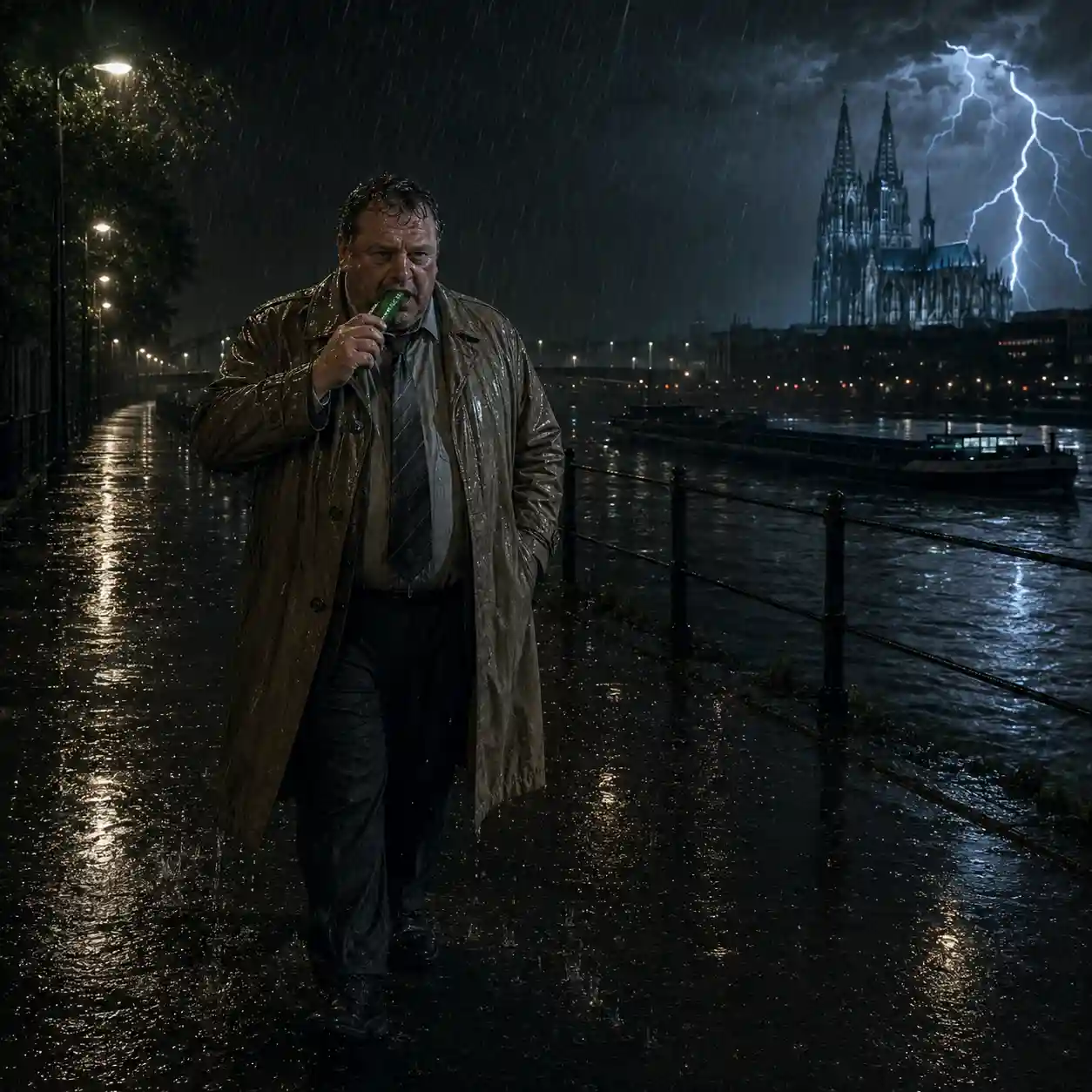
Frank Schätzing begins The Swarm by distributing danger across oceans, professions, and species. Fishermen disappear. Whales turn against boats near Vancouver Island. Aggressive jellyfish and other marine animals disrupt familiar coastlines. Strange worms appear near methane hydrate deposits on the Norwegian seabed.
No single event initially proves intention. Scientists, officials, businesses, and local observers interpret each anomaly through the categories they already know. A whale attack can be blamed on unusual behavior. Newly discovered organisms may be isolated cases. Shipping trouble and disease appear to belong to separate systems.
The novel builds terror through delayed connection. Readers move between locations and understand that the pattern is larger before most characters can demonstrate it. Suspense comes from watching evidence accumulate faster than institutions can cooperate.
Collective crisis also emerges through scattered symptoms in 👉 The Plague by Albert Camus. Camus confines disease within one city and concentrates on solidarity under repetition. The writer expands across the planet, using scientific specialization and media reports to connect distant shocks.
The scale makes ecological interdependence visible. Ocean currents, food chains, microbial life, commercial routes, climate, and coastal settlement do not respect political borders. An event far below the surface can alter cities that never imagined themselves part of the same system.
This opening is strongest when uncertainty remains scientific rather than supernatural. Each disturbance has material consequences before anyone gives it a common author.
Humanity notices the ocean only when it becomes disruptive. The accumulating attacks expose how thoroughly ordinary life already depends on processes that remain unseen.
Johanson, Anawak, and Weaver read different kinds of evidence
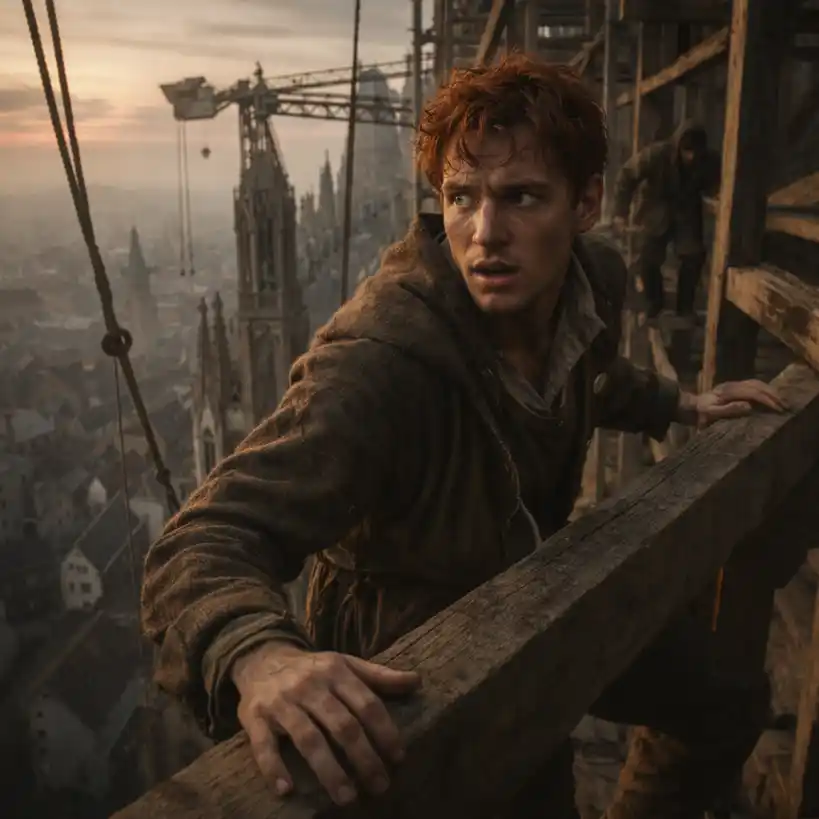
The investigation develops through specialists who encounter the crisis from distinct positions. Sigur Johanson studies the unusual organisms on the Norwegian continental margin and suspects that their appearance connects to a larger geological danger. Leon Anawak brings expertise in whales and marine behavior from the Canadian Pacific coast. Karen Weaver works as a science journalist who follows information across institutional boundaries.
Their differences give The Swarm much of its early energy. Johanson interprets samples, models, and changes on the seabed. Anawak must distinguish ordinary animal intelligence from behavior that appears coordinated by another force. Weaver asks who possesses evidence, which explanation can be communicated, and why important warnings remain dispersed.
No discipline can solve the pattern alone. Biology, geology, oceanography, animal behavior, communications research, and journalism reveal different portions of the same system.
Scientific truth also confronts institutions that control its consequences in 👉 A Life of Galileo by Bertolt Brecht. Brecht concentrates conflict around one scientist and religious authority. Schaetzing makes expertise collective, yet political power still decides how knowledge will be used.
The novel values curiosity, but it does not portray research as detached from personality. Competition, attraction, fear, professional reputation, and national interest affect which hypothesis receives attention. Scientists can be rigorous in one moment and vain or defensive in another.
Some dialogue exists mainly to transfer information to readers. Even so, the ensemble demonstrates an important principle: understanding grows through comparison. Evidence becomes knowledge when boundaries open. The crisis can be recognized only after people stop treating each location, species, and field as a separate story.
Methane hydrates turn invisible change into a megatsunami
The worms on the Norwegian seabed give the novel its most frightening scientific chain of cause and effect. They colonize areas associated with methane hydrates and contribute to destabilizing the continental slope. What first appears to be a small biological anomaly becomes capable of triggering geological collapse.
When the slope fails, the resulting tsunami devastates European coasts. Frank Schätzing takes readers through the sequence at several scales: microbial activity, sediment instability, underwater movement, wave formation, and human destruction. A tiny organism can redirect the energy of a continent.
The episode captures the strength of the book’s research-based imagination. It does not rely on a giant creature rising visibly from the sea. Terror develops through interactions among life, chemistry, geology, and gravity. Societies have built dense coastal systems while understanding only portions of the environment beneath them.
At the same time, the explanatory detail slows the approach to catastrophe. Characters sometimes speak like lecturers because the reader must understand methane hydrates and slope failure before the event reaches full force. The information creates plausibility, but it can weaken individual voice.
The tsunami also marks a structural change. Earlier anomalies allowed hesitation and denial. Mass death forces governments to accept that the events may be coordinated. Scientific inquiry becomes a security operation, and knowledge passes into institutions with military priorities.
His warning is not that nature suddenly becomes malicious. Human activity has treated the ocean as resource, route, waste system, and empty distance. The attack exploits vulnerabilities created by that dependence. The seabed becomes political when it moves. After the wave, nobody can pretend that deep marine processes remain outside human history.
The Yrr transform an eco-thriller into first contact
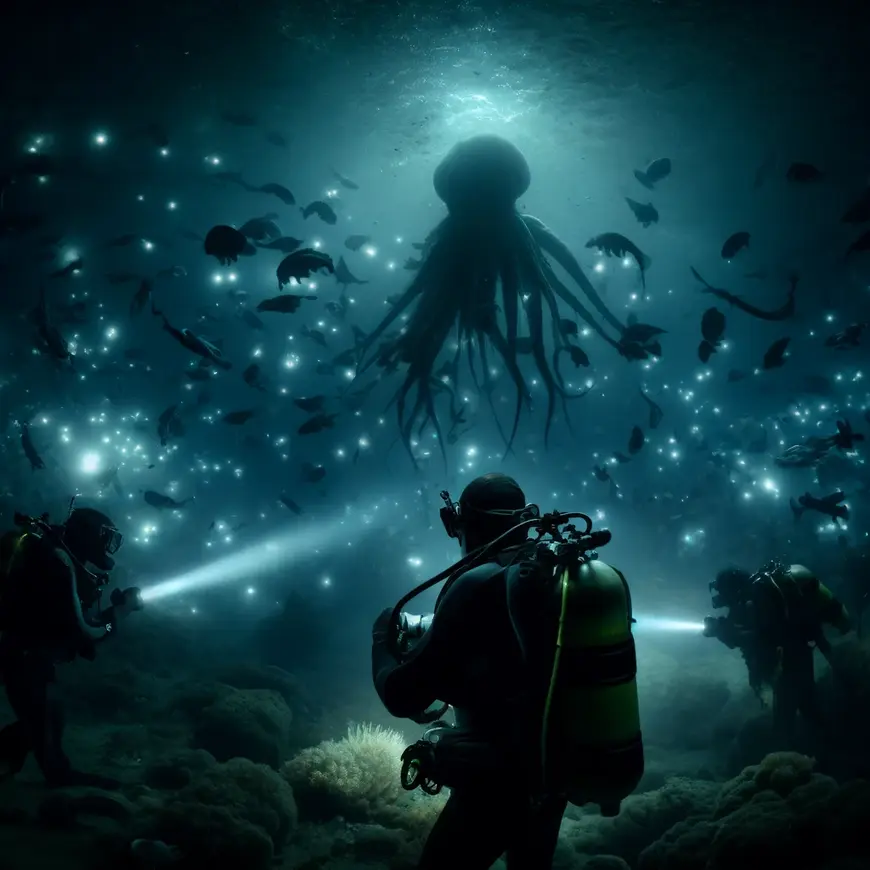
Johanson gives the unknown intelligence the arbitrary name Yrr. Investigation eventually reveals single-celled organisms that operate together in immense networks. The swarm can influence marine species, coordinate attacks, and respond strategically to the damage humans have inflicted upon ocean ecosystems.
This discovery changes the genre of The Swarm. The first half resembles a scientific disaster thriller in which experts seek one cause behind many effects. Its second half becomes a first-contact narrative. Humanity has not met intelligence arriving from another planet. Another intelligence occupied Earth’s oldest habitat.
Colonial encounter takes a different form in 👉 The Martian Chronicles by Ray Bradbury. Bradbury sends humans outward and shows exploration repeating conquest, disease, and cultural destruction. The novelist reverses the direction: the dominant human species discovers an older earthly power capable of resisting intrusion.
The Yrr challenge familiar assumptions about individuals, language, technology, and embodiment. They do not need cities, machines, or centralized government to coordinate at a planetary scale. Their environment is also their infrastructure. What humans classify as separate organisms can become instruments within one distributed will.
That concept is more compelling than the language of revenge sometimes used to describe it. Revenge suggests human emotion and a single grievance. The Yrr act more like an intelligence defending the conditions of its continued existence.
The novel nevertheless grants human characters enough evidence to infer intention with remarkable speed. Speculation becomes operational certainty because the thriller must advance. First contact begins as an ecological accusation. Before humanity can ask what the Yrr are, it must confront what its own species has done.
Collective intelligence unsettles human ideas of the self
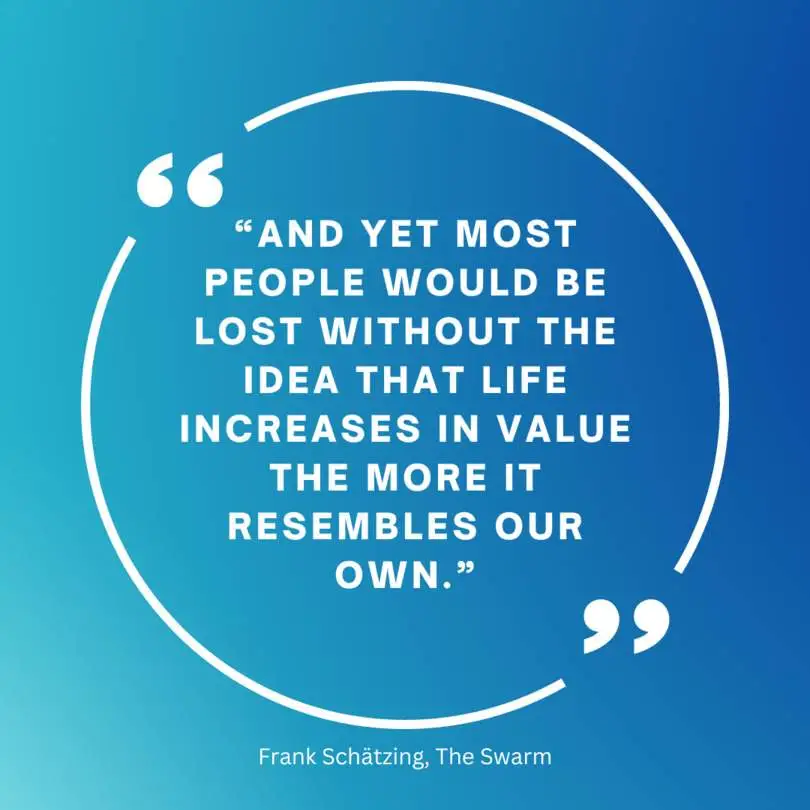
The Yrr do not organize consciousness around an individual body. Their intelligence emerges through countless units capable of joining, separating, exchanging information, and directing other organisms. Identity exists as a relation across the swarm.
This model threatens more than human survival. It challenges the belief that intelligence must resemble the human mind, build comparable technologies, or value the autonomous person. The Yrr make individuality look like one biological option.
Mass behavior and the fear of losing personal boundaries receive a different examination in 👉 Crowds and Power by Elias Canetti. Canetti studies human crowds in which individuals seek release from separation while remaining vulnerable to command. The writer imagines a collective for which separation may never have held the same authority.
The contrast exposes a human weakness. Political and military leaders repeatedly assume that the Yrr must possess a command center, a hierarchy, or a decisive target. Their strategies reproduce the centralized systems they understand. A distributed intelligence cannot be defeated by removing one ruler.
However, the novel sometimes makes the swarm too unified. Internal disagreement, error, and variation give human societies much of their unpredictability. The Yrr gain conceptual power by appearing almost perfectly coordinated, but that perfection can make them function more as a philosophical counterweight than as a fully imagined culture.
Their ability to use other species also complicates the ecological message. Whales, worms, jellyfish, and microbes become weapons within a larger plan. The oceanic collective is not a peaceful harmony of independent life. Connection does not guarantee kindness. The Yrr reveal an alternative intelligence, yet their unity can be as coercive to other organisms as human domination.
Scientific explanation creates credibility – the Ocean Answers
Frank Schätzing devotes extensive space to whale behavior, marine biology, methane hydrates, continental shelves, ocean currents, microorganisms, signal processing, and deep-sea technology. The detail allows spectacular events to grow from recognizable scientific processes rather than arbitrary magic.
This method makes The Swarm unusually immersive for readers who enjoy research inside fiction. A hypothesis develops through observation, competing explanations, and revision. Experts do not instantly know which evidence matters. Science becomes a plot engine rather than decoration.
The same ambition creates the novel’s greatest formal burden. Explanations often arrive in long blocks of dialogue or exposition. A character may temporarily sound less like a distinct person than a channel for information. Repetition ensures that a large cast and complex theory remain understandable, but it also enlarges an already massive book.
Translation adds another layer to this balance. Sally-Ann Spencer’s English version must move between technical vocabulary, international dialogue, action scenes, and the pacing of a commercial thriller. Functional clarity often matters more than stylistic individuality.
The science also changes status as the story progresses. Early chapters carefully distinguish observation from speculation. Once the Yrr hypothesis dominates, increasingly bold conclusions must support urgent action. The novel retains scientific language while moving into speculative territory that cannot receive the same verification.
That shift is legitimate in science fiction, but readers should notice it. Plausible mechanisms around the disasters can make every later claim feel equally established. Research earns trust that speculation then spends. The book remains gripping when the exchange is visible, although its confidence occasionally exceeds what the evidence within the story could support.
Communication competes with the fantasy of extermination
The international response eventually gathers scientists and military leaders aboard the USS Independence. Its mission should allow concentrated research and contact with the Yrr. It also places knowledge inside a command structure prepared to treat uncertainty as an enemy.
Lieutenant General Judith Li represents the logic of strategic dominance. If the Yrr can threaten human civilization, she believes survival requires a weapon capable of destroying them. Other members of the team fear that eliminating a species woven through marine ecosystems could also destroy the conditions humanity needs.
Institutional failure under catastrophe also drives 👉 Blindness by José Saramago. Saramago shows authorities isolating vulnerable people while calling abandonment protection. He operates at a larger military scale, but both novels ask how quickly fear converts power into coercion.
Defense and domination become difficult to separate. Li’s plan promises certainty: one species survives because the other cannot retaliate. Communication demands the harder admission that humans may need to change their behavior without controlling the response.
Samantha Crowe and other researchers search for signals, patterns, and a form of address the Yrr might recognize. The problem is not merely translation between languages. Humanity must communicate across incompatible models of body, memory, and self.
The final conflict on the damaged carrier makes the argument physical. Johanson prevents the eradication weapon from reaching its target and dies in the confrontation. Karen Weaver chooses a contact strategy built around the Yrr’s own chemical communication. Peace remains a desperate experiment. Schätzing rejects extermination, but he does not pretend that understanding arrives before risk.
Famous Quotes from The Swarm
- “The world as we know it is changing. We are just not aware of it yet.” This quote highlights the novel’s central theme of unseen environmental changes and the impending consequences of humanity’s actions on nature. It suggests that significant shifts are occurring beneath the surface, unnoticed by most people.
- “Nature doesn’t need people. People need nature.” This quote emphasizes the dependency humans have on the natural world, whereas nature can thrive without human intervention. It underscores the importance of respecting and preserving the environment, a key message in the novel.
- “The arrogance of man is thinking nature is in our control and not the other way around.” This quote speaks to the hubris of humanity in believing they can dominate and manipulate nature without consequences. The novel illustrates the folly of this belief through the catastrophic events triggered by the oceanic organisms.
- “In the end, it’s not the years in your life that count. It’s the life in your years.” This quote reflects on the quality of life and the importance of meaningful experiences over mere longevity. It encourages readers to live fully and appreciate the richness of life, a theme that resonates through the characters’ struggles in the novel.
- “Survival is the most primitive of human instincts.” This quote captures the essence of the characters’ fight for survival in the face of unprecedented natural disasters. It highlights the basic human drive to stay alive and adapt to threatening circumstances, a central focus in the story.
Trivia Facts about The Swarm
- Publication Year: The Swarm was first published in Germany in 2004 and became an instant bestseller. The English translation was released in 2006.
- Genre: The novel is a science fiction thriller that combines elements of environmental science, marine biology, and geopolitical intrigue. It is known for its detailed scientific background and complex narrative.
- Environmental Themes: “The Swarm” addresses environmental issues, particularly the consequences of human activities on marine ecosystems. The plot revolves around mysterious and catastrophic events caused by oceanic organisms in retaliation against human exploitation of the seas.
- Extensive Research: The author conducted extensive research to ensure scientific accuracy in the novel. He consulted marine biologists, geologists, and other experts to create a realistic portrayal of the underwater world and the science behind the fictional events.
- Adaptations: The Swarm has been adapted into various formats, including a graphic novel and an upcoming television series. The TV adaptation, produced by multiple international partners, aims to bring the novel’s gripping and scientifically rich narrative to a broader audience.
Leon Anawak links ecological attention to divided identity
Leon Anawak’s work with whales places him close to animals that humans admire, commercialize, protect, hunt, and misunderstand. When their behavior changes, he must resist both sentimental assumptions and the belief that aggression makes them unnatural.
His personal history adds another form of distance. Anawak has a complicated relationship with his Inuit heritage and with the identities other people assign to him. Returning toward family and cultural memory does not provide an effortless homecoming. Belonging cannot be recovered as pure origin.
This subplot matters because the larger novel criticizes a civilization that treats the nonhuman world as external. Anawak’s experience shows a related danger in cultural terms: dominant institutions can turn living traditions into stereotypes, expertise, guilt, or symbolic authenticity.
Frank Schätzing sometimes presses the parallel too neatly. Anawak risks becoming the character assigned to represent both whale consciousness and Indigenous knowledge, even though his scientific training and personal estrangement make his position more complex. Cultural identity should not function as a shortcut to ecological wisdom.
His best scenes avoid that simplification. Careful observation, uncertainty, and emotional history exist together. Anawak does not understand whales because of ancestry, nor does scientific status erase the past. He learns by staying attentive to conflict between forms of knowledge.
The subplot also slows the global thriller at useful moments. Catastrophe can make characters appear only as experts running toward the next clue. Anawak’s divided loyalties return scale to one person who cannot solve identity through a successful mission.
Listening begins with refusing possession. Whether he approaches whales, evidence, or cultural belonging, Anawak grows when understanding stops meaning ownership.
The vast ensemble drives momentum but thins character
The novel moves among researchers, officials, journalists, technicians, soldiers, executives, and people caught in disasters. This range shows that a planetary emergency cannot belong to one hero. Each location reveals another dependency within the global system.
Karen Weaver, Sigur Johanson, Leon Anawak, and Samantha Crowe provide different intellectual centers. Judith Li and Jack Vanderbilt represent more aggressive structures of power. Numerous secondary figures carry specialized knowledge or make the human cost of the attacks visible.
Scale is the ensemble’s greatest achievement. Decisions in laboratories, government rooms, ships, and coastal communities affect one another even when the people involved never meet. The plot can shift from microscopic organisms to geopolitical strategy without abandoning its central pattern.
Yet the cast also produces emotional dilution. New names and professional roles arrive faster than some personalities can develop. Dialogue often establishes expertise efficiently, while romantic or personal relationships receive less convincing transitions. Several characters become memorable primarily for the function they perform.
The thriller structure intensifies this tendency. Cliffhangers cut between locations, delaying resolution and maintaining speed across the book. That mechanism works, but repeated escalation can make disaster feel like a sequence of set pieces rather than accumulating grief.
Deaths then carry unequal weight. Some losses alter the moral argument, while others mainly demonstrate danger or clear the crowded narrative. The book wants both the breadth of a global systems novel and the attachment of character-centered fiction.
It achieves the first more consistently. The cast resembles a network before it becomes a community. That design suits the novel’s subject, although readers may admire the system more deeply than the people moving through it.
An ambitious eco-thriller that makes human supremacy visible
The Swarm succeeds by converting ecological dependence into suspense. The author shows that oceans are not scenery beyond human society. They regulate climate, support food chains, carry trade, store energy, host immense life, and absorb consequences that industrial systems prefer not to see.
The Yrr make those consequences answer back with intention. This device can be blunt, yet it transforms slow environmental damage into a conflict the thriller can dramatize. Humanity becomes one species under judgment.
Nonhuman agency also enters history through a radically different form in 👉 The Flounder by Günter Grass. Grass uses a speaking fish to retell gendered cultural history through satire and myth. He gives marine intelligence a scientific and planetary scale.
The novel’s weaknesses remain substantial. Technical exposition can overwhelm voice, the enormous cast contains schematic figures, and the military conflict simplifies political differences into recognizable camps. The Yrr are intellectually provocative but internally opaque.
Still, the book refuses the comforting idea that humans can restore the old order after defeating a monster. Karen Weaver’s contact strategy halts the attacks, but it does not establish permanent trust. Survival depends on living differently under the awareness of another power. The eight-part television adaptation released in 2023 confirms the premise’s visual and international reach, although the novel’s density cannot be transferred intact.
Its most durable achievement is a reversal of perspective. The ocean does not invade the human world. Human systems have already invaded its world. The threat is also a demand for relationship. Hope survives only by removing humanity from the center of Earth.
Quick Summary: My Thoughts on The Swarm
When I read the novel, I was hooked from the start. The mysterious happenings in the ocean intrigued me. I could feel the tension building as strange events unfolded worldwide.
As I read further, the scale of the threat became clearer. The combination of science, suspense, and environmental themes kept me on edge. Each discovery raised more questions, and I was eager to see how the characters would confront the growing danger.
By the end, I felt both thrilled and unsettled. The global catastrophe felt terrifyingly real, and the complex plot left me thinking about humanity’s impact on nature. The novel’s mix of action and thought-provoking ideas stayed with me long after I finished. It was intense, gripping, and made me see the environment in a new light.