Pablo Neruda’s Canto General – The Soul of Latin America
Canto General opens before European arrival, before named republics, and almost before recorded human history. In “A Lamp on Earth,” forests, rivers, birds, minerals, and plants emerge as the first inhabitants of an American world. Pablo Neruda does not present landscape as scenery waiting for human action. Matter already possesses movement, memory, and force.
This beginning establishes the cycle’s enormous ambition. Its fifteen cantos will move through conquest, independence, modern exploitation, political repression, and autobiography. Yet history first appears here through maize, tobacco, copper, jungle, mountain, and water. Geography becomes the oldest historical witness.
The vision is anti-colonial because America does not begin with its European “discovery.” Indigenous peoples enter a world that already has density and meaning. However, the cycle often gathers distinct lands and cultures into one continental body. Unity supplies grandeur, but it can also make difference harder to see.
History likewise becomes inseparable from myth and recurring violence in 👉 One Hundred Years of Solitude by Gabriel García Márquez. Márquez builds one community through family memory and repetition. This poem starts at a continental scale, turning natural catalogues into an alternative origin story.
The opening canto therefore does more than celebrate abundance. Its vegetation hides future metals, labor, borders, and profit. Readers encounter resources before the economic systems that will claim them.
The natural world is never politically innocent. It shelters life, records violence, and provides the material over which empires and companies will struggle. By beginning with the land, the poem gives every later conflict a physical body.
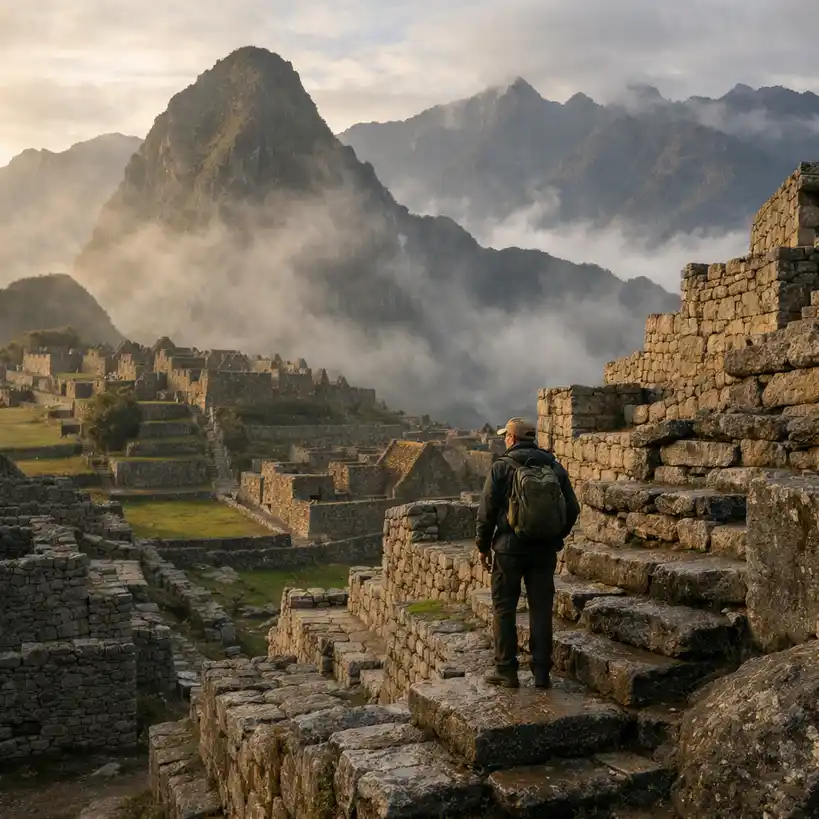
Macchu Picchu turns stone into a record of labor
The twelve-part sequence “The Heights of Macchu Picchu” gives Canto General its most famous ascent. The speaker climbs from modern exhaustion toward the Inca citadel, seeking a relation to human history that ordinary urban life has denied him. At first, the ruins appear almost outside time. Stone, air, altitude, and geometric order promise permanence above anonymous death.
The sequence then interrupts its own admiration. Monumental architecture cannot explain who cut, carried, and placed the stones. The absent worker becomes more urgent than the surviving structure. Beauty conceals the bodies that produced it. The speaker asks after the mason, shepherd, farmer, potter, and bearer whose lives left no individual record.
This reversal keeps the sequence from becoming simple archaeological wonder. Macchu Picchu represents collective achievement, but also a hierarchy that consumed labor. The dead cannot answer directly, so the poet invites them to speak through him. That gesture creates the sequence’s power and its central difficulty.
The speaker wants to recover lives erased by official history. However, his own eloquence may replace the very voices he seeks. He turns many unknown people into one suffering brotherhood, then claims the authority to carry their silence into the present.
The ascent consequently moves in two directions. It rises toward an extraordinary city while descending into hunger, exhaustion, and mortality. Stone preserves form, but not personal testimony.
Resurrection remains a poetic claim. The speaker can expose forgotten labor and make readers feel its absence. He cannot return names that history failed to preserve. The sequence matters because it acknowledges that gap even as its commanding voice tries to cross it.
Conquerors and liberators divide history into enemies
“The Conquerors” changes the cycle’s tempo. Ships, armor, weapons, disease, greed, and Christian authority break into the earlier world. Canto General portrays conquest as organized predation rather than heroic exploration. Pedro de Valdivia and other imperial figures become agents of bloodshed, while land and Indigenous resistance seem to fight together.
“The Liberators” answers with a counter-lineage. Caupolicán, Lautaro, Túpac Amaru, Simón Bolívar, José de San Martín, Bernardo O’Higgins, and labor organizer Luis Emilio Recabarren enter a history of resistance extending across centuries. Biography becomes a political battlefield. The people whom official monuments glorify or marginalize receive new moral positions.
That architecture is forceful but openly partisan. Conquerors tend to embody appetite and cruelty, whereas liberators carry the unfinished purpose of the continent. Differences between Indigenous revolt, republican independence, nationalism, and socialist organization become stages in one struggle.
Political life under another authoritarian order corrodes memory in 👉 Conversation in the Cathedral by Mario Vargas Llosa. Vargas Llosa disperses responsibility through conversation, bureaucracy, and compromise. This cycle prefers sharp historical alignment, giving conflict the clarity of opposing columns.
The method produces memorable judgment. It also narrows ambiguity. Independence leaders could reproduce hierarchies, and resistance movements did not share one future. Heroic compression makes solidarity visible while smoothing ideological conflict. Dates attached to names make that inheritance feel deliberately continuous.
History advances through chosen ancestors. The work constructs a tradition that links anti-colonial warriors to modern workers. The result is less a neutral chronicle than a usable past, designed to tell contemporary readers which unfinished battles they have inherited.
Mines, plantations, and companies continue conquest
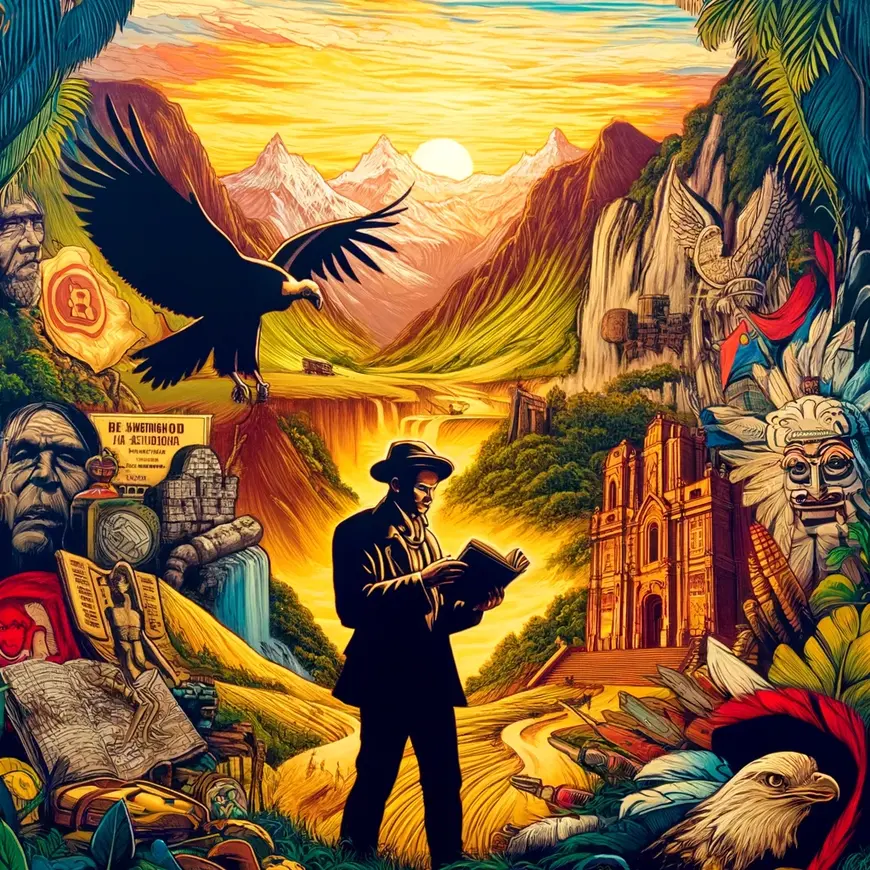
Political independence does not end conquest in Canto General. “The Betrayed Sand” moves from foreign invaders to domestic oligarchs, dictators, mining interests, and international corporations. Copper, nitrate, oil, bananas, and sugar bind natural wealth to injured bodies. The old empire changes its instruments, but extraction continues across formally independent nations.
Canto General names companies such as Anaconda Copper, Standard Oil, and United Fruit. Proper names prevent exploitation from dissolving into a vague complaint about greed. Presidents, lawyers, owners, and corporations occupy the same accusatory map. Commerce becomes conquest without armor.
This argument connects colonial seizure with modern capitalism. Land remains valuable, yet workers now enter the poem as miners, plantation laborers, strike victims, and political prisoners. The continent’s abundance creates wealth elsewhere while leaving hunger near the source.
War similarly turns survival into a market in 👉 Mother Courage and Her Children by Bertolt Brecht. Brecht shows profit adapting to permanent conflict. The poem widens that logic across commodities and borders, making extraction look like a continental system.
Such denunciations can become schematic. Villains receive grotesque features, while workers often appear morally unified. Anger replaces the uncertainty found in the landscape poems. Yet the directness also gives the sequence documentary pressure. Dates, massacres, products, and institutions interrupt any purely symbolic reading.
Material detail carries the political argument. Copper is both mineral and stolen labor. Fruit is both nourishment and export regime. By following resources from earth to market, the poem shows how colonial relations can survive the formal end of colonial government.
Juan replaces heroic biography with testimony
After naming conquerors, presidents, and liberators, “The Earth Is Called Juan” turns toward workers whose lives rarely become historical chapters. Each poem begins from a named person and a particular occupation or place. Miners, farm laborers, shoemakers, and prisoners describe hunger, repression, illness, migration, and endurance in deliberately plainer language.
Juan functions as a shared name for the people, but the canto does not remain entirely anonymous. Individual names and locations resist the abstraction of “the masses.” Political history acquires a speaking body. Instead of praising workers from a distance, the cycle stages their accounts as first-person testimony.
That shift also complicates authorship. The poet writes the voices he presents. Their simplicity is crafted, and their movement toward collective meaning follows his political design. The poems grant visibility while retaining his control over tone, selection, and form.
Speaking for silenced people also drives 👉 Cassandra by Christa Wolf. Wolf rebuilds a myth around one marginalized witness and foregrounds the pressures shaping her account. Canto General gathers many witnesses, seeking solidarity through repetition rather than one sustained consciousness.
“Juan” therefore solves only part of the difficulty introduced at Macchu Picchu. Known names replace the unknown builders, yet the author still mediates their speech. Testimony becomes part of an epic structure larger than any one life.
Collective identity both preserves and absorbs. The workers gain a place in continental history because their stories echo one another. At the same time, common suffering can reduce differences of culture, gender, region, and political desire. The canto is strongest when a specific voice resists becoming only an example.
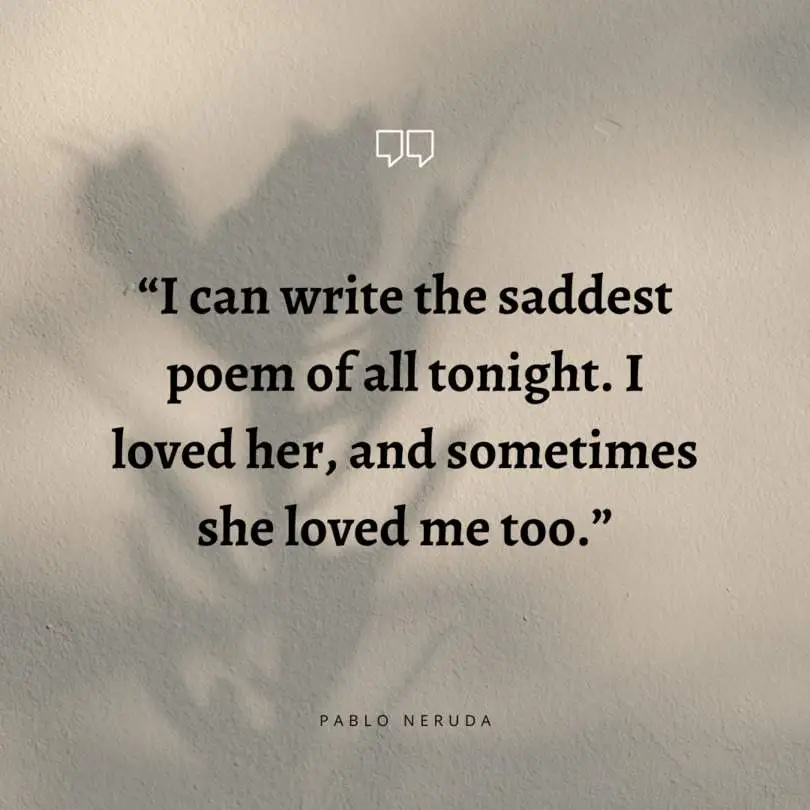
Famous Quotes and Their Explanations from Canto General
- “I am the man. I was lonely. I had no home.” This quote from “The Heights of Macchu Picchu” speaks to the universal feeling of isolation and the search for belonging. It reflects Neruda’s empathy for humanity and his quest to find a deeper connection with the past and nature.
- “Rise up with me, American love.” Here, the writer calls for unity and solidarity among Latin Americans. This line encapsulates his desire for collective action and love for his homeland.
- “I want to do with you what spring does with the cherry trees.” This beautiful metaphor from “Every Day You Play” (included in the broader work) symbolizes renewal and growth, capturing the transformative power of love and nature.
- “The Pacific Ocean was overflowing the boundaries of the world.” In this quote, the author uses the ocean as a metaphor for the vast and boundless history, culture and literature of Latin America, suggesting its immeasurable depth and influence.
- “Give me silence, water, hope.” This line highlights the elemental desires of the human spirit: peace, sustenance, and optimism. It’s a simple yet profound request that reflects Neruda’s connection to nature and his philosophical outlook.
Trivia Facts about Canto General – The Soul of Latin America
- Political Exile: Neruda wrote much of of the work while in political exile due to his outspoken views against the Chilean government.
- Historical Scope: The collection spans the entire history of Latin America, from pre-Columbian times to the 20th century.
- Collaborative Effort: The book includes illustrations by renowned Mexican artists Diego Rivera and David Alfaro Siqueiros.
- Musical Adaptation: Parts of Canto General went into musical compositions, notably by Greek composer Mikis Theodorakis.
- Influence on Latin American Literature: The poem is one of the most significant poetic works in Latin American literature, influencing generations of writers and activists.
- Environmental Appreciation: His vivid descriptions of nature in this poetry are famous for their environmental consciousness and appreciation of Latin America’s diverse ecosystems.
- Multilingual Reach: The book was translated into numerous languages, extending its impact beyond Spanish-speaking audiences worldwide.
Hiding and clandestine print enter the poem itself
The political circumstances surrounding Canto General are not separate from its form. In 1945, the poet entered the Chilean Senate and joined the Communist Party. After he denounced President Gabriel González Videla’s repression, the Supreme Court removed his parliamentary immunity. An arrest order followed in February 1948, forcing him into hiding before he crossed the Andes in 1949. Later that year, the Law for the Permanent Defense of Democracy outlawed the party.
“The Fugitive” converts that experience into a collective journey. Safe houses, night travel, secrecy, landscape, and help from ordinary people prevent pursuit from becoming a solitary adventure. The hidden poet depends on visible workers. His escape confirms the solidarity that the larger cycle repeatedly declares.
Exile and political poetry also reshape national identity in 👉 Germany. A Winter’s Tale by Heinrich Heine. Heine returns imaginatively and physically to a homeland he criticizes. Here, concealment turns Chile into both threatened home and protective terrain.
Publication extended the same conflict. A lavish Mexican edition appeared in 1950 with art by Diego Rivera and David Alfaro Siqueiros. In Chile, a clandestine edition carried a false Mexican imprint. Its production was divided across locations, used ordinary paper and difficult-to-trace equipment, and yielded five thousand copies.
The object therefore enacted the poem’s politics. Printers, organizers, and artist José Venturelli made circulation possible under police repression. Authorship became material cooperation.
A prohibited book becomes collective labor. Its denunciation of censorship did not remain inside the verses. The conditions of printing and distribution turned the physical volume into evidence that political speech survives through networks, craft, and risk.
Catalogues and apostrophes make geography speak
Canto General needs forms large enough to connect centuries, climates, species, people, and political systems. Catalogues provide one answer. Lists of plants, minerals, rivers, birds, islands, tools, and names accumulate until the continent seems to exceed any single viewpoint. Apostrophe provides another. The speaker addresses America, the ocean, the dead, national heroes, workers, and absent friends as if language could summon them into relation.
Repetition creates geographic momentum. Parallel phrases carry readers across abrupt changes of scale. One line may touch a leaf or mollusk; the next opens onto the Andes or Pacific. “The Great Ocean” makes water an archive of migration, isolation, creation, and death rather than a blank border.
An impossible vision of totality also organizes 👉 The Aleph by Jorge Luis Borges. Borges compresses every place into one point and questions the observer who claims to see it. This cycle expands rather than compresses, but its encyclopedic gaze raises the same problem of authority.
The style can overwhelm discrimination. Accumulation places distant objects beside one another through rhythm, even when their historical relations remain unclear. Direct address turns description into ceremony, but it can also make the poet sound like the appointed voice of everything he names. Still, the excess is essential. A modest lyric form could not hold the work’s intended movement from geological time to immediate repression.
The catalogue is both archive and performance. It preserves names that dominant histories neglect while displaying the speaker’s power to order them. The poem’s scale depends on that tension between generous attention and commanding possession.
The general voice gains power by sacrificing ambiguity
The final canto, “I Am,” brings public history into autobiography. Childhood, travel, friendships, political commitments, concealment, and the making of poetry enter the account. This movement suggests that no private self stands outside the continent already described. His life becomes one current inside a larger historical geography.
That ending also reveals the design’s central risk. The poet has spoken to the dead, for workers, against named enemies, and as the voice of America. Solidarity approaches self-authorization. Political commitment gives the cycle urgency, yet commitment sometimes hardens judgment into a division between heroic people and corrupt opponents.
The book’s finest passages resist that simplification. Macchu Picchu makes admiration confront exploited labor. “The Earth Is Called Juan” lets individual names trouble collective identity. Forests, metals, and oceans exceed political allegory because their physical presence remains stranger than any doctrine.
Other passages operate more like propaganda. The author’s communist certainty can flatten historical conflict, and his continental “we” cannot fully represent the Indigenous cultures, women, workers, and nations it gathers. These limits do not cancel the achievement. They define its terms.
Canto General succeeds less as an impartial history than as an epic intervention. It reorganizes memory around land and labor, rejects Europe as America’s starting point, and makes poetry carry accusation, mourning, praise, and hope.
Its greatness remains inseparable from its excess. The same voice that restores forgotten connections can dominate them. Readers do not need to accept every verdict to feel the work’s scale. Its lasting challenge is to hear a continent being made to speak while asking who controls the song.