Germany. A Winter’s Tale – Heinrich Heine’s Vision
Quick Summary: My Thoughts on A Winter’s Tale
Reading the poem by Heinrich Heine was a captivating and reflective experience. The novel’s rich imagery and poetic language drew me into a world filled with both beauty and melancholy. His ability to blend fantasy with reality made the story enchanting.
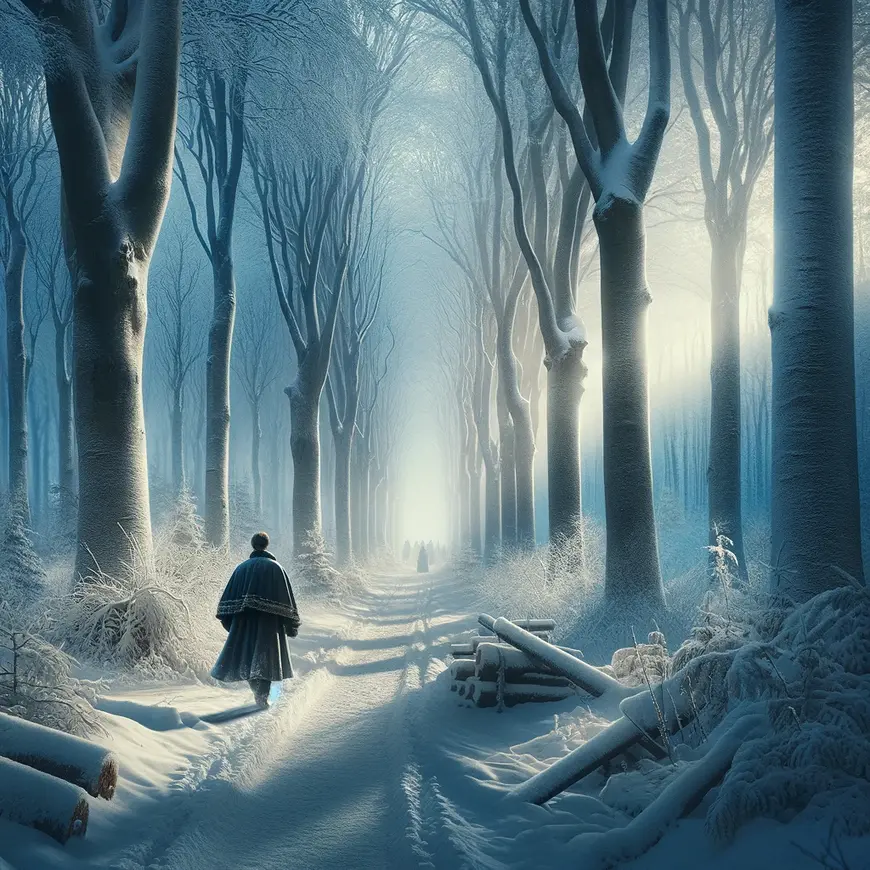
Emotionally, the book resonated deeply with me. The wintry landscapes and melancholic tone evoked a sense of solitude and introspection. I felt a connection to the characters’ longing and the bittersweet nature of their experiences. Heine’s lyrical descriptions of the snowy scenes added to the evocative atmosphere.
Intellectually, the novel stimulated my thoughts on themes of love, loss, and the passage of time. The exploration of these themes through his characters’ journeys made me reflect on my own life and emotions. The interplay between the fantastical elements and the harsh realities of life created a profound and thought-provoking narrative. This book left me with a deep appreciation for his poetic storytelling and its emotional depth.
Germany. A Winter’s Tale (Deutschland. Ein Wintermärchen) by Heinrich Heine is a captivating poetic work that serves as both a political critique and a celebration of Germany. Published in 1844, the poem is an exploration of German society and its cultural and political landscape during a turbulent period of history. His lyrical and satirical style, combined with his sharp wit and insightful observations, make “A Winter’s Tale” a remarkable piece of literature that continues to resonate with readers today.
Review of Germany. A Winter’s Tale
Germany. A Winter’s Tale blends poetic lyricism, biting satire, and political commentary. The poem captivates with rich imagery and evocative language. His vivid descriptions of landscapes, cities, and people bring the journey to life. He immerses the reader in the sights, sounds, and emotions of the winter landscape. The melodic verse adds to its enchanting quality. It captures the essence of the German language and emphasizes the musicality of his expression.
At the heart of “A Winter’s Tale” lies the author’s examination of German society and its complexities. He presents a nuanced and critical portrayal of his homeland and he addresses both its strengths and flaws. He celebrates the beauty of the German landscape, its rich cultural heritage, and the intellectual achievements of its thinkers and artists. Yet, he also confronts nationalism, political oppression, and social injustice. His keen observations and insightful commentary shed light on the contradictions and struggles of a nation in transition.
A Vision of Germany
The political critique in “Germany. A Winter’s Tale” is particularly noteworthy. He challenges the notion of blind patriotism and warns against the dangers of unchecked nationalism. Through sharp satire and irony, he exposes the hypocrisy and folly of those who blindly follow political leaders and propagate extremist ideologies. Heine’s critique extends to religion as well, as he questions the role of the Church and its influence on society, highlighting the oppressive nature of religious dogma and the need for individual freedom of thought.
In addition to its political themes, the poem delves into the broader human condition. The author explores the depths of human emotions, desires, and aspirations. He reflects on the fragility of life, the inevitability of death, and the transient nature of human existence. The musings on love, longing, and the pursuit of happiness add a poignant and introspective dimension to the poem, reminding readers of the universal experiences and emotions that unite humanity across time and place.
It is important to note that this work can be challenging for readers unfamiliar with the historical and cultural context of 19th-century Germany. The poem contains references to specific events, personalities, and political movements of the time, which may require additional research to fully grasp their significance. However, even without an in-depth understanding of the historical context, The lyrical language and universal themes make the poem accessible and engaging.
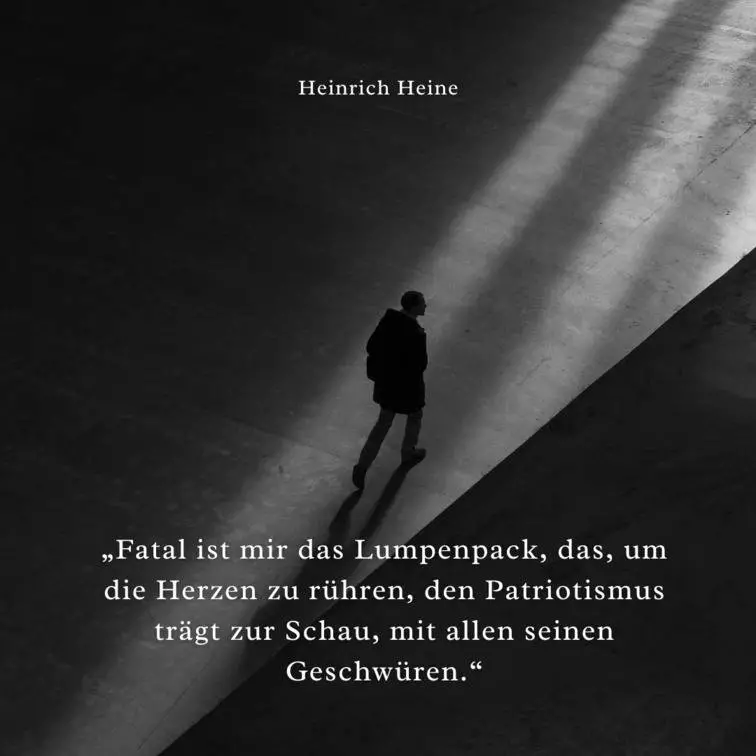
Famous Quotes from Germany. A Winter’s Tale by Heinrich Heine
- “That was but a prelude; where they burn books, they will ultimately burn people as well.” This quote, one of Heine’s most famous, warns of the dangerous path toward intolerance and authoritarianism. By stating that the burning of books is only a prelude to the burning of people, the poet underscores the connection between censorship, the suppression of ideas, and the eventual escalation to violence against individuals. This statement, eerily prophetic, has been frequently cited in the context of the Nazi book burnings and the Holocaust.
- “For where there is singing, settle yourself without worry; evil people have no songs.” This quote reflects his belief in the power of art, poetry, and music as expressions of humanity and goodness. He suggests that where there is culture and creativity, there is a lack of malevolence, implying that the arts are a testament to the human spirit and a bulwark against darkness.
- “Freedom is a new religion, the religion of our time.” Here, the writer elevates the concept of freedom to the status of a modern-day religion, emphasizing its sacred importance in the 19th century, especially amidst the backdrop of political repression and the struggle for national unification in Germany. He portrays freedom as the ultimate value and guiding principle of the era.
Trivia Facts about Germany. A Winter’s Tale
- Political Satire: “Germany. A Winter’s Tale” is a biting satire of Germany’s political situation in the early 1840s. The author critiques various aspects of German society, including its conservatism, militarism, and the romanticized view of its past. The poem was a daring challenge to the authorities and the status quo, given the oppressive political environment of the time.
- Censorship and Controversy: Due to its critical stance against the German states’ repression and censorship, “A Winter’s Tale” was controversial upon its publication. It faced censorship, and Heine’s works were later included in the Nazi’s book burnings due to his Jewish heritage and his political views.
- Return to Germany: The poem narrates his journey from Paris to Germany in the winter of 1843. This visit was significant because Heine had been living in exile in France due to his political beliefs and his conflicts with the German authorities.
- Structure and Style: “A Winter’s Tale” is structured as a travelogue, blending elements of epic poetry with autobiographical sketches. The use of humor, irony, and lyrical beauty makes the poem not only a political critique but also a piece of literary artistry.
- Personal and Political Reflections: While the poem critiques German politics and society, it also reflects on his personal disillusionment and his complex relationship with Germany. His love for his homeland contrasts with his despair over its political failures, creating a deeply emotional undercurrent throughout the poem.
- Influence on Later Works: “A Winter’s Tale” has influenced many later writers and poets, both in Germany and internationally. Its combination of personal narrative with political critique has inspired others to use literature as a means of societal and political commentary.
Conclusion: A Winter’s Tale
In conclusion, Heinrich Heine’s work is a poetic masterpiece. It explores Germany’s social, political, and cultural landscape in the 19th century. His keen observations and biting satire enrich the narrative. His lyrical language captures the essence of the human condition. The poem examines nationalism, democracy, and freedom. It delves into the complexities of German society. “A Winter’s Tale” remains thought-provoking. It invites readers to reflect on identity, justice, and the pursuit of a better future.
The poem follows the writer’s journey through Germany in the winter of 1843-1844. He meets various people and visits different places. He engages in conversations and makes observations. These provide a vivid portrait of Germany’s climate. The poem covers themes of nationalism, democracy, and freedom. It also explores religion and the human condition. The poet presents a multifaceted view of Germany. He combines praise and critique. He explores the nation’s contradictions and potential.