Inside The Hessian Courier by Büchner: Words of Rebellion
The Hessian Courier by Georg Büchner was never meant to sit quietly on a bookshelf. It was designed to provoke, to stir outrage, and to ignite change. Inside this revolutionary pamphlet lives a powerful call to rebellion, framed through words aimed directly at the oppressed. Published in 1834, it remains one of the earliest and clearest examples of political writing that speaks with both clarity and fury.
The writer was barely out of his teenage years when he wrote this. Still, his grasp of injustice was profound. He witnessed the suffering of peasants firsthand and understood that words, when sharpened by conviction, could become tools of resistance. This work is not subtle. It names the guilty, describes their crimes, and calls on ordinary people to act.
The structure is urgent, the tone direct. This is writing without ornament. Yet it contains the seeds of his later artistry: a fascination with power, language, and the gap between rich and poor. His rebellion was not abstract; it was immediate and personal.
👉 As I Lay Dying by William Faulkner captures a similar intensity in exposing social decay through unvarnished voices. Both Büchner and Faulkner show how suffering shapes speech. The Hessian Courier is short, but its words still ring loud today. They remind us that literature can exist not just to reflect life, but to demand change.

The Hessian Courier – Georg Büchner’s First Public Defiance
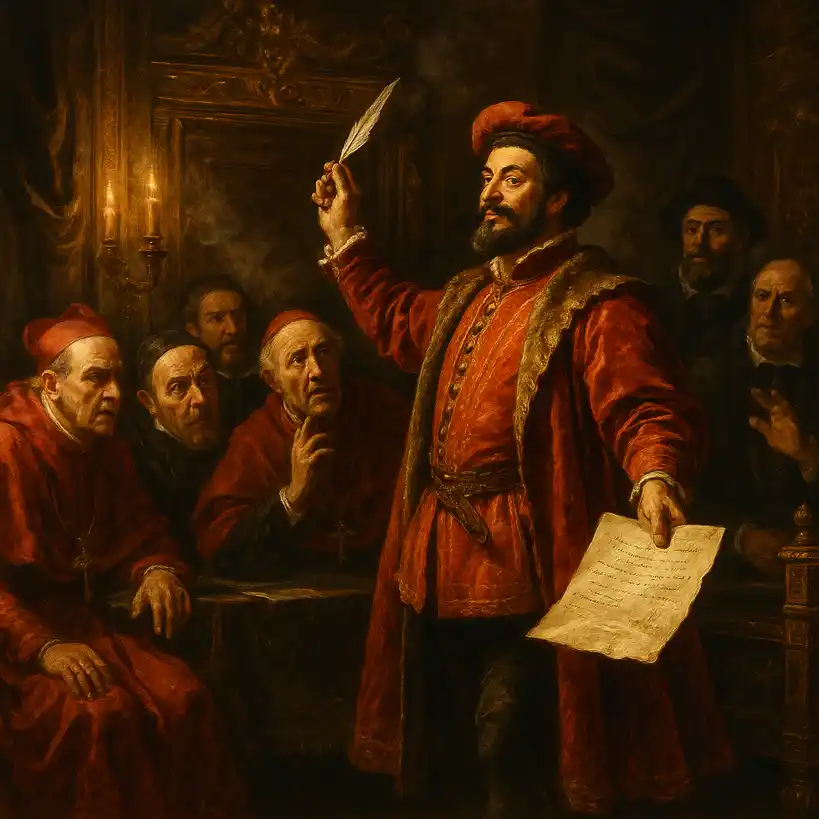
To understand The Hessian Courier, one must see Georg Büchner not as a dramatist, but as an activist. Inside this pamphlet, his rebellion becomes public and irreversible. In 1834, this kind of writing wasn’t just provocative; it was dangerous. He risked imprisonment or worse to publish it.
He believed in the power of words to reach those who had been excluded from education, from politics, from history itself. His writing avoids academic theory. Instead, it speaks directly to workers and farmers. He tells them they are not alone. He shows them who profits from their misery.
His pamphlet shares little in style with his later plays like Woyzeck or Leonce and Lena. It lacks irony, subtlety, or humor. It is urgent while it is angry. And it pulls no punches. 👉 Atta Troll: A Midsummer Night’s Dream by Heinrich Heine, while more playful, shares his frustration with injustice disguised as authority. Both works use language as protest.
The poet was part of the Giessen secret society of revolutionaries. His words here weren’t just rhetorical. They were meant to be read aloud, copied by hand, passed from village to village. Each sentence is a strike against apathy. The Hessian Courier’s legacy is not in its literary style, but in its courage. It stands as proof that literature, even in its roughest forms, has always been a weapon against silence.
Language as a Weapon
In The Hessian Courier, language becomes a weapon. Georg Büchner crafts his sentences not to persuade politely, but to cut through indifference and fear. Inside every phrase is the weight of lived injustice, sharpened into words that demand attention. This isn’t the careful rhetoric of political speeches. It’s the direct, fiery appeal of someone who sees no time left for patience.
His style is clear, repetitive, even brutal at times. He repeats key phrases, taxes, hunger, soldiers, corruption, until they burn into the reader’s mind. His rhythm isn’t poetic, but urgent. The goal is not beauty. It’s awakening.
This technique anticipates later revolutionary writing, where simplicity becomes force. The novelist doesn’t flatter his readers. He speaks to their pain and calls on their strength. His message: the world will not change itself. People must rise.
👉 Auto-da-Fe by Elias Canetti offers a different kind of intensity, but shares his fascination with how words shape reality and how individuals are crushed by systems larger than themselves. Through repetition, accusation, and clarity, he arms his readers with more than outrage. He gives them language they can claim as their own.
The Urgency of Action Over Reflection
One of the defining traits of The Hessian Courier is its impatience with reflection. The artist doesn’t ask his readers to ponder or discuss. He urges them to act. Inside this pamphlet lives a rejection of intellectual detachment. Thought without action, he implies, is complicity.
This urgency sets this book apart from many other revolutionary texts of its time. It isn’t philosophical; it’s practical. And so it names officials and it lists injustices. It identifies allies and enemies while it turns theory into marching orders.
This is why the pamphlet caused such fear among the authorities. The author didn’t merely criticize. He provided a map for rebellion. His words are pointed not just at institutions, but at inertia. He refuses to accept that suffering is natural or necessary.
👉 Baal by Bertolt Brecht, while more theatrical, shares this refusal to romanticize the status quo. Both writers expose how systems dehumanize and how rebellion must reclaim what power denies.
His writing here is closer to a blueprint than a story. Yet even in this raw form, his talent for rhythm and focus is clear. The Hessian Courier may lack the polish of his later works, but it carries the same moral force: words must serve the living.
Why This Pamphlet Still Matters
The Hessian Courier may seem tied to its time — a specific protest against a specific injustice, but its heart remains relevant. Inside its blunt sentences lives a larger truth: systems thrive on silence. The playwright knew this. His pamphlet is not just historical; it’s a template for speaking when speech is dangerous.
What makes this work timeless is its refusal to soften. It doesn’t seek approval from intellectual circles or offer grand philosophical theories. Instead, it shows how injustice hides in plain sight, how laws can mask cruelty, and how voices can shatter complacency.
👉 Beneath the Wheel by Hermann Hesse shares this critique of societal systems. Both Büchner and Hesse show how individuals are crushed beneath expectations and structures designed to keep them silent.
His pamphlet reaches beyond its historical moment. In every era, there are voices waiting to be heard, injustices disguised as tradition, and people told to endure quietly. This text reminds us that words can break that quiet. Even now, its rhythm feels urgent. Its call feels necessary. Literature rarely offers instructions, but this work comes close. Speak. Resist. Remember.

Famous Quotes from The Hessian Courier by Georg Büchner
- “Peace to the huts! War on the palaces!” His most famous line condenses his politics into a battle cry. It demands justice, not charity.
- “Who gives you the right to starve a man?” Direct and unforgiving. Georg Büchner targets those who hide injustice behind law and title.
- “Do not listen to the fine words of the rich.” He warns the poor against deception. Words without action serve only those in power.
- “The people must awaken.” The entire pamphlet lives in this sentence. Awareness leads to change.
- “A man who is silent is already defeated.” Silence becomes surrender. Speaking becomes resistance.
- “Where there is fear, there is tyranny.” Fear feeds systems of oppression. The author offers courage in response.
- “No one will give you freedom. You must take it.” Freedom is not gifted by rulers. It is claimed by the ruled.
- “Your hunger is their wealth.” The writer reveals how exploitation sustains privilege. Hunger is not accidental.
- “Justice begins with truth.” Truth precedes change. This belief shapes every word.
- “Do not wait. Act.” The pamphlet ends where action begins. Delay only strengthens injustice.
Trivia about The Hessian Courier
- First Revolutionary Pamphlet of German Literature: The Hessian Courier is often cited as Germany’s first direct call to political uprising through literature.
- Printed in Secret: Büchner used covert methods to publish and distribute the pamphlet. Copies were often destroyed by authorities.
- Shared Spirit with Billards at Half-Past Nine: Like Heinrich Böll’s novel, his text speaks against inherited violence masked as tradition.
- Influenced Later Revolutionaries: His words inspired political movements beyond his era, shaping activist rhetoric in Germany.
- Part of his Short, Radical Life: He died at twenty-three. This pamphlet is part of a brief, brilliant career committed to change.
- Referenced by German Archives: Original copies are preserved and studied in collections like Deutsches Literaturarchiv Marbach.
- Language of the People: He rejected academic jargon. His words were designed for those ignored by the state.
- Legacy in Political Literature: The Hessian Courier remains a model for writers blending activism with art.
The Legacy of Words as Protest
His later works — Danton’s Death, Woyzeck — receive more literary attention, but The Hessian Courier remains his most radical in intent. Inside these pages, Büchner claims words not as art, but as protest. He proves that writing, even in its roughest form, holds revolutionary power.
His influence can be traced through later generations of writers who blend art with activism, who refuse to separate beauty from ethics. His pamphlet taught that writing need not wait for permission. It need only speak where silence reigns.
This legacy connects to 👉 Being and Nothingness by Jean-Paul Sartre. While Sartre writes from philosophy, both he and Büchner believe in action, in rejecting passive observation in favor of engaged speech.
In a time when literature often aims for entertainment or reflection, this book reminds us that it can also aim to ignite. Its rebellion was loud then. It should still echo now.
The poet never lived to see the changes he demanded. Yet his words survived because they spoke what others dared not. In that survival, we find proof that literature doesn’t need a stage or a library to matter. It needs courage. And a reader willing to listen.
A Voice That Refused Silence
Reading The Hessian Courier today, we hear not just a young man’s fury, but a timeless insistence on justice. The author believed that words could break chains, that speech could wake the silent. Inside this brief, urgent text is the beginning of a voice that refused to accept silence as an answer.
This is not a polished work. It lacks the complexity of his later plays. But it does not lack heart or purpose. It speaks clearly: the world is wrong, and people deserve better. That message, stripped of its historical context, still holds power.
The pamphlet shows that writing need not be grand to matter. It must only be clear, brave, and heard. Literature does not always live in books. Sometimes, it lives in pamphlets passed by hand, in words whispered in secret, in truths shouted from a printing press.
👉 Beloved by Toni Morrison reminds us how history clings to voices silenced too long. Both Morrison and he understand that writing can rescue, reveal, and rebel. his revolution began with words. That is why his voice still matters.