The Lost World: Wonder, Science, and Imperial Violence
The Lost World begins as a young reporter’s attempt to become worthy of an imagined heroic romance and expands into a contest over evidence, authority, territory, and fame. Arthur Conan Doyle sends Edward Malone from London to an isolated South American plateau with Professor Challenger, Professor Summerlee, and Lord John Roxton. Their expedition encounters prehistoric animals, an Indigenous society called the Accala, and beings the narrative repeatedly classifies through a racial hierarchy.
The energy of the adventure remains real, but so do the assumptions organizing it. Wonder and conquest travel together as discovery becomes naming, possession, and public spectacle. The Lost World is a scientific romance and lost-world adventure, as well as early science fiction shaped by imperial adventure fiction. Its enduring fascination depends partly on the tension between imaginative exhilaration and the violence its explorers accept as progress.
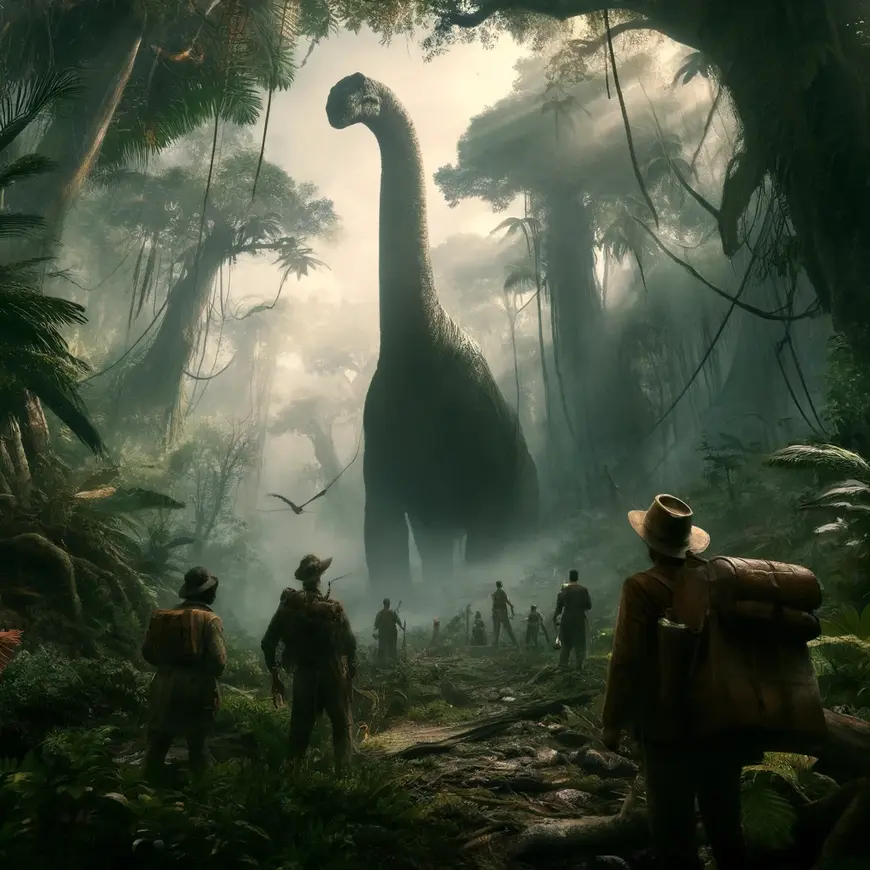
A 1912 Serial Turns Scientific Proof into Spectacle
The Lost World first reached readers as an illustrated serial in 1912 before appearing in book form that year. The format suited a narrative built around delayed proof. Challenger claims that prehistoric life survives on an inaccessible plateau, but damaged photographs, a sketchbook, and his combative reputation leave his audience doubtful. Each new stage promises evidence while postponing universal recognition. Science enters the story through publicity and suspense.
Later speculative fiction also turns knowledge into an event for an audience. In The Illustrated Man by Ray Bradbury, fantastic narratives emerge from a displayed body and force a listener to interpret what he sees. The author uses photographs, lectures, newspaper reports, specimens, and eyewitness testimony to ask who can make an extraordinary claim believable.
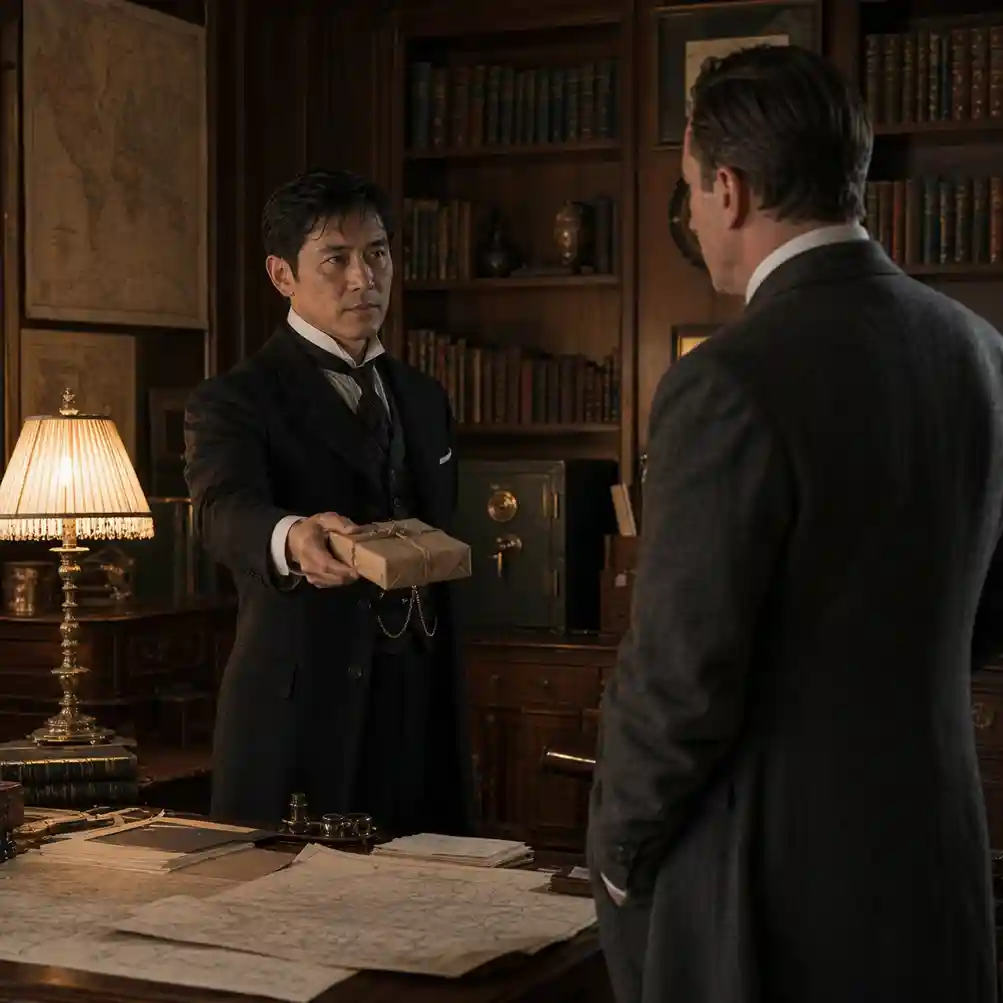
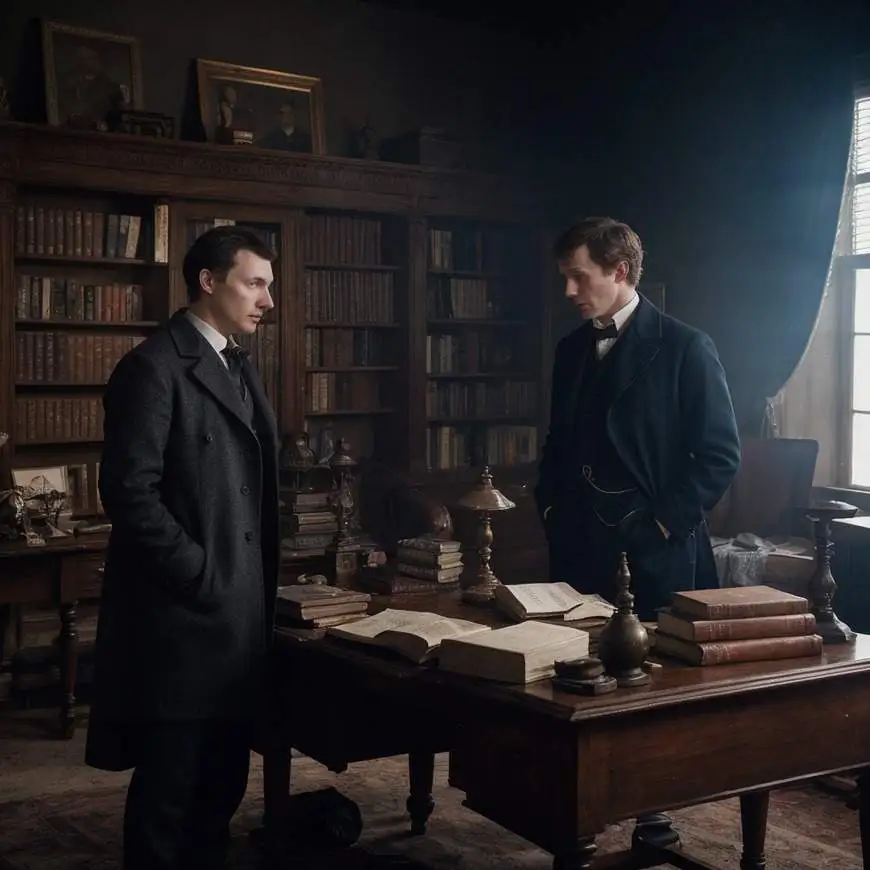
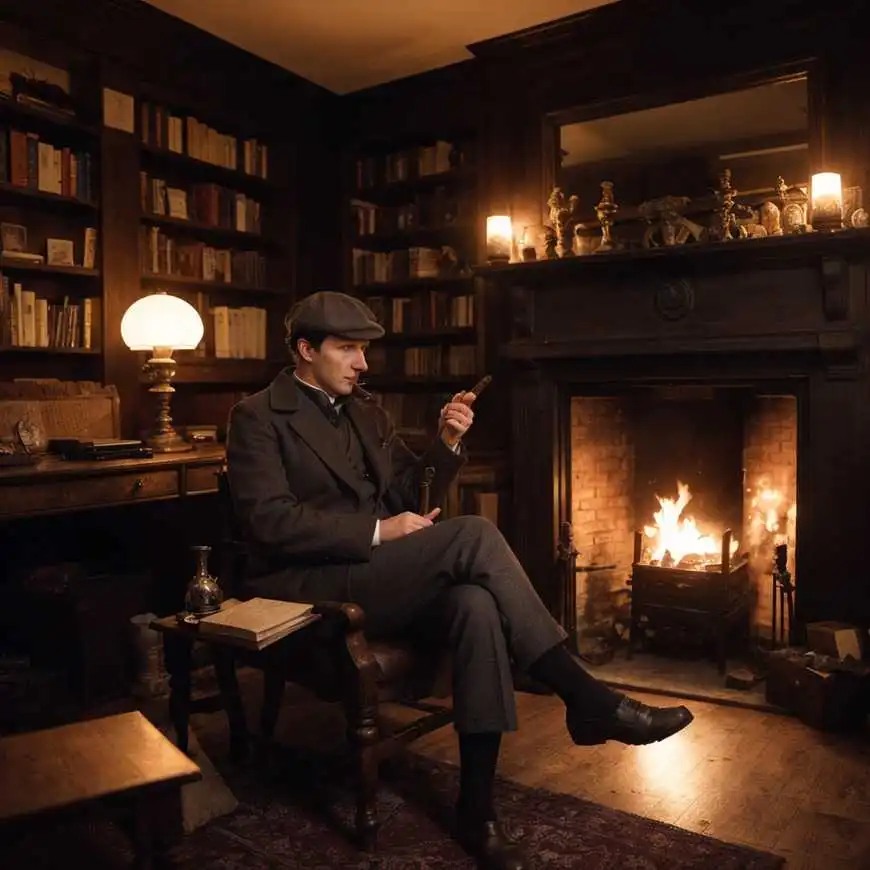
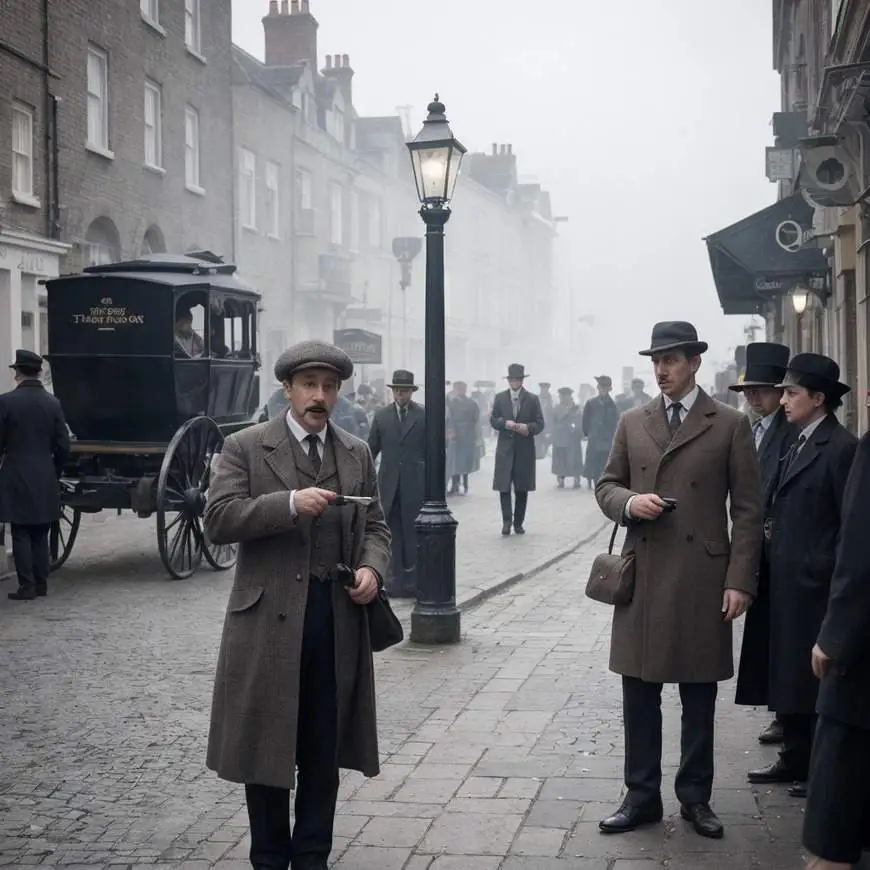
The illustrations intensified this uncertainty because some original images presented the author and associates in costume as members of the expedition. Fiction borrowed the appearance of documentary proof before the plot exposed how easily evidence could be disputed or staged. Malone’s reports serve the same double function. They authenticate the journey within the novel, yet his excitement, limited knowledge, and investment in heroic success make his account selective. In The Lost World, even corroboration must be staged before it can become public fact.
Public science is therefore not a calm transfer of facts. It is a struggle among personalities, institutions, media, and audiences. By structuring the narrative as a series of revelations, the serial form makes readers experience the seduction of proof while also showing how spectacle determines which discoveries acquire authority. In The Lost World, the medium helps decide what counts as knowledge.
Malone Turns Courtship into an Expedition
Edward Malone does not travel because scientific curiosity has governed his life. He wants Gladys Hungerton to see him as the kind of man capable of dangerous deeds. Her romantic ideal links masculine worth to fame, risk, and imperial exploration, and Malone responds by asking his editor for an assignment that might justify his existence. The quest begins as a performance of manhood.
That motive gives The Lost World a comic structure beneath its danger. Malone already behaved bravely during a mining disaster, but he discounts the action because it lacks the glamour Gladys imagines. He must leave ordinary social life to seek a deed that can be converted into a story. Journalism supplies both opportunity and audience. His supposed private devotion is inseparable from the public recognition he hopes to bring home.
The expedition changes him, but not through a simple path from immaturity to wisdom. Malone develops endurance, loyalty, observational skill, and practical courage. He also participates in violence and adopts the explorers’ language of mastery. His growth therefore remains entangled with the masculine system that sent him abroad. When he returns, Gladys has married an unremarkable clerk while he was away. The revelation empties the romantic contract that justified his risk and exposes how little control heroic achievement provides over its promised reward.
The irony keeps The Lost World from simply validating his original quest. Yet Malone quickly redirects his longing toward another expedition rather than abandoning adventure. Disappointment does not free him from the heroic ideal. It shifts his desire from a woman’s approval to the adventure community itself, where danger and masculine recognition can continue without her.
Challenger Makes Science a Contest of Authority
Professor Challenger possesses genuine knowledge, formidable courage, and a nearly limitless need to dominate every room. His claim about the plateau is correct, but correctness does not make his methods impartial. He assaults journalists, humiliates opponents, controls access to evidence, and treats disagreement as a personal insult. Scientific truth arrives wearing Challenger’s ego.
Scientists confront a nonhuman world under very different pressures in The Swarm by Frank Schätzing. Schätzing distributes expertise across institutions facing ecological crisis, while he concentrates authority in rivals whose public reputations shape what can be believed. Challenger and Summerlee debate evidence, but their contest also concerns status.
Summerlee’s skepticism is not foolish. Challenger initially possesses inadequate material for a claim that overturns accepted knowledge, and his hostility makes independent verification necessary. Once the party reaches the plateau, Summerlee changes his position because evidence changes. Challenger, by contrast, treats every confirmation as a personal victory rather than a collective expansion of knowledge. The distinction matters because The Lost World often celebrates intellectual boldness while satirizing the person who embodies it. Challenger can be visionary and absurd in the same scene.
Malone’s narration contributes to that double image. He admires Challenger’s force, mocks his theatrical vanity, and repeatedly records the physical intimidation surrounding scientific debate. The result in The Lost World is not an opposition between reason and emotion. It is a portrait of science conducted by ambitious people inside professional and media systems. The novel grants Challenger the facts, but it never grants him serenity, generosity, or sole ownership of truth.
The Plateau Becomes Maple White Land Before It Is Known
The plateau enters European knowledge through Maple White’s sketchbook, Challenger’s disputed journey, and the expedition’s maps. It is called Maple White Land before its inhabitants can name it for the visitors or define their relation to it. Naming converts another person’s home into an explorer’s discovery. The map declares possession before understanding.
Amazonian space is represented through competing histories in The Green House by Mario Vargas Llosa. That novel exposes missions, commerce, extraction, and state power across connected communities. The Lost World largely filters South America through British travelers who imagine blank areas awaiting heroic entry.
The novel gives the journey material difficulty and some local agency. Zambo is indispensable, and the expedition depends on knowledge, labor, routes, and supplies it did not create. Yet the narrative rewards the four central travelers with authorship of the discovery. Even isolation becomes an invitation to classify, collect, and eventually claim. Roxton announces that the plateau belongs to them by right of conquest after the conflict with the ape-men, although the Accala live there and bear the greatest risk.
The phrase “lost world” therefore describes a European perspective rather than an empty place. The ecosystem was not lost to itself, and the Accala did not need London to make their world real. It becomes lost only within a geography that treats what European institutions have not recorded as absent. This tension does not cancel the novel’s imaginative landscape. It explains how its wonder is produced. The Lost World makes remoteness thrilling by presenting inhabited space as available for discovery, then reveals the political cost when observation becomes entitlement.
Dinosaurs Are Evidence Before They Become Monsters
The prehistoric animals of The Lost World do not serve only as threats. A pterodactyl glimpsed by Challenger supports his disputed account, while tracks, bones, behavior, and ecological relations become objects of observation. The explorers encounter an ecosystem rather than a parade of isolated monsters. The creatures first challenge knowledge, then bodies.
Classification takes a more openly imaginative form in The Book of Imaginary Beings by Jorge Luis Borges. Borges assembles creatures produced by texts, beliefs, and memory. The writer instead borrows contemporary paleontology to give fantasy the texture of scientific report, yet both books expose the human desire to organize the strange by naming it.
The plateau does not literally suspend evolution. Its isolation imagines different conditions under which forms extinct elsewhere have survived and continued interacting. That speculative premise allows the novel to place deep time beside modern observers. It also creates an unstable hierarchy. The travelers possess firearms and technical knowledge, but their bodies remain vulnerable to predators, terrain, hunger, and chance. Human confidence repeatedly contracts when confronted by an environment that does not recognize imperial rank.
Still, the animals are gradually drawn into familiar structures of possession. The party records them, kills some, collects remains, and captures a living pterodactyl for public demonstration. Awe becomes portable evidence. The Lost World is most compelling when the creatures exceed the functions assigned to them, appearing neither as moral symbols nor as obedient museum objects. Their survival enlarges the imaginable past, while the expedition’s response shows how quickly astonishment can become classification, spectacle, and ownership.
The Ape-Men War Exposes a Racial Hierarchy
The conflict between the Accala and the beings called ape-men is the most ethically troubling movement in The Lost World. The narration places both groups on an evolutionary ladder and describes physical difference through the racial science of its period. Challenger even interprets one ape-man as a degraded reflection of himself. The adventure turns classification into permission for killing.
A fragile claim to civilization also collapses under isolation in Lord of the Flies by William Golding. Golding directs violence inward among British schoolboys, while the earlier novel distributes civilization and savagery across racialized categories. Both narratives make organized violence central, but only one initially presents conquest as an uncomplicated achievement.
Roxton, Malone, Challenger, and Summerlee intervene on the Accala side with firearms. The alliance defeats the ape-men, after which the surviving enemies are driven over a precipice or subordinated. The novel celebrates the battle as rescue and conquest, yet the imbalance of weapons turns it into exterminatory violence. The explorers do not merely observe an evolutionary struggle. They decide which population should survive and acquire prestige from the decision.
He gives the Accala military intelligence, community, gratitude, and political purpose, but they remain viewed from outside and receive no sustained individual interiority. The British party then speaks as though victory has created its title to the plateau. A contemporary reading need not pretend that these assumptions are incidental. They organize who may name, judge, kill, and own. The Lost World can retain its power as adventure only if its exhilaration is read alongside the imperial and racial hierarchy that makes conquest appear heroic.
Famous Quotes from The Lost World
- “I have wrought my simple plan if I give one hour of joy to the boy who’s half a man, or the man who’s half a boy.” This quote reflects the playful yet profound nature of the novel itself. It’s spoken by Professor Challenger, the leader of the expedition. He acknowledges the dual appeal of his tale to both the youthful adventurers and the mature thinkers. The “boy” and “man” refer to the spirit of adventure and the intellectual curiosity that the story aims to satisfy in its readers.
- “It is all very well for you to laugh, but I tell you that I feel a most extraordinary call upon my practical abilities.” Challenger says this to his peers who are skeptical of his claims about the existence of prehistoric life on a plateau in the Amazon. This quote emphasizes Challenger’s determination and confidence in his own abilities, even when faced with ridicule. It underscores a theme of perseverance and belief in one’s convictions.
- “The world is full enough of hurts and mischances without wars to multiply them.” This statement, reflecting on the natural and human-made perils of the world, is particularly poignant. It’s a critique of human conflict and the unnecessary suffering it causes, spoken in the context of the dangers the characters already face in their exploration. It highlights the anti-war sentiments of Arthur Conan Doyle and his view on human folly.
- “My instincts are all against a woman being too frank and at her ease with me. It is no compliment to a man.” This quote reflects the period’s gender attitudes and highlights Roxton’s traditional views on how men and women should interact. It sheds light on the character’s personal views, adding depth to his personality and providing a contrast to the more modern attitudes of today.
Trivia Facts about The Lost World
- Inspiration from Real Life: He was inspired to write The Lost World after hearing about Percy Fawcett’s expeditions to South America. Fawcett was a British explorer who traveled extensively across the Amazon basin and had stories of lost cities and mysterious plateaus that captivated him.
- Connection to Sherlock Holmes: The novelist is better known for his Sherlock Holmes detective series. Interestingly, The Lost World features a character, Professor Challenger, who is as much larger-than-life as Holmes but in the realm of adventure and science. Challenger’s combative nature and imposing presence are reminiscent of Holmes’s intellectual dominance.
- Influence on Science Fiction: The work is considered one of the early works of science fiction that helped to define the genre. Doyle’s portrayal of an isolated environment with prehistoric creatures was pioneering for similar adventure stories in the science fiction genre.
- Serialized Publication: Like many novels of the time, this one was first published in serial form in 1912 in the popular magazine Strand Magazine, which had also serialized the Sherlock Holmes stories. This mode of publication helped to build anticipation and excitement among readers.
- Link to Dinosaurs: The novel contributed to the popular fascination with dinosaurs in the early 20th century. It came at a time when the first dinosaur skeletons were being mounted and displayed in museums, capturing the public’s imagination about prehistoric life.
- Real Geographical Inspirations: The plateau in the book, described as being located in the Amazon basin, was inspired by Mount Roraima, a real tepui located at the triple border between Venezuela, Brazil, and Guyana. He never visited the location himself but was inspired by descriptions from explorers.
The Writing Style Makes Malone Reporter and Adventurer
The Writing Style of The Lost World combines first-person reportage, comic characterization, scientific vocabulary, cliff-hanger pacing, and retrospective adventure narrative. Malone writes as a participant who wants to provide credible evidence and exciting copy. His professional habits give dates, observations, documents, and eyewitness detail a documentary surface. Reportage makes fantasy feel immediately verifiable.
He also limits readers to what Malone understands. The reporter is energetic but not scientifically expert, so Challenger and Summerlee translate discoveries through argument. This arrangement supplies explanation without allowing the narrator complete authority. Malone can describe the terror of a forest at night or the shape of an unfamiliar animal, yet his cultural assumptions pass into the record with less scrutiny than his natural observations.
Comedy prevents the scientific material from becoming a neutral lecture. Challenger’s explosions of vanity, Summerlee’s dry resistance, Roxton’s competence, and Malone’s youthful enthusiasm generate competing rhythms of speech. Their banter creates fellowship, but it also establishes a masculine enclave in which aggression often becomes proof of character. Chapter titles drawn from memorable statements reinforce the sense that the story has been assembled from vivid episodes and public testimony.
The prose accelerates during attacks, escapes, and discoveries, then pauses for taxonomy or debate. That alternation lets The Lost World satisfy two desires at once: to encounter the unknown and to have it explained. Its strongest passages preserve a remainder that explanation cannot master. The plateau feels larger than the report because sounds, darkness, distance, and unseen life continue beyond Malone’s field of vision. Across The Lost World, apparent immediacy remains a crafted effect rather than an unfiltered record. The narrative voice makes the impossible persuasive while inadvertently recording the limits of the observer who persuades us.
The Pterodactyl Proves the Claim but Empties the Reward
The explorers return to London with testimony, records, specimens, and a diamond fortune, but the public lecture still turns proof into competition. Challenger releases a living pterodactyl before the audience, silencing organized skepticism in a burst of panic and wonder. The creature then escapes, refusing permanent conversion into an exhibit. Perfect evidence survives only as public spectacle.
An isolated society faces another kind of outside appropriation in Island by Aldous Huxley. Huxley imagines Pala as a developed alternative vulnerable to geopolitical and commercial power. The plateau in The Lost World is not a utopia, but its remoteness likewise ends once outsiders can translate knowledge into prestige, wealth, and future access.
The rewards are unevenly ironic. Challenger receives the vindication he has demanded, Summerlee accepts a new expedition, Roxton shares diamonds discovered through earlier knowledge of the region, and Malone returns expecting romantic recognition. Gladys has married another man, and not even a conventionally heroic one. Her choice exposes the absurdity of the bargain that began the journey. Fame cannot command love, and risk cannot freeze another person’s life.
Malone’s response is revealing. He does not renounce the values that sent him away. He joins Roxton’s plan to return, replacing domestic aspiration with renewed exploration. The circular desire in The Lost World leaves the plateau open to further intrusion and makes adventure its own reward. The novel therefore ends with proof achieved but ethical questions unresolved. London believes at last, yet belief prepares another expedition rather than a more responsible relation to the world that has been found. That open circuit keeps The Lost World ethically unsettled.
Additional Book Reviews for the British novelist