The Passion According to G.H. by Clarice Lispector
Morning light hardens the white of an apartment, and a woman opens a door she usually ignores. The maid has left; the room feels emptied yet charged. In The Passion According to G.H., a private space becomes a threshold that remakes a life. A room turns tribunal. She steps inside, because the day refuses decorum and invites risk.
The walls hold sketches that mock her poise. Therefore, the mirror of class cracks, and the body registers insult as clarity. Silence sharpens terror. She senses an order older than manners, and she senses that the breath she trusts belongs to matter, not to ego. Meanwhile, the city outside keeps its polite hum.
A roach appears near the wardrobe. She recoils, then approaches. Disgust becomes inquiry. Because shame cannot explain the tremor, thought rushes in and meets the thing itself. Moreover, the cheap furniture starts to feel sacred, since every surface now names a law beyond her scripts.
She shuts the door and crushes the insect. The shell splits; a paste shines; the air thickens. Matter tests faith. Consequently, language fails in the old way and begins again in the raw way. She speaks as if the throat opens to the floor. She prays as if prayer starts from dust.
I read the scene as ignition rather than scandal. The act does not seek cruelty; however, it seeks contact. In the book, touch becomes theology, and nausea becomes method. Abjection becomes door. Therefore, the book starts where comfort ends, and it asks what a self means when the world answers without flattery.
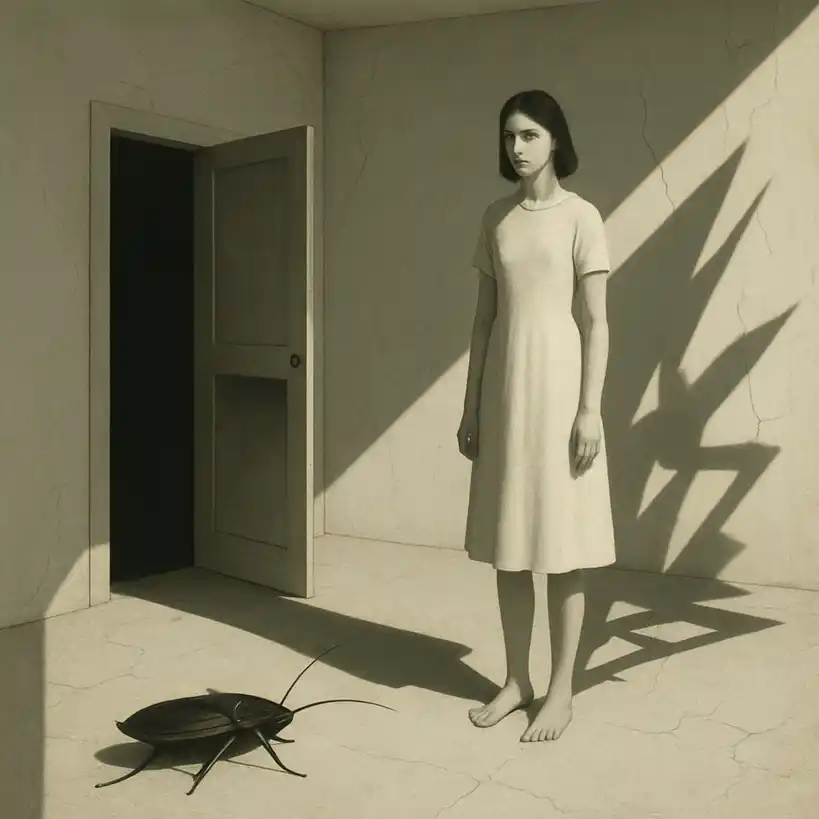
Room, roach, and revelation in The Passion According to G.H.
The novel narrows the stage to one voice and one room, yet the questions widen fast. She tries to speak herself back into form. However, each sentence meets matter and loses its mask. Language unlearns itself. Because symbols refuse service, perception learns to sit with what exists before names.
She studies the roach until fear turns lucid. Therefore, disgust no longer floats as mood; it anchors as fact. Presence replaces pose. The paste looks pale, and the pale looks holy without comfort. Meanwhile, memory sends edits, and she refuses them, since edits hide what the eye now holds.
Her faith undergoes an interior trial. She thought transcendence lived above the world. Instead, it waits inside the world, inside appetite, inside decay. Immanence alters prayer. Consequently, she wonders whether God speaks as substance, not as sentence. She wonders whether love begins when the self stops performing.
I like how Clarice Lispector ties ethics to looking. She stares without blinking; she narrates without escape hatches. Attention becomes mercy. Moreover, the diary pulse keeps heat close to skin, so abstract claims must earn their place. In The Passion According to G.H., the page asks for honesty at the speed of breath.
For a companion in inner seeing and the ethics of perception, the review nods to 👉 To the Lighthouse by Virginia Woolf, where a gaze rebuilds time and a household measures the spirit. The pairing clarifies a shared wager on detail. Therefore, the chapter closes with a vow: keep looking, keep speaking, and keep the self small enough to learn.
Body, voice, and the fracture of self
Heat gathers in the white room, and the mind begins to split along new lines. She hears a voice that sounds like hers and not hers. In The Passion According to G.H., the self loosens from habit and tries to stand without masks. Identity under pressure. She tests each belief against the stubborn fact of matter.
She thought class would protect dignity; however, the room denies rank. Body corrects fantasy. Hunger, breath, and sweat speak first, while etiquette arrives late. Therefore, she trusts sensation before she trusts story. Moreover, the insect’s paste keeps shining, and the shine refuses metaphor that would tame it.
Words change tasks. They stop performing, and they start bearing weight. Language learns honesty. Because lies require distance, she removes distance and lets nausea teach scale. Meanwhile, memory tempts revision, yet she blocks the impulse and chooses witness over elegance.
Fear keeps company with awe. She wants escape, although she also wants truth, so she stays. Courage sits still. Consequently, the room turns sacramental without comfort. The altar looks like a stain, and the liturgy sounds like breath. By contrast, the hallway offers relief that would erase knowledge.
I note how the book rehearses rebirth without drama. It rejects spectacle and favors exactness. In this novel, attention becomes an ethic that anyone can practice. Therefore, the scene ends not with triumph but with permission: live smaller, speak cleaner, and keep faith with what the eye can bear.
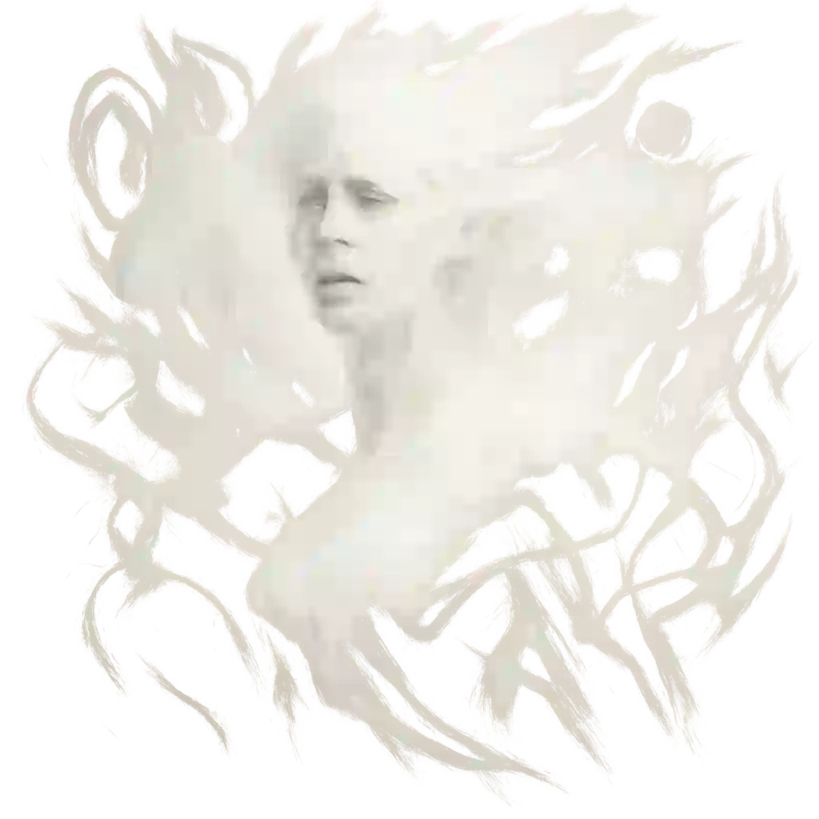
Creatureliness, sin, and the ethics of looking in The Passion According to G.H.
The encounter with the crushed roach keeps widening. She calls it sin to touch, then calls it sin to refuse the truth of touch. Matter challenges purity. Because purity often hides fear, she interrogates the word until it breaks into smaller duties.
Theology descends from the shelf. God stops serving as concept and starts pressing as substance. Immanence shocks prayer. Therefore, she wonders whether love requires nearness to what repels. Moreover, she tests this claim with breath rather than with doctrine.
Ethics arrives through verbs. She looks, waits, and names. Mercy follows attention. Meanwhile, shame speaks in old formulas, yet she answers with new grammar that includes insects, dust, and hunger. Consequently, the self grows porous, and dignity learns humility.
Art takes a seat in the room. She thought images separated life from feeling; however, the day proves the reverse. Vision remakes the viewer. As a result, the closet wall turns into a canvas that paints her back with a darker knowledge.
For a charged mirror on creatureliness, disgust, and the terror of change, the review points to 👉 The Metamorphosis by Franz Kafka. The pairing clarifies why revulsion often masks recognition. In The Passion According to G.H., the lesson concludes without comfort: keep looking until the world looks back, and accept that truth touches before it speaks.
Style, breath, and interior form
Sentences shorten, then swell, and the page begins to breathe with her. Sound turns into meaning before argument arrives. In The Passion According to G.H., style refuses decoration and chooses pulse. Form mirrors awakening. Words arrive as steps across a floor that still remembers dust.
She tests cadence the way a singer tests pitch. Consequently, clauses stretch until they reveal fear, then they contract until they reveal resolve. Language remakes self. Because rhythm carries thought past pride, confession earns detail that doctrine never grants. Moreover, images stop performing and start working.
Time loosens inside the room. A minute hosts a lifetime; a lifetime returns as a breath. Breath controls truth. Therefore, she counts inhales as arguments and exhales as revisions. Meanwhile, memory suggests alibis, yet attention blocks them and keeps the eye near the paste that started this trial.
Punctuation serves courage, not style. Periods give shelter; commas let risk continue. Smallness becomes strength. She writes to survive the moment without lying about it. Consequently, the voice stays narrow and exact, while the meaning grows large enough to include terror and mercy.
I value how the form keeps theory honest. Philosophy follows sensation, not the reverse. As the book advances, the prose models a conduct: speak after looking; stop when you flatter yourself; start again when the body can bear it. That ethic teaches as clearly as any plot could.
Thresholds, mirrors, and living parallels in The Passion According to G.H.
A doorway teaches more than a sermon here. She crosses it again and learns that perception changes objects as much as objects change perception. Parallels widen vision. Because the book trusts interior weather, comparison helps name the storm without stealing the room.
Identity sounds different in another key. For a southern house of mirrors where voice meets desire and childhood tests masks, the review points to 👉 Other Voices, Other Rooms by Truman Capote. Perception alters reality. The echo clarifies how rooms train selves, and how selves redraw rooms.
Another lens tests vision itself. When attention moves past habit and meets matter without slogans, experience shifts scale. Therefore, a brief nod to 👉 The Doors of Perception by Aldous Huxley maps how seeing can change the seer and the said. Solitude teaches law. She learns that the world writes rules inside the body before the mouth writes them on paper.
Comparisons stay tools, not anchors. They widen context, while her crisis keeps the center. Comparisons clarify stakes. Meanwhile, nausea keeps authority; prayer keeps curiosity; and the shell keeps shining like a stubborn thesis.
What returns, finally, is the vow to keep looking. In The Passion According to G.H., every mirror removes one excuse. Consequently, the page defends honesty against comfort, and the reader learns how to stand inside a room without turning away.
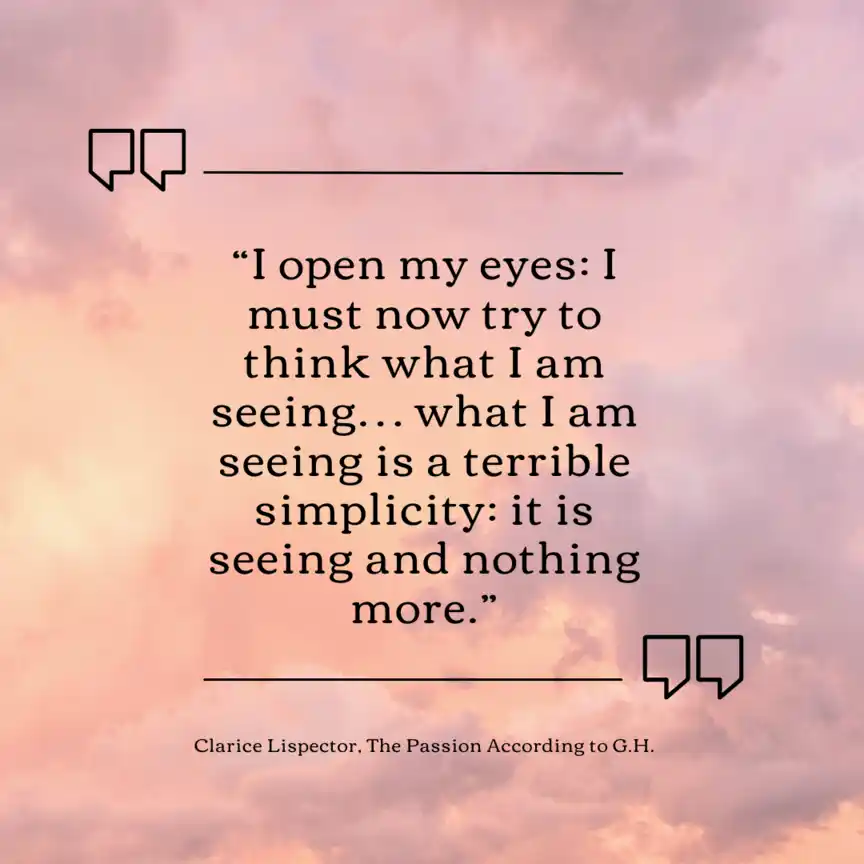
Cutting Quotes from The Passion According to G.H. by Clarice Lispector
- “Silence grows teeth when I refuse its lesson.” The room holds breath; therefore, she learns that quiet can bite until words tell the truth.
- “I touch the real, and my names fall away.” In The Passion According to G.H., contact breaks performance; consequently, language starts to work rather than pose.
- “Disgust opens a door that comfort nailed shut.” She leans closer, because fear hides the curriculum; moreover, the lesson arrives as matter, not metaphor.
- “Prayer begins when pride runs out of air.” The voice slows; therefore, breath carries sense, and the page stops flattering what it cannot prove.
- “I see the paste, and the soul stops pretending.” The novel insists on presence before symbols; meanwhile, symbols return only after they earn trust.
- “Smallness gives shelter to a true vocabulary.” She chooses fewer words; consequently, each word bears weight without decoration.
- “The body keeps faith while the mind negotiates.” She listens to pulse and heat; therefore, ethics arrives through verbs like look, wait, name.
- “Grace does not soothe me; it corrects me.” In this work, mercy feels stern; moreover, it demands nearness to what I once refused.
Interior Notes and Trivia from The Passion According to G.H.
- One room, vast stakes: The entire novel lives in a white apartment room; consequently, The Passion According to G.H. turns minimal space into maximal pressure.
- Shock as method: A crushed roach triggers the inquiry; therefore, the book treats disgust as a tool for stripping illusion from self and faith.
- Immanence over abstraction: God arrives inside matter rather than above it. For a philosophical primer on this shift, see 🌐 Stanford Encyclopedia — Phenomenology; the frame clarifies why presence outruns doctrine here.
- Women, looking, and voice: Interior vision remakes identity. As a counterpoint on gendered perception and social mirrors, compare 👉 Light in August by William Faulkner, which tests community judgment against embodied truth.
- Apophatic tradition: The book’s unsaying and silence echo negative theology, which approaches the divine by unspeaking claims; see 🌐 apophatic theology (Britannica)
- Traveling inward, traveling outward: Interior pilgrimage still meets the world. For a field report that turns observation into conscience, consider 👉 The Voices of Marrakesh by Elias Canetti; consequently, the pairing illuminates how looking reshapes the looker.
From disgust to communion
She edges nearer to what she crushed and refuses to retreat. In The Passion According to G.H., disgust loosens its hold and turns into contact. Abjection becomes door. Although nausea pounds, she keeps looking, because truth asks for nearness, not theory. Moreover, the room answers like a chapel with the lights still on.
She experiments with consent. She agrees to see what exists and to stop flattering herself. Humility learns courage. Therefore, she lets matter instruct spirit, and she lets breath set a discipline stricter than etiquette. Meanwhile, memory still tempts shortcuts, yet attention blocks them one by one.
The scene risks a form of communion. She imagines tasting the world she feared and hears the ancient scandal of incarnation. Matter touches spirit. Consequently, prayer stops floating and lands in saliva, salt, and grit. By contrast, the hallway still offers rescue that would erase learning.
Words earn new tasks as she speaks. They move slow, then they land clean. Language bears weight. Because she accepts creatureliness, love becomes possible without disguise. Furthermore, she forgives her earlier pose, since courage grows only after it leaves its costume on the chair.
I leave this section convinced that the novel teaches a skill. Look until the world looks back; stay until the body learns; speak only what the eye can carry. In this writing, grace does not arrive as comfort. Instead, grace arrives as exactness that refuses lies and asks the mouth to tell the truth of touch.
What the book asks of us in The Passion According to G.H.
The Brazilian author gives a small room and a vast assignment. The reader must slow down, listen to breath, and risk disgust. In The Passion According to G.H., the cost buys clarity. Attention becomes mercy. Therefore, the novel suits patient readers who value ethics over decoration and presence over plot.
Writers and artists will hear a craft manifesto. Form serves revelation. Because sentences track sensation before theory, the book models honesty that others can practice. Moreover, teachers can use its discipline to train description that respects bodies, places, and limits.
The book also fits readers who live close to faith and doubt. Immanence alters prayer. Although doctrine may tremble, love can grow when pride falls. Consequently, the ending feels stern and kind at once: live smaller, tell the truth, and let matter teach you how.
For a quiet urban counterpoint on masks, tenderness, and the ache of self-awareness, consider 👉 Those Without Shadows by Françoise Sagan. Comparisons clarify stakes. The pairing shows how rooms script identity and how honesty rearranges the script.
I close with why the work matters now. Screens still beg for speed; however, bodies still want care. In The Passion According to G.H., the self stops performing and starts attending. Stay with the real. As a result, the book becomes a guide: when fear rises, choose nearness; when words blur, choose breath; when pride shouts, choose the room.