The Possessed by Albert Camus: the Abyss of Absurdity
What I learned from The Possessed by Albert Camus
Reading the book was intense and thought-provoking. His exploration of radical ideas grabbed my attention immediately. The characters felt complex and driven, each with strong beliefs that clashed. I sensed the chaos and tension as their ideals pushed them toward extreme actions. The author painted a picture of a society on the edge, and it was both gripping and unsettling. Every chapter left me questioning their motives and choices.
As I read further, I felt caught up in the characters’ inner struggles. Their conflicts over justice, freedom, and power made me reflect on the consequences of unchecked passion. His storytelling made me feel the weight of each decision and its impact. By the end, I felt a mix of awe and unease at the story’s tragic turns. It was a powerful read that lingered in my thoughts.
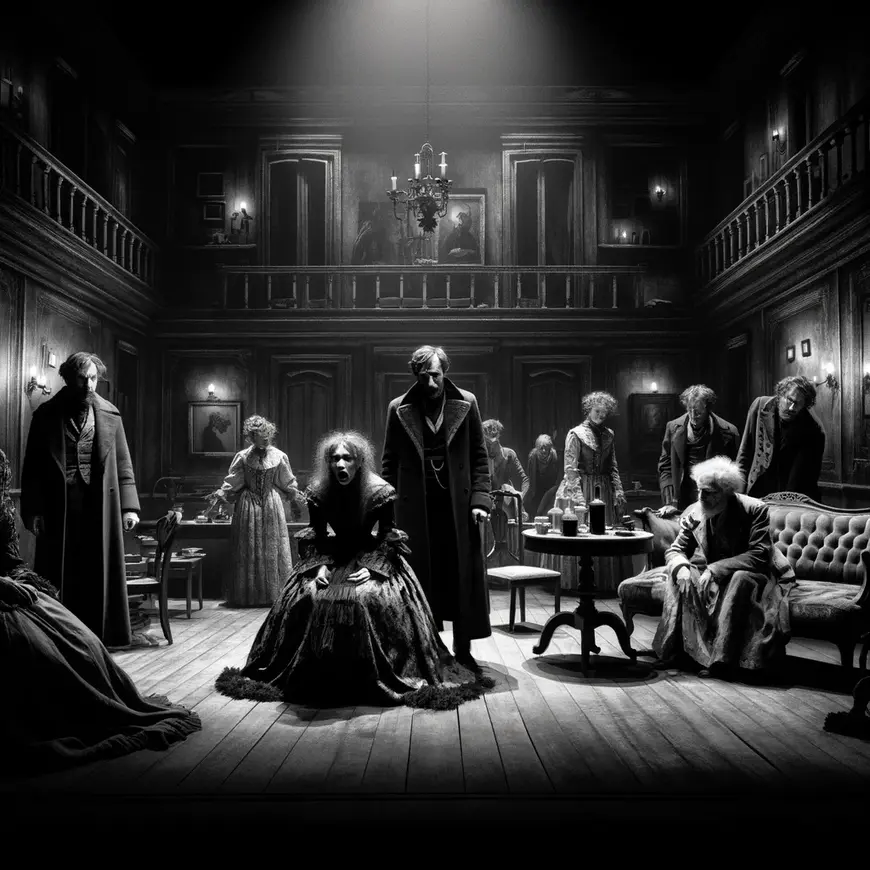
Albert Camus, the maestro of existential contemplation, takes readers on a gripping journey through the labyrinth of absurdity in his thought-provoking work. In this philosophical exploration, the writer weaves a narrative tapestry that unravels the complexities of the human condition, inviting readers to grapple with the existential questions that echo through the corridors of time. As we delve into the depths of his existential musings, The Possessed emerges as a compelling and accessible entry point into the enigmatic world of absurdism.
The renowned author of french literature, known for his exploration of the absurd, thrusts readers into a rollercoaster ride of existential angst in this writing. The narrative unfolds in the form of a philosophical detective story, where the protagonist, Victor Serge, becomes an unwitting investigator of the absurdity that permeates the human experience. From the mundane routines of everyday life to the grandiosity of political ideologies, he lays bare the absurdity that lurks beneath the surface.
The Possessed – A Rollercoaster Ride of Existential Angst
The play’s title, The Possessed, serves as a double entendre, hinting at both the political fervor of the characters and the existential possession that grips the human spirit. The philosopher masterfully navigates the complexities of ideology, rebellion, and the search for meaning, creating a narrative that resonates with readers across temporal and cultural boundaries.
At the heart of story is Victor Serge, a character who serves as the reluctant explorer of absurdity. As a former revolutionary who finds himself caught in the tangled webs of political intrigue, Serge becomes a mirror reflecting the existential dilemmas that define the human journey. Through Serge’s experiences he invites readers to confront the disquieting realization that the pursuit of noble ideals often leads to a collision with the absurd.
Serge’s internal struggles mirror the broader existential questions that pervade his body of work. His journey becomes a metaphor for the individual’s quest for authenticity in a world that oscillates between the tragic and the farcical. As readers accompany Serge through the twists and turns of his existential odyssey, they are compelled to confront their own relationship with the absurdity that colors their lives.
The writer engages with the political landscape of the 20th century. He unravels the contradictions at the intersection of ideology and absurdity. The characters, fervently committed to political causes, become pawns in a larger chess game. Here, the absurdity of human conflict takes center stage.
Camus’s Pen as a Sword of Absurdity
This dance of contradictions mirrors Camus’s broader philosophical inquiries. The pursuit of justice, equality, and freedom becomes entangled with human nature’s absurdity. It also highlights the inherent contradictions within political ideologies. Through the characters’ passionate commitments, he prompts readers to question utopian ideals’ feasibility. He also warns of the risks of being “possessed” by political fervor.
The author wields his pen like a sword in the adaption. His language cuts through human existence’s complexities. His prose is incisive and accessible, allowing readers to navigate philosophical terrain with clarity. His language dissects the absurdity in the characters’ lives and the broader human experience.
The clarity of his language bridges the philosophical and the everyday. He invites readers to engage with complex ideas while staying connected to their realities. As a wordsmith of the absurd, he uses language to explore existence’s nuances. This becomes a journey that is both intellectually stimulating and emotionally resonant.
The Possessed unfolds as a theatrical spectacle. His influence on the Theater of the Absurd is evident in the narrative’s structure and themes. The novel’s absurdity seamlessly lends itself to the dramatic stage. Characters grapple with their existence’s absurd nature in a world that defies reason.
The book influences the Theater of the Absurd, a movement including playwrights like Samuel Beckett and Eugène Ionesco. This underscores the impact on the cultural landscape. The novel serves as a precursor to mid-20th-century dramatic explorations of existential themes. It solidifies his place as a luminary in literature and philosophy.
The Search for Meaning: Existential Interrogation
At its core, The Possessed is an existential interrogation that transcends the boundaries of time. Camus, through the characters’ quests for meaning, prompts readers to confront the inherent absurdity of the human condition. The search for meaning becomes a recurring motif, echoing the broader existential inquiries that define his body of work.
As characters grapple with their own existential dilemmas, readers are invited to join the search for meaning within the framework of the absurd. The author does not provide easy answers; instead, he encourages readers to engage in the ongoing dialogue with the complexities of existence. The novel becomes a mirror reflecting the universal struggle to find purpose and significance in a world that often appears indifferent to human aspirations.
His essay The Myth of Sisyphus, where he famously declares that one must imagine Sisyphus happy, resonates as an undercurrent. The characters, despite their entanglements with the absurd, continue to grapple with life’s challenges and pursue their quests for meaning. The myth of Sisyphus becomes a metaphor for the human capacity to find purpose in the face of seemingly futile endeavors.
The exploration of absurdism aligns with the themes laid out in “The Myth of Sisyphus.” The novel becomes a testament to the resilience of the human spirit, urging readers to confront the absurdity of their own lives with a sense of defiance and purpose.
Individual Freedom vs. Collective Ideal
One of the central tensions in The Possessed is the conflict between individual freedom and collective ideals. The characters, driven by their convictions, grapple with this existential tug-of-war. Their political fervor often collides with the demands of collective ideologies. The philosopher, an advocate for individual freedom, uses the characters’ struggles to explore this complex dilemma. The novel becomes a canvas where personal autonomy and collective responsibility clash. This invites readers to reflect on their relationships with societal expectations.
Through these competing forces, the novel highlights the struggle for individual authenticity. Albert Camus encourages readers to consider how they balance personal autonomy with collective ideals. This reflection deepens the understanding of personal and societal dynamics.
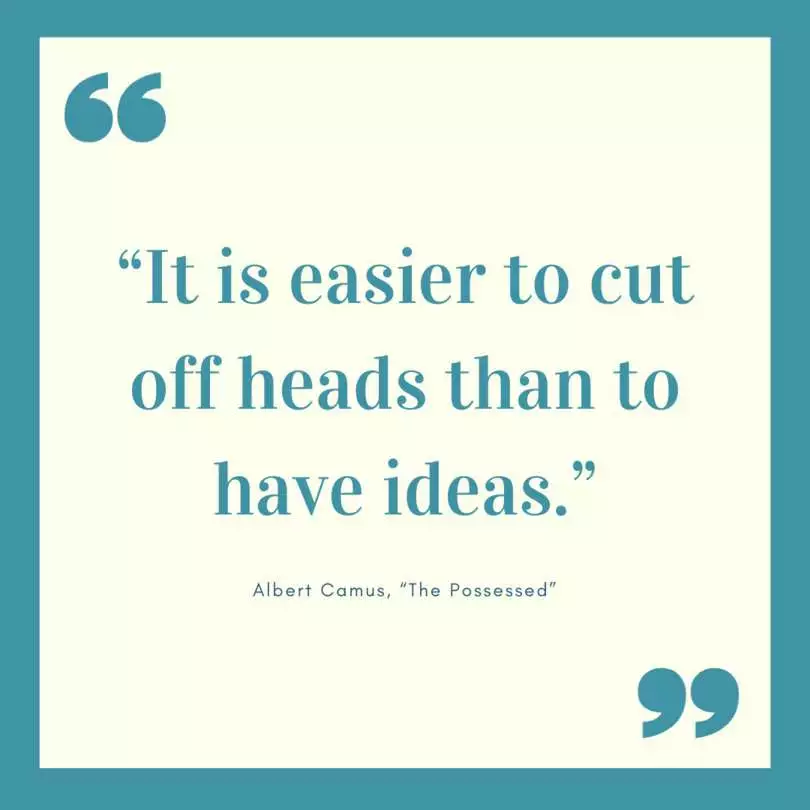
Famous Quotes from The Possessed by Albert Camus
- “The end justifies the means. But what if there never is an end? All we have is means.” This quote reflects the existential and philosophical questions central to his work. It challenges the idea of using any means necessary to achieve a goal by questioning whether such a goal (or end) ever truly exists. It suggests that our actions (the means) are what ultimately define us, rather than the achievement of a particular end.
- “The struggle itself towards the heights is enough to fill a man’s heart. One must imagine Sisyphus happy.” While this quote is originally from Albert Camus’ essay “The Myth of Sisyphus,” its philosophy resonates within The Possessed. It emphasizes finding meaning in the struggle and effort itself, rather than in the ultimate success or failure. This idea ties into the play’s themes of political and personal striving.
- “We are not free. And I will tell you why. Because everywhere there are those who are unfree, who are suffering, who are enslaved.” This quote speaks to the interconnectedness of human freedom and suffering. It highlights the social and moral responsibility individuals have towards others and underscores his belief in collective human solidarity. True freedom cannot exist while others are oppressed.
- “He who despises himself still respects himself as one who despises.” This paradoxical statement delves into the complexity of self-perception and self-worth. Even in self-loathing, there is a sense of pride or respect in the act of judgment. This reflects the deep psychological and philosophical exploration of human nature present in both Dostoevsky’s original novel and his adaptation.
Trivia Facts about The Possessed
- Based on Dostoevsky’s Novel: The Possessed, also known as “The Devils,” is an adaptation of Fyodor Dostoevsky’s novel. Dostoevsky’s original work deeply influenced him, especially its exploration of political and philosophical themes.
- Paris Premiere: His adaptation of the work premiered in Paris in 1959. Paris was a cultural and intellectual hub, where many of his works were celebrated and critically examined.
- Collaboration with Jean-Louis Barrault: The play was directed by Jean-Louis Barrault, a renowned French actor and director. Barrault was a significant figure in French theater and worked closely with Camus to bring the adaptation to life.
- Influence of Existentialism: The adaptation reflects his existentialist philosophy, which he developed alongside other famous writers like Jean-Paul Sartre. Both used their works to explore themes of meaning, freedom, and the human condition.
- Link to Russian Literature: Albert Camus was heavily influenced by Russian literature, particularly the works of Dostoevsky and Leo Tolstoy. This adaptation shows his admiration for Dostoevsky and his desire to bring Russian literary themes into a contemporary French context.
- Performed in Major Cities: After its Paris premiere, it was performed in several major cities around the world, including New York and London. These performances helped spread his interpretation of Dostoevsky’s work to an international audience.
Laughter in the Face of Absurdity
The work embraces the tragicomic nature of existence, where laughter and absurdity coexist in a delicate dance. With his keen understanding of the human psyche, infuses the narrative with moments of humor that punctuate the gravity of the characters’ struggles. The laughter within the novel becomes a coping mechanism—a defiant response to the absurdity that threatens to engulf the characters.
His ability to navigate the delicate balance between tragedy and comedy adds a layer of richness to the work. The novel becomes a testament to the human capacity to find humor in the face of adversity, underscoring his belief in the resilience of the human spirit even in the midst of existential turmoil.
The book contributes to his enduring legacy as a beacon in the darkness of absurdity. His exploration of existential themes, political contradictions, and the search for meaning resonates with readers across generations. The influence extends beyond the realm of literature, permeating philosophical discourse, theatrical expression, and the broader cultural landscape.
As readers engage with The Possessed, they embark on a journey that transcends the confines of fiction. Camus, with his pen as a guide, beckons readers to confront the absurdity of their own lives and embrace the complexities of existence with a sense of introspection and defiance. This writing remains a literary gem that continues to captivate and challenge those who dare to navigate the abyss of absurdity alongside the novelist and his characters.