The Salon by Heinrich Heine: Wit and and the Mind of a Rebel
Reading The Salon by Heinrich Heine is like stepping into a bustling, lively room filled with wit, intellect, and sharp observation. Published between 1834 and 1840, The work is a collection of essays, reflections, and critiques that explore literature, art, and society in early 19th-century Europe. The author, known for his razor-sharp humor and rebellious spirit, uses this work to showcase his unique voice and his deep understanding of European culture.
His writing sparkles with wit and intelligence. He blends personal anecdotes with keen social commentary, making you feel like you’re in conversation with a brilliant friend who always has something interesting to say. This isn’t just a book about art and literature; it’s a glimpse into the turbulent, exciting world of his mind. It’s part travelogue, part cultural critique, and part satire—a delightful mix that kept me entertained and thinking.

The Salon – A Journey Through Ideas and Places
Unlike traditional books with a linear plot, The Salon is more like a collection of thought journeys. Heinrich Heine organizes his work into different sections, each with its own focus. He discusses art exhibitions, literature, history, and even politics. The book opens with essays about Parisian art salons—hence the title. These salons were places where artists, writers, and thinkers gathered to showcase their work and exchange ideas.
He takes us on a tour of these salons, describing paintings, sculptures, and the atmosphere of artistic Paris. He doesn’t just describe what he sees; he interprets it, offering sharp insights and often hilarious commentary. His observations about artists and their works are more than critiques—they’re reflections on the state of European culture.
Later sections dive into broader topics. The poet reflects on the works of German writers like Goethe and explores themes of revolution and social change. He writes about his travels, blending personal experience with philosophical musings. Each essay feels like a conversation that moves fluidly from one topic to another. There’s no strict structure, but that’s what makes the book engaging. You never know where his mind will go next.
Art, Politics, and the Power of Satire
One of the strongest themes in The Salon is the relationship between art and society. The author believes that art is never just about beauty; it reflects the culture, politics, and struggles of its time. As he discusses paintings and literature, he constantly draws connections between the artistic world and the real world. This made me think about how art influences society and vice versa.
Political and social critique is another central theme. He lived during a time of upheaval and revolution in Europe. His writing is filled with reflections on freedom, oppression, and change. He doesn’t shy away from critiquing governments, institutions, and even his fellow writers. His sharp, satirical tone makes these critiques both insightful and entertaining. The writer’s rebellious spirit shines through, making me feel his passion for justice and progress.
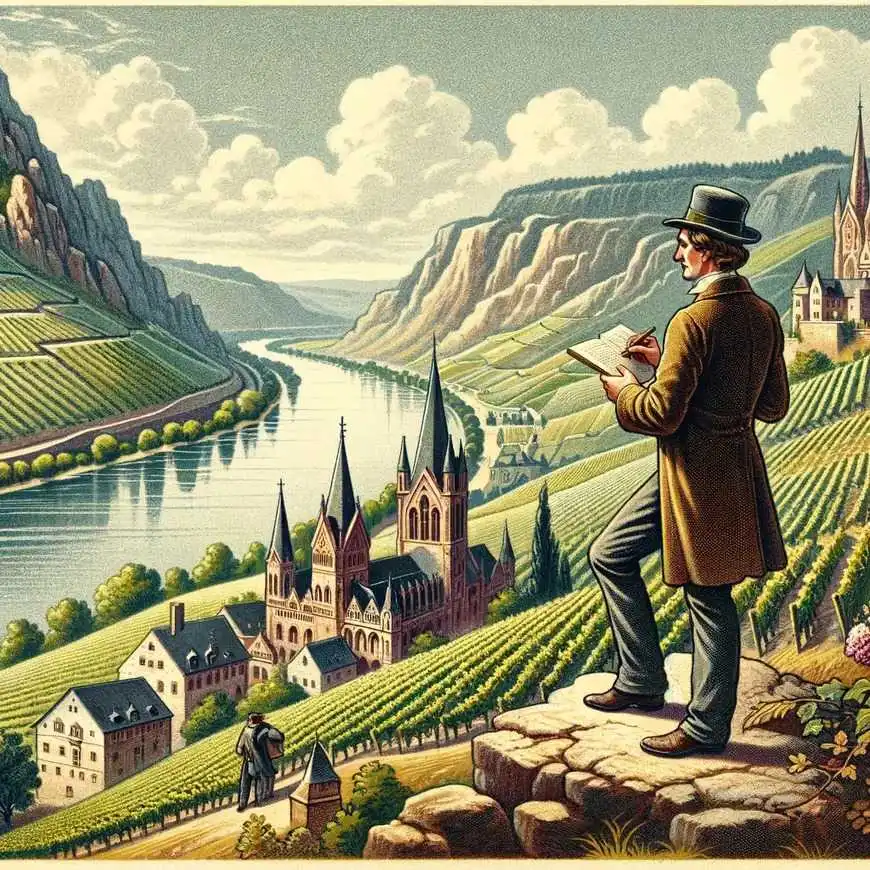
The motif of the flâneur, or the wandering observer, runs through the book. Heine takes on the role of a flâneur, strolling through art salons, cities, and ideas, observing everything with a critical eye. This perspective gives the book a sense of freedom and spontaneity. His curiosity is infectious, and his observations made me want to look at the world more closely.
Another key motif is satire and humor. The poet’s wit is biting and often hilarious. He uses humor to expose hypocrisy, pretension, and folly. His jokes aren’t just for laughs—they carry deeper truths. This mix of humor and insight kept me engaged and often made me smile, even when the topics were serious.
The Many Faces of the poet
In the book, the central “character” is Heinrich Heine himself. He is more than just a narrator or commentator; he’s a vibrant, multifaceted presence throughout the book. His personality shines through in every essay. He’s witty, rebellious, passionate, and sometimes sarcastic. He’s a thinker who questions everything, a critic who doesn’t hold back, and a traveler who absorbs the world around him.
His voice is what makes the book special. His observations are sharp and often unfiltered. He has no patience for pretentiousness or mediocrity. Whether he’s discussing a painting, a writer, or a political issue, he speaks with conviction and flair. I found his honesty refreshing, even when he was being brutally critical. He doesn’t aim to please everyone; he aims to tell the truth as he sees it.
The poet also reveals his more thoughtful, introspective side. In his reflections on art and society, you can sense his deep love for culture and his frustration with the world’s injustices. He’s not just a critic; he’s someone who cares deeply about freedom, beauty, and progress. This mix of wit and sincerity makes him a compelling figure.
The people he writes about—artists, writers, and politicians—also come alive through his descriptions. The writer doesn’t just analyze their work; he sketches their personalities, their quirks, and their flaws. His sharp observations make these figures feel real and immediate, as if you’re meeting them through Heine’s eyes.
Wit, Elegance, and Free-Flowing Thought in The Salon
Heine’s writing style is one of the highlights of The Salon. His prose is elegant, witty, and full of life. He blends sharp analysis with playful humor, making even complex ideas feel accessible. His sentences are often short and punchy, filled with clever turns of phrase. This makes the book feel lively and engaging, never bogged down by heavy academic language.
The structure of this work is fluid and open-ended. There’s no strict narrative; instead, the book is divided into essays and reflections that flow from one topic to another. This gives it a sense of spontaneity, like a series of conversations with Heine. One moment he’s discussing a painting, and the next he’s reflecting on revolution or philosophy. This free-flowing structure kept me on my toes, eager to see where his mind would wander next.
The use of satire is another defining feature of his style. He has a gift for irony and sarcasm, which he uses to great effect in his critiques. His humor is often pointed, aimed at exposing hypocrisy and pretension. But his satire isn’t mean-spirited; it’s driven by a desire for truth and justice. This balance of humor and sincerity gives his writing depth and richness.
The author also uses vivid imagery and metaphors to bring his observations to life. His descriptions of art, people, and places are colorful and evocative. I could easily picture the scenes he described, whether it was a crowded art salon in Paris or a quiet moment of reflection. His imagery adds a layer of beauty to his sharp critiques.

Famous Quotes by Heinrich Heine, Author of The Salon
- “Where they burn books, they will, in the end, burn people too.” The author warns about the dangers of censorship and oppression. Destroying ideas leads to violence against people. This quote shows how freedom of thought and human rights are deeply connected.
- “Thought flies and words go on foot. That is why writing is often like a long, long journey.” This quote reflects the slow process of turning thoughts into writing. Ideas come quickly, but expressing them clearly takes time. The philosopher highlights the patience and effort needed to communicate thoughts effectively.
- “The tree of liberty only grows when watered by the blood of tyrants.” Heinrich Heine emphasizes that freedom often requires sacrifice. People must fight against oppression to achieve liberty. This quote shows his belief that true freedom comes through struggle and bravery.
- “Great geniuses have the shortest biographies.” The poet suggests that truly great minds are defined by their work, not their lives. Their achievements speak for themselves. This quote highlights the idea that actions and creations matter more than personal details.
- “Music is a strange thing. I would almost say it is a miracle.” He expresses his deep admiration for music. To him, music has the power to communicate emotions beyond words. This quote shows his belief in the magical and transcendent nature of art.
- “A man without passion is only a latent force, only a possibility, like a piece of coal that is not yet burning.” This quote stresses the importance of passion in life. Without it, people remain inactive or unrealized. The writer shows that passion is what turns potential into action and purpose.
Trivia Facts about The Salon
- Connection to Paris: He wrote much of The Salon while living in Paris. He moved there in 1831 and immersed himself in the city’s rich intellectual and artistic culture. Paris deeply influenced his work, and its vibrant salons inspired his reflections.
- Influence of Goethe: Heinrich Heine admired Johann Wolfgang von Goethe, one of Germany’s greatest writers. He often referenced Goethe’s works when discussing Romanticism.
- Friendship with George Sand: In Paris, he became friends with the famous French writer George Sand. Sand’s progressive ideas and literary style impacted his own writing.
- Connection to the Romantic Movement: The poet was a part of the German Romantic movement but often criticized its excesses. In The Salon, he praises and critiques Romantic ideas, offering a balanced perspective. His unique voice helped bridge Romanticism and modern thought.
- Influence of the French Revolution: The poet was inspired by the ideals of the French Revolution: liberty, equality, and fraternity. In The Salon, he reflects on these values and how they shaped European society. His political views often appear in his cultural criticism.
- Criticism of German Censorship: The author faced censorship in Germany due to his political views. This pushed him to write more freely in Paris.
- Connection to the Louvre Museum: He often visited the Louvre while living in Paris. His essays in The Salon include discussions of artworks housed in the museum.
- Influence of Hegel’s Philosophy: Heinrich Heine was influenced by the German philosopher Georg Wilhelm Friedrich Hegel.
- Published in French and German Literary Circles: The Salon was widely read in both French literature and German literary circles. It helped Heine gain recognition as a key European intellectual.
A Rebel Ahead of His Time
When this work was first published, it sparked both admiration and controversy. Critics praised his wit, intelligence, and fearless critique of society. His ability to blend humor with serious analysis made him stand out in the world of 19th-century literature. However, his sharp tongue and rebellious spirit also earned him enemies. Some saw his satire as disrespectful or even dangerous.
Over time, the writer’s work has come to be recognized as a masterpiece of cultural critique. His insights into art, literature, and society remain relevant today and his willingness to question authority and challenge the status quo makes him a timeless figure. His work paved the way for future writers who used satire and wit to critique society.
For me, reading The Salon was both enjoyable and thought-provoking. Heine’s voice is so vivid that I felt like I was having a conversation with him. His wit made me laugh, his critiques made me think, and his passion for justice inspired me. I admired his courage to speak his mind, even when it meant challenging powerful institutions.
What struck me most was his ability to connect art and society. He showed me that art isn’t just about aesthetics; it’s about reflecting and shaping the world we live in. His insights made me see the connections between culture, politics, and human nature in a new light.
A Timeless Critique for Curious Minds
The book is more than just a collection of essays; it’s a lively exploration of art, society, and human nature. Heine’s wit, intelligence, and rebellious spirit make this book a joy to read. His sharp observations and satirical humor keep the tone light, even when he’s tackling serious issues. If you enjoy thought-provoking writing, sharp wit, and cultural critique, The Salon is a must-read.
This book is perfect for readers who love literature, art, and history. It’s also a great choice for anyone interested in the connections between culture and society. His insights are as relevant today as they were in the 19th century, making The Salon a timeless work.
In the end, The Salon is not just a critique of 19th-century Europe; it’s a reminder of the power of wit, honesty, and the human spirit. It invites us to question, to laugh, and to think deeply about the world around us.
More Reviews of Heine’s Works