The Time of the Hero by Vargas Llosa – Illusions of Discipline
The Time of the Hero by Mario Vargas Llosa opens with the brutal world of a military academy in Lima. From the start, it dismantles the idealized image of discipline, honor, and duty. Inside these walls, cruelty thrives. Loyalties fracture. Violence hides beneath uniforms. This is not a story about building character. It’s about breaking it.
The Leoncio Prado Military Academy serves as more than a setting. It functions as a microcosm of Peruvian society. Here, corruption doesn’t come from a few bad actors. It’s systemic. Students learn early that survival depends not on excellence but on manipulation, silence, and alliances. The author shows how young men absorb this lesson and carry it into adulthood.
The novel doesn’t follow a traditional plot. Instead, it shifts perspectives, voices, and timelines. These fractured narratives mirror the fragmented morality of the characters themselves. Truth isn’t clear. Heroes aren’t pure. The institution, meant to uphold order, breeds chaos.
👉 Blind Orion by Claude Simon also uses fractured storytelling to reflect how institutions distort reality. Both novels understand that systems shape individuals in ways that often remain unseen. His writing here is sharp, unsentimental, and precise. He peels away illusions until only the raw struggle for power remains.
Mario Vargas Llosa’s Portrait of Corruption – The Time of the Hero
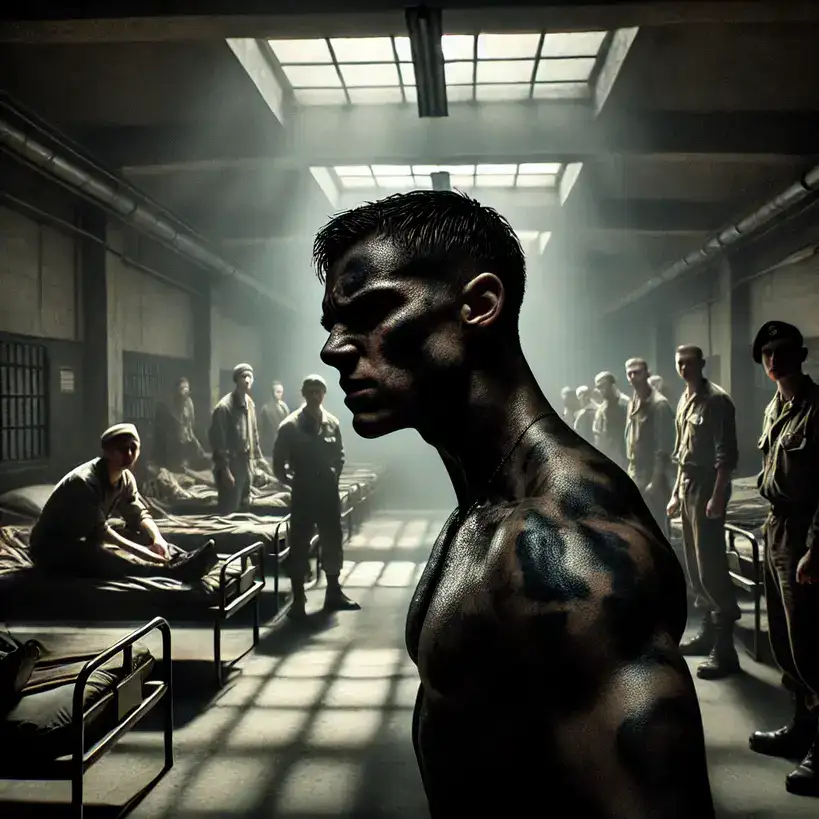
The novel The Time of the Hero isn’t just about a school. It’s about the entire structure of authority, military, political, familial, and how it crushes those inside it. Inside this novel, Mario Vargas Llosa exposes how discipline often disguises cruelty. What looks like order from the outside is revealed as rot from within.
The cadets are not innocent boys corrupted by circumstance. They are willing participants in a world where betrayal is currency. The novelist avoids romanticizing them. He shows their casual violence, their racism, their thirst for dominance. In this way, the academy mirrors the authoritarian regimes of Latin America.
At the heart of the story is the theft of an exam, an act that triggers punishment, cover-ups, and ultimately tragedy. But this plot point matters less than what it reveals: a culture where survival means silence, and where justice is always selective.
👉 Blindness by José Saramago shares this examination of societal breakdown. Both authors strip away layers of civilization to reveal how quickly cruelty surfaces. His sentences carry weight. There’s no wasted motion. His words cut through pretense, exposing how systems create victims and call them heroes.
Masculinity, Power, and Violence
Masculinity in The Time of the Hero is inseparable from violence. Inside the academy’s walls, power is asserted through fists, insults, and domination. Weakness is punished. Sensitivity is ridiculed. The boys learn that survival means mastering cruelty. This distorted masculinity reflects a larger social sickness, one that extends beyond the gates of the school into the world outside.
Mario Vargas Llosa doesn’t offer easy villains. His characters are shaped by the system as much as they contribute to it. The abuse they suffer becomes the abuse they inflict. There is no escape from this cycle, only adaptation. Some blend in and some rebel. Some break.
At the center of this toxic environment is “The Jaguar,” a cadet who embodies the school’s brutal code. He commands fear, not respect. Yet even he is trapped by the institution’s expectations, unable to imagine life outside these rules. Through him, the novelist reveals how systems of violence consume not just their victims, but their champions as well.
👉 Bonjour Tristesse by Françoise Sagan explores similarly destructive expectations, though in a very different setting. Both novels show how environments shape young minds, often in ways they cannot fully resist. His critique is not just about institutions. It’s about the people who let them thrive. Silence and complicity build these walls as surely as bricks.
A Structure Reflecting Chaos
The structure of The Time of the Hero mirrors its themes. Shifting timelines, multiple narrators, fragmented memories, inside this disjointed narrative is a portrait of disorder hidden beneath uniforms and rituals. Mario Vargas Llosa refuses to offer clarity because clarity doesn’t exist within this world. Truth slips between perspectives. Justice is always unfinished.
The reader is placed in the same position as the cadets: trying to make sense of events through rumor, gossip, partial confessions. The theft of the exam paper is a minor crime, but it reveals deeper fractures, among students, among teachers, within the institution itself. Betrayal is everywhere. Loyalty is a myth.
His choice to blur timelines and voices challenges the reader to see beyond plot. It’s a system to be understood. Each thread leads back to the same conclusion: discipline is a mask worn by fear and hypocrisy.
👉 Germany. A Winter’s Tale by Heinrich Heine also dismantles illusions through shifting tones and voices. Both works ask readers to question what is presented as stable or true. The Time of the Hero demands attention, not for spectacle, but for its relentless stripping away of pretense. What remains is not heroism. It is survival.
Breaking Illusions of Discipline
At its heart, The Time of the Hero is about exposure. Inside this novel, Mario Vargas Llosa reveals how institutions that preach discipline often hide disorder beneath rituals and uniforms. The military school teaches obedience, but what it really cultivates is cynicism, cruelty, and hypocrisy.
This dismantling of illusion was scandalous at the time of publication. In Peru, military institutions were sacred, seen as the backbone of order and patriotism. His unflinching portrayal shattered that image. The academy punishes not crime but disobedience, not violence but visibility. Appearances matter more than truth. The school’s survival depends on covering up its own corruption.
Students internalize this lesson. They carry it beyond the barracks into the wider world, becoming the future officers, politicians, and businessmen who continue cycles of violence and silence. The book shows how systems reproduce themselves through those they break.
👉 All Quiet on the Western Front by Erich Maria Remarque offers a parallel in its portrayal of military life’s dehumanizing effects. Both novels reject romanticized visions of honor. The writing strips away the surface to reveal what institutions fear most: their own emptiness. Discipline here is not strength.
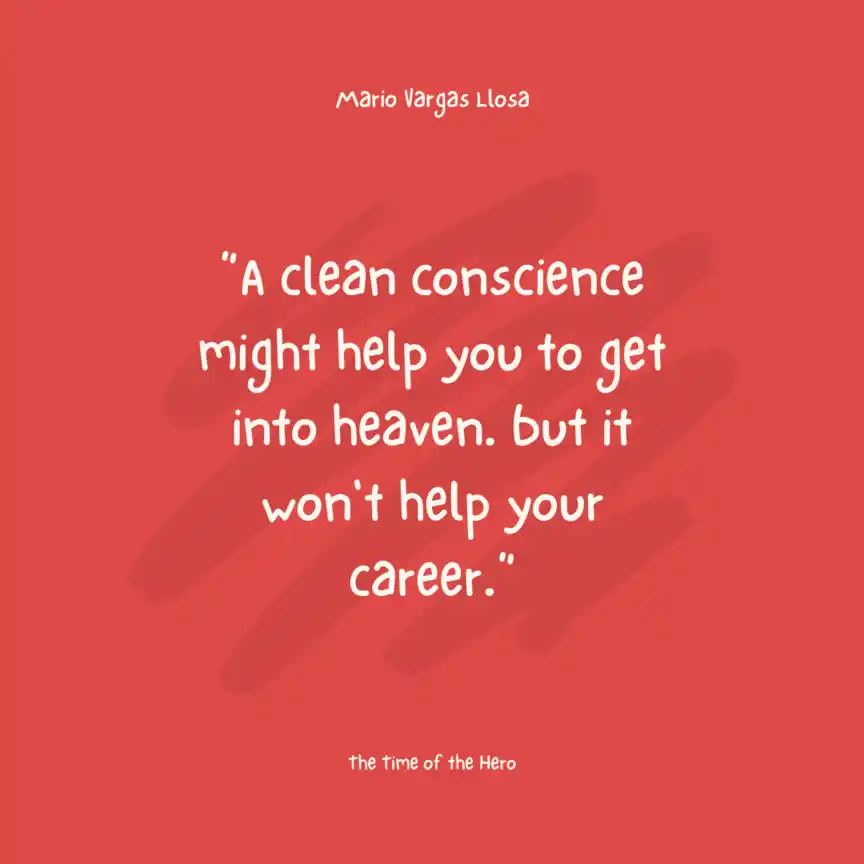
Quotes from The Time of the Hero
- “It’s not the crime that matters, it’s getting caught.” This captures the academy’s true values. Appearances matter more than justice. Punishment comes not for wrongdoing, but for exposure.
- “They trained us to obey, not to think.” Vargas Llosa reveals how institutions suppress individuality. Obedience replaces thought. Discipline masks fear.
- “The school doesn’t punish violence, it punishes scandal.” Authority here fears visibility, not harm. Silence protects power. Scandal threatens it.
- “The uniform covers everything.” The uniform becomes a shield against accountability. It hides weakness, cruelty, and failure.
- “Rules are for those without power.” This reflects the academy’s hypocrisy. Those in charge rewrite the rules to suit themselves.
- “Fear is more powerful than loyalty.” Obedience stems from fear, not respect. Fear binds the cadets tighter than any code.
- “They teach us to survive, not to live.” Survival requires sacrifice of self. The academy molds people for endurance, not happiness.
- “Truth doesn’t matter if no one speaks it.” Silence protects corruption. Speaking truth becomes the first act of rebellion.
Trivia Facts about The Time of the Hero by Mario Vargas Llosa
- Banned by the Peruvian Military: Upon publication, The Time of the Hero was banned in Peru. The military academy publicly burned copies, calling it slanderous.
- Inspired by his Own Schooling: The Leoncio Prado Military Academy is based on Vargas Llosa’s own experience. He wrote from lived observation, not imagination.
- Parallels with The Book of Imaginary Beings: Both books explore systems of classification and control, though Jorge Luis Borges does so through myth and the author through realism.
- Echoes of Brave New World: Like Aldous Huxley, Vargas Llosa critiques systems that suppress individuality under the guise of stability and order.
- Shared Themes with Breakfast at Tiffany’s: Though wildly different in tone, both books explore escape from societal expectations. His world punishes escape. Truman Capote’s celebrates it.
- Legacy in Latin American Literature: The Time of the Hero helped establish his reputation as a leading voice in Latin America’s literary boom.
- Referenced in Military Histories: The book’s accuracy about military abuse has been cited in academic studies on authoritarianism and education (source).
- Shaped by Political Upheaval: The author wrote amid Peru’s shifting politics, embedding real anxieties about power into his fiction.
- Continues to Influence New Writers: Authors tackling themes of authority, youth, and corruption often cite his novel as formative.
Why This Novel Still Resonates
The Time of the Hero remains relevant because it speaks to any system where power corrupts and silence protects. Inside this story of cadets and colonels is a universal truth: authority often hides its failures behind rituals and uniforms. Mario Vargas Llosa understood that these structures survive through complicity and fear, not through justice or merit.
The impact of this novel reaches beyond literature. It forced readers to confront uncomfortable truths about their own societies. It challenged the narrative that institutions serve the people when they often serve only themselves.
Even today, in different forms and places, the patterns the writer exposes repeat. Institutions built on fear and silence still thrive. The Time of the Hero teaches us to question appearances, to listen for the silences that reveal rot beneath ceremony.
The work stands as a warning: institutions rarely reform themselves. They break those inside them before they break themselves. To survive them, one must first see them clearly.
Breaking Through the Silence
Reading The Time of the Hero feels like pulling back a curtain. What seems structured and disciplined is revealed as chaotic and violent. Inside this story, Mario Vargas Llosa exposes the gap between what institutions claim and what they create. His cadets do not emerge noble. They emerge hardened, cynical, and shaped by fear.
His debut was bold. It challenged not just the Peruvian military but the very idea that authority deserves respect simply because it demands it. His critique cuts deeper because it speaks universally. Corruption disguised as discipline, power maintained through fear, these are not Peruvian problems alone.
The novel doesn’t offer solutions. It offers clarity. It shows how institutions create silence and call it peace. How they mold cruelty and call it strength. To break free, one must first recognize the system’s lies.
The work endures because it reminds us: survival inside broken systems requires more than obedience. It requires seeing clearly, speaking honestly, and refusing to let silence win.