Historical Fiction and the Stories That Shape Our Past
History feels distant until a story pulls us close. Historical fiction does exactly that. It takes real times and places, then builds living, breathing narratives around them. We meet people who never existed and yet feel true. We walk into markets, battlefields, salons, and kitchens that once stood. And we care, because the past suddenly sounds like a voice in the next room.
Readers return to this genre because it delivers emotion and context together. We learn while we feel and we compare our present to earlier centuries. We recognize patterns and also see how small choices change lives. The genre thrives across forms, from intimate family dramas to sweeping epics. It travels through courts and colonies, through revolutions and quiet towns.
Writers choose historical fiction for a different but related reason. The past offers boundaries that spark creativity. Records exist, but gaps remain. Those gaps invite craft, research, and imagination. A good novel finds the human pulse in the archive. It respects sources. It also builds scenes that official records could never hold.
This article traces the genre’s growth, defines its traits, explores its subgenres, and reveals why it captivates readers. We’ll examine the challenges for writers, highlight notable works, and consider its role today. Along the way, we’ll see how historical fiction matters because it makes memory active. And when memory is active, we understand our present more fully.
Historical Fiction as a Literary Genre
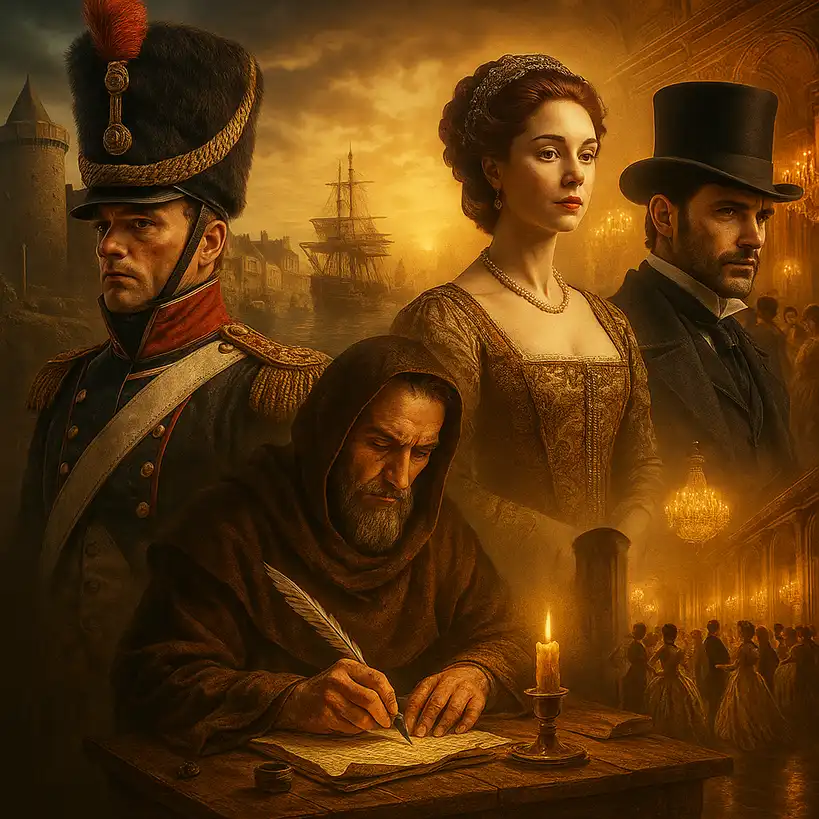
At its simplest, historical fiction is narrative prose set in a real past, written with care for period detail and social texture. The story is invented, yet the time, place, and atmosphere must feel accurate enough to trust. Accuracy does not mean excessive fact-dumping. It means selecting the right signals: clothing, speech rhythms, laws, faith, food, work, and power structures.
Authors usually start with research. They read letters, diaries, newspapers, maps, legal records, and visual art. They study how people moved, traded, married, and died. Then they choose a focus. Some novels follow private lives during public crises. Others show how policy and war reshape ordinary routines.
The genre also relies on plausible voice. Dialogue should not sound modern unless the book has a clear reason for it. Yet it should remain readable. Good writers balance period flavor with present clarity. They avoid anachronisms that break trust.
Finally, historical fiction blends truth and imagination responsibly. Authors may compress timelines or invent composite figures, but they signal context inside the prose. They choose moments that illuminate the age, not just decorate it. They allow ambiguity where the record is silent. In this way, the genre becomes a disciplined art. It brings the archive to life, and it does so with integrity, empathy, and narrative drive.
Most Famous Works in Historical Fiction
- War and Peace — Leo Tolstoy
- Wolf Hall — Hilary Mantel
- The Name of the Rose — Umberto Eco
- A Tale of Two Cities — Charles Dickens
- The Pillars of the Earth — Ken Follett
- I, Claudius — Robert Graves
- The Red and the Black — Stendhal
- The Three Musketeers — Alexandre Dumas
- Doctor Zhivago — Boris Pasternak
- The Leopard — Giuseppe Tomasi di Lampedusa
Award-Winning Historical Fiction of the Last Decade (2016–2025)
- The Underground Railroad — Colson Whitehead
- Lincoln in the Bardo — George Saunders
- Milkman — Anna Burns
- Hamnet — Maggie O’Farrell
- The Night Watchman — Louise Erdrich
- The Promise — Damon Galgut
- The Seven Moons of Maali Almeida — Shehan Karunatilaka
- Trust — Hernan Diaz
- Night Watch — Jayne Anne Phillips
- The Safekeep — Yael van der Wouden
Origins and Evolution of Historical Fiction
The roots of historical fiction stretch far back. Ancient epics like The Iliad and The Aeneid already mixed history and myth, creating narratives that celebrated past events while adding poetic invention. But the genre, as we recognize it today, took shape much later. The 19th century brought a wave of novels that treated the past with both research and narrative sophistication. Writers such as Sir Walter Scott became pioneers, presenting rich depictions of earlier centuries through works like Waverley, which inspired generations of authors across Europe.
During this period, historical fiction served not only as entertainment but also as a cultural unifier. Many nations in the midst of political change turned to historical novels to explore their origins and identity. The genre allowed readers to revisit revolutions, dynastic struggles, and moments of reform through a human lens. In France, authors like Alexandre Dumas captured adventure within precise historical backdrops, while in Russia, Leo Tolstoy brought epic realism to monumental works such as War and Peace.
The 20th century expanded the boundaries of historical fiction. Authors began to explore not only grand events but also the intimate consequences of history—how wars, migrations, and political shifts altered the fates of individuals. Modernist and postmodernist writers experimented with narrative form, sometimes questioning the very nature of historical truth. Today, the genre thrives in both literary and commercial fiction, with authors worldwide drawing on global histories, forgotten episodes, and marginalized voices.
Its evolution shows a constant dialogue between fact and interpretation. Each era’s historical fiction reflects the questions its readers are asking—about the past, about the present, and about how the two shape each other.
Core Characteristics of the Genre
Strong historical fiction stands on three foundations: authenticity, character depth, and narrative tension. Authenticity comes from detailed, accurate worldbuilding. This includes more than clothing or architecture—it extends to social customs, belief systems, economic realities, and the small daily routines that reveal how people lived.
Character depth ensures the story resonates. Historical settings may be unfamiliar, but emotions are universal. Love, ambition, fear, and loyalty cross centuries. Characters in historical fiction must be both of their time and relatable to ours. They should think and act according to the constraints and opportunities of their era, yet their desires and struggles should still strike a modern chord.
Narrative tension keeps the pages turning. While history provides the framework, the plot must engage through conflicts and stakes. This can be a battle’s outcome, a political intrigue, or the quieter suspense of personal survival. The best novels weave these threads together—personal dramas playing out against sweeping historical change.
One challenge here is balance. Too much historical exposition risks slowing the pace. Too little risks losing credibility. Skilled writers choose details that carry both atmosphere and meaning. In 👉 The Confessions of Felix Krull by Thomas Mann, for example, the charm of the conman is heightened by the vivid evocation of early 20th-century Europe. Readers remember the character, but they also remember the texture of the world he inhabits.
Major Subgenres and Styles
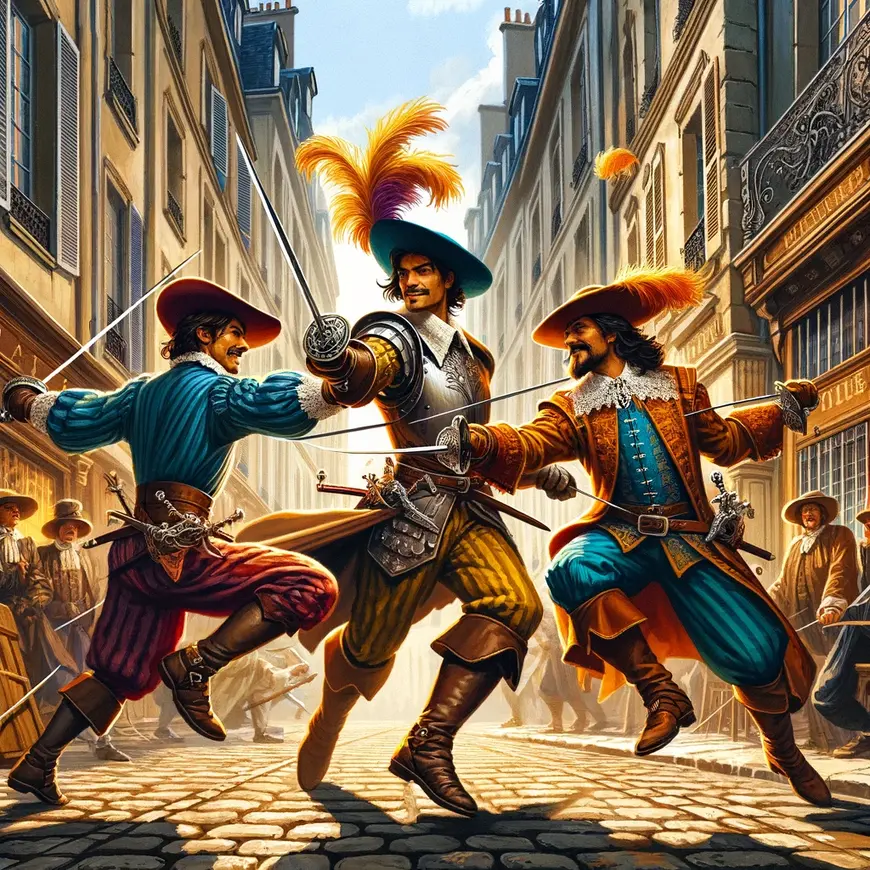
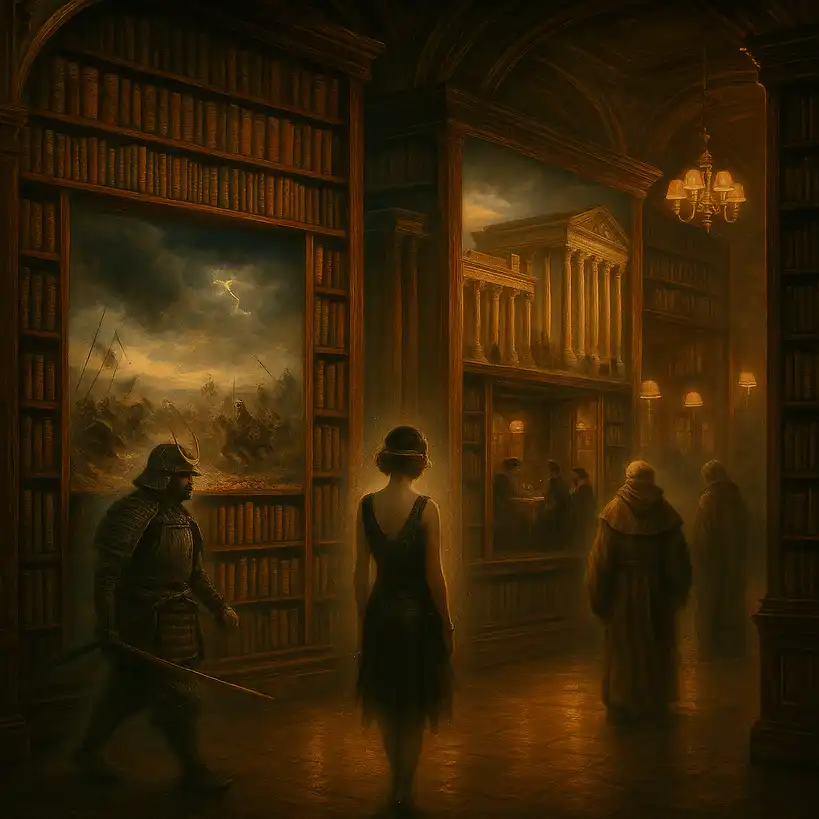
Historical fiction is not a single form—it’s a broad field with distinct subgenres, each attracting its own audience. One of the most enduring is historical romance, where love stories unfold within the pressures of the past. Another popular branch is the historical adventure, where action, exploration, and danger take center stage.
Mystery also finds a natural home in historical settings. A historical mystery builds tension from crimes committed in times without modern forensics, relying on observation, deduction, and social insight. In 👉 Death on the Nile by Agatha Christie, for example, the period details amplify the intrigue, offering readers a richer puzzle than a purely contemporary tale might allow.
There’s also alternate history, which asks “what if” questions that bend known events into new shapes. These works explore how small changes could redirect entire eras, sometimes blending speculative fiction with historical depth. Literary historical fiction, on the other hand, emphasizes style, symbolism, and complex themes over plot speed.
Historical Fiction Classics for First-Time Readers
- Atonement — Ian McEwan
- The Book Thief — Markus Zusak
- The Physician — Noah Gordon
- Memoirs of a Geisha — Arthur Golden
- Girl with a Pearl Earring — Tracy Chevalier
- All the Light We Cannot See — Anthony Doerr
- The Shadow of the Wind — Carlos Ruiz Zafón
- The Other Boleyn Girl — Philippa Gregory
- Pachinko — Min Jin Lee
- The Kite Runner — Khaled Hosseini
Historical Fiction that Inspired Films or TV
- Shōgun — James Clavell
- The Last of the Mohicans — James Fenimore Cooper
- The English Patient — Michael Ondaatje
- Outlander — Diana Gabaldon
- The Guernsey Literary and Potato Peel Pie Society — Mary Ann Shaffer & Annie Barrows
- The Man in the High Castle — Philip K. Dick
- Roots — Alex Haley
- Schindler’s Ark — Thomas Keneally
- The Remains of the Day — Kazuo Ishiguro
- The Queen’s Gambit — Walter Tevis
Why Readers Love Historical Fiction
The appeal of historical fiction comes from its double gift: it transports and it teaches. Readers step into different centuries, tasting the air of another time, yet they also gain insight into human nature that feels timeless. The emotional connection is often stronger than in straightforward history because we see events through the eyes of characters whose lives we follow closely.
For many, the genre is an act of time travel without leaving the armchair. A reader can march beside soldiers, attend royal courts, or navigate bustling markets. In 👉 Danton’s Death by Georg Büchner, the French Revolution is not just a chapter in a history book—it’s a charged human drama where political ideals clash with personal survival.
There’s also the quiet satisfaction of learning through narrative. Dates, names, and political changes are easier to remember when woven into a story. A reader might forget a dry textbook summary of a revolution, but they’ll recall how a family in a novel faced shortages, betrayals, and hope. This combination of knowledge and empathy is what gives historical fiction its lasting resonance.
Moreover, the genre often prompts reflection on present-day issues. Parallels between past and present emerge naturally, showing that while technologies change, ambition, courage, fear, and love remain constant. By making the past vivid and personal, historical fiction helps readers understand not just where we’ve been, but where we might be going.

Challenges in Writing Historical Fiction
Creating historical fiction demands more than a love of the past. Writers face the constant task of balancing authenticity with narrative drive. Too much detail can slow a story to a crawl; too little and the illusion of time collapses. The first major challenge is research depth. Authors often spend months or years reading primary sources, visiting historical sites, and examining artifacts. Yet they must decide which facts to use and which to leave behind.
Avoiding anachronisms is another hurdle. A single misplaced term, object, or attitude can break a reader’s trust. This is why skilled authors remain alert to language patterns, social customs, and even the unspoken rules of the era. In 👉 Death in the Afternoon by Ernest Hemingway, the cultural and historical frame of Spanish bullfighting is recreated with meticulous attention, allowing the story to unfold with credibility.
Ethical considerations also play a role. When portraying real figures or sensitive events, writers must choose between strict accuracy and interpretative storytelling. They walk a fine line between honoring history and creating compelling fiction. In 👉 Point Counter Point by Aldous Huxley, historical and political undercurrents are filtered through a modernist lens, showing how creative form can coexist with historical awareness.
Finally, writers must keep readers engaged in long works without sacrificing the historical frame. This often means blending multiple subplots, shifting points of view, or using literary devices that add layers to the story. The result, when done well, is a work that feels both educational and emotionally rich.
Famous Works and Authors to Explore
The field of historical fiction is vast, spanning centuries, continents, and styles. Some works stand out not only for their storytelling but for their cultural impact. These novels invite readers to explore history through distinct voices and perspectives.
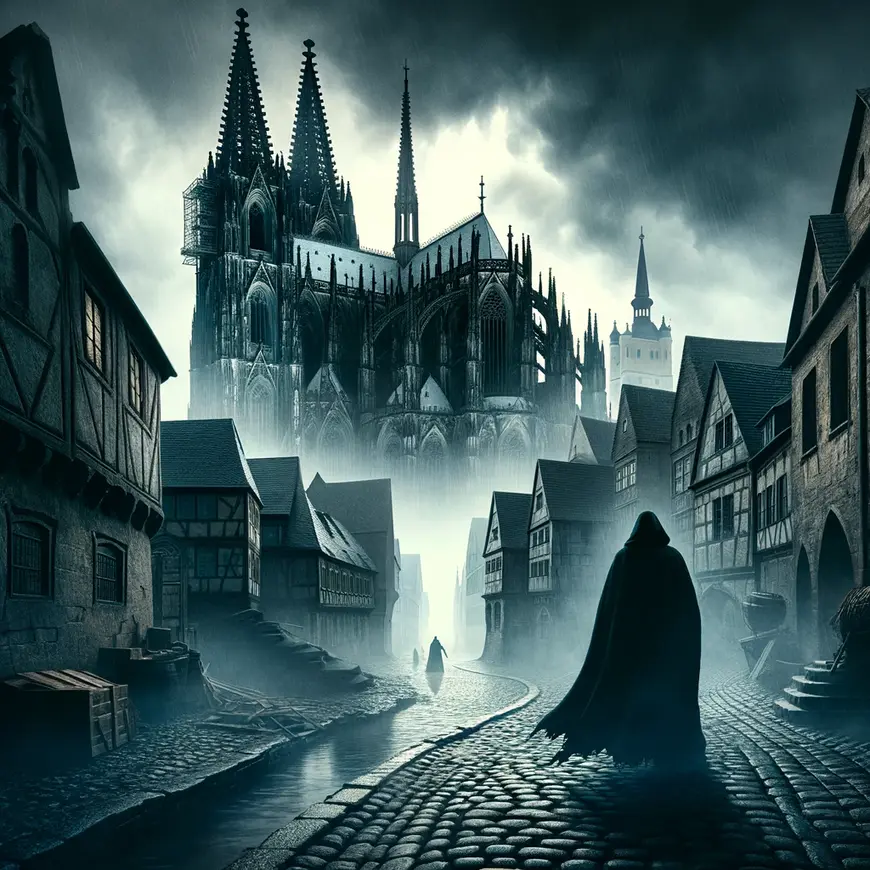
For example, 👉 Death and the Devil by Frank Schätzing immerses readers in medieval Cologne, where political intrigue and suspense weave through stone streets and cathedral shadows. Meanwhile, 👉 In the Penal Colony by Franz Kafka offers a haunting allegory that blends historical resonance with philosophical weight.
Mystery lovers might turn to Death on the Nile for a period crime puzzle, or explore broader resources like the British Library for essays and historical archives. The Historical Novel Society provides a curated gateway to contemporary and classic works, while PEN America discusses literature’s role in preserving cultural memory.
These works and resources show that historical fiction functions not just as entertainment, but as a living archive—preserving the stories that shape our understanding of the past.
Hidden Gems in Historical Fiction
- The Long Ships — Frans G. Bengtsson
- The Blue Flower — Penelope Fitzgerald
- The Known World — Edward P. Jones
- Silence — Shūsaku Endō
- A Place of Greater Safety — Hilary Mantel
- True History of the Kelly Gang — Peter Carey
- The Siege — Helen Dunmore
- The Good Lord Bird — James McBride
- The Wreath (Kristin Lavransdatter, Vol. 1) — Sigrid Undset
- Out Stealing Horses — Per Petterson
The Role of Historical Fiction in Modern Literature
In the digital age, historical fiction continues to hold a powerful place in the literary landscape. Far from being a niche interest, it thrives across publishing formats—from literary hardcovers to bestselling paperbacks and even multimedia adaptations. The genre offers something rare in an age of fast information: a deep, immersive experience that slows the reader down and encourages reflection.
Modern historical fiction often incorporates voices and perspectives that were absent in earlier works. Authors explore the lives of marginalized groups, forgotten figures, and overlooked events. This diversification has expanded the genre’s reach, drawing in new readers who see parts of their heritage represented for the first time. At the same time, it maintains its traditional strengths—rich period detail, emotional resonance, and a grounded sense of place.
The rise of audiobooks and streaming adaptations has further boosted interest. Many readers first encounter historical fiction through a televised drama or film, then seek out the original books. This cross-medium appeal helps the genre remain relevant. It also builds bridges between popular culture and literary tradition.
Moreover, historical fiction serves as a tool for cultural preservation. By weaving history into narrative, it keeps collective memory alive in a way that pure scholarship cannot. Modern works invite readers to compare past and present, fostering empathy and historical awareness in a world often focused on the immediate. In doing so, the genre ensures that the voices of the past are not lost to the noise of the present.
Final Thoughts
Historical fiction is more than a literary genre—it is a shared conversation between past and present. Each novel becomes a doorway to a different era, offering both entertainment and insight. The best works honor historical truth while crafting compelling narratives, guiding readers through landscapes they may never have imagined yet find strangely familiar.
Its endurance lies in this balance. Readers return to historical fiction for the same reason travelers revisit beloved places: the setting changes, but the experience remains profound. Through careful research, strong storytelling, and emotional authenticity, authors can make centuries-old events feel immediate and personal.
For those new to the genre, the journey can start anywhere—from a court intrigue in Renaissance Europe to the quiet struggles of a family during wartime. For seasoned readers, each new work is a chance to see history from another angle, another voice, another heartbeat.
Historical fiction shapes the way we remember, but it also shapes the way we imagine. By walking through these crafted worlds, we better understand our own. And as long as there are stories to tell, the past will never be silent.
Reviews of Historical Fiction Works