Albert Camus: Existentialism through Literature
Albert Camus was a prominent writer and philosopher whose works delved into the complexities of human existence. With a captivating narrative style and a focus on existential themes, the author challenged conventional wisdom and offered profound insights into the human condition. This essay provides an overview of his curriculum vitae, explores his narrative works and stylistic features, lists his major works in chronological order, discusses public reception and reviews of his works, and includes intriguing trivia about the author.
The author was born on November 7, 1913, in Mondovi, French Algeria. After completing his education, he worked as a journalist, essayist, and playwright. He gained recognition as a philosopher, particularly known for his contributions to existentialism and absurdism. His personal experiences, including growing up in poverty and witnessing the harsh realities of colonial Algeria, shaped his writing and philosophical outlook.
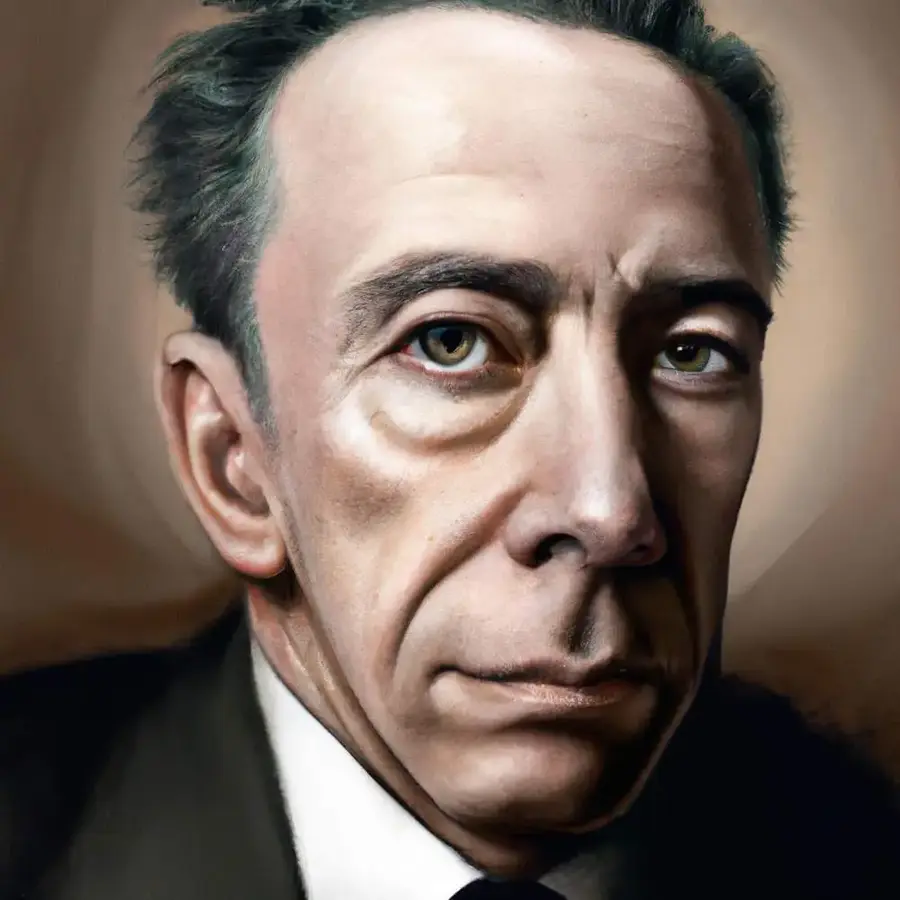
Profile of Albert Camus – Books and Vita
- Full Name and Pseudonyms: Albert Camus; published under his own name.
- Birth and Death: Born 7 November 1913, Mondovi (now Dréan), French Algeria; died 4 January 1960, near Villeblevin, France (car accident).
- Nationality: French (Algeria-born).
- Father and Mother: Lucien Auguste Camus (died in WWI, 1914) and Catherine Hélène Sintès (of Spanish descent).
- Wife or Husband: Married Francine Faure (1940–1960); previously married Simone Hié (1934–1940; annulled/divorced).
- Children: Twins Catherine and Jean (b. 1945).
- Literary Movement: Associated with absurdism and postwar French letters; often linked to existentialism (a label he resisted); Resistance-era moralist.
- Writing Style: Lucid, economical prose; parable-like structures; sun-struck realism from North Africa; ethical inquiry through narrative (novels, essays, plays).
- Influences: Friedrich Nietzsche, Fyodor Dostoevsky, Franz Kafka, Greek tragedy, Stoic thought; contemporaries/debates with Jean-Paul Sartre and Simone de Beauvoir; formed by Algerian landscapes and poverty.
- Awards and Recognitions: Nobel Prize in Literature (1957); Prix des Critiques (1947) for La Peste; major international canonization across fiction, drama, and essay.
- Adaptations of Their Work: The Stranger (Visconti’s Lo straniero, 1967); The Plague (film 1992; numerous stage/radio versions); widely staged plays (Caligula, The Misunderstanding, The Just).
- Controversies or Challenges: Tuberculosis from youth; public break with Sartre; criticized for middle-way stance during the Algerian War (advocated a civil truce, opposed terror and state repression); left the Algerian Communist Party in the 1930s.
- Career Outside Writing: Journalist and editor (Alger-Républicain, Soir républicain, Combat); actor/director with Théâtre de l’Équipe; reader/editor at Gallimard; trained at the University of Algiers.
- Recommended Reading Order:
1. The Stranger
2. The Myth of Sisyphus
3. The Plague
4. The Rebel
5. The Fall
The Rebel Philosopher of Absurdity
In the realm of existential philosophy and literature, the writer stands as a luminary figure whose life and work continue to captivate minds and hearts. Born on November 7, 1913, in Mondovi, Algeria, Albert Camus emerged from humble beginnings to become a Nobel Prize-winning author and prominent voice in 20th-century thought. His exploration of the absurdity of human existence, his critique of the prevailing ideologies of his time, and his unyielding commitment to moral integrity make his life story a compelling narrative.
His childhood was marked by poverty and the absence of his father, who died in World War I when Albert was just a year old. Raised by his mother and grandmother in the working-class neighborhood of Belcourt in Algiers, the young Camus demonstrated early intellectual promise. Despite financial constraints, he excelled in his studies and earned a scholarship to attend the University of Algiers, where he pursued degrees in philosophy.
Awakening: Absurdism and Existentialism
His journey unfolded against the backdrop of the tumultuous 20th century, shaped by two world wars and the rise of existentialist thought. His encounter with the works of existentialist philosophers such as Jean-Paul Sartre and Friedrich Nietzsche played a pivotal role in shaping his intellectual perspective.
At the core of Albert Camus’ philosophy is the concept of the absurd—the inherent conflict between humanity’s desire for meaning and the apparent meaninglessness of the universe. In his seminal work, “The Myth of Sisyphus,” the novelist famously declares that “there is only one really serious question, and that is suicide.” He grappled with the existential dilemma of whether life is worth living in a world devoid of inherent meaning.
His literary career skyrocketed with the publication of his debut novel, “The Stranger” (“L’Étranger”), in 1942. The novel follows the life of Meursault, an emotionally detached and indifferent protagonist who becomes embroiled in a senseless act of violence. Through Meursault’s story, the writer explores themes of alienation, absurdity, and the consequences of rejecting societal norms.
“The Plague” (“La Peste”), published in 1947, is another masterpiece that reflects Camus’ philosophical preoccupations. Set in the fictional Algerian town of Oran, the novel allegorically depicts the human condition in the face of an epidemic. The plague serves as a metaphor for the absurdity of life and the inevitability of suffering.
Journalism and Resistance: An Advocate for Justice
Beyond his philosophical and literary pursuits, Albert Camus was an engaged journalist and political thinker. During World War II, he joined the French Resistance against the Nazi occupation, contributing to the underground newspaper “Combat.” His experiences during this period informed his later reflections on justice, rebellion, and the ethical responsibility of individuals in the face of oppressive systems.
His commitment to justice and human rights led to his outspoken critique of totalitarian ideologies, including communism. Despite his initial sympathy for leftist causes, he became disillusioned with the oppressive nature of some political movements, advocating for a more nuanced and humanistic approach to social change.
In 1957, Albert Camus was awarded the Nobel Prize in Literature at the age of 44. The recognition, while celebrated, brought with it its share of controversies. Some critics questioned the decision, citing his relatively limited body of work compared to other nominees. The Nobel Committee, however, praised his clear-sightedness, his ability to question prevailing dogmas, and his capacity to convey the complexities of the human condition.
His personal life was marked by tumultuous relationships and existential conflicts. His marriage to Francine Faure, with whom he had twins, was characterized by periods of strain. Despite the challenges, Albert Camus remained dedicated to his family, and his experiences as a husband and father informed his exploration of human relationships in both his fiction and philosophical works.
Clarity, Philosophy, and the Art of Simplicity
- Minimalist and Direct Prose: The author writes with simplicity. His sentences are short, straightforward, and stripped of unnecessary detail. This style mirrors the detachment of his characters and the starkness of life in his stories. When I read The Stranger, I noticed how Meursault’s thoughts and actions were described without emotion or embellishment.
- Vivid Physical Descriptions: Albert Camus often grounds his stories in sensory experiences. He vividly describes heat, light, landscapes, and physical sensations. These descriptions connect his ideas to tangible realities. The author uses the environment to reflect his characters’ internal struggles, adding another layer of meaning.
- Emotional Detachment: He often writes in a detached tone. His characters observe life with calm, even when faced with tragedy or chaos. But as the story progressed, I understood how he used this detachment to emphasize the absurd.
- Depth: Albert Camus doesn’t just tell stories; he embeds deep philosophical questions into his narratives. He explores themes like the absurd, morality, and freedom. His works make you think about life’s purpose and the human condition. In The Myth of Sisyphus, his exploration of the absurd is both haunting and liberating. His idea that life has no inherent meaning, but we can still find joy in the struggle, stayed with me.
- Lack of Traditional Punctuation in Dialogue: Albert Camus often avoids quotation marks and traditional dialogue tags. This makes his writing flow like a continuous thought or conversation. In The Fall, the dialogue blends seamlessly with the narrative, creating an intimate and reflective tone. At first, I found it challenging, but soon it felt natural.
- Repetition of Key Ideas: Albert Camus uses repetition to emphasize his themes. Certain images, phrases, and concepts appear again and again in his work.

Legacy and Influence of Albert Camus
His untimely death in a car accident on January 4, 1960, cut short a life of intellectual fervor and creative exploration. His legacy, however, endures through his writings and the impact of his philosophical ideas on subsequent generations of thinkers. The existential themes of alienation, absurdity, and the search for meaning continue to resonate with readers and scholars worldwide.
Camus’ influence extends beyond literature into fields such as psychology, sociology, and political science. His critique of ideology and advocacy for individual freedom and responsibility have inspired movements for social justice and human rights.
Literary Tapestry Woven with Influences
The renowned philosopher and author was not an isolated genius but a product of the rich tapestry of literature that preceded him. His works, marked by profound existential themes, were shaped by a mosaic of influences from various writers who left an indelible mark on his intellectual journey.
His exploration of existentialism owes much to the giants who preceded him in the arena. Jean-Paul Sartre, a prominent existentialist philosopher, played a crucial role in shaping the writer’s early philosophical ideas. However, as their friendship waned, so did their philosophical alignment, leading to a divergence in their views.
Friedrich Nietzsche, the 19th-century German philosopher, also left an enduring imprint on Camus’ thought. Nietzsche’s ideas of eternal recurrence, the will to power, and the critique of traditional morality resonated with Albert Camus, influencing his perspective on the absurdity of life and the search for individual meaning.
Literary Inspiration: Kafka and Dostoevsky
In the realm of literature, Franz Kafka and Fyodor Dostoevsky stand out as two major influences on him. Kafka’s surreal and nightmarish landscapes found echoes in his exploration of the absurd. The notion of the individual facing incomprehensible and oppressive systems in Kafka’s works, such as “The Trial,” left an unmistakable imprint on Camus’ vision of the human condition.
Dostoevsky, with his probing examinations of morality, guilt, and the complexities of the human psyche, provided the author with a literary wellspring. Crime and Punishment and The Brothers Karamazov particularly left lasting impressions on him, inspiring his nuanced portrayals of morality and the consequences of human actions in works like The Stranger and The Plague.
In the realm of modern literature, Ernest Hemingway and William Faulkner were influential figures for him. Hemingway’s spare and direct prose style appealed to him, influencing his own approach to writing. The themes of existential angst and the search for authenticity in Hemingway’s works resonated with His exploration of similar themes in his novels and essays.
Faulkner’s narrative complexity and exploration of the human psyche left a deep impression on Albert Camus. The Southern Gothic atmosphere of Faulkner’s novels, with their intricate characters and moral dilemmas, contributed to Camus’ development of multi-layered narratives that grapple with the complexities of human existence.
Major Works and Books by Albert Camus
- The Stranger (1942)
- The Myth of Sisyphus (1942)
- The Plague (1947)
- The Rebel (1951)
- The Fall (1956)
Review and Public Reception
The philosopher’s works received significant attention from the public and critics. “The Stranger” and “The Plague” were widely praised for their exploration of existential themes and his unique writing style. However, his theory of the absurd and his critiques of political ideologies also attracted controversy and sparked intense debates. Some critics accused him of nihilism or lacking a hopeful outlook, while others celebrated his courage to tackle difficult questions of meaning and morality.
Camus’s narrative works often explore existential themes, focusing on the absurdity and meaninglessness of life. His writing style is characterized by concise and evocative prose, employing vivid descriptions and powerful imagery. Albert Camus masterfully blended philosophy and fiction, intertwining complex philosophical ideas with compelling storytelling to engage readers on both intellectual and emotional levels.
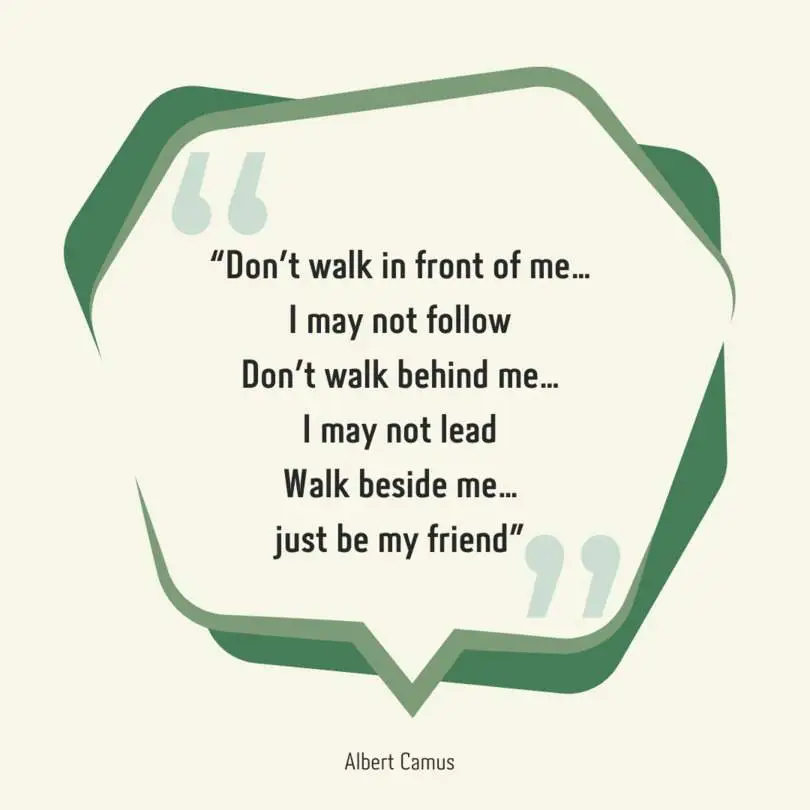
Famous Quotes from Albert Camus
- “In the midst of winter, I found there was, within me, an invincible summer.” He reminds us of inner strength and resilience. Even in difficult times, we can find hope and warmth inside ourselves. This quote shows his belief in human endurance and the ability to overcome hardship.
- “Freedom is nothing but a chance to be better.” Albert Camus connects freedom to responsibility. He believes being free gives us the opportunity to grow and improve. This quote highlights how freedom is not just a right but also a challenge.
- “Man is the only creature who refuses to be what he is.” This quote reflects his ideas on absurdism. Humans constantly seek meaning and purpose, even when life offers none. It shows how we struggle with accepting life as it is.
- “Don’t walk behind me; I may not lead. Don’t walk in front of me; I may not follow. Just walk beside me and be my friend.” Camus values equality and companionship in relationships. He rejects hierarchy and emphasizes mutual support. This quote captures his simple yet profound view of friendship.
- “You will never be happy if you continue to search for what happiness consists of. You will never live if you are looking for the meaning of life.” The novelist warns against overthinking happiness or life’s purpose. He encourages living in the moment instead of obsessing over abstract goals. This quote reflects his philosophy of embracing life’s absurdity.
- “The only way to deal with an unfree world is to become so absolutely free that your very existence is an act of rebellion.” The narrator believes in defiance against oppression. By living authentically and freely, we resist control and injustice. This quote inspires courage and independence.
Trivia about Albert Camus
- Won the Nobel Prize at 44: Albert Camus received the Nobel Prize in Literature in 1957. He was one of the youngest recipients. The Nobel committee praised his exploration of human conscience and the absurd.
- Born in Algeria: The writer was born in 1913 in Mondovi, French Algeria (now Drean). His upbringing in a colonial environment deeply influenced his themes of exile, identity, and belonging, which appear in works like The Stranger.
- Studied at the University of Algiers: He studied philosophy at the University of Algiers. His academic background shaped his writings, especially his ideas on absurdism and existentialism.
- Connection to Paris: The novelist moved to Paris during World War II and became part of its vibrant intellectual scene. The city inspired much of his writing and was a central hub for his philosophical debates.
- Inspired by Friedrich Nietzsche: Nietzsche’s ideas about morality and the rejection of absolute truths influenced Camus. Both writers explored themes of freedom and individual responsibility in a world without inherent meaning.
- Died in a Car Accident: Albert Camus tragically died in a car accident in 1960 at the age of 46. Ironically, he had a train ticket in his pocket but chose to ride with his publisher instead. This untimely death left many wondering about the works he might have written.
His literary contributions continue to captivate readers and stimulate discourse. Through his narrative works, he explored existential themes and challenged the traditional notions of meaning and purpose in life. THe author’s unique writing style and philosophical insights left an indelible mark on the literary landscape. Despite controversies and varied reviews, his works remain significant in their exploration of the human condition.
Albert Camus’s legacy as a profound thinker and gifted storyteller lives on, inspiring generations to contemplate the complexities of existence and embrace the pursuit of truth and authenticity.