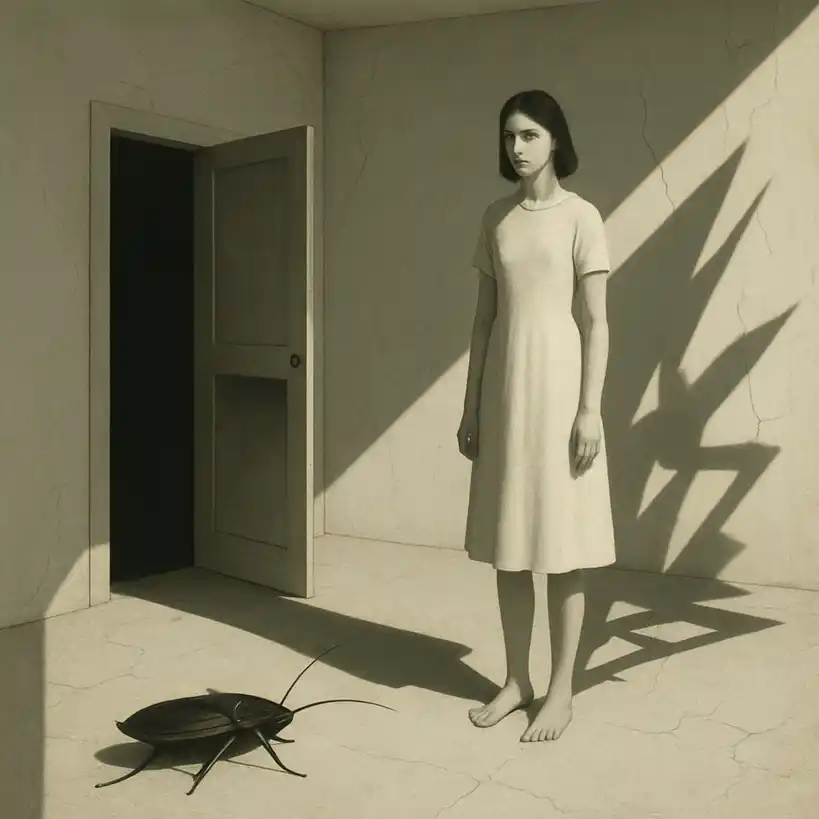
Clarice Lispector: inside the quiet storm
Open a page by Clarice Lispector and not much seems to “happen.” Someone makes coffee. A woman looks at a cockroach. A girl holds an egg. Then, almost silently, the ground of a life moves. Ordinary gestures become detonators. The writer’s gift is to catch the instant when a thought goes too far to turn back.
You don’t have to be a philosopher to read her. What you need is a bit of patience and curiosity about inner weather. Instead of big plot twists, Clarice Lispector offers tiny, irreversible realizations: a character understands herself, mistrusts herself, or feels suddenly naked before the world. That shift might fit into a single sentence, but it echoes for pages.
This article is built as a soft landing guide. First we sketch who the author was and how the early years—migration, poverty, study, journalism—fed the later books. Then we walk through three phases of her life, so you know where each major work sits. After that comes a carefully chosen works list in order, with original titles and English versions aligned.
If you’ve ever opened The Passion According to G.H. or Agua Viva and backed away, this map is for you. We’ll suggest a kinder entry point, show you what to expect, and point out where to rest. If you’re the kind of reader who enjoys interior intensity, you might also like 👉 To the Lighthouse by Virginia Woolf: another journey where a family day and a few silences hold an entire storm. But here we stay with Clarice Lispector. By the end, you’ll have one slim book to start tonight, one riskier choice for when you feel brave, and a way to enjoy the quiet storm instead of backing away from it.
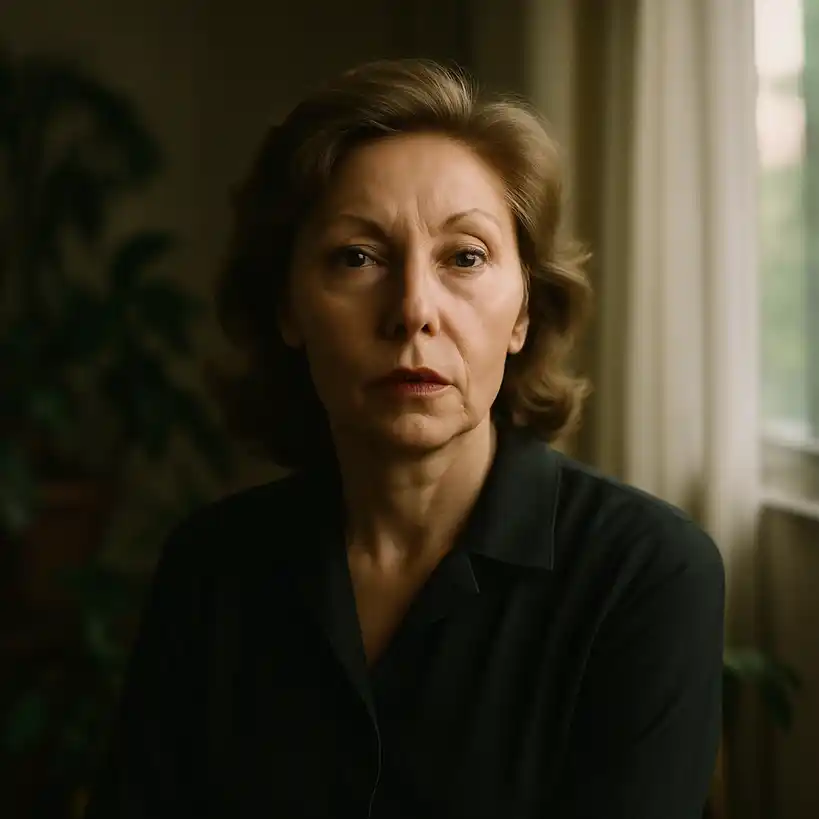
Books and Vita of Clarice Lispector
- Full Name and Pseudonyms: Clarice Lispector; occasional early journalistic pieces under pen names, but fiction signed as Clarice Lispector.
- Birth and Death: Born 10 December 1920 in Chechelnyk (then Ukraine, then part of the Russian Empire); died 9 December 1977 in Rio de Janeiro, Brazil.
- Nationality: Naturalized Brazilian, of Jewish Ukrainian origin.
- Father and Mother: Pedro Lispector; Mania Lispector.
- Wife or Husband: Married Maury Gurgel Valente (diplomat) in 1943; later divorced.
- Children: Two sons: Pedro and Paulo (Pau).
- Literary Movement: Associated with Brazilian modernism and postwar experimental fiction; often labeled introspective or existential, though she resisted rigid categories.
- Writing Style: Radically interior prose, fragmented monologue, metaphysical imagery, focus on everyday gestures that trigger profound realizations.
- Influences: Modernist and existential writers (e.g., Woolf, Kafka), biblical language, Brazilian urban life, Jewish heritage.
- Awards and Recognitions: Received major Brazilian literary prizes (e.g., Graça Aranha Prize early on); later critical canonization as one of Brazil’s greatest twentieth-century writers.
- Adaptations of Their Work: Films and stage adaptations of The Hour of the Star and other works; frequent inclusion in university syllabi worldwide.
- Controversies or Challenges: Lived as an immigrant and minority; struggled financially at times; survived a severe burn accident; dealt with illness (cancer) near the end of life.
- Career Outside Writing: Journalist, translator, and radio writer; worked at newspapers and magazines in Brazil and abroad.
- Recommended Reading Order:
1. Family Ties
2. The Hour of the Star
3. Near to the Wild Heart
4. The Passion According to G.H.
The early life of Clarice Lispector – From border crossing to borrowed books
Clarice Lispector begins as a child between worlds. Born to a Jewish family in what is now Ukraine and brought to Brazil as an infant, she grows up with migration as a first memory, even if she can’t recall the journey itself. At home there are stories in Yiddish, worries about money, and a mother whose illness shadows the house. Outside, there is Portuguese in the street, sun on the walls, and the sense that language can be a door.
Recife becomes the true first landscape. Markets, schoolyards, and the logic of everyday poverty train the young girl’s attention. She listens hard, not just to words but to pauses and slips. The family moves again, this time to Rio de Janeiro, bringing hope, debt, and a suitcase of habits. In the new city, books multiply. Libraries, borrowed volumes, and secondhand stalls turn reading into rescue. The future writer devours whatever she can reach while quietly forming her own questions.
Law school is both a social ladder and a vantage point. Lectures on codes and rights meet nights of furious, private writing. The author tries journalism. She discovered how to file on time and cut a sentence to the bone without losing its sting. Interviews, profiles, and columns teach her to listen for contradictions and to trust the odd detail—a chipped cup, a nervous gesture—as the real center of a story.
By the time Near to the Wild Heart appears, the ingredients are already mixed: an immigrant’s double vision, a girl’s raw intelligence, a young woman’s legal and journalistic training, and a fierce desire to write thought from the inside. Nothing in the biography predicts the style exactly, but every stage helps explain why her pages feel both unstable and precise.
Diplomatic suitcases and pages that won’t behave
Marriage to a young diplomat sends Clarice Lispector out of Brazil and into a string of foreign cities. New languages, cold apartments, embassy parties—on paper it looks glamorous. Inside, the writer feels exiled from the Portuguese she needs to think in. While one life attends receptions, another sits alone, drafting novels that almost refuse to be plots. The distance sharpens her sense that what matters is not what happens, but how consciousness touches it.
The early books mark this restless middle period. Near to the Wild Heart explodes conventional narrative with a girl’s wandering, luminous thought. The Chandelier and The Besieged City keep bending realism until it feels slightly tilted, as though the furniture might slide. Later, The Apple in the Dark and The Passion According to G.H. dig into guilt, freedom, and the terrifying blankness under ordinary tasks. A woman cleaning a room meets a cockroach and, in that encounter, has to rethink what a self even is.
Journalism stays in parallel. Columns and crônicas train her to write sentences that walk on the street, not just in philosophy seminars. She interviews politicians and artists, files copy on time, and learns how much intensity a short space can hold. Translation work adds yet another layer: moving other people’s books into Portuguese makes her even more aware of rhythm, silence, and the grain of a phrase.
By the end of this phase, Clarice Lispector has two lives that keep colliding. A diplomat’s wife and experimental novelist with a quiet storm inside. The second one is winning, line by line.
Fire, fragments, and the last narrow rooms
Eventually the diplomatic marriage ends. The writer returns to Rio, now a single mother with two sons, money worries, and a growing reputation. She writes at home, often at night, sending crônicas to newspapers that later become the volume Discovering the World. Small observations—bus stops, pets, neighbors—turn into X-rays of fear, joy, and boredom.
A domestic accident in the mid-1960s leaves Clarice Lispector badly burned, nearly losing a hand. Recovery is long and painful. The body, already central to her fiction, becomes a site of literal fire and scar. After this, the pages feel even closer to the nerve. Água Viva reads like a long inhalation and exhalation, a voice trying to speak the present moment as it happens.
Illness closes in. Ovarian cancer is diagnosed late; the disease spreads. Even from the hospital, she dictates fragments to a close friend, material that becomes A Breath of Life, a dialogue between an author and her creation about the act of existing at all. Clarice Lispector dies in 1977, one day before turning fifty-seven. The last works arrive almost on top of her death, as if the line refused to stop while there was still time to think.
What remains from this late period is a sense of writing pressed against the edge of life. Shorter books, sharper stakes, more exposed questions: What is a “me”? How much suffering can a word hold? Where does love go when language fails? The rooms are smaller, but the storm inside is louder than ever.
Between Woolf, Rosa, and the unsayable
Critics often group Clarice Lispector with twentieth-century modernists and existential writers, yet she never quite fits any shelf. In Brazil, she shares the timeline with Guimarães Rosa’s linguistic wildness and João Cabral de Melo Neto’s dry precision, but her obsession is neither landscape nor social structure. Instead, she writes the second just before a thought becomes a sentence, when everything feels unstable.
Themes repeat like a private liturgy. Epiphany in small gestures is central: cracking an egg, eating a sandwich, watching an animal. Such acts trigger revelations that may be mystical, terrifying, or both. The unstable “I” keeps changing shape, doubting itself, sometimes dissolving into the world it tries to describe. Ethics without easy doctrine appears too—characters wrestle with cruelty, indifference, and pity, but no tidy lesson arrives at the end. God is often mentioned, rarely defined.
Gender and class are not abstractions here. Many of Clarice Lispector’s protagonists are middle- or lower-middle-class women in apartments, offices, or kitchens, living under expectations that do not match their inner lives. Domestic space becomes a pressure cooker. Silence at the table can feel more violent than any shouted argument.
For another writer who turns philosophy into lived female experience, consider She came to stay by Simone de Beauvoir: a novel where jealousy, freedom, and commitment collide in daily life. The comparison helps highlight what makes Clarice Lispector singular—less programmatic argument, more raw sensation and spiritual risk. Her work keeps asking what it means to be alive from the inside, moment by moment, when no one is watching and words have not yet settled into place.

Famous Books of Clarice Lispector
- 1943 — Perto do Coração Selvagem (Near to the Wild Heart) — Debut novel about Joana, whose drifting, sharp consciousness breaks traditional plot and helped revolutionize Brazilian fiction.
- 1946 — O Lustre (The Chandelier) — A young woman’s interior life unfolds in dense, atmospheric prose that questions memory, family, and identity.
- 1949 — A Cidade Sitiada (The Besieged City) — A city and a girl grow together in a narrative that blurs outer change and inner perception.
- 1960 — Laços de Família (Family Ties) — Short-story collection where everyday scenes—bus rides, lunches, visits—explode into unsettling recognitions.
- 1961 — A Maçã no Escuro (The Apple in the Dark) — A man accused of a crime hides on a farm and struggles with guilt, language, and the possibility of starting over.
- 1964 — A Paixão segundo G.H. (The Passion According to G.H.) — A woman faces a cockroach in a maid’s room and enters a radical spiritual and existential crisis.
- 1969 — Uma Aprendizagem ou O Livro dos Prazeres (An Apprenticeship or The Book of Pleasures) — A hesitant love story that becomes a meditation on desire, solitude, and learning how to say “yes” to life.
- 1971 — Felicidade Clandestina (Covert Joy) — Stories about childhood, envy, and the secret happiness that books and small rebellions can bring.
- 1973 — Água Viva (Água Viva / Stream of Life) — A genre-blurring monologue that tries to capture consciousness in the present tense, without plot.
- 1977 — A Hora da Estrela (The Hour of the Star) — Short novel in which a poor young woman’s fate is narrated—and mishandled—by a tormented, self-aware writer.
- 1978 — Um Sopro de Vida (A Breath of Life) — Posthumously published dialogue between an author and his character about existence, creation, and silence.
Influences on Clarice Lispector – What taught her to listen to the unsayable
Critics love to place Clarice Lispector in a tidy lineage; she keeps slipping out. Still, some threads are clear. Jewish heritage and biblical cadence give her language a sense of address and severity—questions about God, guilt, and mercy appear without doctrine. Russian and Eastern-European background adds a shadow of exile even when the scene is a sunny Brazilian afternoon. Literarily, you can feel her in conversation with:
- Virginia Woolf – interior time, shifting consciousness, and the way a day can hold a life. Clarice Lispector pushes this further, stripping away social detail until only thought, body, and a few objects remain.
- Franz Kafka – estrangement and the uncanny in ordinary rooms. The writer shares his sense that existence can suddenly tilt into absurdity, though her tone is often more intimate and bodily.
- James Joyce (early) – especially the idea of the “epiphany”: a small external trigger that cracks open inner life. Where Joyce leans on city noise, Clarice presses in on the single, vibrating instant.
- Brazilian modernists like Guimarães Rosa and João Cabral de Melo Neto – they show her it’s possible to renew Portuguese from the inside: Rosa through invented speech, Cabral through dry, exact lines.
Philosophically, she is a near neighbor to existential thinkers, especially around freedom, nausea, and responsibility, but she rarely argues in abstract terms. Instead, she lets bodies and tiny actions carry those questions. For a parallel in fiction where philosophy lives in a woman’s daily experience, see She came to stay by Simone de Beauvoir; the comparison clarifies how Clarice Lispector chooses less program, more raw encounter.
After Clarice: writers who hear the echo
Many writers discovered Clarice Lispector not in school but in late-night reading, and you can hear the shock in their essays: I didn’t know prose could do this. Her influence is less about style you can copy than about permission—to center inner life, to risk fragmentation, to let a woman’s consciousness be the whole event.
- Hélène Cixous has written passionately about Clarice Lispector, treating her as a kind of secret ancestor of écriture féminine. You can feel the echo in Cixous’s own hybrids of essay, story, and dream.
- Lygia Fagundes Telles, another major Brazilian writer, shares the willingness to let female subjectivity and moral ambiguity lead, though her plots stay closer to realism.
- Carolina Maria de Jesus (in a very different register) also places a woman’s experience at the center, turning diary and lived hardship into literature; Clarice helps widen the horizon of what “serious” Brazilian writing by women can look like.
- Contemporary Latin American and Lusophone authors who work with fragment, notebook form, or intimate monologue—particularly women—often cite or echo Clarice Lispector when they let structure loosen and focus intensify.
- Anglophone novelists and essayists who value “thinking on the page” frequently point to her as a touchstone for how to write consciousness without flattening it into explanation.
Rooms where thought speaks first – Style & Technique
Clarice Lispector’s pages feel as though the narrator is thinking before our eyes. Voice often hovers between first and third person: “I” slips into “she,” then back again, as if the story can’t quite decide where self ends and character begins. That unstable vantage point lets us sense how fragile identity feels from the inside.
Point of view stays very close. Free indirect discourse dissolves the boundary between narrator and character; doubts, flashes of memory, and sudden insights slide in without quotation marks. The effect is not chaos but continuous interior murmur. External events appear only as they strike consciousness: a knock becomes fear before it becomes sound; a spoon becomes guilt before it is metal.
Time rarely runs straight. A present action—cracking an egg, walking a corridor—can trigger long spirals into past and imagined future, then snap back with almost no warning. These detours aren’t backstory in the usual sense. They are tests of what the present moment means. A few seconds on the clock might take pages; an entire afternoon can vanish in a line.
Ending a scene, she often chooses a hesitation rather than a conclusion. A character reaches the edge of a realization, then pulls back or stands stunned. The “what now?” is left with the reader. That unfinished quality feels faithful to lived thought, which rarely resolves on schedule.
If you’re used to plot-first fiction, this can be disorienting; it helps to read slowly and accept that the main events are invisible: shifts in belief, self-image, or spiritual temperature. The technique is demanding, but it gives a rare reward—the sense of being present at the birth of a thought that might change a life.
Sentences at the edge of speech
On the surface, Clarice Lispector’s sentences can look simple: many are short, declarative, almost childlike. Then an image arrives and knocks the floor sideways. Plain grammar, vertiginous metaphor is a core move. A word like “it” or “thing” might carry half a page of tension; a common adjective (“clear,” “live,” “raw”) suddenly feels metaphysical.
Syntax stretches and contracts with inner pressure. When a thought hesitates, punctuation stutters: dashes, ellipses, false starts. When certainty floods in, the sentence snaps clean. You can often tell a character’s state by how jagged or smooth the line feels.
Imagery is concrete but charged. Eggs, insects, hair, mirrors, animals, cheap objects: each item becomes a lens on existence itself. A cockroach is not a symbol in the academic sense; it is a presence that forces the protagonist to confront the non-human, the abject, the divine. Food and body sensations—hunger, disgust, desire—anchor some of the most abstract passages so that the reader never floats too far from the physical world.
Tone is where things get slippery and powerful. It can swing from almost comic to prayerful in a paragraph. Irony never becomes smug; it tends to turn inward, as self-suspicion. Moments of apparent mysticism are undercut by embarrassment or laughter, which strangely makes them feel more honest.
For another writer who compresses enormous emotional and philosophical weight into spare, luminous prose, you might look at The Lover by Marguerite Duras. The comparison highlights how Clarice Lispector’s own line chooses rougher edges, stranger turns, and a more openly metaphysical risk.

Famous Quotes by Clarice Lispector
- “I only achieve simplicity with enormous effort.” Simplicity here isn’t naivety; it’s the hard-won surface of very complex feeling.
- “Freedom is not enough; what I want is a meaning.” The line points to her central obsession: liberty matters, but without sense, it still feels like emptiness.
- “I write as if to save somebody’s life. Probably my own.” Writing becomes survival; every page is a way of keeping a fragile self coherent for a bit longer.
- “I am not afraid of the dark. I’m afraid of what’s in the dark.” Fear isn’t about objects but about possibility; consciousness magnifies shadows into questions.
- “I am so mysterious that I don’t even understand myself.” Rather than claiming self-knowledge, she leans into uncertainty as a permanent condition.
- “I don’t know what I’m searching for, but I know that I’m not content.” Restlessness becomes method; the work keeps moving because the questions do.
- “Sometimes I feel so full that I think I will explode with light.” Inner abundance can be as unbearable as emptiness; revelation is both gift and pressure.
- “I write because I have nothing better to do with the truth.” Truth exists, but it’s unmanageable; writing is her best attempt at holding it without breaking.
Trivia Facts about Clarice Lispector
- Refugee baby, Brazilian heart: Clarice Lispector arrived in Brazil as an infant Jewish refugee from Eastern Europe. She later insisted she felt entirely Brazilian and was surprised when reminded she hadn’t been born there. 🌐 Biographical profiles note the migration and naturalization.
- Law before literature: She studied law in Rio de Janeiro, not literature. The training in arguments, evidence, and responsibility helped shape the moral pressure in her fiction, where guilt and choice feel like legal cases heard inside the mind.
- A candle that changed the pages: A late-night candle accident set her bedroom on fire and left her with severe burns. The long recovery, and the threat to her writing hand, deepened the urgency and bodily focus of her later work.
- Almost sharing a birthday with death: The writer died on 9 December 1977, just one day before her 57th birthday, a symmetry that biographers often mention when discussing her lifelong preoccupation with time and fate.
- A kindred slow-burn novel to pair with her: If you like stories where very little “happens” outwardly but everything shifts inside, try 👉 Moderato Cantabile by Marguerite Duras as a companion read.
- Moral pressure at a wider civic scale: Readers drawn to Clarice Lispector’s intense inner questioning often respond to the ethical and sensory onslaught of 👉 Blindness by Jose Saramago, where a whole society is pushed to its limits.
How the storm spread
During her lifetime, she puzzled many Brazilian readers. Some critics saw genius; others complained the books were too “hermetic” or “foreign.” Over time, especially from the 1960s onward, a new generation of critics and writers began to recognize the depth of what she was doing with consciousness, gender, and language.
International reception took longer. Early translations were sporadic and sometimes smoothed out the strangeness. More recent editions, including new English translations, have made her voice sharper and more faithful abroad, leading to a surge of attention in the twenty-first century. Today, she appears regularly on lists of essential world writers and is taught alongside figures like Woolf, Kafka, and Beckett in modern-literature courses. For orientation, solid starting points include:
- A good encyclopedia or companion entry on Clarice Lispector’s life and works.
- Essays by Hélène Cixous and other critics who treat her as a foundational figure of women’s experimental writing.
- Prefaces and afterwords in recent translations, which often give clear, reader-friendly context about her style and historical moment.
If you want to feel how philosophical fiction can also be deeply social, you might read Blindness by Jose Saramago after one of Clarice Lispector’s shorter books. The comparison shows two very different ways of placing pressure on human perception and conscience: one through crowded allegory, the other through solitary revelation.
What to keep, and where to start tonight
Clarice Lispector writes from the nerve inward. Plots are thin, scenes are small, but the stakes are enormous because they concern what it means to be a self at all. Her tools are deceptively simple—plain grammar, everyday objects, short episodes—yet they’re used to cut into experiences many novels only circle around. Attention, not event, is her true subject. A gentle entry route helps.
- Start with short stories in Family Ties or Covert Joy—brief shocks where a bus ride, a visit, or a child’s envy flips into revelation.
- Move to The Hour of the Star, a short novel whose narrator wrestles with responsibility toward a poor young woman he both invents and neglects.
- Then try Near to the Wild Heart, where a girl’s mind refuses to fit the life laid out for her.
- When you feel ready for maximum intensity, go to The Passion According to G.H. or Água Viva, where almost nothing happens in the external sense and everything happens inwardly.
Reading tips: take it slowly. One story, one chapter, or even a few pages at a time is enough. Notice which object holds the tension—an egg, an insect, a mirror. Pay attention to where sentences break off or double back; those are places where thought is changing direction.