Georg Büchner: A Revolutionary Force in Literature and Thought
Georg Büchner, a name synonymous with revolutionary ideas and literary innovation. He remains a powerful figure in the realms of literature and philosophy. Born on October 17, 1813, in Hessen, Germany, his life was tragically brief but undeniably impactful. His exploration of social injustice, his groundbreaking plays, and his engagement with political activism left an indelible mark. On both the world of literature and the broader cultural landscape of his time.
The author’s upbringing was characterized by intellectual curiosity and a thirst for knowledge. Raised in a family that valued education, he exhibited a precocious intellect from an early age. He pursued studies in medicine, languages, and philosophy, laying the foundation for his later interdisciplinary approach to literature and thought.
During his time at the University of Marburg, his exposure to radical political ideas ignited a passion for social justice and reform. He joined a group of like-minded students who discussed revolutionary concepts and advocated for change. This period marked the beginning of Büchner’s lifelong commitment to challenging the status quo.
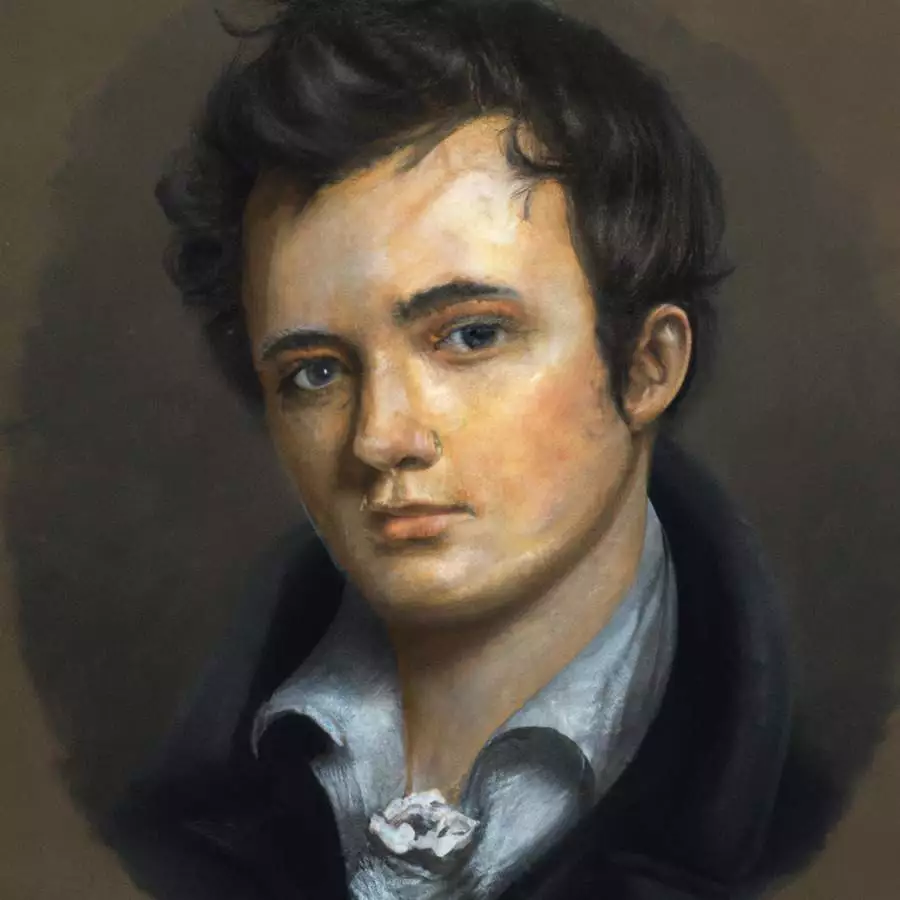
Profile of Georg Büchner – Life and Books
- Full Name and Pseudonyms: Karl Georg Büchner; published as Georg Büchner.
- Birth and Death: Born 17 October 1813, Goddelau (now Riedstadt), Grand Duchy of Hesse-Darmstadt; died 19 February 1837, Zürich, Switzerland (typhus).
- Nationality: German.
- Father and Mother: Dr. Ernst Karl Büchner (physician) and Caroline (Karoline) Büchner, née Reuß.
- Wife or Husband: Unmarried; engaged (1836) to Wilhelmine “Minna” Jaeglé of Strasbourg.
- Children: None.
- Literary Movement: Vormärz/Young Germany; political and social-critical drama; precursor to modernist and naturalist tendencies.
- Writing Style: Concentrated, documentary realism fused with lyrical intensity; fragment form; sharp social critique; rapid scene cuts; colloquial speech alongside philosophical reflection.
- Influences: French Revolution history and figures (Danton, Saint-Just), Shakespearean tragedy, German Romanticism and Sturm und Drang (esp. J. M. R. Lenz), contemporary science and materialist thought, his medical/anatomical studies.
- Awards and Recognitions: No major awards in his lifetime; posthumous canonization as a foundational German dramatist; Germany’s premier literary award, the Georg Büchner Prize (est. 1923; national since 1951), named in his honor.
- Adaptations of Their Work: Woyzeck widely staged; adapted as Alban Berg’s opera Wozzeck (1925) and Werner Herzog’s film Woyzeck (1979); numerous stage/film/TV versions of Danton’s Death and Leonce and Lena; Lenz adapted for stage and screen.
- Controversies or Challenges: Revolutionary activism; co-author of the pamphlet Der Hessische Landbote (1834) calling for social justice; targeted by authorities, fled to Strasbourg; early death at 23 left key works (notably Woyzeck) unfinished.
- Career Outside Writing: Medical student and scientist; doctoral work in comparative anatomy (fish nervous system); Privatdozent (lecturer) in Zürich (1836) in anatomy and natural science.
- Recommended Reading Order:
1. Danton’s Death
2. Lenz
3. Leonce and Lena
4. Woyzeck (fragment)
His Masterpieces
The dramatic talents of Georg Büchner were showcased in his play “Dantons Tod” (“Danton’s Death”). Completed while he was still a student, this play delved into the complex psyche of the French Revolution. And its leaders. His unique approach to character development and his exploration of political morality distinguished “Dantons Tod” as a groundbreaking work. That defied conventional theatrical norms.
In “Leonce and Lena,” he demonstrated his capacity for satire and wit. This comedic play, while seemingly lighthearted, carried underlying themes of existential questioning and societal critique. His’s ability to weave humor with profound insights into the human condition showcased his versatility as a playwright.
Perhaps Büchner’s most famous work, “Woyzeck,” stands as a testament to his innovative narrative style. Left incomplete at the time of his death, this play explored the tragic life of a soldier. Subjected to dehumanizing experiments. His use of fragmented scenes and psychologically complex characters offered a glimpse. Into the depths of human suffering and societal marginalization.
The political activism and radical ideas of the writer led to his involvement in revolutionary circles advocating for social change. Facing political persecution, he was forced into exile in Strasbourg. During this time, he continued to write and remained engaged with like-minded individuals striving for a more just society.
Scientific Endeavors and Interdisciplinary Exploration
His fascination with the natural sciences and philosophy influenced his literary and intellectual pursuits. He wrote scientific papers on topics ranging from cranial nerves to cerebral anatomy. His commitment to interdisciplinary exploration set him apart. As a visionary thinker who sought to bridge the gaps between various fields of knowledge.
Tragically, the life of Georg Büchner was cut short by typhus at the age of 23. Despite his brief existence, his contributions to literature and thought reverberated far beyond his time. His plays and writings continued to inspire subsequent generations of writers, philosophers, and activists.
The legacy of the playwright extended beyond his creative works. His engagement with political activism, his exploration of social inequalities, and his interdisciplinary approach to literature and science left an indelible imprint on modern thought. His ideas about the intersection of art, science, and society continue to resonate in contemporary discussions about the role of intellectuals in effecting change.
The Nexus of Literary Influence and Legacy
In the pantheon of literary history, Georg Büchner stands as a figure. Of immense talent whose life was as brief as his impact was lasting. Born in 1813 in Goddelau, Grand Duchy of Hesse, Büchner’s work transcended the boundaries of his time. Offering a prescient blend of realism and existential inquiry that would resonate through the ages. Though his literary career was cut short by his untimely death at the age of 23. His innovative approach to drama and prose left an indelible mark on subsequent generations of writers. This essay explores the dual role of the author. As both a product of his literary influences and a beacon for future literary innovators.
His Influences: The Seeds of Genius
Büchner’s writing, though limited in quantity, showcases a profound engagement with the philosophical and literary currents of his time. His work is imbued with the influence of several key figures and movements:
- Shakespeare and the Jacobean Dramatists: His dramas reveal a deep affinity with the psychological complexity and existential themes found in the works of Shakespeare and his contemporaries. The introspection and moral ambiguity of characters in plays like “Hamlet” and “Macbeth” are mirrored in Büchner’s own protagonists.
- Johann Wolfgang von Goethe: The titan of German literature left a notable imprint on Georg Büchner, particularly in the younger writer’s approach to nature and humanism. Lenz, a novella, echoes the Sturm und Drang movement’s focus on emotion and individualism, hallmarks of Goethe’s early work.
- The French Revolution and Enlightenment Thinkers: His political engagement and revolutionary fervor were influenced by the ideals of liberty, equality, and fraternity that underpinned the French Revolution. Thinkers like Jean-Jacques Rousseau and the writings of the Enlightenment played a significant role in shaping his ideological stance, evident in his revolutionary drama.
Legacy of Georg Büchner: Lighting the Way Forward
- Naturalism and Realism: The writer is often cited as a precursor to the Naturalist and Realist movements that emerged in the late 19th and early 20th centuries. His unflinching portrayal of societal underclasses and use of vernacular speech in works like “Woyzeck” foreshadowed the approaches of authors like Émile Zola and Gerhart Hauptmann.
- Expressionism: The Expressionist movement, with its emphasis on subjective experience and the distortion of reality to evoke emotion, owes a debt to his exploration of psychological turmoil and existential despair. His influence is apparent in the works of playwrights like Georg Kaiser and Ernst Toller.
- Modernism: The innovative narrative techniques and thematic complexity of Georg Büchner anticipated some of the hallmarks of Modernist literature. Writers such as Franz Kafka and Samuel Beckett, with their focus on the absurdity of the human condition and the breakdown of traditional narrative structures, reflect Büchner’s influence.
- Contemporary Theatre: His impact extends into contemporary theatre, where his plays, especially “Woyzeck,” continue to be staged and reinterpreted. His themes of social injustice, alienation, and the fragility of the human psyche resonate with modern audiences, influencing playwrights and directors around the world.
In conclusion, Georg Büchner’s literary legacy is a testament to the enduring power of his vision. A conduit of influence from the past and a source of inspiration for the future, his work remains a vital touchstone for writers and thinkers grappling with the complexities of the human condition. His brief life and oeuvre stand as a reminder of literature’s ability to transcend time, connecting the threads of human experience across the ages.
List of major works and books by Georg Büchner in chronological order
- The Hessian Messenger (Der hessische Landbote) – Political Pamphlet (1834)
- Lenz – Novella (1835)
- Danton’s Death (Dantons Tod) – Play (1835)
- Leonce and Lena – Play (1836)
- Woyzeck – Play (Incomplete, written around 1836-1837)
- Scientific and Philosophical Writings – Essays and Papers (1836-1837)
- Letters and Correspondence – Various Letters and Documents (1835-1837)
While his literary output was relatively small due to his short life, his works had a significant impact on literature and thought. His plays, in particular, are regarded as pioneering examples of modern drama.
Famous quotes by Georg Büchner
- “Peace to the shacks! War on the palaces!” This quote, from his revolutionary pamphlet “The Hessian Courier,” illustrates Büchner’s radical political stance. It underscores his advocacy for social justice and his opposition to the oppression perpetuated by the ruling classes.
- “Death is the most profound of all profundities.” The author contemplates the inevitability and finality of death, suggesting its overwhelming significance in the human experience, a theme explored in works like “Woyzeck.”
- “The world is chaos. Nothingness is the yet-to-be-born god of the world.” This reflects the existential and perhaps nihilistic view of the universe by Georg Büchner as inherently disordered, a perspective that influences the bleak, often hopeless landscapes of his dramas.
- “What does your decency dictate? — To be decent.” From “Leonce and Lena,” this tautology mocks societal norms and the empty moralizing of the bourgeoisie, showcasing Büchner’s disdain for superficial virtue.
- “Revolution is like Saturn, it devours its own children.” The playwright highlights the destructive nature of revolutionary movements, which often consume those who initiate them, reflecting the turbulent political landscape of his time.
- “If you have a why to live for, you can bear almost any how.” This quote underscores the importance of having a purpose or belief that gives life meaning, a concept that resonates with the existential themes present in his works.
Georg Büchner’s quotes capture the essence of his philosophical and literary contributions, painting a picture of a thinker deeply engaged with the socio-political issues of his time, as well as the timeless questions of human existence. His work, characterized by its critical examination of society and empathy for human suffering, continues to resonate with readers and scholars alike.
Trivia facts about the playwright
- Multilingual Skills: His linguistic abilities extended beyond his native German. He was fluent in French, which allowed him to engage with a wider range of philosophical and literary texts, contributing to the depth of his intellectual pursuits.
- Medical Studies: Büchner’s fascination with the natural sciences led him to pursue medical studies at the University of Strasbourg. His background in medicine influenced his scientific and anatomical writings.
- Alias “Johann Fries”: To avoid political persecution, Georg Büchner used the alias “Johann Fries” during his time in Strasbourg. He continued to write under this pseudonym and maintained correspondence with fellow activists.
- Experiments with Psychoactive Substances: His exploration of altered states of consciousness is in his novella “Lenz.” He was famous to experiment with psychoactive substances like opium, possibly as a means of understanding psychological experiences.
- Impact on Modernist Literature: Büchner’s fragmented and psychologically intense style had a profound influence on the development of modernist literature in the 20th century. Writers like Franz Kafka and Samuel Beckett drew inspiration from his unconventional narrative techniques.
- Admiration by Bertolt Brecht: Playwright and poet Bertolt Brecht held the author in high regard. Brecht considered the works of Georg Büchner to be precursors to his own concept of “epic theater,” emphasizing social critique and alienation effects.
- Prize: In honor of Georg Büchner’s contributions to literature and political thought, there is the Büchner Prize since 1923.
Conclusion Georg Büchner
His life may have been short, but his impact was immense. His exploration of the human psyche, his innovative narrative techniques, and his unapologetic engagement with societal issues left an indelible mark on literature and thought. As we delve into the pages of his plays and writings. We remind us of the power of artistic expression to challenge conventions, ignite conversations, and inspire generations to come.