William Golding: Exploring the Depths of Human Nature
William Golding, a renowned British novelist and playwright, is widely recognized for his thought-provoking works that delve into the complexities of human nature. Through his compelling narratives and vivid storytelling, Golding painted a bleak yet captivating picture of society and its inherent flaws. This essay examines the life, works, and trivia surrounding William Golding, shedding light on his remarkable contributions to literature.
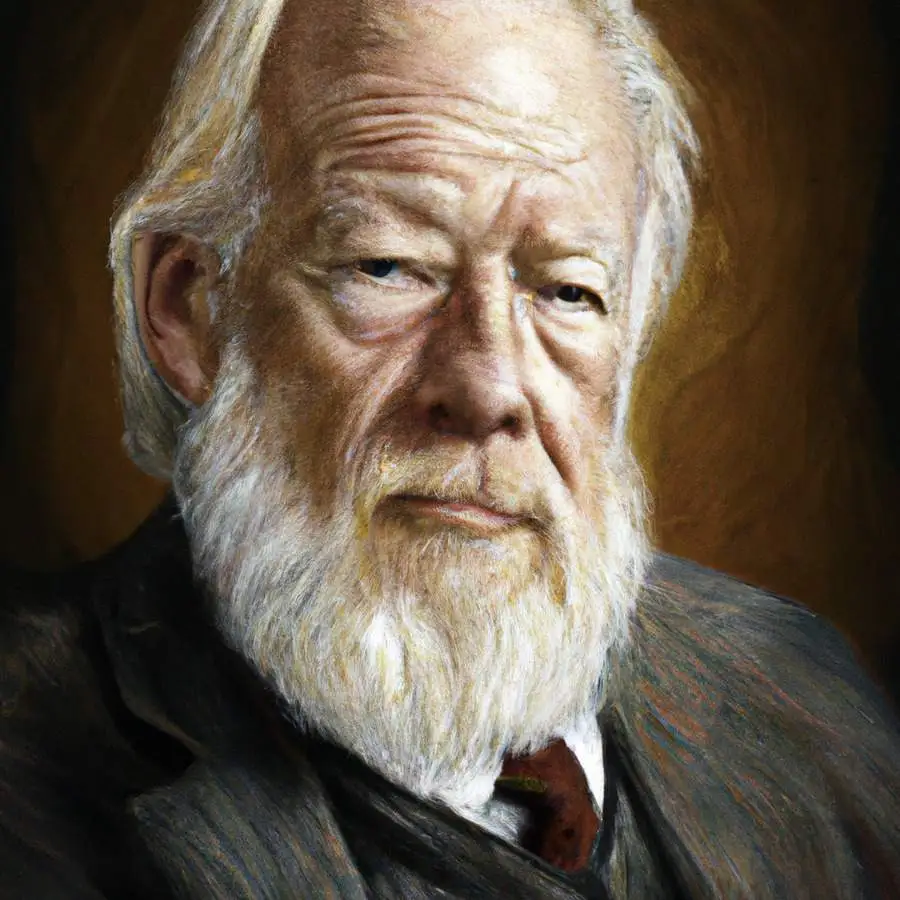
William Golding – Profile
- Full Name and Pseudonyms: William Gerald Golding. No known pseudonyms.
- Birth and Death: Born on September 19, 1911, in Cornwall, England. Died on June 19, 1993, in Cornwall, England.
- Nationality: British.
- Father and Mother: Alec Golding and Mildred Golding.
- Children: David Golding and Judy Golding.
- Literary Movement: Modernism and Allegorical Fiction.
- Writing Style: Symbolic, philosophical, and dark. Explored the conflict between civilization and human savagery.
- Influences: Greek mythology, World War II, and Joseph Conrad.
- Awards and Recognitions: Nobel Prize in Literature (1983). Knighted in 1988. Won the Booker Prize in 1980 for Rites of Passage.
- Adaptations of Their Work: Lord of the Flies adapted into films in 1963 and 1990. Other novels adapted for stage and radio.
- Controversies or Challenges: Criticized for his bleak view of human nature. His works often sparked debate in educational settings.
- Career Outside Writing: Served in the Royal Navy during WWII. Worked as a schoolteacher before becoming a full-time writer.
- Recommended Reading Order:
1. Lord of the Flies: A chilling allegory about the breakdown of order among stranded boys.
2. The Inheritors: A prehistoric novel exploring innocence and violence.
3. Pincher Martin: A psychological survival story at sea.
4. Rites of Passage: A historical novel about class, power, and identity.
Biography of William Golding
William Golding, a prominent British novelist and Nobel laureate, is celebrated for his compelling and thought-provoking works. That delve into the complexities of human nature and the inherent darkness within. Born on September 19, 1911, in St. Columb Minor, Cornwall, England, Golding’s life journey was one filled with diverse experiences. That greatly influenced his writing and allowed him to leave an indelible mark on the literary world. This essay will explore his education, his relationship with his wife, and his connections to other influential authors.
William Golding’s academic journey was characterized by a passion for literature and an insatiable curiosity about the human psyche. He attended the prestigious Marlborough Grammar School, where he developed a strong foundation in classics and literature. This early exposure to the works of renowned writers such as Shakespeare and Milton sparked his interest in storytelling and narrative construction.
In 1930, William Golding entered Brasenose College, Oxford, to study Natural Sciences, but he soon switched his focus to English literature. It was during his time at Oxford that he encountered the works of Sigmund Freud, Carl Jung, and others. Which profoundly impacted his understanding of human behavior and the subconscious. This intellectual blend of science and literature laid the groundwork for his future writing and exploration of the human condition.
In 1939, Golding married Ann Brookfield, and their union proved to be a pivotal and supportive aspect of his life. Ann was an unwavering source of encouragement and inspiration throughout his writing career. The couple had two children, Judy and David, and their familial experiences further deepened Golding’s understanding of human relationships, particularly the dynamics between parents and children, which often surfaced in his novels.
Connections to Other Authors
Throughout his life, William Golding maintained connections with other distinguished authors, both as friends and as intellectual peers. One of his closest friendships was with Anthony Burgess, the renowned author of “A Clockwork Orange.” Golding and Burgess shared a mutual interest in exploring the darker aspects of human nature and frequently engaged in discussions about literature and philosophy.
Another significant literary connection was with the famous American author, Saul Bellow. Their interactions enriched Golding’s perspective on American literature and provided him with valuable insights into the broader literary landscape beyond his British roots.
Furthermore, Golding’s friendship with the poet and critic Stephen Spender introduced him to a broader circle of intellectuals and writers. The exchange of ideas and literary critiques within this group further shaped Golding’s writing and helped him refine his storytelling techniques.
Literary Works
Golding’s most renowned work, Lord of the Flies, published in 1954, established him as a literary force. The novel tells the gripping story of a group of British schoolboys stranded on a deserted island who descend into chaos and savagery. Through the characters and their struggles for power, William Golding explores the inherent darkness within humanity and questions the very foundations of civilization. The book remains a powerful allegory for the fragile nature of societal order and the potential for evil that resides within each individual.
Following the success of this work, Golding continued to explore similar themes in his subsequent novels. “The Inheritors” (1955) depicts the tragic demise of Neanderthals at the hands of Homo sapiens. It highlights mankind’s tendency to destroy what it does not understand. “Pincher Martin” (1956) delves into the psyche of a naval officer stranded on a rock in the middle of the ocean. It provides a chilling exploration of isolation and the disintegration of the self.
In “Free Fall” (1959), William Golding delves into the depths of the human mind, focusing on the spiritual and moral struggles of the protagonist, Samuel Mountjoy. With a masterful blend of symbolism and psychological introspection, Golding crafts a narrative that examines the complexities of personal identity and the search for meaning in a chaotic world.
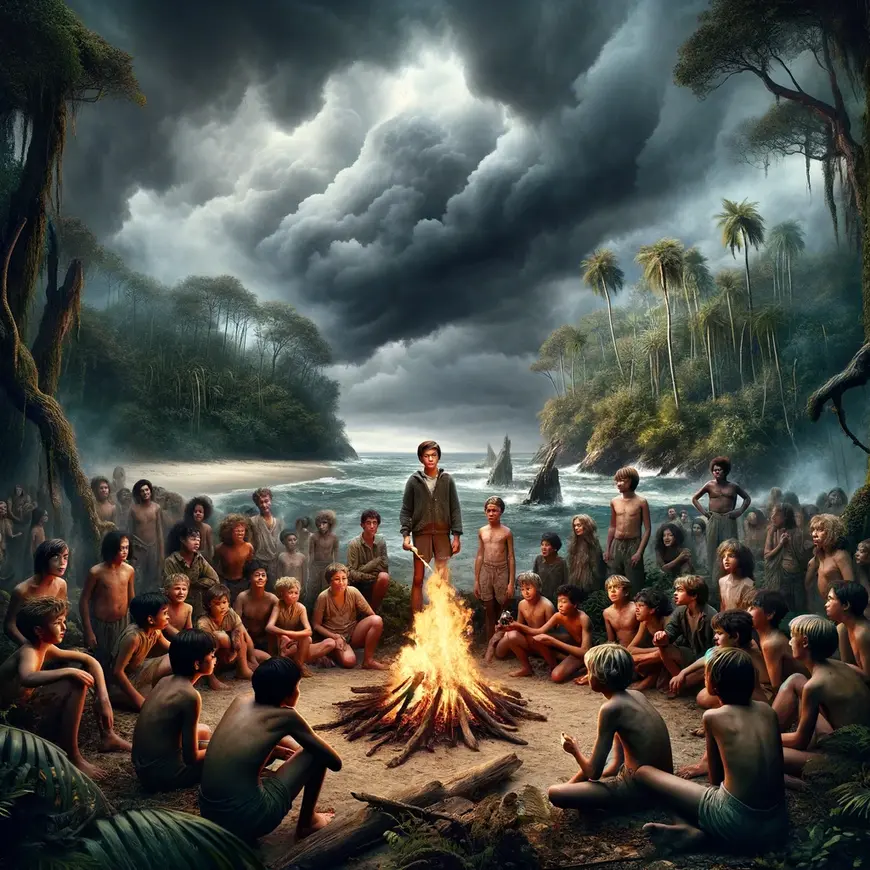
List of Books by William Golding
- Lord of the Flies (1954): Golding’s debut novel remains one of his most famous works. It explores the dark side of human nature through the story of a group of schoolboys. Stranded on a deserted island, whose descent into savagery reflects the inherent struggle between civilization and primal instincts.
- The Inheritors (1955): Is set in prehistoric times. This novel follows the last Neanderthal tribe’s encounters with a group of Homo sapiens.
- Pincher Martin (1956): A gripping tale of a naval officer stranded on a rock after his ship sinks. The novel delves into the protagonist’s struggle for survival, guilt, and the boundaries of sanity.
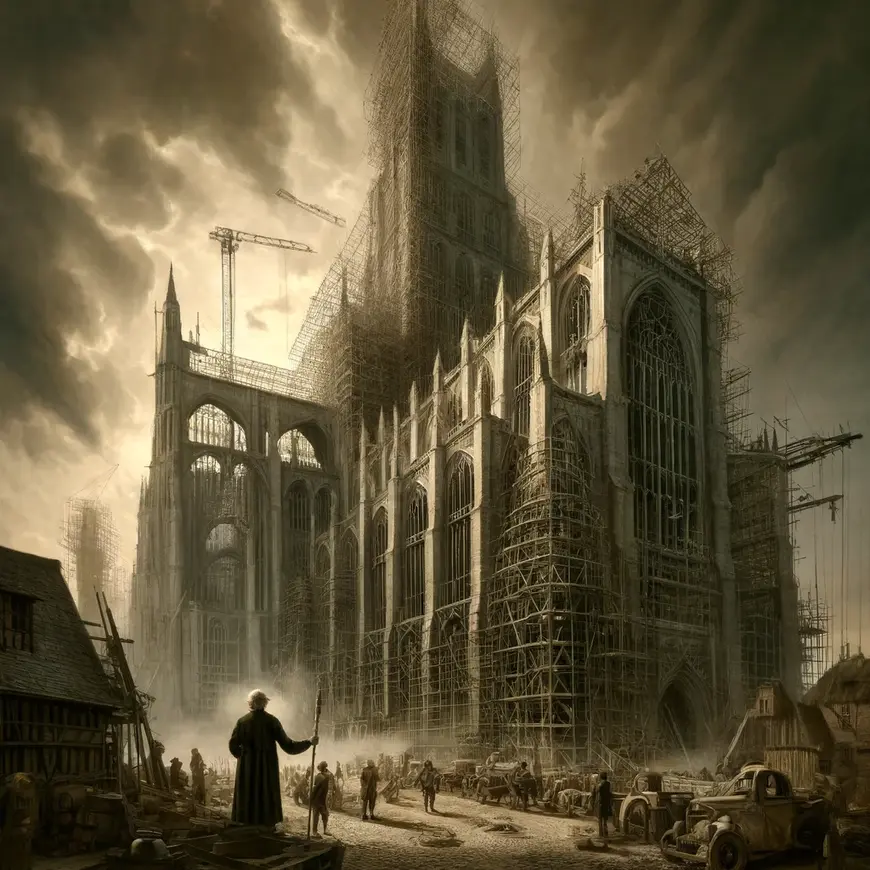
- The Spire (1964): Set in medieval England. The novel follows the ambitious Dean Jocelin’s obsession with building a towering spire on his cathedral.
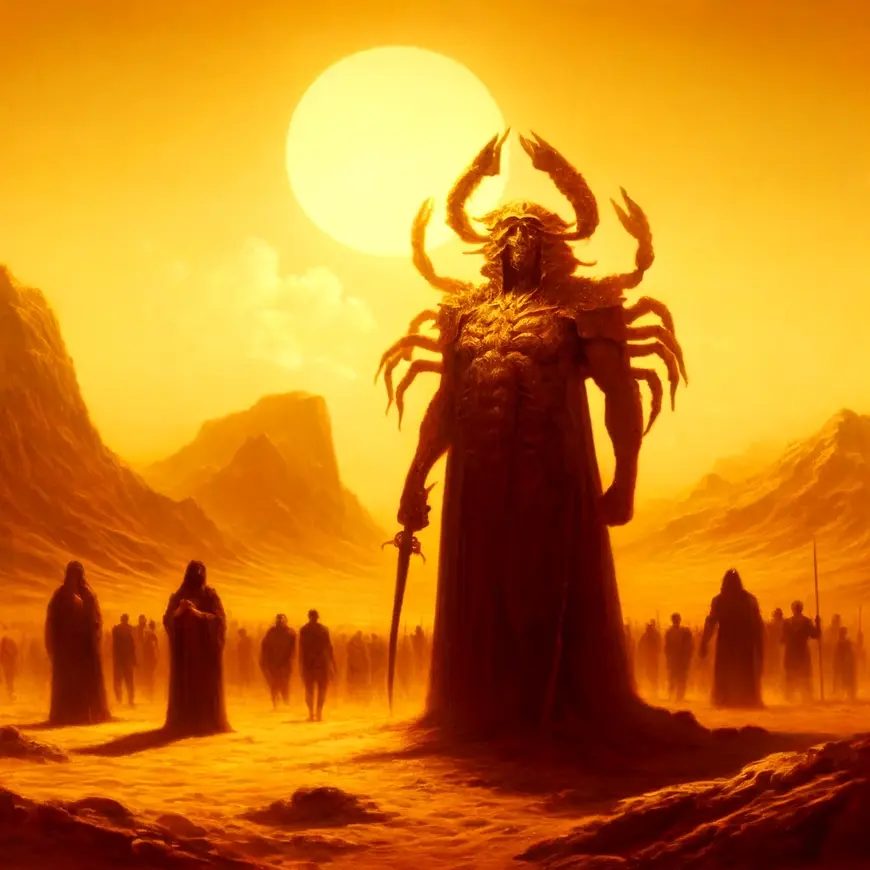
- The Scorpion God (1971): Another collection of three novellas. Where William Golding examines the complexities of human nature, power dynamics, and moral dilemmas.
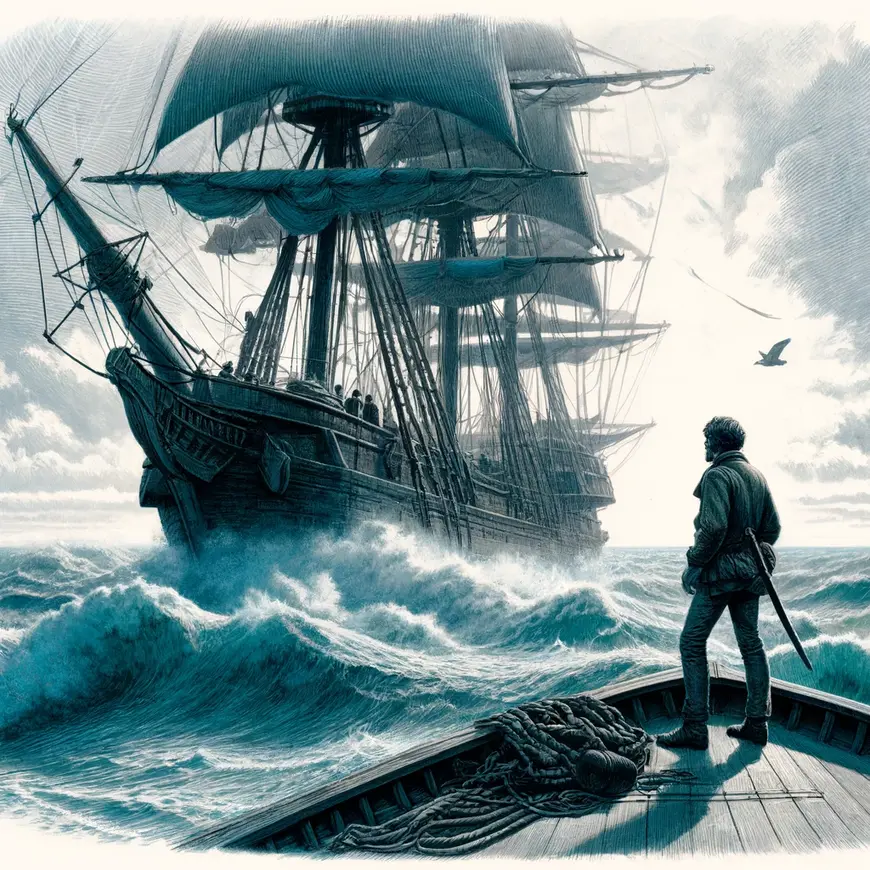
- Rites of Passage (1980): The first book in the “To the Ends of the Earth” trilogy. It tells the story of a young aristocrat, Edmund Talbot, traveling to Australia on a ship. It explores themes of class, colonialism, and social tensions.
- Close Quarters (1987): The second book in the “To the Ends of the Earth” trilogy. The novel continues the story of Talbot’s voyage, delving deeper into the conflicts and dynamics among the passengers and crew.
- Fire Down Below (1989): The final installment of the “To the Ends of the Earth” trilogy. This novel concludes Talbot’s journey, revealing the complexities of human relationships and the consequences of colonialism.
William Golding: Darkness in Simple Words
William Golding is best known for his famous novel Lord of the Flies. But his writing style and techniques go far beyond that one book. His stories often explore deep themes like human nature, violence, and morality. Yet, he uses simple, clear language to tell very complex stories.
Golding’s writing is not fancy. He doesn’t try to impress with big words. Instead, he uses short sentences and everyday vocabulary. This makes his books easy to read but hard to forget. His simple style allows readers to focus on the deeper meaning hidden under the surface.
He often writes from a third-person point of view, but he still takes us deep into his characters’ minds. In the work, we see the boys slowly lose control. We watch their fear grow. We feel their confusion. Golding makes us understand their choices, even when they turn violent.
Golding also uses symbolism as one of his most powerful tools. Nothing in his stories is just what it seems. The conch shell, the pig’s head, and the beast in Lord of the Flies all carry meaning. They stand for order, evil, fear, and more.
As a reader, I find this fascinating. Golding doesn’t explain everything. He trusts us to find the meaning for ourselves. That makes reading his work feel like a personal discovery.
From Innocence to Chaos: Building a World That Falls Apart
One of William Golding’s strongest techniques is his way of building tension and showing change. His stories often start calm and controlled. But little by little, they fall into chaos. This slow breakdown reflects the theme of lost innocence.
William Golding doesn’t rush. He takes time to show how characters change. He uses contrast to highlight this. At the beginning of Lord of the Flies, the boys try to follow rules. They build shelters and hold meetings. But by the end, they are hunting each other.
Golding also uses nature and setting to mirror the characters’ emotions. The island is first described as beautiful and peaceful. But as the boys change, so does the island. Storms come. The forest feels darker. The setting becomes a symbol of their fear and violence.
Another special technique Golding uses is allegory. His stories work on more than one level. You can read the book as an adventure story. But it’s also a story about human nature, society, and the thin line between order and chaos.
William Golding believed that all people carry a dark side. He used his writing to explore this idea. But he didn’t preach. Instead, he let the story show it. For me, this is what makes his work so powerful. He gives you something to think about—long after the book ends.
In the end, Golding’s style is both simple and deep. He shows us the worst parts of human nature, but he does it in a quiet, thoughtful way. That’s why his stories still speak to readers today.
Famous Quotes from William Golding
- “Maybe there is a beast… maybe it’s only us.” Golding connects fear to human nature. He suggests that the real danger isn’t outside us, but within us. This quote from Lord of the Flies shows how people can become violent when rules disappear.
- “The greatest ideas are the simplest.” William Golding connects wisdom to simplicity. He believes that big truths don’t need big words. This quote reminds us that powerful thoughts can come from clear and direct thinking.
- “Which is better—to have rules and agree, or to hunt and kill?” Golding connects order to survival. He challenges the reader to think about civilization versus savagery. This quote shows how important structure is to keeping peace.
- “The mask was a thing on its own, behind which Jack hid, liberated from shame and self-consciousness.” Golding connects identity to behavior. He explains how people act differently when they feel anonymous. This quote shows how symbols like masks can hide a person’s true self.
- “I am by nature an optimist and by intellectual conviction a pessimist.” Golding connects feeling to thought. He explains that while his heart hopes for good, his mind sees the darkness in people. This quote reflects the tension in his worldview and in his writing.
- “Man produces evil as a bee produces honey.” William Golding connects evil to instinct. He believes that creating harm comes naturally to humans. This quote suggests that cruelty is not just learned—it’s a built-in part of human nature.
Trivia
- Studied at Oxford University: Golding attended Brasenose College, Oxford, where he first studied natural sciences but later switched to English literature. He wrote poetry during his time there and published his first book of poems in 1934. This connection between his education and writing shows how deeply he was rooted in classical and literary traditions.
- Served in the Royal Navy During World War II: William Golding joined the British Royal Navy in 1940 and served for six years. He participated in the D-Day landings and saw combat firsthand. This connection between war experience and his writing explains the violent themes and moral struggles in his novels.
- Nobel Prize in Literature: In 1983, William Golding was awarded the Nobel Prize in Literature. For his outstanding contributions to the literary world. The Nobel committee acknowledged his ability to uncover the depths of human nature and his skill in depicting the struggles and conflicts that define human existence.
- Golding’s teaching career: Before gaining recognition as a writer, Golding worked as a teacher. His experience in the classroom allowed him to observe the dynamics of power, authority, and human behavior, which he later incorporated into his novels.
- Influence of mythology and allegory: Golding drew inspiration from various mythological and allegorical sources, infusing his works with profound symbolism. His exploration of archetypal themes and his use of allegorical elements elevate his narratives beyond simple storytelling, inviting readers to contemplate deeper philosophical questions.
- Controversy surrounding “Lord of the Flies”: Despite its critical acclaim, “Lord of the Flies” has sparked controversy over the years. Some readers argue that Golding presents a pessimistic view of humanity, while others assert that the novel is a poignant reflection of human nature’s darker aspects. The book continues to provoke debates and discussions about the inherent nature of mankind.
Literary Legacy
William Golding’s most renowned and influential work is his debut novel, “Lord of the Flies,” published in 1954. This gripping tale of stranded schoolboys and their descent into savagery remains a timeless exploration of human nature, morality, and the inherent struggle between civilization and barbarism. The novel’s success brought Golding international recognition and solidified his position as a masterful storyteller and social commentator.
In the subsequent years, William Golding continued to produce a series of compelling novels. These works further cemented his reputation as a profound thinker and a skilled writer. They draw on his understanding of psychology, human behavior, and the darker aspects of human nature.
In 1983, William Golding was awarded the Nobel Prize in Literature, honoring his exceptional contribution to the world of letters. The Nobel committee praised him for his ability to “illuminate the human condition and reveal its authentic reality” through his literary creations.
Conclusion: William Golding
William Golding’s literary contributions remain significant, as his works continue to resonate with readers and provoke introspection. By exploring the depths of human nature, he challenged societal conventions and questioned the very essence of civilization. From the gripping tale of “Lord of the Flies” to the introspective narratives in “The Inheritors” and “Free Fall.” Golding’s novels offer profound insights into the human condition.
The Nobel Prize laureate’s had the ability to weave compelling narratives, his skillful use of symbolism, and his unflinching exploration of humanity’s darker aspects. This solidified his position as one of the most influential British writers of the 20th century. William Golding’s works serve as a reminder of the fragility of civilization and the complex interplay between good and evil within each individual.