Hiroshima Mon Amour by Marguerite Duras — Love and War
Morning heat opens the streets, and neon fades to pale. Trains sigh, and museum glass catches ash in its shine. In Hiroshima Mon Amour by Marguerite Duras, two strangers meet where memory burns through romance. Memory haunts the body. She speaks of films and exhibits; he listens for what escapes the script. However, desire interrupts theory and asks for touch.
Rooms narrow the world to breath. Because the city holds names the river cannot carry, speech stumbles, then tries again. Love meets aftermath. She wants an image that will hold; he wants a truth that will not lie. Meanwhile, the camera keeps time, and time refuses to heal on cue.
They trade fragments instead of vows. Consequently, every sentence tests what language can bear. Silence says more. The city replies with ordinary noise—bicycles, sandals, doors—which turns ordinary into witness. Moreover, the lovers learn scale from sidewalks and scars, not from slogans.
The work by Duas stays intimate, yet the stakes widen. She remembers another town, another soldier, and another punishment. Therefore, the present trembles under a past that never sleeps. Desire remembers pain. He answers with patience, and patience feels like courage. By contrast, quick comfort feels false.
I watch how the film’s pulse becomes the book’s ethic. It trusts pauses, edits, and glances. In this work, love does not cancel ruin; it reads it. Consequently, the city teaches the couple how to speak without erasing what burned. The lesson begins in a room and ends in the streets that still carry names.
Memory, film, and bodies in Hiroshima Mon Amour
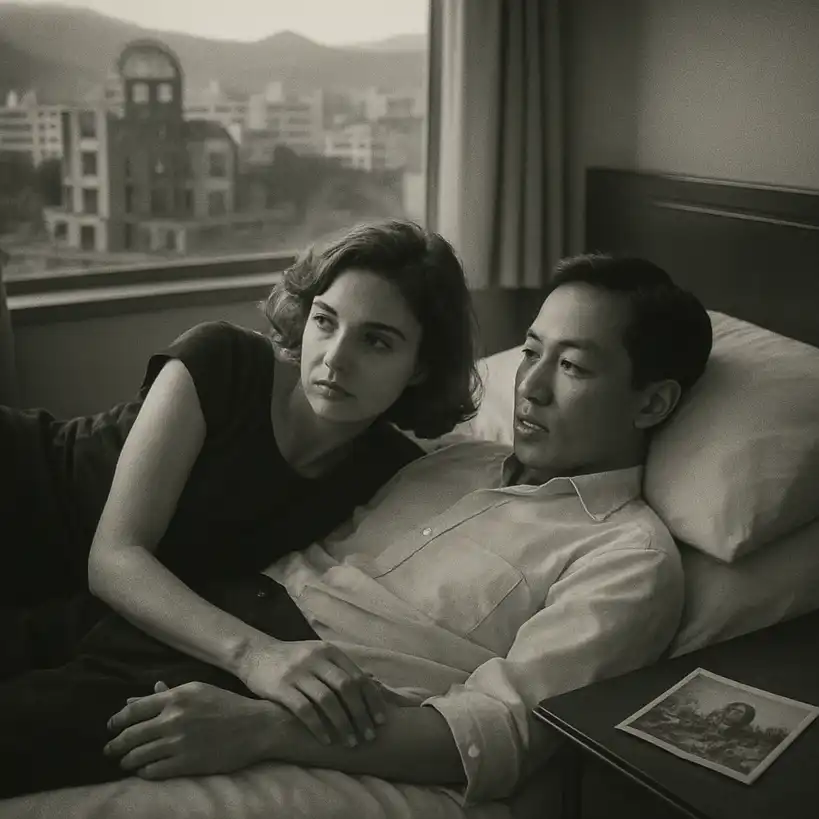
The camera moves like a hand that wants to learn. It traces skin, then concrete, then photographs under glass. In Hiroshima Mon Amour, the gaze studies what the heart fears. Looking requires courage. She narrates a museum tour as if it could close a wound. However, the tour refuses closure and returns as ache.
Words try to hold what images cannot. Therefore, the lovers invent a grammar of nearness: touch, answer, hesitate, repeat. Bodies remember time. He insists on the present; she insists on a past that stains the present. Meanwhile, the city insists on both and keeps them in one frame.
Film technique shapes meaning. Cuts interrupt certainty; close-ups turn feeling into fact; long takes force patience. Form carries witness. Because spectacle flatters forgetting, the story shrinks to rooms, beds, and streets at dawn. Moreover, the scale protects what a crowd might consume.
The lovers test names until names fail. Consequently, they choose simple ones, and the choice reveals respect rather than distance. Love speaks carefully. She tries confession and learns that confession needs a listener, not an audience. He tries comfort and learns that comfort needs truth, not speed.
For a hard mirror on love under war’s shadow and the price civilians pay for history’s grind, consider 👉 Mother Courage and her Children by Bertolt Brecht. The pairing clarifies how affection and survival collide without mercy. In the book, the answer stays modest: witness well, love gently, and refuse the lie that forgetting heals.
Names, forgetting, and the ethics of remembering
They trade names like fragile objects: “You,” “I,” “Nevers,” “Hiroshima.” In Hiroshima Mon Amour by Duras, names hold heat that stories cannot cool. Names carry wounds. She wants release; however, memory refuses charity. He asks for truth; consequently, love accepts limits. Moreover, the city keeps watch while the couple learns to speak lightly and mean deeply.
Forgetting tempts relief. Therefore, she rehearses erasure and tests how long silence can last. Forgetting tempts relief. He counters with presence rather than argument. Meanwhile, the room teaches scale: a touch repairs seconds, yet history still owns years. By contrast, slogans flatten time and sell peace too cheaply.
They invent a grammar for frailty. Because images break under pressure, they turn to breath and repetition. Remembering costs love. She confesses Nevers, and hair shorn for punishment returns as a second skin. He listens without verdict, and listening becomes labor. Consequently, tenderness stops pretending to cure and starts agreeing to carry.
The city supplies witnesses at every corner. Bikes click by; shop doors clap; museum glass shows ash that light cannot hide. Stories choose borders. She chooses detail over spectacle, and detail outlives comfort. He chooses the present tense, and the present holds both grief and desire without apology.
In Hiroshima Mon Amour, memory shapes touch rather than shattering it. Therefore, love accepts damage as context, not failure. She leans closer and refuses amnesia; he leans back and refuses judgment. As a result, the section closes on a quiet rule: speak softly, hold firmly, and let the past keep its weight while the bodies keep their word.
War’s shadow, tenderness, and endurance in Hiroshima Mon Amour
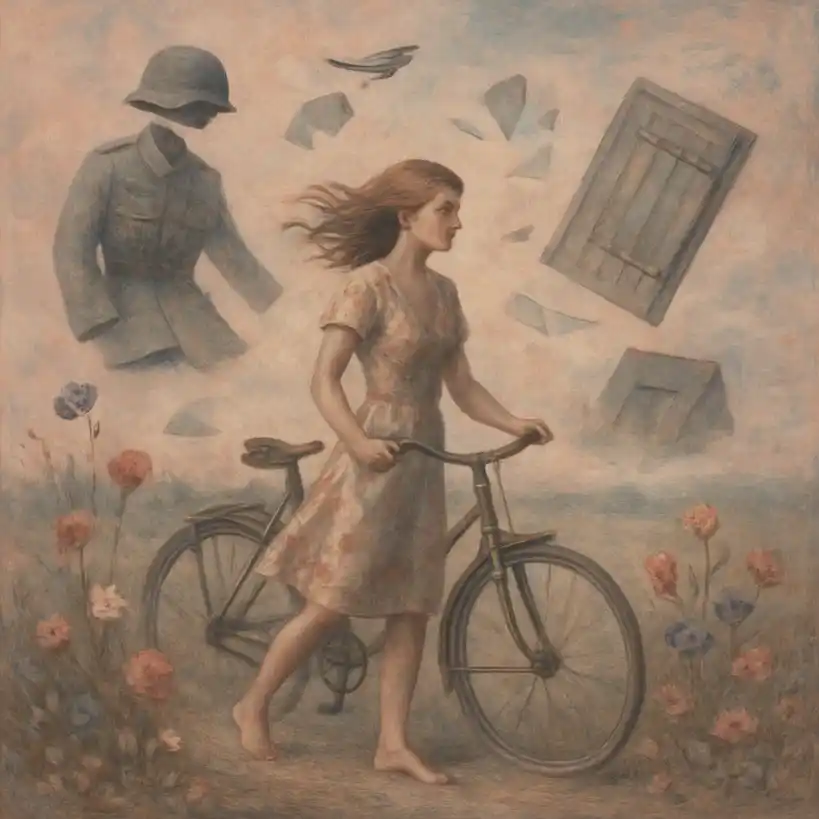
The lovers test how much pain a moment can hold. In Hiroshima Mon Amour, war shadows each gesture and still leaves room for care. Witness before comfort. She reaches for an image that does not lie; however, the honest image remains small. Therefore, the scene stays close to skin, breath, and dawn.
Form resists amnesia. Cuts interrupt habit; close shots refuse distraction; long takes teach patience. Form resists amnesia. He keeps attention on the present, and the present answers with scars that speak in whispers. Meanwhile, she threads past and now until both share one light.
Desire changes when truth enters the room. Because bodies remember, touch cannot pretend innocence. Pain alters desire. Consequently, they refuse melodrama and choose steadiness. She confesses without theater; he comforts without denial. Moreover, the city protects their modest courage by staying ordinary around them.
Time thickens when they talk about endings. She knows exile from an earlier life; he knows loss that never finishes. Care chooses patience. By contrast, speed would falsify both stories. So they hold a pace that honors damage and still lets feeling grow.
For a parallel on memory, pride, and the last inventory a life can make, a sharp mirror waits in 👉 The Snows of Kilimanjaro by Ernest Hemingway. The pairing clarifies how recollection edits love as much as it records it. Here the lesson stays gentler: keep looking, keep naming, and keep faith with what survives the telling.
Style, structure, and the grammar of intimacy
The book writes like breath. Sentences shorten, then lengthen, and the page keeps pace with a body that learns how to speak again. In Hiroshima Mon Amour, form guides ethics as much as plot guides feeling. Form carries witness. She names only what the eye can hold; however, the heart answers with more, so the line widens.
Repetition becomes a hinge rather than a habit. Therefore, words return as trials, not as ornaments. Repetition tests truth. The lovers rename themselves until the names stop lying. Meanwhile, the city edits them with light, noise, and ordinary traffic that refuses to dramatize grief.
Cuts train attention to resist spectacle. Close shots choose skin and concrete over grand abstractions. Small frames, large stakes. Because the camera behaves like a conscience, the prose follows suit and refuses shortcuts. Moreover, the scale protects dignity where a crowd might consume it.
Voice plays two roles at once. She narrates, then doubts; he listens, then answers. Dialogue makes honesty. Consequently, memory does not flatten desire; it shapes it. By contrast, forgetting would cheapen touch and sell a peace the story cannot afford.
I like how this writing trusts technique to earn mercy. Therefore, craft feels moral, not cosmetic. The city holds its scars in daylight, and the couple keeps pace without stealing them. As a result, the style teaches a rule that outlives the scene: look slowly, speak carefully, and let structure keep love from lying.
Shadows, streets, and living mirrors in Hiroshima Mon Amour
The city supplies a chorus that never shouts. Bicycles click past, doors clap, and shop signs glow. In Hiroshima Mon Amour, ordinary sound keeps history audible. Everyday life remembers. She touches rails and kiosks because touch resists cliché. However, she also fears that touch will fail, so she tries again.
Grief moves like weather rather than like speech. Therefore, the lovers agree to share a present tense that can hold both ruin and tenderness. The present holds both. Meanwhile, museums keep artifacts behind glass, and the prose keeps bodies outside glass where air still argues.
Comparisons widen sight without stealing focus. Parallels clarify scale. For the ache of modern streets where conscience sours into fatigue and beauty pricks like ash, the review nods to 👉 Le Spleen de Paris by Charles Baudelaire. Moreover, for a meditation on time, memory, and the peril of consolation, it adds 👉 Time Must have a Stop by Aldous Huxley.
These mirrors stay useful because they return the reader to pavement. Consequently, the couple learns to walk rather than to declaim. Walking teaches mercy. By contrast, slogans try to fly over the city and miss the names on the ground.
I finish this section with a simple claim. Hiroshima Mon Amour asks us to earn each sentence the way steps earn distance. Therefore, witness grows from feet and breath, not from rhetoric. As a result, love turns modest and exact, and memory turns live instead of ceremonial.
Luminous Quotes from Hiroshima Mon Amour by Marguerite Duras
- “I remember you as the city remembers heat.” The line binds touch to weather; therefore, memory moves through bodies, not speeches.
- “Names burn longer than buildings.” In Hiroshima Mon Amour, titles fail; consequently, simple words hold what ruins cannot.
- “We love softly so the past can still breathe.” The story refuses spectacle; moreover, tenderness chooses a smaller light that stays.
- “Silence speaks when photographs go quiet.” Images blink; however, witness continues, and breath finishes what glass begins.
- “Forgetfulness sells comfort; I buy time instead.” The voice rejects speed; therefore, the present earns truth one sentence at a time.
- “Your skin answers what museums cannot.” Here touch resists cliché; meanwhile, ordinary rooms guard dignity.
- “I am Nevers here, and you are Hiroshima.” Names turn into vows; consequently, distance and nearness share one frame.
- “Love survives by refusing to lie about pain.” The couple chooses patience; moreover, honesty slows desire so care can endure.
Context and Craft Facts from Hiroshima Mon Amour
- Film–novel dialogue: Script origins shape rhythm; therefore, Hiroshima Mon Amour reads like breath, with cuts, close frames, and recurring lines that test truth.
- Time signature: The work favors present tense and returns; consequently, memory folds into now, and now refuses closure that slogans sell.
- Names as places: “Nevers” and “Hiroshima” function as living nouns; moreover, the story shows how naming sets borders for love and grief.
- Museums and ethics: Exhibits anchor testimony while glass limits touch; for context on witness practice, see 🌐 Hiroshima Peace Memorial Museum.
- Everyday as witness: Bicycles, doors, and streets carry aftermath; therefore, Hiroshima Mon Amour trusts ordinary detail over grand gestures.
- Memory and philosophy: The narrative engages phenomenology’s focus on lived experience; for a primer on memory and time, visit 🌐 Stanford Encyclopedia — Memory.
- Comparative echo — empire and aftermath: For love under political shadow and the ethics of seeing, compare 👉 Burmese Days by George Orwell; the pairing clarifies how place edits desire.
- Comparative echo — games of meaning: For ritual, abstraction, and the cost of consolation, consider 👉 The Glass Bead Game by Hermann Hesse; consequently, the contrast sharpens the book’s modest scale.
Intimacy, distance, and the choice to stay
Night lifts, and the room keeps its faint glow. She studies his face as if it were a ruined street. In Hiroshima Mon Amour, touch turns into a test that language cannot grade. Touch refuses lies. She names the city again, and the name answers with heat. However, desire keeps asking for a gentler grammar.
They bargain with limits rather than with vows. Therefore, each rule protects honesty instead of comfort. Care chooses limits. He refuses to erase her past; she refuses to dramatize his patience. Meanwhile, the city keeps moving, and movement reminds them that grief belongs to time as much as to bodies.
Words steady, then falter, then steady again. Because forgetting tempts speed, they slow the scene until breath returns. Honesty slows desire. Moreover, they keep sentences short when tears rise, and they let silence hold what words would bruise. By contrast, spectacle would sell a lie and call it closure.
She remembers Nevers, and snow returns like a hand on a window. He remembers other names that never found print. Consequently, the present accepts the past without swallowing it. Presence earns trust. The room does not fix history; it prevents a smaller betrayal: pretending that tenderness survives only inside ignorance.
In Hiroshima Mon Amour by Marguerite Duras, love remains particular and modest. It chooses a tempo that respect can keep. Therefore, their nearness reads like a craft instead of a rescue. I finish this section seeing how the story trains touch to listen first, speak second, and step carefully across a floor that still keeps ashes in its seams.
The last light: what remains and who should read Hiroshima Mon Amour
Dawn rearranges shadows, and the city resumes its ordinary courage. In Hiroshima Mon Amour by Marguerite Duras, remembrance learns to walk. Witness over performance. She accepts that a day can hold both tenderness and ruin. He accepts that love can hold both hunger and restraint. However, neither accepts the lie that forgetting heals.
Form earns the moral. Cuts keep attention awake; close frames protect dignity; long takes teach patience. Therefore, the book argues for practice rather than pose. Keep memory human. Because grand statements cheapen pain, it favors rooms, streets, and names that stand on their own feet. Moreover, this scale invites readers to help instead of applaud.
Who should read this now. Filmmakers who want ethics in their edits should read it. Teachers who coach attention should read it. Care travels by craft. Journalists who weigh image against truth should read it, since the work models a pace that resists spectacle and serves people.
The ending does not claim victory; it claims fidelity. Consequently, the lovers part with a language that no longer lies about time. Hold the present. For a quiet mirror on brief encounters that bruise and bless, the review points to 👉 Nine Stories by J. D. Salinger, where ordinary rooms carry unspoken wars.
I close with a plain rule. Look long enough to earn a name; speak softly enough to keep it true. In this novel, love and memory agree to share one light. Therefore, the reader leaves with a method: resist speed, guard faces, and let the city finish the sentence that history began.