The Vice-Consul: desire behind closed doors
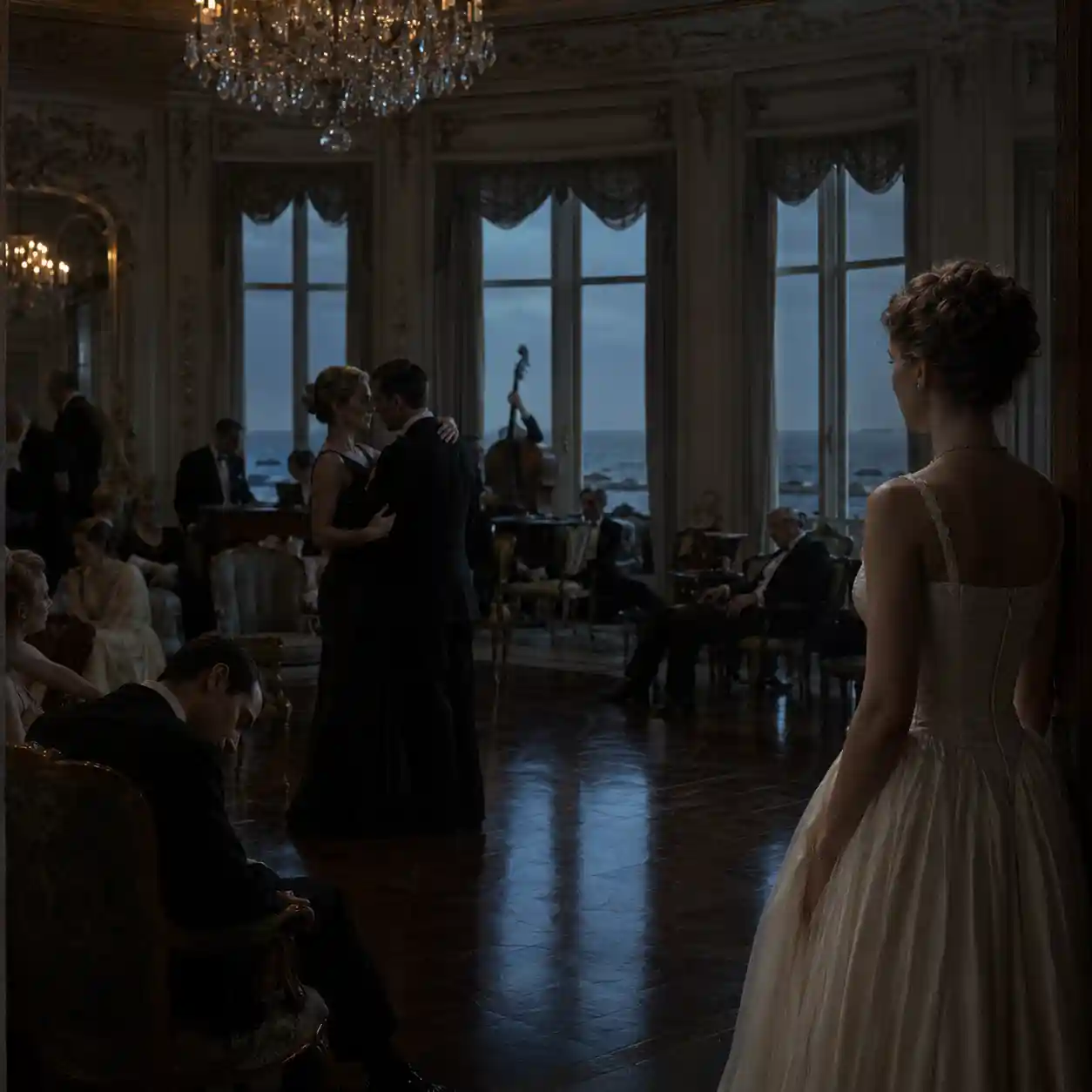
A woman keeps walking, while other people decide how her journey should be told. In The Vice-Consul, Marguerite Duras places that troubling arrangement beside the protected lives of European diplomats in colonial India. First published in French in 1966, this experimental novel follows a Cambodian beggar woman, a disgraced official and the elusive Anne-Marie Stretter. However, their proximity never produces a reassuring discovery that everyone suffers in essentially the same way.
The distinction matters because the characters possess radically unequal resources. The vice-consul has lost standing within a privileged community, whereas the woman’s wandering exposes her to hunger and bodily exhaustion. Peter Morgan, an English writer among the diplomats, tries to imagine her past. His interest may express attention, but it also raises the question of what another person’s suffering offers someone who can return to comfort.
Sympathy does not automatically dissolve privilege. The novel keeps that difficulty active through conversations, repeated movements and interruptions which prevent any character from becoming entirely available to explanation. Desire circulates behind closed doors, although sounds and memories repeatedly cross the boundaries that protect the diplomatic world. Even its apparent stillness depends on keeping certain people outside.
The Vice-Consul belongs to French literature, yet its imagined Asian geography also demands scrutiny of the European gaze. Readers looking for a conventional account of an official’s disgrace may initially feel displaced themselves. The title offers one centre, while the opening leads elsewhere. This instability is essential to a book concerned with who attracts attention, who controls a story and whose life remains beyond the reach of another person’s words.

Peter Morgan begins a story he cannot possess
Before The Vice-Consul settles into diplomatic conversation, it presents a journey under construction. Peter Morgan writes about a young woman who must move away from the place that expelled her. The opening makes the act of composition visible, so that readers encounter both a vulnerable person and the language through which someone else attempts to approach her.
This arrangement prevents us from treating every detail as transparent access to her consciousness. Morgan imagines routes, hunger and the effort of losing familiar bearings, although imagination cannot establish that he knows what those experiences mean from within. The storyteller’s interest becomes part of the story. His distance from the woman is therefore not an incidental obstacle which literary sensitivity simply removes.
A comparison with The Hour of the Star by Clarice Lispector clarifies the ethical problem. In both works, a male narrator’s effort to represent an impoverished woman exposes his own position. However, The Vice-Consul distributes that difficulty across an enclosed social circle, making storytelling one activity among the conversations and pleasures of privileged observers.
Morgan’s imagination should not be dismissed as meaningless merely because it is compromised. Without an attempt to attend, indifference would remain undisturbed. Yet his attraction to suffering also risks turning deprivation into an experience that enriches the writer more securely than it helps the person described. The novel makes that risk uncomfortable by refusing a simple division between exploitative representation and innocent silence.
Reading The Vice-Consul consequently involves keeping two questions together. What can the imagined journey disclose, and what does its telling reveal about the person arranging it? The opening does not promise that either question will eventually disappear. It establishes an attention which must remain conscious of its own limits.
Walking changes what can still be remembered
The beggar woman’s movement has a different relation to space from the diplomats’ travel. Their destinations belong to networks of appointments, houses and recognisable social positions. Her journey instead involves displacement from a home that has become impossible, with hunger determining what can happen next. The Vice-Consul makes walking a bodily necessity before it can become a literary symbol.
Pregnancy and expulsion give that movement a specific beginning. Nevertheless, the narrative does not convert the years of wandering into a neat sequence of hardships followed by recovery. Familiar places and forms of recognition loosen as she moves. The loss of orientation becomes inseparable from the loss of the social world through which a person might ordinarily explain herself.
This is why describing her simply as resilient would reduce the disturbance she brings to the book. Survival continues, but it does not restore everything that survival has cost. Continuing to live is not the same as remaining intact. Her presence resists the comforting expectation that suffering must eventually produce wisdom, strength or a story of overcoming.
The institutional naming of vulnerable bodies in Of Love and Other Demons by Gabriel García Márquez offers a related question. Others can classify a woman while failing to hear what escapes their categories. The comparison concerns this unequal authority to explain, rather than suggesting that the novels share the same history or supernatural assumptions.
In The Vice-Consul, the woman’s song complicates any claim that she is merely silent. Sound travels where a coherent biography may no longer be recoverable. It can disturb a listener without becoming an invitation to complete understanding. Her presence therefore remains active in the novel, although neither Morgan nor the reader receives permission to translate that activity into one final meaning.
The Vice-Consul exposes the protection of polite society
Calcutta is the central setting of the diplomatic circle, while Lahore names the earlier posting and the violence that has made the official unacceptable. Confusing those places would erase the particular form of his suspension. He waits within the world that has rejected him, dependent on its decisions even when his conduct disrupts its rules.
The reported shooting towards the Shalimar gardens makes his disgrace more than an unfortunate failure of manners. Yet the surrounding conversations repeatedly turn towards what sort of person he is and how his presence should be managed. This displacement deserves attention. A community can respond intensely to an embarrassing member while keeping the wider arrangements of suffering at a convenient distance.
In a Free State by V. S. Naipaul provides a useful counterpoint through its examination of mobility, dependence and unequal security. Here, however, the pressure gathers inside a diplomatic environment where invitations and exclusions regulate contact. The Vice-Consul makes the apparently minor question of who may remain in a room politically revealing.
Politeness can protect a boundary without explaining it. The group does not need to agree on the official’s motives in order to withdraw from him. Nor does its discomfort necessarily amount to a coherent moral judgment on colonial violence. Its members can recognise that something intolerable has happened while remaining uncertain about what their own tolerances have allowed.
The novel consequently gives no easy choice between defending the outsider and endorsing those who exclude him. His anguish does not cancel responsibility for his actions. Their revulsion does not make their society innocent. The Vice-Consul holds those uncomfortable propositions together, refusing to turn disgrace into either automatic redemption or a complete explanation of guilt.
Anne-Marie Stretter attracts explanations she cannot settle
Anne-Marie Stretter occupies a centre that never becomes fully transparent. As the ambassador’s wife, she belongs to the protected circle, yet her sadness and apparent distance encourage others to imagine something beyond that role. The vice-consul’s desire intensifies this uncertainty. He approaches her as though recognition from one person might answer an exclusion which the whole group has imposed.
However, The Vice-Consul does not establish her as a cure. The reception makes emotional need public, exposing the conflict between his insistence and her ability to set a limit. Her attention may seem exceptional beside the others’ embarrassment, but attention does not oblige her to grant the relationship he demands. Compassion and availability remain different things.
The conversations around her also complicate ownership of knowledge. Charles Rossett observes, asks questions and becomes involved, although each apparent explanation leaves something unresolved. A person can occupy the centre of everybody’s attention without becoming more accurately understood. Desire may actually increase the supply of confident interpretations faster than it increases knowledge.
The reconstruction of power through conversation in Conversation in the Cathedral by Mario Vargas Llosa offers a formal contrast. Both novels make speaking and recollection consequential, but this book leaves its exchanges more suspended. Conversation circulates around what it cannot resolve. The gaps are not simply clues awaiting a final explanatory scene.
Anne-Marie’s relation to the beggar woman’s song adds another pressure to The Vice-Consul. Memory crosses geographical distance without bringing the two lives into equality. The connection matters precisely because it does not make their circumstances interchangeable. Her response can register a wound in the diplomatic world’s apparent insulation, while leaving intact the material difference between hearing suffering and having nowhere else to go.
Writing Style: repetition makes explanation falter
A recurring action can seem simple until it returns often enough to unsettle the reader’s confidence. Walking, waiting, speaking and listening provide much of the movement in The Vice-Consul. Instead of turning those actions into steady progress, Marguerite Duras lets them accumulate pressure. The same gesture can remain recognisable while becoming harder to explain through an ordinary account of motive.
The Writing Style depends partly on the space between an utterance and the response it receives. Dialogue can approach an important question, then slip towards another subject or leave the answer suspended. Because information arrives through these partial exchanges, the reader must attend to hesitation as well as disclosure. A missing explanation is not always a hidden fact that patient investigation will recover.
Short statements coexist with passages of insistent description. This variation matters more than a general claim that the prose is simply spare. Heat, bodies and surrounding deprivation make themselves felt, while the conversational world attempts to keep them at a manageable distance. The prose lets pressure exceed what the speakers admit.
The novel’s nested storytelling creates a further disturbance. Morgan’s writing draws attention to representation inside a work which is itself representing suffering. That doubling encourages scrutiny without supplying an entirely secure position from which to judge. Readers cannot easily stand outside the problem and congratulate themselves on recognising it.
The Vice-Consul can nevertheless frustrate readers who need sustained access to motivation or a clearly advancing plot. Its restraint sometimes makes characters seem remote, and its atmosphere can become oppressive. Those effects should be acknowledged rather than presented as automatic signs of profundity. The achievement lies in the precise relation between form and difficulty: incomplete access becomes the experience through which the book examines unequal encounters, rather than merely a topic discussed by its characters.

Brief quotations from The Vice-Consul
These fragments use Eileen Ellenbogen’s English translation, as reproduced in the linked scholarly discussion. They belong to the opening and Peter Morgan’s account of his writing, rather than forming a collection of independent maxims. Their brevity keeps attention on the tension between a woman’s movement and another person’s attempt to make it intelligible. Quotation source
- “She walks on”: The opening gives movement priority over an established biography. Yet the attribution to Morgan immediately makes that movement part of a written construction. The woman enters our attention through an action, while the narrative also exposes the person deciding how that action reaches us.
- “How to avoid going back?”: The question makes return a danger instead of an obvious source of safety. Familiarity cannot simply offer refuge after expulsion. Consequently, the journey reverses the comforting expectation that finding one’s way home would resolve the traveller’s difficulty.
- “Make your mind a blank.”: The instruction links geographical departure with an effort to undo recognition. It sounds purposeful, although what it demands threatens the continuity of a self. Losing the way also endangers the means of remembering. The surrounding passage makes that cost bodily and mental together.
- “drunk with the sufferings of India”: Morgan’s description of his own response is deliberately troubling. His language turns other people’s deprivation into an overwhelming experience for himself. The phrase invites scrutiny of literary fascination, because intensity of feeling does not establish that the observer has escaped privilege.
- “Why her in particular?”: The question challenges the writer’s selection of one person as his subject. Choosing whom to describe is already an exercise of power. Nevertheless, the novel leaves open whether explaining that choice could ever remove the unequal relationship on which the project depends.
Facts behind the novel’s unsettled form
- The French novel appeared in 1966: Le Vice-consul entered print as a novel, although its later presentation and reception have complicated that classification. A study of its publishing history also records the move into Gallimard’s L’Imaginaire collection in 1977, showing how editions can frame the same work differently. Its experimental form therefore has a material publishing history. Publication history
- Calcutta and Lahore have different narrative functions: The official waits in Calcutta after the events at his Lahore posting. Gallimard’s presentation places the diplomatic enclave beside the expelled pregnant woman’s destitution, making the contrast between protected residence and forced movement central to the book’s geography. Publisher’s presentation
- A writer appears inside the fiction: Peter Morgan constructs the beggar woman’s earlier journey rather than merely reporting a biography established elsewhere. This makes the question of representation visible within the narrative itself, since readers must consider his imaginative involvement alongside the life he attempts to describe.
- References to European Literature: Her style in the novel has been compared to Marcel Proust and André Gide. Like Proust, she uses fragmented storytelling and deep introspection, while Gide’s existential themes resonate with her characters’ struggles.
- Repeated movement links action with inward disturbance: The woman’s walking and the official’s waiting give recurrence a structural role in The Vice-Consul. Reading alongside Melancholy by Jon Fosse can clarify how repetition unsettles perspective, although this is a critical comparison rather than a documented influence.
- Competing accounts prevent a single authoritative portrait: Marguerite Duras distributes information through observations, dialogue and imagined narration. That formal choice invites comparison with the conflicting voices of Medea by Christa Wolf, while the differences remind us that refusing one final account can serve distinct historical and ethical purposes.
Why The Vice-Consul remains difficult in useful ways
The Vice-Consul is particularly valuable for readers interested in the ethics of attention. It asks more than whether privileged people notice suffering. It examines what noticing allows them to feel, say and imagine, and whether those responses alter the circumstances that make their position secure. The question remains demanding because the novel includes literary attention within its scrutiny.
There is also a powerful refusal of emotional equivalence. Loneliness within privilege and destitution can coexist, but describing both as isolation does not make them the same experience. The narrative’s parallel figures expose how easily a shared vocabulary can conceal unequal conditions. A common feeling does not imply a common situation. This distinction gives the book more force than a general meditation on universal sadness.
Readers drawn to psychological mysteries should expect an unusual kind of uncertainty. The official’s motives, Anne-Marie’s distance and Morgan’s intentions cannot be reduced to answers waiting behind the next conversation. Instead, the difficulty concerns the limits of what other people can make intelligible. Reading means remaining alert without converting every ambiguity into permission for an arbitrary interpretation.
The novel also has limits which belong inside an honest assessment. Its displaced Asian woman remains mediated through a European literary construction, however visibly that construction questions itself. Exposing the problem does not simply solve it. The book rewards a reading that can recognise its formal intelligence while continuing to ask what perspectives remain inaccessible or insufficiently developed.
The Vice-Consul therefore suits readers willing to let uncertainty sharpen judgment rather than suspend it. Its beauty is inseparable from discomfort, and its emotional force rarely arrives as consolation. The lasting experience is of boundaries that speech can reveal but cannot automatically cross. That makes the novel both an examination of exclusion and a test of the reader’s own wish to understand.
Summary of The Vice-Consul
Peter Morgan imagines the earlier life of a Cambodian woman who has been expelled from home while pregnant. Her long movement through Asian landscapes brings hunger, disorientation and the erosion of familiar attachments. The narrative presents this journey alongside the writer’s act of constructing it, so her past does not arrive as an uncomplicated personal testimony.
In Calcutta, the French diplomatic circle lives at a protected distance from surrounding deprivation. Anne-Marie Stretter, the ambassador’s wife, attracts attention from men whose conversations attempt to explain her reserve and sadness. The vice-consul of Lahore is also present, awaiting a decision about his future after violent conduct at his previous posting has made him unacceptable to his peers.
The Vice-Consul gradually brings these lines into proximity without joining them into one resolved plot. The beggar woman’s presence and song disturb the boundary around the diplomatic world. Meanwhile, the official’s interest in Anne-Marie becomes an urgent demand for recognition, drawing embarrassment and rejection from the surrounding company.
At the reception, the conflict between his insistence and the group’s efforts to contain him becomes public. Charles Rossett observes the situation and later hears the official’s appeal, although his involvement does not give him complete understanding. Knowing more does not make intervention possible. Anne-Marie remains the focus of explanations that never fully account for her responses.
The movement towards the islands extends these unresolved relationships rather than supplying a decisive reckoning. Morgan’s imagined journey, the woman’s continuing existence and the official’s exclusion remain connected by echoes, conversations and unequal forms of isolation. The Vice-Consul leaves readers with people whose lives touch without becoming mutually comprehensible, while the social distances separating them survive the intensity of their encounters.
More Reviews of Books by french novelist