Life of Galileo by Bertolt Brecht – Illuminating the Mind
What I have learned from Life of Galileo
I found this play by Brecht to be truly enlightening. Right from the scratch I was drawn into Galileos passion for science and his quest for truth. His depiction of Galileos challenges in the face of the Churches authority gripped me immersing me in the tension and thrill of his discoveries.
As I followed Galileos journey I couldn’t. Ponder the ethical quandaries he encountered. His struggle between upholding principles and ensuring his safety struck a chord with me. The dialogues were sharp and provocative prompting me to reevaluate my perspectives on knowledge, influence and accountability.
By the plays conclusion I felt a blend of respect and sadness, for Galileo. The play prompted me to contemplate the sacrifices made in the name of progress and the bravery required to defend ones beliefs. The compelling narrative and vibrant characters made this an impactful read that lingered in my thoughts long after I finished it.
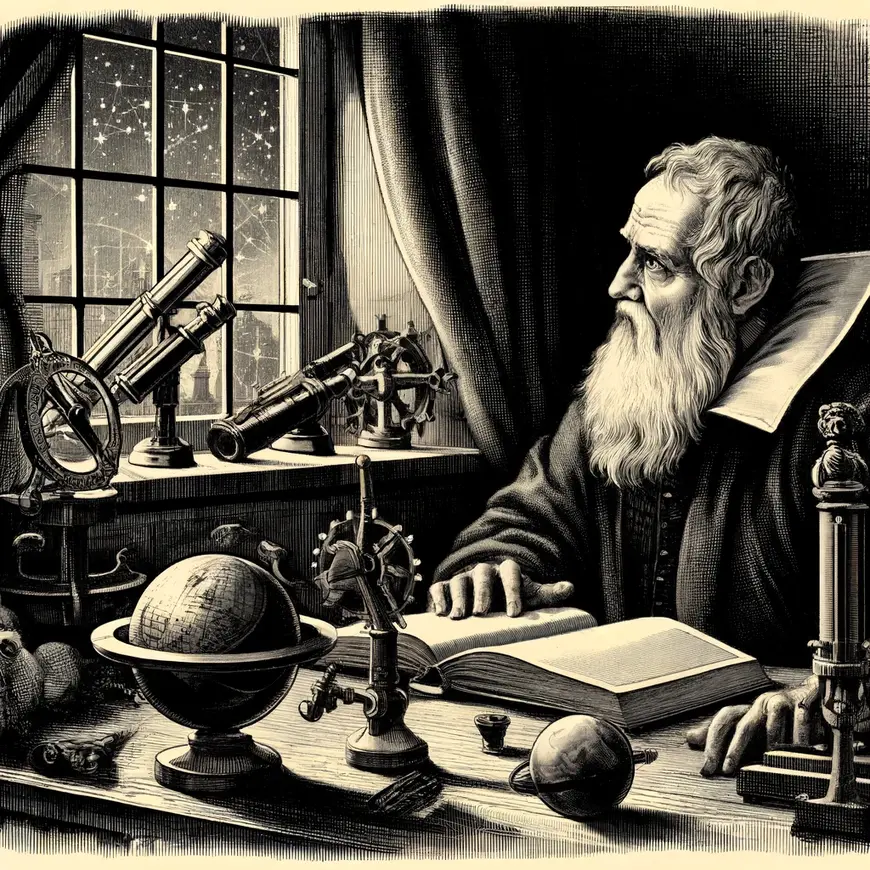
Bertolt Brecht, the visionary German playwright, shines a spotlight on the tumultuous life and groundbreaking ideas of Galileo Galilei in his compelling play, Life of Galileo. With its thought-provoking narrative and powerful exploration of the clash between science and ideology, his masterpiece takes audiences on an intellectual journey that challenges conventional wisdom and celebrates the triumph of human curiosity.
The play written by Bertolt Brecht in 1938, is a gripping historical drama that delves into the life and trials of the renowned astronomer, Galileo Galilei. Brecht, a pioneer of epic theater, crafts a thought-provoking narrative that captures the essence of Galileo’s intellectual struggles and the societal repercussions of his revolutionary scientific discoveries.
Plot Overview: Life of Galileo
Life of Galileo unfolds in 17th-century Italy during the Age of Enlightenment. Galileo Galilei, an Italian mathematician, physicist, and astronomer, challenges the prevailing geocentric model of the universe, advocating for the heliocentric Copernican theory. His controversial findings threaten to overturn long-held beliefs upheld by the powerful Catholic Church.
As Galileo shares his discoveries with students and fellow scholars, he faces increasing opposition from religious authorities who view his scientific ideas as heretical and dangerous. Undeterred, Galileo continues to pursue knowledge and embraces the telescope as a tool to observe the celestial bodies, further confirming the heliocentric model.
As the Church’s pressure intensifies, Galileo finds himself torn between his desire for truth and his fear of persecution. He grapples with the ethical dilemma of whether to recant his findings to appease the Church or to stand by his convictions, even at the cost of facing dire consequences.
Illuminating Themes and Social Commentary
The work is a rich tapestry of themes that resonate throughout the play. One of the central themes is the tension between scientific progress and dogma. His portrayal of Galileo’s struggle to disseminate his discoveries in the face of religious opposition highlights the timeless conflict between empirical evidence and deeply entrenched beliefs.
The play also delves into the ethical dilemmas faced by individuals who challenge the status quo. Galileo’s internal struggle between upholding his scientific integrity and succumbing to the pressures of the Church serves as a powerful commentary on the sacrifices often required in the pursuit of knowledge and truth.
Additionally, Life of Galileo offers a critical examination of power structures and the manipulation of knowledge for political ends. The Church’s attempts to suppress Galileo’s findings underscore the potential dangers of suppressing scientific inquiry and stifling intellectual freedom.
The play remains a timeless and influential work that has captivated audiences worldwide. His use of epic theater techniques, such as narrative distancing and historical context, enhances the play’s universality and makes it relevant to contemporary audiences.
The play’s exploration of the power dynamics between science and authority continues to resonate with audiences, sparking discussions on the importance of preserving intellectual freedom and promoting evidence-based inquiry.

Quotes from Life of Galileo
- “The aim of science is not to open the door to infinite wisdom but to set a limit to infinite error.” This quote explains that science seeks truth by correcting mistakes, not claiming all-knowing wisdom. Bertolt Brecht highlights the practical role of science in improving understanding.
- “Unhappy is the land that needs a hero.” The author critiques societies that rely on heroes instead of collective action. He suggests that a healthy society shouldn’t depend on extraordinary individuals for change.
- “Truth is born of the times, not of authority.” The writer emphasizes that truth evolves with progress and discovery, not by blindly following established power. This quote reflects Galileo’s defiance of the church’s dogma.
- “I believe in reason and doubt.” Galileo values questioning and critical thinking. The novelist uses this line to show the importance of skepticism in advancing knowledge and challenging outdated beliefs.
- “The old books were right about how the heavens move, but they were wrong about why.” This quote highlights the shift from traditional beliefs to modern scientific understanding. He underscores the importance of questioning established ideas to uncover deeper truths.
- “The human race is the same everywhere. Ignorance and fear go hand in hand.” Brecht critiques how fear often prevents people from embracing new knowledge. He shows that ignorance thrives when individuals resist change.
Trivia Facts about Life of Galileo by Bertolt Brecht
- Written in Exile During World War II: Bertolt Brecht wrote Life of Galileo while in exile in Denmark and later in the United States. The play reflects his concerns about truth, authority, and scientific progress during turbulent political times.
- Galileo’s Conflict Mirrors Modern Scientists: The play was inspired by the moral dilemmas faced by scientists during Brecht’s time. Particularly those involved in the development of nuclear weapons, such as the Manhattan Project.
- Connection to Albert Einstein: He admired Albert Einstein, whose theories revolutionized science. Einstein’s discoveries influenced his portrayal of Galileo as a trailblazer who challenged conventional knowledge.
- First Premiered in Zurich, Switzerland: The play premiered in Zurich in 1943 at the Schauspielhaus Zürich. A theater known for supporting experimental and politically charged works during the war.
- Themes of Responsibility and Science: The play reflects his concerns about the ethical responsibilities of scientists. It connects to his broader critique of those who prioritize progress without considering its consequences.
- Set in Italy, a Hub of the Renaissance: The play is set in Italy during the Renaissance. A period of scientific and cultural breakthroughs. Locations like Florence and Venice highlight Galileo’s role in this transformative era.
- Collaboration with Charles Laughton: The 1947 version of the play was written in collaboration with the British actor Charles Laughton. Who also played the role of Galileo in its American premiere in Los Angeles.
Conclusion of Life of Galileo
In conclusion, the play by Bertolt Brecht is a powerful and intellectually stimulating play. That offers a riveting portrayal of Galileo Galilei’s life and struggles. His masterful narrative and thought-provoking themes challenge audiences. He prompts them to question the intersection of science, ideology, and power in society.
The play’s impact and relevance make Life of Galileo essential literature. The playwright explores scientific progress, intellectual freedom, and the quest for truth. His work reminds us of the triumph of the human mind and the power of curiosity.
If you seek a captivating and enriching theatrical experience, this work is a must-see. Prepare to be illuminated by the writert’s brilliant narrative. Witness the enduring legacy of Galileo Galilei’s pursuit of knowledge and truth.