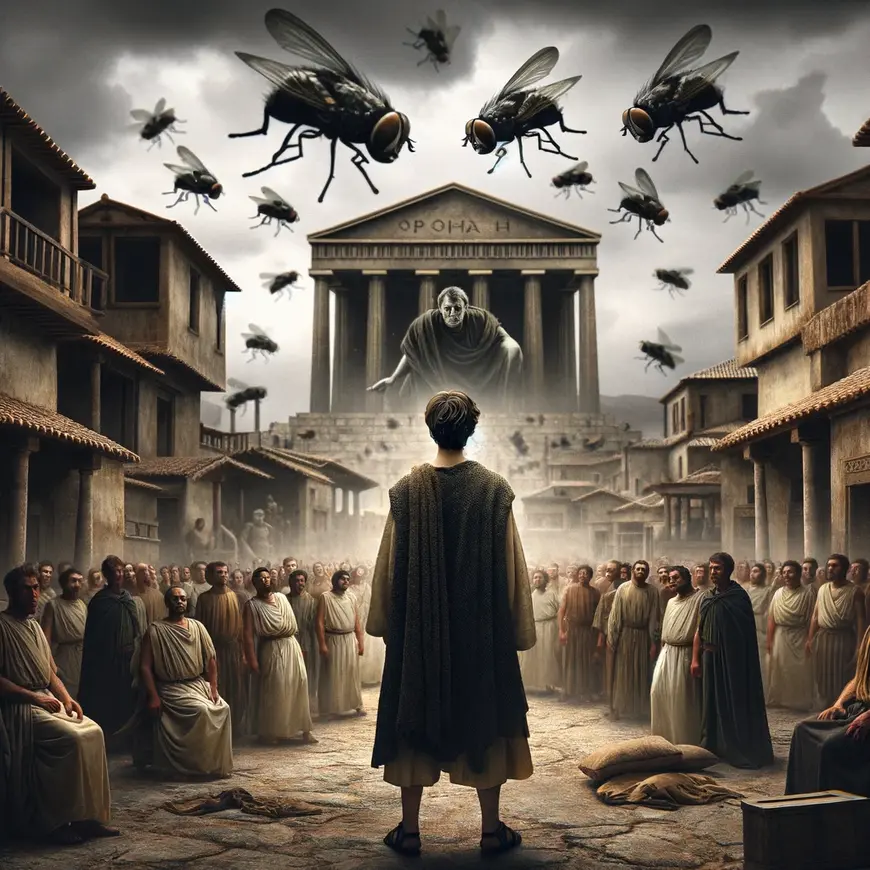
Jean-Paul Sartre’s Nausea – Exploration of Existential Turmoil
My experiences when reading Nausea by Sartre
Reading the book was unsettling and deep. I felt absorbed by Antoine Roquentin’s thoughts and his strange experiences. His existential crisis was vivid and made me uneasy. Every page seemed to echo his confusion about existence. His descriptions felt intense and sometimes overwhelming. I kept pausing to think about what it all meant. The feeling of Nausea was more than just physical; it was a realization of life’s absurdity.
As I read on, I felt both fascinated and disoriented. The way Antoine saw objects and people changed how I viewed my own surroundings. The idea that life had no set meaning struck me hard. It forced me to question my own beliefs. This writing pushed me to confront uncomfortable truths. By the end, I felt a mix of clarity and emptiness. It was thought-provoking and powerful.
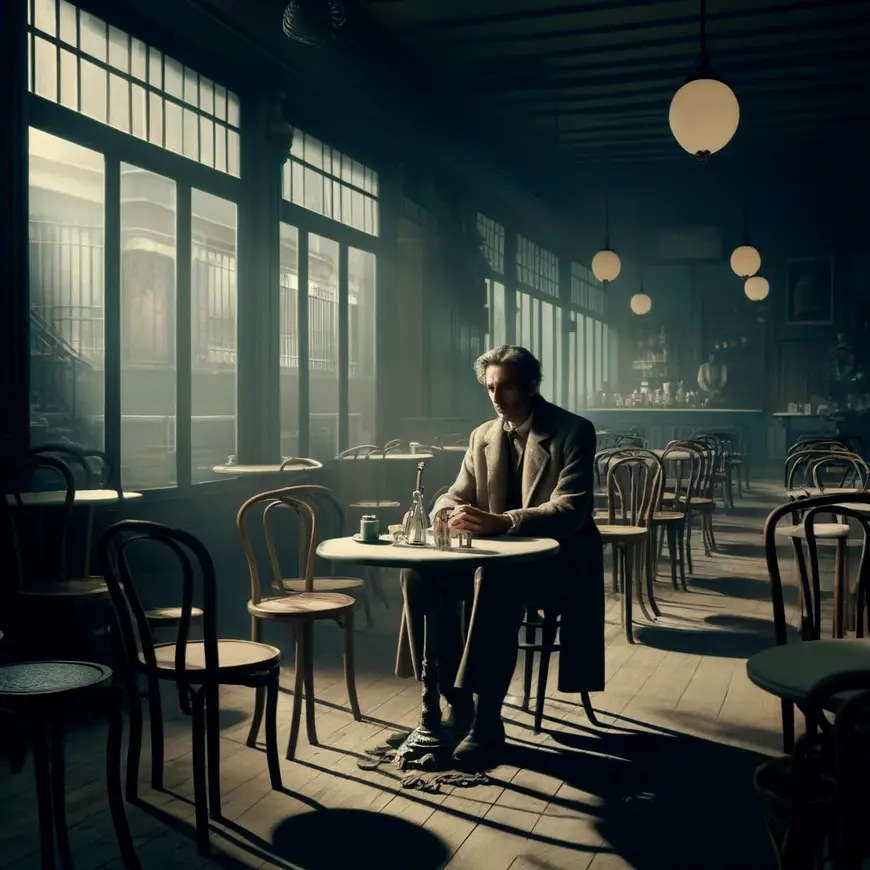
Step into the realm of existential philosophy with Jean-Paul Sartre‘s seminal work, Nausea. In this thought-provoking novel, the French writer takes us on a journey into the mind of Antoine Roquentin, a disenchanted writer who grapples with the unsettling feeling of nausea. As we delve into Roquentin’s inner world, we confront the fundamental questions of existence, meaning, and the human condition. His evocative prose and philosophical insights make this story a timeless and captivating read that invites us to contemplate the complexities of our own existence.
A Disorienting Encounter with Nausea
The novel begins in the fictional French town of Bouville. Antoine Roquentin feels an inexplicable and profound nausea. This unsettling sensation symbolizes Roquentin’s deep sense of alienation and disconnection from the world. Roquentin, a writer researching the life of an 18th-century historical figure, becomes increasingly disillusioned. He struggles with the meaninglessness of his own existence and the seemingly absurd nature of reality.
Jean-Paul Sartre skillfully guides us through Roquentin’s psychological turmoil. He reveals the raw vulnerability of a man facing an existential crisis. As the layers of Roquentin’s consciousness are peeled back, we confront the abyss of human existence. We see the profound freedom we possess to shape our own lives.
The work is often considered a quintessential work of existentialism, a philosophical movement that focuses on the individual’s responsibility and freedom in shaping their own lives. The author delves into the core tenets of existential thought through Roquentin’s experiences and reflections.
Existentialism emphasizes that existence precedes essence, meaning that there is no predetermined purpose or meaning to human life. It is up to each individual to define their own essence through their choices and actions. In Nausea, Roquentin grapples with the weight of this existential responsibility, highlighting the anxiety and despair that can accompany the realization of our own freedom.
The Anxieties of Authenticity
As Roquentin confronts the void of existence, he also struggles with the concept of authenticity. Authenticity, in the context of existentialism, is the idea of living in accordance with one’s true self and values. Roquentin’s pursuit of authenticity leads him to question the roles and masks people adopt to fit into society’s expectations.
Through Roquentin’s musings, the writer challenges readers to examine their own lives and confront the ways in which they may be living inauthentically. The novel serves as a powerful reminder that true fulfillment comes from embracing our individuality and confronting life’s uncertainties head-on.
Throughout Nausea, Sartre paints a bleak and unfiltered portrait of the world. Ordinary objects lose their familiar meanings and become absurd and alien, reflecting Roquentin’s profound sense of estrangement from reality. The novel presents a philosophical exploration of existential nothingness, where traditional values and beliefs are stripped away, leaving behind a world devoid of inherent meaning.
His depiction of this world of nothingness is both unsettling and thought-provoking. Through Roquentin’s eyes, we come to question the validity of the structures and conventions that govern our lives, urging us to seek our own understanding and purpose in an otherwise indifferent universe.
The Absurdity of Time
Time in Nausea becomes a crucial theme in Roquentin’s thoughts. He struggles with the illusory nature of time, seeing the past and future as constructs of the human mind. The constant flow of time highlights the absurdity of existence, making all human efforts seem futile and meaningless.
His exploration of time deepens the novel’s existential themes. It emphasizes the fleeting nature of life and the urgent need to find meaning and purpose in the present moment.
Roquentin immerses himself in self-reflection and intellectual pursuits to find meaning. He looks for answers in history, literature, and philosophy but finds no satisfying solution to his existential angst. The philosopher portrays the human desire for meaning as a constant struggle. This leads Roquentin to face the limits of human knowledge and the inherent uncertainty of life.
The novel prompts readers to question their own search for meaning and face the complexities of existence without giving in to despair. While the novel explores the existential void, it also urges us to embrace the journey of seeking meaning and understanding despite uncertainty.
Philosophical Language
Though the book is deeply philosophical, he presents his ideas in a narrative form accessible to all readers. The novel’s language is evocative and immersive, pulling readers into Roquentin’s world and internal struggle.
Sartre’s writing style mixes introspection with vivid descriptions of Roquentin’s surroundings. This creates a sensory experience that enriches the philosophical exploration. This seamless blend of narrative and philosophy makes Nausea engaging and rewarding for both philosophical enthusiasts and general readers.

Quotes from Jean-Paul Sartre’s Nausea
- “I was in the park just now. The roots of the chestnut tree were sunk in the ground just at my feet. I had only to will a slight rise of the heel to overturn the whole thing, to send the tree hurtling into the sky, the sky into space, but the depth of the roots bound me to the spot. It was the will to die of the roots.” – Jean-Paul Sartre, Nausea
- “Existence is not something which lets itself be thought of from a distance: it must invade you suddenly, master you, weigh heavily on your heart like a great motionless beast—or else there is nothing more at all.”
- “There is not love of life without despair about life.”
- “Freedom is what you do with what’s been done to you.”
- “I am free: there is absolutely no doubt about that. If I were not free, I could not stay here.”
Trivia Facts about Nausea by Jean-Paul Sartre
- Set in Bouville: The author based the fictional city of Bouville on Le Havre. He lived and taught there in the 1930s.
- Influence of Heidegger: Jean-Paul Sartre was influenced by Martin Heidegger’s philosophy. Nausea explores similar existential themes.
- Friendship with Camus: The writer and Albert Camus were close friends. Both writers were key figures in existentialist literature.
- Published in 1938: The book was published in 1938. It marked his rise as a major philosophical and literary figure in Paris.
Nausea is a profound journey into existential turmoil. The novel follows Antoine Roquentin as he explores existence, freedom, and the search for meaning. His evocative prose and philosophical insights make these pages timeless. It continues to captivate readers and provoke thought.
As we accompany Roquentin, we confront the complexities of the human condition. The book challenges us to embrace the freedom and responsibility of defining our own existence. It encourages us to seek authenticity and meaning in a seemingly indifferent world.
In the end, that story reminds us that the pursuit of understanding and authenticity can offer fulfillment and purpose. If you are ready to explore existential thought and human complexities, the novel is a must-read. It will leave a lasting impact on your philosophical journey.