Northanger Abbey by Jane Austen: A Delightful Satire on Love and Literature
My Thoughts on Northanger Abbey
I had such a time reading the novel by Jane Austen. Right from the beginning I found myself drawn to Catherine Morland. The youthful character whose fascination with Gothic novels sets her on a path of amusing misunderstandings. Her clever and humorous writing kept me thoroughly engaged.
As I followed Catherine’s escapades in Bath and later at Northanger Abbey I appreciated the depictions of society and the playful criticism of ideals. Catherine’s imagination often took flight causing me to chuckle at her musings and misinterpretations. Her personal growth and realization about the boundary between fiction and reality were both captivating and heartwarming.
By the conclusion of the book I was completely captivated by this light hearted tale. The book made me admire Her skill in weaving romance, satire and social commentary. The story left me feeling warm hearted with a smile, on my face making it a delightful and unforgettable read.

Jane Austen’s “Northanger Abbey” is not just a novel. It’s a whimsical journey through the romantic landscapes of the early 19th century, adorned with sharp wit and social commentary. As readers accompany the charmingly naive Catherine Morland into the world of Bath society, they are treated to a delightful exploration of love, friendship, and the pitfalls of an overactive imagination. Buckle up for a literary escapade that combines Austen’s signature humor with a playful deconstruction of Gothic tropes.
Unveiling the Charm of Northanger Abbey
At the heart of “Northanger Abbey” is the endearing heroine, Catherine Morland. Her innocence and exuberance brings a breath of fresh air to Austen’s repertoire of leading ladies. Unlike the polished and accomplished heroines in other her novels, Catherine is refreshingly ordinary—a young woman with a penchant for novels and a vivid imagination.
Catherine’s journey is a delightful coming-of-age tale as she navigates the complexities of society, friendships, and, of course, love. Her genuine and unassuming nature endears her to readers, making her triumphs and pitfalls all the more engaging. She masterfully crafts Catherine as a relatable character, inviting readers to cheer for her as she stumbles through the social intricacies of Bath and Northanger Abbey.
The work stands apart in her oeuvre as a delightful experiment in literary satire. The author takes a playful jab at the Gothic novels popular in her time, with their brooding heroes, mysterious settings, and sensational plot twists. The novel becomes a witty commentary on the dangers of allowing a fervent imagination to run wild, especially when fueled by the melodramatic tales of Gothic literature.
As Catherine indulges in her passion for novels, particularly those of Ann Radcliffe, the novelist uses the opportunity to lampoon the exaggerated and often absurd elements of Gothic fiction. The result is a novel that not only tells a charming love story but also serves as a tongue-in-cheek exploration of the impact literature can have on an impressionable mind.
Bath Society: A Canvas for Social Commentary
The backdrop of Bath society provides the writer with a canvas for her keen social commentary. As Catherine enters the glittering world of balls, social gatherings, and matchmaking, readers are treated to her signature wit and insight into the societal norms and expectations of the time. Bath, with its peculiarities and rituals, becomes a microcosm of the broader social landscape Austen often critiques in her works.
Through the lens of Bath society, she explores themes of class, manners, and the pursuit of advantageous marriages. The characters that populate this world, from the charming Henry Tilney to the snobbish General Tilney, serve as instruments for her incisive observations on the foibles of human behavior.
As with any of her novel, love and courtship take center stage in “Northanger Abbey.” However, the author subverts some of the traditional romance tropes, offering a more pragmatic and realistic exploration of love. The courtship between Catherine and Henry Tilney unfolds with a subtle and gentle charm. Eschewing the dramatic declarations and grand gestures often found in romantic literature.
Her approach to love in this book reflects her belief in the importance of compatibility, mutual respect, and shared values. The novel becomes a celebration of a quieter, more genuine kind of love. One that stands the test of time without the need for extravagant displays.
Gothic Intrigues at Northanger Abbey
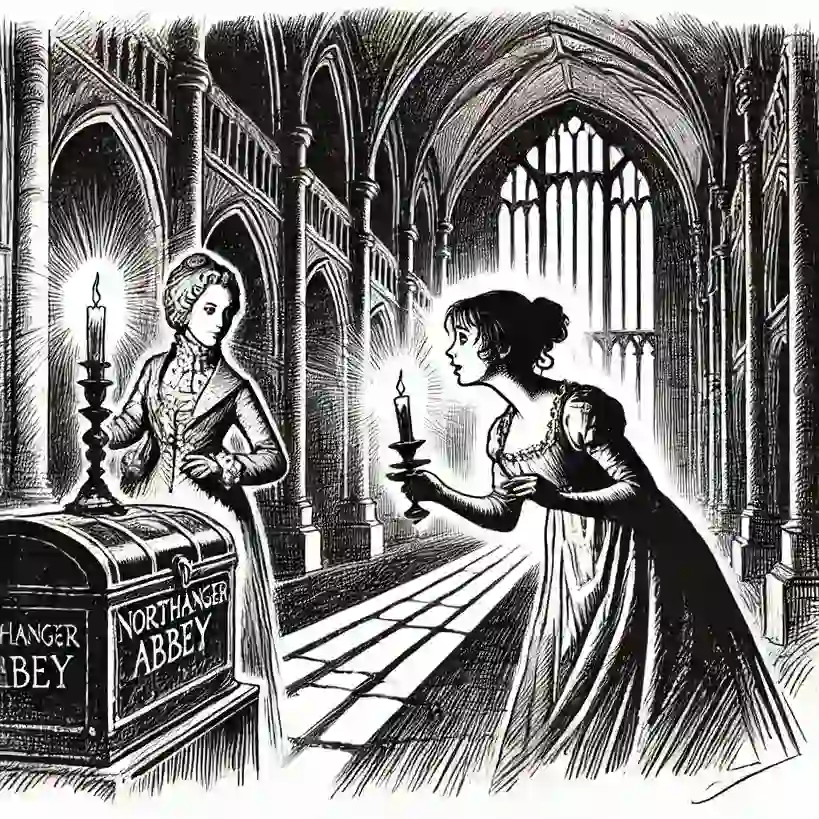
The titular setting provides a fascinating backdrop for the novel’s climactic moments. As Catherine’s imagination runs wild amidst the ancient corridors and hidden chambers of the abbey, the writer skillfully plays with the contrast between reality and the sensational scenarios Catherine envisions.
The Gothic intrigues at Northanger Abbey serve as a clever device for Austen to highlight the dangers of allowing fiction to dictate one’s expectations of reality. The novel becomes a meditation on the balance between imagination and reason, reminding readers of the pitfalls of projecting fantastical narratives onto the mundane world.
Supporting Characters: A Tapestry of Personalities
She populates “Northanger Abbey” with a colorful array of supporting characters, each contributing to the tapestry of the narrative. From the mischievous Isabella Thorpe to the earnest Eleanor Tilney, the characters add depth and nuance to the unfolding story. Her ability to create memorable and distinct personalities, each with their quirks and motivations, enriches the reading experience.
The Thorpe siblings, Isabella and John, in particular, serve as foils to the more genuine and principled characters like Catherine and Henry. Their manipulative and self-serving nature adds an element of drama to the narrative, showcasing her talent for creating characters that embody the vices and virtues of society.
While “Northanger Abbey” has earned its place among Austen’s beloved works, some readers may find its tone lighter and less emotionally complex compared to some of her other novels. The satire, while humorous, may be less biting than in “Pride and Prejudice” or “Emma,” and the romantic elements are approached with a gentler touch.
Additionally, the novel’s structure, with its self-aware narrator addressing the reader directly, may not appeal to all tastes. Some readers might prefer the immersive third-person narration found in her other works, finding the occasional intrusion of the authorial voice a departure from the usual narrative style.
A Witty Twist on Gothic Romance
This book made me smile from the first page. Northanger Abbey isn’t just a romance—it’s a clever, funny, and bold satire of gothic novels and social expectations. The novelist shows her playful side here, and it’s brilliant.
The story follows Catherine Morland, a sweet and imaginative girl who loves spooky books. When she visits Northanger Abbey, she expects mystery, secrets, maybe even a haunted room. Instead, she finds awkward dinners, polite conversations, and a slow, real-world romance. But that’s what makes it so fun.
She mocks the dramatic tropes of gothic fiction while still giving us a heartwarming coming-of-age story. Catherine isn’t perfect. She guesses wrong. She makes mistakes. But she learns, grows, and stays true to herself. That’s why I loved her.
The writing is light and full of charm. The narrator even speaks to the reader at times, adding to the humor. The writer uses this style to explore deeper ideas—like gender roles, class, and the power of books. And she does it with style and grace.
If you want a book that’s smart, funny, and refreshingly honest, this is it. It’s one of her shorter novels, but it still offers rich characters, witty dialogue, and unexpected twists. The novel may not be as famous as Pride and Prejudice, but it’s just as clever—and twice as cheeky.

Famous Quotes from Northanger Abbey by Jane Austen
- “The person, be it gentleman or lady, who has not pleasure in a good novel, must be intolerably stupid.” This quote humorously criticizes those who do not find joy in reading novels. It suggests that such people lack intellectual depth or cultural appreciation. It reflects her defense of novel-reading, which was often looked down upon in her time as frivolous.
- “Friendship is certainly the finest balm for the pangs of disappointed love.” Here, the writer points out that the comfort provided by friends can heal the wounds caused by romantic heartbreak.
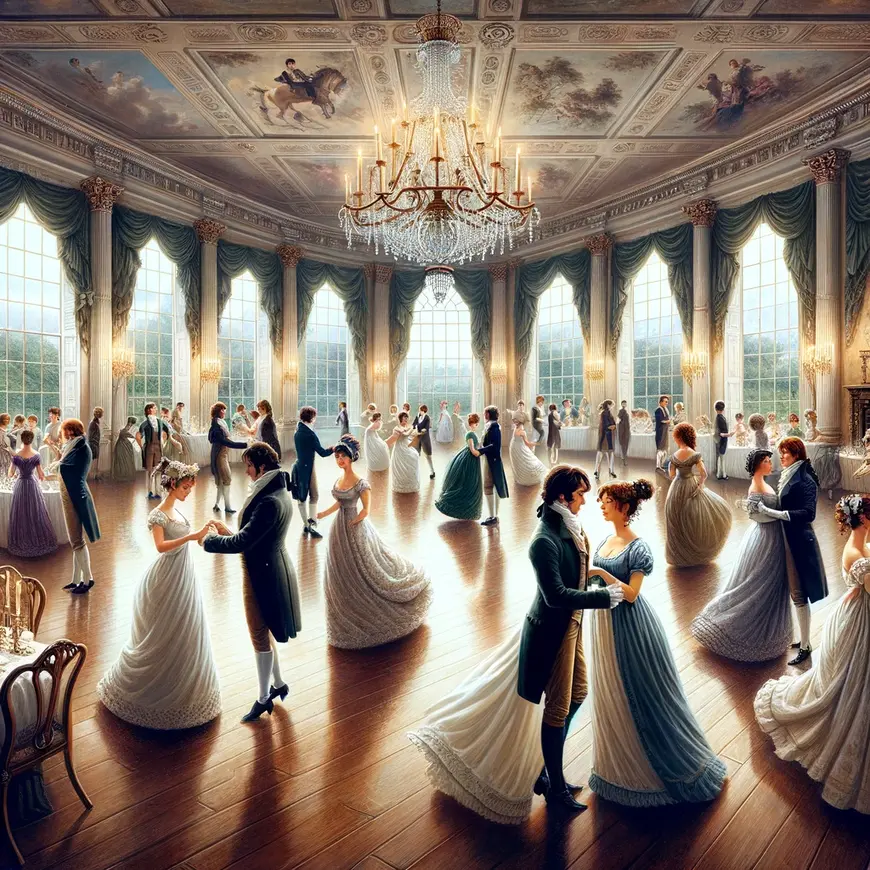
- “To be fond of dancing was a certain step towards falling in love.” This quote draws a connection between dancing and romantic attraction. It reflects the social customs of Austen’s era where dancing was a common way for young men and women to meet and court. It highlights the idea that shared interests and activities can lead to deeper feelings.
- “There is nothing I would not do for those who are really my friends. I have no notion of loving people by halves; it is not my nature.” This declaration by one of the characters emphasizes loyalty and the intensity of true friendship. It illustrates her view on the importance of sincerity and wholeheartedness in personal relationships.
- “A woman, especially, if she have the misfortune of knowing anything, should conceal it as well as she can.” This ironic statement critiques societal expectations of women in the 19th century. Women were often expected to appear less intelligent or knowledgeable to avoid threatening the male ego. She uses this quote to subtly mock and criticize these societal norms.
Trivia Facts about Northanger Abbey
- Originally Written First: “Northanger Abbey” was actually the first novel Jane Austen completed for publication. It was written in 1798-1799, though it was published posthumously in 1817. The novel was originally titled “Susan.”
- Sold but Not Published Initially: She sold the manuscript in 1803 for £10 to a publisher who chose not to publish it.
- A Parody of Gothic Novels: The novel is a satirical parody of the popular Gothic novels of the time, such as Ann Radcliffe’s “The Mysteries of Udolpho.” The novelist uses “Northanger Abbey” to poke fun at the tropes of these novels, which often included mysterious mansions, dark secrets, and supernatural occurrences.
- A Commentary on Novel Reading: The writer discusses the impact of excessive reading novels on young women’s perceptions of the world. Catherine’s misinterpretations of the real world as reflective of Gothic novels she has read is a playful critique of the influence of literature.
- Delayed Publication and Reception: Due to its delayed publication, this book provides an interesting snapshot of Austen’s early writing style. It distincts from her more mature works like “Pride and Prejudice” and “Emma.” This makes it a fascinating study for how her writing evolved over time.
- Introduction to her Themes: The novel introduces several themes that would become common in her later works. This includes the critique of social practices and the development of the heroine’s moral and personal maturity.
- Inclusion of Real Locations: Unlike some of her other novels, the author includes real places in “Northanger Abbey.” Such as Bath, England, a popular social hub in the Georgian era. The detailed description of social life in Bath provides historical context and authenticity to the narrative.
A Timeless Celebration of Wit and Romance
Northanger Abbey endures as a timeless celebration of her wit, keen observations, and mastery of the romantic novel. While it may not enjoy the same level of recognition as “Pride and Prejudice,” the novel has carved its place as a charming and playful entry in the Austenian canon.
Her exploration of love, literature, and the pitfalls of an overactive imagination continues to resonate with readers of all ages. “Northanger Abbey” remains a testament to her ability to weave a narrative that entertains, enlightens, and, above all, endears itself to the hearts of those who revel in the dance of wit and romance.
In conclusion, the work invites readers on a playful sojourn into her literary landscape—a world where love and satire coexist, and the pitfalls of an overactive imagination are explored with charm and wit. With Catherine Morland as a delightful guide, readers navigate the intricacies of society, the allure of literature, and the genuine warmth of her storytelling.
Northanger Abbey stands as a testament to Austen’s ability to craft novels that transcend their time, offering readers a mirror to their own follies and triumphs. It’s a novel that invites laughter, reflection, and, ultimately, an appreciation for the enduring magic of her literary legacy. So, step into the world of “Northanger Abbey” and let Austen’s pen lead you on a delightful dance through the pages of romance and satire.