Sanditon: Selling Health Before the Story Ends
Jane Austen‘s Sanditon turns a seaside resort into an argument about the business of feeling better. Mr Parker believes his town can cure almost everyone, and his confidence grows conveniently alongside his investment in its success. Charlotte Heywood arrives with fewer reasons to be persuaded. Through her attention, the fragment reveals a place where health, fashion, property, and marriage prospects have become difficult to separate.
This unfinished novel of manners is also a commercial satire. Its surviving twelve chapters introduce a community eager to attract visitors and turn their needs into income. The comedy comes from the gap between what people say they are doing and the interests their actions disclose. Selling health requires a story about the place, and almost everyone has a preferred version ready.
Sanditon should be read as that surviving fragment, rather than as the beginning of a romance whose eventual outcome is already known. Sidney Parker appears only near its close. A developed relationship between him and Charlotte belongs to later acts of imagination, not to a completed courtship contained in these pages.
The absence of an ending changes the reader’s task. Instead of watching a final judgment settle everyone’s conduct, we observe claims being made and tested while the social arrangements are still forming. Some impressions strengthen; others remain open to correction. That openness does not make the work shapeless. The accident that brings the Parkers into Charlotte’s life, the resort’s uncertain trade, and the arrivals of potential visitors all connect individual character with material circumstances.
The pleasure of Sanditon lies in seeing how quickly a promise of improvement can acquire a price, a social rank, and a spokesman who is certain that everybody else ought to share the enthusiasm before the surviving text ends.
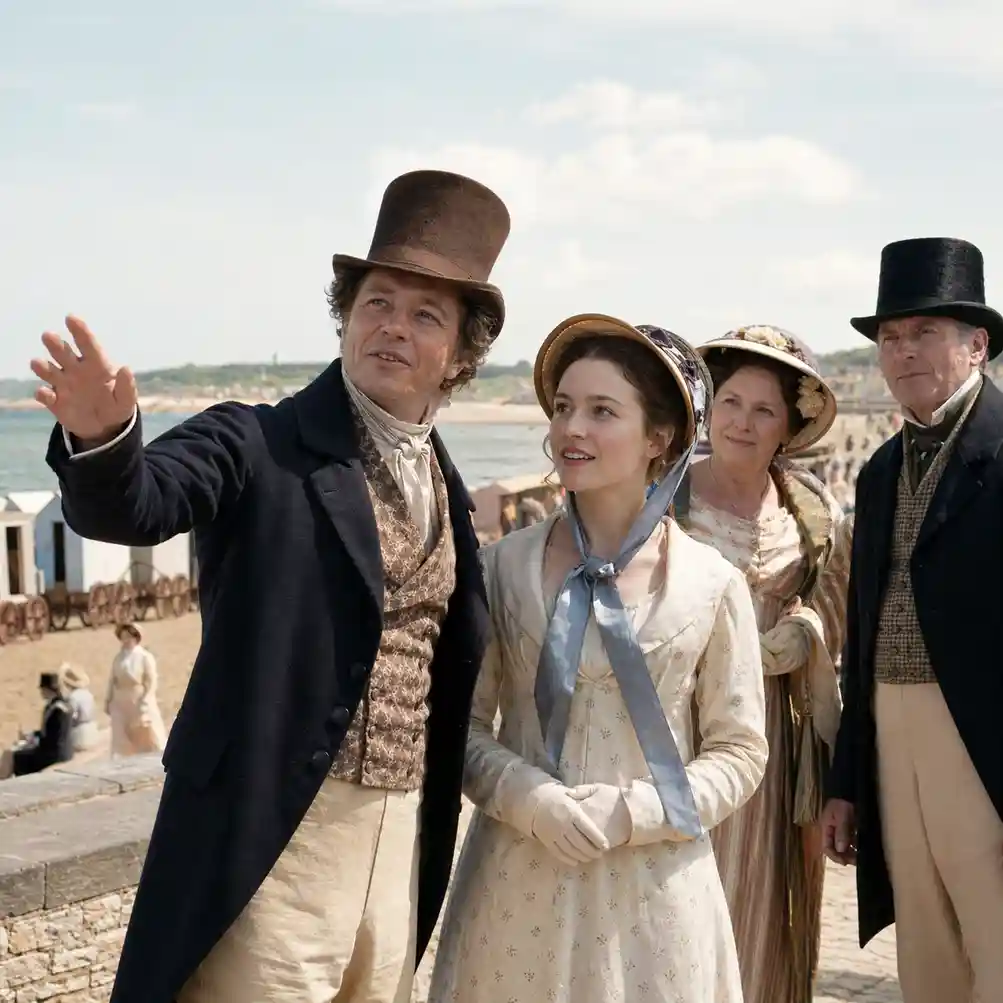
Sanditon Begins with an Accident and a Sales Pitch
Mr and Mrs Parker overturn their carriage while pursuing a business errand. His injured ankle brings them into the Heywood household, where the practical help he receives contrasts with his confused expectations about finding a surgeon. The opening makes the enthusiastic promoter dependent on people whose local knowledge is more reliable than his assumptions.
The invitation to Charlotte follows this encounter. She travels with the Parkers to the Sussex coast and enters a place that Mr Parker describes through its future possibilities. Sanditon is home, property, investment, and personal enthusiasm to him at once. Its success would confirm his judgment as well as improve his finances.
The resort is an interested description. A favorable account of the air or bathing conditions can be sincere and still serve the person offering it. The narrative does not need to expose Mr Parker as a calculated liar. His ability to believe what benefits him is more comic and more recognizable. Charlotte finds empty shops and a subscription list less impressive than her host hoped. The discrepancy between promotional confidence and actual demand gives the seaside setting an economic structure. Buildings and prospects are present; the visitors who would justify them are not yet numerous enough.
Rabbit Is Rich by John Updike offers a later comparison between business interest and a character’s sense of the world. The circumstances differ, but both works let economic confidence shape what a person notices and believes. In Sanditon, the humor remains attached to that selective vision. The town may flourish, but its advocate is already living inside a successful version of events that other observers cannot yet verify.
Illness, Activity, and the Market for Care
The resort’s promise of health encounters the Parker siblings’ elaborate attention to illness. Diana and Susan describe weakness and treatments, while Arthur’s habits combine supposed delicacy with considerable appetite. Sanditon places those performances beside activity that does not always fit the diagnoses.
Diana is especially revealing. She claims exhaustion while organizing journeys, correspondence, introductions, and accommodation. Being unwell does not prevent being indispensable. Her ailments and her usefulness can reinforce each other, allowing her to occupy the center of arrangements even when she declares herself scarcely able to stand.
The satire therefore has more than one target. It questions medical certainty, but also the pleasures of management and the authority acquired by offering help. Diana’s information about arriving visitors proves unreliable because messages, assumptions, and eagerness have made one party appear to be two. Health is also a commercial opportunity. Lady Denham sees possible customers for her asses’ milk, while Mrs Griffiths protects her own favored medical arrangements. The reader encounters competing claims to useful knowledge, each attached to a potential beneficiary.
The Corrections by Jonathan Franzen brings a different family into contact with illness, care, and the wish to manage other people’s lives. Comparing the works helps distinguish genuine need from the social authority that can gather around it. The joke requires discrimination. Mocking these characters’ claims does not establish that sickness itself is unreal or that care is worthless. It exposes particular contradictions between a professed limitation and an observed action.
Sanditon is funniest when the evidence remains concrete: the supposedly exhausted organizer keeps moving, the cautious adviser directs everyone else’s treatment, and the resort’s universal remedy conveniently requires a visit to the resort.
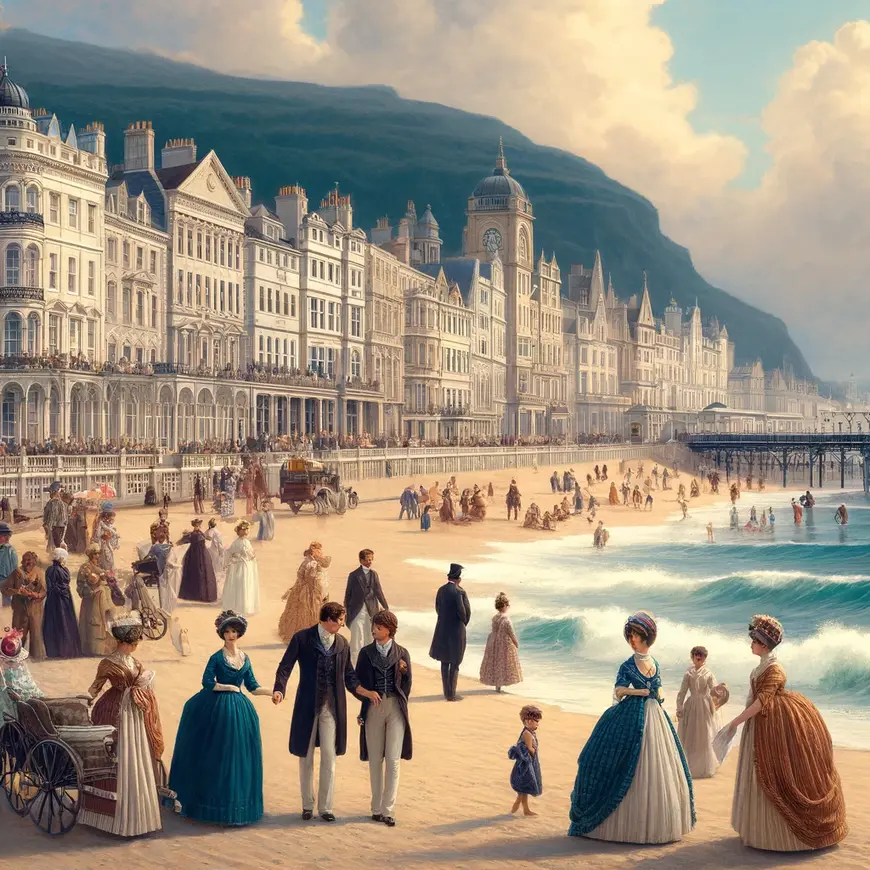
Lady Denham: Wealth That Expects a Return
Lady Denham’s wealth gives her importance beyond the immediate pleasures of seaside company. Relations and dependants must consider what she might eventually leave them. Her participation in the resort links inherited money with a commercial venture, while her conversation reveals how firmly she expects her own interests to remain visible. Money makes attention negotiable. People seek access to her, and she understands that they do. Her position creates a miniature market in deference, patience, and hoped-for advantage. Sanditon lets the reader hear how such a market works through ordinary conversation.
Clara Brereton’s dependence adds pressure to this arrangement. Charlotte initially sees a beautiful young woman in circumstances that seem ready-made for a novel’s mistreated heroine. That sympathetic impression is plausible, but the fragment also gives Charlotte reasons to recognize how much she does not yet know. Lady Denham’s response to prospective visitors is similarly interested. Miss Lambe’s wealth suggests a matrimonial opportunity for Sir Edward, while possible illness suggests income from milk. The same arrival can therefore be interpreted as several kinds of investment at once.
The connection with Royal Highness by Thomas Mann lies in the intersection of courtship and financial need. Both works make an apparently personal future carry economic hopes belonging to other people.
Charity also meets calculation. Near the fragment’s close, discussion of subscriptions shows how difficult it can be to turn wealth into assistance, especially when every new request competes for the same reluctant donor. In Sanditon, status is neither an abstract social rule nor merely an obstacle to romance. It determines who must listen, who can refuse, whose needs become persuasive, and whose future depends on another person’s favorable mood.
Writing Style: Enthusiasm Meets an Observant Sentence
The Writing Style of Sanditon lets extravagant claims encounter a narrator who notices their weak joints. Mr Parker’s promotional language accumulates benefits until almost any bodily complaint appears to need the same seaside solution. The abundance of supposed evidence becomes evidence of his own investment in the claim.
The narrator often gives a character enough room to reveal the contradiction without delivering a separate lecture. A description can begin in the language of confidence and end with a practical qualification. The sentence tests the speaker. This economy allows social criticism to remain comic rather than becoming a series of announced lessons.
Charlotte’s perspective supplies another test. She listens, looks, and compares, yet the prose does not require her first impressions to be final. Her image of Clara as a ready-made heroine shows how a sensible observer can still borrow expectations from books. Sir Edward provides a more aggressive misuse of literary language. He treats reading as a source of grand expressions and models for seduction. The difference between his elevated vocabulary and his intention prevents the reader from mistaking verbal sophistication for an ethical education.
Sanditon also notices the material setting of reading. The circulating library offers books alongside tempting purchases, and Charlotte must check her expenditure. Culture occupies a shop as well as a mind. Satire stays close to objects: lists, clothing, remedies, lodgings, and the visible signs of prosperity. These details make the resort’s ambitions measurable within the scene.
The surviving draft has not undergone the finishing of a completed novel, and some episodes remain preparatory. Even so, the comic intelligence is already distinct. It emerges when a claim, a purchase, or an apparently gracious social gesture discloses the practical wish that keeps it in motion.

Five Quotes from the Surviving Fragment of Sanditon
These short passages retain the capitalization and the ampersand of the 1925 transcription where applicable. They show Sanditon moving between promotional certainty and comic scrutiny. The narrator and the characters differ, so each statement needs its local context rather than an automatic attribution as the author’s personal advice.
- “Nobody could catch cold by the Sea”: In Chapter 2, the narrator conveys Mr Parker’s sweeping belief in the coast’s health benefits. The absolute claim is comic because it leaves no room for contrary experience. His commercial enthusiasm has found a supposedly universal medical justification.
- “Every Neighbourhood should have a great Lady.”: Chapter 3 introduces Lady Denham through this mock-authoritative statement. What follows makes the social arrangement look less like an ideal order than a structure of dependence. The apparent rule prepares the reader to notice who benefits from the great lady’s presence.
- “all the useless things in the World”: In Chapter 4, the circulating library’s attractive stock includes much more than books. The phrase gives a consumer’s temptation a comic description. Charlotte’s effort to limit her purchases turns judgment into an immediate practical choice.
- “very accomplished & very Ignorant”: Chapter 11 describes the Miss Beauforts through a contradiction. Their fashionable abilities do not establish understanding, while their social ambitions give those accomplishments a purpose. The phrase separates impressive presentation from the knowledge a reader might expect it to imply.
- “A little Novelty has a great effect”: Later in Chapter 11, the narrator explains the attention new arrivals attract. The smallness of the resort magnifies visibility. Being noticed can therefore depend on a favorable setting as much as on any exceptional personal quality.
Together, these passages make Sanditon a study of claims whose social success exceeds their reliability. Quote source: Chapters 2, 3, 4, and 11.
Sanditon: Manuscript Facts and the Right to Leave Questions Open
The material history of Sanditon explains why its unfinished condition matters. A surviving draft is not a completed design, and an attractive continuation cannot provide documentary proof of the author’s intended ending.
- Dated composition: The manuscript records 27 January 1817 at its beginning and 18 March at its final sentence. These marks establish the period of surviving work, rather than a date when the imagined story itself reaches a planned conclusion.
- An untitled manuscript: The autograph carries no title. Sanditon became a family name for the fragment, so its familiar modern title should not be mistaken for a heading written above the draft by its author.
- Publication in stages: Extracts appeared in the expanded family memoir of 1871, while R. W. Chapman published the first complete transcription in 1925. Earlier public knowledge of the work and full publication are therefore different events. Source
- Three paper booklets: The surviving manuscript comprises three booklets and about 120 written pages. Its corrections show composition still in progress, making revision part of the evidence rather than a defect to conceal in describing the work.
- A Cambridge home: Mary Isabella Lefroy presented the manuscript to King’s College, Cambridge, in 1930. Its preservation allows readers and editors to distinguish the surviving wording from subsequent editorial choices and imagined completions.
A Christmas Carol by Charles Dickens provides a contrasting treatment of money and charity, with a decisive moral transformation. Sanditon leaves its arrangements unresolved. That limitation is also a reason to read carefully: the comic evidence remains vivid even where the story gives us no final verdict.
Miss Lambe and the Limits of Charlotte’s Knowledge
Miss Lambe enters a community already eager to decide what new arrivals can provide. She is a wealthy young visitor from the West Indies, described by the narrator in explicitly racial terms. Sanditon introduces race and colonial geography into a social world that is quick to translate a person’s presence into financial possibility.
Her money matters to Mrs Griffiths, under whose care she travels, and to Lady Denham’s plans. Yet the fragment gives Miss Lambe little opportunity to define herself. Importance does not guarantee a voice. Other people’s calculations make her conspicuous before the reader can know much about her own wishes. This is a productive limit to recognize. The text permits questions about wealth, race, and dependency; it does not supply a completed trajectory from which to extract a settled answer. An argument about the eventual heroine she might have become must remain speculation.
Breakfast at Tiffany’s by Truman Capote offers a different example of people being read through money, social access, and attractive surfaces. Its narrator’s partial knowledge helps clarify why an observer’s account should not be treated as complete possession of another life.
Charlotte’s own limits appear near the end of Sanditon when she sees Clara and Sir Edward in private conversation. She steps back, registering the encounter without imagining that she has learned everything it means. Her awareness of Clara’s difficult circumstances tempers an unfavorable impression. Observation needs restraint. The fragment’s perceptive heroine remains most convincing when she allows circumstances to complicate judgment.
That lesson extends to the reader. We can identify the forces operating around Miss Lambe and Clara while preserving the difference between what the manuscript actually shows and the futures its unfinished form invites us to imagine.
Reviews of other Works by the renowned english novelist