Pietro Aretino by Georg Büchner — Satire and Scandal
Venice glitters, yet back rooms scheme. Courts trade favors, while poets trade barbs. In Pietro Aretino, Georg Büchner studies the writer who treats truth as spectacle and strategy. Satire strips masks. Aretino flatters, then bites; he praises, then invoices; he prints, then dares the prince to blink.
I watch the fragment move like a pamphlet. Scenes snap open. Jokes land fast. Power mocks piety. Because money directs taste, Aretino turns taste into leverage. He writes praises that read like threats and he files gossip as evidence. He treats courtiers as marks, and marks as courtiers.
The author makes every line perform two jobs. Aretino courts danger to sell safety. He exposes vice to rent virtue. Desire exposes policy. Printers count coins as reputations wobble, while clerics count sins as readers laugh out loud. The marketplace buys fear first and morals second, so the page earns both.
I hear modern media in this traffic. Therefore, the fragment feels current. Courtiers chase image because image buys power. Aretino sells image because truth costs more. Language wields teeth. He chooses words like tools, not ornaments. He files edges until praise cuts.
The result frames a living question: what price belongs to speech that hits its target. Aretino takes fees and enemies. He also takes the most dangerous prize, a public. In this work, the writer refuses simple verdicts. He shows a writer who survives by aiming, and a world that pays him to keep aiming.
Plot and stakes in Pietro Aretino
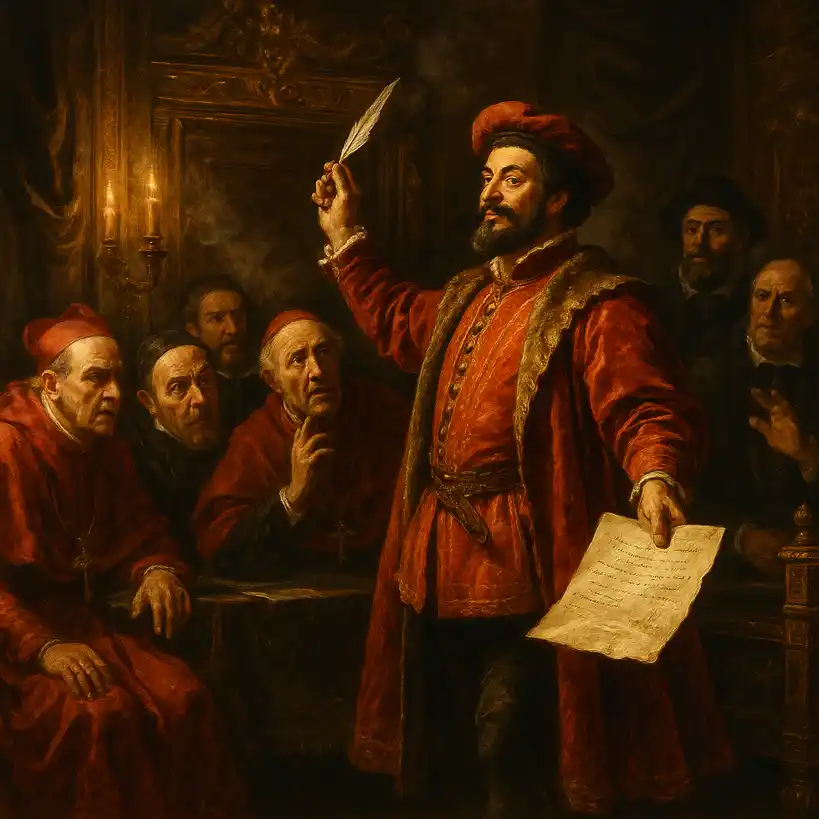
Aretino enters hungry and smiling. He wants coins, readers, and room to strike. In Pietro Aretino, the plot builds from encounters that double as negotiations. Speaking truth to princes. He courts patrons, then shames them; he flatters painters, then bills them; he preaches chastity, then markets scandal.
The stakes rise because each joke risks exile. Aretino lives close to the edge on purpose. He prints letters that bruise egos. He files dialogues that turn desire into politics. Censors fear laughter. City fathers clutch dignity, yet they still peek at the page.
Georg Büchner keeps the action tight. Consequently, every speech carries cost. Aretino tests where a prince hides weakness and where a bishop hides appetite. He praises to corner, and he accuses to bargain. Bodies change politics. A wedding, a portrait, a rumor at a banquet: each scene moves money and law.
Meanwhile, the city behaves like a chorus. Printers spread heat; gondoliers spread lines; salons spread verdicts. Aretino hears all of it and rewrites it for sale. He turns public noise into private leverage. Comedy tests power. Therefore, the fragment treats art as pressure that rulers cannot ignore.
For a mischievous companion on satire that bites its masters while wagging a friendly tail, the review nods to 👉 The Dialogue of the Dogs by Miguel de Cervantes. That pairing highlights how talkers expose owners without losing charm. By the close of this section, the stakes feel clear: speak artfully, live dangerously, and choose your invoice before the guard knocks twice.
Characters and relationships
People buy and sell reputation like silk. Courtiers smile, yet they fear exposure. In Pietro Aretino, alliances change with a pamphlet, and intimacy turns into currency. Trust trades for leverage. Printers count coins while friends count favors; meanwhile, clerics count sins and hide receipts.
Aretino studies faces before he writes. He flatters painters, then tests princes; consequently, each promised line becomes a contract. Desire fuels speech. Because power listens to gossip, he refines rumor into copy that bites cleanly. Moreover, the city sings back, so each stanza raises the price of silence.
The poet frames relationships as stages. A salon plays chorus; a studio plays trap; a balcony plays tribunal. Power answers with masks. Therefore, Aretino keeps two ledgers: one for names that buy praise, another for names that break easily. He courts danger, yet he also courts applause, since both pay.
Rivals sharpen him. A rival poet brags; however, Aretino writes a scene that folds the boast into a joke with teeth. A jealous patron threatens; consequently, he replies with an ode that smiles in public and points in private. Satire strips ceremony. Because the fragment moves quickly, every bond reads as risk, and every toast tastes like a test.
The net effect feels modern. Screens amplify whispers today, and pamphlets did it then. Here, people fall in and out of orbit as soon as words move. I finish this section convinced that relationships supply the plot’s engine, while language supplies the fuel and the flame.
Themes and moral questions
Satire cuts, yet it also cures. The book argues that laughter polices hypocrisy when courts fail. In Pietro Aretino, wit weighs evidence and assigns cost. Censors fear laughter. Therefore, the page becomes courtroom, market, and pulpit at once.
Money enters each verdict. Because praise rents virtue, the writer invoices power. Commerce shadows conscience. Moreover, the fragment asks whether paid truth still counts as truth. It often does, since the fee simply marks how badly a patron needs a mask. By contrast, free flattery rarely risks anything.
Desire mixes with judgment. Lovers chase bodies, while rulers chase image; consequently, both invite exposure. Bodies change politics. Georg Büchner lets sex and state share the frame so readers watch law squint at appetite. Meanwhile, Aretino sells light that reveals more than it forgives.
Violence haunts the margins. A joke can exile a man; a page can end a career. Speech carries danger. Because the city trades fear like spice, the writer measures risk before he prints. He still prints. The courage lands as method: observe, compress, and publish before the guards assemble.
A single mirror hardens the theme. Punishment becomes spectacle when machines replace mercy. For a chill that clarifies how systems chew bodies while language treats them as objects, the review points to 👉 In the Penal Colony by Franz Kafka. The pairing exposes why satire must stay sharp in a world that worships procedure. In the book, sharpness protects the living.
Style, voice, and the stage of fragments
Büchner writes in cuts and flashes. Scenes arrive hot, then change rooms before comfort sets. In Pietro Aretino, fragment becomes form, and velocity becomes meaning. Form sharpens fire. The language moves like a blade, therefore jokes land before defenses rise. Moreover, brief scenes force readers to supply the missing air.
Sound does heavy lifting. Street talk collides with court polish, so rhythm exposes class the way costume cannot. Voices reveal masks. Aretino purrs to a prince, then growls to a printer; consequently, tone proves more honest than oath. Because cadence sells power, he sells cadence with ruthless joy.
Images repeat as signals. Coins glint; balconies beckon; curtains ripple at the edge of scandal. Motifs carry charge. He knows how objects accuse without speech. Therefore, a purse on the table means law on the move, while a brush by a canvas means gossip about to harden into record.
The novelist trusts compression. One gesture replaces a sermon, and one insult replaces a pamphlet. Economy builds pressure. Although the style stays lean, the impact grows large, since speed prevents moral camouflage. In Pietro Aretino, the stage turns narrow, so every step counts.
I read the fragment as craft lesson and warning. Editors can copy its cuts; writers can copy its pace. However, the heart of it resists imitation, because courage powers the style. The novel keeps language dangerous and useful at once. Consequently, the page keeps turning enemies into readers and readers into witnesses.
History bites back: gender, power, and modern echoes
Renaissance Venice sells beauty, yet it also sells bodies. Courts sweeten control with ceremony; however, Aretino peels the sugar off. In Pietro Aretino, desire and law sit at the same table. Bodies change politics. Printers move rumor into record, and record into threat.
Gender runs under every scene. Women appear as subjects and targets, therefore the satire risks complicity while it hunts hypocrisy. Desire demands critique. To widen that lens, the review points to 👉 The Second Sex by Simone de Beauvoir. That classic names how power scripts desire, and the echo clarifies why Aretino’s jokes still sting.
Power also writes memory. Palaces curate virtue, while streets remember debts. Architecture stores lies. As a counterweight, consider 👉 The Palace by Claude Simon, where corridors choreograph obedience. Consequently, the pair shows how walls and titles teach people how to speak and how to fall silent.
Censorship chases revenue. Bishops fear scandal, yet patronage needs buzz. Censors fear laughter. Because money oils doctrine, the fragment studies how printers survive by selling danger at a price the court will secretly pay. Moreover, that loop sounds familiar in any century with sponsors and screens.
History does not stay polite here. It bares teeth, then laughs. Aretino weaponizes wit to force rulers into daylight. Therefore, the fragment feels current without straining for relevance. In Pietro Aretino, the past interrogates the present, and the present answers with uncomfortable recognition. Satire outlives costume.

Cutting Quotes from Pietro Aretino by Georg Büchner
- “Satire sells light that scorches the mask.” The line fits a city that buys image; therefore, it needs writers who price truth correctly and accept the heat that payment brings.
- “A compliment turns into a bill the moment it lands.” Pietro Aretino treats praise like leverage, so courtiers learn the cost before dessert; consequently, every smile sounds like a contract.
- “Names weigh more than titles when money rattles the room.” I hear coin on wood, and I see posture melt; moreover, a page becomes a court where evidence arrives as a proper noun.
- “Desire speaks policy in a whisper no oath can hide.” Lovers talk, then laws shift; meanwhile, he notes the rate of exchange and records who pays for silence.
- “Laughter guards the public when ceremony fails.” The fragment argues for wit as civic armor; consequently, it sharpens courage without begging and refuses flattery that hides harm.
- “Write short, strike clean, and let silence finish the blow.” That craft rule fits him exactly, because compression protects force and converts style into proof.
- “Coins change testimony faster than sermons do.” The quip explains why markets audit morals; therefore, a poet can cross-examine a palace with a single price.
- “Print remembers what palaces forget.” Memory lives in ink rather than in ceremony; moreover, a pamphlet outlasts a banquet because paper keeps score without fear.
Renaissance Notes and Trivia from Pietro Aretino
- Aretino’s business model: He sold reputation management before PR had a name. Pietro Aretino shows how invoices shadow praise and how satire sets prices. See context at 🌐 Britannica.
- Venice as amplifier: Print shops spread rumor into record. Consequently, audiences learn to read gossip as policy. The work treats the lagoon as a loudspeaker for power and scandal.
- Masks and theatres: Public pose shapes law. For a stage where passion rewrites duty, compare 👉 Romeo and Juliet by William Shakespeare; the parallel clarifies how love and rank collide in plain sight.
- Punishment as spectacle: Bureaucracy often hides cruelty inside process. Therefore, Pietro Aretino pairs scandal with procedure to show how systems police desire. For background on print, power, and image, visit 🌐 The Met — Prints and Propaganda.
- Gendered scripts: Desire writes roles that money enforces. Pietro Aretino exposes how portraits, poems, and patronage police women while excusing men. Consequently, the jokes land like evidence.
- Aftershocks and retreat: Exile threatens when words bite too hard. By contrast, pen and press keep calling. For a postwar echo about disillusion and return, consider 👉 The Road Back by Erich Maria Remarque; the pairing highlights how public myth cracks when lived truth speaks.
- Printing economies: Pamphlets travel because small formats cut costs; therefore, printers turn scandals into affordable news for wide streets rather than narrow salons.
- Risk calculus: Libel, exile, and prison shadow every page; consequently, writers weigh danger against duty and choose tactics that reach readers before guards arrive.
Signature scenes and close reading
Aretino enters a studio and praises a portrait while he studies a purse. In Pietro Aretino, a compliment becomes a lever. Pause as weapon. He lets silence bloom, therefore the patron hears the hidden invoice. Moreover, the painter senses a review that can bless or bury. The room tightens because language sharpens.
Büchner scripts a balcony exchange where rumor changes rank. A noble whispers, and a servant smiles; consequently, the hierarchy flips for a heartbeat. Names before titles. Aretino repeats the gossip, but he trims it to the word that hurts most. The line lands, and the court pretends not to flinch.
A banquet scene binds appetite to law. Cups clink; skirts rustle; clerics weigh sins by tone. Coins change testimony. Aretino toasts a prince, then lists virtues with numbers that look like fees. Because laughter covers panic, the table laughs on cue. However, the ledger already updated.
The author uses objects as cross-examiners. A sealed letter hums on the table; a ribbon on a shoe names a lover; a smudge on a canvas names a debt. Comedy makes evidence. Therefore, the fragment teaches readers to watch hands, not speeches. A retouched scene proves guilt faster than a sermon.
These vignettes also clarify method. Aretino edits life like copy: cut filler, keep verbs, reveal motive. In the novel, craft and courage travel together. Consequently, the signature moments show how a writer wins without drawing blood. He changes valuations instead, and the city bows to the new math.
Verdict and who should read it
Büchner delivers a fragment that behaves like a live wire. In Pietro Aretino, satire polices hypocrisy while it risks its own soul. Evidence outlasts fashion. Therefore, readers meet a Renaissance that looks modern: sponsors want glow; audiences want harm; writers decide how much truth they can afford.
The book rewards people who value process. Editors will copy its cuts; critics will copy its angles; teachers will copy its patience. Satire needs ethics. Because every joke carries collateral, Aretino counts costs before he prints. Moreover, the page proves that courage can pay rent without selling its teeth.
Writers who fear power should study these tactics. Use wit, not noise. Aretino flatters to corner and smiles to warn, while printers turn that pressure into currency. By contrast, cowards sermonize and then kneel. Consequently, the fragment reads like a handbook in negative: do not beg; do not blur; do not bluff.
For a mirror on guilt, confession, and the peril of self-judgment, consider 👉 The Fall by Albert Camus. The pairing shows how an eloquent voice can condemn itself while it accuses the world. Hold your nerve. Aretino keeps his, and the city adjusts its mask to fit the new light.
I close with a simple invitation. Readers who work with power, money, image, or scandal should read this book. Furthermore, anyone who writes for a public should read it twice. The first time for the laughs, and the second time for the bill that laughter hides.