My Journey with The Aleph by Jorge Luis Borges
Reading The Aleph by Jorge Luis Borges was a remarkable experience. This collection of short stories showcases the unique ability to blend reality with the fantastical. Each story is rich with philosophical ideas, metaphysical concepts, and profound reflections on human existence.
His writing style is captivating. He uses simple language but weaves complex ideas seamlessly into his narratives. Each story in this work challenges the reader to think beyond the ordinary. The author explores themes such as infinity, the nature of time, and the limits of human knowledge. His stories are a journey through the surreal and the intellectual.

Stories That Stand Out
While all the stories in the collection are compelling, a few stood out for me:
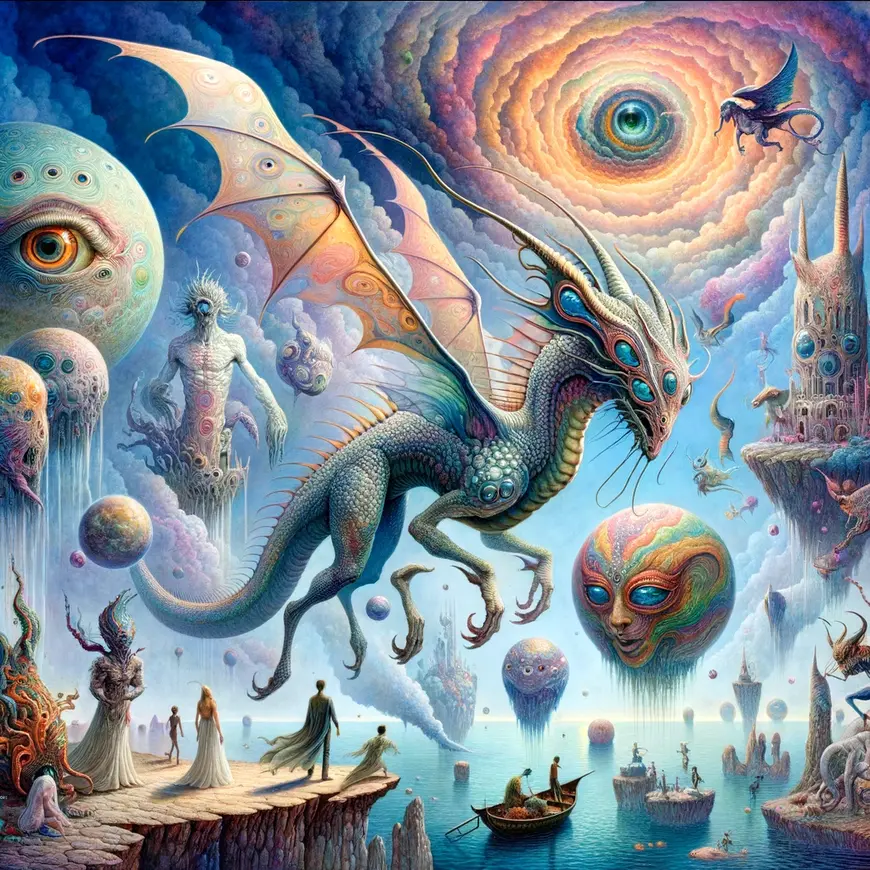
The Aleph: This is the title story and arguably the most famous in the collection. It tells the tale of a man who discovers a point in space that contains all other points. Through this Aleph, one can see everything in the universe from every angle simultaneously. This concept blew my mind. It made me ponder the nature of infinity and the human desire to know and see everything.
The Immortal: In this story, Borges explores the idea of immortality. The protagonist discovers a river that grants eternal life. However, he soon learns that living forever is not as desirable as it seems. The story delves into the burdens of immortality and the true value of mortality. It’s a profound meditation on what it means to be human.
The House of Asterion: This story reimagines the myth of the Minotaur. The writer gives a voice to Asterion, the creature, presenting him as a misunderstood being. This fresh perspective on a classic myth was fascinating. It made me rethink how we perceive monsters and the stories we tell about them.
His stories often blur the line between reality and fiction. He challenges our perceptions of truth and illusion. His fascination with labyrinths and mirrors is evident in many stories. These symbols represent the complexity and endless possibilities of human thought and existence.
Reading this collection of stories is like embarking on a philosophical journey. He invites us to question our understanding of the world. He plays with concepts of time, space, and identity. His stories are not just narratives but intellectual exercises. They encourage deep thinking and introspection.
Discovering Notable Quotes and Their Meanings from The Aleph
- “I saw the Aleph from every point and angle, and in the Aleph I saw the earth, and in the earth the Aleph and the earth in the Aleph.” This quote from the story encapsulates the concept of seeing everything at once. It speaks to the idea of infinity and the interconnectedness of all things.
- “To be immortal is commonplace; except for man, all creatures are immortal, for they are ignorant of death; what is divine, terrible, incomprehensible, is to know that one is immortal.” From “The Immortal,” this quote highlights the unique human burden of being aware of death. It contrasts the simplicity of animal existence with the complex human consciousness.
- “A labyrinth of symbols… An invisible labyrinth of time.” This quote reflects Borges’ recurring theme of labyrinths and the complexity of human experience. It suggests that life itself is a maze of symbols and moments.

Trivia Facts About the work
- Inspiration: Borges often drew inspiration from his own life and experiences. The work is partly inspired by his fascination with the concept of infinity and his love for books and libraries.
- Publication History: The book was first published in 1945. It has since become one of his most celebrated works, influencing countless writers and thinkers.
- Symbolism: The Aleph is the first letter of the Hebrew alphabet. It often symbolizes the beginning or the essence of things in various mystical traditions, aligning with the story’s theme of infinite knowledge.
- Cultural Impact: Borges’ works have left a significant mark on literature and philosophy. His blending of fantasy and reality has inspired genres like magical realism.
Reading the work by Jorge Luis Borges was an enriching experience. The stories are not just tales but explorations of deep philosophical and metaphysical questions. His ability to combine simple language with profound ideas makes this collection accessible yet intellectually stimulating. If you’re interested in literature that challenges your perception of reality and expands your mind, the work is a must-read.