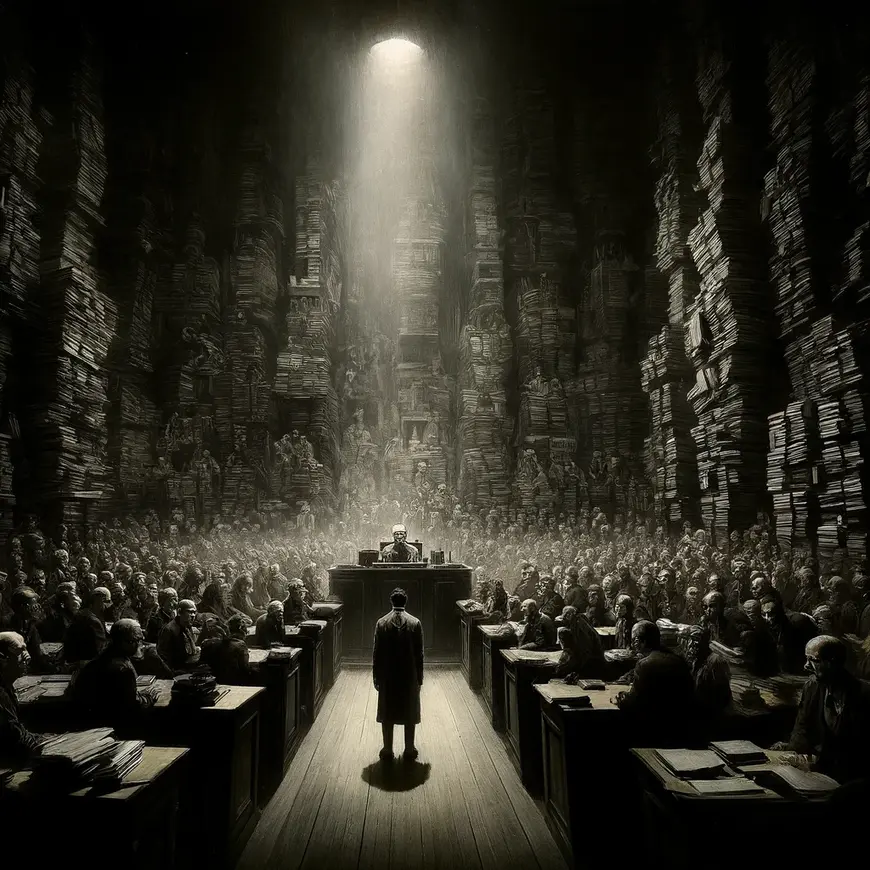
Kafka’s Enigmatic Labyrinth – A Review of The Castle
My Takeaways from The Castle
Engaging with Franz Kafkas novel I found it to be an captivating read. That left me both intrigued and bemused right from the start. Throughout the storys progression and, as K. the main character grappled with the castles mysteries and challenges. Ahead of him the narrative carried a sense of confinement and tension that mirrored his arduous journey.
As the narrative unfolded further I couldn’t shake off a sense of rising discomfort. Each exchange appeared odd tinged with tape and disarray. I anticipated clarity to emerge. It remained elusive.
This ambiguity led me to ponder the aspects of structures and power. Upon reaching the conclusion I found no closure leaving me uneasy and contemplative. This book proved to be an perplexing piece that prompted reflections, on the essence of authority, purpose and human aspirations.
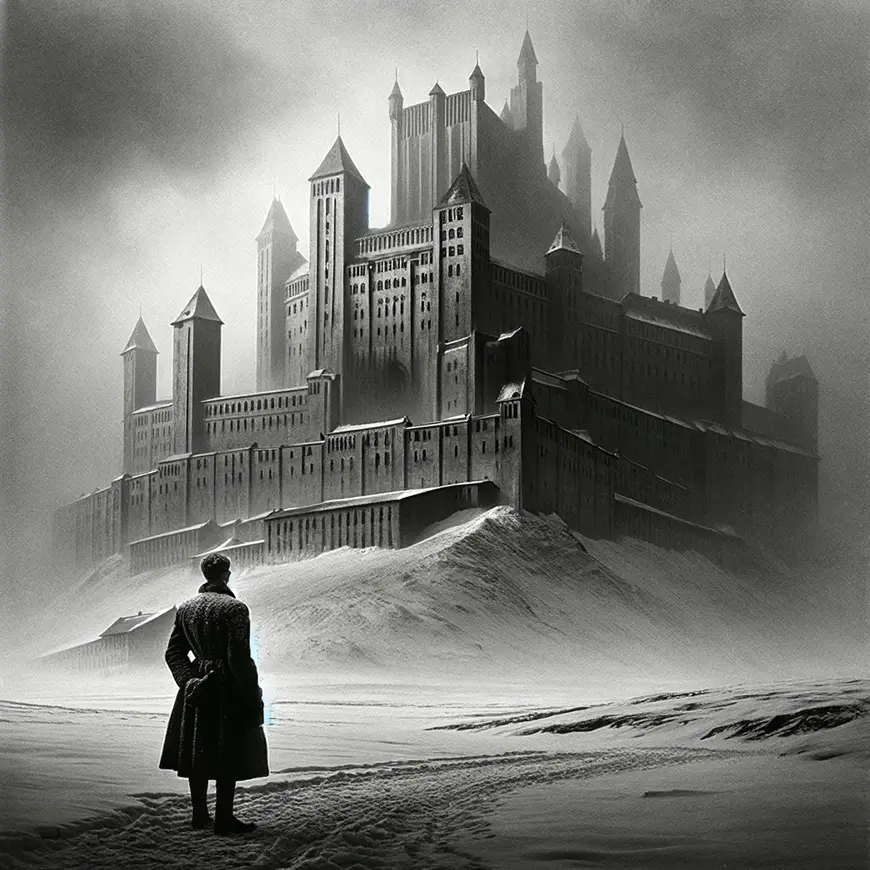
In the realm of literature that delves into the intricate workings of bureaucracy, power, and existentialism, Franz Kafka’s The Castle stands as a labyrinthine masterpiece. That immerses readers into a world of ambiguity and surrealism. With prose that evokes both confusion and fascination, the author weaves a narrative that invites readers to accompany the protagonist. On a journey through the corridors of authority, where reality and absurdity blur into a disorienting experience.
The World of The Castle
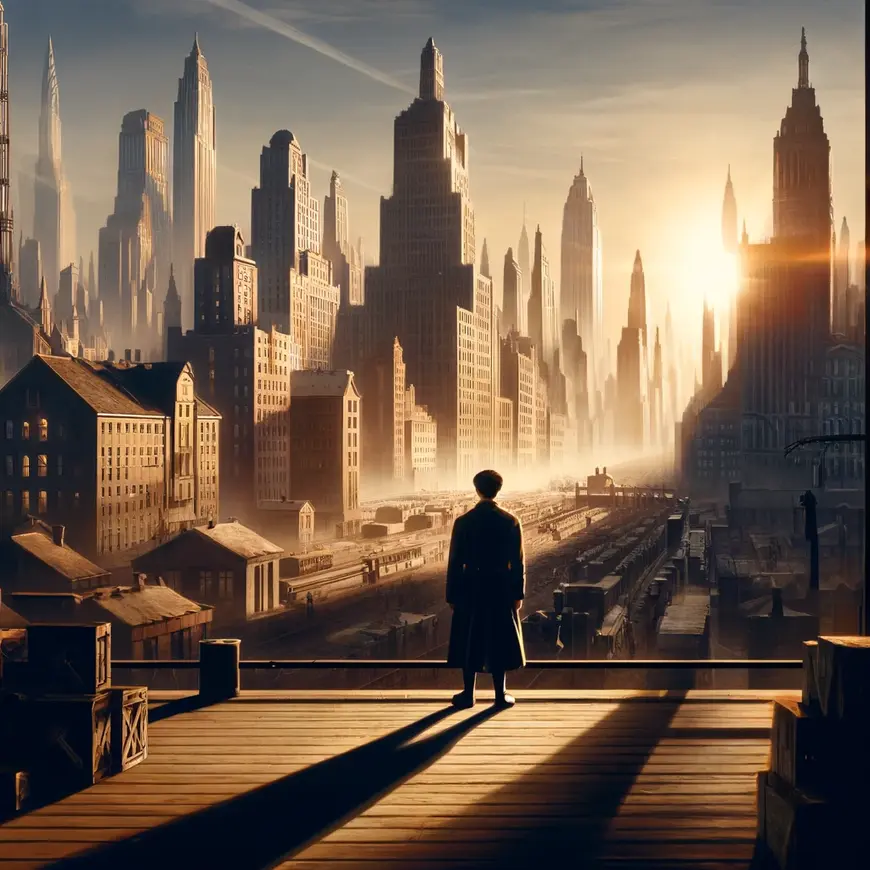
Chiefly imagine a world where the pursuit of approval from a distant authority becomes a labyrinth of confusion and frustration. Where the protagonist K. navigates the enigmatic landscapes of bureaucracy and power dynamics. But Kafka’s novel introduces us to a society marked by the relentless pursuit of validation. As K. seeks to establish his presence in a village overshadowed by the looming presence of the titular Castle. Besides his narrative traverses the realms of existential uncertainty, the search for meaning, and the complexities of human interactions.
Certainly the setting of this book becomes more than a backdrop; it’s a stage upon which the absurdity of existence is laid bare. The narrative reflects the sense of alienation and disorientation that individuals experience when confronted with the bewildering systems of authority and the question of their place within them.
A Symphony of Bewilderment
Albeit the heart of the novel lies within its characters, each representing a facet of the Kafkaesque experience. K., the determined protagonist, becomes a vessel for readers. To explore the maze of bureaucracy, frustration, and the relentless pursuit of recognition. His interactions with the residents of the village mirror the complexities of human relationships. Where communication often leads to misunderstanding and frustration.
Other characters, such as Frieda and Klamm, provide contrasting perspectives on the themes of authority and power dynamics. Because his portrayal of these characters serves as a mirror to the absurdity of life within the Castle. Where individuals are trapped in a cycle of seeking approval from an authority that remains distant and elusive.
“Navigating the maze of existence,” Kafka seems to say. As he delves into themes that resonate deeply with the human experience. The theme of absurdity is central to the narrative. As K.’s futile attempts to gain access to the Castle highlight the nonsensical nature of the bureaucratic systems that govern his world. The exploration of the absurdity of existence prompts readers. To reflect on the ways in which individuals grapple with systems that defy logic and reason.
Existentialism is another prominent theme that surfaces throughout the narrative. But his portrayal of K.’s search for meaning and identity within the confines of the Castle invites readers to consider the existential dilemmas. That arise when individuals confront the uncertainty of their place in the world. The tension between the desire for recognition and the existential void serves as a foundation for the narrative’s exploration of the human condition.
Prose as a Surreal Symphony
Altogether Franz Kafka’s writing style is a surreal symphony that oscillates between lucidity and ambiguity, a blend of vivid descriptions and introspective musings that evoke a sense of disorientation. His language is both evocative and enigmatic, creating an atmosphere that captures the sense of alienation and uncertainty experienced by the characters. His prose carries a weight that conveys the psychological turmoil of K.’s journey and the absurdity of the world he navigates.
Basically the novel’s structure is deliberately fragmented, reflecting the disorienting experience of the characters as they navigate the complexities of the Castle. The writing style mirrors the labyrinthine nature of the narrative, where reality blurs with illusion and the boundaries between the internal and external worlds become indistinct.
While this novel is rooted in its historical context, its exploration of bureaucracy, existentialism, and the search for meaning remains relevant in the modern world. In an era marked by discussions of power structures, identity, and the quest for validation, the examination of these themes offers a timeless perspective.
The theme of bureaucracy’s impact on the individual continues to resonate, as individuals navigate systems that often prioritize procedure over human connection. His portrayal of K.’s struggle to navigate the complexities of the Castle serves as a reminder of the alienation that can result from engaging with institutions that seem indifferent to individual needs.
Quotes from The Castle by Franz Kafka
- “It is only because of their stupidity that they are able to be so sure of themselves.” This quote reflects his critique of the bureaucratic system depicted in this work. It suggests that the officials and authorities in the Castle are confident and unyielding not because they are competent, but because they are ignorant of their own limitations and the complexities of the situations they manage. This theme of irrational authority is central to the novel’s exploration of power and control.
- “I dream of being with you, and everything is simpler then.” This quote underscores the protagonist K.’s longing for human connection and simplicity amidst the convoluted and alienating environment of the village and the Castle. It reveals K.’s desire for intimacy and understanding. Contrasting sharply with the impersonal and impenetrable bureaucratic world he finds himself in.
- “It’s only because of their emptiness that the distance between them seems so great.” Here, Franz Kafka reflects on the sense of isolation and disconnection that pervades the novel. The ’emptiness’ refers to the lack of genuine communication and understanding between people. This distance, both physical and emotional, is amplified by the emptiness of their interactions and relationships.
- “You are not at home in the village, you are not at home in the Castle, you are not at home anywhere. You are no one’s master, and no one is your master.” This quote encapsulates K.’s existential plight. He is a stranger in a strange land, unable to find a place where he belongs. This sense of not being ‘at home’ symbolizes the broader human condition of searching for meaning. And place in a world that is indifferent or hostile.
Trivia Facts about The Castle
- Unfinished Work: He left it unfinished at the time of his death in 1924. The novel ends abruptly, and its resolution remains a mystery.
- Published Posthumously: His friend and literary executor, Max Brod, published the book posthumously in 1926. Brod ignored Kafka’s instructions to destroy his manuscripts, which included this book along with other major works.
- Multiple Translations: Due to its unfinished state and his complex prose, The Castle has been translated multiple times. With various interpretations of its text. The most notable English translations were done by Willa and Edwin Muir in 1930 and Mark Harman in 1998.
- Autobiographical Elements: The novelist infused the novel with elements of his own life. The character K.’s struggles and alienation reflect his own feelings of isolation and frustration with bureaucratic systems.
- Themes of Bureaucracy: The novel is a profound critique of bureaucracy. The Castle represents an inaccessible authority, and K.’s interactions with its officials highlight the inefficiencies and absurdities of bureaucratic institutions.
- Influence of Jewish Mysticism: Some scholars believe that the novel contains elements influenced by Jewish mysticism. And Franz Kafka’s own Jewish heritage.
- Fragmentary Nature: Because the novel was unfinished, its structure is fragmentary. Some chapters seem disjointed, and there are inconsistencies in the narrative, which adds to the enigmatic quality of the work.
- Symbolism: The work itself is a potent symbol in the novel. It represents various ideas such as the elusive nature of authority, the search for meaning, and the barriers between individuals and their aspirations.
- Critical Reception: However, it has since become one of his most studied and analyzed works. Recognized for its profound philosophical and existential insights.
- Health: During the time he was writing the story, Kafka’s health was deteriorating due to tuberculosis. This illness influenced the bleak and oppressive atmosphere of the novel.
A Journey into the Kafkaesque
The Castle is a journey into the Kafkaesque landscape of absurdity, bureaucracy, and existential questioning. Besides a narrative that challenges readers to confront the ambiguities of human existence. His novel invites readers to explore the labyrinthine corridors of the Castle alongside K.. Also delving into the complexities of power dynamics, the pursuit of meaning, and the elusive nature of validation.
As readers immerse themselves in the world of this novel, they are reminded of the power of literature. Altogether to mirror the complexities of the human experience, the search for identity within a world that often defies understanding. And albeit the inherent absurdity of navigating systems that lack clarity.
The prose becomes a portal through which readers can contemplate their own interactions with authority, the quest for validation, and the timeless struggle to find meaning within a universe that remains, at times, frustratingly enigmatic. This writing is a testament to the enduring allure of the Kafkaesque. And basically a reminder of the inherent mysteries that permeate the human condition.