The Labyrinth of Justice: The Trial
The Trial begins with one of the most disturbing situations in modern fiction: Josef K. is arrested, yet no one tells him what crime he has committed. Franz Kafka does not prepare the reader with background, motive or warning. The accusation is already present before understanding can begin.
That opening gives the novel its special pressure. Josef K. is not dragged immediately into a normal prison. He continues working, moving through the city and meeting people. Yet his life is no longer his own. The case has entered it like an invisible disease. Every conversation, room and gesture becomes part of a process he cannot define.
The author wrote the novel in 1914 and 1915, but he left it unfinished. It was published after his death in 1925 through Max Brod, who ignored Kafka’s wish that unpublished manuscripts be destroyed. This history matters because the book itself feels unsettled. It has a beginning, an ending and several powerful chapters, but no fully stable path between them.
The unfinished form deepens the anxiety. The reader moves through fragments of authority, just as Josef K. moves through fragments of law. Nothing quite resolves. Nothing fully explains itself. That is why The Trial still feels so alive. It does not only describe fear. It creates a world in which explanation is always promised and always withheld.
Josef K. and the strange logic of innocence
Josef K. insists on his innocence, but the writer makes that innocence uneasy. He has no known charge against him, and the court never presents a clear accusation. Yet K. does not behave like a man untouched by guilt. He grows defensive, proud, irritated and increasingly absorbed by the case. The court may be absurd, but it also awakens something already unstable inside him.
This is one of the novel’s sharpest tensions. He does not ask whether K. committed a specific crime. And he asks what happens when a person is forced to live under accusation without content. K. tries to fight the process, but he also starts to accept its language. He complains, performs, argues and searches for influence. The trial begins outside him, then slowly colonizes his inner life.
Innocence becomes harder to hold when power controls the terms. K. cannot disprove what has never been properly stated. He cannot defend himself because he does not know what defense would mean.
This makes a useful contrast with 👉 Crime and Punishment by Fyodor Dostoevsky. Dostoevsky follows a guilty man into psychological torment. The novelist follows a possibly innocent man into a system that produces guilt without needing proof.
The result is more frightening because it is less visible. Josef K. may be innocent in law, but the novel shows how accusation can reshape a person before any verdict appears.
The court as a system without a center
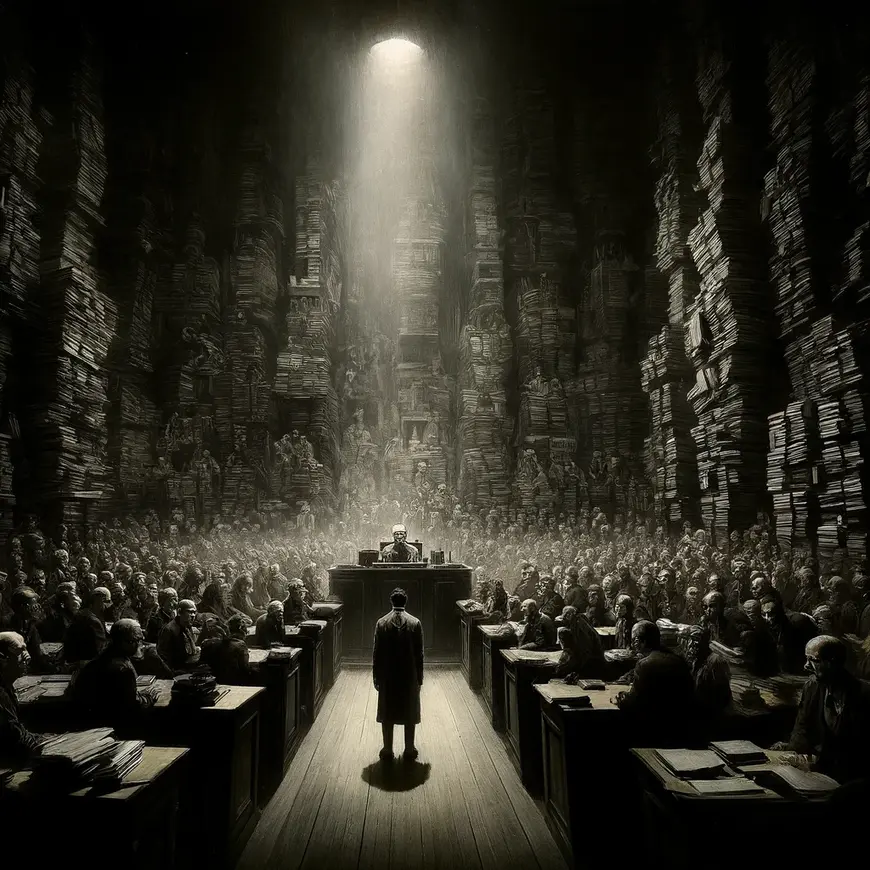
The court in The Trial is everywhere and nowhere. It appears in rented rooms, attics, offices, corridors, private apartments and strange conversations. It has officials, assistants, lawyers, painters and messengers, but no clear center. K. keeps meeting people who seem connected to the process, yet none of them can explain the whole machine.
This gives the novel its maze-like force. The court is not simply a building. It is a network of dependency, rumor and procedure. Each person knows a little. No one knows enough. Every offer of help creates another form of dependence. The more K. tries to understand the system, the more deeply he enters it.
His genius lies in making this power ordinary. The court is not gothic in a decorative sense. It hides in staircases, offices and social contacts. Its terror comes from administrative vagueness, not spectacle. The system is powerful because it does not need to reveal itself fully.
In this sense, 👉 No Exit by Jean-Paul Sartre offers an interesting parallel. Sartre traps characters in a closed room where judgment comes through the gaze of others. Kafka creates a larger and less theatrical prison, but the pressure is similar: there is no clean outside from which the accused can look back safely.
The court has no face because it works through many faces. That makes it harder to resist. K. can argue with individuals, but the process survives every conversation.
Plain style and comic terror
Kafka’s style is often called nightmarish, but the word can hide how controlled his writing is. The Trial does not rely on emotional exaggeration. Its sentences often move with plain, almost businesslike clarity. People speak politely, explain procedures, make appointments and offer practical advice. The horror grows from this calm surface.
That restraint creates a strange kind of comedy. Many scenes are absurdly awkward. K. behaves with wounded vanity. Officials are petty or evasive. Rooms are too cramped. Conversations turn in circles. The law becomes ridiculous without becoming harmless. He makes the reader feel embarrassment and dread at the same time.
The comedy sharpens the terror. If the court were only monstrous, K. could reject it more easily. Instead, it appears through half-normal situations. A hearing resembles a shabby meeting. A lawyer’s visit becomes social discomfort. A painter offers strategic advice like a professional consultant. The whole nightmare keeps borrowing the language of ordinary life.
This is why the novel still feels modern. Institutions often do not announce themselves as evil. They speak in forms, schedules, permissions and polite evasions. The author understood that terror can become more powerful when it sounds reasonable.
The style also prevents easy heroism. K. is not a noble rebel in a dark myth. He is intelligent, vain, impatient and often socially clumsy. The plain prose keeps him exposed. It refuses to turn fear into grand tragedy too soon.
The parable Before the Law
One of the most important moments in The Trial comes near the end, when K. hears the parable commonly known as Before the Law. A man from the country waits before a door that seems meant for him, but a gatekeeper does not let him enter. He waits for years, grows old and dies without gaining access.
The parable condenses the entire novel. Law appears as promise, distance and delay. It is visible enough to attract desire, but inaccessible enough to destroy the person who seeks it. The man does not simply walk away. He remains bound to the possibility that entrance may one day be granted.
The writer then complicates the parable through interpretation. The priest and K. discuss what it means, but interpretation does not free them. Each explanation opens another trap. Was the gatekeeper deceiving the man? And was the man too obedient? Was the door truly his alone? The text refuses a final answer.
The law in the parable is both invitation and refusal. That is why it feels so central to the novel’s design. K. wants clarity, but every attempt to interpret the process makes him more entangled.
A quiet link can be made to 👉 The Book of Disquiet by Fernando Pessoa. Pessoa’s fragmentary prose also turns inner uncertainty into a form. Kafka is more judicial and dramatic, but both writers show consciousness trapped inside endless reflection. The parable does not solve The Trial. It teaches the reader how unsolvable the novel is.
An unfinished novel shaped by editing
The publication history of The Trial is not a footnote. It shapes the way the book should be read. Kafka did not complete the novel, and the manuscript did not leave a fully settled chapter order. Max Brod prepared the posthumous publication, giving readers access to one of the essential works of modern literature while also making editorial decisions that he himself never finalized.
This creates a special tension. We read The Trial as a major novel, but also as a work that remains open at the level of construction. Some chapters feel central. Others have the quality of episodes, approaches or possible paths. The result is not a polished legal plot. It is a broken architecture of accusation.
That brokenness fits the subject with remarkable force. A completed, perfectly ordered version might have reduced the novel’s unease. The existing text feels unstable because Josef K.’s world is unstable. The reader does not possess the full map, just as K. does not possess the full law.
The fragment is not merely a defect. It has become part of the novel’s meaning. Of course, we should remember that the novelist did not simply design every uncertainty as final form. The book is unfinished. Yet the unfinished condition intensifies its literary effect.
The editorial history also reminds us that his modernity depends on paradox. A manuscript he did not prepare for publication became one of the defining books of the twentieth century. A damaged form became a powerful form.

Quotes from The Trial
- “Someone must have been telling lies about Josef K., he knew he had done nothing wrong but, one morning, he was arrested.”
- “It’s only because of their stupidity that they’re able to be so sure of themselves.”
- “If you follow the trail of your image in someone’s eyes, you can see yourself as you really are.”
- “It’s better to let things come to you, at the right time, in the right way.”
- “There is an infinite amount of hope in the universe … but not for us.”
- “Like a dog!”
Trivia Facts about The Trial
- Posthumous Publication: The author never saw the novel published during his lifetime. He died in 1924, and the novel was published posthumously in 1925. He had actually instructed his friend Max Brod to destroy his manuscripts. Including The Trial, but Brod chose to publish them instead.
- Symbolism of the Law: The book is heavy with legal and bureaucratic symbolism, exploring themes of justice and authority. The elusive and inaccessible nature of the Law in the novel reflects his own experiences with bureaucracy. He worked at an insurance company dealing with worker accident claims.
- Real-Life Inspiration: His own life experiences heavily influenced the themes and settings of this novel. His fraught relationship with his authoritarian father, his professional background in law, and his work in the insurance sector dealing with the bureaucracy of the Austro-Hungarian Empire all fed into the novel’s atmosphere and themes.
- Themes of Guilt and Identity: Central to the story is the exploration of guilt and identity. Josef K. spends much of the novel confronting or evading accusations and judgments. Without ever knowing what his alleged crime is.
- Philosophical Influence: The existentialist movement in philosophy, which came to prominence after his time, often draws upon themes illustrated in The Trial. The novel’s exploration of absurdity, freedom, and the burdens of human existence align closely with existentialist thought.
- Cultural References: The book has permeated popular culture and can be seen referenced in other works that tackle themes of oppressive bureaucracy and the illogical nature of power, from Terry Gilliam’s film “Brazil” to 1984 by George Orwell.
Why Kafkaesque still means more than bureaucracy
The word Kafkaesque is often used for frustrating bureaucracy. That is understandable, but too narrow. The Trial does contain offices, documents, hearings and officials. Yet its deeper terror lies elsewhere. The power does not merely delay people. It changes the way they understand themselves.
In the novel, the system does not need to explain the charge. It only needs K. to keep responding. Every attempt to defend himself confirms that he has entered the process. Every conversation increases his dependence on people who claim special access. So every possible helper becomes another gatekeeper.
This makes him different from writers who show political power in more direct form. 👉 1984 by George Orwell presents a visible regime with ideology, surveillance and language control. His court is harder to locate. It has no single dictator, no clear doctrine and no public program. Its authority is cloudy, procedural and intimate.
Kafkaesque power works by making uncertainty feel official. It surrounds the individual with rules that cannot be mastered and expectations that cannot be satisfied. The victim becomes not only oppressed but interpretively exhausted.
That is why the novel reaches beyond its historical moment. It speaks to anyone who has faced a system that demands compliance while withholding reasons. But it also speaks to the inner life. He shows how quickly external confusion can become self-doubt. The court is outside K., but it also learns to speak through him.
Why The Trial still unsettles readers
The Trial still unsettles readers because it does not become easier to explain with time. Many classics feel distant until we reconstruct their context. The novel works differently. Its world remains strange, but the feelings it produces remain recognizable: confusion before institutions, fear of hidden judgment, shame without clear cause, and the desperate wish for an explanation that never arrives.
The book is not a simple warning against bureaucracy. It is more disturbing than that. It suggests that modern life can turn procedure into destiny. A person may continue working, talking, moving and planning while already living under a sentence he does not understand.
This is why the ending is so devastating. K. does not reach a final courtroom where truth becomes clear. The process moves toward death without granting meaning. The last humiliation is not only that he is killed. It is that he dies still inside the logic of a case that never became intelligible.
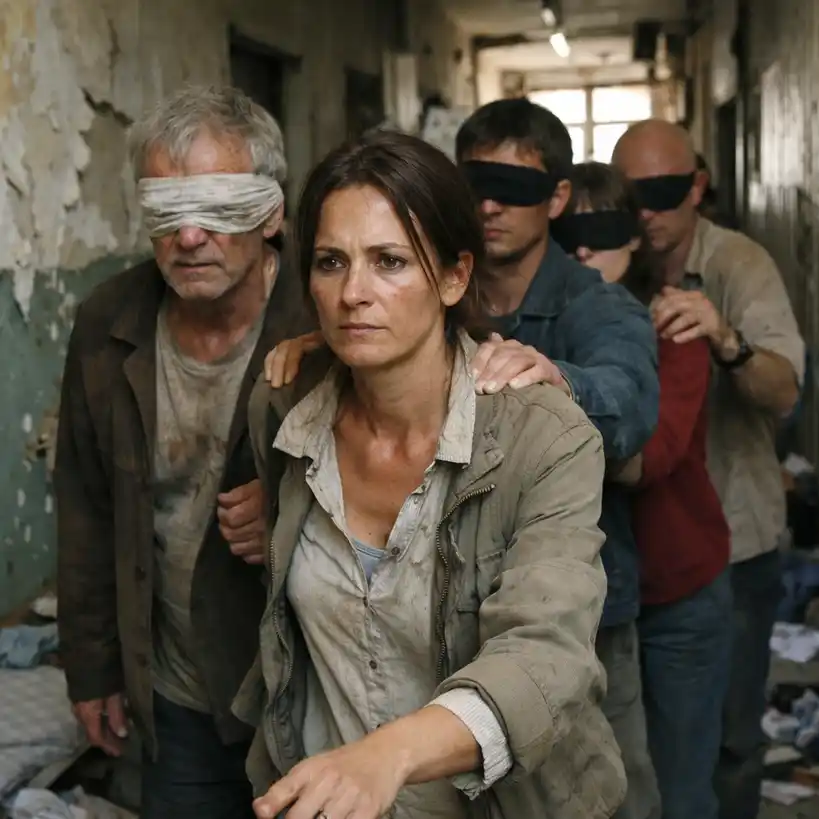
👉 Blindness by José Saramago offers a later and very different vision of social collapse, but both novels ask what remains of human dignity when ordinary structures fail. His answer is colder, narrower and more private.
The power of The Trial lies in its refusal of comfort. It gives no clear crime, no stable law, no heroic escape and no complete explanation. Yet it is not vague. It is exact in its uncertainty.
Kafka makes the reader feel what Josef K. cannot solve: a world where judgment arrives before understanding, and where the search for meaning becomes part of the punishment.
My Thoughts on The Trial – The Labyrinth of Justice
Reading this novel was a captivating experience. From the start, I was completely immersed in Josef K.’s unsettling world. He gets arrested out of the blue with no explanation. His writing, filled with haunting and suffocating descriptions, made me empathize with Josef K.’s confusion and frustration.
As I followed Josef K.’s journey to understand his situation and defend himself, the absurdity and hopelessness struck me. The complex bureaucracy and lack of answers kept me on edge, therefore reflecting Josef K.’s increasing powerlessness.
By the end, I pondered themes like authority, guilt, and the challenges of dealing with those in power. The book made me think deeply while leaving me feeling both unsettled and enlightened.