Why The Painter of Modern Life Still Shapes Our View of Art
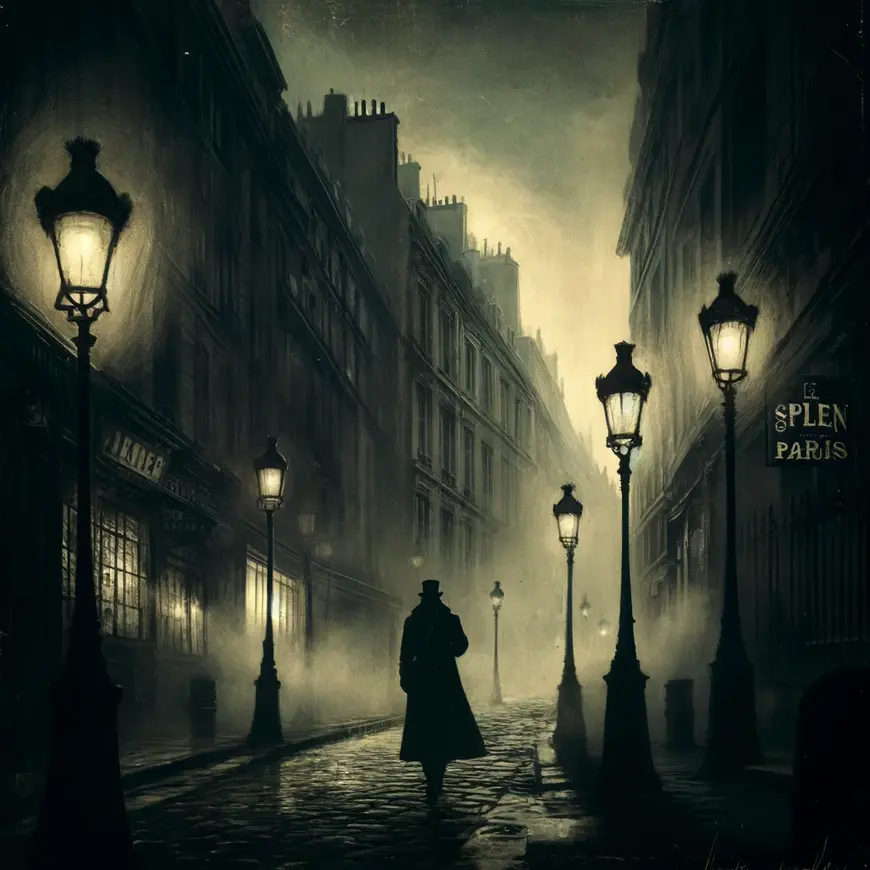
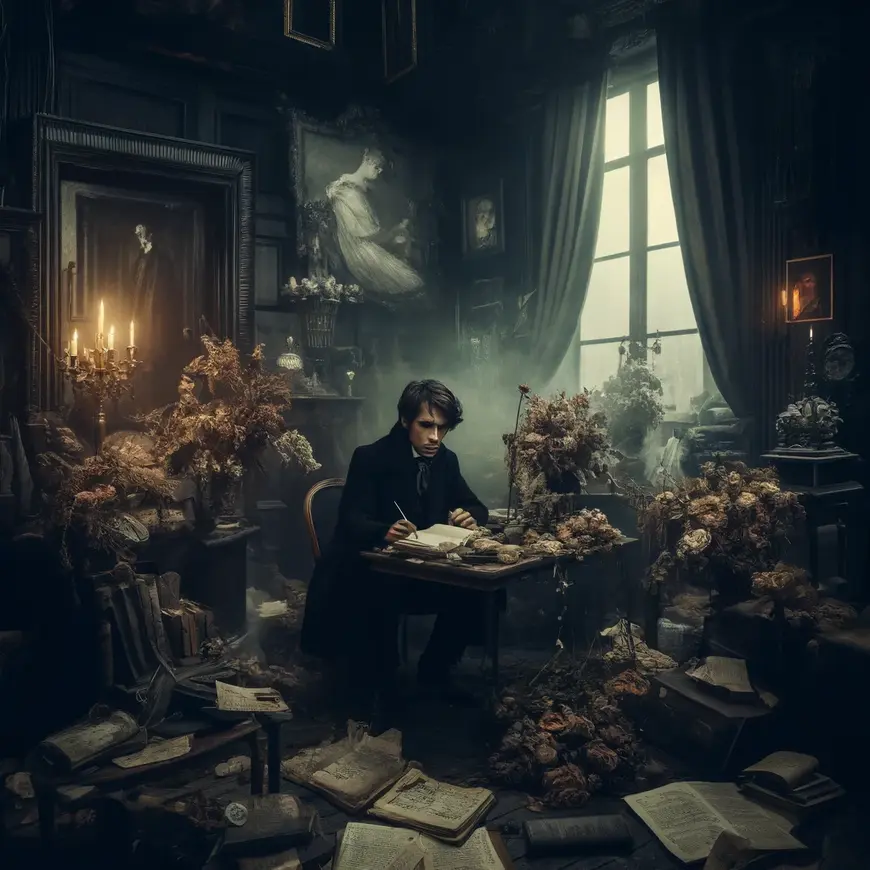
In the crowded streets and smoky cafés of 19th-century Paris, The Painter of Modern Life feels like a manifesto whispered in motion. Reading Charles Baudelaire’s essays is like following a sharply dressed flâneur, someone who sketches beauty on the move. I first encountered this work while trying to understand how art reflects society. What I found was something deeper, a philosophy of presence. The writer doesn’t just admire the modern artist; he reinvents him.
This slim but potent volume resists categorization. It is part art criticism, part poetic reflection, and entirely immersive. The poet introduces us to Constantin Guys not simply as a draftsman, but as an ideal: a man who captures the fleeting essence of the now. Through him, the author reflects on makeup, fashion, and speed, all elements of urban life that speak louder than oil on canvas. The structure of the essay is fluid, echoing the ephemeral nature of its subject matter. And yet, in every paragraph, Baudelaire wrestles with permanence.
I found myself revisiting sentences like brushstrokes, the kind that linger after the image has vanished. His style is lyrical, but never indulgent. His judgments are firm, but never without nuance. The Painter of Modern Life invites us to think differently not only about art, but about how we look at life itself.
The Painter of Modern Life: Capturing the Ephemeral
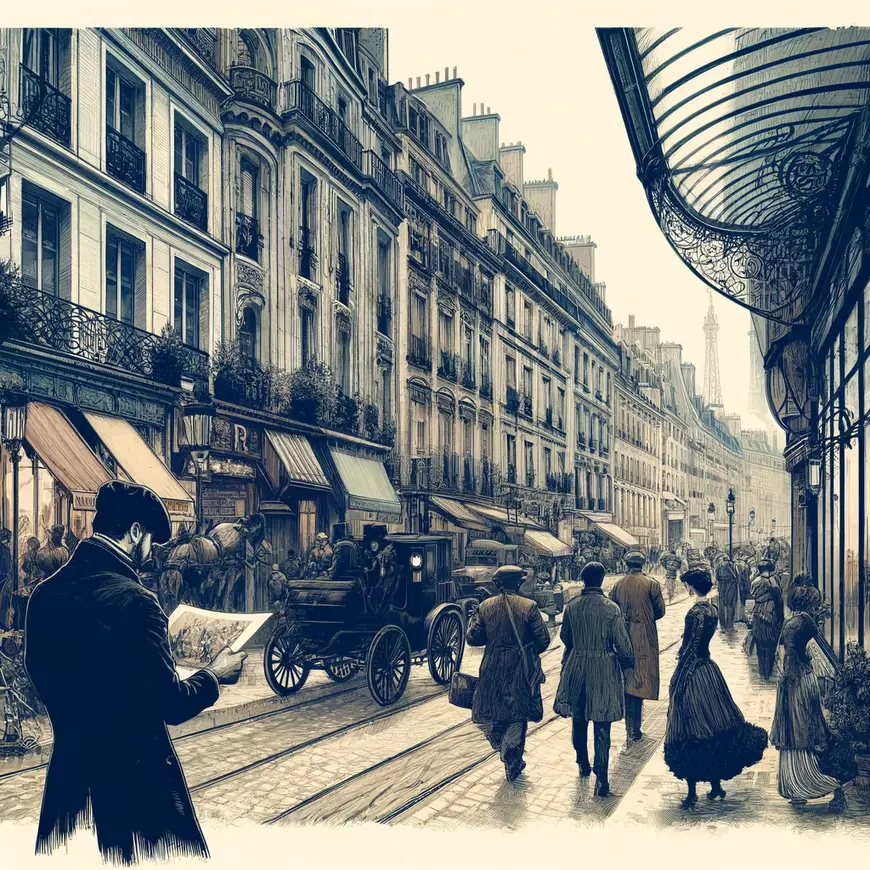
In The Painter of Modern Life, the author builds his argument on an elusive contradiction: how to capture the eternal in the fleeting. His subject, the modern painter, is a wanderer, a spectator, a man of the crowd. He is not simply copying reality, but interpreting it — absorbing the pulse of the city and translating it into gesture, tone, and atmosphere. He argues that true beauty lives in transience. This core idea still resonates in today’s photography, fashion, and street art.
I admired how he champions the observer over the academic. Unlike classical painters who seek grandeur, this artist seeks speed. He sketches rather than composes, dashes rather than defines. And yet, there is nothing careless about the vision. It’s a style that values intensity over polish, much like 👉 Cannery Row by John Steinbeck, where the beauty of the everyday becomes a poetic principle.
Charles Baudelaire also expands the meaning of art to include makeup and fashion. For him, the aesthetic experience is everywhere — on a woman’s painted face, in a man’s tailored coat, in the rustle of movement through a city. This perspective changed the way I think about detail. He doesn’t reduce art to surfaces, but he makes the surface speak. Much like 👉 A Murder is Announced by Agatha Christie reinvents domestic scenes into suspense, he reimagines visual culture through the lens of perception.
There’s something deeply modern in this approach. By embracing the ephemeral, The Painter of Modern Life becomes strangely permanent. It defines not what art is, but what it could become.
Style and Structure: Aesthetic Thinking in Motion
The writer doesn’t argue; he evokes. Reading The Painter of Modern Life feels like watching someone sketch thoughts mid-stride. The text flows in a stream of precise yet poetic fragments, each paragraph circling the same idea from a different angle. There is no rigid outline. Instead, we move intuitively between topics like beauty, elegance, fashion, and speed. This looseness reflects his belief in spontaneity, a quality he values more than structure itself.
His language is musical but sharp. Phrases land with rhythm, as if composed by a poet and sharpened by a critic. In describing modern beauty, he calls it “eternal in its momentariness” — a paradox that captures the spirit of his project. I found this structure not only effective but emotionally resonant, especially when contrasted with dry academic writing. He makes ideas live on the page.
The transitions are subtle. There are no formal headings, but clear shifts in tone and subject. We sense when he’s moved from the painter to the painted. And often, his arguments build not through logic, but through accumulated impressions. Each observation reinforces the one before, until a pattern takes shape. That’s the true power of this essay — it mirrors the fleeting moments it describes.
Flâneur as Artist: The Spirit of the Modern Gaze
One of the most compelling ideas in The Painter of Modern Life is the elevation of the flâneur. This figure — half artist, half wanderer — embodies the modern condition. He strolls through the crowd not to disappear in it, but to observe it with ruthless attention. He is detached, yet alert. Invisible, yet never absent. The poet redefines the artist as someone who doesn’t just create from within, but absorbs the world outside.
This idea reminded me of 👉 The Hound of the Baskervilles by Arthur Conan Doyle, where Sherlock Holmes also thrives in observation and inference. Both figures watch rather than act, and their skill lies in seeing what others miss. His flâneur does not solve crimes, but he solves the mystery of movement — how to translate ordinary life into aesthetic experience.
The painter he admires works like a reporter. He captures what he sees, instantly, instinctively, without the burden of perfectionism. This speed is not carelessness. It is precision in motion. The ability to fix fleeting gestures on paper is what sets the modern artist apart. And unlike the studio-bound academic, this painter finds his canvas in the city itself.
What I loved most about this chapter was how deeply it resonates today. In our world of instant images and scrolling feeds, the flâneur is more relevant than ever. He reminds us to slow down and see before reacting — to reclaim the gaze as something powerful, not passive.
Beauty and the Artificial: Baudelaire on Makeup
Few passages in The Painter of Modern Life are as provocative as those on cosmetics. Charles Baudelaire defends makeup not as deception, but as transformation. He views it as art — a way for women to express their inner selves through surface. In this, he directly challenges naturalist aesthetics. Beauty, he argues, is not about returning to nature but rising above it. The artificial is not false; it is superior.
This bold claim reframes the way we read urban fashion and style. In his view, the painted face is not a mask. It is a statement — controlled, deliberate, and creative. He even compares women to sculptures or paintings, whose strength lies in their distance from the natural. His praise of elegance and excess can feel startling today, yet it opens space to reconsider how much power there is in choosing one’s appearance.
The argument is layered. He ties makeup to spiritual freedom, suggesting that to decorate is to shape the soul’s expression. He speaks not of vulgarity but of mastery, where artifice becomes a tool of identity. This section isn’t just about beauty; it’s about self-authorship through aesthetics. And in typical Baudelaire fashion, he blurs the lines between fashion, morality, and metaphysics — with elegance and conviction.
Timeless Relevance: From Paris to Today
Reading The Painter of Modern Life in the 21st century reveals how sharply Baudelaire anticipated modern life. His observations on fashion, gender, time, and urban experience echo through contemporary art, design, and digital culture. He treats modernity not as a threat but as an opportunity, a moment to reflect beauty back into the world through brief, luminous impressions.
This reminds me of 👉 In Search of Lost Time by Marcel Proust, where memory functions like his vision, layered, fleeting, sensory. Both authors believe that moments, when captured with precision, can unlock something permanent. His idea of modern beauty, bound to its time and yet timeless, is still deeply influential.
He also anticipates media culture. The emphasis on surface, speed, and visibility in The Painter of Modern Life feels strikingly contemporary. He describes a visual economy long before photography and advertising matured. He sees the world as a series of symbols, outfits, postures — and he urges us to read them closely.
For me, the most lasting insight is this: modernity is not about novelty, but about attention. The author teaches us that when we notice with care, even the briefest detail can become eternal. His essay does not fade — it persists because the questions it asks remain unresolved.
✒️ Thoughtful Quotes from The Painter of Modern Life by Charles Baudelaire
- “Modernity is the ephemeral, the fugitive, the contingent.” This quote distills his mission: to find beauty in what vanishes quickly.
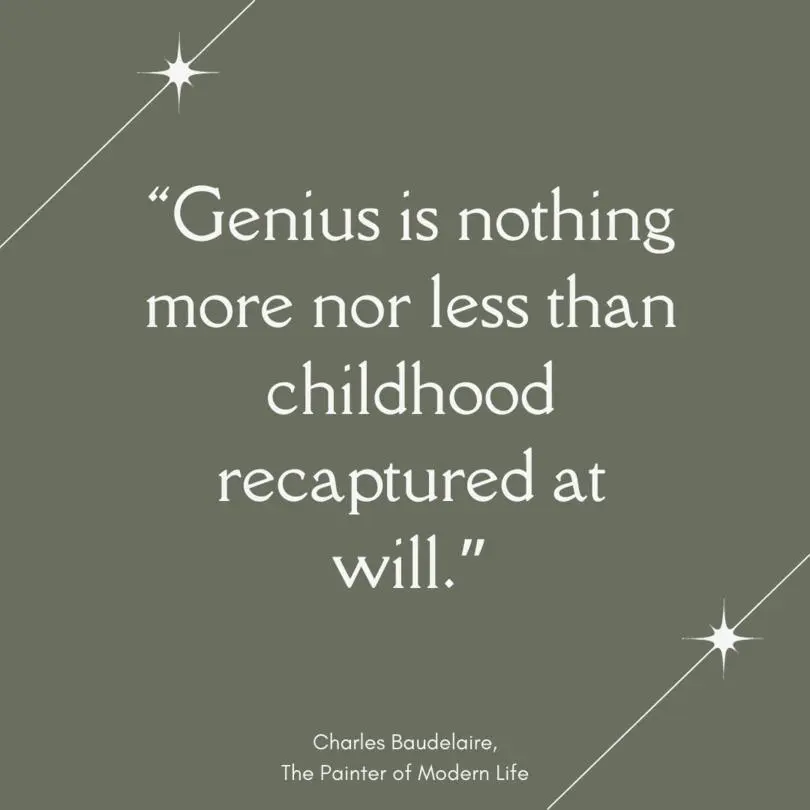
- “Genius is nothing more nor less than childhood recovered at will.” He celebrates instinct and spontaneity, traits often lost with age but essential to modern creativity.
- “The pleasure of being in a crowd is a mysterious expression of love.” The flâneur doesn’t retreat from society — he finds emotional meaning in observation.
- “Fashion should thus be considered as a symptom of the taste for the ideal.” Even in passing styles, Charles Baudelaire sees a longing for something greater.
- “To be a useful person has always seemed to me something very hideous.” He rejects utility as the highest goal and praises aesthetic experience over function.
- “Make-up is the art of creating harmony between the body and the soul.” Cosmetics are not deception, but a tool for self-expression and inner alignment.
- “Beauty is always bizarre.” He defends eccentricity as essential to art, suggesting that normality lacks imagination.
- “The true painter for whom we are looking will be he who can snatch its epic quality from the life of today.” Modern life contains drama and heroism — the artist’s job is to reveal it.
- “The dandy must aspire to be sublime without interruption.” Dandyism is more than fashion; it’s a moral stance toward elegance and detachment.
📚 Trivia Facts from The Painter of Modern Life
- Inspired by Constantin Guys: The essay centers on a real artist Charles Baudelaire admired, who worked for newspapers and embodied spontaneity in visual art.
- First published in 1863: It appeared in installments in the newspaper Le Figaro, bringing his theories to a wide audience of Parisian readers.
- Makeup as resistance: The novelist praised makeup as a rebellion against nature and passivity, a rare view at the time.
- Linked art to fashion: He saw fashion as a key form of modern expression, echoing ideas that appear later in 👉 The Method by Juli Zeh.
- Influenced Walter Benjamin: The German philosopher referenced this essay extensively in his writings on modernity and urban life.
- Rejected utilitarianism: Like 👉 Germany. A Winter’s Tale by Heinrich Heine, the writer resisted the growing culture of productivity over creativity.
- Part of a broader movement: The essay aligned with Symbolism and early aestheticism, paving the way for Oscar Wilde and others.
- Inspired fashion theory: Thinkers like Roland Barthes and Judith Butler trace roots of style-as-expression back to his ideas.
- Tied to urban development: Written during Haussmann’s redesign of Paris, the essay reflects the shifting cityscape as much as art itself.
- Still taught globally: The Painter of Modern Life remains a foundational text in university programs across the world, from the Sorbonne to 👉 The Witches of Eastwick by John Updike-style American lit seminars.
The Modern Artist as Interpreter
At the core of The Painter of Modern Life lies his belief that the artist is not a creator in isolation but an interpreter of his age. He sees the painter as someone who must translate experience into vision, catching fragments of life and turning them into meaning. Art, in his view, is not eternal because it avoids the present — but because it captures it so completely that it transcends it.
This idea reshapes the role of the artist. Rather than searching for ideals, the painter should seek what is real and immediate. And yet, realism here is not plain observation. It is stylized, intense, and full of perspective. The artist becomes a mirror and a filter — reflecting the world, but bending it through mood, rhythm, and form. The poet doesn’t separate craft from emotion; he insists they work together.
He urges us to reject rigidity. The painter should work quickly, freely, instinctively. This allows for moments of genius to rise from the everyday. Much like a musician improvises, the artist in this essay draws power from the ephemeral. It’s not the object but the way we see it that creates beauty. This principle explains why his vision still feels alive — because it teaches us how to look.
Legacy and Influence: Beyond the Page
The Painter of Modern Life remains one of the most influential essays in modern art history. Its ideas reach beyond the 19th century and echo through visual theory, photography, film, and fashion. His concept of the flâneur shaped the language of urban observation. His defense of makeup and clothing as meaningful aesthetics paved the way for cultural studies. This book doesn’t just talk about art — it became part of art’s evolution.
When reading this, I thought of 👉 The Blood of Others by Simone de Beauvoir. Both works ask how individuals relate to their time. They recognize that meaning isn’t just found in ideology, but in choices, styles, and gazes. Charles Baudelaire gives the reader a new way to engage with the world — a way that combines curiosity with discipline.
He also reminds us that observation is political. What we choose to notice — and how we record it — says as much about our values as any manifesto. This makes the book a call to awareness. In a world that changes faster than we can grasp, he urges us to slow down, to watch with intention, to make meaning before it fades.
His legacy, then, isn’t just literary. It’s perceptual. We carry it in the way we move through cities, in how we read faces, and in how we turn fleeting moments into forms that last.