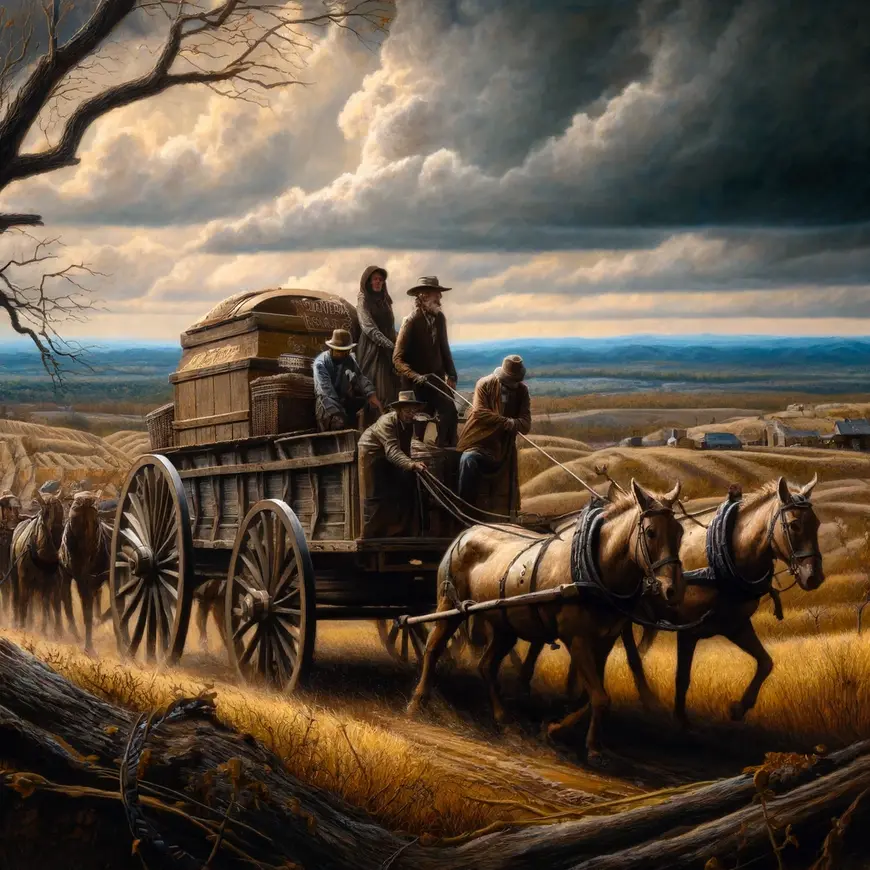
Dusty roads in The Reivers by William Faulkner
The Reivers begins with a spark of reckless curiosity and a boy’s quickening conscience. Lucius Priest steps into trouble not by design but by proximity to Boon’s impulsive energy, and the story invites us to travel with him, step by step, as choices turn into consequences that teach. William Faulkner keeps the tone light, and yet it never feels thin. The scenes stay close to dusty streets, creaking porches, and engines that cough to life, so the comedy lands while the heart still matters.
What I love here is the clarity of the setup. The car theft is not only a plot device; it is a cultural hinge between old codes and new machines. The novel stages these frictions without scolding anyone. It lets people reveal themselves through talk, mess, and small acts of generosity. Because the narrator looks back with warmth, the pace feels friendly, and the humor stays humane.
As the journey starts, the novel builds a rhythm of incident and insight. Short scenes become little tests. Lucius learns to read faces, to notice silences, to spot when luck masks pride. The book respects his innocence while nudging him toward earned responsibility. That is why the opening works so well: it is playful, it is kind, and it already hints at the moral work ahead.
Seeing the South through The Reivers
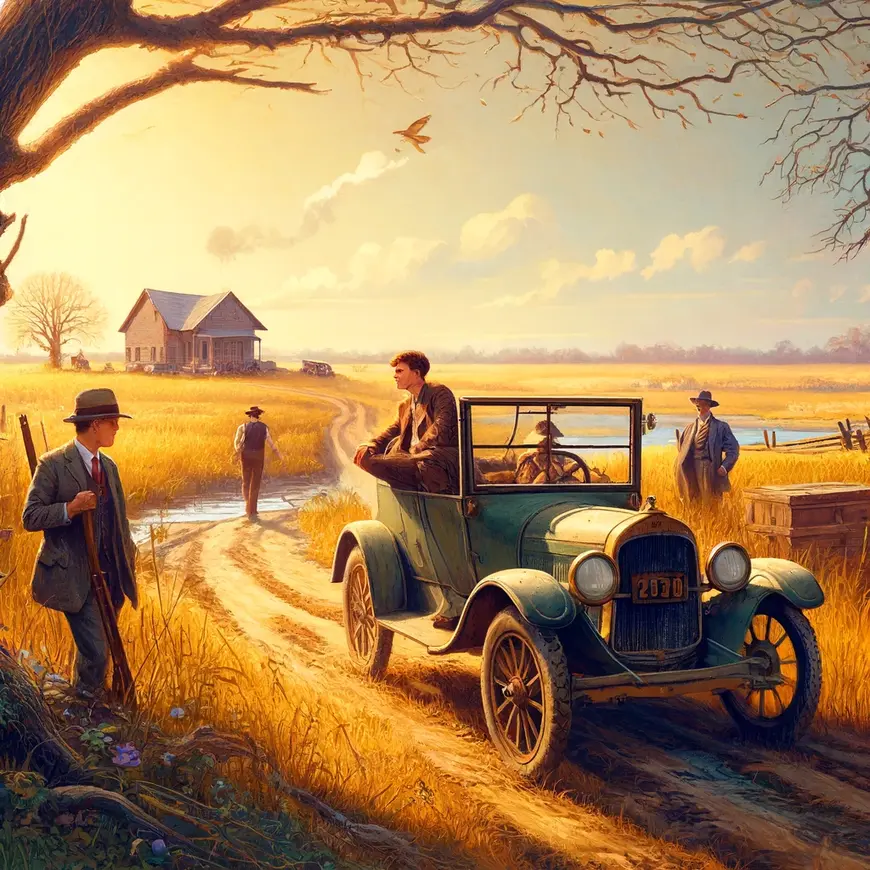
The Mississippi that frames The Reivers feels lived in, layered, and changing at speed. Wagons share the road with automobiles, and every crossroads carries a story. This tension between habit and novelty creates conflict without cruelty, because the novelist lets ordinary folks argue, barter, and forgive. The setting is not just backdrop; it acts like a soft-spoken witness to every choice the travelers make.
Boon charges forward; Ned plays a longer game. Lucius watches both and learns how charm can open doors while quiet patience keeps them open. In town after town, comic turns expose real stakes: pride, dignity, money, and the fragile trust between strangers. The novel keeps us smiling while it points to the costs of bravado and the value of restraint.
For a deeper Southern counterpoint on travel, family, and burden, 👉 As I lay Dying by William Faulkner shows how a journey reshapes kinship under pressure. Here, too, forward motion reveals character. The difference is tone: where that book presses hard, The Reivers chooses warmth. Both reach for truth, but this one lets kindness lead, and that choice gives its lessons a brighter afterglow.
Characters that drive the story
In The Reivers, motion is never just about covering ground. It is about the friction between personalities and how those frictions spark change. Boon Hogganbeck moves like a man chasing the horizon, full of restless impulse. He jumps into situations without stopping to weigh the cost, dragging others into his whirlwind.
Lucius, though younger, has a steady adaptability that keeps the journey from tipping into chaos. He learns quickly, absorbing lessons in silence, which gives him an unexpected resilience. Ned McCaslin, ever observant, plays the long game. His moves are deliberate, his strategies hidden behind a calm, easygoing surface.
What I admire most is how Faulkner lets small choices ripple outward. A horse swap here, a side conversation there, each pushing the travelers toward unplanned turns. These aren’t filler episodes; they’re points where values get tested.
Supporting characters, stable owners with quick wits, roadside mechanics who know more than they say, townsfolk with gossip as sharp as their smiles — all add texture. Each scene reminds us that every stop is a community with its own rules, and the trio must navigate them to keep moving forward.
The interplay between Boon’s impulsiveness and Ned’s foresight recalls the layered dynamics in 👉 The Grapes of Wrath by John Steinbeck, where families and strangers negotiate shifting alliances under constant pressure. In both novels, movement becomes an emotional trial as much as a physical one. By the close of this section, the trio has not only advanced on the map but also in their mutual understanding, a mix of grudging respect and unspoken reliance that will prove essential when the road grows rougher.
Humor with lessons tucked inside
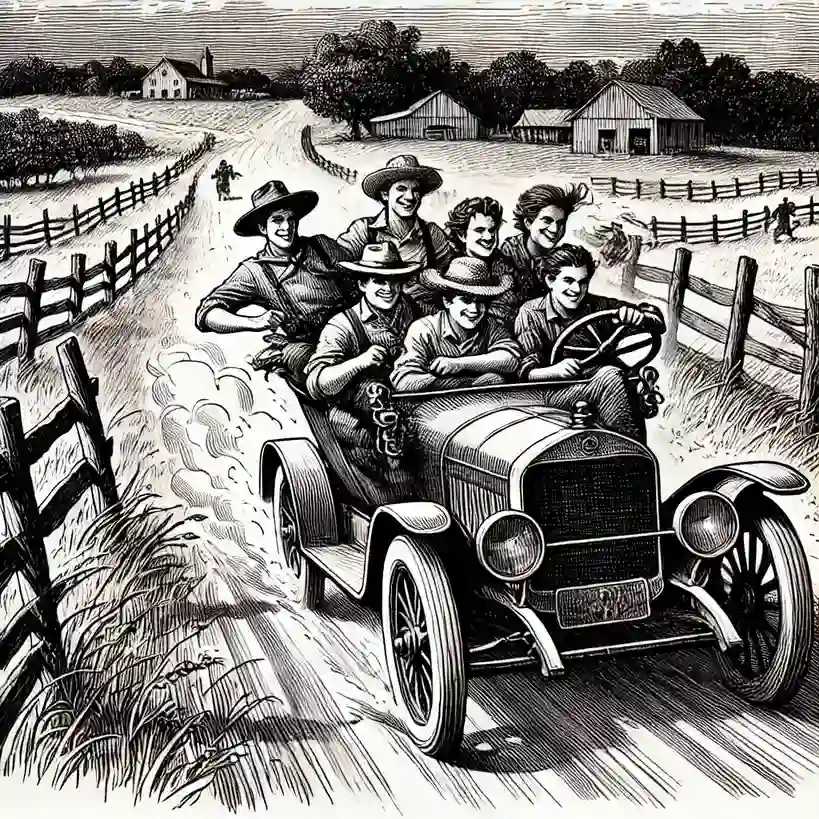
Faulkner’s humor works like a gentle but persistent teacher. A botched plan at a horse track might make you laugh at Boon’s blunders, but under the smile is the question: what do we owe each other when luck shifts? Boon’s escapades invite groans and grins, while Lucius’s reactions quietly reveal a growing moral compass. Humor here never cheapens the story; instead, it sharpens the point without turning bitter.
Scenes move easily from banter to reflection. A stable dispute that begins with teasing ends in a lesson about fairness, when a playful bet forces the characters to consider what a promise is worth. A misread gesture in a crowded street transforms from embarrassment into an opening for compassion. The writer is careful not to rush these shifts, each moment lands with both charm and purpose, allowing us to savor the joke and the meaning it carries.
The ability to blend amusement with insight recalls 👉 The Adventures of Augie March by Saul Bellow, where charm and trouble share the same path. Yet here, the Southern backdrop slows the rhythm, letting wisdom arrive at the same measured pace as a mule cart on a dusty summer road. This gentler delivery means the lessons feel earned, not imposed. By the time the chapter closes, you realize the laughter has cleared space for something more lasting: the understanding that humor, when tied to truth, can be as memorable as the truth itself.
When plans shift without warning
Road trips in novels rarely go as planned, and The Reivers is no exception. What starts as a straightforward drive toward Memphis becomes a chain of diversions, some welcome, others risky. Lucius quickly learns that adaptability is survival. One wrong turn leads them to an unfamiliar town, where they must negotiate their way out of suspicion. Another delay comes from a mechanical failure, forcing them to barter for help in a place where they have little leverage.
These disruptions are more than plot twists. Each forces the characters to reveal something deeper. Boon’s quick temper flares, yet his loyalty to Lucius remains unshaken. Ned’s patience turns into quiet leadership, his calmness smoothing tensions before they escalate. Even Lucius surprises himself by stepping in when others hesitate, finding his voice in situations where silence would have been easier.
The texture of these moments is rich with Southern small-town detail. The author paints porches sagging under summer heat, storefronts with peeling signs, and locals who size up strangers before deciding whether to offer help. This authenticity makes the setting an active player in the journey, sometimes aiding the travelers, sometimes testing them.
In each setback, there’s a seed of opportunity. Whether it’s the chance to swap a story for a favor, or to observe how different communities enforce their own unwritten rules, Lucius begins to see travel not as a race to the destination but as an education. Every detour is a lesson in resourcefulness, and every delay an invitation to look more closely at the people around him. By the end of this stage, it’s clear the journey will not be measured in miles alone.
The Reivers – The weight of choices on the road
If Chapter 5 shows how circumstances shape the journey, this chapter focuses on how choices shape the traveler. Lucius starts to realize that each decision, whether to speak up, to help, or to stand back, carries consequences he cannot undo. These moments arrive quietly, often tucked inside seemingly small interactions.
One such moment comes when the group encounters a struggling farmer. The easy route would be to pass by, yet Lucius feels the tug of responsibility. Boon argues for speed; Ned suggests caution. In the end, the decision is made not through debate, but through action. Lucius steps forward, and in doing so, claims a piece of his emerging adulthood.
William Faulkner uses these moral crossroads to deepen our understanding of the boy’s growth. The South here is no romantic postcard; it’s a place where poverty and pride stand side by side, and where generosity often comes from those with the least to spare. Helping others sometimes costs the travelers time, money, or safety, but it also strengthens the bonds between them.
This layered moral landscape echoes the complexities found in 👉 Beloved by Toni Morrison, where personal histories and community responsibilities intertwine in ways that demand courage. In The Reivers, the stakes are smaller on the surface, yet they carry the same weight for the boy who must live with his choices.
By the chapter’s end, Lucius understands that adventures are not just about what you gain, but also about what you give up along the way. Each mile forward is a step deeper into the kind of wisdom that only comes from acting when it would be easier to turn away.
Memorable Quotes from The Reivers by William Faulkner
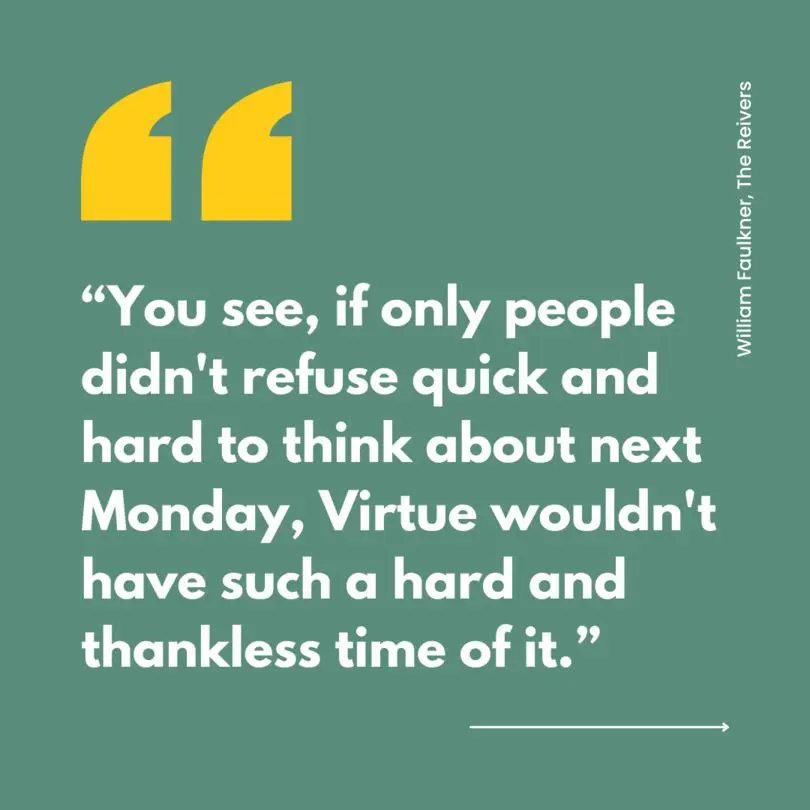
- “The past is never dead. It’s not even past.” A reminder that history lingers in every choice, shaping how we see the present. Lucius’s journey becomes a small echo of this truth, where even a boy’s mischief carries the weight of inherited values.
- “Memory believes before knowing remembers.” This line captures how instinct often guides us before reason takes over. Lucius’s willingness to trust his gut in uncertain situations reflects this blend of intuition and experience.
- “Given the choice between the experience of pain and nothing, I would choose pain.” It speaks to the value of living fully, even when it hurts. For Lucius, the discomfort of mistakes proves more valuable than the safety of avoiding them.
- “You don’t love because: you love despite; not for the virtues, but despite the faults.” A sentiment woven through the relationships in the novel. It applies to friendship as much as romance, showing how bonds survive imperfection.
- “To understand the world, you must first understand a place like Mississippi.” This ties the novel’s regional setting to its universal insights. Lucius’s growth is inseparable from the land and culture that shape his journey.
- “A gentleman accepts the responsibility of his actions and bears the burden of their consequences.” Lucius learns this lesson on the road, as every decision leaves a mark on himself and those around him.
- “Life is motion, and motion is change.” The road in The Reivers becomes a metaphor for personal transformation. Standing still is never an option; even setbacks push the characters forward in some way.
Trivia Facts from The Reivers
- Pulitzer Prize Winner: The Reivers earned William Faulkner his second Pulitzer Prize for Fiction in 1963, cementing his place among America’s most celebrated novelists.
- A lighter Faulkner: Known for dense, challenging narratives, he surprised readers with the novel’s accessible style, offering humor and warmth without losing depth.
- The meaning of the title: “Reivers” is an old Scottish word meaning “thieves” or “raiders,” perfectly fitting a tale centered on a stolen car and a series of escapades.
- Set in Yoknapatawpha County: Like many of his works, the novel unfolds in Faulkner’s fictional Mississippi county, a setting rich with recurring characters and history.
- Horse racing subplot: The racing scenes combine suspense and humor while revealing the cultural importance of betting and competition in the rural South.
- Strong supporting cast: Characters like Boon and Ned are among his most memorable comic creations, balancing wit and heart.
- The car as a symbol: The stolen Winton Flyer reflects the tension between tradition and modernization in the early 20th-century South.
- International reach: Despite its regional focus, The Reivers has been translated into numerous languages, showing its universal themes of youth and growth.
- Literary legacy: His influence remains strong, with 👉 The Old Man and the Sea by Ernest Hemingway often studied alongside his works in literature courses worldwide, as noted by resources like The Pulitzer Prize website and The Paris Review.
Bonds tested and strengthened
As the road unwinds, the three travelers find themselves in situations that test not only their patience but also the strength of their connection. The open road has a way of magnifying differences. Boon’s impulsive streak begins to grate on Lucius, whose growing maturity makes him less tolerant of rash decisions. Ned, meanwhile, plays mediator, sensing that small irritations can quickly grow into real conflicts when there’s nowhere to escape.
One night, a heated argument over a navigation mistake nearly derails the trip. Tempers flare, words are exchanged, and for a moment the trio seems split beyond repair. Yet the next morning, a shared challenge, a broken axle on a deserted stretch, forces them to work together. The cooperation comes without formal apologies, just the quiet understanding that survival depends on unity.
His gift lies in capturing unspoken reconciliation. A joke shared over breakfast, a silent nod after a roadside repair, these small gestures speak louder than grand speeches. The book reminds us that bonds are often reforged not in dramatic declarations, but in the daily acts of showing up for each other.
The shifting dynamic between these characters recalls the way alliances evolve in 👉 Siddhartha by Hermann Hesse, where growth often comes from learning to listen and adapt. In The Reivers, that growth happens in the dusty air between one challenge and the next. By the time they reach the outskirts of their destination, the tension has settled into something stronger than friendship: a mutual reliance forged in the rhythm of the road.
Arrival with more than expected
The final stretch toward Memphis carries a mix of relief and reluctance. Lucius knows that reaching the city means the adventure will soon end, yet he also senses that he will not return home the same boy who left. Every mishap, every laugh, every hard choice has etched itself into his understanding of the world.
Their arrival is far from triumphant. Instead of a grand welcome, they slip quietly into the city, already dealing with the loose ends of their journey, debts to settle, favors to repay, and the unspoken question of what comes next. Memphis itself is alive with contrasts: shining storefronts beside crumbling brick, polite greetings alongside guarded stares. It is a place where opportunity and risk walk hand in hand.
Here, Faulkner lets the pace slow, as if giving Lucius time to absorb it all. The city offers a taste of independence, but also a reminder that freedom comes with responsibility. Encounters with strangers hint at paths Lucius might take in the future, while memories of the road remind him how easily those paths can change.
The understated ending mirrors the book’s larger truth: adventures rarely conclude with a single moment of closure. Instead, they leave you carrying fragments of lessons, pieces that will surface when you least expect them. By the last page, Lucius is still young, still curious, but also aware that he has crossed an invisible threshold. He will return home, but a part of him will always remain on that long road, where mischief and meaning traveled side by side.
More Reviews of Works by Faulkner



More Reviews from the Genre Educational Novel