Tortilla Flat: friendship with a cost
A house promises shelter, yet it can also turn a friend into a landlord. In Tortilla Flat, John Steinbeck begins with that awkward transformation and builds a comic novel whose warmth never entirely cancels its unease. The book’s episodic adventures belong to a picaresque tradition, while its Arthurian framework lends Danny and his companions a deliberately disproportionate grandeur.
The setting is a district of Monterey, California, rather than a separate picturesque town. Danny returns from military service to discover that he has inherited two houses, and the acquisition changes his position among men accustomed to getting by without much property. Consequently, friendship immediately encounters questions of debt, dependence, and obligation.
The pleasures of Tortilla Flat are real: elaborate excuses, resourceful conversation, improbable plans, and a narrator who can give a minor escapade the dignity of a legendary quest. Generosity and self-interest share the same room. Because the friends often confuse the two, their arguments invite laughter without becoming reliable statements of moral truth.
However, the novel also asks more difficult questions about its own affectionate portrait. Poverty sometimes acquires an attractive freedom that material deprivation does not necessarily possess. The paisanos receive narrative attention and dignity, yet the telling can also turn them into a picturesque collective for an outside audience.
Those tensions make Tortilla Flat more interesting than a simple celebration of uncomplicated lives. Its comedy depends on instability, while its final movement changes the emotional meaning of the earlier gatherings. The friendship has a cost even when nobody produces an honest account of it, and the house cannot permanently protect the world that forms around its rooms.
Ownership changes the terms of friendship
Danny’s inheritance gives Tortilla Flat its central practical problem. A man who has usually shared the insecurity of his companions suddenly controls a scarce resource, so equality becomes harder to maintain. Although the houses look modest, the new distinction between host and guest reaches into almost every negotiation.
Pilon understands that property can separate people, but his understanding is hardly disinterested. He worries about Danny’s elevated status while seeking the benefits of the same arrangement. Thus, the novel makes social criticism emerge through a character whose insight and opportunism remain closely connected.
Rent becomes particularly revealing because it promises a formal relationship that nobody wishes to sustain honestly. A debt may preserve the appearance of independence, although the prospect of paying it threatens the comfort of the debtor. An unpaid obligation still shapes a relationship. The comedy comes from the distance between the agreement and the behaviour it produces.
For a different account of housing and dignity, 👉 A House for Mr Biswas by V. S. Naipaul offers an illuminating comparison. There, ownership answers a long struggle for autonomy. Here, possession gives Danny responsibilities from which he increasingly wants release.
The contrast helps explain why the material world matters in Tortilla Flat. A home is never simply a symbol of belonging, because someone controls it, somebody maintains it, and others depend on continued access. Consequently, hospitality creates both affection and an unequal distribution of power.
Tortilla Flat does not solve this problem with an uncomplicated rejection of property. The friends need shelter, and the house enables experiences that would otherwise be impossible. Instead, the inheritance reveals how difficult it is to preserve an ideal of free companionship when the conditions supporting it belong to one person.
Pilon turns appetite into an ethical argument
Much of the comedy in Tortilla Flat begins before anybody acts. Pilon first discovers a reason why the action he desires would benefit someone else, satisfy a higher principle, or prevent a greater misfortune. His eloquence therefore gives ordinary appetite a surprisingly elaborate moral wardrobe.
The reader of Tortilla Flat can follow the reasoning while seeing the missing step. Concern for another person’s welfare somehow ends in a bottle of wine, an avoided payment, or a useful acquisition. Because the argument remains internally industrious, the scene can be funny without relying on a simple contrast between intelligence and stupidity.
Self-deception does not require a lack of intelligence. Pilon often sees social relationships acutely, yet he uses that perception to protect his immediate comfort. The gap between insight and conduct gives his speeches their energy. It also prevents affection for him from turning into complete endorsement.
This quality finds a theatrical counterpart in 👉 The Importance of Being Earnest by Oscar Wilde. Both works allow elegant language to expose the selfishness it appears to disguise. Their social worlds differ sharply, but verbal performance repeatedly rearranges what their characters are prepared to call respectable.
The narrator of Tortilla Flat participates in the joke through a solemnity that exceeds the occasion. A small manoeuvre can receive the explanation normally reserved for a major ethical decision. Nevertheless, the elevated voice sometimes grants the friends an imaginative importance that ordinary social judgement would deny them.
That double effect deserves attention. We laugh at their evasions, while the narrative also makes their thoughts worth hearing. The most successful scenes preserve both responses, allowing amusement and recognition to coexist rather than asking us either to condemn the friends outright or to regard every trick as harmless charm.
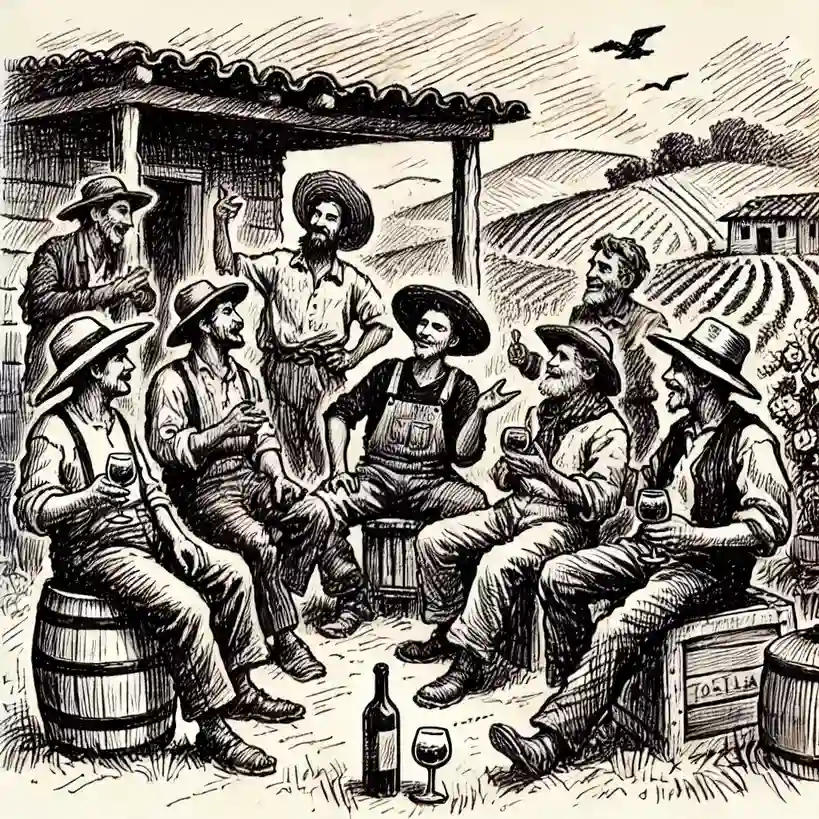
An improvised household can offer real care
The friendships in Tortilla Flat would carry little emotional weight if every act of kindness concealed only another scheme. Although the men frequently begin with questionable motives, living together can change what they are willing to protect. Their shared space allows responsibility to develop through familiarity, even when nobody announces a conversion.
The Pirate’s place within the group is especially revealing. His vulnerability initially attracts calculation, but his trust complicates the attempt to treat him simply as an opportunity. Consequently, the difference between protecting someone and exploiting him becomes a problem inside the household rather than an abstract test outside it.
In Tortilla Flat, the same structure makes small resources significant. Food, a place to sleep, company, and someone willing to listen can carry a value that money alone does not explain. Care becomes visible through ordinary provisions. Yet the absence of formal accounts never means that the household has escaped material need.
A productive comparison is 👉 The Grass Harp by Truman Capote. Its unconventional companionship also creates an alternative to respectable arrangements that fail to satisfy emotional needs. However, each book gives its fragile community a different voice and a different relationship to the surrounding town.
In Tortilla Flat, belonging can be comic, possessive, generous, and exhausting at once. The friends help sustain one another, although their constant proximity also makes demands. Therefore, Danny’s eventual restlessness cannot be understood simply as ingratitude towards an otherwise perfect refuge.
The household’s value lies partly in its imperfection. People who routinely fail the tests of conventional respectability can still recognise a claim upon them. That possibility gives the novel its warmth, while the uneven distribution of care prevents the warmth from becoming a complete moral defence of the group.
The Round Table casts a complicated shadow
The Arthurian comparison in Tortilla Flat gives the friends’ gatherings a structure larger than their immediate circumstances. Danny’s house becomes the centre of a fellowship, while separate adventures accumulate into the history of a group. However, legendary language also prepares us to notice that a fellowship can dissolve.
This framework transforms the scale of the comedy. An errand or a quarrel can resemble a quest, although the distance between elevated form and everyday purpose remains visible. Therefore, the narrative both celebrates its characters and invites us to question the grand stories through which communities explain themselves.
👉 Don Quixote by Miguel de Cervantes offers a useful comparison for this traffic between ordinary life and chivalric imagination. Yet the mechanism differs: Danny’s circle receives legendary stature from its narrator rather than simply mistaking its surroundings for a knightly world. The distinction helps keep the comparison precise.
There is also an ethical difficulty in the perspective of Tortilla Flat. Its affectionate treatment of the paisanos can challenge respectable society’s exclusions, but it can also make deprivation seem attractively carefree. Affection does not settle the question of portrayal. Readers should examine the generalisations attached to the group as carefully as the generosity shown towards particular people.
Women, too, often appear through male desire, gossip, or negotiation. Their presence can energise the comedy while revealing how narrowly the fellowship defines its central loyalties. Consequently, the novel’s freedom is unevenly distributed, even within its alternative social world. These reservations need not cancel the achievement. They make reading more attentive by separating the pleasure of the voice from automatic agreement with its assumptions. The novel becomes richer when its tenderness, theatricality, and exclusions remain visible together.
Writing Style: mock grandeur and a changing rhythm
The writing style of Tortilla Flat works through the distance between what happens and how the narrator describes it. Small appetites receive expansive explanations, while dubious conduct acquires the ceremonious language of a chronicle. Because the voice remains composed, its exaggeration often becomes funnier than an explicit punchline would be.
The novelist uses this mock grandeur to organise an episodic novel without making every chapter advance a conventional plot. Meetings, stories, and schemes gradually establish the habits of a community. Consequently, repetition becomes useful when it reveals a familiar pattern from a slightly different emotional angle.
Dialogue supplies another source of movement. A character may appeal to friendship, religion, honour, or necessity, while the reader watches the desired conclusion approach. The argument is part of the action. What people persuade themselves to believe can matter as much as what they eventually manage to obtain.
Descriptions of the house, the hillside, and the surrounding town give these performances a physical setting. Nevertheless, the narrative does not maintain the impersonal stance of a social survey. It arranges and embellishes, so its Monterey should be read as a literary construction shaped by selection and tone.
Within American literature, the book offers a distinctive encounter between regional observation and inherited European storytelling forms. Its local details coexist with a fellowship structure that reaches beyond California. That combination helps explain why neither simple realism nor pure fable adequately describes the reading experience.
The final change of mood is therefore especially important in Tortilla Flat. Earlier comic rhythms do not disappear, but they begin to carry loss. By the end, the narrator’s elevated language can sound like an effort to preserve something already passing away, and the reader hears the old amusement differently.

Quotes that reveal the novel’s tensions
These brief excerpts come from the English text of Tortilla Flat, checked against the edition reproduced by Faded Page. They are deliberately short passages rather than a collection of detachable life lessons. Their value lies in how ordinary words expose the novel’s changing relationships and its distance between promise and performance.
- “a mystic sorrow”: The prefatory description places sadness inside the fellowship’s story from the beginning. Therefore, the later change of mood does not arrive without preparation. The phrase encourages readers to hear an undertone of loss even during the most entertaining adventures around Danny’s house.
- “I am an heir!”: Danny’s exclamation announces a practical alteration in his life. Yet inheritance also changes how his companions view him and what they expect. The excitement therefore contains a problem that the following negotiations gradually expose through questions of hospitality, status, and obligation.
- “My freedom will be cut off.”: Pilon recognises dependence when he feels himself becoming indebted. However, his anxiety also protects his reluctance to contribute. The sentence is revealing because a genuine concern about autonomy arrives together with a convenient excuse for avoiding an unwelcome task.
- “It is good, this,”: Pilon responds to the comfort of shelter and companionship. For a moment, the pleasure needs little justification beyond the shared situation. Consequently, this modest observation reminds us that the household offers something real, despite its inhabitants’ evasions and the narrator’s persistent irony.
- “no two walked together.”: The closing separation reverses the pattern of companionship that has sustained the book. Its plainness makes the loss particularly sharp. After so much communal talk, the narrator ends by letting the friends’ physical movement express what their elaborate explanations can no longer repair.
Facts and reading connections around Tortilla Flat
- A breakthrough in 1935: Published on 28 May 1935, the novel brought the writer his first major popular success. Its place in his career matters because the reputation now attached to his later books can obscure the importance of this earlier comic achievement. 🌐 chronology
- Monterey, rather than a separate town: The novel’s district belongs to Monterey, with the hillside setting shaping the distance between the friends and more conventional social arrangements. Describing it as an independent town loses the local relationship on which much of the book’s atmosphere depends.
- A fellowship modelled on Arthurian legend: The publisher identifies the Round Table framework as central to the novel’s structure, including the fellowship’s sorrowful trajectory. This helps explain why its adventures accumulate into something more than an interchangeable collection of amusing incidents. 🌐 Penguin Classics
- An American picaresque companion: The adventures invite comparison with 👉 The Reivers by William Faulkner, another novel that gives misbehaviour a comic narrative energy. This is a reading connection, while the different narrators and social settings prevent a simple equivalence between the two books.
- A community remembered through episodes: 👉 Dandelion Wine by Ray Bradbury provides another way to consider how separate episodes create a town’s emotional life. The comparison highlights the role of recurring places and shared stories, although its childhood perspective differs from the adult fellowship here, whose members repeatedly explain their choices through improvised arguments about duty, pleasure, and what friendship should require of them.
Why Tortilla Flat deserves more than an easy laugh
Readers may first approach Tortilla Flat for its humour, and the humour remains a reason to read it. The friends’ improvised arguments can be wonderfully agile, while the narrator knows how to preserve a solemn face. However, the book becomes more rewarding when that amusement leads to questions about what the group is defending.
Its treatment of property is particularly suggestive. A house can offer independence from the street while creating dependence between its occupants, so security and freedom do not move together automatically. The novel gives that contradiction an intimate scale, allowing it to appear through rent, food, and expectations.
The same attention helps distinguish companionship from a sentimental ideal of community. People may care for one another while making unreasonable demands, and generosity may emerge from arrangements that began selfishly. A flawed friendship can still have real value. Consequently, judging the men requires more than deciding whether they are admirable or disreputable.
The portrayal of poverty and ethnicity also calls for an active reader. An affectionate narrator can still generalise, simplify, or turn a marginalised population into an attractive spectacle. Rather than treating that tension as an inconvenient footnote, a strong reading makes it part of the discussion about who speaks and who becomes a story.
For these reasons, Tortilla Flat suits readers willing to let pleasure and criticism coexist. It offers no comprehensive sociology of Monterey, nor should its characters stand for everyone who shares their background. Its strength lies in the particular theatrical world created by their habits, exchanges, and unstable solidarity.
The final pages of Tortilla Flat then test how much that world has come to matter. What began as an amusing arrangement acquires the vulnerability of a shared life. The laughter survives, but it can no longer be mistaken for a guarantee of safety.
Summary of Tortilla Flat
After military service, Danny returns to Monterey and learns that his grandfather has left him two houses. The inheritance gives him shelter, but it also introduces responsibilities and changes his relationships with his friends. Pilon quickly becomes involved in the new arrangement, negotiating between his desire for comfort and his fear of dependence.
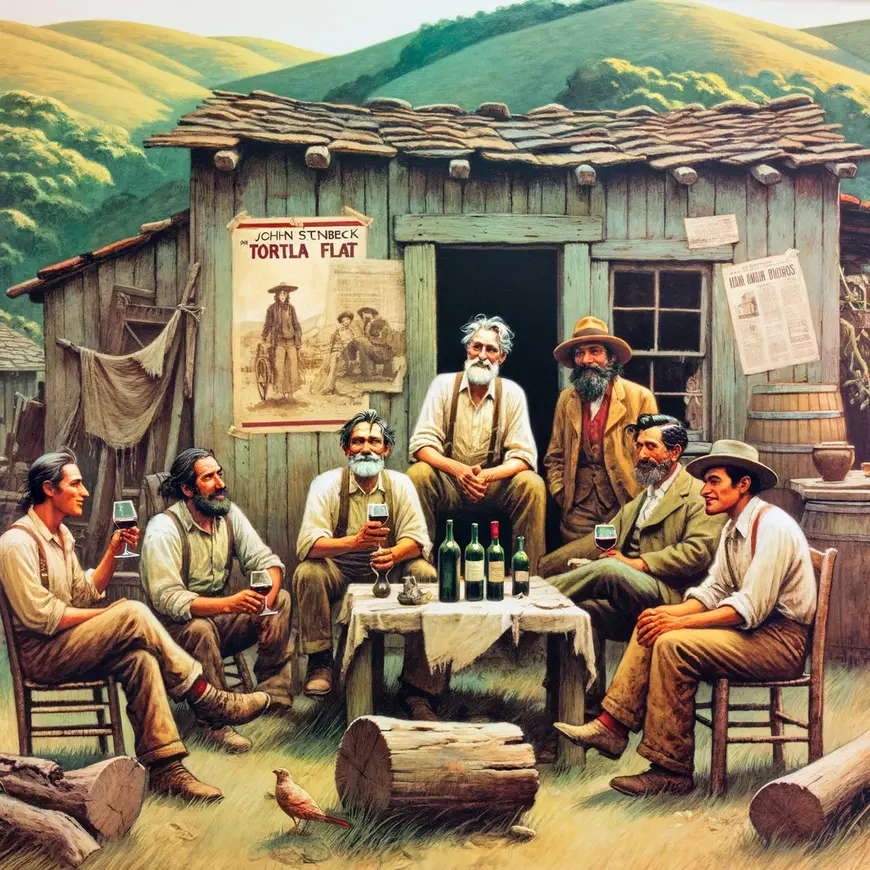
In Tortilla Flat, one house is lost to fire, while the remaining house becomes the centre of a growing fellowship. Pilon, Pablo, Jesus Maria, Big Joe Portagee, and the Pirate gather around Danny in different ways. Their daily lives consist of conversation, food, wine, plans, evasions, and occasional acts of considerable kindness.
The episodes repeatedly turn on a gap between declared principles and immediate desires. The friends explain their conduct through loyalty or concern, although self-interest often directs the argument. Nevertheless, their shared life also creates genuine attachments, and the Pirate’s trust becomes an important test of what the group will protect.
As time passes, Danny becomes increasingly dissatisfied with the role his possessions and companions have given him. He longs for the freedom of his earlier life, then withdraws from the routines of the household. The centre of the fellowship begins to fail. His friends recognise his unhappiness without fully understanding how to relieve it.
They eventually arrange an extraordinary party, but its exuberance cannot restore a lasting balance. Danny’s final violent rush into the darkness ends in a fatal fall. Afterwards, his companions confront both his absence and the uncertain future of the house that has held them together.
When the remaining house catches fire, they allow it to burn. The destruction gives their fellowship a visible ending, and the men finally leave separately. Tortilla Flat closes with the disappearance of a community whose comedy, generosity, and fragility have become inseparable.
Other Reviews of Works by the famous american writer