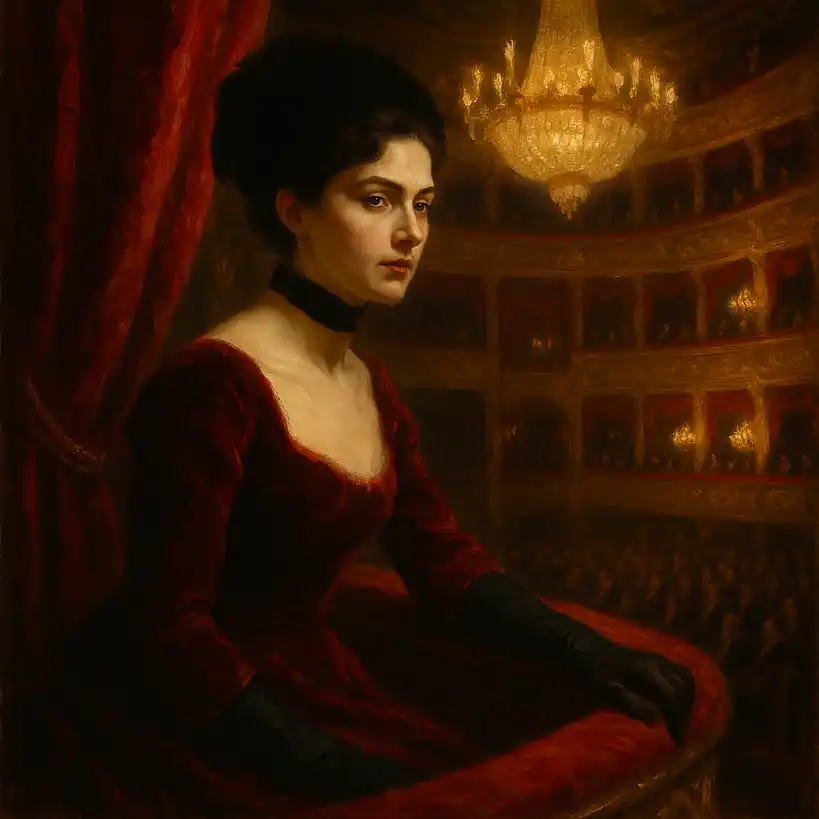
Inside War and Peace by Leo Tolstoy
The first thing to know about War and Peace is this: it’s not just a novel. It’s a world. Leo Tolstoy didn’t write a story, he captured a universe. He followed dozens of characters through conversations, battles, letters, and inner monologues, crafting a narrative that never really starts or ends. It feels like life itself: messy, contradictory, and full of meaning.
The novel begins in 1805 with a soirée in St. Petersburg, where high-society banter hides the distant rumble of Napoleon’s ambitions. But what seems like a political backdrop soon becomes the central current of the novel. War doesn’t stay outside the drawing rooms, it moves into the lives of the characters. And the peace they seek never really arrives.
His genius lies in scale. The novel balances grand historical arcs with the smallest personal moments. We move from generals giving orders to peasants gathering firewood, from cannon fire to quiet prayers. Every detail is meaningful because every life matters.
Reading it today, the effect is still overwhelming. It’s not just about Russia or the Napoleonic Wars. It’s about how people live with love, fear, duty, and change. The novel pulls you into this rhythm, where politics and passion collide, and nothing is simple.
This wide, shifting scope recalls works like The House of the Spirits by Isabel Allende, where family sagas unfold against political chaos. But the story operates on a different level of ambition. It invites not just empathy, but perspective, across time, class, and country.
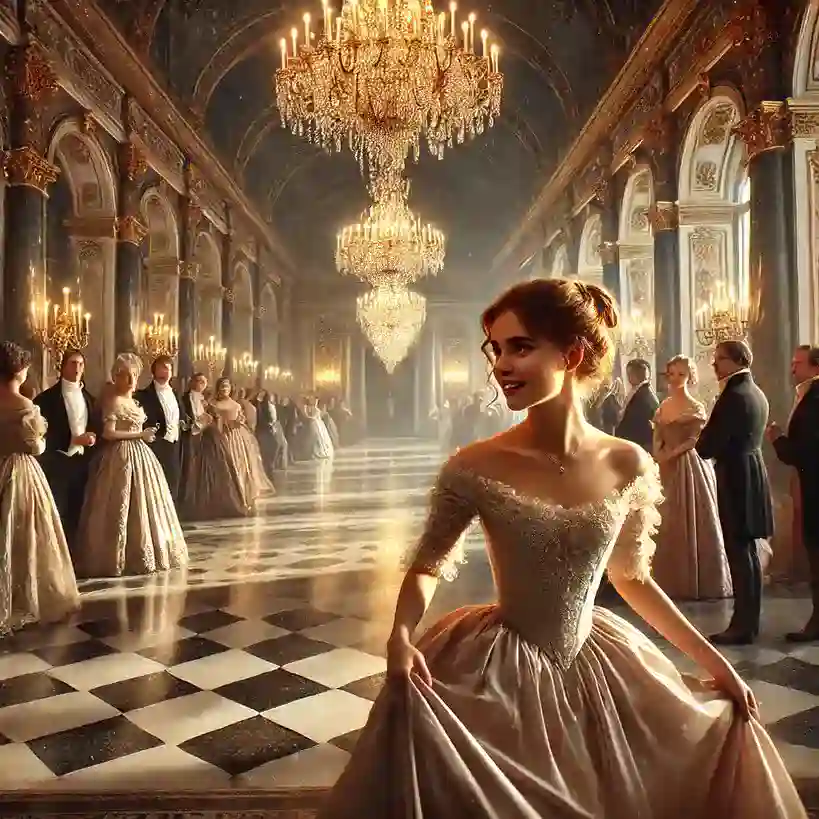
War and Peace – Tolstoy’s Deep Gaze Into the Human Soul
Leo Tolstoy doesn’t just describe people, he dissects them. His characters don’t remain static types. They evolve, fail, grow, and surprise us. War and Peace is filled with internal contradiction, and that’s what makes it powerful. Everyone is uncertain, including the author.
Take Pierre Bezukhov, awkward and idealistic. At first, he inherits a fortune and stumbles into high society, but his soul remains restless. He searches for meaning through Freemasonry, war, imprisonment, and eventually love. His spiritual hunger feels modern, he wants something real in a world of illusions.
Then there’s Prince Andrei Bolkonsky, noble and tormented. At the start, he believes in heroism. But war breaks his ideals. Loss and love humble him. His scenes with Natasha later in the novel remain some of the most human moments in literature. His pain is quiet but shattering.
And Natasha Rostova, joyful, impulsive, and painfully young. She starts as a lively girl and becomes a woman shaped by mistakes and resilience. The author never punishes her. He allows her to grow, honestly.
These characters reflect Tolstoy’s own evolving worldview. Early drafts of the novel reveal his deep philosophical struggle. Is life guided by free will or historical force? Is love a solution or a distraction? These aren’t resolved, they’re lived.
In that sense, the novel shares ground with Crime and Punishment by Fyodor Dostoevsky, both novels explore the boundaries of moral responsibility, freedom, and self. But while Dostoevsky focuses inward, the writer zooms out. His vision is panoramic.
The novel is less about right answers and more about clear seeing. Through his characters, he asks us not to judge too quickly. Instead, he wants us to observe, feel, and understand.
War in the Mud, Not on the Pedestal
Tolstoy’s war scenes don’t glorify. They unravel. In War and Peace, battles are confusing, frightening, and sometimes absurd. Soldiers lose their way, orders get misinterpreted, and moments of courage mix with panic. War isn’t heroic, it’s human, and often senseless.
From Austerlitz to Borodino, we see not only the noise of muskets but the silence of aftermath. The novelist describes smoke, cold, disoriented men, and wounded horses. There’s no cinematic triumph here. Just survival. Strategy is often guesswork. Leaders aren’t gods, they’re flawed men, overwhelmed by chance.
Prince Andrei’s experience at Austerlitz shows this perfectly. He dreams of glory, only to be wounded and left staring at the sky, realizing how small he is. It’s one of the most haunting moments in the book, a collapse of personal ambition beneath the stars.
His view of history also defies convention. He challenges the idea that “great men” shape the world. Instead, he argues that history flows from millions of small, chaotic actions. Napoleon isn’t a hero here, he’s a symbol of ego and illusion.
This refusal to mythologize connects the book to more modern war literature, like The Old Man and the Sea by Ernest Hemingway, another story about pride, futility, and quiet endurance. But his scale is broader. He maps how war infects everything, even the kitchen table and the family prayer.
By grounding war in ordinary confusion, the author asks the reader to reflect. Not to cheer. And that shift in tone is what makes the story a timeless political and emotional critique.
Peace Is Never Simple
For a novel with “peace” in the title, it rarely feels peaceful. Domestic life in War and Peace is full of heartbreak, restlessness, and change. The drawing rooms may be quieter than the battlefield, but they’re no less dramatic.
Relationships in the novel are fragile. Natasha and Andrei’s engagement unravels not because of war, but because of human error and vulnerability. Pierre’s marriage to Helene is disastrous from the start, yet he clings to it out of confusion and duty. These are not tidy love stories, they are lessons in human complexity.
And yet, there are moments of grace. The Rostov family gatherings, the dance scenes, and Pierre’s late rediscovery of love, these glimpses of warmth remind us that peace is possible, if only briefly. It isn’t perfection. It’s presence.
This emotional rhythm, love, betrayal, recovery, mirrors the larger flow of history in the book. Just as empires rise and fall, so do marriages and beliefs. Leo Tolstoy seems to say: nothing lasts, but everything matters.
In this way, War and Peace shares the sensibility of Night and Day by Virginia Woolf, where emotional shifts are as significant as political ones. Like Woolf, the writer honors the subtle tremors of ordinary life, showing how they echo far beyond the drawing room.
Even in scenes of happiness, the work holds a quiet melancholy. Characters laugh, but they know loss. They love, but they hesitate. That bittersweet tension is what makes his “peace” so profound.
Time as a Character
Few novels handle time like War and Peace. He doesn’t rush. He expands, slows, rewinds. Decades pass, then a moment lingers for pages. Time becomes part of the storytelling, not just the setting. It’s almost a character itself.
In one scene, a glance between Pierre and Natasha lasts a heartbeat, but Tolstoy stretches it, layering emotions, hesitations, memories. Elsewhere, entire years pass in a sentence. This manipulation of time gives the novel its depth. We experience the weight of life as the characters do: unpredictably.
The novelist also reflects on historical time. He questions how people understand the present while living it. The characters don’t know they’re “in history” — they’re just trying to make choices. That’s what gives the novel such urgency. We’re inside time, not outside of it.
The epilogue takes this further. After the drama ends, we move into philosophical territory. What is free will? Can anyone change the course of events? He suggests that history isn’t shaped by big names alone, but by countless invisible choices, meals eaten, letters written, roads taken or not.
This approach feels similar to Memoirs of a Dutiful Daughter by Simone de Beauvoir, where personal development and political moments become one timeline. In both books, time shapes the self, but also bends under the weight of memory.
The novel teaches us that time isn’t linear. It moves in waves. That’s why we remember some scenes for pages, and others disappear. That’s why rereading feels like reading a different book. Time, like truth, is never simple in his world.
Quotes from War and Peace by Leo Tolstoy
- “Everything I know, I know because I love.” This line from Prince Andrei expresses his central belief: that truth emerges not from logic, but from love. It’s a quiet thesis for the entire book.
- “The strongest of all warriors are these two — Time and Patience.” A philosophical moment that reminds us wars aren’t won with violence alone. Real strength lies in endurance.
- “If everyone fought for their own convictions, there would be no war.” Here, Leo Tolstoy flips the usual view of loyalty. He suggests war results not from belief, but from obeying others too easily.
- “Nothing is so necessary for a young man as the company of intelligent women.” This small but progressive observation comes in passing, yet it stands out for its wisdom and humility.
- “We can know only that we know nothing. And that is the highest degree of human wisdom.” Echoing Socrates, this is one of the novel’s core insights. The author wants readers to embrace uncertainty, not fear it.
- “It’s not given to people to judge what’s right or wrong. People have eternally been mistaken and will be mistaken, and in nothing more than in what they consider right and wrong.” A haunting challenge to moral certainty. The writer asks us to stay humble.
- “Kings are the slaves of history.” In this critique of power, he reminds us that even rulers follow tides bigger than themselves.
- “Love hinders death. Love is life.” Simple but profound. The kind of line that reshapes the meaning of earlier scenes.
- “Man lives consciously for himself, but is an unconscious instrument in the attainment of the historic, universal, aims of humanity.” One of his boldest thoughts. He pulls the reader into a broader view of history and agency.
Trivia Facts about War and Peace
- Based on Real Battles: Leo Tolstoy used historical records and firsthand military accounts to portray Austerlitz and Borodino. He even drew on his own Crimean War experience.
- Written at Yasnaya Polyana: He drafted much of the novel at his family estate, a place that appears symbolically in several works, including A Hunger Artist by Franz Kafka, where isolation plays a similarly key role.
- Initial Serialization: Early versions of War and Peace were serialized in The Russian Messenger, a popular 19th-century journal. This was the same era that saw the rise of publications like La Revue Blanche in France.
- Philosophical Turn in the Epilogue: The second epilogue shifts into a meditation on free will and determinism. This influenced later modernist experiments, such as Nausea by Jean-Paul Sartre.
- Napoleon as Anti-Hero: Unlike other historical fiction, War and Peace does not glorify Napoleon. Instead, the author dismantles the myth, a perspective shared by modern historians like Orlando Figes.
- Controversial at First: Some critics in Russia thought the novel was too philosophical and too personal for a historical epic. Over time, it became a cornerstone of Russian literature.
- Inspired Other Epic Novels: Authors like Thomas Mann (see Buddenbrooks) and Saul Bellow (The Adventures of Augie March) acknowledged his influence on structure and scope.
- Public Domain and Free Access: Today, this writing is freely available in its entirety through platforms like Project Gutenberg, making it one of the most accessible classics.
Why It Still Matters
Why does War and Peace remain relevant in a digital, fractured world? Because it reminds us that people have always struggled with the same questions: What is worth fighting for? Can love survive change? How should we live?
Modern readers may find the length intimidating, but once inside, the novel is surprisingly intimate. It speaks directly to our anxieties, about family, politics, faith, failure. Tolstoy doesn’t offer easy solutions. Instead, he shows that life is not about clarity, but about connection.
There’s also an honesty in the writing that feels radical. The emotions are real. The confusion is real. And the love, awkward, painful, resilient, is entirely human. In a world of polished narratives, the book embraces the unresolved.
That makes it a cousin to Divided Heaven by Christa Wolf, another novel where personal stories and political pressures collide, and no one walks away clean. Both books reject simplification. They honor contradiction.
His ambition also teaches something about storytelling. He didn’t cut for clarity and he expanded for truth. He made space for the unspoken, the minor, the flawed. In doing so, he redefined what a novel could be.
Today, in a world that often feels chaotic and fast, War and Peace asks us to slow down and listen, not just to the plot, but to the people inside it. Their doubts, hopes, and changes are still our own.
Final Thoughts: A Novel That Holds Everything
Finishing War and Peace is not an end, it’s a beginning. The story stays with you. The people become part of your memory. The questions echo. It’s not just a novel you read. It’s one you live inside for a while.
Tolstoy wrote about the past, but his gaze was toward the future, toward who we might become if we listened more carefully to one another. His compassion was fierce. His ambition was total. And through his prose, we’re reminded that history is never just events. It’s made of lives.
The story offers no final answer, but it doesn’t need to. What it gives instead is a lens, a way of seeing both the horror and the beauty in the same moment. That’s rare. That’s literature at its highest. For those willing to make the journey, it’s a transformative one. Every reread brings out new truths. Every chapter gives something back. Few books can say the same.
This richness connects it with The Hour of the Star by Clarice Lispector, another brief but unforgettable meditation on presence, dignity, and what it means to be seen. Different scale, same power. In a crowded world of fleeting stories, this work stands calmly at the center, wide, open, generous. It asks a lot. But it gives even more.