Ana Maria Machado: learning by laughter
Ana Maria Machado writes stories that invite a smile first and a choice second. The joke opens the door; play with purpose keeps everyone inside. A child bends a rule, then learning why rules protect. A parent listens, and the room gets kinder. Her pages feel light, yet they carry images that do work: a ribbon that marks belonging, a mirror that tests truth, a door that opens the “wrong” way so courage can walk through.
You don’t need a specialist’s map. Start with a short, bright book where a clever kid flips a problem and the grownups blink. Then try a slightly longer tale that lets a family talk about fairness without heavy words. The sentences are clean. The rhythm suits aloud time. Clarity before flourish is the house style, so young readers never get lost, and adults never feel talked down to.
What lingers is balance. Curiosity runs, but limits keep the game safe. Laughter lowers the guard, and a small action—returning a toy, sharing a seat, telling the truth—lands the lesson without a lecture. If you enjoy clear prose that carries wonder, you might also like 👉 The Aviator by Antoine de Saint-Exupéry for a neighboring spirit of curiosity and care.
This guide will give you the essentials. We’ll sketch early years, newsroom training, and the classroom feedback loop that honed this voice. We’ll map recurring themes—kindness with rules, attention before judgment, objects that carry meaning—and we’ll propose a simple reading order you can start tonight. By the end, you’ll have a few books to pick up, a way to read them aloud, and a sense of why these stories travel so well from living room to library: bright surfaces, deep fairness, and a calm belief that courage can be practiced.
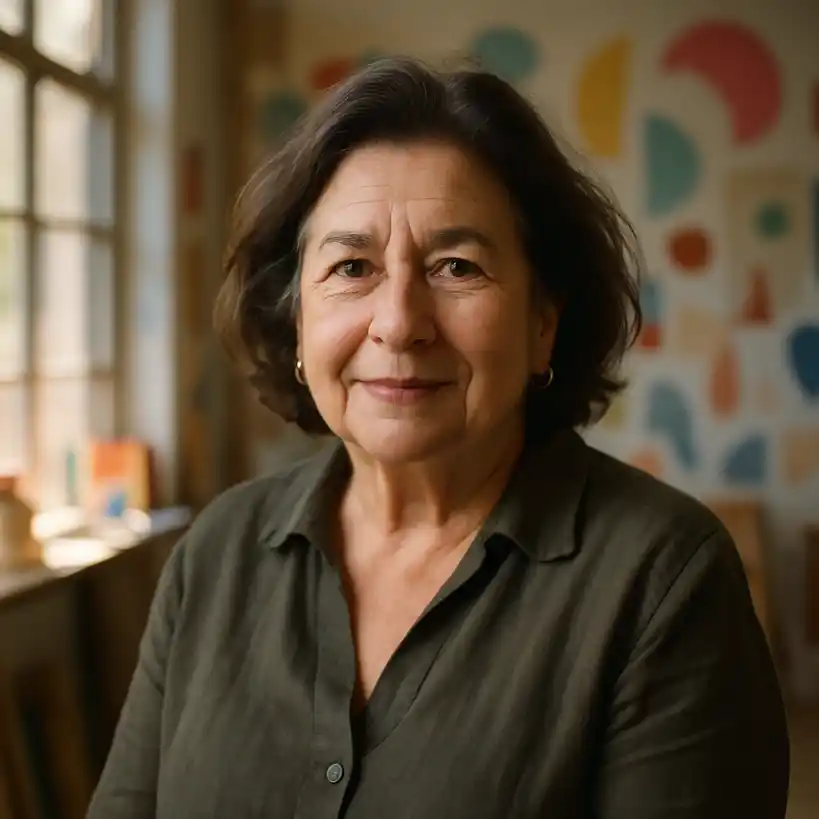
Works and Life – Profile of Ana Maria Machado
- Full Name and Pseudonyms: Ana Maria Martins Machado; writes as Ana Maria Machado.
- Birth and Death: Born 24 December 1941, Rio de Janeiro; living.
- Nationality: Brazilian.
- Father and Mother: Mário de Sousa Martins and Diná Almeida de Sousa Martins.
- Wife or Husband: Married to musician Lourenço Baeta; previously married to physician Álvaro Machado.
- Children: Rodrigo Machado, Pedro Machado, and Luísa Martins Baeta Bastos.
- Literary Movement: Brazilian children’s and young-adult literature with strong civic and pedagogic currents.
- Writing Style: Clarity before flourish, aloud-ready rhythm, objects that carry meaning, endings that land on action.
- Influences: Monteiro Lobato, Cecília Meireles, Clarice Lispector, Gianni Rodari, Ruth Rocha, Lygia Bojunga.
- Awards and Recognitions: Hans Christian Andersen Author Award 2000; SM Ibero-American Prize 2012; multiple Jabuti Prizes; member and former President of the Brazilian Academy of Letters.
- Adaptations of Their Work: Stage and school adaptations of picture books and middle-grade titles; broadcast readings and classroom projects.
- Controversies or Challenges: Worked through Brazil’s dictatorship years, balanced journalism and writing, and advocated for reading policies and access.
- Career Outside Writing: Journalist, editor, educator, bookstore founder and cultural organizer.
- Recommended Reading Order:
1. Menina Bonita do Laço de Fita (Nina Bonita: A Story)
2. Bisa Bia, Bisa Bel (Me in the Middle)
3. Era uma Vez um Tirano
4. Do Outro Mundo
Early years, classrooms, and the reporter’s ear
The first workshop was school. Teachers traded riddles and tongue-twisters; a future writer learned attention before judgment. Home added fuel: shelves within reach, jokes that slid into serious talk, and adults who didn’t fear hard questions. That mixture formed the habit that never left her—listen first, cut later.
Journalism arrived early as craft school. Deadlines trimmed the line. Interviews taught how to ask questions that open people, not shut them down. The result was sentences with purpose: strong verbs, precise images, and no padding. That newsroom rhythm would later protect the children’s books, keeping them light but never thin. Reporting also kept the world close. Buses, markets, and schoolyards became a steady supply of details you can touch on a Tuesday morning.
Reading to groups of kids closed the loop. Stories were drafted in public, in a sense, because young listeners vote with eyes and silence. Respect for the reader became a rule: don’t talk down, don’t drag on, don’t dodge the hard part. Visits to schools and libraries worked like rehearsals; a laugh in the right place stayed, and a puzzled pause sent a sentence back to the desk.
Travel and cultural work widened the lens. New idioms arrived, along with fresh games and different ways to show fairness. Through all of it, a few principles held: clarity before flourish, play with purpose, and objects that carry meaning better than speeches. By the time books began to gather awards and translations, the core voice was already built—welcoming to mixed rooms, gentle in tone, firm in ethics, and always ready to turn a small joke into a better rule everyone can keep.
Deadlines, classrooms, and books that teach fairness
By the middle stretch, newsroom training and school visits had fused into a method. Drafts arrived with sentences with purpose. Classroom readings tested timing, so jokes opened scenes and choices closed them. Picture books tried rhythm; chapter books tried stamina; both guarded play with purpose. When tougher themes appeared—bullying, lies, loss—the prose stayed welcoming. Rules that protect made courage possible without scaring off new readers.
Collaboration sharpened everything. Illustrators brought color and surprise; the text answered with space for the image so eyes could wander and think. School tours worked like rehearsals: a laugh in the right beat stayed; a puzzled silence sent a line back to the desk. Out of this loop came signature objects—ribbons, mirrors, tricky doors—ordinary things that become moral levers once a child decides.
Civic pressure lived between the lines. Allegory carried what plain speech sometimes couldn’t, and the pages kept their hospitality even when the topic was heavy. Families noticed the aftertaste: children felt braver, parents felt included, teachers felt seen. For a classic adult counterpart in everyday negotiations of affection and duty, consider 👉 Night and Day by Virginia Woolf; the comparison clarifies how Machado keeps the mood bright while protecting ethical stakes.
The schedule stayed disciplined: mornings for drafting, afternoons for letters and librarians, travel in season. Translations widened the circle, but the room never changed in spirit—one adult, one child, one story, and enough air for both to breathe, laugh, and practice fairness.
Long practice, light touch, welcome that endures
Later books carry the ease of a writer who still listens. Plots look simple, then bloom after lights-out when a reader replays a choice. Clarity before flourish remains the rule; surprises live in perspective, not trickery. A chapter that belonged to the bold kid tilts toward a shy friend; the lesson turns mutual. Kindness with rules keeps the temperature right: warm enough to invite, firm enough to guide.
Forms rotate without strain. Picture books fold big feelings into images that do work—a knot to untie, a shadow to befriend. Middle-grade tales test responsibility with schoolyard stakes that feel true on Monday morning. Family reads offer sly jokes for adults that never trip young listeners. The marvelous still visits, but it has good manners. A talking animal nudges honesty; a small enchantment restores a scene to fairness rather than erasing consequences.
Public roles never drown the writing day. Festivals, workshops, and stacks of children’s letters become field notes; tomorrow’s draft answers today’s classroom. Respect for the reader stays central—no scolding, no shortcuts, no padding. The page trusts kids with real choices and trusts adults to stand nearby without stealing the spotlight.
What lingers is gentle authority. The voice smiles, then waits. A child tries, errs, tries again, and finds a better rule they can keep. Endings land on acts, not speeches: a returned toy, a shared seat, a truth told calmly. That’s why these books age well. They leave courage in reachable places—on a shelf, in a backpack, at the edge of a pillow—and they keep their welcome for the next reader who needs a hand and a fair game.
Movement and peers; core themes
Ana Maria Machado sits inside Brazil’s late-20th-century surge in children’s and young-adult literature that treated kids as thinkers, not targets. Alongside Ruth Rocha and Lygia Bojunga, she helped turn classrooms and living rooms into mini public squares where play could carry civic meaning. Internationally, she shares affinities with Astrid Lindgren’s moral courage and Gianni Rodari’s combinatory games, yet her tone stays unmistakably Brazilian—musical, welcoming, and practical. What truly binds her work is a consistent ethic: clarity before flourish, kindness with rules, and images that do work so the lesson lands as an action, not a speech.
Themes braid rather than stack. First, play with purpose: a riddle opens a door, but the solution is cooperation. Second, family time-travel: grandmothers and future children share the same room so tradition and change can negotiate calmly. Third, civic literacy sized for small hands: stories test fairness at the lunch table, the bus stop, or a classroom vote. Even when the marvelous appears—a talking animal, a teasing echo—it behaves well, widening responsibility rather than erasing consequence. For a neighboring adult novel where philosophy meets daily choices, see 👉 The Mandarins by Simone de Beauvoir; the comparison clarifies how Machado keeps ethical stakes warm, concrete, and shareable.
Peers matter to the method. Illustrators, librarians, teachers, and translators form a craft ecology around her pages. Their feedback loops shape rhythm, page turns, and the precise moment a joke yields to a choice. Through it all, her books protect shy readers without caging bold ones. That’s the quiet signature: welcoming prose, visible boundaries, and endings that land on something a child can do tomorrow.

Famous works by Ana Maria Machado in chronological order
- 1979 — História Meio ao Contrário (—); children’s book. A fairy tale told “backwards” to question habit and power; playful form serves fairness.
- 1980 — Do Outro Lado Tem Segredos (—); novella for young readers. Coastal childhood and memory teach identity through small brave acts.
- 1982 — Bisa Bia, Bisa Bel (Me in the Middle). A girl converses with her great-grandmother and imagined future descendant; family becomes guidance, not a cage.
- 1982 — Era uma Vez um Tirano (—). Three kids outwit a joy-banishing tyrant; civic courage scaled to the schoolyard.
- 1986 — Menina Bonita do Laço de Fita (Nina Bonita: A Story). A tender classic about affection, difference, and belonging; perfect for read-aloud.
- 1988 — Tropical Sol da Liberdade (Freedom Sun in the Tropics). An adult novel of dictatorship, exile, and return; private love meets public history.
- 1999 — A Audácia Desta Mulher (—). Multi-voice family saga probing class, gender, and national memory; intimate stakes, wide echo.
- 2002 — Do Outro Mundo (From Another World). A boy befriends the ghost of a Holocaust victim; history enters daily life through shared curiosity.
- 2007 — Mensagem Para Você (The History Mystery). Messages leaping across centuries turn kids into researchers; teamwork makes knowledge a game.
What taught the game to be fair
Ana Maria Machado’s toolkit grows from classrooms, newsrooms, and storytellers who treat kids as thinkers. She keeps clarity before flourish, lets images do work, and turns play with purpose into a craft rule.
- Monteiro Lobato: Child agency and colloquial speech; stories that put curiosity first and let young readers test choices without scolding.
- Cecília Meireles: Musical attention and quiet precision; gentle cadence that carries big feeling in small, sayable lines.
- Clarice Lispector: Interior focus and ethical tension; attention before judgment that keeps emotion exact even in simple scenes.
- Ruth Rocha: Humor with structure; aloud-friendly prose that respects the child listener and lands clean.
- Lygia Bojunga: Elastic crossings between memory and fantasy; permission to let the marvelous serve fairness and freedom.
- Gianni Rodari: Combinatory play and inventive constraints; games that flip tales while keeping rules that protect.
Across these shelves she keeps three tools steady: a hospitable voice, objects that carry meaning (a ribbon, a mirror, a wrong-way door), and endings that land on action, not lecture. The result is a page that welcomes children, trusts families, and turns reading time into rehearsal for empathy.
Who writes differently because Ana Maria Machado
Her success gave permission to treat the picture book as a mini public square. You can hear her echo wherever stories blend imagination with a spine, rules that include, and aloud-ready music.
- Ilan Brenman: Read-aloud rhythm and playful ethics; scenes invite kids to negotiate fairness with humor intact.
- Ana Claudia Ramos: Family feelings handled with clear images and safe boundaries; courage scaled to school-day stakes.
- Sônia Rosa: Everyday justice and belonging; respect for the reader when talking about identity, history, and care.
- Tino Freitas: Book-as-object play, participation, and choice; games that teach without turning into lectures.
- Patricia Auerbach: Page turns built for curiosity; visual cues and clean verbs that keep shy readers inside the circle.
- Eva Furnari: Comic invention and visual wit; fantasy that safeguards kindness and lets rules protect the fun.
Editors, teachers, and librarians echo the stance: invite everyone in, keep limits kind and visible, and let ordinary objects carry the lesson. The throughline is practical and generous. A joke opens the door. A rule keeps the room safe. A small decision—returning a toy, sharing a seat, telling the truth—closes the story with fairness you can use tomorrow.
Rooms where play turns into insight
Ana Maria Machado speaks in a hospitable voice. The narrator sounds like a trusted adult who sits at the edge of the carpet, not at a podium. First person and close third both appear, yet distance stays low. Children hear themselves in the lines. Adults feel invited, never scolded. Dialogue carries weight, but so do quiet stage directions, the small beats that show how a chair is shared or a toy is returned.
Point of view stays close to a single child or a compact group. That focus lets feelings become facts: a knot in the stomach turns into a choice, a blush becomes a clue. Time often moves in short arcs that fit an afternoon or a bus ride. Flashbacks arrive as quick, clear snapshots rather than long detours. The effect is aloud-ready rhythm, a pace that respects attention spans without flattening complexity.
Scenes tend to open with an action or a concrete object. A ribbon, a door, a mirror, a note that went missing. The object anchors emotion and keeps the moral question practical. At endings, she avoids speeches. Instead, action closes the lesson: the truth is told, the seat is shared, the mistake is repaired. That restraint lets families talk after the lights are out.
Three craft habits return book after book: clarity before flourish, play with purpose, and page turns placed where curiosity naturally peaks. These moves protect shy readers and challenge bold ones. The result is a narrative space where kids can rehearse fairness, adults can model calm, and everyone leaves with one small idea they can use tomorrow.
Sentences that leave air for pictures
The line is plain, then surprising. Short sentences establish safety. A sharp image tilts the room. Simple syntax, precise images is the guiding pair. Verbs do most of the work, so meaning does not wobble when read aloud. When feelings swell, sentences lengthen just enough to carry the wave, then return to clean beats that welcome new readers back inside.
Imagery starts in the hand. Ribbons, pockets, notebooks, doors that open the unexpected way. These things are never empty decorations. They are working objects that let kids move from feeling to doing. Because the prose is spacious, illustrators can add humor, clues, and parallel stories in the margins. Text and picture cooperate. The line steps back, the image steps forward, and the page teaches without a sermon.
Tone sits in a careful middle: warm, not sugary; firm, not harsh. Jokes arrive early to relax the room. Consequences arrive later to protect it. A child’s mistake is taken seriously, yet shame is avoided. Adults are present, yet agency belongs to the child. When the marvelous appears, it behaves. A talking animal nudges truth-telling. A ghost asks for listening. Wonder widens responsibility rather than erasing it.
Repetition supports memory. Key phrases return like handles that young readers can grab. Sound play works quietly under meaning, with alliteration and soft internal rhyme. Nothing blocks comprehension. Everything greases the path to a choice. That is why the books travel so well across classrooms and living rooms. The grammar is kind. The pictures get room to dance. The tone keeps everyone at the table until the last page turns.
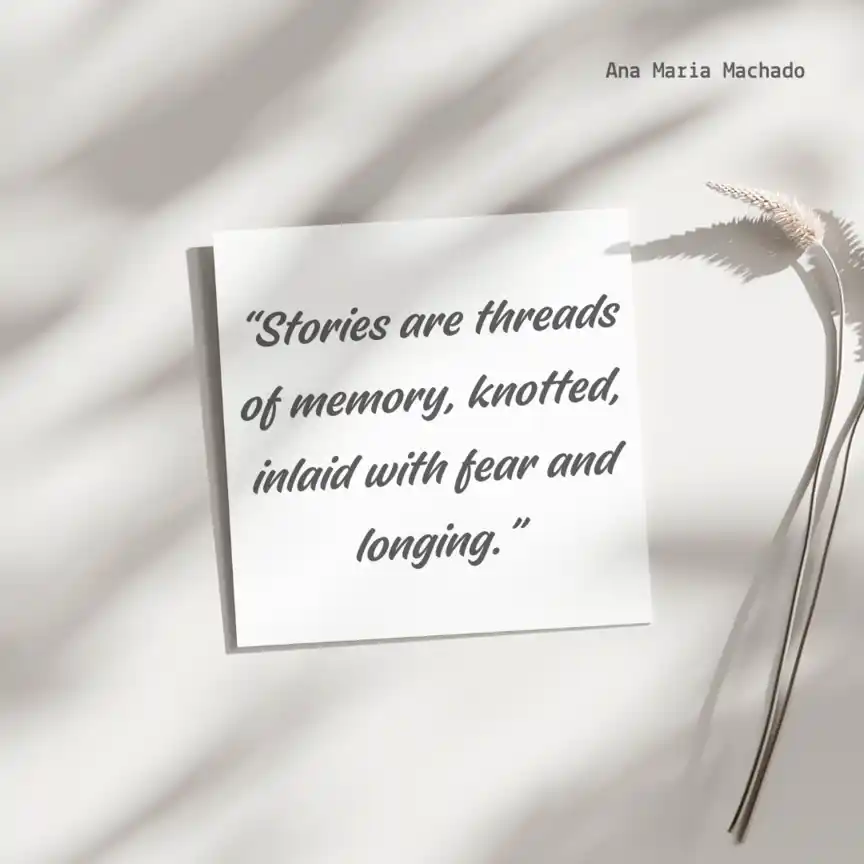
Famous quotes by Ana Maria Machado
- “Telling the others what has happened is crucial to our survival as a whole.” Narrative preserves memory, and memory protects ethics. Stories turn private experience into shared knowledge. Children learn that listening is a civic act.
- “Books are not written to be only mirrors, but windows.” Literature should widen a reader’s view, not trap it. Classrooms need stories from beyond the familiar. Curiosity grows when we look out as well as in.
- “We need to tell and to be told stories. The more, the better.” Practice matters. Reading aloud builds rhythm, trust, and belonging. Frequent encounters make reflection a habit, not a chore.
- “No one should be forced to read anything. Reading is a right of every citizen, not a duty.” Invitation works better than pressure. Joy sustains attention over time. Voluntary reading builds durable, self-directed learners.
- “What leads a child to read, first of all, is example.” Modeling beats lectures. Caregivers who read set the tone for the home. Teachers who read signal that books are worth our time.
- “When I read, I am always establishing some kind of relationship between different times and cultures.” Every page is a bridge. Comparisons sharpen judgment and empathy. Translation becomes a tool for meeting others well.
- “Children’s books walk always on a tight rope.” Art and pedagogy must balance. Preaching breaks the spell; craft keeps it. Respecting the child reader is the rule.
Trivia facts about Ana Maria Machado
- Member of Brazil’s literary academy: She occupies Chair 1 of the Brazilian Academy of Letters and served as its President; the Academy’s biography confirms dates and details.
- Top international honor: She received the 🌐 Hans Christian Andersen Author Award in 2000, the field’s highest lifetime recognition for children’s literature; IBBY lists her among winners
- Bookstore pioneer: She co-founded Malasartes, one of Brazil’s first bookstores dedicated to children’s books, turning retail space into a community hub for reading.
- Journalism as training ground: Years in newsrooms shaped her sentences with purpose and her ability to explain big feelings in small, sayable lines.
- A picture book that travels: Menina Bonita do Laço de Fita reached readers worldwide in translation as Nina Bonita: A Story, often used in classrooms to talk about affection and belonging.
- Family across time: Bisa Bia, Bisa Bel became Me in the Middle in English and is studied for the way it lets a child negotiate past and future voices.
- Companion reads for adults, ethics under pressure: If you want a nonfiction-adjacent travel classic about courage and craft, pair her with 👉 Wind, Sand and Stars by Antoine de Saint-Exupéry.
- Another philosophical neighbor: For questions about time, choice, and responsibility in adult fiction, try 👉 All Men are Mortal by Simone de Beauvoir.
Reception over time and further reading
Reception began at home. Teachers and librarians saw that the books solved a local problem: how to discuss fairness, diversity, and courage without heavy hands. Families reported something rarer. After the joke, children acted differently. They shared the seat, returned the toy, told the truth. That pattern built trust. Awards followed, then translations, then invitations to speak for the wider culture as a public reader who could still talk softly.
Abroad, critics first praised accessibility, then noticed structure. Short arcs and concrete objects were not signs of simplicity. They were signs of design for aloud time. University courses on children’s literature now place her work next to international peers who mix imagination and ethics with unusual grace. Editors appreciate how illustrators can breathe inside the prose. Translators report that the line travels cleanly because the verbs carry meaning and the metaphors stay close to ordinary life.
For context in English, good starting points include short author profiles, festival pages, and prefaces in modern translations. Classroom guides also help, since they focus on read-aloud practice, discussion prompts, and ways to model kindness with rules. Treat reviews as field notes, then watch how the books work in your own room. If the room gets calmer and braver after chapter two, you have the right match.
As a next step, build a small path. Pick one picture book for very young readers, one short novel for confident listeners, and one adult title for yourself. Keep the circle small. Share the reading. Let the ending land on an act. That is how this work keeps its welcome and renews its power across new readers.
Summary and next steps
Ana Maria Machado gives families and schools a clear, warm toolkit. The stories feel light, yet the choices matter. Objects do steady work, so ethics stays practical. The voice is hospitable, the rhythm is aloud-ready, and the endings prefer action over lecture. That combination explains both classroom longevity and cross-border travel. It also explains why adults enjoy the books as much as children. The prose respects time. The humor lowers defenses. The lesson fits in a backpack.
Start with a short picture book and read it aloud twice. On the first pass, enjoy the play. On the second, ask one calm question about fairness. Then try a compact chapter book. Notice how agency belongs to the child, while adults hold the room steady. If you want to compare textures, add one adult novel to your own list and watch how similar moral pressures behave among grownups.
Keep a simple practice. Place clarity before flourish. Invite wonder that behaves. Let rules protect, not punish. Use repetition as a friendly handle. When a page lands on a small action, name it, then practice it tomorrow. That is how literature becomes daily habit.
From here, you can expand outward. Build a classroom set, host a family read-aloud evening, or pair one story with a community project. The goal is not speed or volume. The goal is a room that leaves kinder than it arrived. If this article gave you a path, take the first step tonight, one page and one voice at a time.
