Jonathan Franzen: The Symphony of Modern American Literature
In the grand overture of American literature, one name resounds with the eloquence of storytelling and a deep understanding of the human condition – Jonathan Franzen. A literary maestro who has conducted the symphony of contemporary narratives, his life and works are a testament to the intricate harmonies and dissonances that shape our modern world. In this essay, we embark on a journey through the life of the author, exploring the cadence of his literary contributions and the resonances that echo through the corridors of modern American letters.
Born on August 17, 1959, in Western Springs, Illinois, Jonathan Earl Franzen spent his formative years in a suburban setting. From an early age, literature played a pivotal role in his life, becoming a refuge and a source of inspiration. His childhood readings ranged from classic literature to comic books, laying the foundation for the diverse literary palette that would characterize his later works.
His early interest in writing found expression in his academic pursuits. He attended Swarthmore College, where he delved into the world of literature and honed his skills as a wordsmith. It was during these formative years that the symphonic chords of his literary ambitions began to resonate.
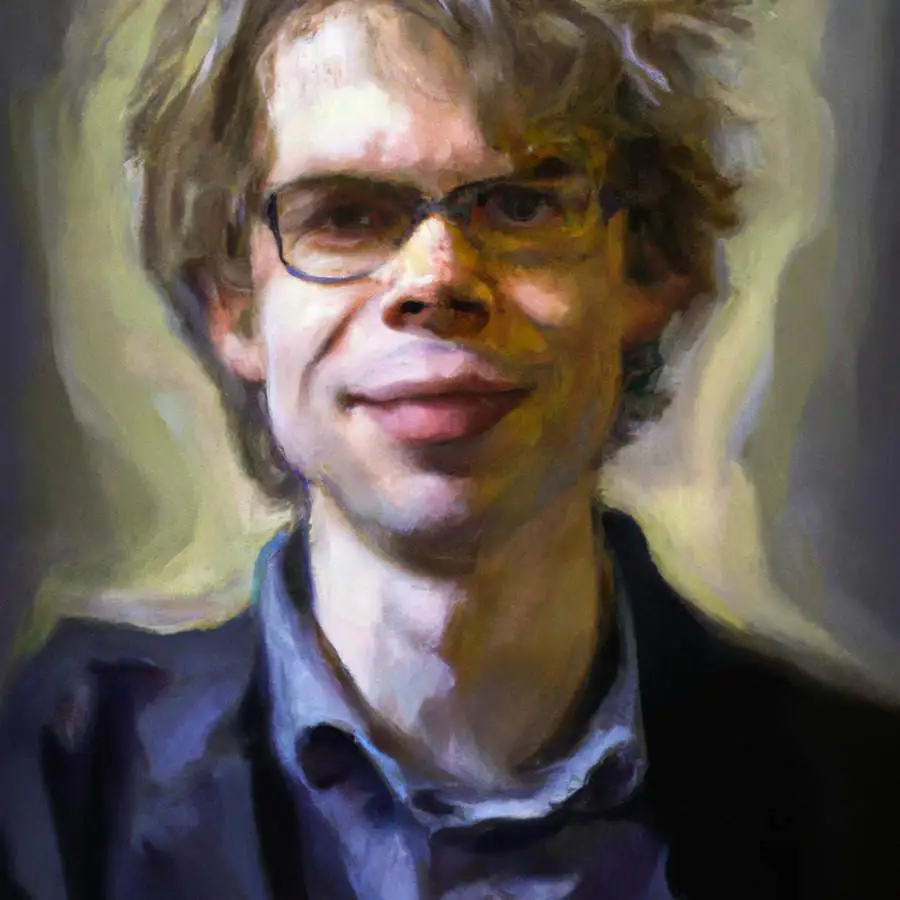
Profile of Jonathan Franzen – Life and Books
- Full Name and Pseudonyms: Jonathan Earl Franzen; publishes as Jonathan Franzen and does not use pseudonyms.
- Birth and Death: Born 17 August 1959 in Western Springs, Illinois; he is alive and based mainly in the United States.
- Nationality: American novelist and essayist writing about contemporary life in the United States.
- Father and Mother: Son of civil engineer Earl T. Franzen and Irene Franzen, born Super; he grew up in Webster Groves, Missouri.
- Wife or Husband: Married writer Valerie Cornell in 1982; they later divorced. His long term partner is writer Kathy Chetkovich.
- Children: No children are widely mentioned in standard biographical sources.
- Literary Movement: Linked to social realism and the New Sincerity, especially in large family novels set in late twentieth and early twenty first century America.
- Writing Style: Known for long, detailed narratives with close psychological focus, sharp social observation, and a mix of satire, moral seriousness, and emotional vulnerability.
- Influences: Early influenced by postmodern novelists such as Thomas Pynchon and William Gaddis, later balancing this with admiration for more traditional storytellers like Charles Dickens and Alice Munro.
- Awards and Recognitions: Winner of major literary prizes including the National Book Award and the James Tait Black Memorial Prize, along with several other national and international honours.
- Adaptations of Their Work: His novel The Corrections has inspired several attempts at film and television adaptations, and his essay “Emptying the Skies” became a documentary film.
- Controversies or Challenges: Often at the centre of debate for public comments on Oprah’s Book Club, digital culture, and climate politics, which present him as both novelist and cultural critic.
- Career Outside Writing: Worked as a researcher in earth sciences before full time authorship and is a prominent bird conservation supporter.
- Recommended Reading Order:
1. The Corrections
2. Freedom
3. Crossroads
4. The Twenty-Seventh City
The Soloist Emerges: Debut
Franzen’s debut novel, “The Twenty-Seventh City,” published in 1988, marked the emergence of a literary soloist. Set in his hometown of St. Louis, the novel captured the social and political complexities of urban life, showcasing his ability to navigate the intricacies of human relationships against a backdrop of societal change.
While the novel did not catapult him to immediate fame, it laid the groundwork for the thematic preoccupations that would characterize his later, more celebrated works. The echoes of “The Twenty-Seventh City” reverberate through his oeuvre, offering insights into his early explorations of identity, community, and the impact of societal forces on individual lives.
The Resonant Symphony: The Corrections
The true crescendo of Jonathan Franzen’s literary career came with the publication of The Corrections in 2001. This magnum opus not only garnered critical acclaim but also catapulted the writer into the limelight of contemporary American literature.
The Corrections weaves a multi-generational narrative that dissects the dynamics of a Midwestern family, the Lamberts, as they navigate the complexities of identity, mental health, and societal expectations. The novel, a finalist for the National Book Award and winner of the James Tait Black Memorial Prize, resonated with readers for its keen insights into the human psyche and its unflinching examination of the modern American experience.
His masterful storytelling in The Corrections lies not only in the exploration of familial intricacies but also in his ability to illuminate the broader societal currents that shape individual destinies.
Following the resounding success of The Corrections, he continued to compose the harmonic complexities of modern life in “Freedom” (2010). This novel further solidified his reputation as a chronicler of contemporary America, tackling themes of freedom, responsibility, and the consequences of individual and collective choices.
“Freedom” revolves around the Berglund family, providing a panoramic view of their lives and relationships. The novel’s expansive scope captures the zeitgeist of the early 21st century, delving into political ideologies, environmental concerns, and the intricacies of love and betrayal.
The Challenge of Artistic Authenticity
Jonathan Franzen’s literary journey is not without its share of controversies. His steadfast commitment to exploring uncomfortable truths and his reluctance to conform to societal expectations have, at times, sparked debates and criticism. His public persona, marked by candid and unfiltered expressions of his views on literature and contemporary culture, has added layers of complexity to his image.
The question of authenticity, both in his works and public persona, has become a central theme in discussions surrounding Jonathan Franzen. His willingness to engage with the complexities of the human experience, even when uncomfortable, has garnered both admiration and scrutiny. This authenticity, whether in the portrayal of characters in his novels or in his public reflections, adds a distinctive layer to the symphony of his literary identity.
Beyond Fiction: Essays and Cultural Commentary
In addition to his novels, Jonathan Franzen has made significant contributions to cultural commentary through essays and non-fiction works. His essay collection “How to Be Alone” (2002) showcases his ability to engage with a wide range of topics, from the impact of technology on human connection to the role of the writer in society.
His essays reflect his intellectual curiosity and his commitment to addressing pressing issues with nuance and depth. As a cultural commentator, he remains unafraid to tackle difficult subjects and challenge prevailing narratives, further solidifying his role as a literary figure who transcends the boundaries of fiction.
Jonathan Franzen’s public persona is as much a part of his narrative as the characters in his novels. Unapologetically outspoken and at times polarizing, he has navigated the waters of literary fame with a candidness that both intrigues and unsettles.
His reluctance to conform to expectations, whether in the realm of social media or in his approach to literary awards, has led to a complex relationship with the public. While some view his authenticity as a breath of fresh air, others find it challenging. His willingness to embrace contradictions, both in his works and public life, adds a layer of complexity to the portrait of a modern literary figure.
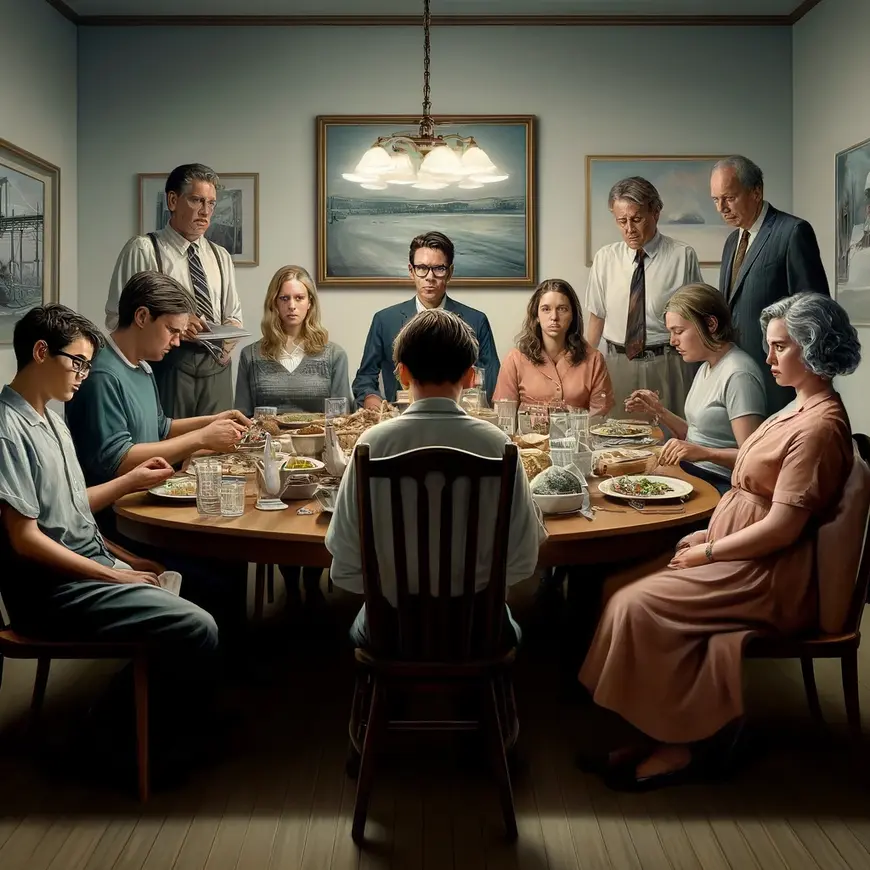
Famous works of Jonathan Franzen
- The Twenty-Seventh City (1988): His debut novel, “The Twenty-Seventh City,” explores the social and political complexities of urban life in his hometown of St. Louis. The novel set the stage for Franzen’s thematic explorations of identity and societal forces.
- Strong Motion (1992): Franzen’s second novel, “Strong Motion,” delves into the seismic undercurrents of family dynamics and societal shifts. The novel reflects his continued exploration of personal and societal forces shaping individual lives.
- The Corrections (2001): “The Corrections” is widely considered Jonathan Franzen’s breakthrough work. The novel, a multi-generational exploration of the Lambert family, earned critical acclaim, won awards, and solidified his reputation as a prominent voice in contemporary American literature.
- How to Be Alone (Essay Collection, 2002): This collection of essays showcases his versatility as a writer and cultural commentator.
- Freedom (2010): “Freedom” follows the Berglund family and offers a panoramic view of their lives against the backdrop of societal changes. The novel further cements his status as a chronicler of contemporary America and explores themes of freedom, responsibility, and the consequences of individual choices.
- Farther Away (Essay Collection, 2012): Another collection of essays, “Farther Away,” continues the author’s exploration of diverse topics, including reflections on literature, nature, and personal experiences. The collection showcases his continued engagement with cultural commentary beyond fiction.
- Purity (2015): “Purity” is a novel that ventures into the realms of political and personal intrigue.
Voices that shaped Jonathan Franzen as a writer
- Franz Kafka: Jonathan Franzen has described reading The Trial as the moment he understood how powerful literature can be. Kafka’s dense unease and circling sense of guilt echo in his own characters, who often feel watched, judged, and trapped in systems they barely control.
- William Gaddis: Gaddis gave him a model of the huge, demanding postmodern novel. When the author wrestles with The Recognitions or J R, he measures his own ambitions against that scale. The struggle pushed him toward a more inviting realism that still keeps structural complexity and moral weight.
- Thomas Pynchon: From Pynchon he learned to think in systems. Conspiracies, corporations, and technologies connect distant lives in books like Gravity’s Rainbow. Jonathan Franzen keeps that wide angle, but he brings it down into living rooms and kitchens where global tensions appear as family conflict.
- Alice Munro: Her short stories model a quieter kind of ambition. She stays with ordinary people and lets time fold back on itself in subtle ways. He learns from her patience and uses a similar respect for small gestures when he builds long, layered novels.
- Saul Bellow: Bellow’s work, especially Herzog and The Adventures of Augie March, offers a way to mix high thought with messy daily life. Jonathan Franzen follows that line by giving his characters strong inner monologues while keeping them rooted in jobs, streets, and family routines.
- John Updike: Updike’s suburban focus and close, lyrical style gave him a template for writing about marriage, sex, and faith. Books like Rabbit, Run and Rabbit Is Rich show how a single life can reflect a whole era. The novelist extends that approach into a new generation, with different politics but similar intimacy.
Writers who carry his legacy
- Jami Attenberg: She has spoken of how The Corrections helped her shape The Middlesteins. The influence appears in the way she moves between relatives while keeping a tight grip on food, health, and money. Her tone is looser and funnier, yet the deep family tensions feel very Franzenesque.
- Juli Zeh: Zeh’s big social novels show a clear kinship with Franzen’s work. In Unterleuten, New Year, and The Method, she uses small communities and personal crises to reveal legal, media, and environmental conflicts. The method is similar to Freedom: a close focus on private lives that opens into a wide view of society.
- Taffy Brodesser-Akner: In Fleishman Is in Trouble she uses multiple viewpoints, sharp dialogue, and a shifting narrator to dissect marriage and status. Critics often compare this structure to his family novels. She brings a different cultural angle and a stronger comic bite, but the blend of gossip and moral concern feels like a next step after him.
- Younger family saga writers: Many newer novelists now work inside a space defined using Jonathan Franzen as a reference point. Reviewers label books “Franzen-like” when they see large family casts, social critique, and rich interior lives in one package. Even when authors resist the comparison, his example shapes how readers and publishers think about the serious contemporary family novel.
- International realists and climate novelists: Outside the United States, writers who mix realism with environmental and ethical questions often stand beside him in criticism. They share an interest in how climate, migration, and technology invade private rooms. In that sense, Franzen’s blend of moral seriousness and accessible storytelling helps map out a territory where many others now write.
Families in Motion: Voice and Time in his Fiction
Jonathan Franzen likes to work with a close third person that feels almost like first person from the inside. The narrator often stays tight to one family member at a time, then shifts to another, so the reader moves through the household like an unseen guest. This approach lets him show how each person misreads the others and how private resentments grow in silence. In The Corrections and Freedom that movement between parents and children becomes the real engine of the story.
He also enjoys structural games with time, although the surface often looks simple. A scene may open in the present, slide into a memory, then snap back without flashy markers. The effect is that past choices sit right beside current arguments. Old guilt or shame leaks into a breakfast table quarrel or a small act of kindness. Jonathan Franzen uses these time shifts to show that families never start from zero. History is always in the room.
Chapters often feel like self contained units with their own emotional arc. Many could almost stand as novellas about one person’s crisis of faith, love, work, or ideology. Yet the wider novel keeps weaving these arcs together, so patterns slowly emerge across decades. Later books such as Crossroads stretch this method across different generations and historical moments.
The reader feels time not only as clock time but as cultural time, with changing music, politics, and technology pressing on each life. In this way his handling of narration and time turns the family novel into a long, patient study of how people and eras shape each other.
From Long Lines to Sharp Stings: Rhythm and Voice in His Writing
At the level of the sentence, Jonathan Franzen balances clarity with richness. Many lines are long and carefully layered, yet the grammar stays clean enough that readers rarely get lost. He likes to stack clauses that circle a feeling from several angles, then finish with a sharp, plain word. The rhythm shifts between these extended sentences and shorter, almost aphoristic ones. This variation keeps the prose musical without sounding showy.
Descriptions often hinge on small, telling details. A cluttered desk, a fading music poster, a half eaten snack on a plate can reveal mood, class, and secret habits. He uses contemporary objects phones, laptops, branded clothes, pop songs as part of the emotional landscape. These items are not simple social markers. They also carry nostalgia, status anxiety, or quiet shame.
Imagery in his work tends to be grounded rather than poetic. Instead of elaborate metaphors he prefers comparisons that feel close to everyday speech. Weather, traffic, and household chores appear often and mirror inner states in subtle ways. The tone that wraps this writing is mixed and complex. Irony and satire expose self deception, especially around politics and virtue.
At the same time there is a steady sympathy for weak or wounded characters, even when they behave badly. Jonathan Franzen allows readers to feel uneasy about his people and still care for them. That combination of critical distance and emotional investment gives his novels their particular weight and makes the style feel both demanding and welcoming.
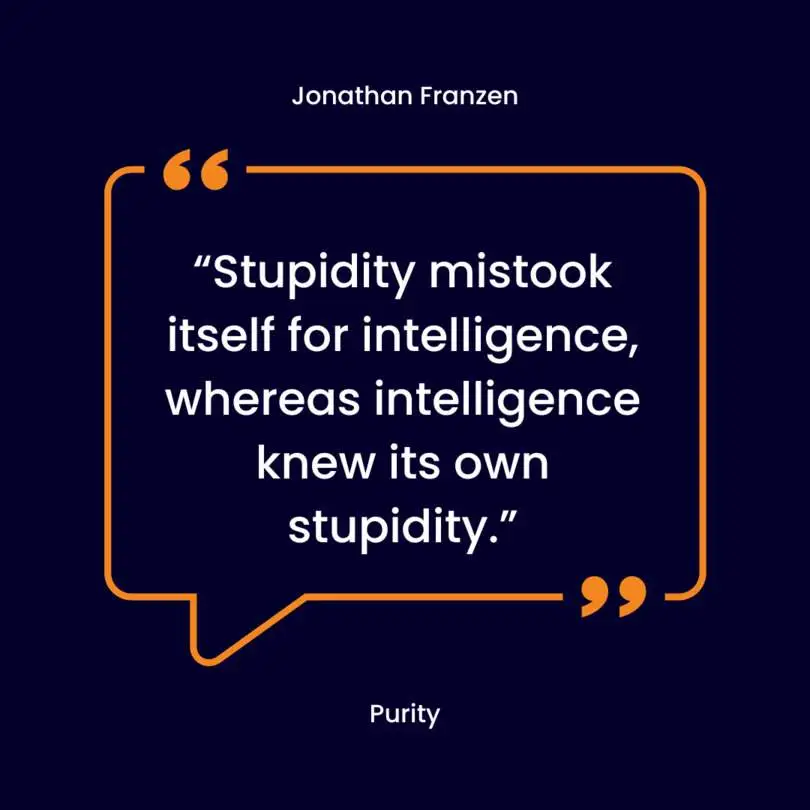
Famous quotes from Jonathan Franzen
- “The reader becomes God, for all textual purposes. I see your eyes glazing over, so I’ll hush.” This quote reflects his awareness of the dynamic relationship between the reader and the text. It acknowledges the reader’s role in interpreting and breathing life into the written words.
- “The first lesson reading teaches is how to be alone.” Jonathan Franzen emphasizes the solitary nature of reading and its capacity to cultivate a sense of solitude. This quote highlights the transformative power of literature in fostering introspection and self-discovery.
- “The place of true meeting is the place of truth. And the truth is at the center.” The author often explores themes of truth and authenticity in his works. This quote suggests that genuine connection occurs when individuals navigate through the layers to reach a shared, truthful core.
- “The only way to deal with death is to transform everything that precedes it into art.” He reflects on the inevitability of death and the redemptive power of art. This quote underscores the transformative potential of turning life’s experiences into meaningful artistic expressions.
- “A novel is a moral enterprise, and only the people who seriously need to be moral should be allowed to write them.” Jonathan Franzen posits the idea that writing a novel is inherently tied to a moral purpose. This quote suggests that authors take on a responsibility to engage with moral questions and explore the complexities of human behavior through their storytelling.
Trivia facts about Jonathan Franzen
- Reluctance towards Technology: Jonathan Franzen is known for his skepticism towards modern technology, particularly the rise of social media. He gained attention for his reluctance to engage with Twitter and other social platforms, expressing concerns about their impact on genuine human connection.
- Birdwatching Enthusiast: He is an avid birdwatcher, and his passion for ornithology is evident in his non-fiction work. “The End of the End of the Earth.” Birds and birdwatching are recurring themes in his essays, reflecting his deep connection to the natural world.
- Academic Pursuits: Before establishing himself as a novelist, the author pursued a Ph.D. in German literature at Harvard University. Although he did not complete the program. His academic background has influenced the depth and intellectual rigor evident in his works.
- Reservations about Oprah’s Book Club: In 2001, when “The Corrections” was selected for Oprah Winfrey’s Book Club. Jonathan Franzen expressed discomfort with the commercial implications of the endorsement.
- Collaboration with David Foster Wallace: The writer had a close friendship and literary collaboration with fellow author David Foster Wallace. The two writers shared early drafts of their novels and provided feedback to each other. This literary camaraderie persisted until Wallace’s tragic death in 2008.
- Rejected Titles: Before settling on “The Corrections” as the title for his breakthrough novel. The author considered several alternative titles, including “The Americans” and “The Year of Glad.” The eventual choice reflects the novel’s exploration of personal and societal corrections.
- Screenwriting Experience: In addition to his work as a novelist and essayist, he has tried his hand at screenwriting.
- Dual Citizenship: Jonathan Franzen holds both American and German citizenship. This dual citizenship reflects his familial connections to Germany and adds another layer to his complex identity. Which often surfaces in the nuanced portrayals of characters in his novels.
The Legacy in Progress: Jonathan Franzen’s Impact
As Jonathan Franzen continues to compose the symphony of his literary career, his impact on modern American literature remains undeniable. The thematic richness of his novels, the authenticity of his characters. And his ability to grapple with the complexities of contemporary life contribute to a legacy in progress.
These works have not only earned him literary accolades. But have also sparked discussions about the role of the novelist in society. His exploration of family dynamics, societal forces, and the intricacies of personal freedom invites readers to confront uncomfortable truths. And engage with the ever-changing landscape of the American experience.
In the grand symphony of American literature, Jonathan Franzen stands as a masterful conductor. Weaving together the harmonies and dissonances of contemporary life. From his early notes in “The Twenty-Seventh City” to the resonant chords of “Freedom.” He has composed a narrative tapestry that reflects the complexities of the human experience in modern America.
His unflinching exploration of familial relationships, societal dynamics. And the consequences of individual choices has positioned him as a literary figure who transcends the boundaries of fiction. His impact extends beyond the pages of his novels.
As the symphony of Jonathan Franzen’s literary career continues to unfold. Readers are invited to listen closely to the nuanced melodies and discordant notes that characterize his works. In doing so, we engage not only with the narratives of his novels but also with the broader conversations about identity, freedom, and the ever-evolving tapestry of the American story.