Inside Jorge Amado: Bahia, politics, desire
Jorge Amado writes streets that smell like cocoa and frying oil. I start with that because the books move on appetite and argument. Bahia’s cocoa belt supplies the raw material: plantations, ports, and the people who turn labor into song. Love arrives loud. Politics never hides. Desire with consequences is the current under almost every scene, whether the setting is a bar, a market, or a kitchen at dusk.
You do not need a scholar’s map to enter these works. Begin with one approachable novel where a city feels like a single crowded room. Then step into a bigger canvas where money, class, and faith push on private lives. A simple path through the books is what this guide delivers, with English titles in all chapters so you never trip on naming. Movement and peers will set context without slowing the pace.
Style matters here. You will see talk that crackles, plots that dance, and humor that lands like a verdict. Laughter as truth becomes a tool, not a decoration. Scenes hold joy and bruise in the same paragraph. The line stays clear even when the crowd gets loud. I will point to the city novel as the best doorway, then show how later books keep the same heartbeat while widening the lens.
Comparisons can help if you want another city’s heat. For a neighbor in crowded alleys and moral pressure, try 👉 Oliver Twist by Charles Dickens and watch how poverty, wit, and willpower set a life in motion. Rooms you can smell is the promise here: Bahia’s light, market talk, and a laugh with teeth that tells you exactly who holds power.

Profile of Jorge Amado – Life and Works
- Full Name and Pseudonyms: Jorge Leal Amado de Faria; wrote as Jorge Amado.
- Birth and Death: 10 August 1912, Itabuna (raised in Ilhéus), Brazil; 6 August 2001, Salvador, Brazil.
- Nationality: Brazilian.
- Father and Mother: João Amado de Faria; Eulália Leal Amado.
- Wife or Husband: Matilde Garcia Rosa (m. 1933–1944); Zélia Gattai (m. 1945–2001).
- Children: João Jorge Amado; Paloma Amado.
- Literary Movement: Brazilian modernism; Northeastern (Bahian) regionalism; civic, comic realism.
- Writing Style: Crowd-led narration, braided scenes, street-level dialogue, humor as verdict; clear prose with sensory detail.
- Influences: Machado de Assis, Graciliano Ramos, João Guimarães Rosa; also Dickens, Balzac, Victor Hugo.
- Awards and Recognitions: Brazilian Academy of Letters (member); major national and international honors, including the Camões Prize.
- Adaptations of Their Work: Dona Flor and Her Two Husbands (film/TV); Gabriela, Clove and Cinnamon (TV/film); Tieta (TV); Tent of Miracles (film).
- Controversies or Challenges: Book bans and censorship; Communist Party affiliation; periods of exile.
- Career Outside Writing: Journalist; federal deputy; cultural advocate; screen and TV collaborator.
- Recommended Reading Order:
1. Gabriela, Clove and Cinnamon
2. Dona Flor and Her Two Husbands
3. The Violent Land
4. Tent of Miracles
Cocoa dust, schoolrooms, and a first reporter’s notebook
Ilhéus and Itabuna give Jorge Amado his first weather. Cocoa dries in courtyards, and ships lean against the wharf. Childhood near the docks trains the eye to count hands, coins, and rumors. Family ties link countryside to port, so the boy learns how the city feeds on the fields. Class lines show in doorways and uniforms. Those doorways keep returning in later chapters.
School brings print to the noise. Teachers push composition and memory. A student who writes daily discovers how a sentence can carry street talk without flattening it. Newspapers soon open their doors. Reporting turns observation into habit: names spelled right, places correct, times exact. That discipline protects the later fiction when the plot begins to dance. A reader can feel the ledger beneath the carnival.
University widens the circle. Law lectures share a week with cafés, theaters, and party meetings. Books and barricades arrive together, and the language learns to hold both. Friendships with artists and journalists add craft to energy. Early pieces appear in small papers and little magazines. Feedback is quick, sometimes rough, always useful. Scenes sharpen. Dialogue gets teeth.
Travel starts the next layer of schooling. Trains and boats carry the young Jorge Amado to other cities where new accents and new hustles change the air. A portable Bahia forms in the notebook: recipes, sayings, street corners, saints’ days, and jokes that only make full sense at night. By the time the first works reach readers, the kit is ready. A clear line, a crowded room, a moral knot. Those elements keep their shape as the books grow famous, and the early pages explain why the later ones still feel lived-in rather than arranged.
Cocoa barons, banned books, and a crowd that won’t hush
Success arrived early and loud. A string of Bahian novels turned docks, plantations, and back-street faith into living rooms on the page. Reportage as foundation kept names, places, and prices exact. Early books tracked labor and hunger with the eye of a young journalist who knew the smell of sacks and rain.
Politics shaped the middle years. Street meetings, arrests, and seizures of books tried to stop the voice; the novels grew more public instead. Censorship as fuel is how this period reads now. Writing widened from the single corner bar to the whole city, then to the cocoa belt beyond the port. Crowds entered as characters. Priests, dockers, gamblers, and cocoa bosses argued inside the same paragraph, and the dialogue snapped like market talk.
Form kept evolving. Big canvases like The Violent Land and city portraits like Shepherds of the Night balanced appetite with argument. The city as chorus became the engine: many small scenes, one moral weather. Love stories ran hot, yet they carried the weight of class and law. Humor never left; it started to flash brighter, even in hard chapters, which made the verdicts land with more force.
Travel and brief exiles changed the air. New languages and new lefts complicated old certainties, and the fiction answered by turning warmer and more generous to ordinary pleasure. Desire with consequences stayed the rule. The middle-period classics that readers still start with—Gabriela, Clove and Cinnamon, Dona Flor and Her Two Husbands—arrived from this mix of street heat, memory, and a stubborn faith in people who keep singing after work. That is why the crowds did not hush; they entered the novels and found themselves seen.
Saints’ days, television lights, and late blue hours
Fame never loosened the grip on Bahia for the author. Late books returned to carnival, kitchens, and the harbor at dusk. Late warmth, sharp edges is the mood: generous scenes, clean sentences, verdicts tucked inside jokes. The prose stayed welcoming, and the worlds kept their noise—vendors calling, radios buzzing, a neighbor’s piano learning one stubborn tune.
The range broadened without bloat. Shorter, playful tales shared a shelf with sweeping city novels. A craftsman’s ease shows in the pacing: chapters end on a laugh or a look, not a slogan. Characters age. Streets change. Tourists arrive. Still, the human scale holds. Love stories keep their mischief while the law and the church keep their watch. Ordinary work remains central; you feel the weight of crates, the heat of kitchens, the sting of a cheap shoe.
Adaptations multiplied. Films and television carried the Bahian voice into living rooms far from the port, and the books answered by leaning even harder into local spice and rhythm. Place as a promise guided the choices. Names of squares and hills matter. Dirt roads matter. The sea matters most. Those anchors kept the late novels from floating off into myth.
Public honors came and went; the schedule barely changed. Mornings belonged to writing, afternoons to letters and visits, evenings to friends and music. Discipline beneath the carnival explains the steady clarity of the final decades. Looking back, the line feels consistent: laughter used as truth, desire framed by consequence, and Bahia treated as a full republic of work, love, faith, and gossip.
Markets, saints, and a city-sized chorus
The writer Jorge Amado stands at the lively crossroads of Brazilian modernism and regional fiction from Bahia. I picture him working where popular speech meets print, turning street rumor into literature without losing the laugh. The movement context matters, yet the pages feel local first. Bahia as literary capital is his lasting wager: ports, markets, terreiros, and kitchens carry the nation’s arguments more honestly than ministries do.
Peers of the author sharpen the outline. Graciliano Ramos narrows language to bone and tests dignity under drought. Machado de Assis cools the line and puts irony to work against vanity. João Guimarães Rosa remakes syntax so the backlands can speak in their own weather. Clarice Lispector turns inward, proving that daily life can hold metaphysical heat. Beside them, Jorge Amado chooses amplitude, music, and laughter as truth-telling, then anchors it in labor, money, and law.
Themes recur as variations, not formulas. Desire with consequences is everywhere: love and appetite are joyous, yet they meet class borders and church doors. Work and property drive plot, from cocoa groves to corner bars, so contracts and gossip matter as much as edicts. Faiths in conversation—Catholicism, Candomblé, folk rites—share the same page and make the city feel plural on purpose. Power rarely arrives as abstract theory; it shows up as a badge, a ledger, a landlord’s hand.
What holds it all together is tone. Generosity without naivety lets rogues win a scene and still face the bill. The humor bites, then forgives. Ordinary objects keep their shine: a skillet, a dress in a dry season, a wet street after a noon rain. This blend of civic scale and neighborhood closeness explains why the novels travel.
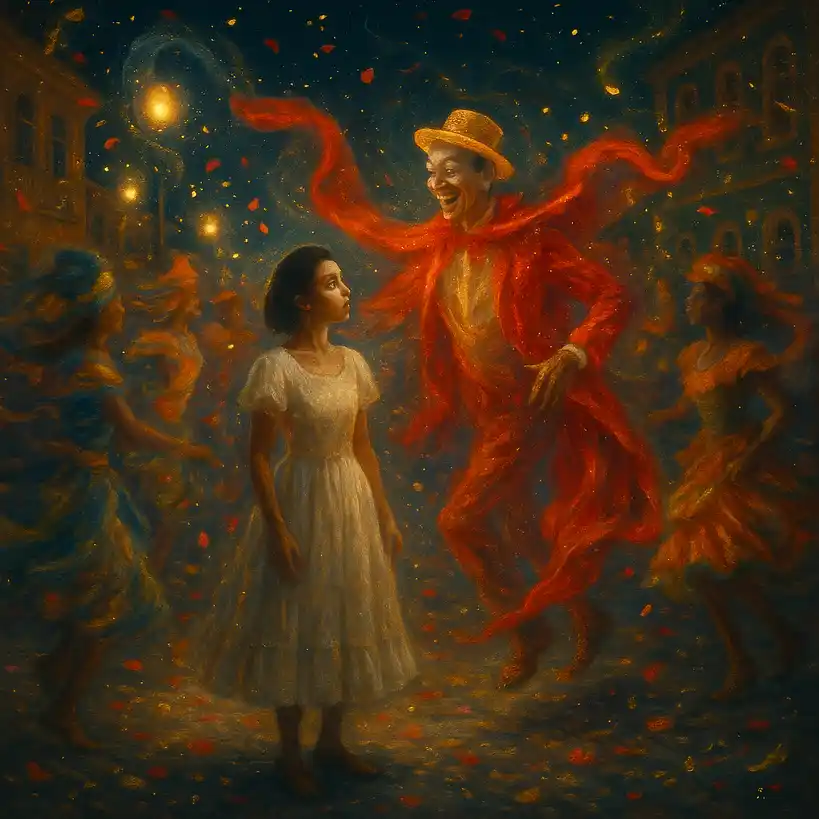
Famous Works by Jorge Amado in Chronological order
- 1931 — O País do Carnaval (The Country of Carnival). A first look at youth and politics in Bahia, already testing how ideas sound in the street.
- 1933 — Cacau (Cacao). Plantation labor and profit seen from ground level; work and hunger set the stakes.
- 1934 — Suor (Sweat). City rooms and precarious jobs; bodies and rent shape the days.
- 1935 — Jubiabá (Jubiabá). A coming-of-age through docks, music, and Candomblé; public life meets private hope.
- 1936 — Mar Morto (Sea of Death). Sailors, tides, and devotion on the Bahian waterfront; love rides the currents.
- 1937 — Capitães da Areia (Captains of the Sands). Street children as a republic of their own, written with unsentimental care.
- 1943 — Terras do Sem Fim (The Violent Land). Cocoa wars render law and ambition as everyday weather.
- 1944 — São Jorge dos Ilhéus (The Golden Harvest). Boom and bust in Ilhéus; a companion to The Violent Land.
- 1958 — Gabriela, Cravo e Canela (Gabriela, Clove and Cinnamon). A city’s modernization seen through a love plot that won worldwide readers.
- 1964 — Os Pastores da Noite (Shepherds of the Night). Three interlinked tales where faith, hustle, and humor share one neighbourhood.
- 1966 — Dona Flor e Seus Dois Maridos (Dona Flor and Her Two Husbands). Comic eros, grief, and memory turned into a popular classic.
- 1969 — Tenda dos Milagres (Tent of Miracles). Race, scholarship, and street wit collide in a defense of Bahian culture.
- 1977 — Tieta do Agreste (Tieta or Tieta, the Goat Girl). A prodigal return exposes provincial hypocrisy with comic bite.
- 1988 — O Sumiço da Santa (The War of the Saints). A runaway saint topples pomposity and lights up Salvador over two days.
What fed the music: influences on Jorge Amado
The novelist Jorge Amado learned to turn street noise into narrative. I hear him testing forms against Bahia’s crowded rooms, then keeping whatever made the page sing with clarity. Reportage as backbone stayed in place even when the plot danced.
- Machado de Assis — irony with moral bite: Dom Casmurro (1899) and The Posthumous Memoirs of Brás Cubas (1881) model a cool gaze that exposes vanity without cruelty. Amado keeps the warmth, borrows the aim, and points it at bosses, priests, and poseurs.
- Graciliano Ramos — pared style, hard truth: Barren Lives (1938) and São Bernardo (1934) show rural dignity under pressure. The lesson sticks: short sentences can carry hunger, law, and pride without sermon.
- João Guimarães Rosa — language cracked open: The Devil to Pay in the Backlands (1956) reinvents speech so the hinterland can speak itself. Jorge Amado chooses a looser music for the coast, yet the courage to honor local talk feels shared.
- Victor Hugo — civic scale with human rooms: Les Misérables (1862) proves that law, debt, and rumor belong beside kitchens and love. Amado’s cities echo that wide reach while staying comic and tender.
- Honoré de Balzac — money and rumor as engines: Father Goriot (1835) turns credit and gossip into fate. Bahian markets learn the same physics.
- Charles Dickens — crowd sympathy and street wit: Bleak House (1853) and Oliver Twist (1838) balance laughter with indictment. Amado adapts the blend to cocoa ports and neighborhood saints.
After Amado: Writers who kept the city singing
His novels taught others to treat a city as a chorus. I keep seeing three gifts travel forward: the crowd given dignity, humor used as verdict, and love stories tied to law and money. Laughter as truth-telling is the trait that sticks.
- Paulo Lins — urban epic from below: City of God (1997) follows boys into men under guns, police, and TV glare. Scenes carry slang, gossip, and fear without losing compassion. The scale feels Amadian, the tempo its own.
- João Ubaldo Ribeiro — nation through neighborhood: An Invincible Memory (1984) turns Bahia into a long memory that runs on jokes, hunger, and stubborn hope. Amado’s amplitude meets a historian’s patience.
- Milton Hatoum — family under public weather: The Brothers (2000) uses Manaus to show how desire, class, and migration cut across kin. Tenderness and indictment share the same page.
- Isabel Allende — love and politics entwined: Of Love and Shadows (1984) treats affection as a form of courage inside state fear. The moral temperature matches Amado’s belief that private lives carry public stakes.
- Luis Sepúlveda — tenderness in rough places: The Old Man Who Read Love Stories (1989) finds dignity far from capitals. Ordinary people carry the light, and that is very Amado.
- Manuel Puig — pop culture as engine: Kiss of the Spider Woman (1976) proves that gossip, radio, and movies can structure a serious book. Amado’s radio of streets becomes Puig’s cinema of talk.
How the crowd becomes a character – Style & Technique
Jorge Amado writes with a narrator who listens first and judges later. I hear a hospitable voice that welcomes gossip, prayer, and complaint into the same paragraph. Point of view stays mostly third person, yet it leans close enough to catch breath and perfume. In Gabriela, Clove and Cinnamon, a scene can begin with a street rumor, slip into Gabriela’s quiet stubbornness, then widen to the shopkeepers arguing about progress. The shift feels earned because detail keeps us steady.
Perspective moves like a camera in a busy square. Many angles, one pulse describes the effect. A chapter might track a dockworker through a market, cut to a cocoa buyer counting crates, and end with a priest’s aside that tilts the meaning. These changes read as neighborhood knowledge rather than tricks. Free indirect style lets inner weather surface without quotation marks, so we stay in the hum of the city.
Time runs braided instead of straight. Reprise instead of repeat is the pattern: a night returns from another witness, a quarrel reappears as a joke, a kiss becomes a rumor that matters. The reader learns the map by walking it twice. That approach keeps large casts legible. In The Violent Land, the cocoa wars advance through overlapping scenes that swap vantage rather than chronology, which suits a world ruled by ledger entries and sudden favors.
Dialogue carries the street. Talk that does work pushes status and desire forward with the snap of market speech. Registers shift from courthouse to kitchen without strain, and punchlines land as verdicts. The result is civic fiction that moves like a festival: songs near stalls, private vows near public deals, and time measured by bells, shifts, tides, and who gets paid.
Sentences you can taste, jokes that cut clean
Prose stays simple while flavor runs high. Short main clauses set pace. Lists appear when inventory matters to power or joy. I think of syntax built for heat: verbs do the lifting, modifiers earn their keep, and rhythm follows footsteps, not theory. That is why kitchens feel busy and voting days feel crowded. Paragraphs gather like stalls in a market, each with its scent and price.
Images carry meaning without sermon. Food, fabric, and weather return as working motifs. A skillet signals work and care. A dress in the dry season marks money and longing. Cocoa dust on a ledger stains a contract before a lawyer ever does. The sea rinses the city and resets the mood. These objects keep plot human-scale even when politics looms.
Tone balances kindness with bite. Generous but not gullible might be the rule. A joke arrives, then leaves a small bruise where power sat. Irony points at uniforms, not at the poor. Priests, bosses, and bureaucrats get their day in comic court, yet a widow receives her scene in clean light. That mix builds trust. Readers feel the writer on the side of work, music, and meals shared.
Voices with their own weight means slang, prayer, and courthouse diction share a page without collapse. A mispronounced word or an over-polished sentence becomes plot, not decoration. Refrains help memory: a nickname, a proverb, a street cry return so the city sounds continuous. Across books, the craft rule holds. Clarity before flourish keeps scenes legible, jokes sharp, and the aftertaste warm enough to send you back for another chapter.

Famous Quotes by Jorge Amado
- “Bahia is more than a place; it is a way of loving.” Place becomes feeling; the novels turn streets, kitchens, and saints’ days into a grammar of affection.
- “Love laughs, but it also pays the bill.” Desire arrives with appetite and cost; Amado keeps joy and consequence in the same frame.
- “The city is a crowd of stories looking for a listener.” Markets, bars, churches, and docks supply narrators; the novelist’s job is to hear and arrange.
- “Power wears uniforms; dignity wears work clothes.” Class shows up as texture—badges, ledgers, shoes—so ethics read as detail, not lecture.
- “A joke tells the truth faster than a sermon.” Humor functions as verdict; laughter clears the air and exposes vanity.
- “Nothing stays secret in a town that cooks with the windows open.” Gossip moves plot like weather; public and private rooms sit a wall apart.
- “Hunger understands every language.” Work, debt, and desire cross borders; the sentence stays simple so stakes stay human.
- “A saint can trip the powerful the way a peel trips a king.” Faith and mischief coexist; small acts undo pomp and remind the city who it belongs to.
Trivia Facts about Jorge Amado
- Bahia in one house: The Fundação Casa de Jorge Amado in Salvador preserves manuscripts, photos, and Bahian cultural archives; it anchors the city’s literary memory. 🌐 Fundação Casa de Jorge Amado.
- Camões Prize, 1994: The highest Lusophone honor recognized Amado’s reach across language and borders; the official roll lists him as the 1994 laureate. 🌐 Biblioteca Nacional — Camões Prize.
- Reporter’s habits: Early newsroom work shaped the fiction’s clarity: names right, places exact, prices believable—then the plot could dance without losing truth.
- Cocoa belt ledger: Research in Ilhéus and Itabuna fed the plantation novels; a stain of cocoa dust on a ledger often says more than a speech.
- Family of writers: Zélia Gattai, his partner for decades, wrote acclaimed memoirs; together they built an archive that kept letters, photos, and city ephemera alive.
- Street talk, book craft: Amado’s pages welcome slang, prayer, and courthouse diction; the blend lets a neighborhood sound like itself on the page.
- Irony beside appetite: For a cooler edge on vanity and doubt in Brazilian classic form, see 👉 Dom Casmurro by Machado de Assis—useful contrast with Amado’s warmer amplitude.
How readers argued—and kept reading
Street vitality over polish drew huge audiences; clarity over theory bothered some critics who wanted harder experiment. Censorship in mid-century Brazil created notoriety and loyalty at once. Abroad, translations amplified the humor and civic tenderness; readers felt they had walked a real city. Later, television and film adaptations widened the circle without diluting the line; the books kept their generous but not gullible gaze.
A small, durable shelf serves newcomers. Start with a city door: Gabriela, Clove and Cinnamon balances modernization, gossip, and a love plot that never turns sugary. Add the comic-classic: Dona Flor and Her Two Husbands uses laughter to ask what memory owes the living. Go wide on the cocoa wars: The Violent Land shows money, rumor, and law moving through rooms and bodies.
Reading tips help. Mark small objects—a ledger, a badge, a skillet—because status and guilt ride on things. Track reprises: a night or a rumor returns from another angle and sharpens meaning. Add one biography or interview sequence for context, then return to the novels. The pages carry their own proof.
What to hold, and where to start tonight
Jorge Amado shows how a city can be a choir. I stay for the warmth that still names power, for laughter as truth, and for rooms you can smell—cocoa dust, frying oil, sea air. Characters choose in public. Institutions press in private. Desire with consequences keeps joy honest, and the prose welcomes every voice without losing clarity.
A simple plan works. Begin with an open door: Gabriela, Clove and Cinnamon gives you markets, modernization, and a love story that refuses cliché. Take the comic high point: Dona Flor and Her Two Husbands turns grief and appetite into a moral puzzle with songs. Map the money and rumor: The Violent Land shows how contracts, guns, and gossip set the weather.
Keep the method steady. Read to feel, then to see. First, enjoy the scene; then notice which object carried the verdict. Vary pace: one chapter in the morning light, one after dinner with the window open. Mark a refrain or a street cry and watch where it returns. If a crowd feels large, trust the reprises; the map will reveal itself. When you finish, the city lingers. A joke keeps its bruise. A kitchen stays warm. A badge still weighs on a pocket.
More Reviews of Works by Jorge Amado

Dona Flor and Her Two Husbands
Dona Flor and Her Two Husbands by Jorge Amado Salvador hums before sunrise. Drums test the air. Vendors lift their…

Gabriela, Clove and Cinnamon by Jorge Amado There are books that transport you. Others seduce you slowly. But Gabriela, Clove…