Marcel Proust: Unveiling the Literary Enigma
Marcel Proust, a towering figure in French literature, remains one of the most enigmatic and influential writers of the 20th century. His monumental work, In Search of Lost Time, continues to captivate readers with its intricate exploration of memory, love, and the passage of time. Yet, behind the pages of his magnum opus lies a life marked by complexity, creativity, and a relentless pursuit of artistic perfection.
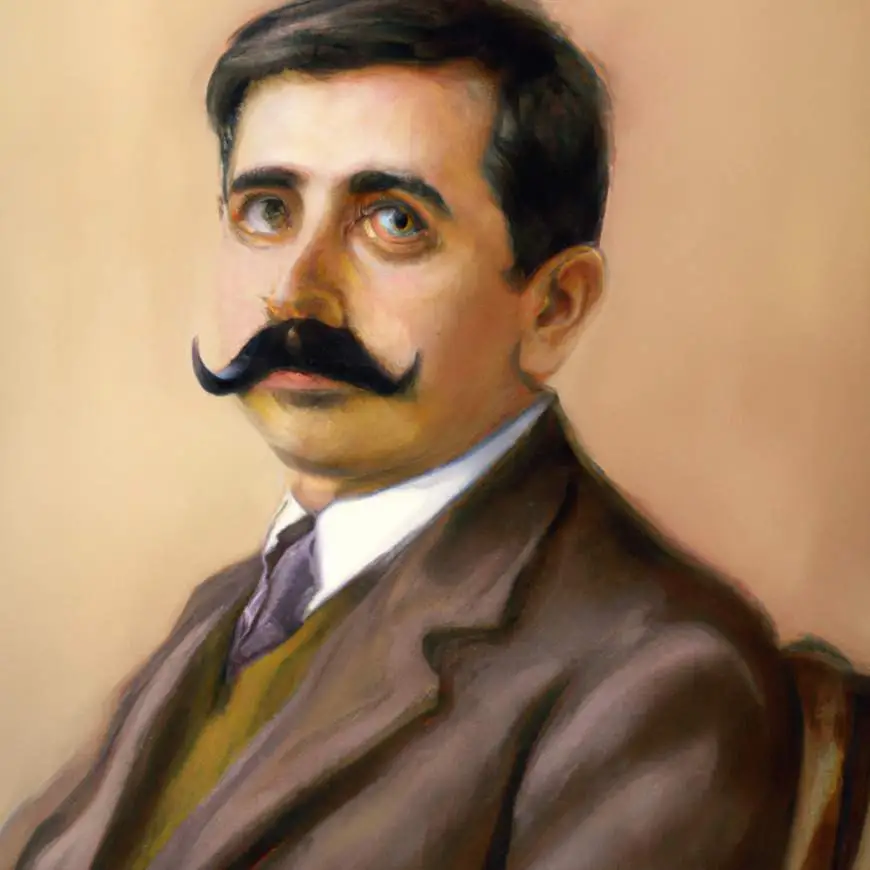
Marcel Proust was born on July 10, 1871, in Auteuil, a suburb of Paris, France, to Adrien Proust, a prominent physician, and Jeanne Weil, from a wealthy Jewish family. From a young age, Proust demonstrated a keen intellect and a voracious appetite for literature. He was educated at home by tutors and attended the Lycée Condorcet in Paris, where he excelled in his studies despite struggling with poor health, particularly asthma, which would plague him throughout his life.
In his early twenties, Proust embarked on a career as a writer, publishing articles, essays, and literary criticism in various journals and magazines. He became part of Parisian literary circles, where he befriended influential figures such as Anatole France, André Gide, and Paul Valéry. Despite initial setbacks and critical indifference, Proust remained determined to establish himself as a serious writer, pouring his energies into his creative pursuits with unwavering dedication.
Profile of Marcel Proust – Vita and Works
- Full Name and Pseudonyms: Valentin Louis Georges Eugène Marcel Proust. No known pseudonyms.
- Birth and Death: Born on July 10, 1871, in Auteuil, France. Died on November 18, 1922, in Paris, France.
- Nationality: French.
- Father and Mother: Adrien Proust and Jeanne Weil.
- Wife or Husband: Never married.
- Children: None.
- Literary Movement: Modernism and Impressionism in Literature.
- Writing Style: Lush, introspective, and reflective. Known for long sentences, deep memory exploration, and inner monologue.
- Influences: Ruskin, Montaigne, Stendhal, and French salon culture.
- Awards and Recognitions: Prix Goncourt (1919) for In the Shadow of Young Girls in Flower. Regarded as one of the greatest novelists of all time.
- Adaptations of Their Work: In Search of Lost Time adapted for stage, television, and film in various forms.
- Controversies or Challenges: Struggled with severe asthma, reclusive life, and social prejudice due to his homosexuality and Jewish heritage.
- Career Outside Writing: Translated Ruskin’s works and contributed to literary journals and salons.
- Recommended Reading Order:
1. Swann’s Way: The entry into his monumental cycle of memory and time.
2. In the Shadow of Young Girls in Flower: A lyrical exploration of youth and desire.
3. The Guermantes Way: A dive into high society and personal change.
4. Time Regained: A profound conclusion to his literary masterpiece.
Unveiling In Search of Lost Time
Proust’s literary masterpiece, “In Search of Lost Time” (À la recherche du temps perdu), stands as one of the most ambitious and monumental works of modern literature. Comprising seven volumes and spanning thousands of pages, the novel explores the intricacies of memory, consciousness, and human experience through the eyes of its narrator, Marcel, a thinly veiled alter ego of the author himself.
Throughout his life, Marcel Proust grappled with his sexuality and the complexities of romantic love. He harbored unrequited feelings for several men, including his close friend and confidant, Reynaldo Hahn, a composer, and Lucien Daudet, the son of the writer Alphonse Daudet. Proust’s romantic entanglements and emotional turmoil would serve as a rich source of inspiration for his fictional characters and narrative themes.
Proust’s fragile health and hypersensitivity to noise and light compelled him to lead a reclusive lifestyle, retreating into the confines of his cork-lined bedroom, where he wrote and worked on his magnum opus. Despite his physical limitations, Proust maintained a meticulous routine, devoting himself to the meticulous crafting of his prose and the refinement of his aesthetic vision.
Marcel Proust died on November 18, 1922, at the age of 51, following a series of health crises exacerbated by his chronic asthma. Despite his relatively short life, Proust’s literary legacy endures as a testament to the transformative power of art and the enduring quest for meaning in the face of life’s transience and uncertainty.
Famous works by Marcel Proust in chronological order
- Swann’s Way (Du côté de chez Swann) 1913. The first volume of Marcel Proust’s monumental novel “In Search of Lost Time,” “Swann’s Way,” introduces readers to the narrator’s childhood memories, his experiences with the enigmatic Swann family, and his reflections on art, love, and memory.
- Within a Budding Grove (À l’ombre des jeunes filles en fleurs) 1919. The second volume, “Within a Budding Grove,” continues the narrator’s exploration of memory and desire as he navigates the complexities of adolescence, love, and social interactions.
- The Guermantes Way (Le Côté de Guermantes) 1920. In the third volume, “The Guermantes Way,” the narrator delves deeper into the aristocratic world of the Guermantes family. Exploring themes of social class, identity, and the nature of power.
- Sodom and Gomorrah (Sodome et Gomorrhe) 1921. The fourth volume of “In Search of Lost Time,” “Sodom and Gomorrah,” continues the narrator’s exploration of love and desire.
- The Captive (La Prisonnière) 1923. In the fifth volume, “The Captive,” the narrator delves into the intricacies of jealousy, possessiveness, and obsession in romantic relationships. Exploring the dynamics of love and power.
- The Fugitive (Albertine disparue) 1925. The sixth volume of “In Search of Lost Time,” “The Fugitive,” follows the narrator’s search for his lost love, Albertine. And his reflections on the nature of memory, loss, and the passage of time.
- Time Regained (Le Temps retrouvé) 1927. The final volume, “Time Regained,” brings the narrator’s journey full circle as he reflects on the transformative power of art, memory, and the passage of time. Culminating in a profound exploration of the nature of human experience and consciousness.
Literary Influences on Marcel Proust
Marcel Proust was deeply influenced by a diverse array of writers, thinkers, and artists whose works shaped his artistic sensibility and thematic concerns. At the same time, Proust’s innovative approach to narrative structure and psychological depth exerted a profound influence on subsequent generations of writers, ensuring his place in the pantheon of literary immortals.
Writers Who Influenced Marcel Proust
- Gustave Flaubert: Marcel Proust admired Gustave Flaubert’s meticulous attention to detail, psychological realism, and narrative precision. Flaubert’s novel “Madame Bovary” inspired Proust’s own exploration of the complexities of human desire, disillusionment, and the quest for authenticity in “In Search of Lost Time.”
- Charles Baudelaire: Proust was captivated by Charles Baudelaire’s poetry, particularly his evocative imagery, existential themes, and exploration of the urban landscape. Baudelaire’s “Les Fleurs du Mal” resonated with Proust’s own fascination with memory, nostalgia, and the fleeting nature of time.
- John Ruskin: The writings of John Ruskin, particularly his aesthetic theories and reflections on art and society, influenced Proust’s understanding of beauty, perception, and the transformative power of art. Ruskin’s emphasis on the importance of close observation and the cultivation of the senses resonated with Proust’s own aesthetic sensibilities.
- Marcel Schwob: Marcel Proust admired the experimental prose style and narrative innovations of Marcel Schwob. A French writer known for his literary experiments and eclectic interests. Schwob’s “Imaginary Lives” inspired his exploration of the multiplicity of human experience and the fluid boundaries between reality and imagination.
- John Keats: Marcel Proust was drawn to the Romantic poetry of John Keats, particularly his odes and sonnets. Which celebrated the beauty of the natural world and the intensity of human emotion. Keats’s emphasis on sensory experience and the transformative power of imagination resonated with Proust’s own aesthetic vision.
Writers Influenced by Marcel Proust
- Virginia Woolf: Virginia Woolf, a leading figure of the modernist movement, admired Proust’s innovative narrative techniques and psychological depth. Woolf’s stream-of-consciousness narrative style and exploration of subjective experience were influenced by Proust’s experimental approach to storytelling.
- James Joyce: James Joyce, renowned for his groundbreaking novel “Ulysses,” admired Proust’s meticulous attention to detail, psychological realism, and exploration of memory and consciousness.
- Samuel Beckett: Samuel Beckett, a Nobel Prize-winning playwright and novelist, admired his existential themes and narrative experimentation. Beckett’s exploration of the absurdity of existence and the human condition was influenced by Proust’s portrayal of the passage of time and the search for meaning in a chaotic world.
- Marguerite Yourcenar: Marguerite Yourcenar, a French novelist and essayist, admired Proust’s psychological insight and narrative richness. Yourcenar’s exploration of identity, memory, and the complexities of human experience was influenced by Proust’s nuanced portrayal of character and his exploration of the inner workings of the human mind.
- Italo Calvino: Italo Calvino, an Italian novelist known for his imaginative storytelling and philosophical depth. Admired his narrative innovation and thematic complexity.
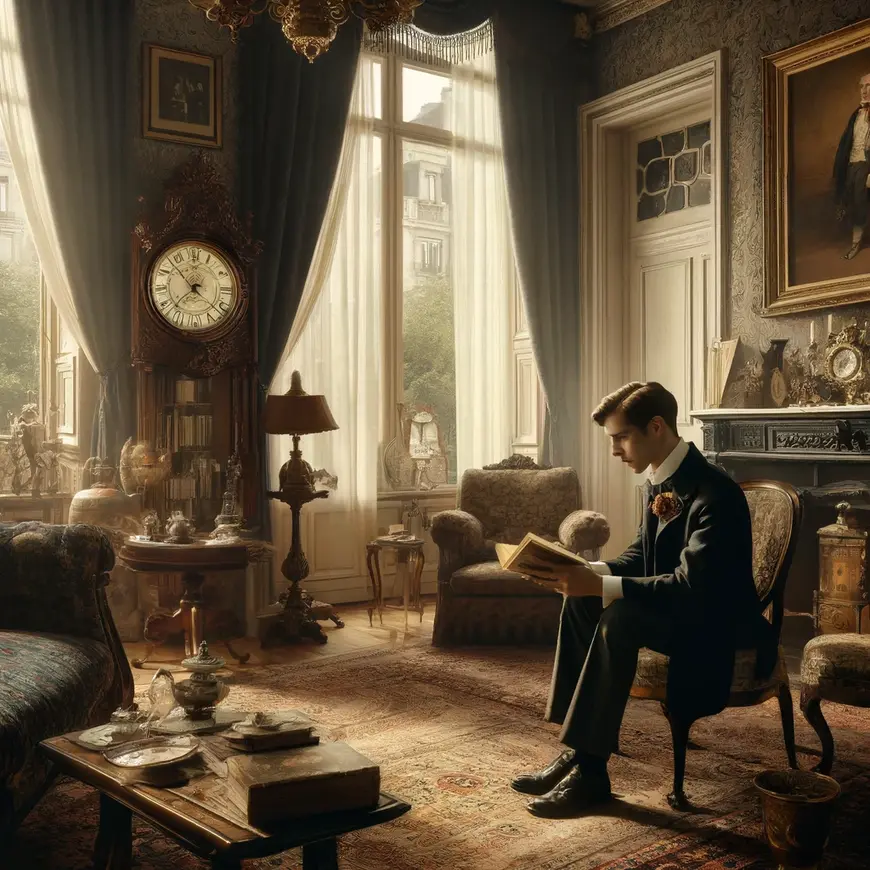
Marcel Proust – The Art of Memory, Detail, and Endless Reflection
Reading Marcel Proust is like stepping into a luxurious, dreamlike world where time slows down, and memories come alive. His writing isn’t a quick journey; it’s a deep dive into the human experience. At first, I wasn’t sure if I could keep up with his long, winding sentences and intricate thoughts. His words made me see life’s smallest moments with new clarity and meaning.
Proust’s writing is rich, reflective, and filled with sensory detail. His most famous work, In Search of Lost Time, is a masterpiece of introspection. Let’s explore the unique writing style and techniques that make Proust’s work unforgettable.
Long, Flowing Sentences: A Journey Within a Sentence
Marcel Proust is famous for his long, complex sentences. These sentences often stretch across half a page or more. They flow like a river, winding through thoughts, memories, and emotions. Each one feels like an exploration in itself.
At first, reading these sentences felt overwhelming. I had to slow down and concentrate. But once I got into the rhythm, I found a hidden beauty. Each sentence unfolded layer by layer, revealing deeper thoughts and subtle emotions. It felt like Marcel Proust was guiding me through a labyrinth of the mind.
In Swann’s Way, a single sentence might describe the sound of footsteps, the color of a sunset, and a childhood memory — all in one elegant flow. This technique captures how our minds truly work: one thought leading to another, endlessly connected.
These long sentences mirror the way memories and thoughts come to us. They allow Proust to fully explore a single idea without interruption. They force us to slow down and pay attention.
The Power of Memory: The “Madeleine Moment”
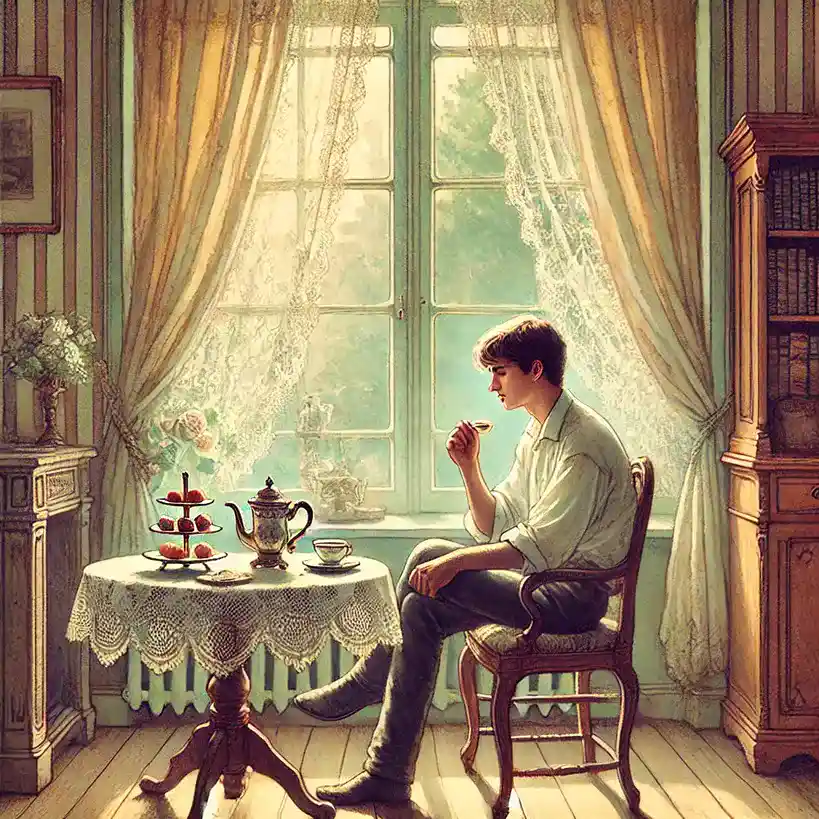
Proust’s writing revolves around the concept of involuntary memory. The most famous example is the madeleine moment in Swann’s Way. When the narrator dips a madeleine cookie into tea, the taste suddenly brings back memories of his childhood.
When I read this passage, I felt the magic of rediscovering forgotten memories. It reminded me of how a song, a smell, or a taste can transport us back in time. Proust captures this experience perfectly, showing how small details can unlock entire worlds of emotion.
This technique makes Proust’s writing deeply relatable. We’ve all experienced moments when a simple sensation triggers a flood of memories. Marcel Proust uses this to explore how our past shapes who we are.
Rich Sensory Detail: Painting with Words
Proust doesn’t just tell a story; he makes you experience it. His descriptions are filled with sensory details — the feel of fabric, the scent of flowers, the glow of evening light. These details make his world vivid and alive.
In In Search of Lost Time, Marcel Proust describes rooms, landscapes, and people with such precision that I felt like I was there. I could almost smell the lilacs, see the changing sky, and hear the rustling of silk dresses.
These sensory details ground Proust’s abstract reflections in the physical world. They help readers connect emotionally to his stories. Every description feels like a small painting, rich with color and texture.
Deep Reflection and Philosophical Insight
Proust’s writing is filled with philosophical reflections. He explores themes like love, jealousy, time, and the nature of art. His characters don’t just experience life; they think deeply about it.
When I read In Search of Lost Time, I felt like I was having a conversation with Marcel Proust himself. His reflections on human nature made me pause and think. He doesn’t offer simple answers. Instead, he invites readers to explore these questions with him.
These reflections add depth to Proust’s stories. They transform simple events into meaningful experiences. His insights make his work not just a novel, but a guide to understanding life.
Stream of Consciousness and complex Characters
Marcel Proust uses a technique called stream of consciousness. This means he writes thoughts as they naturally occur, without a strict structure. His prose flows from one idea to another, just like our minds do. Sometimes, I felt like I was inside the narrator’s head, listening to his unfiltered thoughts. This technique makes the writing feel personal and intimate.
Stream of consciousness helps Marcel Proust capture the complexity of human thought. It allows him to show how memories, emotions, and ideas are connected. This technique makes his writing feel real and honest.
Proust’s characters are layered, flawed, and deeply human. They experience love, jealousy, desire, and regret. They reflect on their emotions, trying to understand themselves.
In Swann’s Way, Charles Swann’s obsession with Odette feels painfully real. His jealousy and doubt reminded me of how complicated love can be. Proust doesn’t judge his characters; he presents them honestly. Proust’s characters feel real because they reflect the complexity of human emotions. Their struggles are universal, making it easy to connect with them.
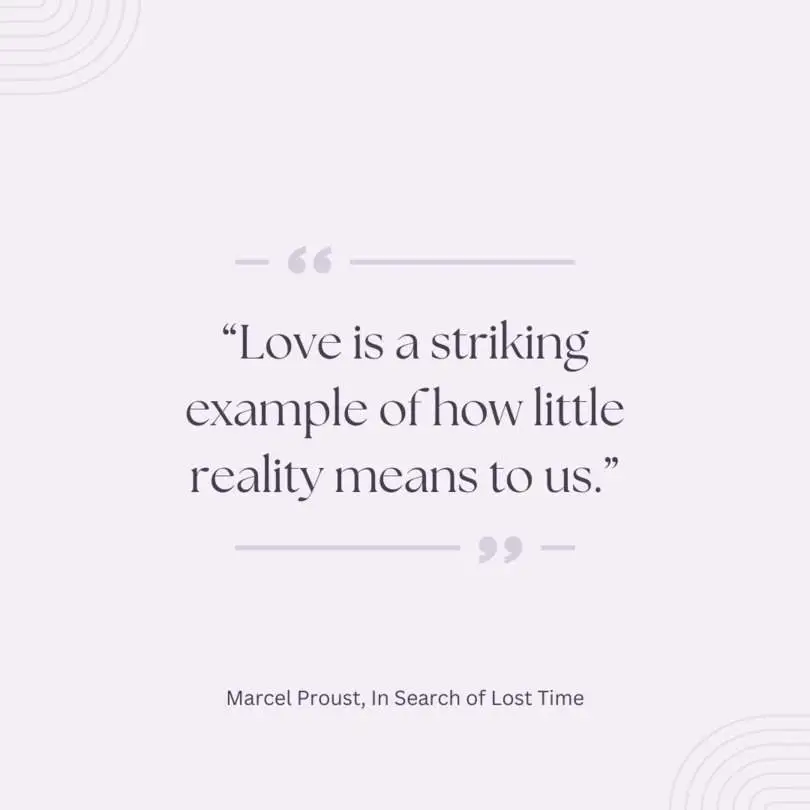
Famous quotes from Marcel Proust
- “The real voyage of discovery consists not in seeking new landscapes, but in having new eyes.”
- “Let us be grateful to people who make us happy, they are the charming gardeners who make our souls blossom.”
- “Happiness is beneficial for the body, but it is grief that develops the powers of the mind.”
- “We don’t receive wisdom; we must discover it for ourselves after a journey that no one can take for us or spare us.”
- “Remembrance of things past is not necessarily the remembrance of things as they were.”
- “The real act of discovery consists not in finding new lands but in seeing with new eyes.”
- “The only true voyage of discovery, the only fountain of Eternal Youth, would be not to visit strange lands but to possess other eyes, to behold the universe through the eyes of another, of a hundred others, to behold the hundred universes that each of them beholds, that each of them is.”
Trivia facts about Marcel Proust
- He funded the publication of his first volume: After rejections from several publishers, he paid for the printing of Swann’s Way himself through Grasset in 1913.
- The Original Title of “In Search of Lost Time”: His monumental novel “In Search of Lost Time” was originally titled “À la recherche du temps perdu”. But he also considered other titles. Including “Les Intermittences du cœur” (The Fickleness of the Heart) and “Le Monde réel” (The Real World).
- Reclusive Lifestyle: Marcel Proust was known for his reclusive lifestyle and often worked from his bed, surrounded by cork-lined walls to minimize noise and distractions. He rarely left his apartment in Paris, preferring to immerse himself in his writing and research.
- Long Sentences: Marcel Proust was famous for his long, convoluted sentences, some of which spanned several pages. His intricate prose style and labyrinthine syntax challenged readers and translators alike. Contributing to the unique texture and rhythm of his writing.
- Unfinished Magnum Opus: Despite its monumental length and scope, “In Search of Lost Time” remains unfinished. With his passing away before he could complete the final volume. His devoted friend and editor, Jacques Rivière, posthumously edited and published the final volumes based on Proust’s notes and manuscripts.
- Influence on Modern Literature: Marcel Proust’s innovative narrative techniques, psychological depth, and exploration of memory and consciousness have had a profound influence on modern literature. Writers such as Virginia Woolf, James Joyce, and Samuel Beckett admired Proust’s work. And drew inspiration from his experimental approach to storytelling.
A Journey Worth Every Page
Reading Marcel Proust is like slipping into a slow dream where every detail matters. His writing doesn’t just tell stories — it reveals how time shapes us, how memory haunts us, and how emotions never really leave. He takes what seems fleeting and gives it weight. He turns forgotten moments into entire worlds.
What struck me most is how personal his work feels. Not because it’s easy, but because it demands something real from the reader — patience, attention, reflection. And once you give in, Marcel Proust rewards you with beauty you won’t forget. A madeleine dipped in tea becomes a portal. A passing feeling becomes an entire universe.
Proust wrote from isolation, but his voice reaches far. He gave literature a new rhythm — one that moves with thought instead of plot. That’s why modern writers still echo his style, still chase his depth. And that’s why readers keep returning. His work feels endless because it’s about what never ends: time, love, loss, self.
Even today, In Search of Lost Time isn’t just a book — it’s an experience. It’s a reminder that the small things are often the most profound. And it proves that introspection, when done with care, can connect us all.
So if you’re ready to look inward, to walk slowly, and to truly feel the weight of your own memories, let Marcel Proust be your guide. His words may take time — but they give it back in full.
Reviews of Works by Marcel Proust
Swann’s Way by Proust: Memory and the Search for Lost Time Reading Swann’s Way is…
In Search of Lost Time by Marcel Proust – A Literary Odyssey My Thoughts on…