Mario Vargas Llosa: start with power, city, memory
Mario Vargas Llosa writes cities that sweat and institutions that creak. I start here because the scale feels civic while the scenes stay human. Power in everyday life is the constant: barracks, classrooms, cafés, newsrooms. You meet people under pressure and watch how choices tilt their days. Curiosity is the right mood for page one. No jargon, just clarity will guide this article as we map life, themes, style, and a reading path that respects your time.
You do not need a specialist’s toolkit. A lean entry novel lets you hear the voice without fatigue. Then a bigger book shows how politics, desire, and memory share one stage. A simple path to the books is what you will get, with English titles throughout these chapters so nothing blocks the flow. We will show where the writer stands among peers from Latin America’s Boom and after, and how those debates shaped form.
Style matters because the architecture carries meaning. I will point to braided timelines, multiple points of view, and dialogue that snaps like street talk. Read to feel, then to see becomes our method: feel the pace first, then notice the technique that makes the pace possible. By the end, you should be ready to start with one short, strong pick, step into a landmark, and save a deep cut for a long weekend. Books you can enter tonight is the promise—city lights, sharp voices, and problems worth thinking about.
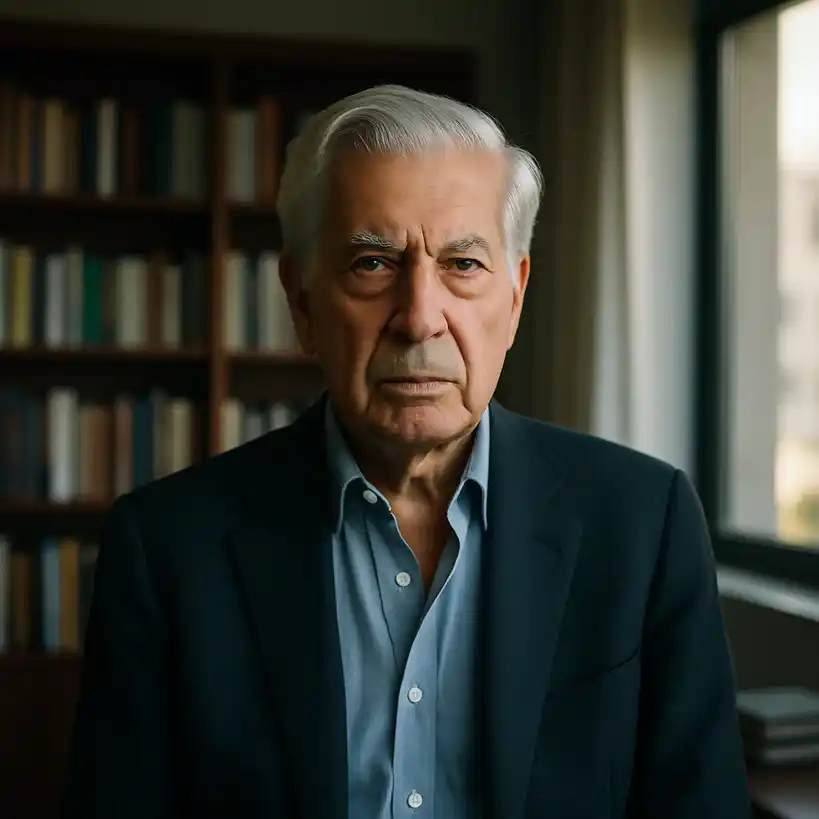
Profile of Mario Vargas Llosa – Life and Works
- Full Name and Pseudonyms: Jorge Mario Pedro Vargas Llosa; wrote as Mario Vargas Llosa.
- Birth and Death: 28 March 1936, Arequipa, Peru; lives in the 21st century (public figure and writer).
- Nationality: Peruvian (later also Spanish citizenship).
- Father and Mother: Ernesto Vargas Maldonado; Dora Llosa Ureta.
- Wife or Husband: Julia Urquidi (m. 1955); Patricia Llosa (m. 1965).
- Children: Three: Álvaro, Gonzalo, Morgana (with Patricia Llosa).
- Literary Movement: Latin American Boom; post-Boom public intellectual.
- Writing Style: Counterpoint narration, braided timelines, polyphony, sharp dialogue; experiment that stays clear.
- Influences: Gustave Flaubert, William Faulkner, Victor Hugo, Honoré de Balzac, André Gide.
- Awards and Recognitions: Nobel Prize in Literature (2010); Miguel de Cervantes Prize; Prince of Asturias Award.
- Adaptations of Their Work: Captain Pantoja and the Special Service; The Feast of the Goat; Aunt Julia and the Scriptwriter (basis for Tune in Tomorrow).
- Controversies or Challenges: Political quarrels; censorship and bans; high-profile campaign for Peru’s presidency (1990).
- Career Outside Writing: Journalist, columnist, professor; candidate for president; cultural commentator.
- Recommended Reading Order:
1. The Time of the Hero
2. The Green House
3. Conversation in the Cathedral
4. Aunt Julia and the Scriptwriter
Arequipa, absences, and a military school notebook
Arequipa, 1936, sets the record; separation sets the mood. Spanish-speaking writer Mario Vargas Llosa was born into a family that soon split, and the child moved with his mother to relatives in Bolivia, then back to Peru. Early years in motion left a habit of watching rooms closely. A father returned later with rules and resistance to literary dreams. That tension—authority against imagination—became a lifelong argument inside the fiction.
Schooling tracked this pressure. Catholic classrooms taught discipline and rhetoric. Then came the Leoncio Prado Military Academy in Lima. A school that forged a style gave him barracks slang, hierarchy, and the feel of group power. Scenes from that period later surfaced as hard evidence in a first major novel. Reading deepened fast. European nineteenth-century fiction sat beside local newspapers and modern poetry, giving the student a double lens: big structure and daily noise.
University opened the world wider. San Marcos in Lima offered law and literature, cafés and protests, mentors and magazines. Learning by publishing turned into the best education; early stories met readers and argued for a future on the page. A scholarship carried him to Madrid for graduate work, then doors to Paris followed, but the essential toolkit was already forming: social critique, narrative experiment, and an ear for public speech.
The writer learned to chart desire and authority in the same paragraph. Streets taught pace. Classrooms taught debate. Barracks taught how power moves through bodies and rooms. Foundations for the city novel were set before the first big book arrived.
Manuscripts, cafés, and a city that keeps talking
Mario Vargas Llosa found his stride between newsroom shifts and late-night drafts. Paris, then London and Barcelona, turned study into stamina. Boom years, hard work is the honest label. The novelist kept chasing how power moves through streets and rooms, and the pages answered with pace.
A first wave of major novels set the pattern. The Time of the Hero shook Peru by exposing military-school cruelty with unsentimental detail. The Green House braided timelines and voices until a whole city felt audible. Conversation in the Cathedral asked one urgent question—“At what precise moment had Peru fucked itself up?”—and built a labyrinth of memory to answer it. Form as pressure became the craft rule: jump-cuts, overlapping dialogue, and long scenes that refuse easy exits.
Peers sharpened the edge. The Latin American Boom was less a club than a daily dare. Julio Cortázar’s play with time and Carlos Fuentes’s civic panoramas pressed the Peruvian to risk structure without losing clarity. Journalism and essays kept the sentences honest. Discipline over glamour guided the routine; mornings belonged to the novel, afternoons to reading and the wider world.
Not everything was ascent. Public fights, bans, and ideological quarrels left bruises. The writer answered by doubling down on clarity about institutions and desire. Cities as moral arenas stayed central: barracks, bars, ministries, bedrooms. If you want a neighboring route through power and pleasure that keeps the human scale, try 👉 Dona Flor and Her Two Husbands by Jorge Amado. The comparison reminds us that the big questions live in kitchens, not just in congresses.
Campaigns, returns, and late light on old problems
Politics stepped from page to plaza. Mario Vargas Llosa ran for Peru’s presidency in 1990, and the campaign’s heat clarified long-held ideas about liberty, institutions, and culture. A writer in the square is not a costume here; the novels had foreshadowed it. After the loss came movement again—Madrid, Lima, festival stages—and a new run of books that read like verdicts softened by sympathy.
The range stayed broad. The War of the End of the World looked back to a doomed uprising and weighed faith against authority. Aunt Julia and the Scriptwriter turned mischief into an argument about storytelling and reality. The Feast of the Goat drilled into dictatorship with a reporter’s patience and a dramatist’s timing. Late novels, clear stakes is the rhythm: institutions under the lamp, private lives under pressure.
Recognition gathered. Awards stacked up, and in 2010 the Nobel Prize fixed his place in the global canon. Honors, then more work—the cadence never changed. New titles kept arriving: The Bad Girl on obsession across borders; The Discreet Hero on money, pride, and quiet courage; Harsh Times revisiting political fracture with cold light. Essays and columns kept the civic argument active.
I hear a mellowing without softness. Sentences remain direct; experiments serve clarity. Freedom with responsibilities has become the through-line, whether the scene sits in a newsroom or a bedroom. When you want a different angle on love, labor, and heat under law, read 👉 Gabriela, Clove and Cinnamon by Jorge Amado and watch how a city’s gossip becomes moral weather.
Maps, rivalries, and the questions his books won’t stop asking
I place Mario Vargas Llosa inside a moving conversation we call the Boom, but I hear him arguing more with institutions than with fashions. The Boom as daily dare is the frame: Cortázar loosens time, Fuentes widens civic space, García Márquez bends the real, Donoso darkens the house. Vargas Llosa answers with experiment that serves clarity. He keeps plot tight, rooms specific, and dialogue alive with street air. Experiment that stays clear becomes a craft ethic rather than a slogan.
Peers sharpened that ethic. Julio Cortázar’s play made risk feel necessary; Carlos Fuentes’s panoramas showed how a nation fits in one book; José Donoso’s nightmares warned what secrecy does to families. The Peruvian absorbed these pressures, then built his own engine: overlapping voices, braided timelines, and scenes that refuse easy exits. City as moral engine is the abiding setting—barracks, bars, ministries, newsrooms, bedrooms—each a pressure chamber for choice.
Themes recur with new masks. Power, desire, truth collide in public and private rooms. Uniforms and gossip move plot as surely as laws. Corruption is not a twist; it’s the weather characters breathe. Violence creeps in as institutional habit more than spectacle. Freedom, when it appears, arrives with cost and responsibility. Memory, finally, is not nostalgia; it is an argument the present must win or lose.
This context helps new readers pick a door. If you want politics entwined with intimacy, choose a city novel. If you want history turned into pulse, pick a rebellion book and if you want play that still lands hard, open a meta-fiction of radio scripts and love. However you enter, you’ll meet a narrator testing how people live under pressure—and whether truth can survive the rooms that try to crush it.
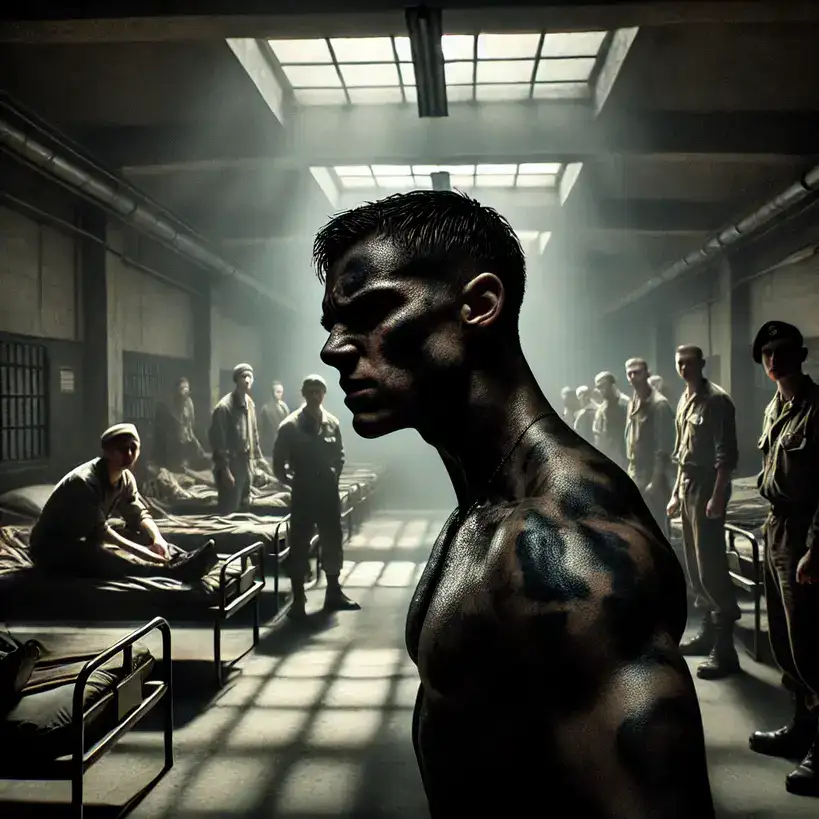
Famous Works by Mario Vargas Llosa in Chronological Order
- 1963 — La ciudad y los perros (The Time of the Hero / The City and the Dogs); novel. Military-school cruelty and group power examined with unsentimental precision.
- 1966 — La Casa Verde (The Green House); novel. Braided timelines and multiple voices turn a desert city into a living chorus.
- 1969 — Conversación en La Catedral (Conversation in the Cathedral); novel. A labyrinth of memory asks how a country unraveled, scene by scene.
- 1973 — Pantaleón y las visitadoras (Captain Pantoja and the Special Service); novel. Bureaucracy meets desire in a satire of military logic.
- 1977 — La tía Julia y el escribidor (Aunt Julia and the Scriptwriter); novel. Love story and radio melodrama entwine to question fiction and reality.
- 1981 — La Guerra del fin del mundo (The War of the End of the World); historical novel. A doomed rebellion tests faith, authority, and rumor.
- 1984 — Historia de Mayta (The Real Life of Alejandro Mayta); novel. A political investigation blurs witness, memory, and invention.
- 1986 — ¿Quién mató a Palomino Molero? (Who Killed Palomino Molero?); short novel/detective. A case that exposes class, uniform, and impunity.
- 1988 — Elogio de la madrastra (In Praise of the Stepmother); novel. Erotic provocation used to probe moral pose and private truth.
- 1993 — Lituma en los Andes (Death in the Andes); novel. Andean landscapes turn fear and folklore into political dread.
- 2000 — La fiesta del chivo (The Feast of the Goat); novel. Dictatorship dissected with a reporter’s patience and a dramatist’s timing.
- 2006 — Travesuras de la niña mala (The Bad Girl); novel. Obsession and mobility traced across decades and cities.
- 2019 — Tiempos recios (Harsh Times); novel. Cold-war intrigues and coups rendered as intimate, consequential choices.
What taught him to build a city on the page
Mario Vargas Llosa learned by testing structure against pressure. I hear him taking courage from nineteenth-century scope, then threading it through modern montage. Experiment that stays clear became a lifelong ethic.
- Gustave Flaubert — sentence discipline, impersonal gaze: Madame Bovary (1857) showed how exact syntax and cool distance turn private desire into public consequence. Vargas Llosa’s essays on Flaubert read like a craftsman’s apprenticeship in clarity.
- William Faulkner — braided time, many minds: The Sound and the Fury (1929) proved that overlapping perspectives can reveal a family and a region without collapsing into fog. For a companion doorway, see 👉 The Sound and the Fury by William Faulkner.
- Victor Hugo — civic scale with human rooms: Les Misérables (1862) taught how institutions, streets, and law can live beside kitchens and love. Vargas Llosa updates that reach for twentieth-century Peru. Try 👉 Les Miserables by Victor Hugo to feel the wide frame.
- Honoré de Balzac — systems and money: La Comédie humaine diagnosed how class, credit, and rumor steer fate. You can hear the echo any time a colonel, clerk, or fixer bends a scene.
- André Gide — polyphony and self-examination: The Counterfeiters (1925) modeled a novel that watches itself making fiction. Vargas Llosa adapts that reflex into radio scripts, interviews, and dossiers without losing momentum. 👉 The Counterfeiters by Andre Gide is a good map to that move.
- Jorge Amado — pleasure and power in the same breath: Bahian streets in Gabriela, Clove and Cinnamon (1958) showed how gossip, bodies, and commerce make law feel local; the lesson travels to Lima.
Across these sources, the Peruvian writer kept one rule: form must serve truth. When a chapter jumps in time or a conversation overlaps, the trick exists to make power visible, not to show off.
Aftershocks: who writes differently because he did
His novels taught younger writers how to make institutions feel intimate. I keep seeing three gifts travel forward: montage that stays legible, dialogue with street air, and plots that treat memory like evidence. City as moral engine is the shared inheritance.
- Juan Gabriel Vásquez — history with investigative pulse: In The Sound of Things Falling (2011), personal trauma and national fracture braid through interviews and rumor. The cool camera and civic stakes feel Vargas-Llosa-adjacent while staying distinctly Colombian.
- Javier Cercas — testimony as narrative drive: Soldiers of Salamis (2001) turns interviews and archives into story. Polyphony, doubt, and civic argument move the plot rather than decorate it.
- Santiago Roncagliolo — crime that indicts institutions: Red April (2006) uses a case file to expose power, class, and fear in Ayacucho. Clear scenes and moral pressure echo the Peruvian master’s toolbox.
- Alonso Cueto — intimate choices under public weather: The Blue Hour (2005) puts family truth against national violence; restraint on the line, heat in the rooms.
- Claudia Piñeiro — corruption at eye level: Thursday Night Widows (2005) traces money and secrecy through a gated community. Institutions shrink to rooms, and choices tell on themselves.
The cube turns: voices, angles, and ticking time
Mario Vargas Llosa builds scenes like a glass cube you can walk around. I use that image because chapters often braid several strands at once—present talk, remembered shock, and a clue dropped two pages earlier. Counterpoint as engine keeps tension rising without cheap twists. In The Green House, the cuts feel musical; in Conversation in the Cathedral, long dialogues spool out while time quietly shifts beneath your feet.
Point of view changes with intent. A chapter might begin in tight third person, slide into interior monologue, then widen to a cool, panoramic glance at the city. Distance as a tool lets the novelist grant dignity to private worry and still map how institutions press on bodies. You hear the room—fans, glasses, radio hiss—while the plot inches forward.
Time behaves like a net, not a line. Scenes recur from new angles until the reader owns the pattern. Reprises, not repeats describe this rhythm: the same night returns, a different witness speaks, the motive sharpens. Suspense builds from recognition—now we understand why the insult stung, why the door mattered, why the rumor stuck.
Dialogue carries street air. Voices overlap, interrupt, and mislead. Talk that does work means every exchange moves motive or status. A barked order shaves a rank; a whispered joke restores it. I read these pages with a pencil because the architecture rewards attention. You can feel the scaffolding, yet the story never stalls to point it out.
Clean lines, hot rooms: sentences, images, tone
Prose moves with reporter clarity and dramatist timing. Short main clauses carry weight; modifiers earn their keep. Syntax built for pace lets scenes switch from bedroom to barracks without whiplash. Lists surface when institutions matter—ranks, files, forms—so power reads like a texture, not an abstraction.
Images stay urban and tactile. Rooms with pressure define the novels: a cheap bar’s sweat, a ministry’s polished door, a courtyard with the light wrong for the hour. Nature appears, but cities dominate, and even beaches feel argued over by gossip and money. Motifs repeat without announcing themselves. A uniform thread on a sleeve, a scuff on a shoe, a cheap cologne—they return to mark shame, pride, or fear.
Tone balances irony with compassion. Cool gaze, warm core might be the rule. The narrator refuses melodrama, yet the writing is not cynical. Characters make bad bargains; the sentences let them live through the cost. Humor arrives through situation—radio soap plots colliding with real love in Aunt Julia and the Scriptwriter—or through a bureaucratic memo phrased just wrong.
Sex and violence appear without euphemism. Direct, not lurid governs the line. The page names what happens and then shows consequence, often social, sometimes legal, always human. Diction keeps faith with speech patterns; slang and status markers signal who can afford mistakes and who cannot. Translators who honor this register help English readers hear the city as it is.
How the world argued—and kept reading
Early critics in Peru met The Time of the Hero with outrage and fascination. A military academy felt exposed, and the young novelist’s cool tone made the charge sting. Outside Peru, reviewers praised the clarity and the nerve. As the Boom years rolled, The Green House and Conversation in the Cathedral drew attention for structure as much as theme—montage, overlapping voices, and time shifts that still landed cleanly. Readers who wanted straight lines complained; others heard a city speak through many mouths.
Reputation widened with range. Comic provocation in Aunt Julia and the Scriptwriter showed that play and critique could share a chapter. Historical sweep in The War of the End of the World confirmed that civic questions travel across centuries. Later, The Feast of the Goat brought a stark, accessible lens on dictatorship that pushed the writer into more classrooms and book clubs. Clarity before flourish became the calling card even for skeptics of his politics.
If you want one shelf to start, pair a broad selected novels set with essays that reveal method. His memoir A Fish in the Water helps decode the line between page and plaza. Craft readers should add The Perpetual Orgy: Flaubert and “Madame Bovary” to see how sentence discipline becomes an ethic. Biographical context from reliable profiles and long interviews rounds out the picture; then the novels do the lasting work.
Practical tip for newcomers: read with a pencil. Mark switches in time, track who speaks in crowded scenes, and notice how a small object—a badge, a bar tab, a pressed uniform—quietly carries the argument. Do that, and you’ll feel why these books keep returning whenever cities and institutions ask to be understood.
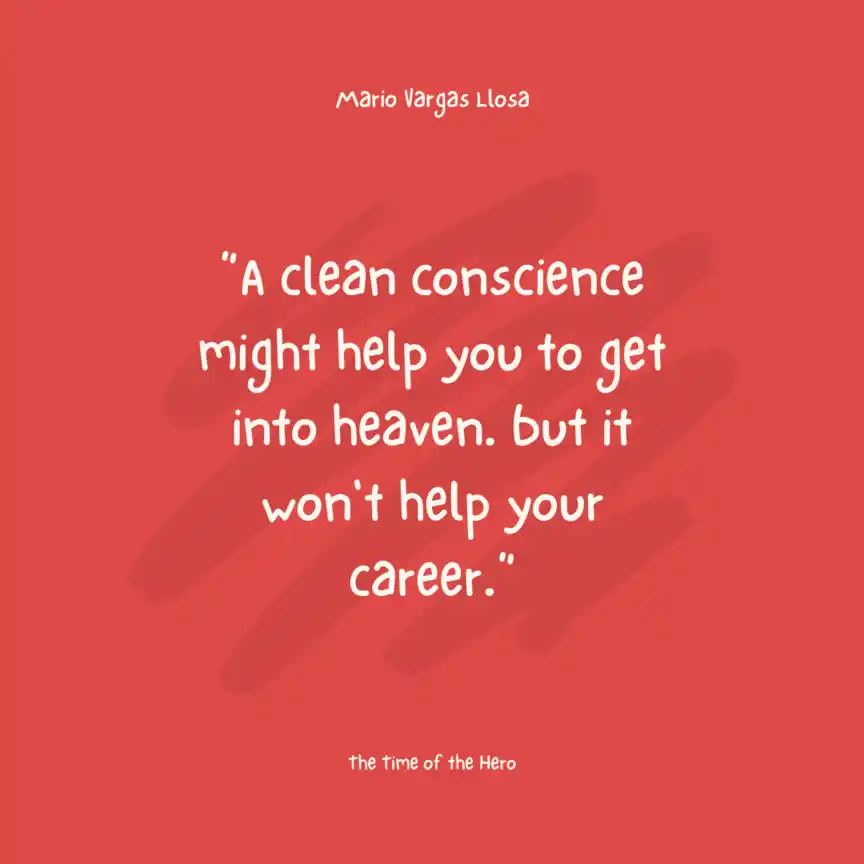
Sentences that still spark – Famous Quotes by Mario Vargas Llosa
- “At what precise moment had Peru fucked itself up?” A country’s crisis distilled to one scalpel question; the novel unspools answers in memory and talk.
- “Like writing, reading is a protest against the insufficiencies of life.” The line that sums up his Nobel lecture’s ethic of freedom and imagination.
- “Fiction is a lie that tells the truth.” A craft credo: invention becomes a path to realities we can’t face head-on.
- “We invent fictions in order to live somehow the many lives we would like to lead when we barely have one at our disposal.” Art enlarges experience without denying limits
- “The truths that seem most truthful… turn out to be either half truths or lies.” Skepticism as a reader’s duty and a novelist’s tool.
- “When I was young… we were totally convinced that literature was a kind of weapon.” Passion reins in later to become clarity and civic argument.
- “I think that literature has the important effect of creating free, independent, critical citizens who cannot be manipulated.” Freedom as literature’s real horizon.
- “Without fictions we would be less aware of the importance of freedom.” A reminder that imagination trains the civic nerve.
Small doors into a very large career – Trivia Facts about Mario Vargas Llosa
- Nobel phrased with precision: The Swedish Academy cited Mario Vargas Llosa in 2010 “for his cartography of structures of power and his trenchant images of the individual’s resistance, revolt, and defeat.”
- Papers at Princeton: Drafts, typescripts, and correspondence spanning decades are housed at Princeton University Library; scholars use the archive to trace composition and revision. 🌐 Princeton University Library notes the scope and dates.
- A novel vs. a barracks: The Time of the Hero drew fierce pushback from Leoncio Prado Military Academy; the controversy helped the young writer’s name travel.
- A campaign in the square: In 1990, he led a liberal coalition for Peru’s presidency; Alberto Fujimori won the runoff, and the novelist returned to full-time writing.
- An essayist of craft: The Truth of Lies collects arguments about how fiction “lies” to reach reality; the stance shapes later novels and interviews.
- Peer routes to the Boom: If you want the era’s game-changer in form, try 👉 Hopscotch by Julio Cortázar. For a civic panorama with ruthless clarity, read 👉 The Death of Artemio Cruz by Carlos Fuentes.
- From radio scripts to satire: Aunt Julia and the Scriptwriter turns pulp melodrama into narrative engine; the book’s playfulness masks a serious argument about storytelling.
- Late focus, steady heat: The Feast of the Goat brought a wider general audience to his political themes, pairing reporter patience with novelistic empathy.
What to hold, and where to start tonight
Mario Vargas Llosa shows how power, city, memory share one stage. I return for the cool gaze and the warm core: institutions named clearly, people given room to choose, and sentences that move like syntax built for pace. Scenes feel walked-through—bars, barracks, ministries—so ethical pressure arrives as lived detail, not lecture.
A quick plan helps. Begin with a short, strong entry: Aunt Julia and the Scriptwriter balances play with purpose and lets you hear the dialogue snap. Step into the early landmark: The Time of the Hero tests uniforms, loyalty, and cruelty without melodrama. Go big on the city-as-labyrinth: Conversation in the Cathedral rewards a pencil in the margin—track voices, mark time jumps, watch how a single question powers a book. Add historical reach: The War of the End of the World turns rebellion into a human map.
Reading tips that pay off: underline small objects (a badge, an invoice, a shoe scuff)—they often carry status or guilt. Note who speaks and who stays silent in crowded scenes; silence is a move.
Close the loop by sampling essays—A Fish in the Water for life and politics, The Truth of Lies for craft—and then re-enter the novels. If a book feels dense, shift pace: one chapter in the morning, one at night. Read to feel, then to see; the structures will reveal themselves, and the streets will start talking back.
Reviews of Works by Vargas Llosa
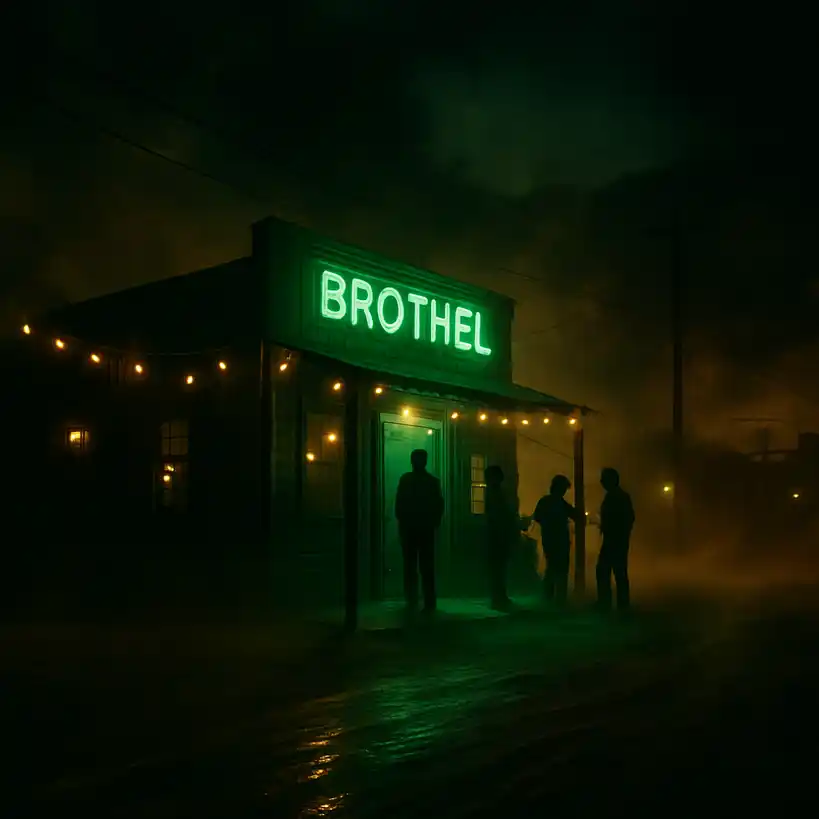
The Green House by Vargas Llosa – lives broken by the jungle Heat presses on Piura. Consequently, The Green House…
The Time of the Hero by Vargas Llosa – Illusions of Discipline The Time of the Hero by Mario Vargas…