What Burmese Days Tells Us About Power, Race, and Decay
Reading Burmese Days felt like entering a crumbling house — one where every room reveals new signs of rot. George Orwell doesn’t just tell a story; he exposes the slow internal decay of a system built on racism, power, and delusion. From the first chapter, I sensed a deep tension between the characters’ outer confidence and their inner emptiness. The British Empire may appear strong, but the author makes it painfully clear: it’s already dying from within.
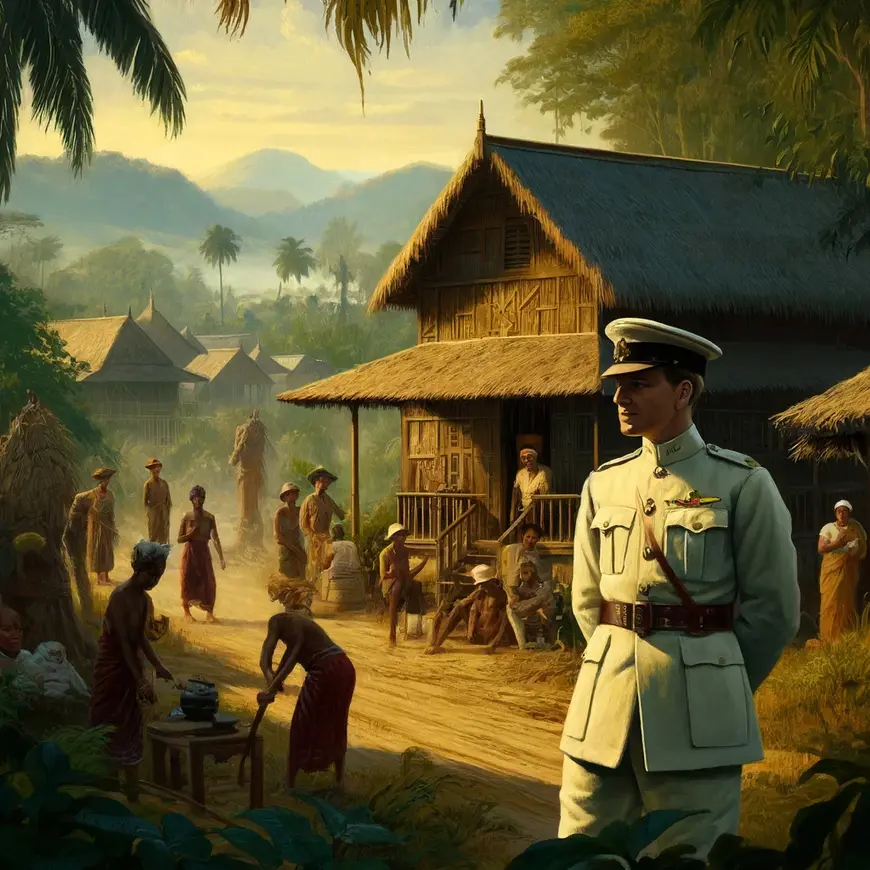
The novel unfolds in colonial Burma during the 1920s, and everything — from the weather to the social order — feels suffocating. His prose is dry and piercing. He describes heat, boredom, and bureaucracy with such precision that I could almost feel the sticky air. But what struck me more was the sense of emotional isolation. Every character, regardless of their race or rank, seems deeply lonely. And that loneliness is not just personal — it’s structural.
Flory, the protagonist, is a British timber merchant. He’s disillusioned with imperial rule but lacks the strength to resist it. I found his moral paralysis both tragic and familiar. He’s not heroic. He’s not admirable. But he is terrifyingly believable. His complicity, his cowardice — they’re symptoms of a larger disease. One that he dissects not with anger, but with cold, devastating clarity.
Burmese Days and the Crisis of Identity
In Burmese Days, the writer presents a society obsessed with boundaries — racial, social, political — and then shows how those boundaries destroy everyone. The colonial club in Kyauktada becomes a symbol of this world: closed to natives, open only to men who conform, it stands for exclusion disguised as civilization. And yet inside, there is no grace. Only petty jealousy, cruelty, and fear.
Flory doesn’t belong. He speaks the local language, sympathizes with Burmese culture, and questions British arrogance. But this empathy isolates him even more. He is caught between two identities and accepted by neither. His friendship with the native doctor, Veraswami, and his love for Elizabeth are attempts to escape the crushing loneliness of imperial life. But both relationships are built on illusion. I watched Flory try to connect, and I felt the inevitability of his failure.
The club members are not villains in the theatrical sense — they are ordinary racists, driven by habit, comfort, and fear of change. He doesn’t exaggerate them. He lets their words speak for themselves. It reminded me of 👉 Royal Highness by Thomas Mann, where class and tradition operate as silent tyrants, stifling personal freedom.
In this chapter, George Orwell shows how colonialism isn’t just a system of domination — it’s a factory for identity crisis. The colonizers lose touch with reality. The colonized are silenced. And in between lies a bleak middle ground where people like Flory try — and fail — to live with both conscience and cowardice.
Women, Weakness, and the Colonial Gaze
One of the most painful threads in Burmese Days is the story of Elizabeth Lackersteen. She arrives in Burma hoping for a husband and a future, only to find a world of heat, judgment, and cruelty. The novelist presents her not as a romantic heroine, but as a woman trained to survive through conformity. She is drawn to Flory’s attention, but repelled by his flaws. She longs for safety, not love — and in that, he makes her tragedy quiet, but powerful.
Elizabeth’s refusal to accept Flory’s complexity is not shallow; it’s tactical. She sees what the world will allow her to be, and she adapts. But her choices still lead to misery. George Orwell doesn’t absolve her, yet he doesn’t condemn her either. Like Flory, she is shaped by a brutal system that discourages sincerity. Their relationship becomes a stage for miscommunication, self-protection, and deep misunderstanding.
What struck me most was how he shows desire itself being colonized. Flory wants connection but fears exposure. Elizabeth wants stability but fears emotion. The result is a romance where neither person is truly seen — only imagined. It’s a devastating portrayal of what happens when people must perform roles instead of living truthfully. And even worse, when those roles are determined by empire, gender, and race.
Corruption as Daily Routine
In Burmese Days, corruption isn’t shocking — it’s routine. Everything from local elections to business deals operates on bribes, alliances, and rumor. The philosopher doesn’t present this as a uniquely Burmese problem. In fact, he’s far more critical of the British, who hide behind legality while manipulating every situation for personal gain. The empire, he suggests, functions not through justice but through disguised exploitation.
U Po Kyin, the local magistrate, is one of the most brilliantly written characters in the novel. Obese, cunning, and self-assured, he plans to ruin Dr. Veraswami’s reputation just to secure membership in the European Club. His schemes are absurd — and terrifyingly effective. The author shows how power doesn’t need morality; it only needs leverage. And U Po Kyin has plenty of that.
I was reminded of 👉 Blindness by José Saramago. In both novels, systems break down, and human nature is revealed — not in moments of crisis, but in the routines people build around injustice. His vision is not apocalyptic, but relentlessly mundane. Everyone participates in corruption not because they are evil, but because they are afraid, or bored, or ambitious.
And that, I think, is his sharpest insight. Empire isn’t sustained by cruelty alone. It survives because people accept small compromises, day after day. In this world, even doing nothing becomes a political act — and often a destructive one.
The Unbearable Silence of Complicity
Flory’s inaction is not just frustrating — it’s revealing. He sees the ugliness around him: the racism, the moral collapse, the casual cruelty. Yet he remains passive. He’s a man who understands but does not intervene. His friendship with Dr. Veraswami offers a glimpse of something better — mutual respect, shared values — but he fails to defend it when it matters most.
That failure haunted me. I wanted Flory to speak up. To reject the club. To stand beside the doctor. But the writer doesn’t give us a redemption arc. Instead, he shows how even the most perceptive people can become spectators in their own downfall. Flory is not cruel. He is weak. And George Orwell treats that weakness as a kind of moral rot — one that grows quietly until it consumes everything.
The moments of potential change are there. Flory is offered chances to act differently, to take risks. But each time, he retreats into silence. And that silence is not neutral. It’s a form of consent. He makes sure we understand: not speaking out is not being innocent. It’s being afraid — and allowing harm to continue.
Systems of Power and the Collapse of the Self
Burmese Days builds to its tragedy with unnerving steadiness. Nothing happens quickly. The lies are small, the betrayals subtle. But by the final chapters, the cost becomes visible. Flory loses not only his position, but also his sense of self. He tries to live between two worlds and ends up exiled from both. His suicide isn’t surprising — it feels inevitable.
His message is clear: the colonial system doesn’t just oppress the ruled; it deforms the rulers too. It isolates, weakens, and corrupts. Flory dies not only because he is rejected, but because he has no framework left to believe in. His failure is personal, but it’s also systemic.
This made me think of 👉 Lenz by Georg Büchner. Both works trace the slow unraveling of a man who cannot align his beliefs with his environment. Both ask how long the human mind can bear contradiction before it breaks. In Burmese Days, that contradiction is between principle and privilege — and the writer shows just how devastating that gap can become.
The club continues. The doctor is denied. The system resets. But the reader sees what the characters do not: that each “normal” decision leads to decay. He leaves us not with hope, but with unflinching recognition.

✒️ Thoughtful Quotes from Burmese Days by George Orwell
- “He was a liar, and he knew it, and he hated himself.” The author captures the self-awareness that often coexists with moral cowardice — a theme central to Flory’s character.
- “The lie that we’re here to civilize them.” This blunt phrase reflects Orwell’s scathing view of the imperial justification — a lie accepted for convenience.
- “Beauty is meaningless until it is shared.” Flory’s yearning for connection reveals both his humanity and his fundamental loneliness.
- “To live in the tropics one must acquire a sort of thick skin.” The novelist uses climate as metaphor for emotional numbness and ethical erosion.
- “In any poor country, to be slightly corrupt is to be honest.” A darkly ironic observation that reflects the normalized moral decay in colonial systems.
- “The European Club stood as a symbol of Empire.” The setting is not just a place — it becomes Orwell’s symbol for exclusivity and illusion.
- “There is only one way to get rid of ghosts, and that is to confess.” Guilt and repression are portrayed not as private feelings, but as collective failures.
- “It is a corrupting thing to live one’s life alone.” Flory’s isolation is not romantic — it is destructive, shaped by the system he cannot escape.
- “They don’t want justice. They want obedience.” George Orwell unpacks colonial motives with chilling simplicity — the empire exists to dominate, not uplift.
📚 Trivia Facts from Burmese Days by George Orwell
- Published in 1934: Burmese Days was his first novel, drawn directly from his five years serving in the Indian Imperial Police in British Burma.
- Written during illness: Much of the novel was drafted while George Orwell was recovering from tuberculosis, adding to its introspective tone.
- Burma renamed Myanmar in 1989: His “Burma” remains a key setting in postcolonial discourse, especially in works like 👉 Wallenstein by Friedrich Schiller that also dissect decaying authority.
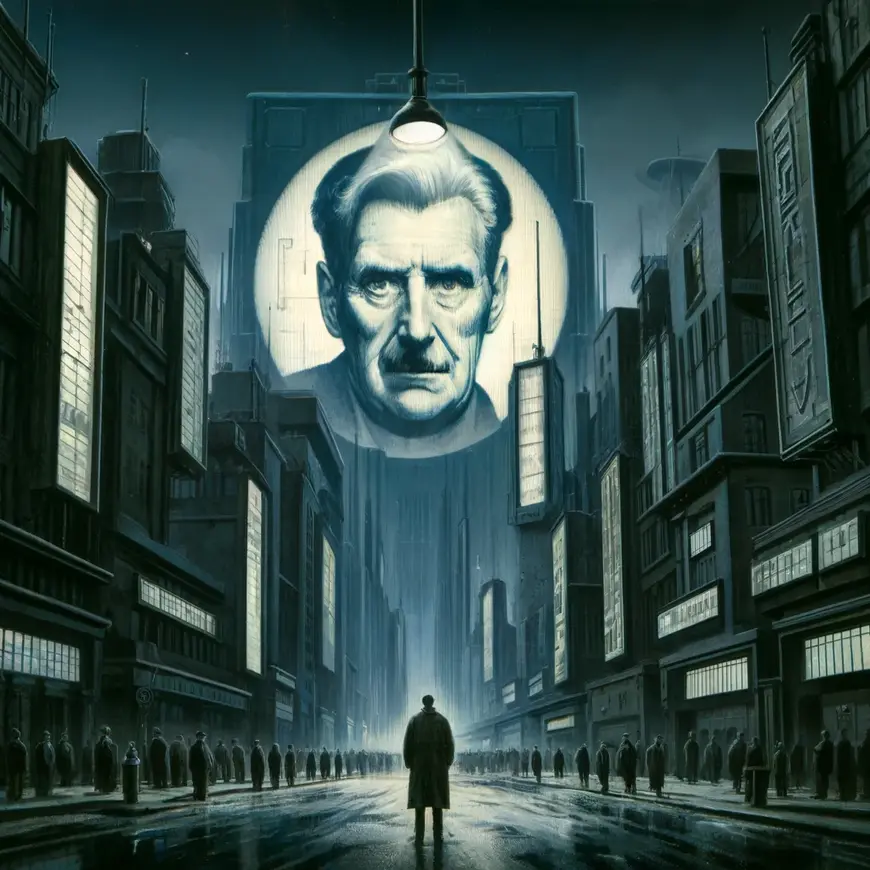
- Foreshadows of later themes: The surveillance, corruption, and psychological control in this early novel echo more famously in 1984.
- Linked to trauma studies: Scholars have compared Flory’s collapse to the mental fragmentation found in 👉 The Sound and the Fury by William Faulkner.
- Echoes in post-war fiction: Themes from Burmese Days also appear in 👉 Humboldt’s Gift by Saul Bellow — another story of moral breakdown under institutional weight.
- Banned in post-independence Myanmar: For years, the novel was not allowed in schools or libraries, viewed as politically sensitive.
- Still taught globally: The novel is part of many university postcolonial literature syllabi, including programs at University of Sussex and SOAS University of London.
Dr. Veraswami and the Illusion of Merit
If Flory represents the crumbling conscience of colonialism, Dr. Veraswami represents its impossible alternative. He is loyal, educated, and pro-British to a fault — yet never accepted as equal. His belief in the civilizing mission is sincere, even touching. But the author makes it painfully clear: good character means nothing in a rigged system. Respectability won’t save you if you’re on the wrong side of the racial line.
Veraswami’s fate is perhaps the most bitter. He does everything “right,” yet he cannot win. He doesn’t romanticize him. The doctor is flawed, sometimes naive, occasionally obsequious. But those flaws make him human — and his rejection more brutal. His story is not about betrayal. It’s about the slow realization that merit has no place in empire.
I kept hoping for some small justice — for his membership to be granted, for his friendship with Flory to be preserved. But George Orwell doesn’t offer illusions. Instead, he shows how dignity is worn down by the daily humiliations of colonial life. What makes Veraswami tragic is not his defeat, but how predictable and quiet it is.
This is what Burmese Days Tells Us
What lingers after finishing Burmese Days is not its ending, but its atmosphere. The novel leaves behind a residue of discomfort — a sense that nothing has changed, and perhaps nothing will. He doesn’t ask us to admire anyone. He asks us to see clearly: colonialism is not just exploitation. It is self-destruction performed in slow motion.
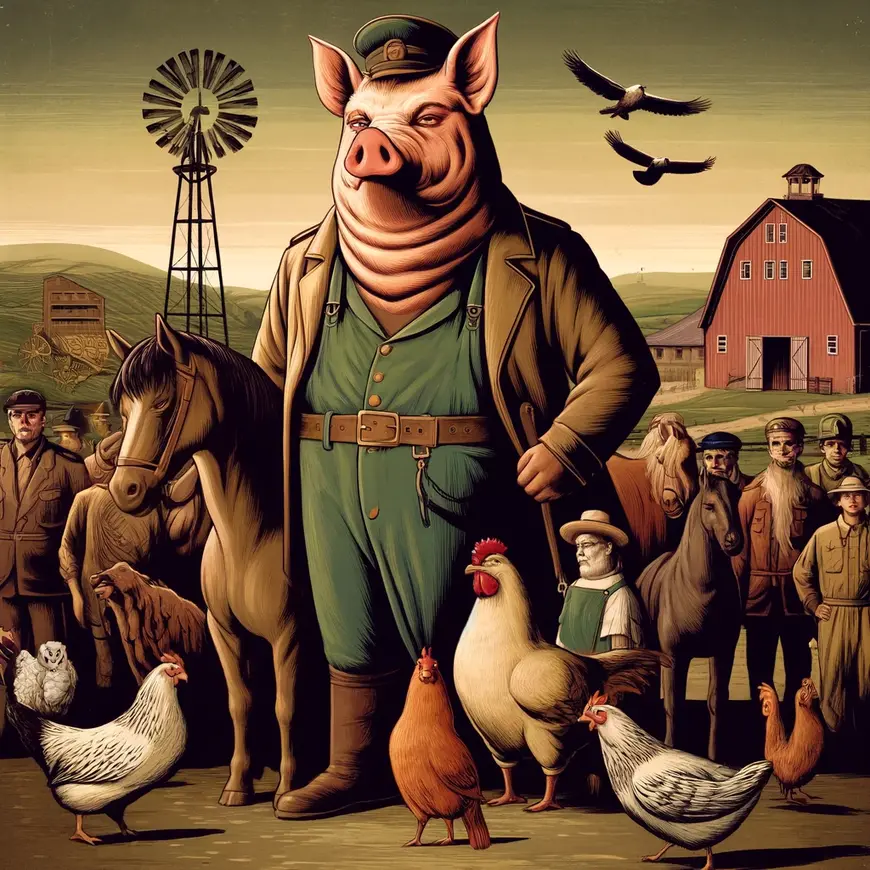
Unlike the political clarity of 1984 or Animal Farm, this novel is psychological. It lives in heat, routine, self-delusion. It shows that empire doesn’t need monsters to survive — just enough silence, enough rules, enough cowardice. And in that, Burmese Days becomes more than a historical novel. It’s a moral one.
It reminded me of 👉 Beloved by Toni Morrison, where the legacy of oppression is not just political but intimate — haunting every relationship, every hope. Orwell’s tone is different, but the insight is similar: systems of power do not vanish cleanly. They stay. They shape the people who serve them and the ones who resist.
Even now, Burmese Days feels urgent. It doesn’t explain colonialism. It exposes it. Quietly, ruthlessly, and with just enough empathy to make us uncomfortable. Which, perhaps, is exactly what the writer wanted.