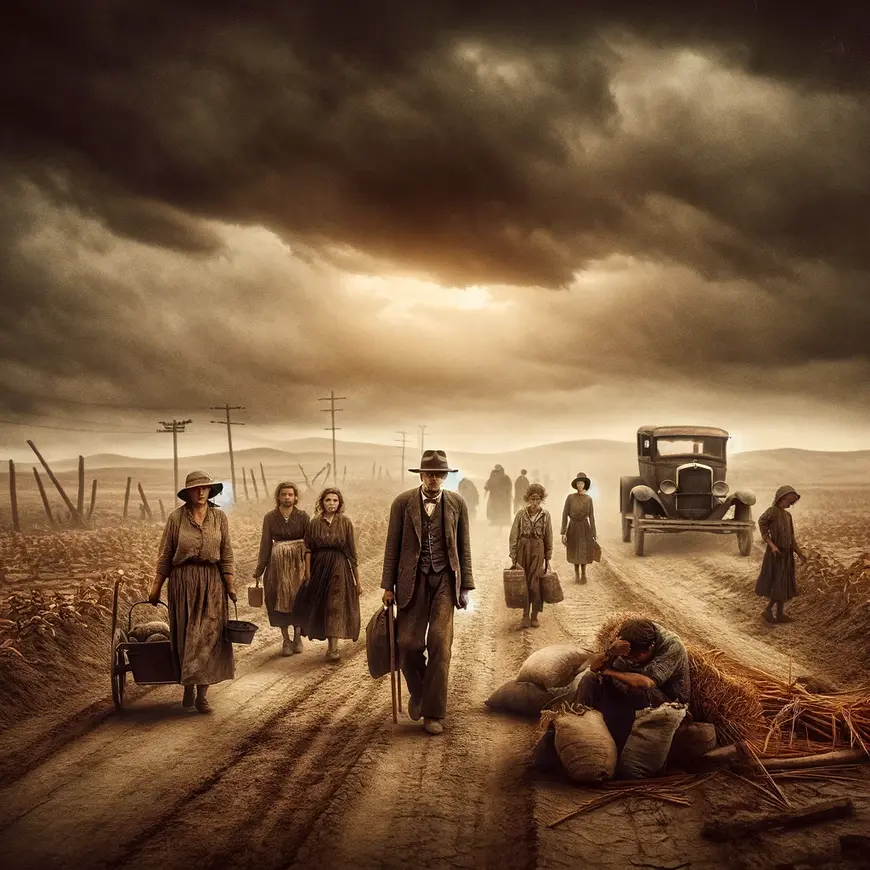
Cannery Row by John Steinbeck – the Brutality of the Margins
When I first read Cannery Row, I didn’t know what to expect. It begins with a description of a sardine factory. A street. A few run-down buildings. But John Steinbeck doesn’t waste time dressing it up. He elevates it through attention, through the kind of prose that sees deeply rather than widely.
This isn’t a novel of grand events. There is no sweeping romance or violent climax. But there is atmosphere. There’s a strange harmony between decay and beauty, a tenderness that rises out of the wreckage. He gives dignity to lives others would pass by. And not by sugarcoating them, by looking directly at them.
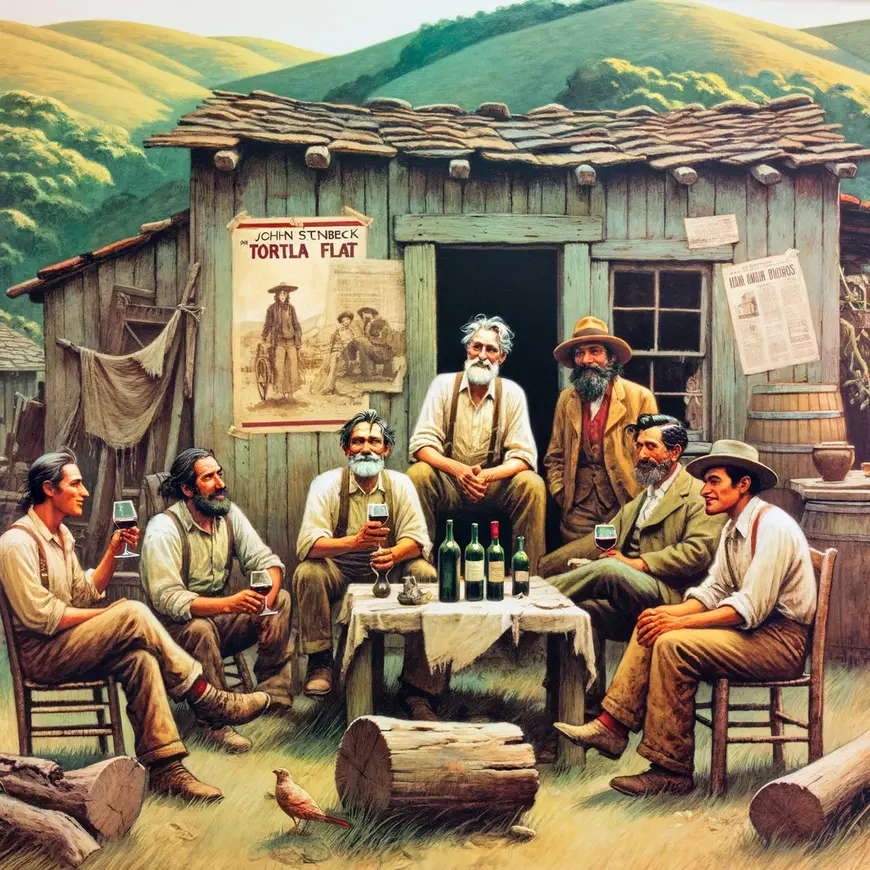
The story drifts through the lives of Mack and the boys, of Doc, Dora, and the rest of this offbeat ensemble. They fail constantly. They drink too much, lie, steal, and sleep in patched-together shacks. But somehow, they’re not broken. They’re not pitiful. They’re vital. And that vitality is what stunned me. It made me realize how much fiction ignores these lives. The author, instead, whispers: “They matter too.” And he doesn’t say it with pity. He says it with respect.
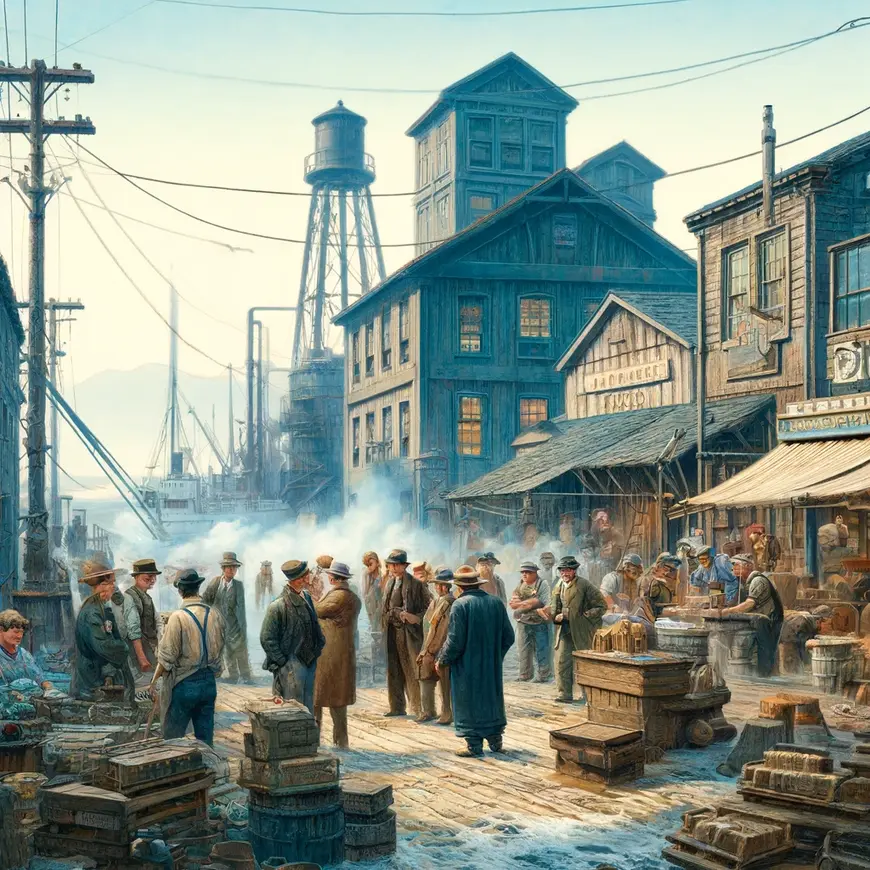
A Place Without Plot – Cannery Row
If you’re looking for narrative structure, Cannery Row might frustrate you. The book doesn’t build toward a traditional arc. Instead, it flows, a tide of vignettes, moments, oddities. That structure is its genius. It reflects the life it portrays: unstable, surprising, deeply human.
We follow characters who have no trajectory by modern standards. Mack isn’t climbing a ladder. Doc isn’t overcoming a secret. Yet the emotional resonance is immense. Their stories matter because they are told. The novelist teaches us that attention itself is moral.
👉 A Happy Death by Albert Camus comes to mind here, another book where meaning is drawn not from resolution but from existence itself. Like Camus, Steinbeck asks us to pause in the ordinary, to extract wonder from repetition. What’s also striking is the tonal control. He walks a tightrope between comedy and sadness, without falling into irony or sentimentality. He trusts us to get it. And we do.
The Strange Nobility of Failure
What touched me most in Cannery Row is the way John Steinbeck handles failure. No one in the book is “making it.” Mack and his gang spend their days scheming, fixing things just enough to fall apart again. But there’s no bitterness in how he portrays this. In fact, their failure feels strangely noble.
They have no illusions. They know their place in the world, outside. But within that space, they create something beautiful: community. Loyalty. Improvised generosity. There’s a party that fails so spectacularly it ruins a house, yet it brings the characters together in a way that success never could.
This reminds me of a deeper idea, that resilience isn’t just about trying again. It’s about redefining what matters. The boys on Cannery Row don’t become rich or wise. But they stay decent. They find joy in small things. They don’t measure their worth by profit or permanence. And maybe that’s why they remain human. There’s also something quietly radical in his choice. He lets these characters fail, without fixing them. And somehow, that honesty heals us as readers.
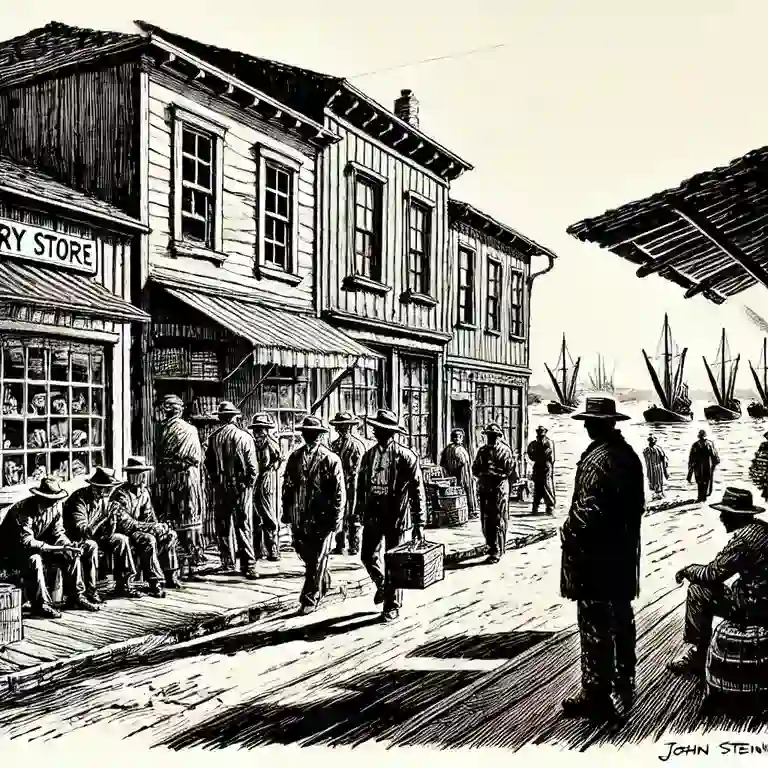
Doc and the Ethics of Observation
Doc is the book’s quiet center. A marine biologist, calm and generous, he doesn’t lecture or intervene. He observes and he listens. He helps when asked. He’s one of the few people on Cannery Row who seems truly content. And that contentment feels hard-earned, the product of years spent watching life unfold without trying to control it.
👉 A Study in Scarlet by Arthur Conan Doyle offers a parallel. Like Holmes, Doc sees clearly. But unlike Holmes, he adds kindness to insight. He studies life not to solve it, but to join it. There’s a kind of gentle ethics in Doc’s presence: give space, pay attention, act only when needed.
Steinbeck’s prose reflects this rhythm. The scenes around Doc are calm, luminous. Even when he suffers — and he does — the writing doesn’t rush. It lingers. It mourns with him, but it also trusts him to carry on. He’s not a savior and he’s not a victim. He’s just present. And that makes him unforgettable.
The Economy of Kindness
In Cannery Row, money is scarce, but kindness circulates freely. He builds a social world where survival depends not on wealth but on grace. The boys often steal, Doc is sometimes broke, and yet help arrives, meals are shared, and broken things are fixed, often imperfectly, but with heart.
The most powerful moments aren’t built on grand gestures. They come in fragments: a sandwich offered without comment, a party thrown without expectation, a debt quietly forgiven. The author values what cannot be measured, and that makes the novel feel strangely restorative. It’s a book about a forgotten class, but never a book that asks for pity.
There’s a recurring idea that generosity doesn’t always look like virtue. Sometimes it looks like chaos. Like Mack’s plan to do something nice for Doc, which spirals into a disaster. But what matters is the impulse. The intent. The broken beauty of trying. This kind of moral economy — built on attention, care, small offerings — is something I’ve rarely seen in fiction. And the writer makes it feel not only real, but necessary.
A California That Doesn’t Dream
Steinbeck’s California isn’t the promised land. It’s dusty, cracked, full of failure and disrepair. The golden light still falls, yes, but it reveals splinters and rust. Cannery Row resists the myth of the American West. There’s no land to conquer, no dream to fulfill. Only people, getting by, one week at a time.
👉 A Tale of Two Cities by Charles Dickens comes to mind here, not for plot, but for atmosphere. Dickens gave voice to a turbulent London; the writer gives voice to a decaying Monterey. Both let place become character. Both insist that context shapes fate.
In his Monterey, the geography is real. The tide pools, the bar at the corner, the vacant lots. These aren’t just settings, they’re emotional zones. A single dock can carry years of memory. A lab can hold the entire town’s hope. This gives the novel a rare emotional topology, where space matters as much as action.
It’s a way of writing that feels almost cartographic, mapping not land, but loss. And still, the tone stays warm. Not nostalgic, but gentle. The novelist isn’t romanticizing the past. He’s saying: this existed. And by saying it, he saves it.

Profound Quotes from Cannery Row by John Steinbeck
- “It has always seemed strange to me… the things we admire in men—kindness, generosity, openness, honesty, understanding and feeling—are the concomitants of failure in our system.” This quote captures his sharp critique of capitalism. It’s not just poetic, it’s political, and deeply true to the novel’s vision.
- “Cannery Row in Monterey in California is a poem, a stink, a grating noise, a quality of light, a tone, a habit, a nostalgia, a dream.” This iconic opening line defines the entire book. John Steinbeck sets the tone for a story that sees beauty in what others reject.
- “The things we admire in men, we detest in real life.” This haunting thought returns several times in his work. It reminds us of the uncomfortable truth that society often punishes what it publicly praises.
- “Doc would listen to any kind of nonsense and change it for you to a kind of wisdom.” In this simple line, he distills Doc’s quiet genius, not in what he says, but in how he listens. It’s a testament to the ethical depth of his character.
- “There’s nothing like a nice piece of hickory.” Spoken in the context of everyday absurdity, this quote is the novelist at his most playful. It reminds us that humor and chaos are stitched into the fabric of Cannery Row.
- “They’re not bad people. You’d like them. You’d have to.” This is his invitation to drop judgment. He introduces Mack and the boys with warmth, not excuses, urging us to look deeper than appearances.
Curious Facts from Cannery Row
- eal place, fictional soul: Cannery Row is based on a real street in Monterey, California, formerly named Ocean View Avenue. After the novel’s success, it was renamed in his honor.
- Doc was a real man: The beloved character of Doc was modeled after his close friend Ed Ricketts, a marine biologist and philosopher. Ricketts’ lab and legacy still attract visitors today via 👉 All Men Are Mortal by Simone de Beauvoir, which also honors a life that defies simplification.
- Written during wartime: The author wrote the novel in 1944, while World War II was raging. The book’s focus on simplicity, community, and small joys may have been a conscious counterpoint to the violence and chaos of the time.
- Inspired a film, but not his approval: A 1982 movie adaptation starring Nick Nolte was released, but he purists often find it lacking the novel’s nuance and charm.
- Banned and beloved: Like several of his works, Cannery Row has faced censorship in some school districts for its portrayal of sex work and alcohol. Yet it remains one of his most taught and treasured books.
- Ed Ricketts’ Pacific Biological Laboratories: The actual lab where Ricketts worked is now a historical site in Monterey. The Monterey Public Library and the Center for Steinbeck Studies at San Jose State University offer archives related to the lab and the book. You can explore more at sjsu.edu/ and monterey.org/library.
- Literary echoes: The book shares spiritual DNA with 👉 Absalom, Absalom! by William Faulkner, both explore the weight of community memory and the limits of individual action, though in vastly different styles.
Memory as Shelter – The Warm Brutality of the Margins
In this book, memory does not trap people. It shelters them. Characters often think about the past, but not to escape. They remember because those memories provide warmth. The things they’ve lost become internal furniture, worn but essential.
John Steinbeck understands that people don’t hold on to memory because it is true. They hold on because it’s the only thing that stays. Whether it’s the memory of a failed party, a woman long gone, or a time when someone was still alive, the past becomes a quiet companion in the present.
This is especially visible in Doc’s reflections. He never drowns in nostalgia, but there is weight in how he remembers. The people of Cannery Row do not live for the future. They live from within their stories. That makes the book feel deeply intimate.
The writing mirrors this. The author does not use sweeping generalizations. He uses detail. An old blanket. A cracked window. These are not symbols. They are anchors. And that makes everything feel earned.
The Poetry of Uselessness
One of the most moving elements in Cannery Row is the celebration of what the world calls “useless.” Mack and the boys don’t produce anything of value. Doc studies sea creatures no one else understands. Dora runs a business society condemns. Yet each of them contributes something essential, life.
👉 Germany. A Winter’s Tale by Heinrich Heine offers a similar resistance to conventional value systems. Heine writes about what society discards, turning marginal voices into lyrical ones. The writer does something similar. He takes characters written off by the American Dream and reclaims them through literary dignity.
The book suggests that worth cannot be measured by outcome. That intent and connection are enough. That the attempt to bring someone a frog or throw a party or just sit quietly is its own kind of success.
There’s a scene near the end where Doc listens to music and eats a sandwich. It’s a tiny moment, easily missed. But it holds the entire philosophy of the novel: life is not waiting to begin. It’s already here, if we care to notice.