No Place on Earth: The Cost of Belonging
No Place on Earth by Christa Wolf imagines an encounter between Heinrich von Kleist and Karoline von Günderrode at a gathering in Winkel am Rhein in June 1804. This historical novella compresses a large question into a small social occasion: what does belonging cost people whose thoughts and ambitions exceed the roles available to them?
The two writers are not simply placed together as examples of misunderstood genius. Their unease takes different forms, and the narrative attends to those differences. Kleist’s restless self-examination and Günderrode’s restricted freedom create possibilities for recognition without making their positions interchangeable. Shared estrangement does not automatically abolish the inequalities between a man and a woman.
No Place on Earth makes an apparently cultivated environment feel difficult to inhabit. Conversation, introductions, manners, and observation surround people whose inner lives do not fit comfortably into that arrangement. The tension develops through the distance between participation in a gathering and the feeling of actually having a place there.
The imagined meeting is a literary possibility, not a recovered historical event. That distinction is central to the book’s force. Fiction can arrange an encounter that history did not record and ask what might become thinkable within it. The premise invites attention to recognition rather than to the satisfaction of verifying a biographical anecdote.
Readers should expect concentrated psychological prose rather than a panoramic account of either writer’s life. The work brings social pressures into the texture of thought, where judgement from others has already become judgement of oneself. Its most troubling suggestion is that exclusion need not begin with a locked door. It can begin with the ordinary terms on which admission is offered.

No Place on Earth and an Invented Meeting
The gathering in No Place on Earth creates a useful contradiction. Many people occupy the same room, yet proximity does not guarantee understanding. Social forms bring individuals together while sorting them into recognisable positions. The novella asks what happens to someone who can attend the occasion but cannot comfortably occupy the identity it expects.
This gives the historical setting a purpose beyond atmosphere. The familiar apparatus of cultivated sociability becomes a means of inspection. Taste, ease, and appropriate conversation appear to demonstrate successful participation. For an uneasy observer, those signs may instead intensify the awareness of everything that must be suppressed before participation becomes possible.
Recognition requires more than company. The central encounter offers the possibility that one person might perceive another’s difficulty without immediately translating it into a fault. That possibility is valuable precisely because the surrounding world is already full of explanations, judgements, and recommendations about how people ought to live.
No Place on Earth does not need to turn the imagined meeting into a miraculous solution. A person can become less isolated in an exchange without acquiring new material freedoms. Keeping those possibilities distinct protects the premise from sentimental rescue. Understanding may matter greatly while remaining insufficient to change the conditions that made it necessary.
Iphigenia in Tauris by Johann Wolfgang von Goethe places a different degree of hope in speech and recognition under restrictive circumstances. Its dramatic resolution gives communication a different reach. Here, the fragile value of an encounter lies in what it permits people to acknowledge, even when acknowledgement cannot promise an exit. The contrast keeps hope connected to the actual limits of the situation.
Günderrode and the Unequal Terms of Freedom
Günderrode’s situation makes the question of belonging inseparable from gender. In No Place on Earth, creative aspiration does not float above the organisation of ordinary life. A woman’s authority, independence, and acceptable public presence are already being judged before anyone decides whether to take her artistic ambitions seriously.
Orlando by Virginia Woolf experiments more expansively with gender and the conditions of authorship. Its expansive play across time makes changing social expectations conspicuous. This novella works through compression instead, concentrating pressure within a historical moment. The comparison helps identify why the confined setting matters: restrictions become visible through what a person must negotiate before any grand achievement can even be considered.
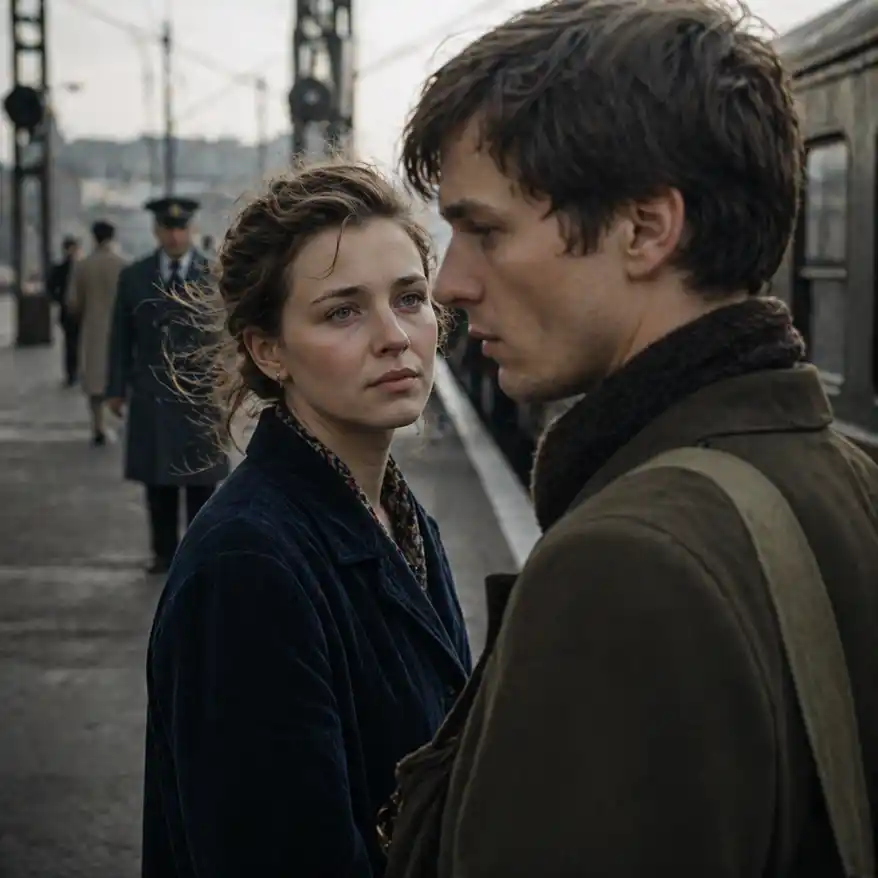
The opening’s attention to her gaze makes this judgement tangible. A look can become a problem because it fails to match what someone expects from a woman. The reader encounters a rule disguised as perception: an observer appears merely to notice, while measuring another person against an unspoken social requirement.
That is why Kleist cannot simply stand outside the system beside her. His own estrangement may create a possibility of sympathy, yet it does not remove the expectations through which he initially sees women. The novella’s interest lies partly in that contradiction. A person who suffers under judgement can still reproduce judgement when looking at someone else.
No Place on Earth therefore gains little from being reduced to a celebration of exceptional female talent. Such a description risks preserving the terms that make only exceptional women worthy of attention. Freedom concerns ordinary permissions as well as artistic recognition: to think, to refuse, to be taken seriously, and to exist without continual correction.

Kleist, the Doctor, and the Meaning of Recovery
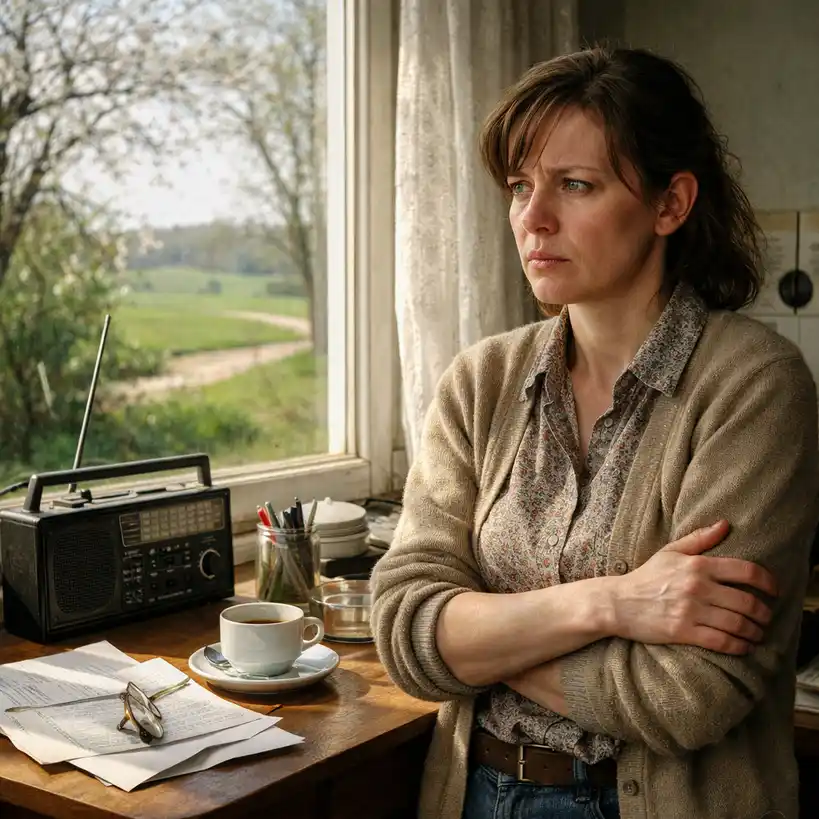
Kleist’s exchanges with the doctor Wedekind give No Place on Earth a sharp way to examine normality. Care and authority do not become identical, but they overlap uneasily. Advice intended to restore someone’s functioning may also require that the person stop asking questions the surrounding world finds intolerable.
The opening makes this tension felt through Kleist’s awareness that resistance can be interpreted as a symptom. Once that interpretation takes hold, disagreement risks confirming the judgement it tries to challenge. Objection becomes evidence against the objector, leaving the person little room to contest the terms of the conversation.
There is no need to turn Wedekind into a simple villain to recognise the problem. Good intentions can operate within a narrow account of health, especially when social adjustment supplies the measure of success. The unsettling question is what has been restored when a person becomes easier for others to manage.
No Place on Earth also complicates a romantic defence of suffering. Kleist’s thought is painful, unstable, and demanding. The reader need not admire every movement of that thought to recognise the danger of dismissing it entirely. Relief and self-erasure are not the same achievement, even when both can produce outward quiet.
Lenz by Georg Büchner also portrays a writer whose distress challenges the explanations available around him. The works should not be treated as interchangeable diagnoses. Their literary value lies in the pressure they place on interpretation itself: who gets to describe another person’s condition, what that description permits, and what remains unheard when a label seems to settle the matter.
Writing Style: Thought Beyond the Polite Surface
The writing style of No Place on Earth demands attention to shifts in perspective. Spoken exchange is only one part of the gathering. Internal questioning, perception, memory, and commentary create a less orderly social space beneath the visible arrangement of people and furniture. The reader must continually reconsider who is speaking or thinking.
The body interrupts abstraction. Hands, light, discomfort, and the placement of people in a room make inward pressure perceptible. Philosophical questions therefore arrive through a person’s difficulty remaining present, rather than through a detached series of arguments. A social occasion can be beautifully arranged and still feel physically punishing to someone within it.
The short, questioning movements also complicate any single authoritative account of the characters. Thought can turn against itself before an observer has finished naming it. Self-division becomes a formal experience for the reader, who encounters an unstable movement between being watched, watching others, and inspecting the self.
No Place on Earth benefits from being read slowly, with room to distinguish these movements. The density can also be a barrier. Readers who prefer clear transitions and a steadily unfolding plot may find the opening’s layered voices demanding. That difficulty belongs to the attempt to represent consciousness under pressure, though recognising its purpose does not remove the effort.
Death in Venice by Thomas Mann offers another compact examination of an artist’s unstable relation to self-command. Its narrative distance differs from the closeness of this prose. The comparison draws attention to the position of the reader: are we examining a troubled figure from outside, or feeling how an account breaks apart within the figure’s own thought? Those positions produce markedly different kinds of discomfort.

Translated Quotes from the German Opening
The following short quotations are our literal English translations, checked against the publisher’s reading sample. They are not attributed to Jan van Heurck’s English translation of No Place on Earth. The printed page references make their location and context clear without suggesting access to an unverified English wording.
- “Who is speaking?” On page 10, the question opens a movement into bodily awareness and interior speech. It alerts the reader that identifying a voice will itself be part of the reading experience. Certainty about who is speaking cannot simply be assumed.
- “Contradiction is a sign of illness.” On page 10, this belongs to Kleist’s inward account of his relation to the doctor. The formulation exposes his sense that disagreement has already been placed inside a medical explanation, limiting his ability to challenge it.
- “Should a woman look like that?” On page 13, the question appears as attention turns towards Kleist’s perception of Günderrode. Its interest lies in the expectation revealed by the act of looking. Gendered judgement enters before any generous recognition is secure.
- “Another kind of death.” On page 15, Kleist’s inward struggle associates the silencing of an insistent inner voice with another form of loss. The phrase should be read within that consciousness, rather than promoted into a general recommendation about suffering.
- “Unequal struggle.” Also on page 15, the brief formulation concentrates the imbalance surrounding his struggle. Pressure is not evenly distributed, even when a social gathering presents itself as civil and harmonious.
These fragments show how No Place on Earth makes questions of voice, gender, conformity, and inward survival part of its sentence-level movement. Their power depends on the pressures the opening has already established.
Trivia: Historical Premise and Edition Details
- An imagined encounter. The central meeting in No Place on Earth is fictional. The premise brings real writers together for a literary inquiry, so their presence should not be used as evidence that the gathering happened as described.
- June 1804. The opening explicitly places the imagined occasion in June 1804 at Winkel am Rhein. This is an early nineteenth-century setting, making an account centred on eighteenth-century life misleading even though both writers were born in the previous century.
- German original. The original title is Kein Ort. Nirgends. The Suhrkamp edition page identifies the original work and describes its imagined encounter, helping distinguish the German title from the title of its English translation.
- 1979 publication. The reading sample’s copyright page records first publication in 1979 by Aufbau in Berlin and Weimar, and simultaneously by Hermann Luchterhand in Darmstadt. A later English edition date should therefore not replace 1979 when describing the original work’s appearance.
- English translator. Jan van Heurck translated the English edition. The Farrar, Straus and Giroux edition record lists a 144-page paperback issued in September 1983; that record identifies a particular edition, not necessarily the first English publication.
- A later German volume. The German sample used here belongs to the Bibliothek Suhrkamp edition of 2014 and follows a text issued in paperback in 2007. Those dates describe later editions rather than new composition, a distinction especially useful when a publisher page foregrounds the product currently available.
Together, these details prevent biography, fictional setting, original publication, translation, and current format from collapsing into one account. No Place on Earth is historically specific even where it deliberately exercises the freedom of invention.
No Place on Earth and the Need for Another Listener
The appeal of No Place on Earth lies in its refusal to make recognition effortless. Shared unhappiness does not automatically create understanding, and artistic ambition does not exempt people from the assumptions of their society. The novella’s imagined encounter is valuable because it opens a possibility that the ordinary gathering makes difficult to sustain.
The Good Person of Szechwan by Bertolt Brecht offers a different formal treatment of the conflict between an individual’s needs and the roles society makes available. Its theatrical division makes the incompatibility visible through action. This novella locates comparable pressure within perception and thought, asking what a person must divide or silence in order to continue.
This is also what distinguishes sympathy from idealisation. A reader can take the figures’ unease seriously without treating every thought as wisdom or every conflict as proof of superior genius. The work invites an attention patient enough to recognise contradiction, including the contradiction of needing acceptance from a world one also resists.
The historical distance gives that inquiry room. It permits questions about authority, prescribed roles, and the boundary between adjustment and surrender without requiring every detail to function as a coded reference to a later political event. Parallels with the circumstances of the book’s composition are worth considering, but a single explanatory key would narrow the encounter.
No Place on Earth suits readers drawn to concentrated prose, difficult conversations, and the social conditions of creativity. Its force is less a consoling portrait of belonging than an inquiry into why belonging can demand so much. The imagined listener matters because another person may interrupt isolation, even when neither person can abolish its causes.
More reviews of works by the famous writer