Something Wicked This Way Comes by Ray Bradbury
Something Wicked This Way Comes by Ray Bradbury is a novel that pulled me in before I even opened the book. The title alone carries a shiver. It promises mystery, danger, and the kind of magic that whispers instead of shines. When I finally sat down to read it, I found exactly that, a story where childhood meets darkness and wonder masks fear. What I didn’t expect was just how beautifully the author would capture that balance.
The novel follows two thirteen-year-old boys, Jim Nightshade and Will Halloway, in a quiet American town suddenly transformed by the arrival of a sinister traveling carnival. The lightning-rod salesman, the calliope music, the carousel, they all seem harmless at first. But under the surface lies a darkness that feeds on longing. The story isn’t just about good and evil. It’s about the terrifying cost of wishes, the hunger to be older, and the loneliness of adulthood.
What makes this novel stand out isn’t just the plot. It’s Bradbury’s voice, poetic, alive, and slightly surreal. The language often feels like it’s floating between reality and dream. Sentences twist and tumble, pulling you along. That style is risky, but here, it works. It makes the fear feel deeper and the town more fragile.
As I read, I thought of 👉 Rabbit is Rich by John Updike, another novel that captures small-town America, but the writer brings myth into the mundane. The book speaks to the child in all of us, the one who knows magic might be real, and that it’s probably best not to look too closely when it comes to town.
Something Wicked This Way Comes – Wishes, Whispers, and Warnings
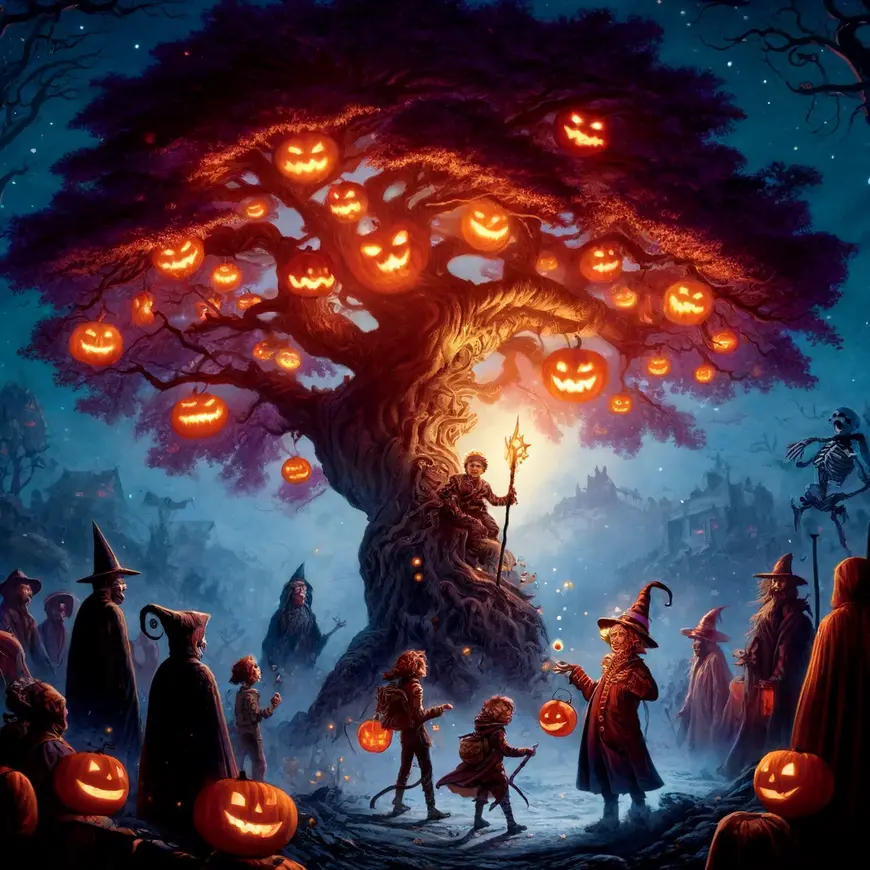
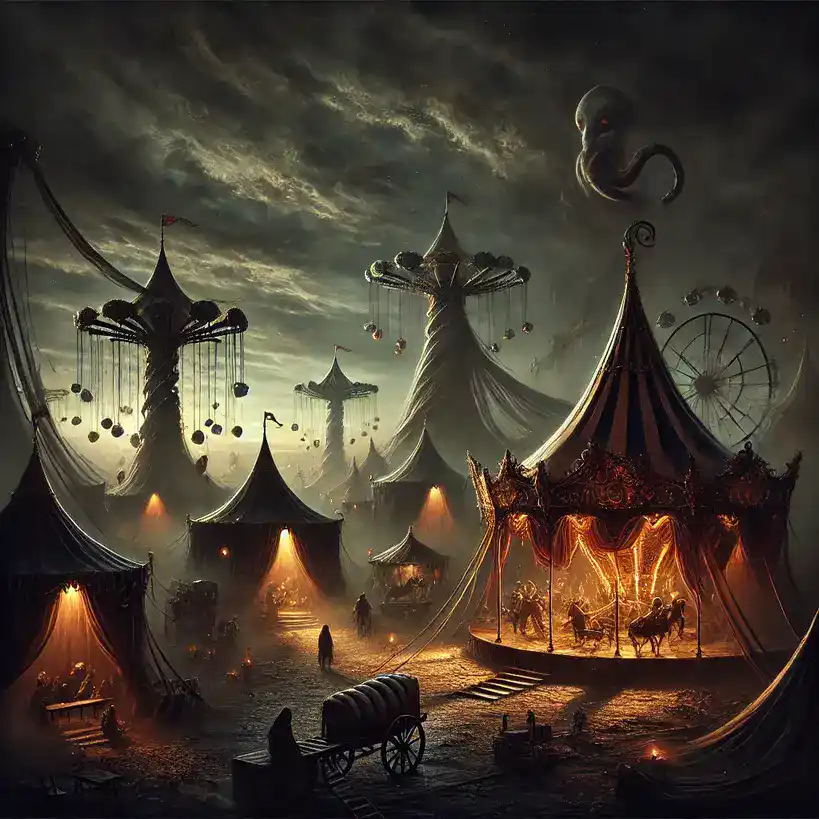
The plot of Something Wicked This Way Comes unfolds slowly, like fog creeping in overnight. It begins in late October, just before Halloween, when a carnival unexpectedly arrives in Green Town, Illinois. Jim and Will, best friends and opposites in many ways, are immediately drawn to it. But this is no ordinary carnival. It moves silently, it opens only at night, and the people who run it, especially the mysterious Mr. Dark, seem to know more than they should.
At the heart of the carnival is a magical carousel that can change a person’s age, forward or backward, depending on which direction it turns. It’s a tempting offer, especially for the lonely, the nostalgic, or the bitter. But as the townspeople begin to vanish or transform, Jim and Will realize that the carnival feeds on desire. It offers what you want most, but takes everything in return.
Their journey becomes a race against time to understand what the carnival is and how to defeat it. Along the way, Will’s father, Charles Halloway, an aging, thoughtful janitor at the town library, becomes central to the fight. He knows darkness. But more importantly, he knows the power of laughter, love, and light.
This story of temptation and innocence reminded me of 👉 Romeo and Juliet by William Shakespeare, not in structure, but in how it shows the dangers of desire unchecked by wisdom. Something Wicked This Way Comes isn’t a story of romance. It’s a story of emotional seduction, of people losing themselves to longing. He takes a simple premise and fills it with fear, beauty, and melancholy. The carnival is just a metaphor, but one that breathes, smiles, and stares straight into your heart.
The Dreamer Who Feared the Dark
Ray Bradbury didn’t just write science fiction or fantasy, he wrote about feeling human in extraordinary circumstances. Born in 1920, he grew up during the Great Depression and absorbed everything: pulp magazines, radio shows, horror movies, carnival life, and classic literature. All of it found its way into his work, where he blended lyrical language with dark themes. Something Wicked This Way Comes is one of his most personal novels. It draws on his childhood and the small-town rhythms that shaped him.
The novelist was never a cold futurist like some of his sci-fi peers. His imagination was warm, colorful, nostalgic, but often touched by dread. He believed in the beauty of childhood wonder, yet understood how quickly innocence could turn into fear. That contrast defines this novel. The carnival isn’t a spaceship or an alien threat. It’s a mirror of human weakness, of everything we wish we could change about ourselves.
He wrote the first version of the story as a screenplay in the 1950s, originally inspired by a collaboration with Gene Kelly. But when the film didn’t happen, he turned the material into a novel, refining it with rich, poetic prose. You can feel the theatrical roots in the book’s language, everything is visual, dramatic, and deeply symbolic.
Reading Bradbury alongside someone like 👉 J. D. Salinger might seem strange, but they share something vital: a deep empathy for adolescence. Where Salinger captures alienation, he captures fear and wonder. He understood that childhood doesn’t end in one clean break. It fades, and sometimes, it fights to return.
The author was never cynical. Even in his darkest tales, like this one, he held on to hope. In Something Wicked This Way Comes, that hope becomes a weapon, one far more powerful than any spell.
What We Trade for a Wish
At its core, Something Wicked This Way Comes is a story about longing, and the danger that comes with it. Everyone in the novel wants something: youth, freedom, second chances. But the writer doesn’t treat desire as evil. He shows how it becomes dangerous when it’s pursued without acceptance. The characters fall victim not because they want too much, but because they want to undo who they are.
The magical carousel becomes the novel’s central metaphor. Spin it one way, and you grow older. The other way, you become a child again. But those changes come at a price, not just physically, but spiritually. People who ride it don’t just transform. They lose themselves. They become hollow, controlled by Mr. Dark and the carnival’s eerie performers.
Another theme is fear, especially the fear of aging. Will’s father, Charles Halloway, feels this most acutely. He’s past his prime and wonders if he’s still useful, as a father, as a man, as a person. His struggle resonated with me more than I expected. It reminded me of 👉 Home by Toni Morrison, where aging is also portrayed as both burden and quiet power.
There’s also a strong theme of friendship. Jim and Will are opposites, one drawn to darkness, the other to light, yet their bond remains strong. Their differences test their loyalty, but never break it. The storyteller uses their relationship to show how shared experience can overcome inner conflict.
Finally, there’s the theme of joy, not as entertainment, but as resistance. Laughter and love, he tells us, are powerful forces. They confuse evil, weaken it, and ultimately destroy it. In a novel full of shadows, that message shines.
Boys, Fathers, and the Man in the Shadows
The characters in Something Wicked This Way Comes are shaped by contrast. Jim Nightshade and Will Halloway, both thirteen, are inseparable friends, yet they couldn’t be more different. Will is cautious, observant, and moral. Jim is daring, restless, and curious about the darker side of life. Their friendship is the emotional core of the story. It’s tested, strained, but never broken. Together, they face what no child should: the shadowy promise of growing up too fast.
Then there’s Charles Halloway, Will’s father. He’s a library janitor who feels old, tired, and full of regret. He reads late into the night, watches the boys from a distance, and wonders if he’s already missed his chance to be the father his son needs. His arc is subtle but powerful. He transforms from a man weighed down by time into someone who finds strength in love and laughter. The novelist makes him a quiet hero, the kind who wins by listening instead of shouting.
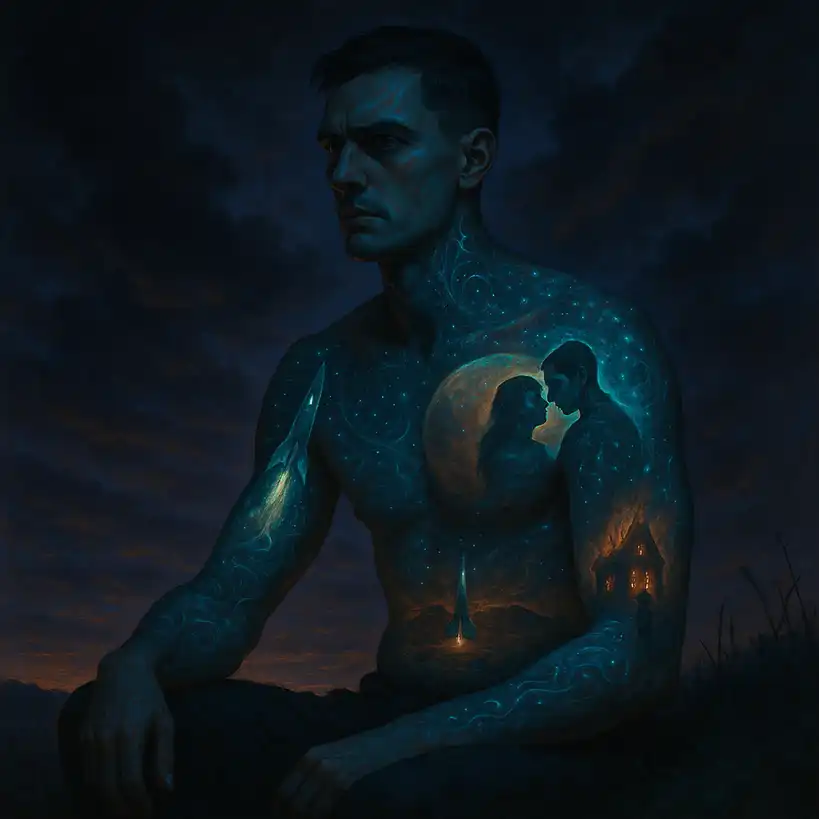
Mr. Dark, the Illustrated Man, is the carnival’s ringleader and its most frightening figure. His power comes from knowledge: he knows what people fear, what they crave, what they wish they could change. He’s seductive, persuasive, and impossible to pin down. He doesn’t hurt his victims. He tempts them.
In this story, the characters aren’t shaped by what they do. They’re shaped by what they choose not to do. That choice, to accept themselves, to love without condition, is what saves them.
A Voice That Dances with Shadows
Ray Bradbury’s language in Something Wicked This Way Comes doesn’t just tell a story, it sings it. The prose is poetic, wild, and deliberately strange. Sentences rush forward like wind through carnival tents. They loop, repeat, and shimmer. It’s not always easy, but it’s always alive. He wants you to feel, not just understand.
His style breaks rules, and that’s what makes it so memorable. He blends sensory overload with moments of clarity. One paragraph might swirl with metaphors, while the next hits you with a single, sharp truth. It’s a style that reflects the story’s themes, fear, confusion, wonder. You read the book the way you’d dream a nightmare, half-lost, fully absorbed.
Characters speak in voices that sound half-human, half-myth. Charles Halloway’s monologues feel like ancient wisdom wrapped in modern weariness. Mr. Dark speaks like a magician rehearsing a curse. Even Jim and Will talk with the intensity of boys who sense something enormous hiding beneath the world.
The lyrical intensity reminded me of 👉 Steppenwolf by Hermann Hesse. Both novels explore inner transformation using abstract, emotional language. And in both cases, the style reflects the characters’ internal journeys more than external events.
His use of repetition is especially striking. Phrases echo like carnival music, slightly off, slightly haunting. He leans into rhythm as much as meaning. You don’t just read the sentences. You feel their tempo, like footfalls approaching in the dark.
This style won’t appeal to everyone. But if you let go of structure and follow the music, his language becomes a ride of its own. The voice, once strange, becomes hypnotic, and then unforgettable.

Chilling Quotes from Something Wicked This Way Comes by Ray Bradbury
- “A man is not happy without a map.” This quote captures Charles Halloway’s longing for purpose. Without direction, even a quiet life can feel lost.
- “Too late, I found you can’t wait to become perfect, you got to go out and fall down and get up with everybody else.” Ray Bradbury shows that growth comes from mistakes, not from waiting for the right moment.
- “The stuff of nightmare is their plain bread.” This chilling line describes the carnival’s power. It thrives on fear, not as a trick, but as its daily sustenance.
- “Evil has only the power we give it.” A key message of the novel. The author insists that darkness isn’t all-powerful, it’s enabled by human desire.
- “We’re more afraid of living than we are of dying.” This reflection speaks to the book’s deepest fear: that we might pass through life without truly feeling it.
- “The carousel spins forward and back, but it never stops.” The machine becomes a symbol of time’s cruel logic, always in motion, always tempting us to escape.
- “You can’t go back. You can’t go forward. You can only be.” The writer argues for presence over fantasy. Wishing for change is what the carnival exploits.
- “It’s the laughter that defeats them.” A rare moment of hope. Joy isn’t just healing, it’s a weapon against despair.
- “The mirror sees you, but you do not see yourself.” Identity and illusion twist together here. Evil thrives when we stop recognizing who we really are.
Dark Secrets from Something Wicked This Way Comes
- Inspired by a 1930s carnival memory: Ray Bradbury based the story on a traveling carnival that visited his Illinois hometown during childhood. The memory stayed with him for decades and shaped the novel’s eerie tone.
- It began as a screenplay: Before it was a novel, Something Wicked This Way Comes started as a script for a project with Gene Kelly. When the film fell through, he reworked it into prose.
- A deep influence on Stephen King: King has cited the novel as one of his favorites, especially praising its mix of fantasy and psychological horror.
- Most poetic novel: Critics often describe it as his most lyrical work. The style blends lush description, abstract imagery, and metaphysical reflection.
- The 1983 Disney film adaptation A rare dark entry in Disney’s catalog, the movie adapts the novel faithfully in tone but simplifies many themes. The author wrote the screenplay himself.
- The Illustrated Man connection Mr. Dark echoes the title character from 👉 The Aleph by Jorge Luis Borges, where tattoos and symbols reflect infinite knowledge and dread.
- Critically divided on release Some loved its beauty and depth; others called it overwritten. Over time, it became a cult classic and is now required reading in many schools. The 📘 American Library Association lists it as a recommended title for advanced teen readers.
- Original drafts were darker Early versions focused more on evil, temptation, and punishment. Later edits introduced hope, making laughter the novel’s real weapon. His legacy is preserved by The Center for Ray Bradbury Studies, which maintains his archives and scholarship.
A Book That Remembered My Fears
I didn’t expect Something Wicked This Way Comes to feel so personal. I thought I’d be entertained, maybe unsettled. But what I got was a deep emotional memory, a reminder of how childhood felt before I had the words for it. He captured the feeling of lying awake at night, wondering what’s out there, and worse, what’s inside me. That emotional honesty is what made me love this book.
The author doesn’t write about horror in the usual sense. He writes about the quiet, creeping kind, the fear that comes from longing for things you can’t have. I saw myself in Jim’s hunger to grow up, in Will’s fear of losing what makes him good, and in Charles’s sadness at watching time slip by. The characters aren’t extraordinary, but their feelings are. That’s what makes the novel powerful.
The scenes that stayed with me weren’t the terrifying ones, though those were chilling. It was the quiet conversations in the library. The carousel turning at night. The way the wind seemed to whisper secrets. Bradbury made the ordinary magical, and the magical deeply human.
This emotional weight reminded me of 👉 Beloved by Toni Morrison, another novel where pain, memory, and longing blur the line between the supernatural and the real. Both books show how what haunts us isn’t the ghost — it’s the past we can’t change.
I loved this book because it trusted me to feel. It didn’t need to explain everything. It just offered images, voices, and emotions, and let me find the meaning. Something Wicked This Way Comes reminded me what fear feels like when it’s still tinged with wonder. That’s a rare kind of magic.
The Carnival That Never Leaves
Finishing Something Wicked This Way Comes felt like stepping out of a dream, the kind that lingers long after you’ve woken up. It’s not just a story about a haunted carnival or two boys battling evil. It’s about the uneasy beauty of growing up, the sadness of aging, and the way fear nestles inside desire. Bradbury doesn’t offer neat resolutions. He offers reflection. And in doing so, he creates something timeless.
This novel isn’t loud. Its horror doesn’t rely on gore or spectacle. It comes in whispers, shadows, and slow realizations. The carousel doesn’t just change your age, it tempts you to erase yourself. The villains aren’t monsters. They’re promises, dangerous because they sound so sweet. The novelist teaches that resisting temptation is the bravest kind of courage, especially when the thing offered is everything you think you need.
I kept thinking about Charles Halloway long after I finished. His wisdom, quiet strength, and deep sadness grounded the novel for me. He’s not just a father. He’s a mirror, of every reader who has ever felt time slipping, joy fading, or purpose wavering. And his discovery — that love and joy can defeat darkness — gave the novel its emotional core.
Something Wicked This Way Comes isn’t just a book I recommend. It’s a book I carry. In language, in mood, in memory. The carnival may pack up, but it never really leaves. It waits in October, with music faint and strange, always ready to return.