Stranger Bear Word to the Spartans We by Heinrich Böll
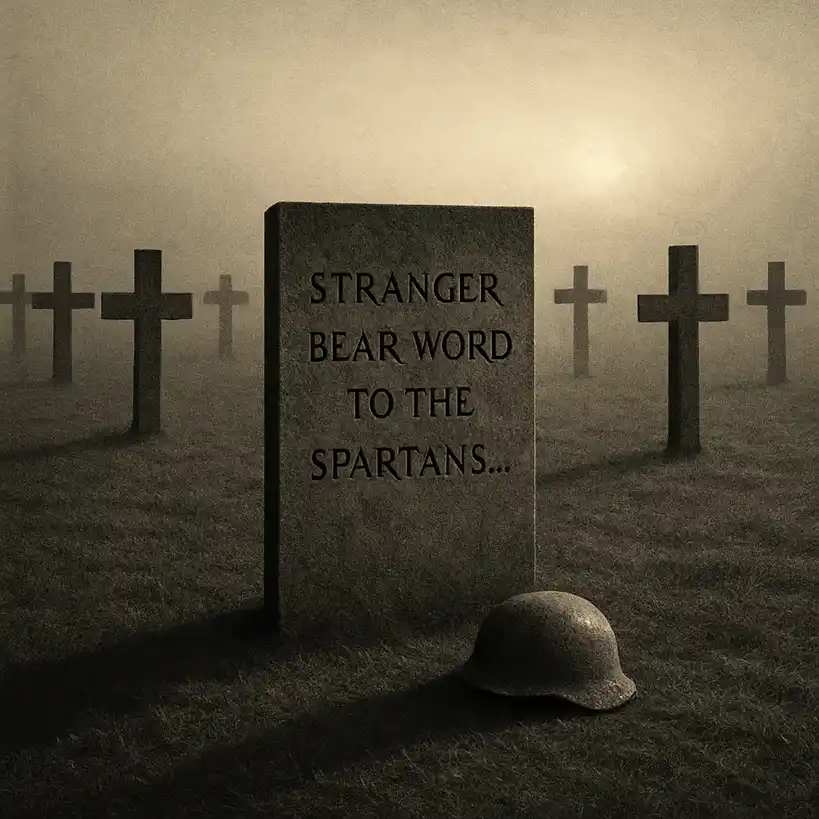
A stranger steps into a ruined classroom, and the wall still speaks. Consequently, Stranger Bear Word to the Spartans We… turns a painted motto into a living witness. The Simonides line asks him to bear word to the Spartans; therefore Heinrich Böll lets a sentence outlive armies. Because rubble holds chalk, timetables, and broken desks, rubble as archive becomes the book’s method. The city remembers the war through objects, not speeches.
The author builds pressure from grammar. Although the inscription promises honor, the scene measures obedience against harm. As a result, obedience on trial replaces patriotic comfort. The soldier reads the imperative and then reads the room. Moreover, quiet details do the judging: a nailed door, a fallen map, a child’s slate turned shield. By contrast, loud slogans fade fast when the wind moves through glassless frames.
Language does the lifting. The motto turns into motto as evidence, and evidence turns into choice. Meanwhile, the reader hears how one word can unlock a history of orders, drills, and fear. Therefore Stranger, Bear Word to the Spartans We… makes literature into a civic act. We enter as listeners; we leave as witnesses. Finally, Böll closes the loop with a lesson in ruins: where the classroom stands open to weather, memory refuses to be cleaned.
Command, witness, and the work of saying “we” in Stranger, Bear Word to the Spartans We…
The book asks who gets to say “we.” Because the wall orders the passerby to speak to the Spartans, the pronoun tightens like a net. Consequently, Stranger, Bear Word to the Spartans We… tests whether loyalty can survive truth. A wounded reader studies the line; therefore voice under orders becomes problem and plot. Meanwhile, the city listens to its own echo.
Böll stages judgment without uniforms. The shattered school turns into classroom as court, and evidence sits in plain view. Although the motto claims honor, bodies and absence argue otherwise. As a result, memory versus command directs each turn of thought. I set this civic ethic beside 👉 The Plague by Albert Camus, where a town counters fate through lucid responsibility rather than myth.
Objects keep the philosophy grounded. A chalk stub, a bent bell, and a rumpled rollbook record names no slogan can erase. Moreover, the soldier’s reading reshapes the order; by contrast, mechanical compliance would only repeat harm. Therefore the page demands a different we—one built from witness, not spectacle. Finally, Böll leaves us with witness against myth: carry the message, yes, but change its meaning so the living are not asked to die for the dead again.
Body, injury, and the tempo of reading
The text meets a body first. Consequently, Stranger, Bear Word to the Spartans We… ties comprehension to breath, limp, and pause. Because the reader is hurt, wounded reading slows the line until the motto’s order sounds different. A chest tightens; a bell stutters; therefore time arranges pain into beats. Meanwhile, shards in the floor coach each step, so the city teaches cadence without a drum.
Detail keeps the philosophy grounded. Bandage, dust, and chalk share the page; moreover, time as shrapnel breaks a minute into fragments. The stranger looks up, then lowers his eyes, and the sentence changes as he moves. As a result, the book shows how motion edits meaning. By contrast, clean halls would hide the cost that bodies keep on ledger.
Speech arrives through damage. The voice tries to recite, yet the rib answers first; consequently, speech with scars replaces parade tone. The room unlocks itself as he circles the desks, and language unlocks him back. Therefore the title’s command meets gait, breath, and grit, and it softens into witness. Finally, Stranger, Bear Word to the Spartans We… lets injury choose tempo, and tempo chooses truth the healthy rarely hear.
Curriculum, orders, and the city’s counter-lesson
The classroom once trained obedience. Therefore Stranger, Bear Word to the Spartans We… reads timetables and hymn boards as tools, not décor. Because chalk lists duties, schoolroom ideology lingers on the plaster. A maxim promised honor if boys learned to march; consequently, the wall now examines that promise in blown-out light. Meanwhile, attendance sheets record a different roll call: names present, names gone.
Böll studies syntax as policy. Although the imperative looks simple, grammar of obedience hides its price in neat letters. A stranger reads the line and remembers what such grammar unlocked in streets beyond. As a result, the work pairs pedagogy with aftermath rather than with pride. I set this sober schooling beside 👉 All Quiet on the Western Front by Erich Maria Remarque, where lessons meet trenches and the syllabus collapses.
Objects overturn the lesson plan. A cracked pointer lies under glass; a map curls; a clock stops. Moreover, rumor has replaced recitation, and neighbors teach what the primer refused. Therefore the room writes a counter-lesson that chooses daylight over myth. Finally, the city remembers the war with its own curriculum: open doors, careful reading, and a refusal to unlock the same disaster with the same shining words again.
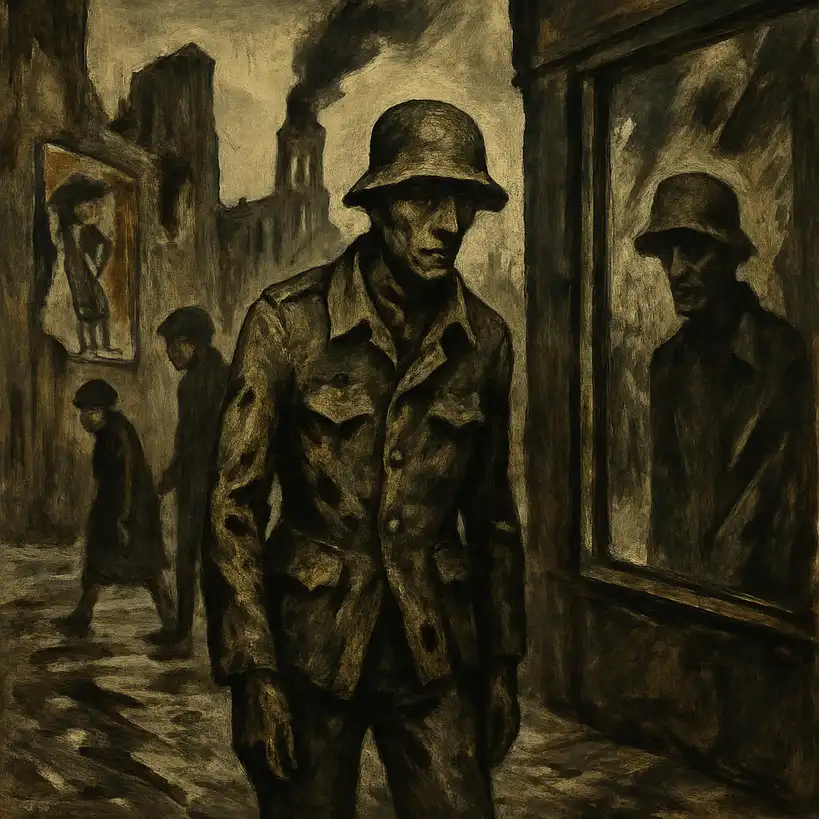
Style, cadence, and the civic sentence
Heinrich Böll writes sentences that feel spoken in ruins. Consequently, this novel by Böll builds force through paratactic pressure rather than ornament. Because clauses arrive briskly, breath as measure keeps memory close to the body. I hear chairs scrape, papers lift, and a distant bell answer. Moreover, the imperative in the title echoes inside these short lines, so command as echo stays audible even when no officer stands nearby.
Form carries ethics. Although the page shows rubble, syntax holds order; therefore Stranger, Bear Word to the Spartans We… treats clarity as courage. The narrator names objects before ideas, and that sequence matters. A slate, a rollbook, a bent pointer, then a thought about obedience. By contrast, propaganda reversed that order and hid its bill. Here language remembers the war because nouns refuse to lie.
Sound guides the eye. Repetition maps the room without mapmakers; consequently, the reader turns like the stranger turns. I watch a word return, then darken. Meanwhile, the old Spartan motto loses shine when dust sits on every letter. Therefore the classroom unlocks itself, and the line unlocks a different we. Finally, the work by Böll proves that a city can relearn speech after defeat, if witnesses keep cadence and if sentences refuse alibi.
Performance, hunger, and the body that says “we”
Orders want display. Therefore the book studies how a public body carries a public vow. Because the injured reader limps under that vow, body as argument replaces parade. The wall demands a messenger to the Spartans; moreover, the room answers by counting ribs and empty seats. As a result, pain as counter-speech breaks the glamour of obedience.
I stage this argument beside 👉 A Hunger Artist by Franz Kafka, where a crowd mistakes endurance for virtue. By contrast, Böll refuses spectacle and audits cost. The stranger does not perform; he reads. Consequently, Stranger, Bear Word to the Spartans We… turns attention into labor and labor into truth. The city does not clap. The city listens.
Objects certify the verdict. A cracked bell, a warped desk, and chalk dust write evidence in matter that no anthem can erase. Meanwhile, the pronoun we stops feeling generous and starts feeling exact. We means the living, not the poster. We means the reader and the neighbor sweeping glass. Therefore the stranger bears word by changing the message. Finally, Stranger, Bear Word to the Spartans We… names a hard freedom: language unlocks the ruined classroom only when citizens refuse to spend another life to polish a dead sentence.
Letters, rollbook, and the ethics of repair
The wall’s painted letters still hold a charge. Consequently, Stranger, Bear Word to the Spartans We… asks us to read the alphabet as evidence. Because flakes of paint drop like snow, letters as relics turn weather into witness. I watch a finger trace a line; therefore the command thins into memory. Meanwhile, a chalk stub waits where a lesson once began, and the room steadies itself around that small tool.
Names anchor the test. A curled register lists who came, who left, and who never returned; consequently, rollbook of absence replaces myth with count. Although the slogan promises honor, the page displays cost. For instance, a smudge hides a surname, then the smudge becomes a fact. Moreover, a bell claps twice, and the motto loses shine it cannot recover. As a result, Stranger, Bear Word to the Spartans We… rebuilds judgment from nouns.
Repair starts with reading. Because citizens must answer orders with detail, repair through reading becomes the work. The stranger studies the line, then studies the room; consequently, citizen grammar replaces parade grammar. By contrast, obedience would skip the roll and salute the wall. Finally, Stranger, Bear Word to the Spartans We… suggests a better message to carry: not the old command, but the names that survive it, spoken aloud until silence learns to listen.
Quotes from Stranger, Bear Word to the Spartans We… by Heinrich Böll
- “Where are we?” “In Bendorf.” Recognition lands like a blow; consequently, the city name turns memory into evidence inside the ruined school.
- “Drink, comrade.” Mercy speaks softly; therefore a cup steadies the scene while the war keeps burning outside the windows.
- “Put a cigarette in my mouth.” Need trims pride; moreover, small comforts measure pain more honestly than any slogan in Stranger, Bear Word to the Spartans We…
- “It cannot be true, I thought. The car cannot have driven so many kilometers.” Denial buys time; consequently, shock edits distance before the room explains it.
- “You must find out what wound you have and whether you are in your old school.” Resolve replaces drift; therefore the mind sets its own orders inside the wreckage.
- “It was my handwriting on the blackboard.” Proof arrives; moreover, the book makes a chalk line decide the plot and the verdict.
- “Stranger, bear word to the Spartans we…” The truncated motto speaks; consequently, the classroom turns a heroic epitaph against obedience in this novel.
- “Seven times it stood there, clear and relentless.” Repetition drills meaning; therefore the wall refuses doubt and the reader cannot look away.
- “I had no arms, and no right leg.” The sentence cuts clean; consequently, the body answers the motto more fiercely than any speech could.
Trivia from Stranger, Bear Word to the Spartans We…
- Epigram engine: A school-wall preserves the Thermopylae line; consequently, Stranger, Bear Word to the Spartans We… treats a single sentence as plot, ethic, and verdict.
- Rubble aesthetics: Trümmerliteratur turns debris into archive; moreover, bells, desks, and rollbooks function as evidence, not décor. For background, see 🌐 Thermopylae epitaph overview.
- Pronoun politics: The command speaks “we,” yet a wounded passerby hears “I” and “you”; therefore Stranger, Bear Word to the Spartans We… exposes how grammar recruits obedience.
- Classroom to courtroom: A bombed school becomes civic space; consequently, lessons convert into hearings where objects testify and slogans face cross-examination.
- War as trade: Logistics, ledgers, and errands frame the aftermath; for a stage-driven look at survival economies, compare 👉 Mother Courage and her Children by Bertolt Brecht.
- Loyalty and silence: Quiet refusals outlast parades; furthermore, this book shows how small denials protect the living better than loud vows.
- Youth under ideology: Postwar youth inherit mottos and debts; as a counterpoint on conformity and bravado, see 👉 Cat and Mouse by Guenter Grass.
- Classical echo: The Simonidean couplet keeps returning in modern culture; for translations and variants, read 🌐 Simonides epigrams (Attalus).
- Rollbook of absence: Names in the register outlast uniforms; consequently, counting the missing becomes a civic ritual stronger than any motto.
- Repair as practice: Reading becomes labor; therefore citizens copy rolls, reopen rooms, and carry a changed message—names first—so language serves the living before it serves the dead.
Afterlife, lineage, and a practice for peace
Rubble ends a battle; it does not end a sentence. Therefore this novel treats aftermath as discipline. Because words built harm, afterlife of orders demands daily audit. I see neighbors sweep glass and then rename the room; consequently, civic reading becomes routine. Meanwhile, the motto stays, but meaning moves, since the living rewrite pronouns with care.
Lineage clarifies the task. I read this civic method beside 👉 War and Peace by Leo Tolstoy, where households and streets learn to carry war without worship. By contrast, Stranger, Bear Word to the Spartans We… keeps the scale intimate and the ledger public. Furthermore, peace as labor asks for slow work: doors rehung, bells reset, and lessons reopened to argument. As a result, the classroom starts teaching again.
The message to bear changes shape. Although the line still points to the Spartans, the city now speaks we without helmets. For instance, a volunteer copies the roll, then knocks on a widow’s door. Moreover, a child reads aloud and hears that reading can protect. Finally, Stranger, Bear Word to the Spartans We… closes its circle by opening a civic one: carry the message, yes, but carry it as repair—names first, facts next, silence last.