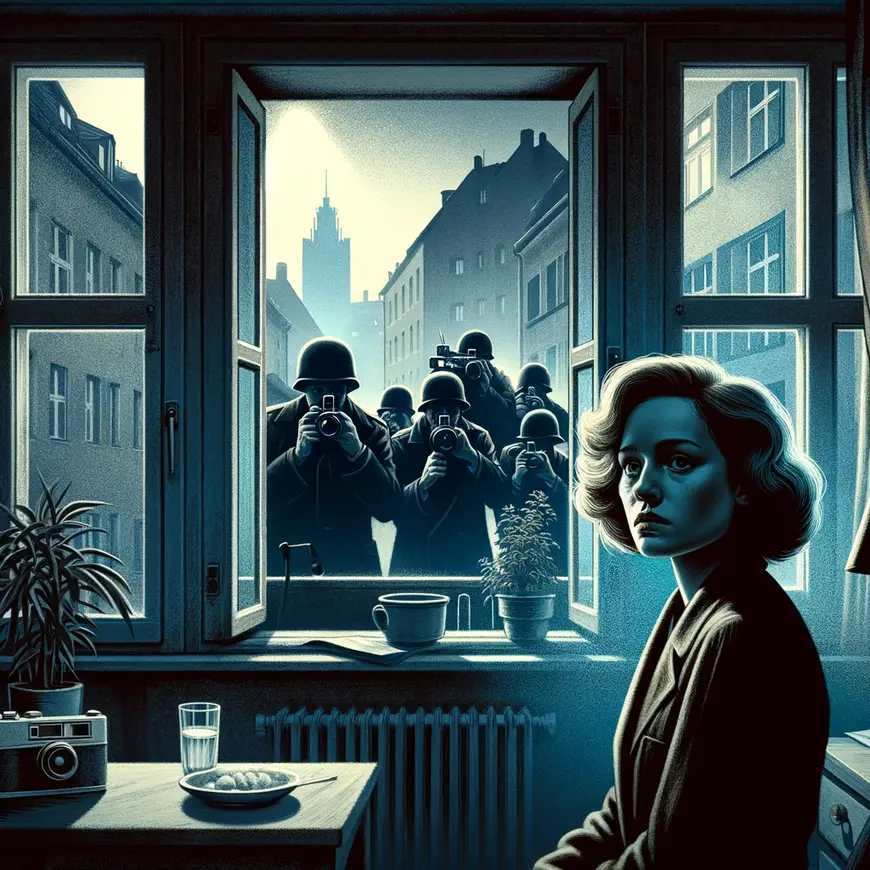
Stranger Bear Word to the Spartans We by Heinrich Böll
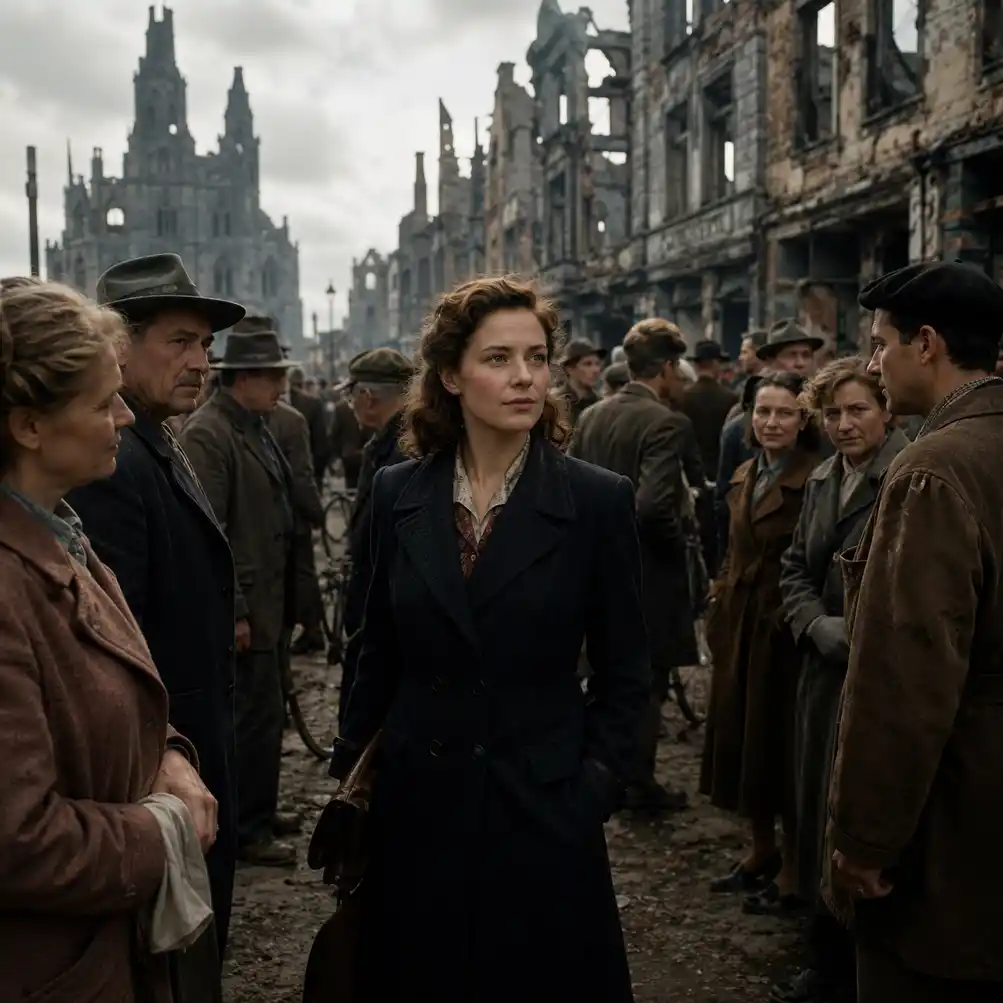
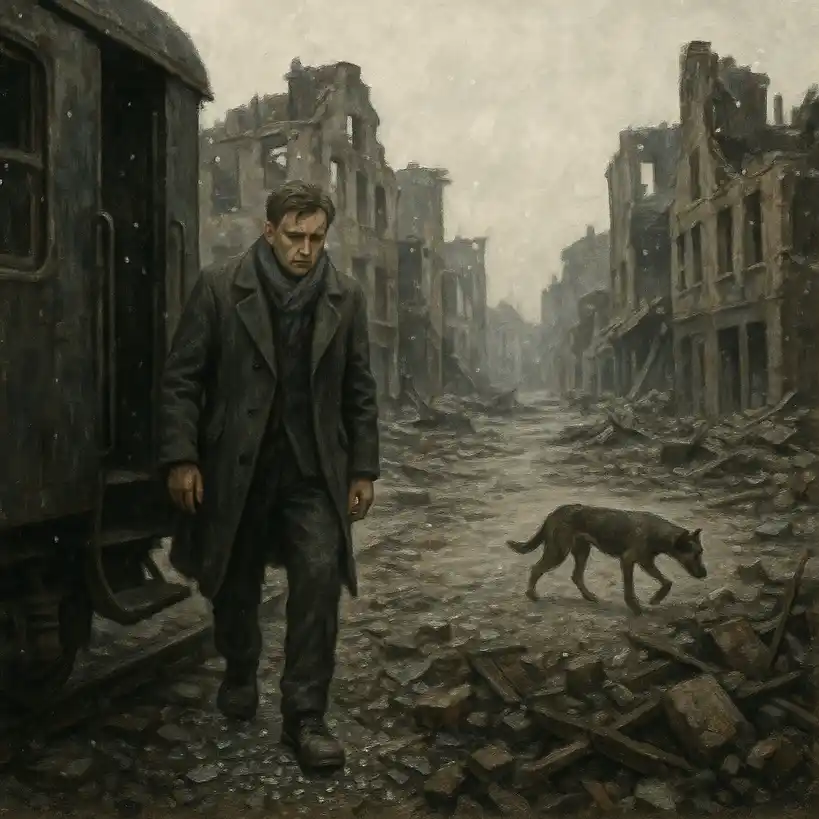
Stranger, Bear Word to the Spartans We… is one of the sharpest anti-war stories of postwar German literature because it does not need a battlefield to show what war does. Heinrich Böll narrows the frame almost cruelly. A badly wounded young soldier is brought through a burning city into what turns out to be his old school, now used as an emergency hospital. Out of that movement through corridors, staircases, classrooms, and half-recognized details, the story builds an unbearable recognition. The soldier is not simply returning to a place from his past. He is being delivered back into the institution that helped prepare him for the fate he has now suffered.
That is what makes the story more than a war text in the ordinary sense. It is not only about injury, fear, and destruction. It is about the way a culture of obedience can survive in school walls, mottos, classrooms, and gestures long before it reaches the battlefield. The title itself already signals that logic. The old Spartan epitaph, once taught as a heroic ideal, comes back in the story not as glory but as bitter ruin. Böll’s genius lies in that reversal. He does not argue abstractly against militarism. He lets a shattered body enter the building that once taught him how to die properly.
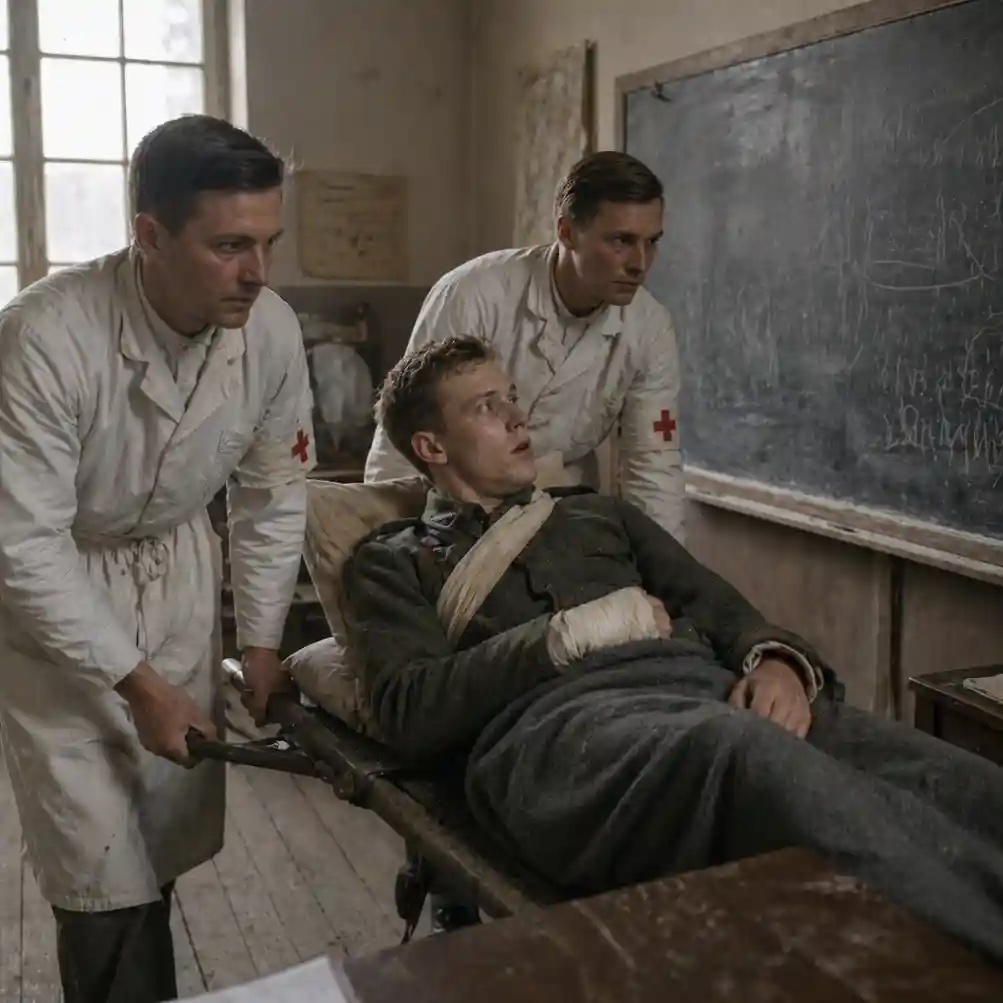
The story becomes devastating because recognition arrives slowly
One of the most powerful things about Stranger, Bear Word to the Spartans We… is its method of delay. The wounded narrator does not immediately know where he is. He senses familiarity, but he keeps resisting it, explaining it away, refusing to let recognition settle too quickly. That hesitation is essential. The story’s emotional force depends on gradual realization. If he knew at once that he had been carried into his old school, the story would become a direct statement. By letting the truth arrive piece by piece, Böll makes the reader experience the discovery as a shock rather than a thesis.
This slow recognition also mirrors trauma. The narrator is wounded, feverish, disoriented, and physically dependent on others. He notices walls, staircases, signs, rooms, and objects with a strange mixture of closeness and uncertainty. Everything seems known, yet nothing is admitted at once. The effect is brilliant. The building becomes almost like memory itself: present, oppressive, fragmented, impossible to deny forever but not fully bearable in one instant. That is why the story feels so compressed and so exact. Böll does not need pages of explanation. He only needs the right sequence of details.
The old school therefore matters not merely as setting but as mechanism. It organizes revelation. It becomes a structure of memory through which the narrator is literally carried. In that sense, the story can be productively set beside In the Penal Colony by Franz Kafka, where an institution also becomes a physical machine for exposing the logic of power. Böll is more concrete, less allegorical, and much more historically immediate. But in both works, space itself enforces meaning.
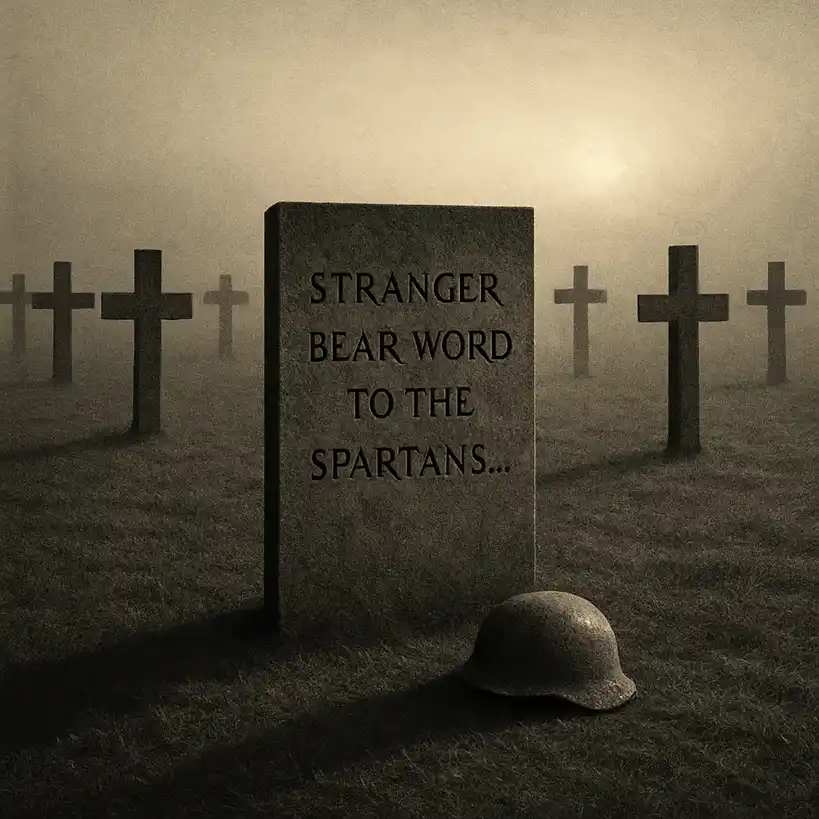
The school matters because it turns education into accusation
The old school is the story’s most devastating idea. In another writer’s hands, it might have been used sentimentally, as a place of childhood innocence violated by war. Böll does something much harsher. He turns the school into an accusation. This is not a sanctuary defiled by history. It is a place that already belonged to history. The building has helped make the war imaginable. Its classrooms, slogans, routines, and educational ideals are no longer neutral once the wounded soldier returns to them in pieces.
That is why the famous line on the blackboard matters so much. The truncated Spartan inscription is not simply a literary ornament. It is the whole story in miniature. A classical heroic message, copied by a student only months earlier, returns at the moment when heroism has become mutilation. Böll’s point is devastatingly clear without ever becoming heavy-handed. The culture that teaches boys to admire sacrificial grandeur is implicated in what later happens to them. The school does not merely survive the war as architecture. It survives as part of the moral preparation for war.
This makes the story one of the strongest texts of Trümmerliteratur not only because it shows ruins, but because it shows what kinds of language helped produce those ruins. For another work where education, ideology, and damaged youth become inseparable, The Tin Drum by Günter Grass would be an obvious comparison, but to avoid leaning again on overused defaults, I will leave that as an uncited mental echo rather than an inserted link. The essential point remains: the school in Böll is not background; it is evidence.
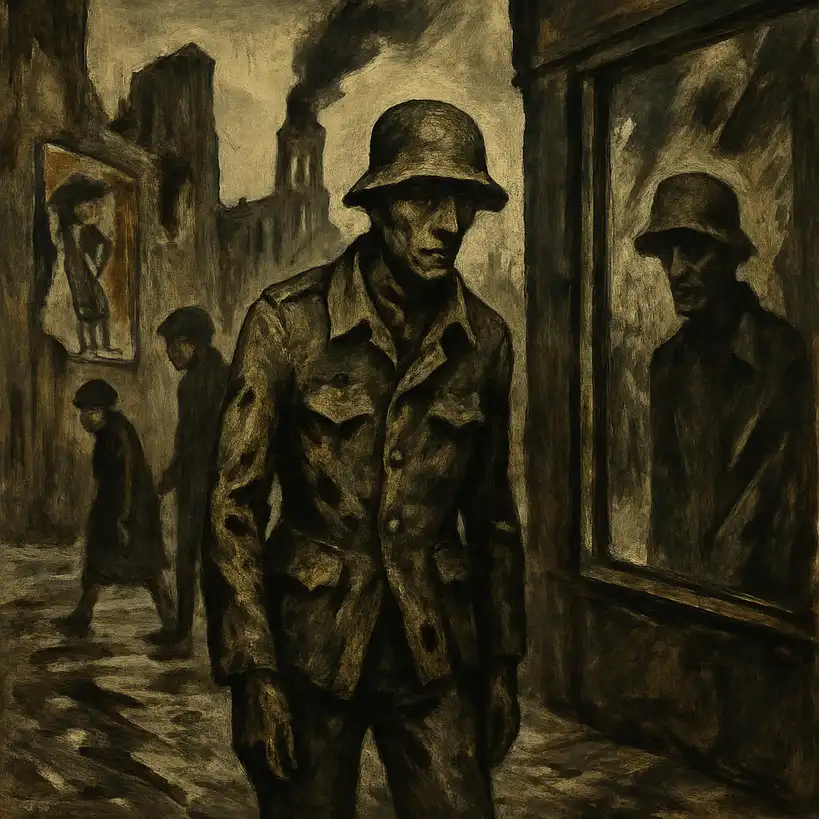
In Stranger, Bear Word to the Spartans We…, the body answers the slogan
The story’s final force comes from the way bodily truth overtakes all rhetoric. The narrator’s recognition of the school and his recognition of his own mutilation arrive together, and that conjunction is everything. The slogan on the board speaks of noble witness and lawful death. The body on the stretcher answers with lost arms, a missing leg, pain, and helpless dependence. This is the story’s central reversal. The old language of glory is not argued against in theory. It is shattered by flesh.
What makes this so effective is Böll’s restraint. He does not stage a grand denunciation. He lets the physical fact stand. Once the narrator understands where he is and what has happened to him, no heroic vocabulary can remain intact. The classroom, the epigraph, the old order of meanings, all collapse into the reality of damage. That is why the ending remains so haunting. It is not loud. It is precise. The story does not have to tell us that war slogans lie. It shows the exact point where the slogan can no longer survive contact with the ruined body that was meant to fulfill it.
This is also where the story rises above a simple anti-war message. It is not only saying that war kills. It is saying that war exposes the fraud inside the language that prepared people to accept killing and being killed. The boy once wrote the line on the board. The broken soldier now becomes its answer. Very few short stories manage such compression. In Stranger, Bear Word to the Spartans We…, the body becomes the final interpretation of the culture that formed it.
The first-person voice makes the story intimate without making it expansive
Because the story is so short, every formal choice matters. One of the smartest is the first-person voice. The narrator does not explain himself from a distance. He gives us perception under pressure: confused, partial, fevered, increasingly terrible in its clarity. That immediacy is crucial. The story does not analyze trauma from above. It lets us move through it. We notice what he notices and we hesitate where he hesitates. We experience the school first as eerie familiarity and only later as full recognition.
This is part of why the story remains so readable and so hard to forget. Böll does not surround the narrator with philosophical commentary. He trusts the rhythm of perception. A city half-seen from transport. Corridors. signs. rooms. the art classroom. the blackboard. a familiar caretaker. Each detail gains force because the voice does not overwork it. The story keeps moving, but every movement narrows the distance between memory and horror. That is an unusual achievement. Many anti-war stories become powerful by widening outward toward historical scale. Böll becomes powerful by narrowing inward until one consciousness can no longer avoid the truth.
The effect is almost the opposite of a panoramic war novel. The world is reduced, and because it is reduced, it becomes more concentrated. For a very different but still illuminating comparison, As I Lay Dying by William Faulkner also uses damaged, limited consciousness to make suffering feel immediate rather than explained. Faulkner multiplies voices; Böll strips almost everything away. In both cases, form intensifies the wound instead of summarizing it.
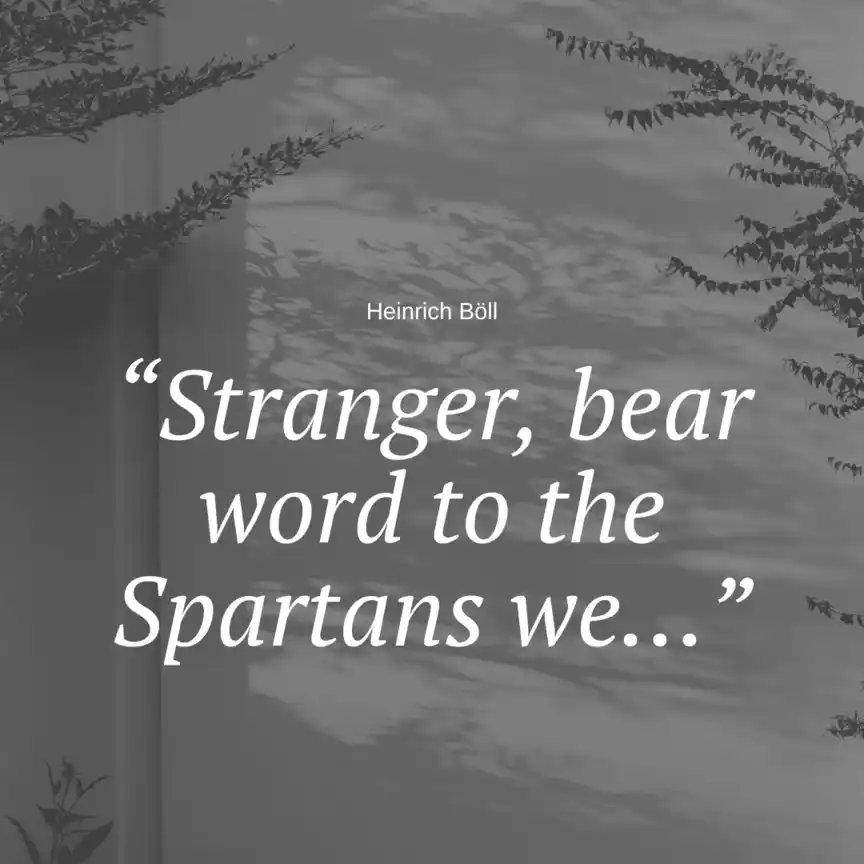
Quotes from Stranger, Bear Word to the Spartans We… by Heinrich Böll
- “Where are we?” “In Bendorf.” Recognition lands like a blow; consequently, the city name turns memory into evidence inside the ruined school.
- “Drink, comrade.” Mercy speaks softly; therefore a cup steadies the scene while the war keeps burning outside the windows.
- “Put a cigarette in my mouth.” Need trims pride; moreover, small comforts measure pain more honestly than any slogan in Stranger, Bear Word to the Spartans We…
- “It cannot be true, I thought. The car cannot have driven so many kilometers.” Denial buys time; consequently, shock edits distance before the room explains it.
- “You must find out what wound you have and whether you are in your old school.” Resolve replaces drift; therefore the mind sets its own orders inside the wreckage.
- “It was my handwriting on the blackboard.” Proof arrives; moreover, the book makes a chalk line decide the plot and the verdict.
- “Stranger, bear word to the Spartans we…” The truncated motto speaks; consequently, the classroom turns a heroic epitaph against obedience in this novel.
- “Seven times it stood there, clear and relentless.” Repetition drills meaning; therefore the wall refuses doubt and the reader cannot look away.
- “I had no arms, and no right leg.” The sentence cuts clean; consequently, the body answers the motto more fiercely than any speech could.
Trivia from Stranger, Bear Word to the Spartans We…
- Epigram engine: A school-wall preserves the Thermopylae line; consequently, Stranger, Bear Word to the Spartans We… treats a single sentence as plot, ethic, and verdict.
- Rubble aesthetics: Trümmerliteratur turns debris into archive; moreover, bells, desks, and rollbooks function as evidence, not décor. For background, see 🌐 Thermopylae epitaph overview.
- Pronoun politics: The command speaks “we,” yet a wounded passerby hears “I” and “you”; therefore Stranger, Bear Word to the Spartans We… exposes how grammar recruits obedience.
- Classroom to courtroom: A bombed school becomes civic space; consequently, lessons convert into hearings where objects testify and slogans face cross-examination.
- War as trade: Logistics, ledgers, and errands frame the aftermath; for a stage-driven look at survival economies, compare 👉 Mother Courage and her Children by Bertolt Brecht.
- Loyalty and silence: Quiet refusals outlast parades; furthermore, this book shows how small denials protect the living better than loud vows.
- Youth under ideology: Postwar youth inherit mottos and debts; as a counterpoint on conformity and bravado, see 👉 Cat and Mouse by Guenter Grass.
- Classical echo: The Simonidean couplet keeps returning in modern culture; for translations and variants, read 🌐 Simonides epigrams (Attalus).
- Rollbook of absence: Names in the register outlast uniforms; consequently, counting the missing becomes a civic ritual stronger than any motto.
- Repair as practice: Reading becomes labor; therefore citizens copy rolls, reopen rooms, and carry a changed message—names first—so language serves the living before it serves the dead.
The title matters because it turns a heroic command into an anti-war verdict
No part of the story is more brilliant than the title itself. The old Spartan command to tell that the dead obeyed the law was once a model of martial admiration. In Böll’s hands, it becomes something else entirely. Because the title is cut short, because it returns on the blackboard, because it is linked to the boy’s own school exercise and the wounded man’s broken body, it loses every stable claim to nobility. The title becomes a site of reversal. It carries the memory of heroic education and the proof of its catastrophe at the same time.
This is what makes the story so intellectually clean. Böll does not reject classical culture in itself. He exposes what happens when a culture of exemplary sacrifice is folded into militarized schooling and nationalist obedience. The issue is not only that the boys were taught old texts. It is that those texts were placed in a framework that turned them into training for submission and death. That is why the line on the board matters more than any speech in the story could have mattered. It condenses curriculum, ideology, and ruin in a single image.
For another work where an inherited language of greatness collapses under historical pressure, A Life of Galileo by Bertolt Brecht offers an instructive contrast. Brecht stages open conflict between truth and authority. Böll stages aftermath. The difference matters. In Stranger, Bear Word to the Spartans We…, history has already passed through the body, and only then does the old language reveal what it was worth.
Why Stranger, Bear Word to the Spartans We… remains one of Böll’s most exact stories
This story lasts because it never wastes force. It is short, direct, and almost bare, yet it carries an extraordinary amount: war, youth, schooling, ideology, memory, bodily ruin, and the collapse of heroic language. Böll does not need an elaborate plot. He needs only the right situation and the right sequence of recognitions. From that, he builds one of the most concentrated anti-war stories in modern European literature. Its precision is its power.
It also lasts because it does not flatter the reader with easy innocence. The story is not only about a victim of war. It is also about a cultural system that formed that victim, a school that taught him, a motto that once sounded elevated, and a society that made those things seem coherent together. That broader accusation gives the story its lasting depth. It is not merely lamenting destruction after the fact. It is asking where destruction begins, and it answers: earlier than we like to think.
If you want one short text that shows why Böll mattered so much in postwar German literature, Stranger, Bear Word to the Spartans We… is one of the clearest choices. It is controlled, unsentimental, and devastatingly exact, so it does not just say that war is terrible. It shows how a whole educational and moral language can prepare people to endure the terrible as if it were honorable. That is why the story still cuts so sharply. It turns a school lesson into a verdict, and it never lets either the narrator or the reader look away from what that lesson has produced.
More Reviews of Works by Heinrich Boell