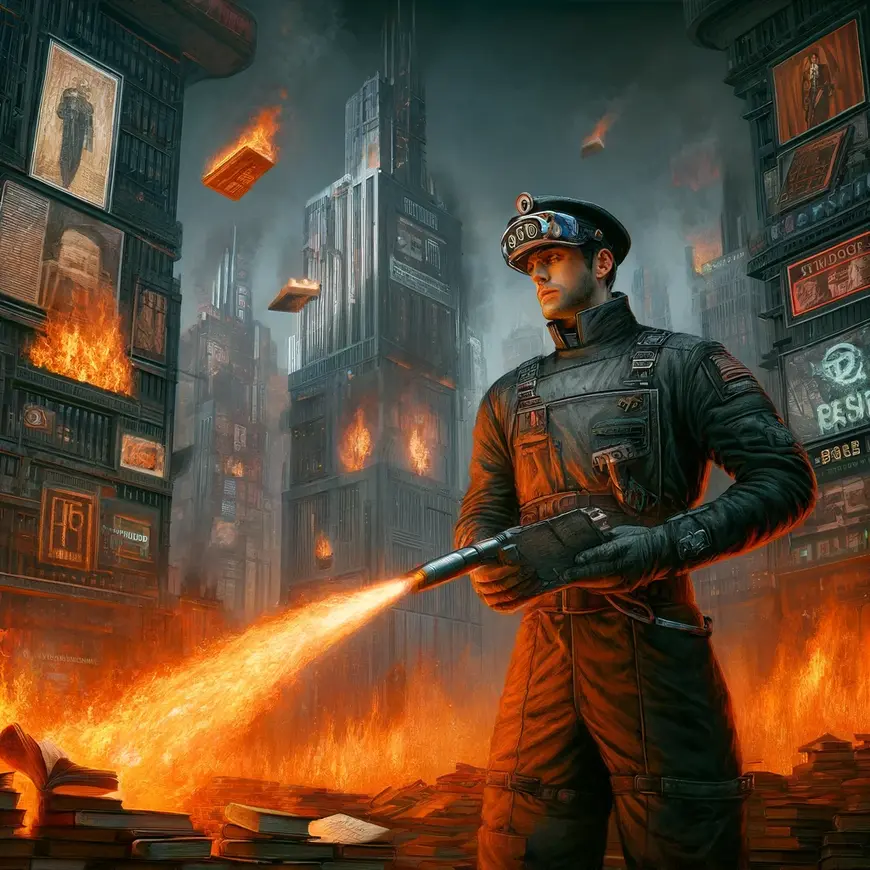
The Illustrated Man by Ray Bradbury — Tattoos and Time
A traveler meets a stranger whose skin lives. The campfire breathes, and ink begins to move. In The Illustrated Man, pictures wake like eyes and speak. Skin writes prophecy. The host warns the guest to look away, yet curiosity climbs closer. However, wonder never arrives free of charge.
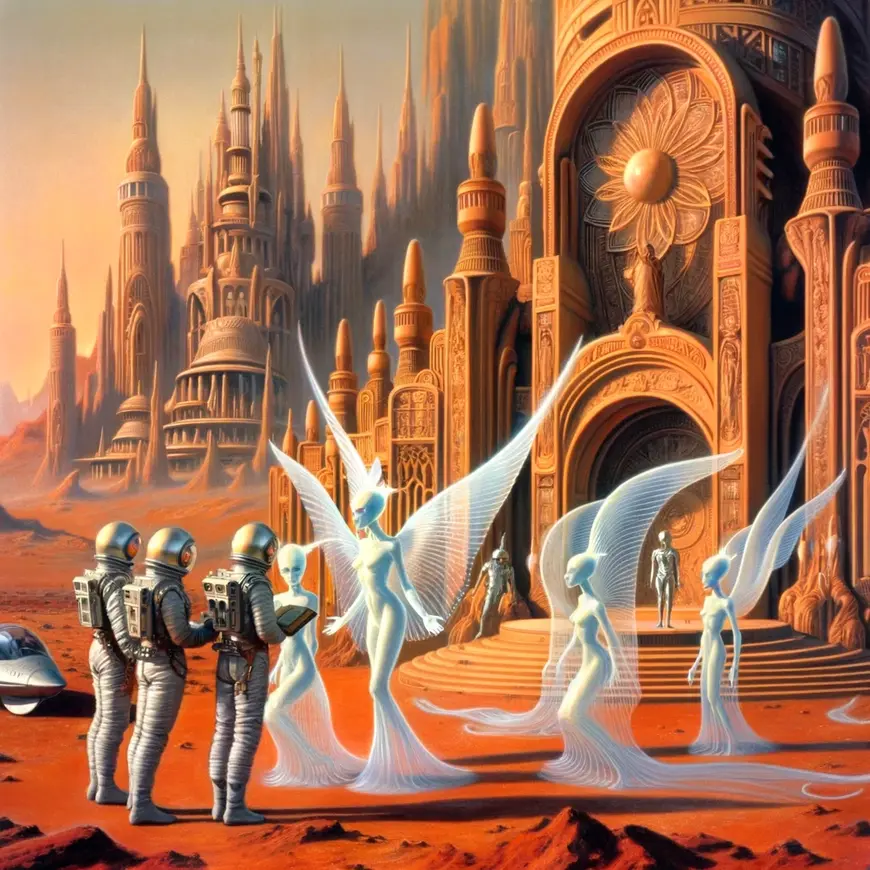
Each tattoo opens a window. Consequently, one scene becomes many, and one body becomes a library. Stories step off the skin. The future flickers with Martian sands, nuclear suburbs, metal nannies, and lonely rockets. Moreover, every tale tests a simple claim: technology amplifies urges that already wait in us.
Ray Bradbury sets fable against fear. Therefore, language runs hot and bright, while morals land with a clean strike. Wonder costs something. Parents love and fail; astronauts dream and break; children play and burn. Meanwhile, the man with living art sits quiet and lets images judge the watchers.
I track the frame as a moral device. Because the pictures know the end, suspense turns inward. The frame judges the viewer. The guest wants the thrill without the verdict, although the ink refuses that bargain. As a result, the book asks the oldest question in a new light: what does it mean to remain human when the future moves faster than mercy.
The fire lowers, and the skin keeps working. In this book, dread and awe share one chair. Consequently, the opening teaches the right pace for the rest: look, then listen, then decide. By contrast, speed flattens wonder into noise. I close the first section with a rule the book enforces again and again: watch closely, or the picture watches you.
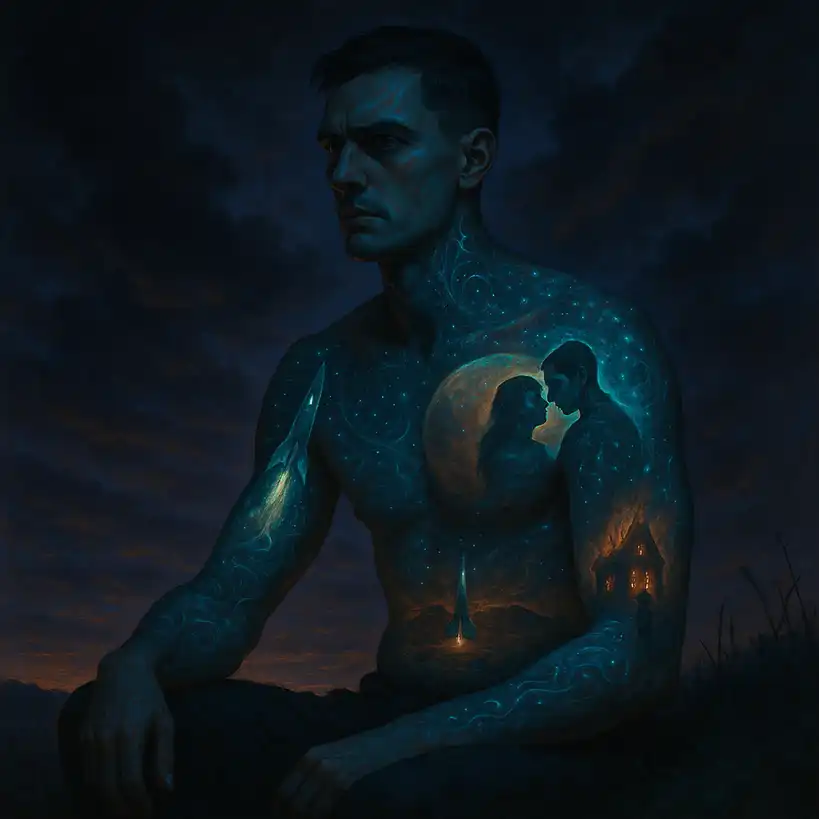
Stories as Tattoos in The Illustrated Man
The gallery turns, and scenes replace sleep. One picture shows a house that mothers children with circuits. Another shows a rocket that remembers earth with pain. In this novel, each tale stands alone, yet each one fits the same spine. Small frames, large stakes. Therefore, the book marries campfire intimacy to cosmic scale.
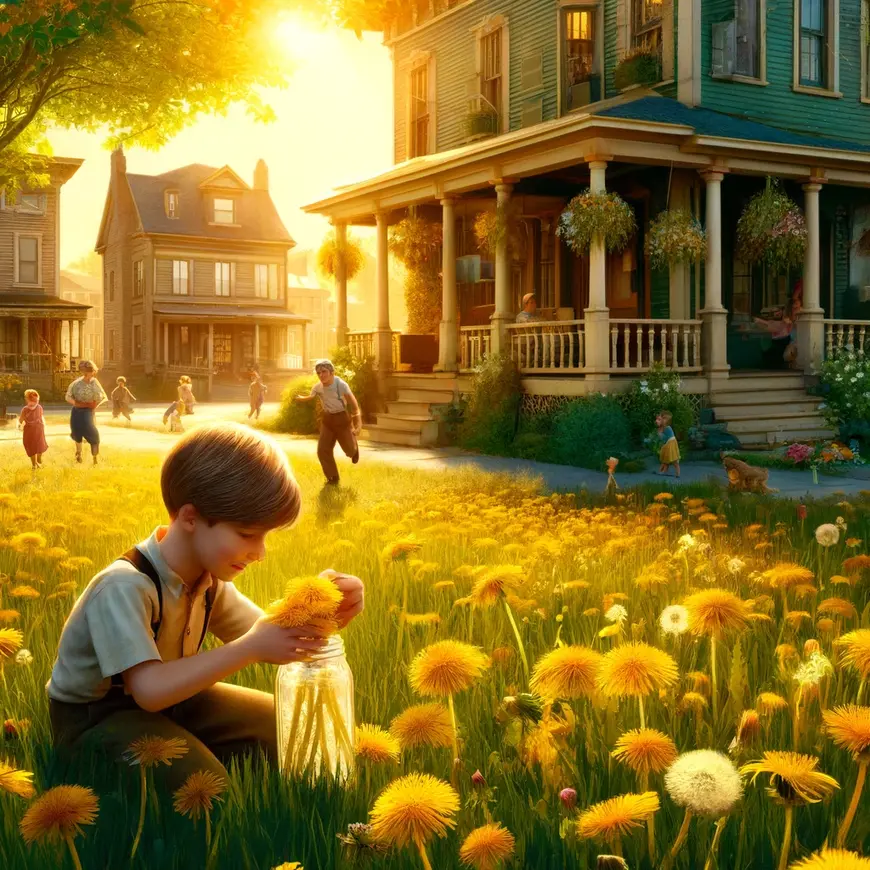
Motifs repeat and grow teeth. Children inherit screens and nightmares. Couples chase paradise and find ruin. Family under future light. Consequently, love and fear braid together, and invention sharpens both. Moreover, Martian wind and Midwestern night feel like cousins, since distance never erases appetite.
Bradbury writes sentences that sprint and stop. He loves nouns that shine and verbs that cut. Language aims to warn. Because images move, morals do not need sermons. They arrive as aftertaste. Meanwhile, the frame character sits like a judge who never speaks the verdict out loud.
Travel also links the pieces. The stranger wanders from town to town, and the road behaves like film between reels. Movement edits memory. By contrast, suburbs trap time and turn playrooms into deserts. The tension holds because the canvas never runs out of space, and the reader never runs out of nerves.
For a human-scale parallel where the sky teaches danger and craft teaches courage, the map nods to 👉 Wind, Sand and Stars — Antoine de Saint-Exupéry. Pilots learn humility above dunes; readers learn humility before pictures that move. In The Illustrated Man, that humility matters. Consequently, the section closes with a warning and a welcome: follow the ink, but count the cost before you stare.
Children, machines, and love that learns to bite
A nursery grants wishes, and the walls obey terror. Parents buy comfort, and the house raises wolves. In The Illustrated Man, love meets a screen that never blinks. Childhood magnifies power. The room studies the children, therefore the room learns their hunger. However, a wish that never hears no stops feeling like love.
Stories repeat this warning with new masks. Robots sell loyalty; consequently, spouses rent alibis. Love without limits breaks. A city entertains its last day with fireworks. Moreover, astronauts argue about meaning while the dark turns their talk into echoes. The future never causes cruelty; it only removes friction.
Language keeps moving like a flashlight. Ray Bradbury chooses bright nouns and hard verbs. Screens train appetite. Because adjectives spoil quickly, he stores heat in action. Meanwhile, the frame character sits by the fire and lets each picture judge the watcher. I listen, then I feel the verdict arrive without a speech.
Parents want safety and thrill in one purchase. Therefore, they outsource care to machines and call it modern. Fear learns quickly. The children hear that call and answer with games that draw blood. By contrast, the adults try soft rules, then discover that soft rules teach no limits.
I turn the page and find the same pulse inside a different skin. The work keeps pairing wonder with price. Consequently, the campfire grows smaller, while the gallery grows louder. The book asks for a duty that no device can perform. It asks mothers and fathers to draw borders, to say no, and to stay. Because stories remember, the skin remembers too, and the reader remembers most of all.

Desire, vows, and the cost of freedom in The Illustrated Man
A promised life arrives, then demands a receipt. Lovers gamble on escape, and escape rewrites the bill. In The Illustrated Man, freedom feels holy until it asks for collateral. Desire edits truth. People chase paradise, however paradise expects maintenance. Therefore, small lies multiply and turn into cages.
Marriage faces the future like a fragile craft. A husband buys a double, and the double steals his home. Freedom bites back. Another couple seeks a perfect planet; consequently, winters teach a colder lesson. Moreover, rockets grow fast while character lags behind, so speed exposes what patience once hid.
Bradbury refuses cynicism. He believes in tenderness, yet he measures it. Compassion needs borders. Parents must protect, not flatter. Travelers must own the trail, not blame the stars. Meanwhile, the frame keeps moving down the road, because the living gallery cannot sleep without witnesses.
I notice how choice shapes every ending. Characters choose wonder over duty, and duty arrives late with a bill. Choice reveals soul. By contrast, the rare hero keeps promises when no one claps. That quiet act turns science fiction into moral weather. Furthermore, the language stays simple so the choices stay clear.
A mirror outside the genre clarifies this charge. A tiny book watches a fragile life, then measures kindness without glamour. For a human-scale echo of fate, hunger, and the price of attention, the review nods to 👉 The Hour of the Star by Clarice Lispector. The pairing shows how a single voice can carry a cosmos. In this story, each picture does the same work. Consequently, the section ends with a rule that travel cannot cancel: love what you chose, and keep the promise that love requires.
Style, imagery, and the carnival of warnings
Color flames through every page. Stars glow cold; lawns burn warm; steel shines like teeth. In The Illustrated Man, Ray Bradbury turns spectacle into signal. Color turns caution bright. He writes quick verbs, therefore scenes sprint. He chooses solid nouns, consequently morals land without sermon. Moreover, the campfire frame keeps intimacy taut.
Images repeat until they judge. A house hums lullabies, yet it learns hunger. Rockets promise wonder, however they collect ghosts. Fable sharpens ethics. The book loves astonishment, although it never forgets cost. Because wonder expands appetite, the stories test whether conscience expands as fast.
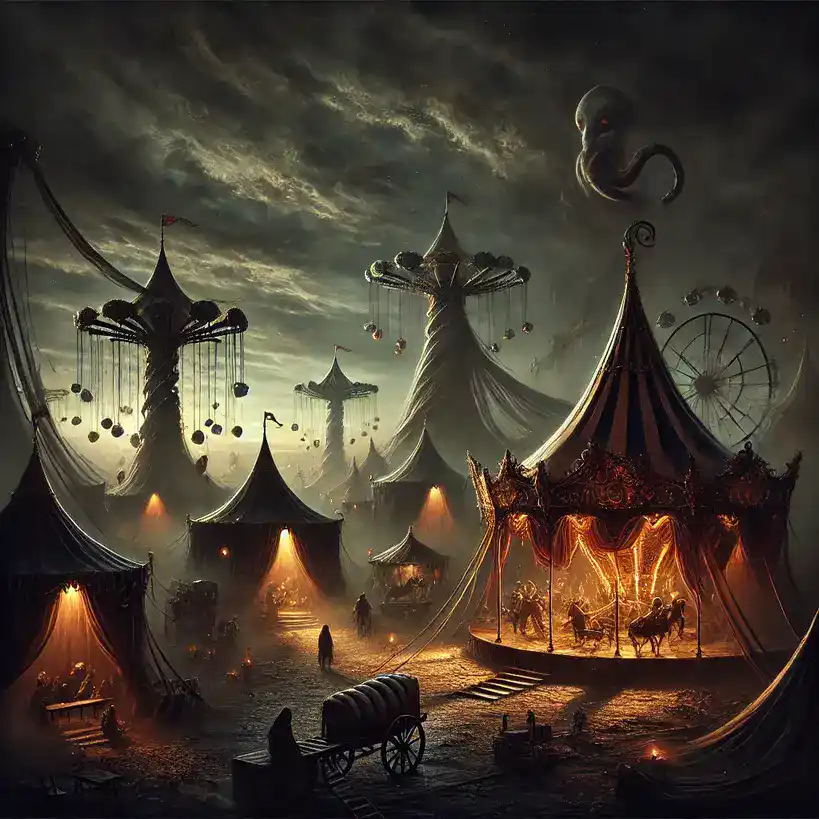
Structure works like a midway. We walk from tent to tent while one ringmaster watches. The frame watches us. The stranger never argues; instead, the skin performs. As pictures move, we become the exhibit. Therefore, suspense shifts from plot to reader: will we choose caution before the ink writes our ending.
Tone walks a tightrope. Sentences carry sweetness, yet endings bite. Tenderness needs teeth. Parents ache; children glow; astronauts cry; machines listen. Meanwhile, the road keeps turning, and the gallery never empties. By contrast, weaker fables would choose a single mood and dull the charge.
I admire how this writing hides craft inside heat. He layers sensory detail so fear feels lived, not lectured. He clips dialogue so motives show. Consequently, scenes read fast and stay long. The show looks simple because the work runs deep. Therefore, style becomes ethics: make the warning beautiful enough to enter the heart, then let the heart do the rest.
Luminous Quotes from The Illustrated Man by Ray Bradbury
- “The future lives on my skin and refuses to sleep.” The frame speaks, therefore dread and awe share one body in The Illustrated Man.
- “Wonder costs more than the price of a ticket.” The tales dazzle; however, every image collects a debt that this work makes visible.
- “Machines obey desire, and desire forgets mercy.” The book warns plainly; consequently, tools amplify us.
- “Children learn quickly what walls will allow.” Parents buy comfort; moreover, the nursery answers with teeth in this work.
- “Color sings, then the ending bites.” Bradbury pairs brightness with consequence; therefore, delight matures into caution.
- “A promise breaks louder in a vacuum.” Space strips excuses; consequently, vows ring clear by Ray Bradbury.
- “Stories walk off the skin when the heart looks away.” The gallery judges; however, the reader still chooses.
- “Tenderness needs borders, or it learns to burn.” Love survives with limits; moreover, limits keep wonder human.
Context and Craft Facts from The Illustrated Man
- Campfire frame, cosmic reach: A roadside meeting opens the gallery; consequently, The Illustrated Man turns one body into many worlds.
- Short form, long echo: Each story closes fast, yet images linger; therefore, compression sharpens the moral afterglow.
- Homes under pressure: Suburbs host fables about screens and fear; moreover, domestic rooms test courage across this book.
- Travel as editing: The wanderer links episodes as film links reels; consequently, movement stitches meaning in The Illustrated Man.
- Comparative echoes: For voice that ripples like light on water, see 👉 The Waves by Virginia Woolf. For a parable of art, craft, and divided paths, consider 👉 Narcissus and Goldmund by Hermann Hesse.
- Frame-tale lineage: The roadside gallery extends a long tradition of frame stories; therefore, it sits beside tale-cycles that bind many episodes to one narrator. See 🌐 Britannica — Frame story.
- Carnivalesque and the “grotesque body”: The tattooed showman channels festival logic, inversion, and the public body; consequently, the frame borrows energy from the carnivalesque. See 🌐 Mikhail Bakhtin.
- Color as warning system: Bradbury’s bright imagery seduces first; however, the palette delivers alarms that readers can feel across the novel.
- Choice over fate: The pictures predict, yet people decide; consequently, ethics remains personal in this work.
Mirrors, myths, and what other books teach this one
Short forms demand precision. The Illustrated Man proves it, since each tale must open a world and close a wound in minutes. Short forms, long echoes. Because the canvas is skin, transitions feel physical. Consequently, the collection reads like a single body learning self-control.
Other rooms teach useful angles. Childhood voices haunt these pages, therefore innocence never feels safe. Play flips morals. A prank can break a city; a game can break a parent. Moreover, the watching eye creates pressure, since gaze turns ordinary flaws into fate. Gaze creates prisons.
I trace how choices trap characters. They ask technology to love them; however, tools only obey. Obedience amplifies desire. By contrast, patience draws borders and saves homes. Meanwhile, the gallery tattooist walks on, and the night keeps offering fresh screens to weak wills.
Comparative reads sharpen the lesson without stealing the spotlight. For early, intimate shocks where small choices echo, consider 👉 Three Early Stories by J. D. Salinger. For fables that invert expectations and show how language plays with power, add 👉 Upside Down Story by Ana Maria Machado. For a chamber of relentless attention where the look itself binds judgment, turn to 👉 No Exit by Jean-Paul Sartre. These companions test how stories confine or free us.
The links return me to this book. Pictures move because we move toward them. Therefore, the cure begins where the warning lands: name the wish, slow the hand, and keep the promise that love demands before the skin decides for you.
More Reviews of Works by Bradbury