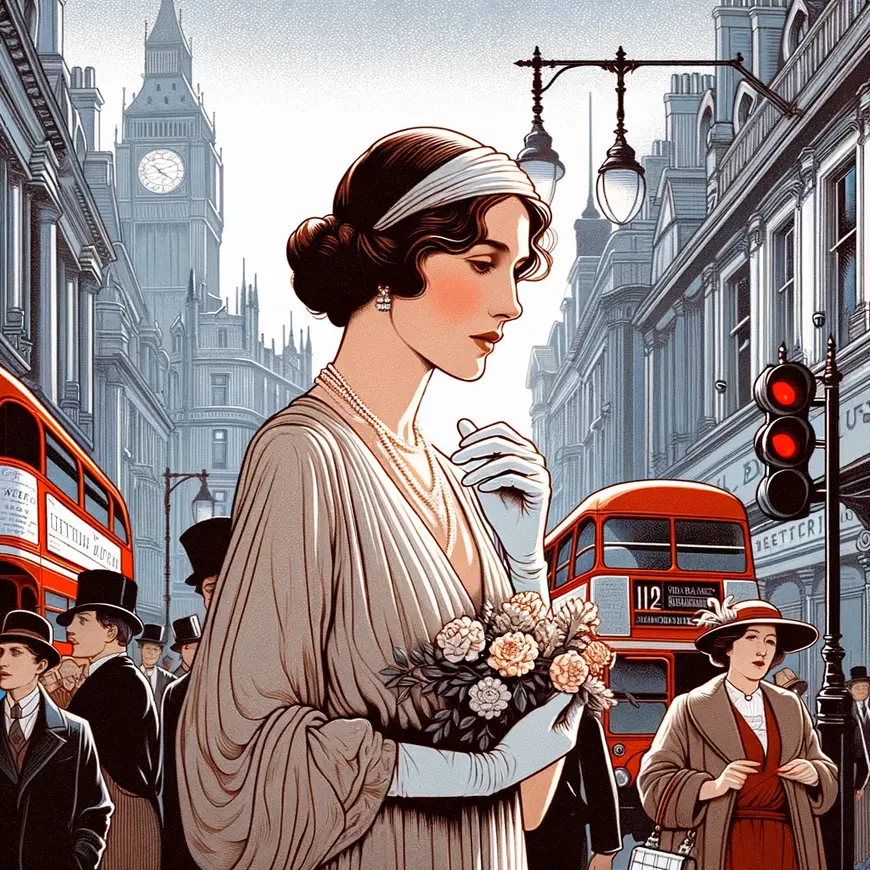
To the Lighthouse by Virginia Woolf – A Portrait of Silence
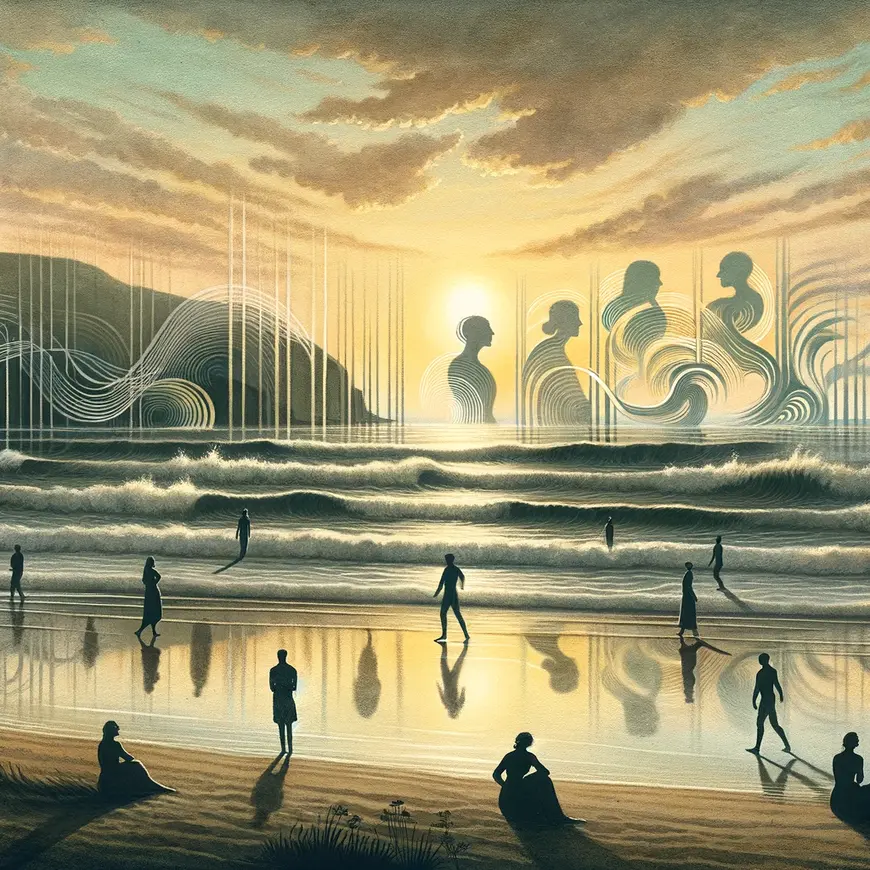
Virginia Woolf’s To the Lighthouse is a novel that resists clarity even as it bathes everything in light. It follows a family and its guests across two temporally disjointed visits to a summer house by the sea, but that’s only the outer shell. Beneath, the novel carries the weight of fleeting thoughts, unsaid words, and emotional undercurrents we barely notice in life — until a book like this makes them visible. I was immediately taken in by the rhythm of her prose. The writing felt like standing in a shallow tide: just when you think it’s receding, it comes back stronger and unexpected.
What struck me most was how little “happens” — and yet how much is felt. The early tension between Mr. and Mrs. Ramsay about the weather, the trivial interruptions from children, the lingering silence after a phrase, it all mirrors real life, but told in a language only this author can compose. This is not a plot-driven novel. Instead, it’s a world of inner thoughts brushing past each other like shadows.
Her stream-of-consciousness is masterful here, but what makes it so affecting is how restrained it is. The narration doesn’t scream for attention. It whispers. It follows not one character, but many, letting us float from mind to mind. This multiplicity gives the novel its emotional weight. I saw myself in these characters, not in what they did, but in what they almost said. It reminded me of 👉 The Road Back by Erich Maria Remarque, which also explores emotional distances in postwar silence. More than a novel, it is a meditation. And once you tune into its wavelength, it lingers. The waves keep coming.
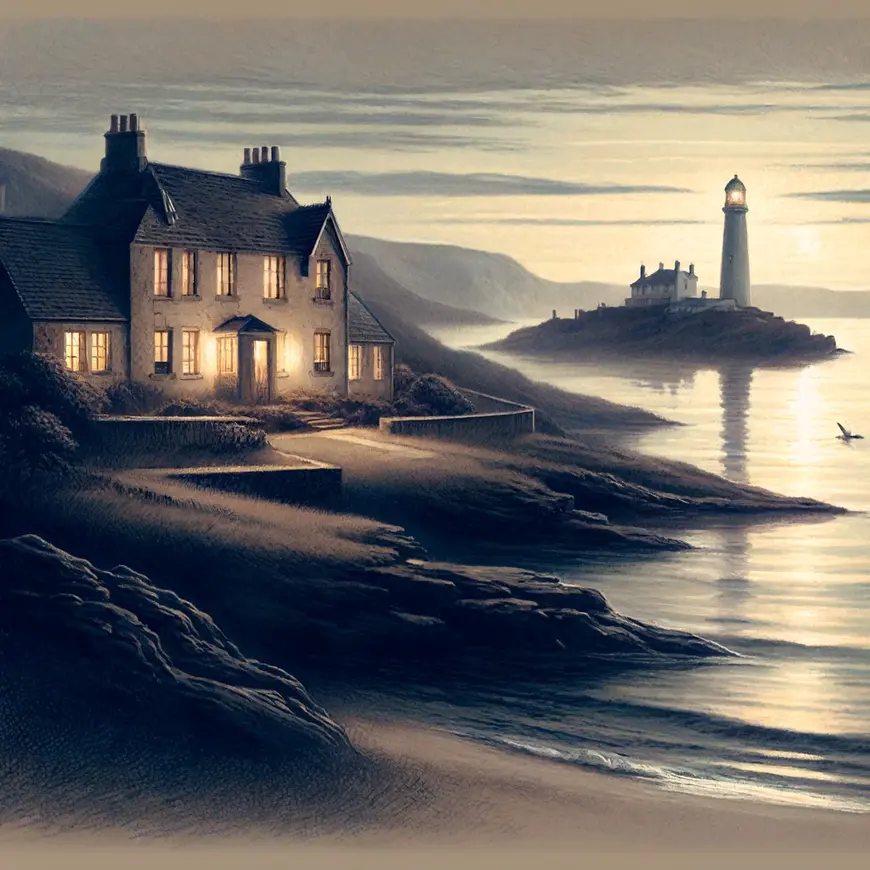
The Shifting Architecture of To the Lighthouse
The structure of the writing is quietly radical. Divided into three parts, “The Window,” “Time Passes,” and “The Lighthouse” — it manipulates time and focus in a way that dissolves traditional narrative expectations. The first section spans just one day, while the second covers ten years in a handful of pages. This daring contrast gives the novel a pulse, a sense of being simultaneously stretched and compressed, like memory itself. I found the middle section particularly haunting: war, loss, and decay unfold with a detached urgency. It’s not dramatic, but deeply unsettling.
The lighthouse, a recurring image and destination, becomes more than a physical object. It stands for aspiration, longing, and the elusive nature of understanding. Reaching it is both symbolic and literal, a quest that seems simple but carries emotional and philosophical complexity. She plays with space and perspective: rooms, doors, dinner tables, all loaded with psychological resonance.
I admired how the novel turns ordinary domestic scenes into sites of profound revelation. The tensions over dinner, the arranging of flowers, the unspoken disappointments, everything resonates. Like 👉 Requiem for a Nun by William Faulkner, the setting here isn’t passive background but a living presence.
Woolf’s use of temporal dislocation is more than a stylistic choice. It reflects how we actually experience life: in fragments, in returns, in gaps. She captures the feeling of looking back from a changed world. The fact that you remember something isn’t because it was important, it’s because it shaped you, silently. That’s the lighthouse. Always there, always distant, always refracted through time.
Painting Thought into Fiction
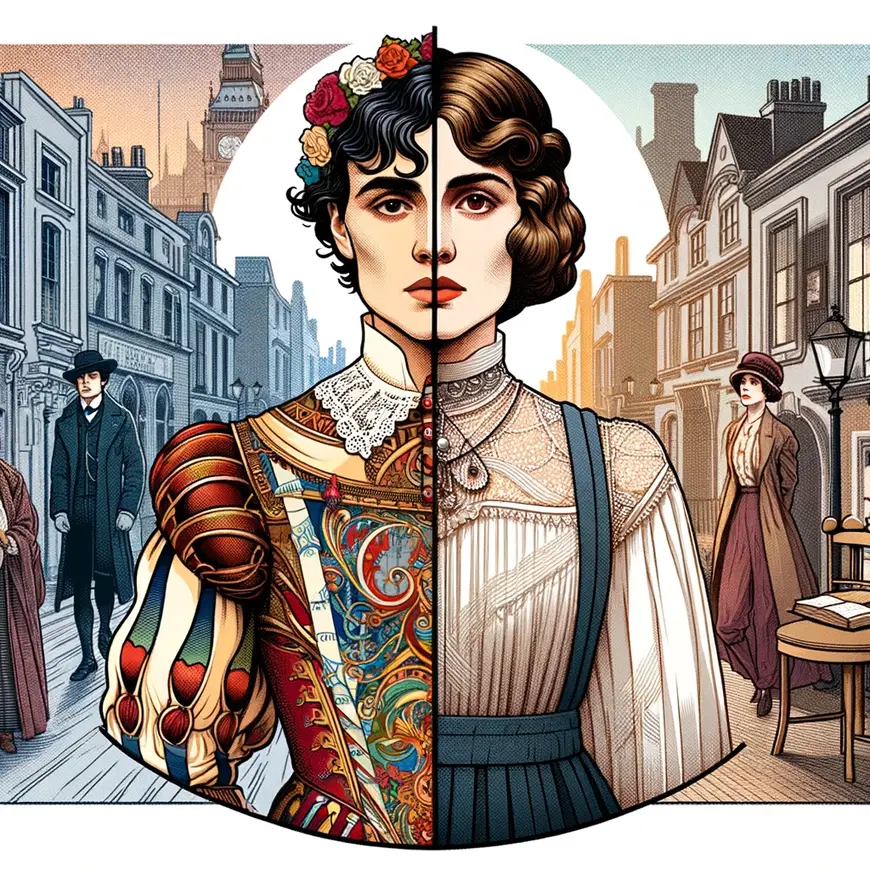
Among the many memorable characters in the book, Lily Briscoe stands out as her most compelling voice of resistance and creativity. A painter grappling with her place in the world and within her own art, Lily is often seen at the edge of scenes, observing, reflecting, hesitating. But it is precisely from this margin that she sees most clearly. Her struggle to “get the line right” on her canvas mirrors Virginia Woolf’s own modernist experiment with form and meaning. I found myself quietly rooting for Lily, not because of a dramatic arc, but because she dares to think deeply and feel silently.
Lily’s art becomes a metaphor for her writing. Both women are battling expectations, conventions, and the pressure to make sense of the incomprehensible. As Lily tries to balance form and emotion on her canvas, the novelist is doing the same with her narrative. Each brushstroke, each sentence, is deliberate and searching. This deep parallel between artist and author made me more attentive to every detail in the novel. I realized that the ordinary can carry meaning, if only we look carefully enough.
Lily also offers a form of emotional continuity across the novel’s time lapse. While the Ramsays fade and change, her presence grounds the story in reflection. Her final scene, where she finishes her painting, feels less like triumph and more like understanding. It’s a quiet closure, one that doesn’t resolve grief or time, but accepts them.
Reading Lily’s story, I remembered how Virginia Woolf often wrote of the “moments of being” — flashes of clarity that punctuate the blur of daily life. Lily embodies that idea. She watches, she listens, and in the end, she finds her line.
The Invisible Power of Mrs. Ramsay in To the Lighthouse
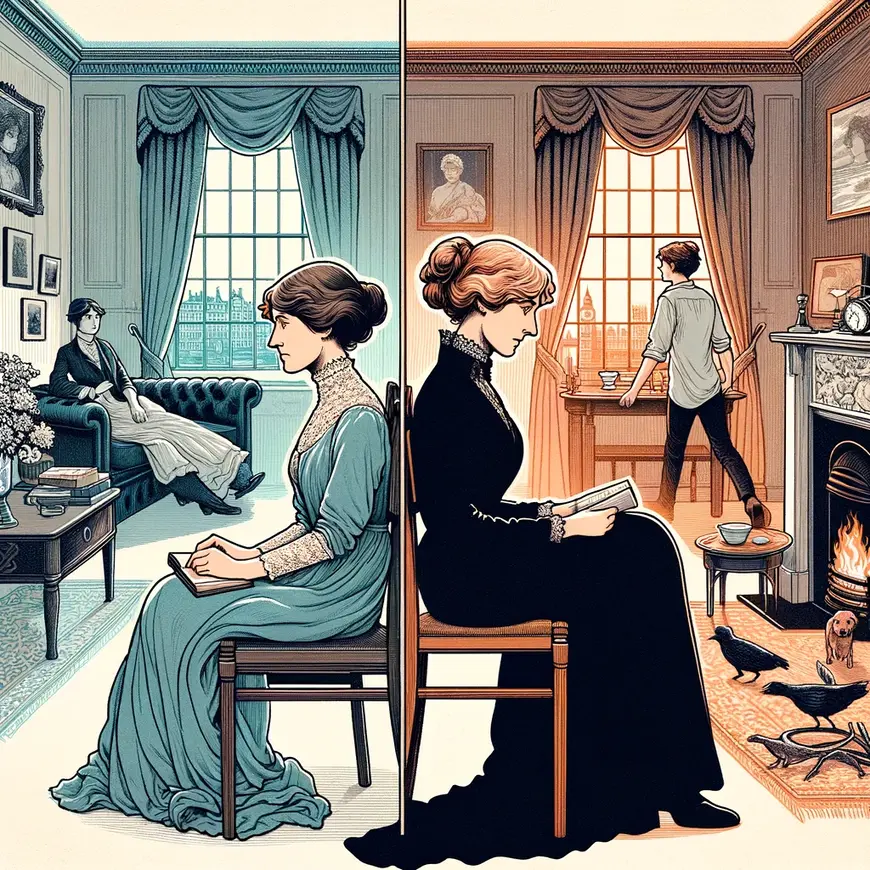
Mrs. Ramsay exerts a quiet gravity over To the Lighthouse, drawing people toward her without seeming to try. She comforts, organizes, softens tensions, all while rarely revealing her own depths. I was fascinated by how much of her power lies in perception. She is seen through others’ eyes, fragmented and idealized, yet she also exists in moments of solitude that feel raw and sincere. She doubts her worth, fears aging, and questions her marriage, but still embodies a kind of fragile authority.
Her ability to create harmony at the dinner table or soothe her children feels almost mythic. But she doesn’t sanctify her. Instead, she peels back the layers of a woman conditioned to serve others while longing for personal space. This tension is heartbreaking. Mrs. Ramsay is both the emotional center of the family and a ghost within it, admired, needed, and yet profoundly alone.
I couldn’t help but think of 👉 Lenz by Georg Büchner, where the central character is also observed more than understood, drifting through others’ expectations. Mrs. Ramsay’s presence lingers long after her absence, shaping how characters relate to each other and to time itself. Her sudden disappearance in the middle section is jarring, not because of its drama, but because of its silence.
What moved me most was how the writer showed the cost of Mrs. Ramsay’s grace. Her life is composed of small sacrifices, invisible threads that hold others together. And though she’s often idealized, her pain and uncertainty feel vividly real. She’s not a symbol. She’s someone we’ve known, or someone we’ve been.
Time Passes, and Everything Changes
The middle section of To the Lighthouse — “Time Passes” — is a breathtaking shift. It abandons the intimate human perspective and instead lets the house and passing time take center stage. Years blur into pages. Characters die off-screen. War arrives and departs without fanfare. I was stunned by the quiet power of it all. The absence of emotion doesn’t flatten the loss; it deepens it. Virginia Woolf doesn’t narrate grief, she embodies it in stillness and erosion.
This chapter reads like a meditation. Rooms decay, dust accumulates, silence expands. Life becomes something ephemeral, a suggestion rather than a presence. And yet, this detachment doesn’t feel cold. It invites reflection, forcing the reader to pause and feel the weight of absence. In this silence, I felt the echo of everything the first section had built. The careful domestic rituals are now memories, shadows of former warmth.
I found it profound that she entrusted the natural world — light, wind, darkness — to convey what the characters no longer could. The house becomes a character in its own right, mourning and enduring. The passage of time is not dramatic but unstoppable. Even the deaths, of Mrs. Ramsay, Andrew, Prue, arrive parenthetically, as if whispered from another room.
This part of the novel made me rethink the pace of my own life. How much do we miss while rushing forward? The author suggests that meaning doesn’t vanish with time, but it does change shape. What lingers is not the event, but the atmosphere. And in “Time Passes,” the atmosphere is everything.
Mr. Ramsay and the Weight of Expectation
Mr. Ramsay is one of the most complex figures in To the Lighthouse. He is brilliant and vulnerable, self-absorbed yet desperate for affection. At first, I found him frustrating, his need for admiration, his harshness with his children, his gloom. But the more the writer revealed of his inner life, the more I saw a man struggling to live up to his own impossible standards. His academic achievements feel hollow next to the emotional validation he craves but cannot ask for.
There’s a certain tragedy in his pride. He wants his children to be strong, his students to respect him, his wife to love him, but he doesn’t know how to give in return. And still, Virginia Woolf doesn’t reduce him to a caricature. She lets us into his fears, his intellectual insecurity, his need to be reassured. I recognized in him the kind of sadness that’s hard to name but easy to feel.
His walk to the lighthouse in the final section becomes a kind of redemption. It’s not heroic, but it is human. He doesn’t change completely, but he softens, even if only for a moment. That small shift feels more meaningful than any grand transformation.
Mr. Ramsay is both imposing and fragile. And her refusal to resolve his contradictions is what makes him unforgettable. She allows him to be flawed and still worthy of empathy.
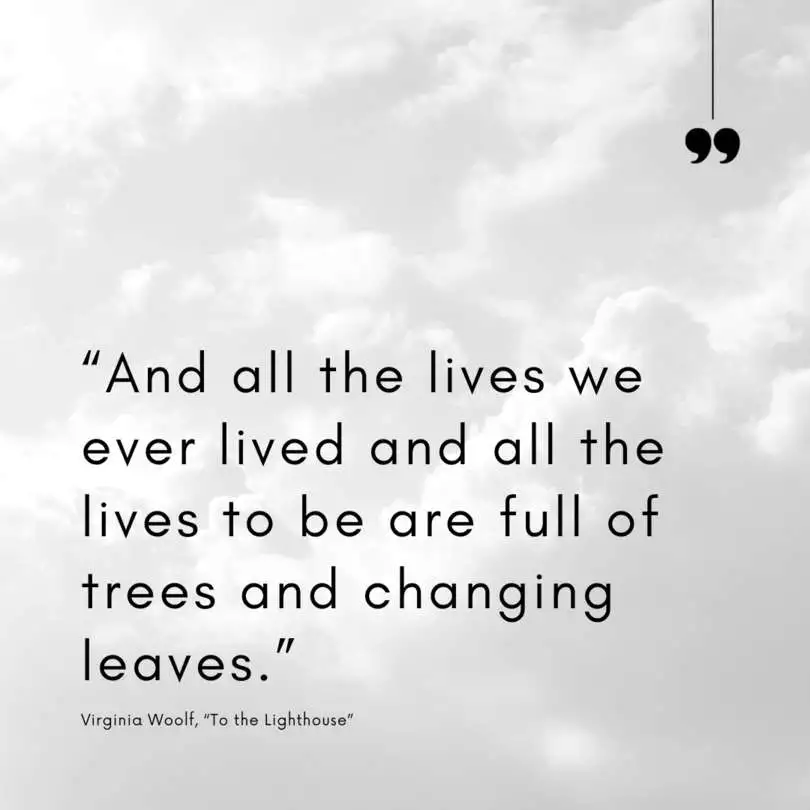
Reflective Quotes from To the Lighthouse by Virginia Woolf
- “What is the meaning of life? That was all—a simple question; one that tended to close in on one with years.” This line distills the existential tone of the novel. Virginia Woolf doesn’t offer answers, only the ache of the question lingering through time and thought.
- “They went to the window to look at the storm.” A moment of outward stillness masks the emotional storm within. This contrast of domestic calm and inner turbulence captures her signature narrative layering.
- “For now she need not think about anybody. She could be herself, by herself.” Mrs. Ramsay’s fleeting liberation is one of the few times she detaches from her role as nurturer. It’s a quiet feminist victory, one that lingers.
- “The great revelation perhaps never did come. Instead there were little daily miracles, illuminations, matches struck unexpectedly in the dark.” This line celebrates the ordinary. It reframes meaning as small moments of clarity rather than grand epiphanies.
- “She felt this thing that she called life terrible, hostile, and quick to pounce on you if you gave it a chance.” Lily Briscoe’s fear echoes her personal struggles. It also reminds us how fragile existence can feel beneath the surface of daily life.
- “It was love, she thought, love that makes the world go round.” A deceptively simple reflection that haunts the novel. Love binds the characters, but also isolates them when it cannot be fully communicated.
Trivia Facts from To the Lighthouse
- Writing defied traditional plots: Rather than linear storytelling, she employed stream of consciousness and impressionistic time shifts, reshaping how readers experience interior life. 👉 Nausea by Jean-Paul Sartre also challenges narrative conventions.
- The novel captures a post-WWI world: Written in the shadow of the Great War, the book reflects a deep cultural disillusionment. Its central “Time Passes” section eerily echoes the lost years of European trauma.
- Lily Briscoe channels her own creative tension: Lily’s inner doubts and refusal to conform to traditional roles mirror her anxieties about being a woman artist in a male-dominated world. 👉 Desolation by Gabriela Mistral also explores female creativity in solitude.
- The novel influenced countless modernists: Its structure and technique impacted contemporaries and later writers alike. 👉 The Sound and the Fury by William Faulkner shares her deep dive into fragmented consciousness.
- The Hogarth Press published it in 1927: Woolf and her husband Leonard ran the press themselves, giving her full creative control. This helped shape modern independent publishing. Learn more via The British Library.
- Feminism is subtle but firm: Through Lily and Mrs. Ramsay, she interrogates the limits imposed on women. Her characters challenge domestic expectations without dramatizing rebellion.
- The setting omits most historical references: Yet history seeps in through absence, through ghostly allusions, unsaid grief, and social expectations. 👉 The Palace by Claude Simon also evokes war and absence through experimental form.
- The book’s themes resonate with philosophical aesthetics: Concepts of time, beauty, and memory have drawn attention from scholars in literature and philosophy alike. Explore further via The Stanford Encyclopedia of Philosophy.
The Lighthouse as Meaning and Mirage
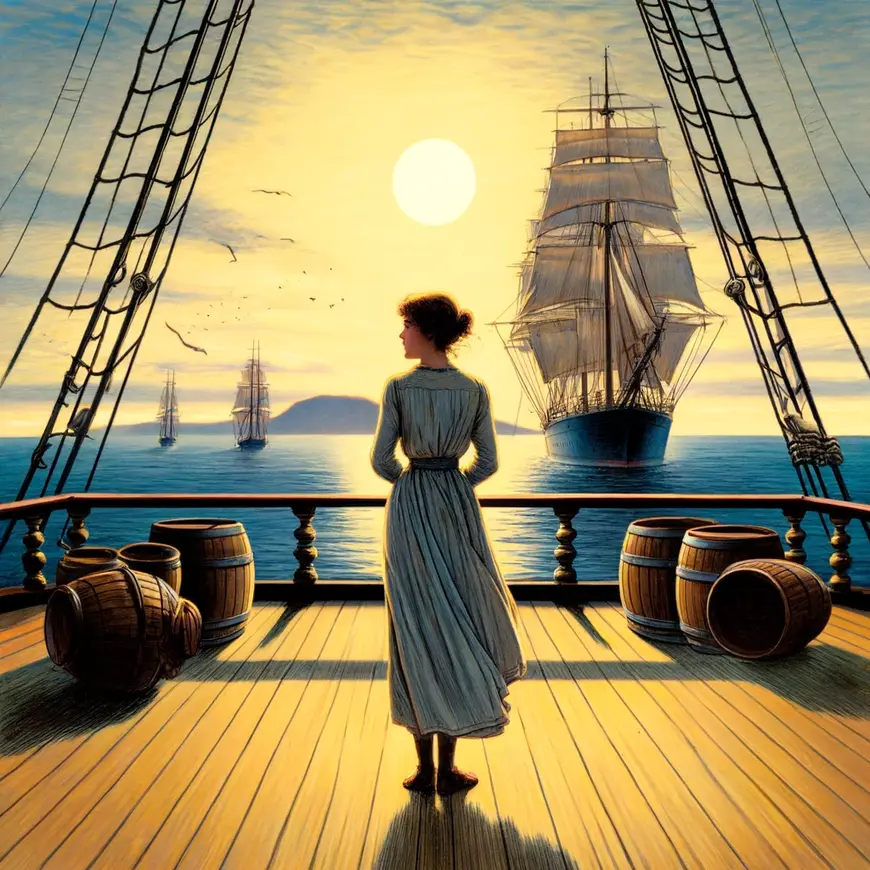
The lighthouse, long promised and long postponed, finally comes into view in the novel’s last section. But it isn’t the same symbol it once was. At the beginning of the novel, it represented longing, childhood desire, and postponed dreams. By the time the characters reach it, the lighthouse has changed, or rather, they have. I found this incredibly moving. The journey became less about reaching a place and more about accepting the passage of time.
What fascinated me was how the lighthouse remained distant, almost indifferent, even when approached. It didn’t offer revelations or resolutions. It simply stood there, constant, as people and emotions shifted around it. This indifference made the symbol even more powerful. It wasn’t about closure. It was about presence. The lighthouse had been so many things to so many people, a promise, a joke, a metaphor, and now it was just a building on a rock.
But Virginia Woolf never lets the physical object speak alone. The inner lives of James and Cam, sailing with their father, imbue the moment with quiet tension. Their arrival is not triumphant. It’s subdued, introspective. For James, touching the lighthouse is less important than enduring the journey to it. For Cam, the experience is colored by her resentment and uncertainty. They don’t find clarity, but they find something quieter, a shared endurance, perhaps.
I found the moment remarkably honest. The building is not magic, but it holds meaning precisely because it doesn’t deliver what we expect. It remains a shape in the mist, steady and unknowable, much like life itself.
Painting as a Way of Seeing – To the Lighthouse
Lily Briscoe’s painting becomes the soul of To the Lighthouse by the end. Her canvas, with its uncertain lines and shifting forms, reflects the novel’s search for meaning amid ambiguity. Watching her return to her work after Mrs. Ramsay’s death was deeply affecting. It felt like a tribute not just to a person, but to the very act of holding on, to memory, to vision, to purpose.
What struck me most was how Lily’s art doesn’t aim to capture reality but to interpret it. She doesn’t want to “paint a portrait” of the Ramsays. She wants to find an arrangement that feels true. This mirrors how she writes: fragmentary, emotional, layered. I admired Lily’s quiet persistence, her ability to face doubt and still go on. She reminded me of anyone who has ever tried to make sense of life through creativity.
The painting doesn’t resolve into clarity. But that final moment, when she draws her line and feels it is right, is one of the most satisfying endings I’ve ever read. It’s not about success or recognition. It’s about the moment when something elusive finally aligns, however briefly.
Lily’s vision and her struggle echoed 👉 The Counterfeiters by André Gide, where art, truth, and perspective constantly reshape one another. Lily doesn’t find answers, but she finds expression. That is enough. Through her, the author celebrates not just the power of art, but the courage it takes to create in the face of uncertainty. It made me reflect on my own need to give shape to the things I feel but cannot always name.