The Lyrical Tapestry of Portuguese and Brazilian Literature
The literary traditions of Portugal and Brazil, while intertwined through a shared language and historical connections, have each developed their own distinctive voices, themes, and contributions to world literature. This article delves into the rich tapestries of Portuguese and Brazilian literature. Exploring their historical evolution, key figures, and landmark works that have left an indelible mark on the literary world.
Both Portuguese and Brazilian literatures have evolved to reflect the changing landscapes of their societies. Weaving together the threads of history, culture, and identity in their narratives. Their contributions to world literature are marked by a diversity of voices and styles, from the epic and the lyrical to the introspective and the social. Through their literary achievements, Portugal and Brazil have not only enriched their national cultures but have also offered the world a window into the unique experiences and perspectives of their peoples.
As we continue to explore the depths of Portuguese and Brazilian literatures, we are reminded of the power of literature to transcend boundaries, to reflect the complexities of human experience, and to connect us across time and space through the shared language of storytelling.
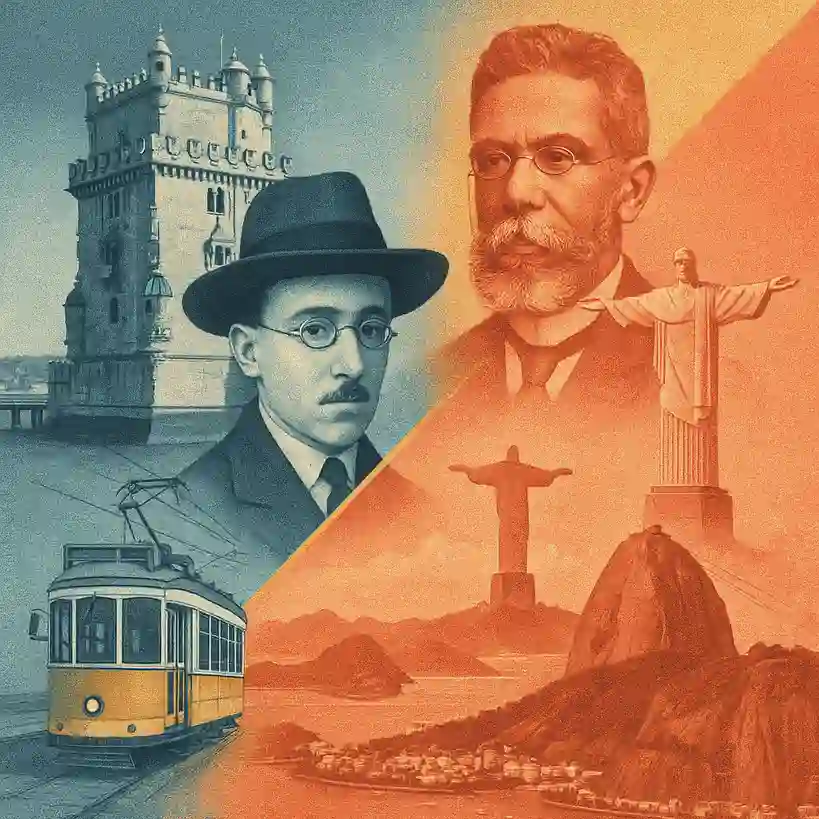
The Foundations of Portuguese Literature
Portuguese literature boasts a history that stretches back to the lyrical poetry of the 12th and 13th centuries. Deeply rooted in the Iberian Peninsula’s complex social and religious fabric. However, it was Luís de Camões in the 16th century who elevated Portuguese literature to global prominence with his epic masterpiece, “Os Lusíadas.” This seminal work, celebrating Portugal’s voyages of discovery, encapsulates the Renaissance’s spirit of exploration and humanism. Establishing a national epic that remains integral to Portugal’s cultural identity.
The 19th and 20th centuries witnessed a flowering of Portuguese literature. With the emergence of significant figures such as Fernando Pessoa. Pessoa, with his heteronyms, challenged traditional narratives and introduced a new depth to literary expression. Exploring themes of identity, existential despair, and the complexity of the human psyche. Meanwhile, José Saramago, awarded the Nobel Prize in Literature in 1998, is renowned for his distinctive narrative style and profound explorations of historical and existential dilemmas. Most notably in works such as “Blindness” and “Baltasar and Blimunda.”
The Evolution of Brazilian Literature
Brazilian literature carved its own path following Brazil’s independence from Portugal in 1822. Initially influenced by Romanticism, it soon embraced a variety of styles and themes that reflected the nation’s diverse cultural and racial heritage. The late 19th and early 20th centuries saw the rise of Machado de Assis, Brazil’s literary colossus. Whose works like “Dom Casmurro” and “The Posthumous Memoirs of Brás Cubas” offered a scathing critique of Brazilian society with unparalleled wit and psychological depth.
The 1922 Modern Art Week in São Paulo marked a turning point for Brazilian literature. Ushering in a period of experimentation and a break from European models. This period saw the emergence of modernists such as Mário de Andrade and Oswald de Andrade. Who sought to capture the essence of Brazil’s cultural diversity and challenge the social order through their work.
In the latter half of the 20th century, Clarice Lispector emerged as a singular voice in Brazilian literature. With her introspective and complex narratives that explore themes of identity, language, and existence. Similarly, Jorge Amado’s vibrant and colorful narratives brought to life the rich tapestry of Bahian society. Focusing on the lives of the marginalized and the dynamics of Brazilian cultural identity.
Special characteristics of Portuguese and Brazilian Literature
Portuguese and Brazilian literature stand out for several unique features that reflect their cultural, historical, and linguistic diversity. These literatures offer insights into the societies from which they emerged. Showcasing distinctive storytelling techniques, themes, and a profound depth of emotional and intellectual exploration. Here are some aspects that make them special:
Both literatures draw from the deep well of their countries’ histories and cultural heritages. Portuguese literature, with its roots in the Age of Discoveries, explores themes of adventure, exploration, and the sea. As well as Portugal’s complex history of empire and colonialism. Brazilian literature, meanwhile, delves into the country’s diverse ethnic makeup, its colonial past, and the social inequalities that have shaped its development, offering a vibrant mosaic of Brazilian life and identity.
The Portuguese language itself is a vessel for literary expression, characterized by its melodiousness and flexibility. Writers in both traditions have exploited these qualities to create works of great beauty and linguistic innovation. Brazilian literature, in particular, has been noted for its inventive use of language. Incorporating indigenous and African influences to reflect the country’s multicultural identity.
A recurring theme in both literatures is the exploration of national and personal identity. Portuguese writers often grapple with the concept of “saudade.” A deep sense of longing or melancholy that is integral to the Portuguese psyche. Reflecting on the country’s past glory and its place in the modern world. Brazilian authors, on the other hand, frequently address the search for a cohesive national identity. Examining the blending of indigenous, African, and European cultures that defines Brazil.
Social Critique, Humanism, Innovation and Modernism
Many works of Portuguese and Brazilian literature serve as poignant critiques of social injustice, inequality, and the human condition. From the stark realism of José Maria de Eça de Queirós to the socially engaged novels of Jorge Amado. These literatures do not shy away from addressing the challenges facing their societies. This humanistic concern links the personal with the political. Offering not only criticism but also empathy and a deep understanding of human complexity
Both Portuguese and Brazilian literature have been at the forefront of modernist movements. Challenging traditional forms and experimenting with new styles and narrative structures. The Brazilian Modernist movement of the 1920s, for example, was pivotal in redefining Brazilian literature and arts. Promoting a break from European influences and a celebration of indigenous and African heritage. Similarly, Portuguese modernists like Fernando Pessoa revolutionized literary form and expression, leaving a lasting impact on the literary world.
Despite their regional origins, the literatures of Portugal and Brazil have gained international acclaim, influencing writers and readers worldwide. The universal themes, innovative techniques, and profound insights found in these works have transcended linguistic and cultural barriers. Contributing to the global tapestry of literature.
In summary, Portuguese and Brazilian literature are special for their deep engagement with their cultural and historical contexts, their linguistic innovation, exploration of identity, commitment to social critique, and contributions to modernist movements. These characteristics make them essential components of world literature, offering readers a rich, diverse, and profound body of work.
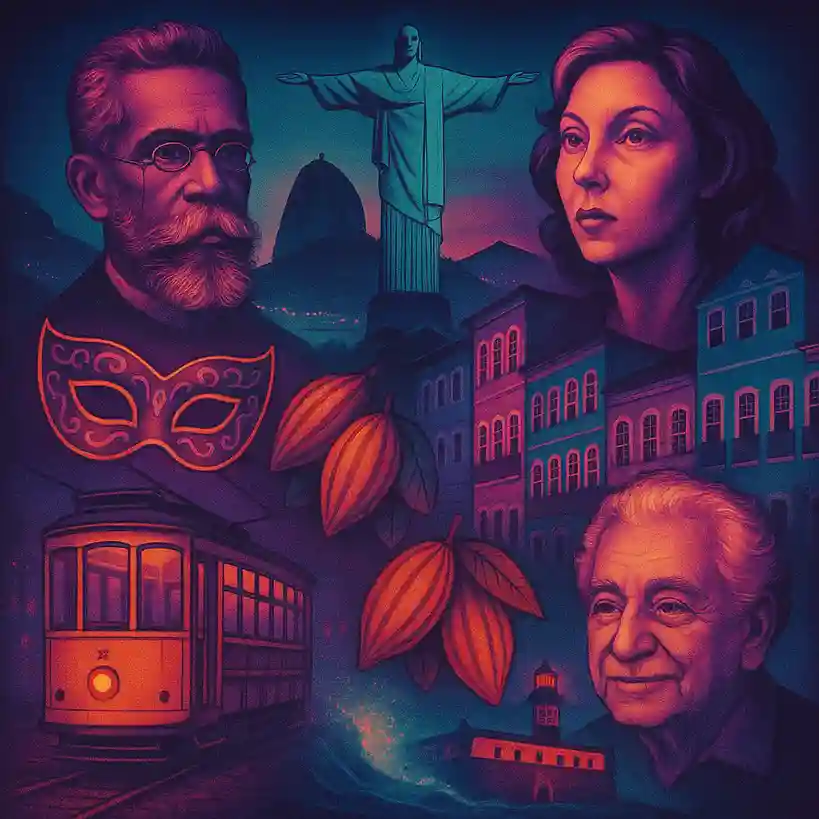
Portuguese Literature of the 20th century
- “The Book of Disquiet” (Livro do Desassossego) by Fernando Pessoa (Published posthumously, started in 1913) – A fragmentary lifetime project, this work is a collection of reflections and philosophical musings attributed to Pessoa’s semi-heteronym, Bernardo Soares.
- “Baltasar and Blimunda” (Memorial do Convento) by José Saramago (1982) – A magical realism novel set in the 18th century Portugal, intertwining historical events with fictional elements.
- “The Lusiads” (Os Lusíadas) by Luís de Camões (1572) – Though not 20th century, it’s foundational for understanding Portuguese literature, celebrating Portuguese explorations.
- “The Maias” (Os Maias) by José Maria de Eça de Queirós (1888) – Another foundational classic, it critiques 19th-century Portuguese society but continued to influence well into the 20th century.
- “Poems” (Poesias) by Florbela Espanca (1930) – Known for her lyrical poetry and sonnets that express intense emotions and feminist ideals.
- “Peregrination” (Peregrinação) by Fernão Mendes Pinto (1614) – Although written in the 16th century, this travelogue gained popularity in the 20th century as a critical work of early Portuguese exploration.
- “Message” (Mensagem) by Fernando Pessoa (1934) – A collection of poetry that reflects on the seafaring history of Portugal and its cultural heritage.
- “The Year of the Death of Ricardo Reis” (O Ano da Morte de Ricardo Reis) by José Saramago (1984) – A novel that follows one of Fernando Pessoa’s heteronyms in a fantastic narrative.
- “Fado Alexandrino” by António Lobo Antunes (1983) – A complex novel about the return of Portuguese soldiers from the colonies after the Carnation Revolution.
- “Sea of Straw” (Mar de Palha) by Almeida Faria (1968) – A novel that explores family dynamics and social change in Portugal during the Salazar regime.
Famous works of Brazilian Literature
- “The Devil to Pay in the Backlands” (Grande Sertão: Veredas) by João Guimarães Rosa (1956) – A novel that explores the Brazilian backlands, employing innovative language and narrative techniques.
- “Macunaíma” by Mário de Andrade (1928) – A rhapsodic novel that plays with language and Brazilian folklore to critique societal norms.
- “The Hour of the Star” (A Hora da Estrela) by Clarice Lispector (1977) – A novel that explores the inner life and struggles of an impoverished young woman in Rio de Janeiro.
- “Captains of the Sands” (Capitães da Areia) by Jorge Amado (1937) – A novel about a group of abandoned street children in Salvador, Bahia.
- “Vidas Secas” (Barren Lives) by Graciliano Ramos (1938) – A novel depicting the harsh life of a migrant family in the Brazilian northeast.
- “The Posthumous Memoirs of Brás Cubas” (Memórias Póstumas de Brás Cubas) by Machado de Assis (1881) – A pioneering work in Brazilian literature,.
- “The Alchemist” (O Alquimista) by Paulo Coelho (1988) – This allegorical novel has its roots in Brazilian literary traditions.
- “Death and Life of a Severino” (Morte e Vida Severina) by João Cabral de Melo Neto (1955) – A play written in verse that depicts the struggles of the rural poor in the Brazilian northeast.
- “Quarup” by Antônio Callado (1967) – A novel that reflects on Brazilian identity, politics, and society through the story of a priest in the Amazon.
- “Gabriela, Clove and Cinnamon” (Gabriela, Cravo e Canela) by Jorge Amado
Classics of Portuguese and Brazilian Literature
Portuguese Literature Classics
- “Os Lusíadas” by Luís de Camões (1572) – An epic poem that celebrates the Portuguese voyages of discovery, highlighting the adventures of Vasco da Gama.
- “Amor de Perdição” by Camilo Castelo Branco (1862) – A tragic love story that is often compared to Romeo and Juliet.
- “Livro do Desassossego” by Fernando Pessoa (Published posthumously, 1982) – A fragmentary work of existential reflections and philosophical musings.
- “O Crime do Padre Amaro” by José Maria de Eça de Queirós (1875) – A critical look at the Portuguese society.
- “Mensagem” by Fernando Pessoa (1934) – A collection of symbolic poetry.
- “Os Maias” by José Maria de Eça de Queirós (1888) – A novel that critiques Portuguese society.
- “Sermão de Santo António aos Peixes” by Padre António Vieira (1654) – A sermon that is celebrated for its rhetorical brilliance.
- “A Cidade e as Serras” by Eça de Queirós (1901) – A novel contrasting rural life in Portugal with the urbanization of Paris.
Brazilian Literature Classics
- “Dom Casmurro” by Machado de Assis (1899) – A psychological novel that explores themes of jealousy and unreliability of memory.
- “Grande Sertão: Veredas” by João Guimarães Rosa (1956) – A novel that delves into the life and struggles of the Brazilian backlands.
- “Memórias Póstumas de Brás Cubas” by Machado de Assis (1881) – A novel written from the perspective of a dead protagonist.
- “A Hora da Estrela” by Clarice Lispector (1977) – A poignant exploration of the life of a young, impoverished woman in Rio de Janeiro.
- “Capitães da Areia” by Jorge Amado (1937) – A novel about a group of orphaned children living on the streets of Salvador.
- “Vidas Secas” by Graciliano Ramos (1938) – A portrayal of the life of a family in the drought-stricken Northeast of Brazil.
- “O Guarani” by José de Alencar (1857) – A romantic novel that idealizes the Indigenous peoples of Brazil.
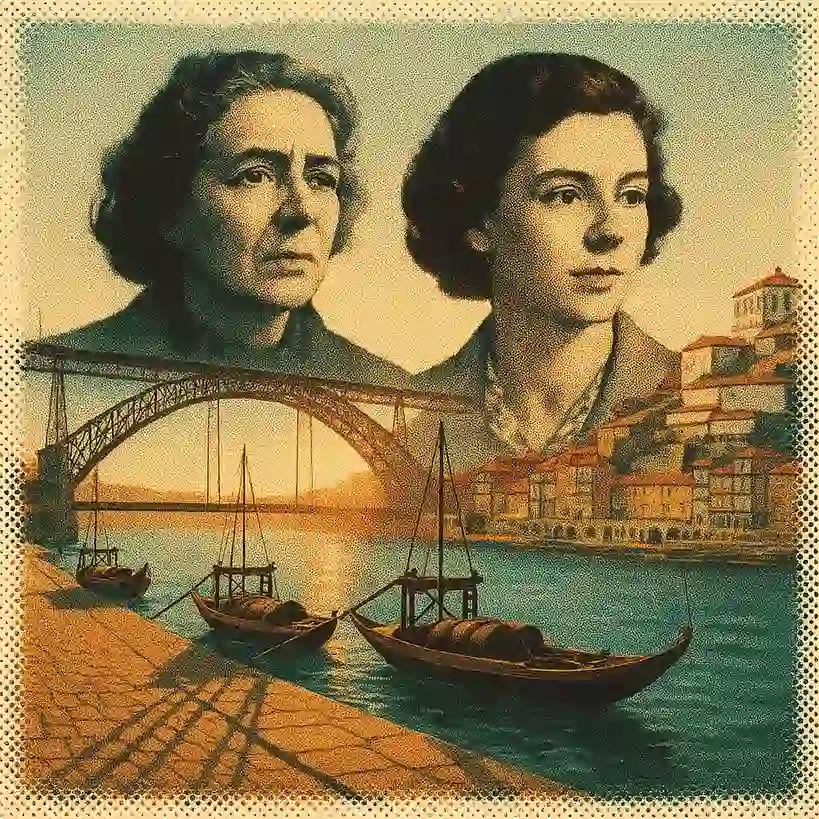
Famous Portuguese Writers
Male Writers
- Luís de Camões – Renowned for “Os Lusíadas,” an epic poem that celebrates Portuguese explorations.
- Fernando Pessoa – A literary giant known for his heteronyms and the book Livro do Desassossego.
- José Saramago – Nobel Prize laureate in Literature, famous for novels such as Blindness and Baltasar and Blimunda.
- Eça de Queirós – A leading figure in 19th-century Portuguese literature, known for “Os Maias” and “O Crime do Padre Amaro.”
- António Lobo Antunes – A contemporary writer known for his dense and introspective novels.
- Miguel Torga – Noted for his poetry, short stories, and the creation of a deeply personal mythos of Portuguese life.
- Manuel Alegre – A poet and politician, his work often reflects his engagement with the Carnation Revolution.
- Antero de Quental – A poet and intellectual, central to the Portuguese Generation of 1870.
- Almeida Garrett – A playwright, poet, and novelist, he was instrumental in introducing Romanticism to Portugal.
Female Authors
- Florbela Espanca – Celebrated for her emotive sonnets and a pioneering female voice in Portuguese poetry.
- Sophia de Mello Breyner Andresen – Renowned for her poetry and children’s stories.
- Agustina Bessa-Luís – Her works often explore complex psychological themes and Portuguese society.
- Maria Teresa Horta – A poet and feminist, known for her contributions to the “Three Marias” controversy.
- Natália Correia – A poet, intellectual, and social activist, her works include poetry, essays, and plays.
- Lídia Jorge – Known for novels that explore Portugal’s postcolonial experience.
- Inês Pedrosa – Known for her novels and essays that often focus on personal relationships and social issues.
- Teolinda Gersão – A novelist and short story writer.
- Ana Luísa Amaral – A poet and academic, her work is recognized for its lyrical quality and exploration of feminist themes.
- Dulce Maria Cardoso – A contemporary writer.
Famous Brazilian Writers
Male Authors
- Machado de Assis – Regarded as one of Brazil’s greatest writers, known for Dom Casmurro.
- Jorge Amado – Famous for his vibrant novels about life in Bahia, such as “Gabriela, Clove and Cinnamon.”
- João Guimarães Rosa – Best known for “Grande Sertão: Veredas,” a novel of profound linguistic innovation and philosophical depth.
- Carlos Drummond de Andrade – One of Brazil’s best-loved poets, known for his accessible yet profound verse.
- Manuel Bandeira – A poet and critic, known for his lyricism and emotional depth.
- Rubem Fonseca – A short story writer and novelist, renowned for his urban and gritty narratives.
- Paulo Coelho – Although controversial for literary purists, his works like “The Alchemist” have achieved global fame.
- Ariano Suassuna – A playwright and novelist, best known for “The Auto of the Compadecida.”
- Adélia Prado – A poet and writer, Prado’s works are known for their spiritual depth.
Female Writers
- Clarice Lispector – Noted for her innovative narrative style and existential themes.
- Cecília Meireles – Her lyrical poetry is celebrated for its beauty and philosophical depth.
- Lygia Fagundes Telles – A novelist and short story writer.
- Cora Coralina – A poet and storyteller, her works are deeply rooted in the culture and landscapes of the Brazilian interior.
- Rachel de Queiroz – The first woman to enter the Brazilian Academy of Letters, known for her novels about social issues in the Northeast.
- Nélida Piñon – A novelist and the first woman president of the Brazilian Academy of Letters.
- Patrícia Galvão (Pagu) – A writer and activist, known for her involvement in modernist art movements and communist activism.
- Ana Maria Machado – A novelist.
- Ana Cristina Cesar – A poet and translator, associated with the Brazilian “Marginal Literature” movement of the 1970s.
- Conceição Evaristo – A contemporary writer and educator, her works focus on race and gender.
Nobel prize winners for literature
José Saramago is the only writer who has been awarded the Nobel Prize in Literature. He won the prize in 1998. Saramago is known for his distinctive narrative style, characterized by long sentences and detailed descriptions. As well as his tendency to blend fantastical elements with realistic scenarios. His works often explore complex social and existential themes.
José Saramago (Portugal, 1998):
- Nobel Prize Motivation: “who with parables sustained by imagination, compassion and irony continually enables us once again to apprehend an elusory reality.”
- Notable Works: “Blindness” (Ensaio sobre a cegueira), “Baltasar and Blimunda” (Memorial do Convento), and “The Gospel According to Jesus Christ” (O Evangelho Segundo Jesus Cristo) are among his most celebrated novels.
Saramago’s literature is marked by his critical approach to social, political, and philosophical issues. Employing a unique blend of fantasy and reality to explore the human condition. Despite Portugal and Brazil’s rich literary traditions and numerous talented writers. Saramago remains the sole Nobel laureate in Literature from the Portuguese-speaking world as of the last update.
Trivia Facts about Portuguese Literature
- Luís de Camões and “Os Lusíadas”: Often compared to Homer’s epics, “Os Lusíadas” is the national epic of Portugal, celebrating Portuguese explorations. Camões reportedly saved his manuscript from a shipwreck while returning from India by swimming with one arm and holding the manuscript above water with the other.
- Fernando Pessoa’s Heteronyms: Pessoa created over 70 heteronyms, complete with their own biographies, writing styles, and philosophies. The most famous include Alberto Caeiro, Ricardo Reis, and Álvaro de Campos.
- José Saramago’s Nobel Prize: When José Saramago won the Nobel Prize in Literature in 1998, he became the first Portuguese-language author to receive this honor, putting Portuguese literature on the global map.
- The Bertrand Bookstore: Lisbon is home to the oldest operating bookstore in the world, Livraria Bertrand, which opened in 1732. It has been a focal point for literary circles in Portugal for centuries.
Trivia Facts about Brazilian Literature
- Machado de Assis’s Multiracial Background: Machado de Assis was of mixed race in a predominantly white literary scene and faced considerable prejudice.
- Jorge Amado and the Brazilian Academy of Letters: Renowned for his socially engaged novels set in Bahia. Jorge Amado was also a member of the Brazilian Academy of Letters.
- Clarice Lispector’s Mystique: Born in Ukraine and raised in Brazil. Lispector became one of the most significant Brazilian authors of the 20th century. Known for her enigmatic personality and dense, introspective prose, she has often been described as a kind of literary sphinx.
- João Guimarães Rosa’s “Grande Sertão: Veredas”: This novel is celebrated for its revolutionary use of language. Blending rural Brazilian dialects with high literary prose. Rosa was also a diplomat and a polyglot, fluent in several languages.
- “Capitães da Areia” by Jorge Amado: This book was so controversial for its portrayal of poverty and crime in Salvador, Bahia. That it was publicly burned by the Brazilian government shortly after its publication in 1937.
- Academia Brasileira de Letras (Brazilian Academy of Letters): Founded by Machado de Assis and others in 1897, it serves as a cultural institution that guards the language and literature of Brazil. It has 40 members, known as “immortals,” mirroring the French Academy.
- The Brazilian Modern Art Week (Semana de Arte Moderna): Held in São Paulo in 1922. This event marked the beginning of Modernism in Brazil. It was a groundbreaking moment for Brazilian culture. Featuring artists, writers, and musicians like Mário de Andrade and Oswald de Andrade (no relation). Who pushed for a Brazilian identity free from European influence.
Conclusion for Portuguese and Brazilian literature
Portuguese and Brazilian literature represent two rich and vibrant traditions that, while sharing a common language, have each developed their own unique identity and voice. These literatures reflect the complex histories, diverse cultures, and changing societies of Portugal and Brazil. From the epic voyages of Portuguese explorers to the multifaceted realities of Brazilian life.
Its writers, such as Luís de Camões and Fernando Pessoa, have left an indelible mark on the literary world. With their profound contributions to poetry and prose. José Saramago, the Nobel laureate, bridges the tradition with modern concerns. Using his distinctive narrative voice to examine the human condition in innovative and challenging ways.
Brazilian literature, on the other hand, boasts a dynamic and diverse canon. That captures the essence of Brazil’s cultural and racial melting pot. From the critical realism of Machado de Assis to the modernist innovations of Mário de Andrade and the introspective genius of Clarice Lispector. Brazilian writers have continuously pushed the boundaries of literary expression. Their works address the complexities of Brazilian society. Including issues of race, class, and gender, often with a distinctive blend of humor, tragedy, and insight.
They offer a window into the soul of their respective cultures, inviting readers to explore the nuances of human experience through the lens of Portuguese and Brazilian perspectives.
In conclusion, Portuguese and Brazilian literatures are treasures of the global literary landscape. Enriched by their distinct histories, cultures, and voices. They challenge, entertain, and enlighten, providing valuable insights into the human condition and the societies from which they emerge. As the world becomes increasingly interconnected. The universal themes and unique expressions found in these literatures continue to resonate with readers around the globe. Cementing their place in the pantheon of world literature.
Reviews of Works from Portuguese and Brazilian Literature
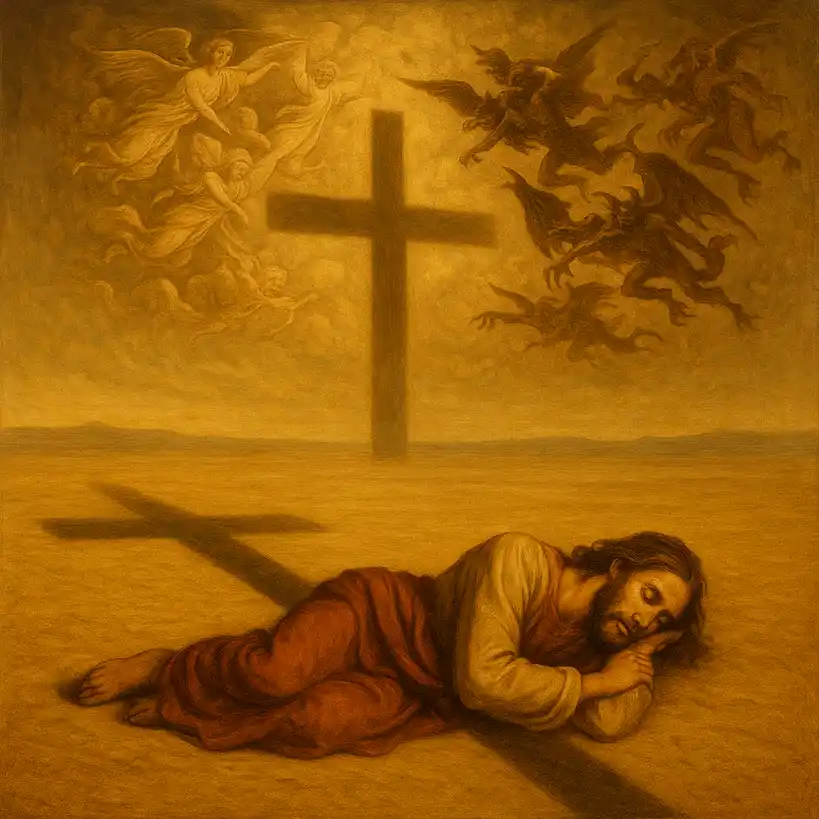
The Gospel According to Jesus Christ
The Gospel According to Jesus Christ by José Saramago Saramago opens with ordinary labor and fear; consequently, The Gospel According…

Nina Bonita: A Story by Ana Maria Machado celebrates identity Ana Maria Machado writes for the ear and the eye….
The Passion According to G.H. by Clarice Lispector Morning light hardens the white of an apartment, and a woman opens…

Dona Flor and Her Two Husbands
Dona Flor and Her Two Husbands by Jorge Amado Salvador hums before sunrise. Drums test the air. Vendors lift their…

Searching for love and meaning in The Zahir by Paulo Coelho The Zahir opens with a jolt, the narrator’s wife…

Upside Down Story by Ana Maria Machado Flips Reality With Wit Upside Down Story by Ana Maria Machado is one…

The Hour of the Star by Clarice Lispector – A Voice That Breaks Some books whisper. Others scream. But The…

Gabriela, Clove and Cinnamon by Jorge Amado There are books that transport you. Others seduce you slowly. But Gabriela, Clove…

The Keeper of Sheep: A Poetic Exploration by Fernando Pessoa Reading The Keeper of Sheep by Fernando Pessoa was like…

Blindness by José Saramago: into the Fragility of Civilization Reading Blindness by José Saramago felt like stepping into a nightmare….

Jose Saramago’s The Lives of Things My Summary of The Lives of ThingsReading the story by José Saramago was an…

The Enigmatic Soul: The Book of Disquiet by Fernando Pessoa Quick Summary: My Thoughts on The Book of DisquietI found…
Veronika Decides to Die by Paulo Coelho – of Self-Discovery What I take away from the book Veronika decides to…
The Alchemist by Paulo Coelho – Soul’s Journey Through Destiny My summarized thoughts after reading The AlchemistReading the book by…