Veronika Decides to Die – of Self-Discovery
Paulo Coelho begins Veronika Decides to Die with a decision already made. Twenty-four-year-old Veronika takes sleeping pills in her rented room in Ljubljana and waits for death. She has a job, parents who love her, past relationships, and no immediate catastrophe. Her despair comes from the prospect of repetition. She believes she has already seen the range of pleasures and disappointments that life will offer.
That premise refuses the comforting assumption that suicidal despair must have one visible cause. Veronika does not lack reasons to live in a simple social sense. She can list them and still feel detached from them. An acceptable life can remain inwardly uninhabitable.
Her final letter introduces the novel’s strange mixture of pain and irony. Annoyed by a magazine article asking where Slovenia is, she decides to blame that ignorance for her death. The gesture is absurd, but it briefly reconnects her to anger, national identity, and the desire to correct another person. Even while dying, she wants to influence the story told about her.
Suicide stands at the beginning of philosophical inquiry in 👉 The Myth of Sisyphus by Albert Camus. Camus examines whether life can be lived without an ultimate explanation. Coelho turns the question into a fable about habit, fear, and renewed desire.
The opening remains deliberately unsettling because Veronika’s reasoning sounds controlled. Calm language does not make the danger less real. It shows how thoroughly she has converted despair into a plan.
Villete transforms death from an escape into a deadline
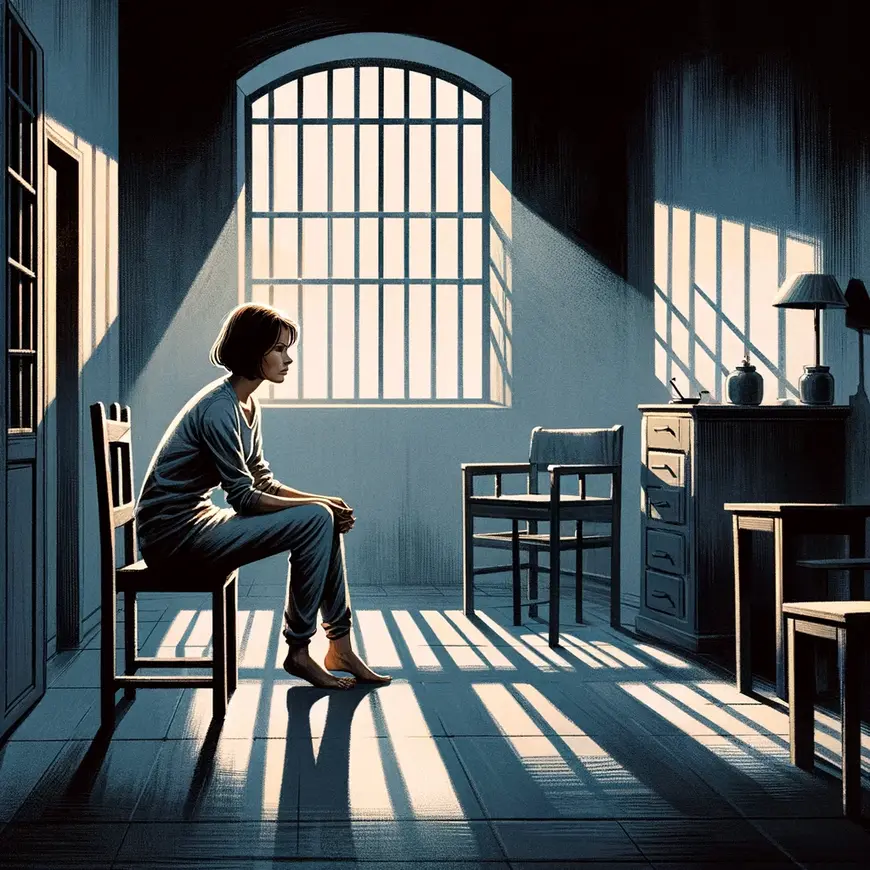
Veronika survives the overdose and wakes in Villete, a psychiatric hospital with a frightening public reputation. Dr. Igor tells her that the pills have irreparably damaged her heart. She may remain alive for only a few days. The announcement reverses her position without changing the apparent outcome. She wanted death when it seemed under her control. Now she resents it because someone else has given it a schedule.
Veronika Decides to Die builds much of its force from this reversal. The future becomes valuable after it has been reduced. Ordinary sensations acquire urgency because they may not return. Yet Veronika does not instantly embrace life. She first asks for a faster death and reacts with anger when the hospital prevents another attempt.
The institution also changes the meaning of time. Outside Villete, she imagined decades as a closed pattern. Inside it, every hour contains uncertainty. Patients interrupt one another, treatments distort routine, and the border between voluntary and involuntary confinement remains unstable.
Mortality similarly strips social success of its authority in 👉 The Death of Ivan Ilyich by Leo Tolstoy. Tolstoy’s judge discovers too late that a respectable life may have been falsely arranged. Veronika receives a shorter, more theatrical warning, but both characters must reconsider what they once called normal.
The deadline awakens resistance before gratitude. That sequence matters. The Brazilian novelist does not make recovery begin with a lesson. It begins when Veronika becomes furious that life will continue without her.
Madness offers freedom because normality demanded obedience
Villete contains patients with different diagnoses, but the novel repeatedly asks who has the authority to define sanity. Some residents need intensive care. Others remain because the hospital protects them from obligations outside. The Fraternity, an informal group of long-term patients, has learned to treat the institution as a refuge from competition and judgment.
In Veronika Decides to Die, the label of madness creates an unexpected permission. Once others regard Veronika as mentally ill, she feels less pressure to appear polite, grateful, modest, or predictable. She can express hatred, ask improper questions, and play the piano at night. Disgrace releases desires that respectability suppressed.
The insight is attractive, but it also simplifies. Psychiatric illness does not automatically free a person from social rules, and hospitalization can reduce autonomy more brutally than ordinary life. The writer uses Villete as a symbolic space where conventional identities loosen. Readers should not mistake that metaphor for a complete account of institutional care.
An inward life also exceeds the identity visible to others in 👉 The Book of Disquiet by Fernando Pessoa. Pessoa’s Bernardo Soares remains outwardly quiet while his imagination creates a vast private existence. Veronika has reduced herself to an efficient public role until Villete makes that division impossible.
The novel’s sharpest challenge to normality concerns collective agreement. A behavior can look sane because many people repeat it, not because it serves them well. Conformity can hide suffering without curing it. Villete becomes less an opposite of society than a concentrated version of its judgments.
Zedka gives depression a history without solving it
Zedka is one of the first patients who speaks to Veronika without treating her only as a medical case. She entered Villete with depression after an old romantic obsession overwhelmed her marriage, family life, and sense of reality. Her account complicates the idea that material stability protects a person from collapse.
Veronika Decides to Die lets Zedka describe depression as an experience that alters the scale of everything. Love, memory, shame, and imagined possibilities become stronger than the life directly before her. She does not fit a moral category such as selfish, ungrateful, or weak. Advantages do not disprove her suffering.
At the same time, the novel places her inside a questionable treatment regime. Veronika watches staff induce an insulin coma, a dangerous historical practice presented through Zedka’s dissociative experience. The scene creates haunting imagery, but it does not offer a reliable clinical model. The author turns treatment into a passage between bodily coercion and imagined freedom.
The search for a self beyond inherited answers drives 👉 Siddhartha by Hermann Hesse. Hesse’s protagonist chooses a spiritual journey; Zedka reaches insight through illness, confinement, and separation from ordinary roles. Their paths differ sharply, yet both reject wisdom delivered as a ready-made formula.
Zedka eventually prepares to leave Villete, but the book does not prove that every conflict has disappeared. Her importance lies in what she gives Veronika before departure: a language for difference. Recovery begins without a perfect explanation.
Mari exposes how fear can shrink an entire world
Mari once worked as a successful lawyer and expected to continue a conventional professional life. Panic attacks changed that future. The attacks arrived with physical terror and gradually made ordinary situations feel unsafe. Villete became the place where she could stop explaining symptoms that other people misunderstood.
Her story broadens Veronika Decides to Die beyond the protagonist’s crisis. Mari did not consciously reject life. Fear narrowed it for her. She lost confidence in her body, career, and public identity, then found protection among people whom society had dismissed.
The Fraternity gives her companionship, but it also creates a comfortable form of avoidance. Members can criticize the outside world while refusing to test whether they could re-enter it. Safety becomes another kind of confinement. Veronika’s approaching death disturbs that arrangement because it removes the fantasy of unlimited postponement.
Psychiatric authority also fails a vulnerable person in 👉 Mrs. Dalloway by Virginia Woolf. Woolf treats Septimus Warren Smith’s trauma with greater psychological and social complexity, while his doctors convert distress into disobedience. Coelho is more schematic, but Mari likewise reveals the damage caused when respectable life has no place for an experience it cannot see.
Her eventual decision to leave Villete carries more weight than a general celebration of courage. Mari has practical reasons to fear the world that once abandoned her. Still, she chooses uncertainty over permanent refuge and plans to work for people affected by conflict. Veronika’s crisis becomes contagious in a life-giving way. By confronting death, she forces Mari to notice how survival can become passive disappearance.
Eduard’s silence protects a vision his family rejected
Eduard, the son of a Yugoslav diplomat, entered adulthood under strong expectations. His parents imagined a respectable career and a useful place within their social world. He wanted to paint and pursued a spiritual vision that they regarded as impractical. After emotional shock and withdrawal, he received a diagnosis of schizophrenia and became almost silent.
Veronika Decides to Die presents Eduard as listener, witness, and romantic figure. He sits near the piano while Veronika plays, responding through attention before he responds through speech. Their connection does not begin with a conventional conversation. Music crosses the distance that clinical labels and family plans could not.
His story supports Coelho’s defense of personal vocation. A life designed entirely to satisfy others may preserve status while destroying inward purpose. Silence becomes Eduard’s last protected territory.
Yet the characterization raises serious limits. The novel links schizophrenia to frustrated artistry, spiritual sensitivity, and romantic awakening so tightly that illness can begin to look like a poetic identity. Eduard receives less psychological specificity than symbolic importance. Love and music reach him, but they should not be read as substitutes for sustained treatment.
Joana also refuses a life arranged by external expectations in 👉 Near to the Wild Heart by Clarice Lispector. Lispector preserves instability and contradiction rather than turning self-discovery into a clear spiritual lesson. Eduard’s movement is more direct because Coelho writes in the form of a parable. His awakening moves us but remains clinically simple. The distinction allows readers to value the scene without treating it as medical truth.
The piano returns pleasure to Veronika’s own body
Before Villete, Veronika had disciplined her desires into a manageable life. She worked, maintained relationships, and avoided choices that might disappoint her parents. Her training as a pianist belonged to a path she did not pursue. At the hospital piano, a rejected self returns through sound.
Music changes the pace of Veronika Decides to Die. The novel’s philosophical statements often move quickly toward conclusions, but the piano scenes depend on repetition, physical effort, and response. Veronika does not reason herself into wanting life. She feels force travel through her hands and hears it enter another person’s attention.
The instrument also lets her express emotions that good behavior had hidden. Anger does not need to become an argument. Desire does not need social approval. Art gives form to feelings without domesticating them.
Eduard’s presence matters because he listens without asking her to perform a respectable identity. Their intimacy develops around shared concentration before it becomes romantic. For the first time, Veronika experiences her body as a source of pleasure and communication rather than merely the mechanism she tried to stop.
The writer risks making creative release look instantaneous. A few nights at the piano cannot resolve every cause of despair. Still, the sequence captures something credible about renewed attention. A person may reconnect with life through an activity before possessing a complete explanation for that change.
The piano therefore represents more than a lost career. It holds the possibility of choice. Veronika recovers desire before she recovers a future. The order is essential because a future means little until something inside it feels worth wanting.
Dr. Igor’s successful experiment is an ethical failure
The ending reveals that Veronika’s damaged heart is a deception. Dr. Igor has used drugs to imitate symptoms and persuaded her that death is imminent. He treats the result as evidence for his theory that awareness of mortality can dissolve the emotional poison he calls vitriol.
This twist completes the design of Veronika Decides to Die, but it also creates the novel’s most serious moral problem. Veronika does not consent to the experiment. A doctor exploits her dependence, gives false medical information, and exposes her to terror. The fact that she wants to live afterward does not make those actions ethical.
A beneficial outcome cannot create consent retroactively. Dr. Igor regards Veronika as both patient and proof. His private theory matters more to him than her right to understand what happens to her body.
The deception also weakens the book’s engagement with suicide. Veronika’s transformation occurs under an artificially compressed deadline. Most people in despair will not receive such a dramatic reversal, nor can responsible care reproduce it. The plot offers a parable about mortality, not a treatment method.
The author partly exposes the doctor’s vanity through his ambition to present the experiment and gain recognition. However, the narrative grants him control over the final explanation. Veronika leaves without learning that the central fact shaping her new life was false.
That ignorance preserves the emotional ending while transferring its cost to trust. The cure repeats the control the novel criticizes. Parents, institutions, and social conventions all decide what others should become. Dr. Igor claims a liberating purpose, yet he uses the same authority in a more extreme form.

Famous Quotes from Veronika Decides to Die
- “The two hardest tests on the spiritual road are the patience to wait for the right moment and the courage not to be disappointed with what we encounter.” This quote speaks to the journey of personal growth and spiritual enlightenment. Patience is necessary to wait for the opportune moment in life, not rushing into actions or decisions.
- “Nothing in this world happens by chance.” The novelist often explores the idea of destiny and the interconnectedness of all events in life. This quote suggests that every event, no matter how small or coincidental it may seem, has its place and purpose in the grand tapestry of life. It encourages readers to look for meaning in their experiences, believing that there’s a reason behind every occurrence.
- “Collective madness is called sanity.” This quote challenges societal norms and the concept of normalcy. It implies that what society collectively agrees upon as sane or normal behavior might actually be a form of madness. The author often encourages questioning societal norms and the courage to live true to oneself, even if it means going against the grain.
- “When you go after something you want, the whole universe conspires in helping you to achieve it.” A recurring theme in his work, this quote embodies the idea of the Law of Attraction and the power of intention. It suggests that when we truly desire something and take steps towards it, forces beyond our understanding align to bring us closer to our goals.
- “Happiness is something that multiplies when it is divided.” This quote speaks to the nature of happiness and generosity. It’s a metaphor for the joy of giving and the way happiness spreads.
Trivia Facts about Veronika Decides to Die
- Global Impact: Since its publication, Veronika decides to die has touched readers worldwide, being translated into dozens of languages. Its universal themes of redemption, freedom, and the will to live resonate across different cultures.
- Real-Life Inspiration for the Setting: The mental institution where Veronika is committed is inspired by a real hospital in Slovenia.
- Film Adaptation: The novel was adapted into a movie released in 2009, starring Sarah Michelle Gellar as Veronika. The film adaptation made several changes to fit the cinematic narrative.
- Influence on Mental Health Dialogue: Following the book’s release, many readers felt inspired to share their own experiences with mental health issues, contributing to a broader dialogue about suicide and the importance of seeking help.
- A Book of Hope: Despite its title and the central theme of suicide, the book is ultimately a book about hope, love, and rediscovery of the will to live. It emphasizes the idea that every moment is a new opportunity to choose differently and to find beauty in life.
Ljubljana makes normality a historical as well as private question
The novelist sets the novel in Ljubljana shortly after Slovenia’s emergence as an independent country. Veronika’s irritated response to foreign ignorance gives the location more than decorative value. She lives in a young state that must explain itself to outsiders while she struggles to imagine an identity beyond routine.
The setting of Veronika Decides to Die also surrounds Villete with memories of political systems that defined acceptable thought and behavior. Several characters come from the former Yugoslavia and carry different relationships to national belonging, war, professional status, and family expectation. Madness becomes one part of a larger question: who decides which version of reality counts?
Private identity forms inside public history. Veronika’s despair is personal, but the language available to describe normality has social and political origins. Eduard’s diplomatic family treats vocation as duty. Mari redirects her legal experience toward people affected by conflict. Zedka’s Serbian identity complicates the easy unity of the hospital community.
Private choices also carry the pressure of a young political order in 👉 Divided Heaven by Christa Wolf. Wolf binds love and identity to the division of Germany with far greater political detail. The writer uses post-Yugoslav history more lightly, yet his characters likewise discover that inward freedom never develops outside public structures.
The geographical specificity keeps the fable from floating free of history. Still, the novel uses regional conflict more as moral background than as sustained political analysis. Villete becomes a border within a border. Inside it, the excluded create their own society and decide whether freedom means leaving or remaining.
A life-affirming parable that requires resistance
Veronika Decides to Die succeeds through compression. One decision, one false prognosis, and a small group of patients allow him to ask how habit, fear, family love, social judgment, art, and mortality shape the will to live. The prose seeks clarity rather than ambiguity, which helps the novel reach readers directly.
Its most convincing insight concerns postponed desire. Veronika has not suffered because nobody loved her. She has accepted safety so completely that her own wishes no longer seem urgent. The hospital’s strange freedom, the piano, anger, friendship, and erotic connection return those wishes to her.
Intensity matters more than passive survival. That message explains the novel’s emotional appeal. It does not shame Veronika for failing to appreciate a comfortable life. Instead, it asks what comfort excluded.
However, the psychiatric framework remains schematic. Depression, panic disorder, and schizophrenia frequently serve a spiritual argument. Several characters improve through insight, risk, or love with a speed that real illness may not permit. Dr. Igor’s deception turns medical abuse into the mechanism of hope.
Those weaknesses matter because the subject is not abstract. Readers should resist any suggestion that imminent death, romantic connection, or a courageous choice can reliably cure mental illness. Professional care, patient autonomy, and long-term support remain largely outside the fable.
His book is strongest when read as provocation rather than prescription. It asks readers to notice which desires they have silenced and which routines they mistake for destiny.
Its hope survives when simplifications stay visible. Life becomes precious in these pages, but no doctor, lover, or parable can decide what another person’s recovery must look like.
What I take away from the book Veronika decides to die
I was deeply moved by this novel. The books exploration of life, death and mental well being really resonated with me. Veronikas journey, from despair to self discovery was both heartbreaking and inspiring.
On a level the story evoked a mix of sadness and hope within me. Witnessing her struggle with the desire to end her life was difficult. Seeing her find happiness in moments brought a glimmer of positivity. Her transformation highlighted the importance of embracing lifes uncertainties.
From an perspective the book prompted me to reconsider ideas about normalcy and happiness. Hiss insights on expectations and conformity led me to ponder my decisions. Themes of existentialism and self exploration left an impression on me encouraging reflection on living true, to oneself.