📚 Famous Book Series: Facts & Figures
Some stories don’t end after one book. They expand and they build worlds. They create lifelong readers and entire fan communities. That’s why people keep asking questions like: How many Harry Potter books are there? How many Dune books? How long is the Percy Jackson series?
Behind these questions is more than curiosity. There’s a love for worlds that invite readers back again and again. Famous book series aren’t just long — they’re landmarks. They shape how we read, what we collect, and what we pass down. This page explores how series grow, why readers search for answers, and what these facts reveal about our love of stories.
The Magic of Series: From One Book to Many
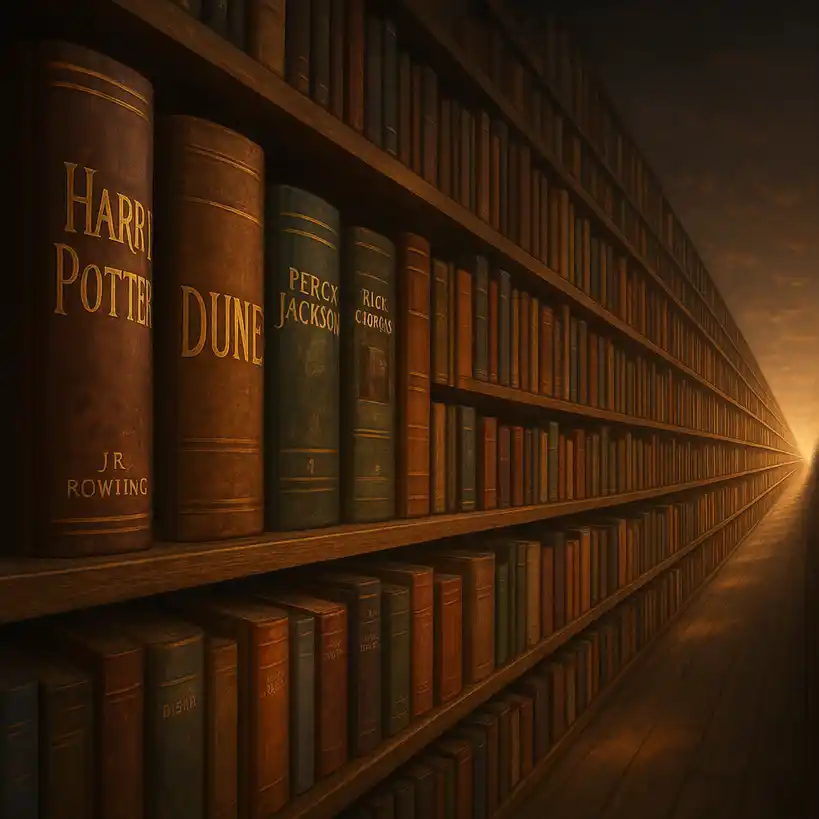
Some book series are planned from the start. Others grow slowly, shaped by success, demand, and loyal readers. Harry Potter expanded one school year at a time. Dune grew through sequels, prequels, and spin-offs, far beyond its original intent. Diary of a Wimpy Kid keeps releasing new books, each adding to its collection and cultural footprint. Readers return because they want to stay in these worlds longer.
Series answer a fundamental reader need: to continue. To keep turning pages. To stay with beloved characters. Not all stories invite that kind of commitment, but the biggest series capture imagination in ways that make readers ask for more. What began as a single book often transforms into a saga because the world feels too large, too rich to contain within one volume.
👉 Those Without Shadows by Francoise Sagan reminds us how even a single unexpected success can create demand for more from an author. Sometimes, a writer’s audience grows faster than anticipated — and publishers are quick to answer that hunger with follow-ups.
👉 Gustave Flaubert’s Sentimental Education shows the opposite: a meticulously crafted standalone. Not every masterpiece spawns sequels. Some authors aim for precision, not expansion. Yet in commercial publishing, series often win because readers crave immersion.
For publishers, series are a gift. They build loyalty. Readers return. Collectors commit. A successful series isn’t just about books anymore — it becomes a bond between author, publisher, and audience.
Why Readers Keep Counting
Why do people ask, how many books are there in a series? Because numbers shape expectations. A trilogy feels achievable. A sprawling 20-book fantasy cycle feels like a commitment. Readers want to know the shape of the journey before they begin. It’s not just curiosity; it’s practical planning.
Completionists care deeply. They want the full set, every volume on their shelves. They want to know the reading order, whether the series is finished, and how many companion books exist. This affects how people buy, read, and recommend. Clarity matters when investing time, energy, and money in a world.
Adaptations drive curiosity too. A new Percy Jackson TV series sparks fresh searches. A Dune film revival prompts questions about the scope. People want to understand the commitment before diving in. Knowing the number helps frame expectations.
👉 Auto-da-Fé by Elias Canetti offers the opposite: a dense, singular work, famously resistant to expansion. Some stories stand alone by design, challenging the idea that quantity equals significance. Yet even standalone books draw readers who long for completion and closure.
Collecting matters. Series give readers something to organize, complete, and revisit. Reading becomes an ongoing relationship. Counting isn’t just about numbers — it’s about connection. It’s about the satisfaction of seeing a journey through to the end.
Big Series, Big Impact
Big series shape more than reading habits. They reshape publishing itself. A successful series influences marketing, drives bookstore sales, and often sets trends across genres. From Harry Potter to Dune, Wimpy Kid to Narnia, these books became more than stories — they became blueprints for success.
Fantasy and YA thrive on long-running series because readers want depth. They want sprawling worlds, layered plots, and time to explore. Big series allow this. They create space for world-building and character development on a grand scale. Publishers understand this. They invest in these worlds because they know readers return.
👉 The Good Person of Szechwan by Bertolt Brecht offers a different example of longevity. Though it’s a play, it demonstrates how stories endure through reinvention, adaptation, and continuous relevance. Some narratives need sequels. Others need reinterpretation.
Shorter series can still leave a mark. The Hunger Games reshaped dystopian fiction with just three books. Twilight defined a generation’s approach to romance and supernatural fiction. Length isn’t the only factor. Impact matters. Influence shapes markets as much as numbers do.
Not all big worlds require dozens of books. Lord of the Rings remains three volumes, but its cultural weight is enormous. Meanwhile, Dune grew beyond Herbert’s original vision, expanding through new generations of writers.
👉 Song of Solomon by Toni Morrison reminds us that some books build vast imaginative worlds within a single cover. Series expand, but standalone works can also endure, shaping how we understand storytelling’s power.
Big series show us the market’s hunger for depth. They offer readers and publishers a roadmap to longevity and cultural impact.

Why Book Counts Matter to Fans
For fans, knowing how many books exist isn’t just trivia — it’s part of belonging. It shapes how communities form, how collectors organize, and how new readers plan their journey. Fandom thrives on knowledge: reading orders, completion lists, what’s canon and what’s optional.
A book count helps fans navigate vast fictional worlds. Is it a trilogy? An ongoing epic? A completed saga? Knowing the shape of a story helps readers decide where and how to begin. It also fuels discussion, recommendations, and even debates within fan communities.
Take Harry Potter. Readers still ask, how many books are there? Because seven remains the heart of that world. Spin-offs exist, but the core stays fixed. That number shapes how people engage with the series and what they pass on to others.
👉 She Came to Stay by Simone de Beauvoir reflects a different path: one book, standing alone, yet rich enough to inspire conversations across generations. Not all influence comes from sequels — but series offer a unique form of engagement through continuity.
Collectors want clarity. Completionists want order. Bookshelves reflect this. Box sets, anniversary editions, illustrated volumes — knowing the number helps fans complete their collections and feel connected.
Counting books isn’t just about numbers. It’s about belonging, clarity, and participation in a shared reading journey. It’s about marking progress through imaginary worlds that become part of real life.
The Business of Bigger Stories
Series aren’t just stories — they’re strategies. A long-running series is a publisher’s best friend. It promises steady income, loyal readers, and multiple formats to sell: paperbacks, hardcovers, e-books, audiobooks. More books mean more opportunities to capture attention, renew interest, and drive sales.
Publishers count on these big series. They extend contracts, plan marketing campaigns years ahead, and build long-term strategies around reliable franchises. Crime fiction, fantasy, and young adult thrive on this model. Readers return because they trust the world will keep expanding. Trust turns into revenue.
Long series also allow publishers to fund riskier projects. The reliable success of a Percy Jackson or Wimpy Kid helps balance the financial risks of debut novels or experimental works. Big stories stabilize catalogues, fill bookstore displays, and fuel school reading lists.
👉 New Year by Juli Zeh represents the opposite end of the publishing spectrum — a precise, self-contained novel. While powerful, it isn’t structured for expansion. Still, even singular works help shape a publisher’s reputation alongside the giants of serialized fiction.
Big franchises do more than fill pages. They create licensing deals, adaptations, merchandise, and events. They influence how publishers structure their lists and how readers discover new stories.
In the end, series aren’t just art. They’re infrastructure. They build entire ecosystems that benefit writers, publishers, and readers alike. Behind every sprawling fantasy saga or detective series lies a business model designed for growth.
Looking Ahead: Will Series Keep Growing?
Are long book series still growing? Absolutely — but not always in the same way. While fantasy and YA continue to produce sprawling sagas, there’s also a rise in tighter cycles: duologies, trilogies, companion novels. Not every reader wants a ten-book commitment anymore.
Digital platforms shape this shift too. Kindle, Wattpad, and serialized apps encourage long series, but without the pressure of print. Writers build stories chapter by chapter, responding to readers in real time. These series often grow organically, free from traditional publishing constraints.
Self-publishing has also changed the landscape. Authors can extend series based on demand, adding volumes over time. Flexibility allows worlds to expand as long as readers stay interested.
Still, fatigue exists. Some readers crave shorter arcs, clear endings, and stand-alone novels. Publishers balance both trends. Long-running fantasy still thrives, but concise, impactful stories hold their ground.
👉 Purity by Jonathan Franzen reminds us that some narratives stretch across hundreds of pages but remain singular. Literary fiction continues to value both the epic and the contained. The market has room for both extremes.
The future will hold sprawling worlds and sharp, self-contained tales. Readers will keep asking how many books are there? — and the answers will keep evolving. Whether through grand epics or brief cycles, the hunger for stories endures.
Asking for more than Facts and Figures about Famous Book Series

Review Recommendations while searching Facts and Figures about Famous Book Series