How many books are published each year?
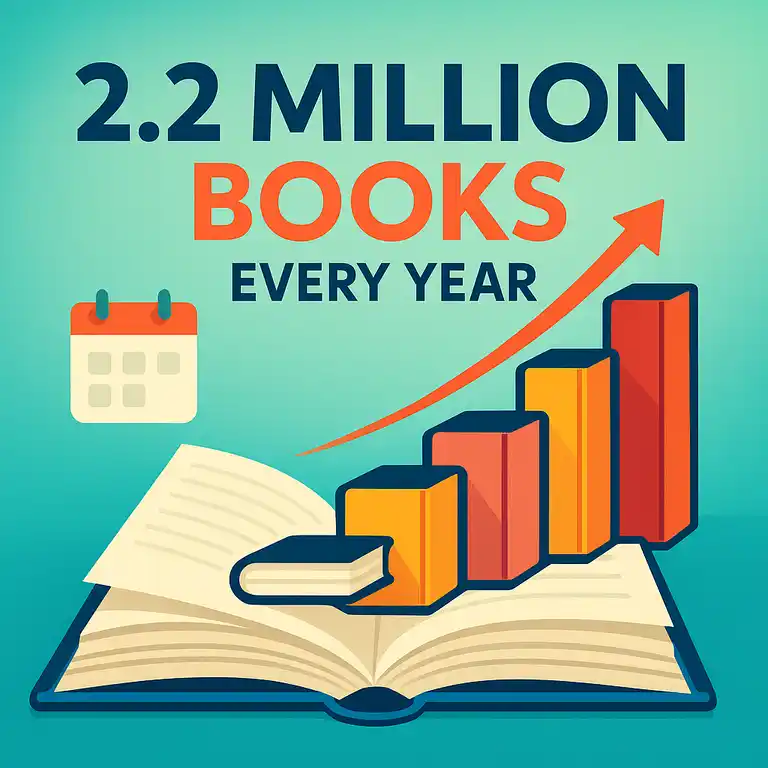
As of 2024, the world publishes around 2.2 to 2.4 million new books every year. That includes print books, eBooks, audiobooks, and everything in between. The number grows steadily—fueled by traditional publishers, indie presses, and millions of self-published authors. Countries like the United States, China, India, and the UK lead the way. But titles come from everywhere. Every language. Every corner of the world.
That’s about 6,000 new books every single day. It’s exciting. And honestly? A little overwhelming. Books used to be rare. Expensive. Carefully chosen by gatekeepers. Now, anyone with a story and a screen can press “publish.” That’s beautiful. It means more voices. More experiments. More books that were never possible before.
But it also means: more noise. Every book enters a huge crowd. Many disappear. Some go viral. Most fall somewhere in between. Finding the right reader—that’s the new challenge.
And yet, I love this number. It shows that literature isn’t dying. It’s exploding. Quietly, page by page, everywhere. Not all of these books win awards. Not all of them even get edited. But they exist. And that means someone, somewhere, believed in them enough to hit “publish.” In a world of short attention spans, that’s something worth celebrating.
📚 How many children’s books are published each year?
As of 2022, the global children’s book market is substantial, with over 250 million children’s books sold in the United States alone. While exact global publication figures are challenging to pinpoint, this sales volume indicates a robust publishing output in the children’s category.
In France, for instance, 18,535 children’s books were published in 2022, highlighting the significant contribution of individual countries to the global children’s literature landscape.
Children’s books are a cornerstone of the publishing world. They introduce young minds to the joys of reading, spark imagination, and often become cherished memories. The diversity in this genre is vast—ranging from picture books for toddlers to complex narratives for young adults.
The market’s growth is fueled by various factors: educational initiatives, parental emphasis on early literacy, and the universal appeal of storytelling. Moreover, the rise of diverse and inclusive children’s literature has broadened the scope, ensuring stories resonate with a wider audience. In essence, the children’s book sector is not just about numbers; it’s about nurturing the next generation of readers and thinkers.
✍️ Charles Dickens and the Serial Publishing Hustle
Charles Dickens didn’t write novels. Not at first. He wrote installments—weekly or monthly chapters printed in magazines and periodicals. Readers waited, eagerly, for the next cliffhanger. He was published like a Netflix series before streaming even existed. So what would Dickens think of 2.4 million books a year? He’d probably raise an eyebrow and say, “That’s a lot of competition.”
Back in the 1800s, the publishing world was smaller, slower, and noisier in a different way—street sellers shouting headlines, readers passing pages along, entire families reading aloud. Today, stories arrive faster than ever, but the hunger for them hasn’t changed.
Dickens knew the power of pacing. He understood that readers come back when you leave them wanting more. If he were writing today, would he self-publish? Launch a Substack? Host a serial podcast? Who knows. But one thing’s clear: in a world where thousands of books are released every day, he’d still find a way to keep us hooked.

🐍 J.K. Rowling and the Avalanche That Followed Harry Potter
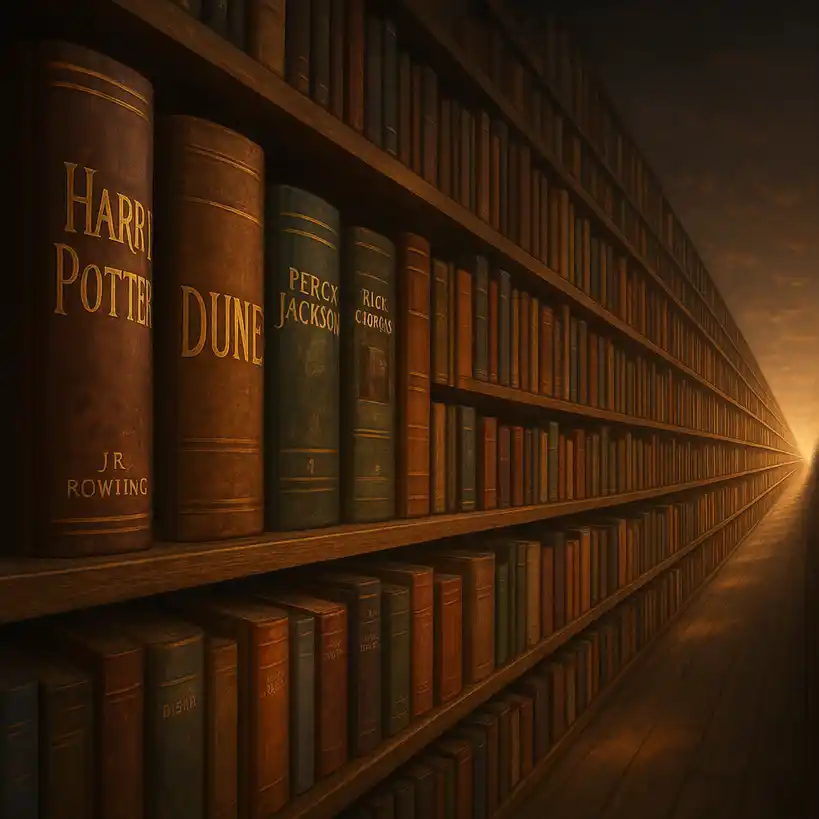
When Harry Potter and the Philosopher’s Stone was first published in 1997, no one expected it to change global publishing forever. But it did. It wasn’t just the success—it was the ripple effect. Suddenly, publishers everywhere were looking for “the next Harry Potter.” And what followed? A tidal wave of children’s and YA fiction.
That’s part of why the annual book count now tops 2 million. The bar was raised, the appetite expanded, and a generation of writers grew up dreaming of castles, owls, and lightning bolts.
Rowling didn’t just write bestsellers—she changed how the industry thinks about series, merchandise, adaptations, and fandom. Her success helped open doors for hundreds of writers who followed. Some wrote fantasy, some wrote romance, some just found the courage to try. Of course, not every book gets a theme park. But that’s the magic of this number.
🐘 George Orwell, Predictions, and the Future That Arrived Early
George Orwell once imagined a world where books would be burned, ideas erased, and language reduced to grunts and slogans. But instead, we now publish millions of books every year, in every genre, from every angle imaginable. If anything, we might be drowning in information, not starving for it.
Orwell might find that ironic. In 1984, controlling what people read meant controlling how they think. Today, it’s more complicated. We don’t have a single Ministry of Truth—but we do have algorithms, content overload, and a race for attention. In a world of 2.4 million new titles a year, which books get noticed? Which voices rise above the noise?
Orwell didn’t write to predict the future. He wrote to warn us about habits. He saw how easy it is to let someone else decide what’s “true” or “worthy.” And today, with so many books pouring into the world, the question isn’t just what gets published. It’s: what do we read? Big Brother may not be watching. But the data trackers are. And the flood of new books each year makes Orwell’s old fears feel strangely modern.
✈️ Agatha Christie and the Mystery of Global Appeal
Agatha Christie wrote more than 60 novels and 150 short stories. That’s impressive. New editions, new languages, new formats. Every year, Christie’s back on the shelves. In a world where millions of new books appear annually, how does one mystery writer from the early 20th century still hold our attention?
Maybe it’s the puzzles. Maybe it’s the characters and it’s just that Hercule Poirot has better branding than most influencers. Either way, Christie shows us that longevity in publishing isn’t about chasing trends—it’s about timeless hooks. And the fact that new authors publish alongside her every year? That’s a literary mystery in itself.
Each new year brings new books, yes. But it also brings old favorites—revived, reissued, re-loved. Christie reminds us that a well-planted seed in literature doesn’t just grow. It keeps blooming.
More Facts and Figures

Recommended Book Reviews for you