What Is the Longest Novel Ever Written (by Word Count)?
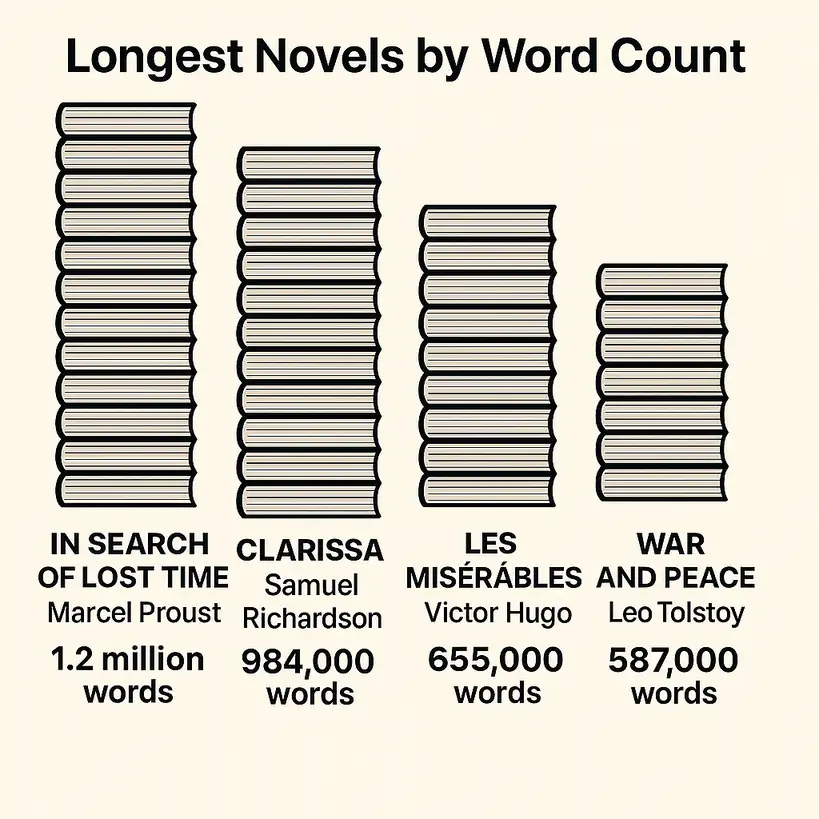
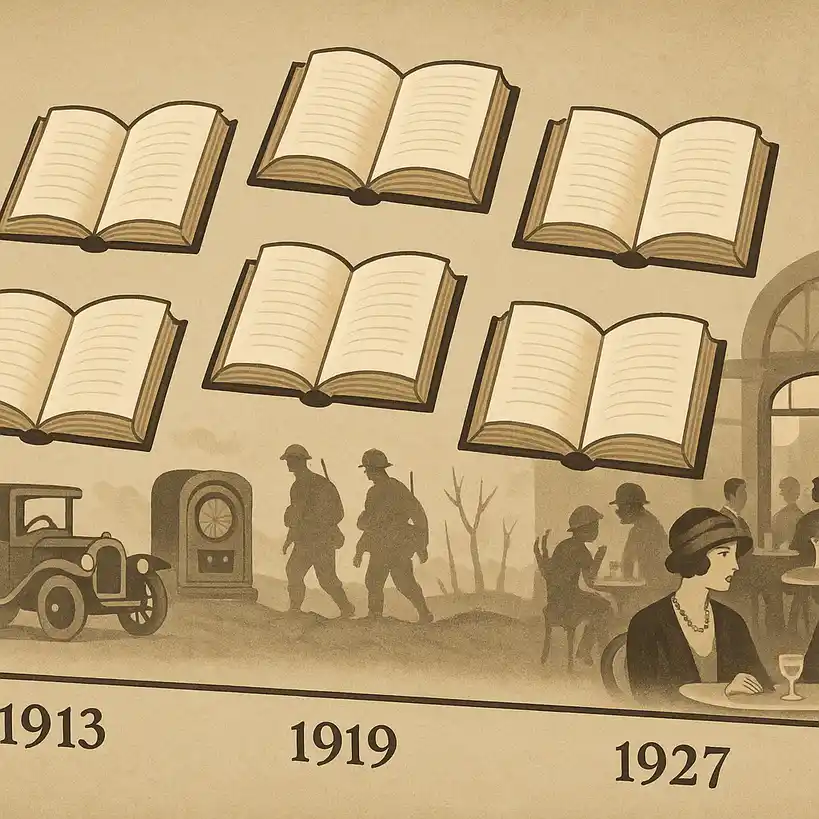
The longest novel ever written — by word count — is “In Search of Lost Time” by Marcel Proust. In French, it’s À la recherche du temps perdu. This monumental work contains around 1.2 million words, spread over seven volumes and published between 1913 and 1927.
It’s not just long — it’s also famously deep. Proust doesn’t hurry. He stretches a single moment into pages of introspection. A bite of a madeleine turns into a meditation on memory, time, and meaning. That style makes the book feel even longer — but in a good way.
There are other contenders. A novel from Vietnam called At Swim, Two Birds and the French work Artamène ou le Grand Cyrus sometimes claim the record, depending on how one defines “novel.” But in terms of widely recognized literary fiction, Proust’s book remains the longest by far.
It’s also widely read, quoted, and admired — not just for its size, but for how it turns time itself into a literary structure. Proust invites you to take your time. Maybe that’s the real secret behind its length.
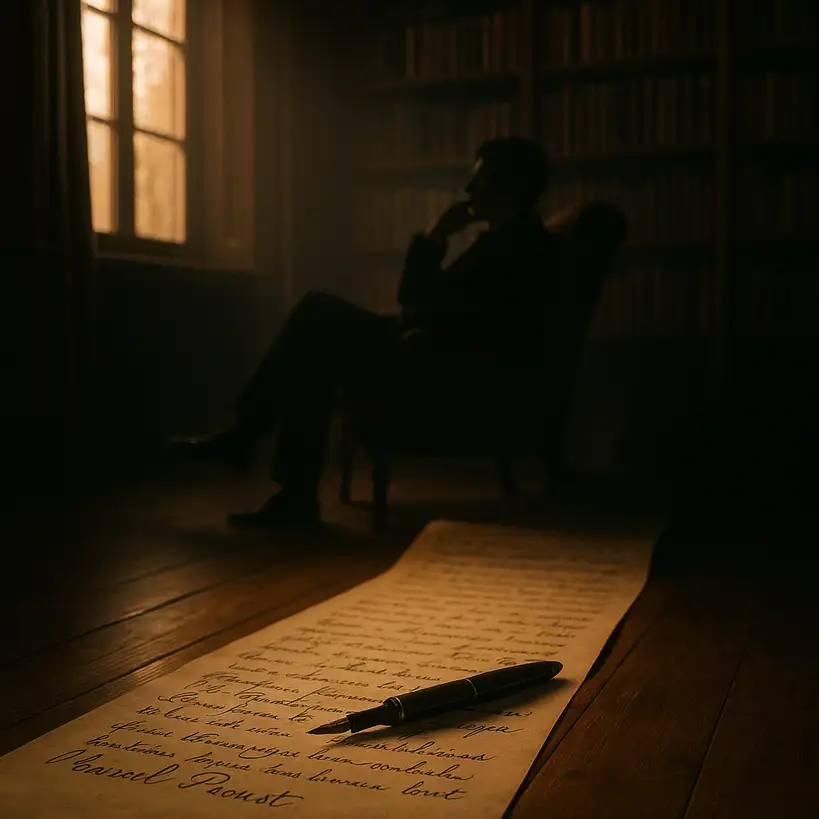
📚 Proust and the Lost Pages of Salinger
In Search of Lost Time is a literary marathon. But what happens when a writer chooses silence instead? That’s exactly what J.D. Salinger did. After the success of The Catcher in the Rye, he stopped publishing. For decades. And yet — he kept writing.
Salinger and Marcel Proust might seem like opposites. One spilled millions of words across seven volumes. The other vanished behind a wall of mystery. But both had one thing in common: they believed in interiority. In the small, detailed spaces of thought.
While Proust filled entire chapters with memories of madeleines and lost time, Salinger used restraint. A single line of Holden Caulfield could carry more angst than a ten-page speech. Yet they were both after the same truth — the inner pulse of being alive.
Salinger never wrote a long novel. But if his vault of unpublished stories ever emerges, we may discover he left behind something vast. Maybe not 1.2 million words — but perhaps something just as deep.
🏛️ The Quiet Monument of Saramago
José Saramago didn’t need chapters. He barely needed punctuation. But what he did need — and use masterfully — was time. Like Proust, Saramago wrote novels that unfold slowly, looping through ideas, testing your patience, and sharpening your focus.
Take Blindness, for example. The story doesn’t rush. It builds gradually, word by word, sentence by sentence — sometimes one single sentence lasting a whole page. Saramago makes you stay with him. He dares you to read at his pace.
His longest novel, The Gospel According to Jesus Christ, clocks in at over 100,000 words. Not a record-breaker, but still monumental. And emotionally intense.
There’s a certain kinship between Proust’s infinite memory and Saramago’s slow spiral of thought. Both show us that length is more than numbers. It’s about how long a story lingers in your head.
With Saramago, the silence between the lines often says more than the words themselves. Just like Proust, he invites you to listen closely.
🧠 Huxley, Memory, and the Future of Long Narratives
Aldous Huxley didn’t write long novels. In fact, Brave New World is famously short. But he thought deeply about memory, consciousness, and the way humans process time — themes that align closely with Proust’s obsession in In Search of Lost Time.
In essays and speeches, Huxley often referenced the limits of language. He wondered how much a single sentence could contain. He praised writers like Proust for expanding what a novel could do — not just tell a story, but explore a mind.
Later in life, Huxley experimented with altered states. He believed that under certain conditions, people could see time differently. Proust didn’t need substances. He used language as a gateway. He let memory unfold on its own terms — slowly, quietly, relentlessly.
For Huxley, Proust was proof that the novel didn’t need to follow rules. It could be immersive or it could be circular. It could — like thought — wander.
So while Huxley never wrote a million-word epic, he deeply understood the mental landscape such a novel could explore. And that’s part of why In Search of Lost Time still feels modern. It’s not just long. It’s profound.
🌀 David Foster Wallace and the Weight of Words
When we talk about long novels, one name always comes up — David Foster Wallace. His novel Infinite Jest, published in 1996, is famous for its complexity, its footnotes, and its bulk: over 1,000 pages and around 577,000 words.
That’s still only half the length of Proust’s In Search of Lost Time. But Wallace’s novel feels just as heavy — not just physically, but mentally. It loops, tangles, and swerves. It demands focus. And like Proust, Wallace wasn’t just chasing plot. He wanted to recreate consciousness itself. Page by page, sentence by sentence, he tried to show how a brain works when it spirals — and that makes the reading experience strangely intimate.
Wallace once admitted he admired writers who could pack depth into every line. And while he used a more chaotic structure than Proust, the ambition was similar: stretch literature beyond the surface. Take the novel somewhere new.
Where Proust slowed time down, Wallace fractured it. Proust gave us memory through calm prose. Wallace threw in tennis academies, recovery centers, and language so thick it bends back on itself. Still, they both wrote with urgency — as if their minds couldn’t hold it all in.
So no, Wallace didn’t write the longest novel ever. But he wrote one of the densest. And that’s another way to feel the weight of a story.
More Facts and Figures next to What Is the Longest Novel Ever Written?
Interested in some reviews while searching the longest novel