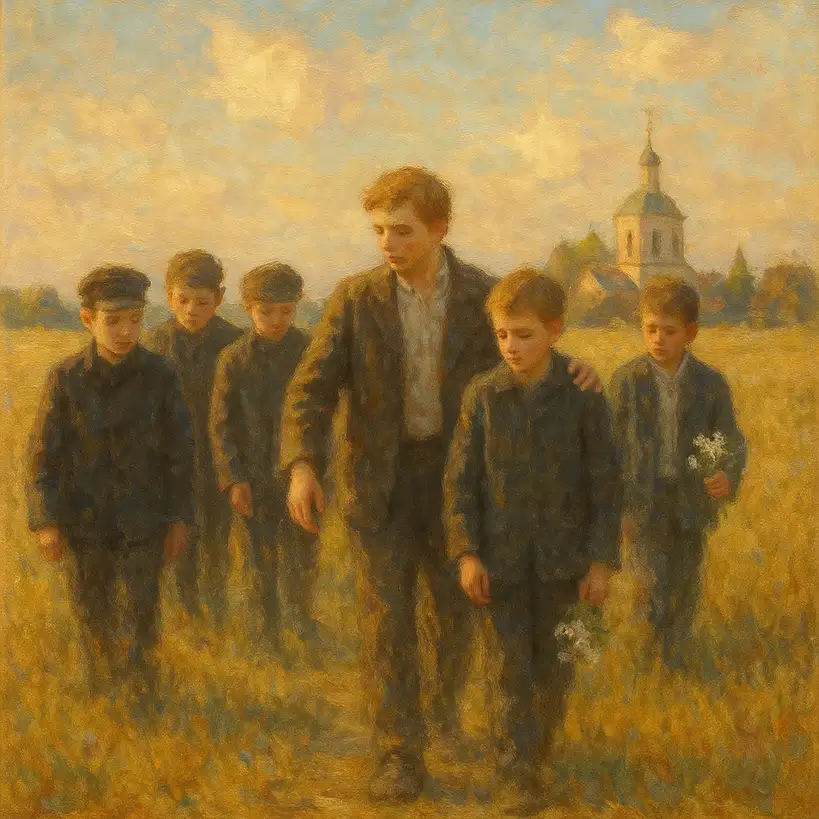
Fyodor Dostoevsky – voices under pressure
Fyodor Dostoevsky writes like someone who has just walked out of a police room and into your kitchen. The air is charged. Voices in conflict fill the page—confession, argument, prayer—and each sentence asks what a person can live with. I start readers here: intimacy plus public heat. The novels stage guilt in public rooms, where law, money, and strangers press on private vows. We listen as characters try to save a soul without losing a city.
You don’t need a scholar’s map. A short entry like Notes from Underground sharpens the ear; a bigger landmark like Crime and Punishment shows how conscience moves through streets, pawnbrokers, and police talk. Clarity before flourish is our rule in this guide: English titles in every chapter, a simple path through life, themes, and style, and a works list that pairs original with official translations later on. I’ll point out how point of view fractures, how time loops back to the scene you feared, and how dialogue becomes a moral test.
Comparisons can help tune the instrument. For a neighboring portrait of a person crushed by systems, read 👉 The Trial by Franz Kafka. You’ll hear a colder, bureaucratic echo that clarifies what Dostoevsky does differently: heat, argument, and a will that refuses to go quietly. Read to feel, then to see—feel the pressure first, then notice the technique that makes it relentless. By the end of this article, you’ll have one book to start tonight, another for a long weekend, and a clear sense of why these rooms still feel contemporary when you step inside.
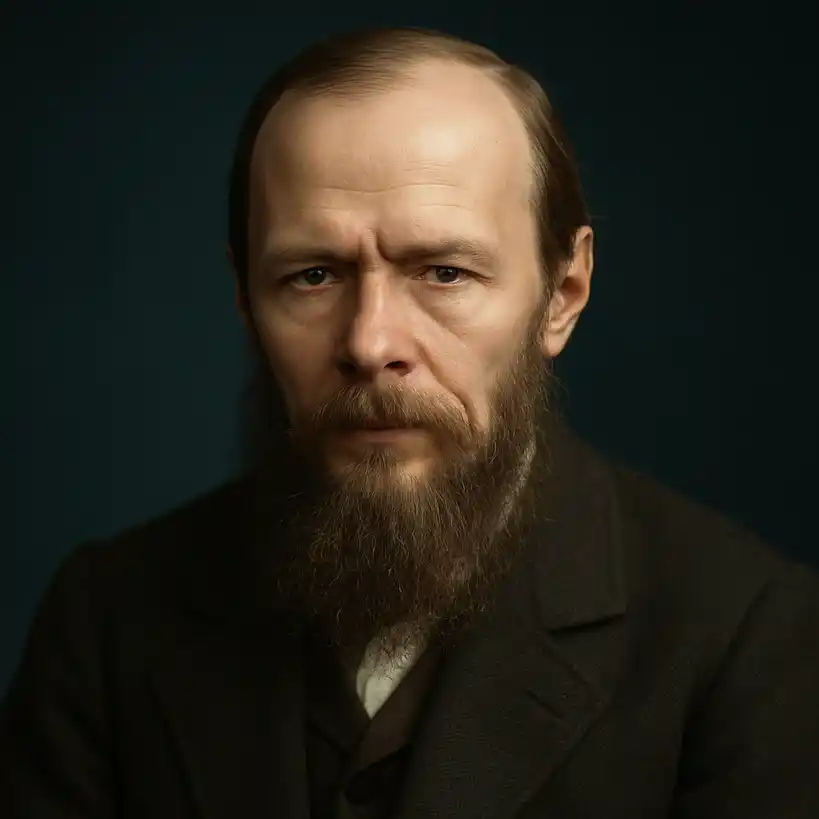
Life and Works of Fyodor Dostoevsky – Profile
- Full Name and Pseudonyms: Fyodor Mikhailovich Dostoevsky; often rendered as Dostoyevsky in English.
- Birth and Death: 11 November 1821, Moscow; 9 February 1881, St. Petersburg.
- Nationality: Russian.
- Father and Mother: Mikhail Andreevich Dostoevsky; Maria Fyodorovna Dostoevskaya (née Nechayeva).
- Wife or Husband: Maria Dmitrievna Isaeva (m. 1857–1864); Anna Grigorievna Snitkina (m. 1867–1881).
- Children: Sofya (died in infancy), Lyubov, Fyodor, Alexey.
- Literary Movement: Russian realism; psychological and philosophical fiction.
- Writing Style: Polyphonic dialogue, confessional monologue, urban realism, moral inquiry.
- Influences: Nikolai Gogol, Balzac, Dickens, Pushkin, Schiller; Scripture.
- Awards and Recognitions: Canonical status in world literature; 1880 Pushkin speech marked national acclaim.
- Adaptations of Their Work: Film and television versions of Crime and Punishment, The Idiot, The Brothers Karamazov, Demons.
- Controversies or Challenges: Arrest and mock execution, Siberian exile, censorship, epilepsy, debt and gambling.
- Career Outside Writing: Engineer cadet; editor and journalist; diarist; public lecturer.
- Recommended Reading Order:
1. Notes from Underground
2. Crime and Punishment
3. The Idiot
4. Demons
5. The Brothers Karamazov
Arrests, ledgers, and a stubborn faith in the line
Moscow, 1821: a doctor’s household, charity patients in the yard, and a boy who learns early that money and mercy argue in the same room. Early witnesses to suffering shaped Fyodor Dostoevsky’s attention. Books arrived as necessity rather than ornament. Church stories, French novels, Russian chronicles—he read to make sense of crowded feelings. A mind built for pressure met the capital’s noise.
Technical schooling followed. The Engineering Academy in St. Petersburg trained him to measure, draw, and keep order. Nights undid that order with cheap candles and pages. Translation work—especially Balzac—taught prose with spine and gave him an informal apprenticeship in plot and motive. Then the circle of radical talkers. Then the arrest and then the mock execution and Siberia. The ledger of beliefs changed under punishment, but the attention intensified. He would write people as if the police were listening and the soul were speaking anyway.
Prison and barracks gave him rooms he never forgot: bunks, stoves, boots, small humiliations. Those objects return in the fiction as moral evidence. When the city re-enters—tenements, pawnbrokers, bridges—the pages feel walked-through, not imagined. If you want a companion for the psyche split between the room and the crowd, try 👉 Steppenwolf by Hermann Hesse; it clarifies, by contrast, how the Russian writer Fyodor Dostoevsky keeps the social and the spiritual glued together without losing either.
By his twenties and thirties, the toolkit is set: overlapping voices, scenes that refuse easy exits, and questions that bite. The writer has stood inside interrogation rooms and hospital wards. He has counted coins with characters who can’t afford mistakes. He learned to load a detail—the scrape of a chair, the feel of a glove—until it tells the truth. That habit never leaves the page.
Debts, dictation, and novels that will not sit still
Exile ended, the work began to sprint. Magazine deadlines paid rent, roulette burned it, and the line learned to move fast without breaking. Pressure became craft, not just trouble. A young stenographer, Anna Grigorievna, took dictation on a tight contract; together they beat the clock with The Gambler. Partnership as engine shaped the next decades, page by page.
Books arrived in a fierce sequence. Notes from Underground sharpened the quarrel between pride and need. Crime and Punishment pushed conscience onto the street where pawnbrokers, policemen, and a feverish student turned ethics into action scenes. Guilt in public rooms became the signature. The Idiot tried to imagine a completely good man among debts, gossip, and cruelty. Demons tracked a town where ideas catch fire faster than the people who carry them. The chapters argue, yet the scenes stay concrete: chairs scrape, candles gutter, winter bites.
Editing and polemics kept the pen hot. Columns forced opinions into clean prose, which disciplined the sprawling novels. Illness returned in fits; poverty never walked far. Suffering as attention is the honest pattern. The writer looked harder because the world kept pressing. He wrote voices that interrupt, confess, joke, pray, and accuse, often in a single scene. Point of view fractures, then locks into focus the moment a soul chooses.
I read these middle years of Fyodor Dostoevsky as a craft school hidden inside disaster. The deadlines set the drum. The cities supply the chorus. The plots refuse easy exits because life was offering none. Form serves truth here: a chapter moves like a hearing, a street corner becomes a tribunal, and a single small kindness changes the weather.
A public voice, a last summoning bell
The late period of Russian author Fyodor Dostoevsky sounds like a man who knows the hall is full. Readings drew crowds, and Diary of a Writer turned the month’s weather into argument and plea. Public conscience, private ache sits in every column. The big books keep coming. The Adolescent tests pride against need inside a family ledger. The Brothers Karamazov gathers everything that mattered, then asks whether mercy can survive rumor, drink, and a courtroom glare. Faith tested in daylight is the final stance.
Home life steadied the work. Anna managed rights and printers with calm precision. Travel to Europe brought more creditors and more notes. Petersburg stayed the essential stage: tenements, churches, squares, a police room where the air feels short. The prose grows broader in sympathy, not softer. Kindness with teeth is the tone. Sinners get their say; no one escapes the bill.
Public honors arrived. A Pushkin speech in 1880 became a civic event because the orator believed literature could keep a country’s conscience awake. The last winter felt crowded with visitors and plans. Then illness closed the door in 1881. The funeral turned into a procession that showed how widely the voice had traveled.
If you want a cool counterpoint to this heat, try 👉 The Metamorphosis by Franz Kafka. The contrast clarifies what the author chooses: he keeps the social room open even when the soul breaks, and he lets argument stay human rather than abstract. The late lesson is simple and hard. Freedom carries cost, mercy needs work, and truth prefers small rooms where a person must choose. That is why these novels still feel like a summons when you open them, and why late chapters keep their grip long after the light fades.
Sects, salons, and the storm under the floorboards
I place Fyodor Dostoevsky inside Russian realism and the quarrel between Slavophiles and Westernizers, but the pages feel more like street debates than schools. He shares space with Turgenev’s polished psychology and Tolstoy’s moral sweep, yet aims for rooms where conscience speaks out loud. Gogol supplies the Petersburg grotesque; Dickens the crowd’s dignity; Balzac the ledgers of debt and rumor. From that mix, the novelist builds a form where a city listens while a soul argues with itself.
Themes return like recurring knocks. Guilt in public rooms drives the action: shame refuses privacy and drags court, church, and bar into the scene. Freedom with cost follows—characters test their will against money, hunger, and love, then learn what their choices buy. Faith and doubt don’t cancel; they wrestle. You hear prayer beside provocation in the same chapter, and the book refuses to declare an easy winner.
Technique serves the argument. Voices overlap until truth must prove itself in dialogue. Polyphony as truth test means a saint, a skeptic, and a scoundrel all get their best lines, and the reader must decide who is living honestly. Time loops back not for trickery but to add witness; the same night returns from another angle and the moral temperature rises. Mercy enters quietly and the weather of a chapter changes.
Set beside his peers, Fyodor Dostoevsky keeps the room smaller and the stakes hotter. Institutions matter, but the trial is always personal. That’s why the books still feel like summonses rather than monuments: many voices in one room, choice under pressure, and a last, stubborn hope that grace can find a way in.
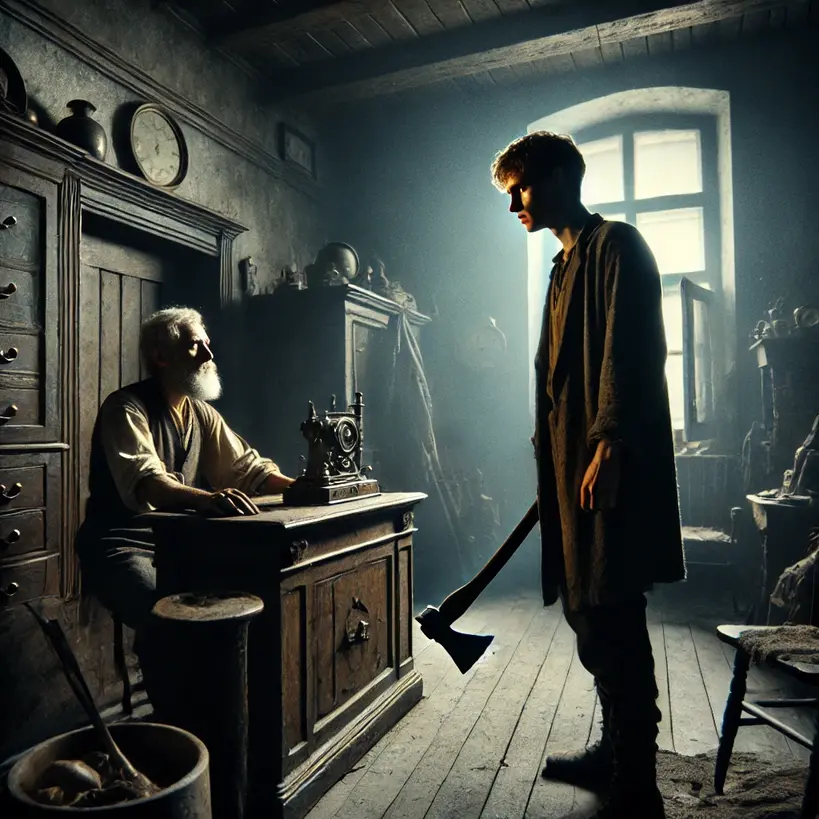
Famous Works by Fyodor Dostoevsky in chronological order
- 1846 — Бедные люди (Poor Folk); novel. Letters between a copyist and a young woman turn poverty into moral x-ray; empathy arrives through small, stubborn gifts.
- 1846 — Двойник (The Double); novella. A minor official meets his mirror and unravels; paranoia becomes a street-level comedy of status and shame.
- 1861 — Униженные и оскорблённые (Humiliated and Insulted); novel. Found families, exploitation, and pride under pressure; early test of the crowded social canvas.
- 1862 — Записки из Мёртвого дома (The House of the Dead); memoir/novel. Prison life observed with unsentimental exactness; objects and routines become moral evidence.
- 1864 — Записки из подполья (Notes from Underground); novella. A defiant voice argues with itself and the city; freedom and self-harm share one room.
- 1866 — Преступление и наказание (Crime and Punishment); novel. Conscience walks the streets; a murder turns into a public trial of guilt, mercy, and money.
- 1866 — Игрок (The Gambler); short novel. Debt, desire, and the wheel; written at speed, it reads like a craft lesson in pressure.
- 1869 — Идиот (The Idiot); novel. A good man enters a world of gossip and calculation; kindness meets the costs of society.
- 1870 — Вечный муж (The Eternal Husband); novella. Jealousy, embarrassment, and power games; comedy edges into cruelty with clinical precision.
- 1872 — Бесы (Demons); novel. A provincial town catches ideological fire; polyphony becomes a stress test for truth and responsibility.
- 1875 — Подросток (The Adolescent / A Raw Youth); novel. Pride, paternity, and money; a young narrator learns how choice and consequence stick.
- 1880 — Братья Карамазовы (The Brothers Karamazov); novel. Faith and doubt argue in public; crime, courtroom, and grace converge in one vast inquiry.
What taught him to make a room confess – Influences on Fyodor Dostoevsky
Dostoevsky learned to put souls on the street. I hear the roots in satire, ledgers, crowds, and prayer. He keeps what serves pressure and throws out what feels pretty.
- Nikolai Gogol — Petersburg grotesque, pity with a flinch: The Overcoat and Dead Souls show how a city can warp a clerk and still break your heart. Masks, stairs, and cramped rooms become moral evidence. For a crisp civic counterpoint, try 👉 Dead Souls by Nikolai Gogol.
- Honoré de Balzac — money, rumor, rank as engines: Père Goriot and Lost Illusions teach how credit and talk move fate. Dostoevsky keeps the ledger as plot and lets receipts accuse.
- Charles Dickens — crowd dignity, comic bite: Bleak House and Oliver Twist grant the poor full presence; jokes cut upward. This gives Fyodor Dostoevsky license to mix pity with teeth. A fine pairing is 👉 Bleak House by Charles Dickens.
- Alexander Pushkin — measure, music, moral clarity: Stories like The Stationmaster model clean form where small choices carry weight. Fyodor Dostoevsky scales that ethic to tenements and courts.
- Friedrich Schiller — freedom and the inner tribunal: The dramas arm his characters with conscience as stage, so a speech can turn a life.
- The Gospels — mercy under daylight: Scripture supplies a grammar of forgiveness that never cancels cost. Courtrooms and kitchens both test it.
What stays after all these shelves is a rule: form must serve truth. If a technique crowds the witness, he drops it. If an image makes guilt and grace legible, he keeps it and repeats it until the room confesses.
Who writes differently because he did – Writers influenced by Dostoevsky
His novels proved that argument can be a plot. I keep seeing three gifts travel forward: polyphony that tests truth, guilt staged in public, and mercy that arrives late but real.
- Franz Kafka — bureaucratic nightmare with a human pulse: The Trial cools the heat but keeps the trap. Systems accuse, rooms shrink, and the self strains to stay intact.
- Albert Camus — crime as moral experiment: The Stranger and The Fall strip the room to light and voice; the question of responsibility stays central, only in a drier key.
- Jean-Paul Sartre — freedom under witnesses: No Exit turns a quarrel into a cell; choice under pressure refuses to leave the stage.
- Mikhail Bulgakov — satire with metaphysical sparks: The Master and Margarita lets devils, writers, and officials trade lines; the city becomes a tribunal with jokes. Read 👉 The Master and Margarita by Mikhail Bulgakov to hear the echo and the twist.
- Andrei Bely — the city as mind: Petersburg treats streets like nerves; symbols ring where footsteps fall.
- Hermann Hesse — divided selves seeking wholeness: Steppenwolf keeps the interior quarrel loud; society still presses from the next room.
Influence here is license, not template. Writers keep their climates and creeds. What carries forward is the nerve to let many voices share one scene, to make objects testify—a bill, a stair, a coat—and to trust that a late, fragile grace can still alter the weather. That is the Dostoevskian bequest: the novel as a hearing, the chapter as a test, and a city that listens while a soul decides.
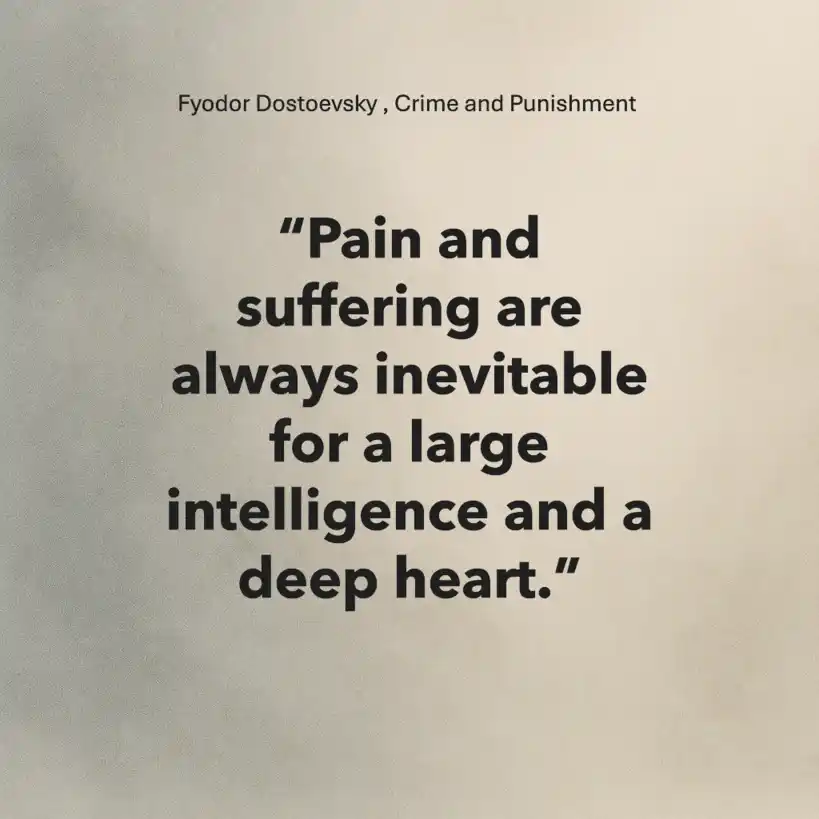
Famous Quotes by Fyodor Dostoevsky
- “Pain and suffering are always inevitable for a large intelligence and a deep heart.” A warning and a map; thought and feeling raise the stakes rather than lower them.
- “To go wrong in one’s own way is better than to go right in someone else’s.” Individual responsibility beats borrowed virtue; freedom has a price.
- “The degree of civilization in a society is revealed by entering its prisons.” Institutions show their soul where people have least power.
- “What is hell? I maintain that it is the suffering of being unable to love.” Condemnation is not fire but privation; mercy becomes the only exit.
- “Man is a mystery. It must be unraveled, and if you spend your whole life unraveling it, do not say you wasted your time.” Inquiry becomes duty; patience is part of love.
- “Beauty will save the world.” A provocation more than a slogan; the line asks whether grace can do work that argument cannot.
- “Much unhappiness has come into the world because of bewilderment and things left unsaid.” Speech is an ethical act; silence can wound.
- “The soul is healed by being with children.” Innocence is not escape but remedy; tenderness returns courage to adults.
Trivia Facts about Fyodor Dostoevsky
- Mock execution and exile: In December 1849 Fyodor Dostoevsky stood before a firing squad, then heard a last-moment reprieve. The sentence became years of Siberian penal service that reshaped his themes. Britannica confirms the arrest, staged execution, and commuted sentence.
- Dictation race and a marriage: Under a ruinous contract Fyodor Dostoevsky dictated The Gambler to the young stenographer Anna Grigorievna, finished on time, then married her in 1867.
- Epilepsy in the fiction: Seizures and auras surface in The Idiot and elsewhere, not as spectacle but as windows into compassion and fear.
- Editor with a deadline drum: His journals trained the prose to argue in public. Columns tightened the big novels and kept the rooms noisy and alive.
- Receipts as plot devices: Debts, IOUs, and pawn tickets function like characters. A banknote can tilt fate as decisively as a speech.
- How the city talks: Stairs, bridges, and courtyards repeat across books. These places act like witnesses that remember shame and mercy.
- Parallel routes in conscience: For ethical pressure without a crime scene, try 👉 Middlemarch by George Eliot. For a high-altitude court of society, read 👉 The Magic Mountain by Thomas Mann.
- Late public standing: The 1880 Pushkin speech turned a writer into a civic voice and set the stage for the reception of The Brothers Karamazov the following year.
How readers argued, then agreed he mattered
Reception began in quarrel and ended in consensus. Early works of Fyodor Dostoevsky drew praise for sympathy and form. Arrest and exile changed the critical frame, since the writer returned with a harder gaze and a public mission. By the middle novels, readers confronted guilt staged in public and polyphony that tests truth. Some objected to volatility and theology. Others recognized a new scale for the city novel. The 1880 Pushkin speech sealed a public role that was larger than art, which set expectations for the last summit in The Brothers Karamazov. University of Oregon
Translations carried the voice far. English readers met the books of Fyodor Dostoevsky through Constance Garnett and later through Pevear and Volokhonsky, which kept the rooms crowded and the sentences clear. Philosophers folded the novels into debates about freedom, responsibility, and faith. The Stanford Encyclopedia of Philosophy maps how these pages inform modern accounts of personhood and choice, while Britannica remains a reliable orientation to the life and sequence of works.
A short shelf for newcomers works. Start with a compact shock in Notes from Underground. Move to a street trial in Crime and Punishment. Test goodness under gossip in The Idiot. Watch ideas burn in Demons. End with the wide tribunal in The Brothers Karamazov. For context, sample entries from Diary of a Writer and read a good biography that covers debt, illness, travel, and the editorial years. Keep one method in mind. Read to feel, then to see. First the pressure, then the craft that makes it relentless.
What to keep, and where to start tonight
Fyodor Dostoevsky builds rooms that argue and refuses easy exits. I stay for the compassion with teeth, the way a single coin can change a life, and the steady belief that mercy must survive witnesses. Guilt in public rooms is the engine. Freedom with cost is the lesson. The prose is urgent, tactile, and loyal to places you can smell and stairs you can count. That is why these novels still feel contemporary when you enter them.
A working route helps. Begin with a sharp primer: Notes from Underground teaches the ear to hear quarrel as thought. Take the big street case: Crime and Punishment follows conscience through bridges, pawnbrokers, and police talk. Shift to a saint under pressure: The Idiot asks what goodness can survive in society. Watch ideology run hot: Demons shows how ideas seize towns and souls. Finish with the vast inquiry: The Brothers Karamazov brings prayer, crime, and courtroom into one field of vision.
Read with simple tools. Mark repeated objects like stairs, bridges, candles, coats. They remember more than speeches. Track reprises of the same night or room from different witnesses. Meaning thickens with each return. Listen for small mercies that change the weather of a chapter. If pace feels heavy, try one chapter in the morning and one at night. The polyphony is easier when you share your own breath with it.
Leave with this promise. The books press, then they offer. Compassion without naivety is the voice. The city listens while a soul decides. When you step back into your own rooms, small acts will look brighter and every choice will feel a little more real.