George Orwell: the World with Truth and Vision
George Orwell, the pseudonym of Eric Arthur Blair, was an exceptional writer and visionary who left an indelible mark on the world of literature. With his insightful and thought-provoking works, he challenged societal norms and shed light on the complexities of human nature. From his groundbreaking novels, such as “Nineteen Eighty-Four” and “Animal Farm,” to his compelling essays and journalistic endeavors,
His intellectual prowess continues to captivate readers to this day. This CV delves into the life and achievements of this author, revealing the remarkable journey of a man who dedicated his life to the pursuit of truth and justice.
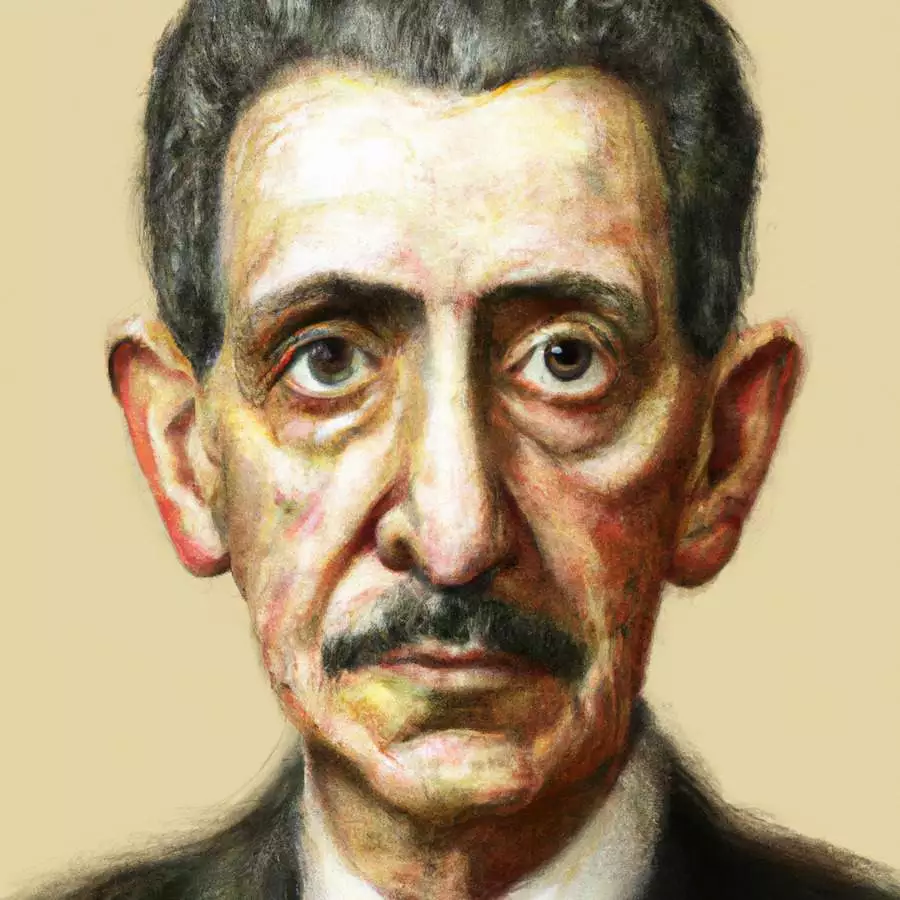
Profile of George Orwell – Life and Books
- Full Name and Pseudonyms: Born Eric Arthur Blair. Wrote and became famous under the pen name George Orwell.
- Birth and Death: Born on 25 June 1903 in Motihari, British India. Died on 21 January 1950 in London.
- Nationality: British writer from a middle class family shaped by the British Empire.
- Father and Mother: Father Richard Walmesley Blair, a colonial civil servant. Mother Ida Mabel Blair, who moved to England and encouraged reading.
- Wife or Husband: Married Eileen Maud O’Shaughnessy in 1936 and, after her death, Sonia Brownell in 1949.
- Children: Adoptive father of one son, Richard Horatio Blair, adopted in 1944.
- Literary Movement: Linked to modernism and social realism and a key voice in democratic socialist and anti totalitarian writing.
- Writing Style: Clear, direct prose with strong verbs, concrete images and a quietly ironic tone, especially in essays.
- Influences: Influenced by Jonathan Swift, Charles Dickens, Jack London and H. G. Wells, as well as his own experiences in Burma and the Spanish Civil War.
- Awards and Recognitions: Won few major prizes in life, but his books appear on many lists of the most important works of the twentieth century.
- Adaptations of Their Work: Animal Farm and Nineteen Eighty-Four inspired films, television, radio, stage works and graphic novels.
- Controversies or Challenges: Criticised for sharp views on empire, class and politics and for giving officials a private list of suspected Stalinist supporters.
- Career Outside Writing: Served in the Indian Imperial Police and later worked as teacher, bookseller, journalist and BBC radio producer.
- Recommended Reading Order:
1. Animal Farm
2. Nineteen Eighty-Four
3. Homage to Catalonia
4. Down and Out in Paris and London
A Literary Visionary
George Orwell, whose real name was Eric Arthur Blair, was an English writer and journalist who made a big impact on the world of literature. He wrote about important social issues and showed us the realities of human life. George Orwell was born on June 25, 1903, and his writing still matters today because he had a unique ability to understand and explain the problems of his time.
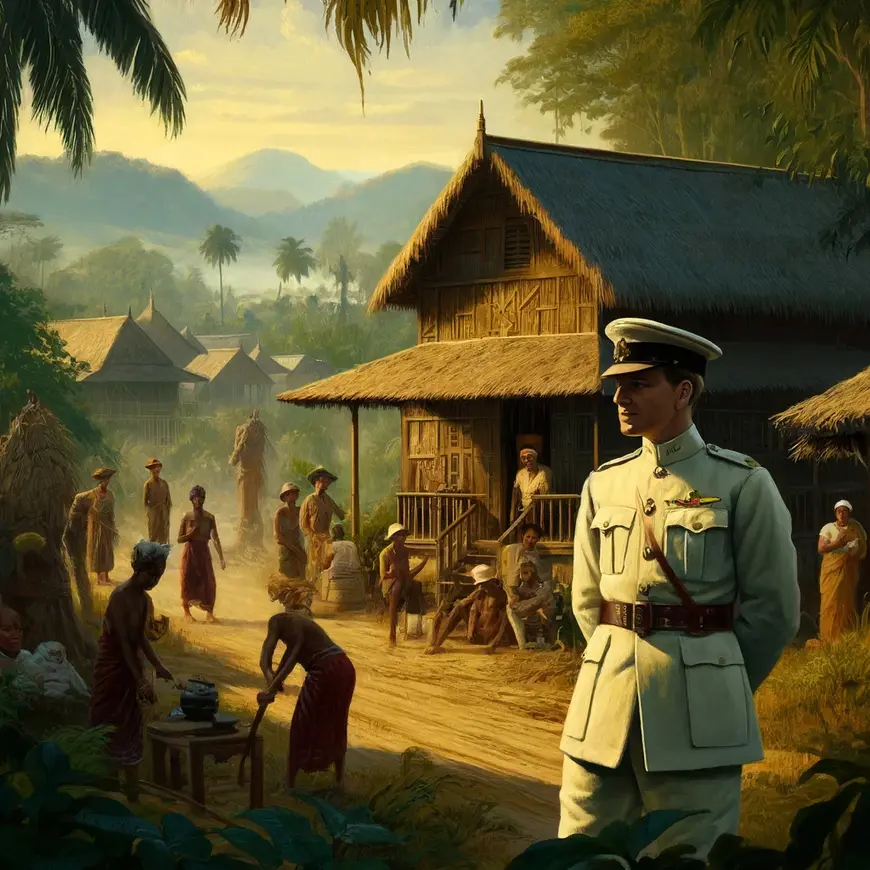
He started writing when he was young, and he always cared deeply about fairness and justice. He went to a school called Eton College and later worked as a police officer in Burma, which is now called Myanmar. This experience made him realize how powerful countries can take advantage of weaker ones. It made him want to use his writing to fight against unfairness and abuse of power.
George Orwell wrote different kinds of books, including novels, essays, and true stories about his own life. Some of his early works, like “Down and Out in Paris and London,” talked about how he struggled with poverty and homelessness. He showed us how people without money suffer and how society can be cruel to them.
In his novels, the writer continued to explore important issues. While in “Burmese Days,” he wrote about the bad effects of British rule in Burma. In “A Clergyman’s Daughter” and “Keep the Aspidistra Flying,” he told stories about ordinary people trying to live their lives but facing problems because of their social status.
The Visionary Writer Who Challenged Power and Fought for Justice
He also did something very special: he wrote non-fiction, which means he wrote true stories about real events. One of his most famous works is “The Road to Wigan Pier,” where he talked about the difficult lives of working-class people in England. He showed us how poor people suffer and don’t have the same opportunities as others.
During the Spanish Civil War, George Orwell fought against fascism. He wrote a book called “Homage to Catalonia” about his experiences. This war made him realize the importance of freedom and democracy. He saw how people who were supposed to be fighting for freedom were actually fighting against each other. This made him want to protect democracy and fight against any kind of dictatorship.
But it was his dystopian novels that made him famous worldwide. “Animal Farm” and “1984” are both very important books. In “Animal Farm,” he used animals to tell a story about power and how it can be abused. In 1984, he created a dark future where the government controlled everything and people had no freedom.
George Orwell didn’t just write books. He also wrote articles and essays for newspapers and magazines. And he wrote about many different topics, like imperialism and the complexities of human nature. He wanted to help people understand the world better and to fight for what is right.
Hiss writing is still important today because it speaks to us about the problems we face in our society. His ideas about fairness, justice, and the importance of freedom are still relevant. He inspires us to stand up for what is right and to challenge those who try to control us.
Education and Writing Career
His academic journey laid the foundation for his intellectual pursuits. He attended St. Cyprian’s School in Eastbourne, England, where he faced the harsh realities of class distinctions and social injustice, experiences that would later shape his writing. He won a scholarship to Eton College, one of the most prestigious schools in the country, where he honed his literary skills and developed a deep sense of empathy for the underprivileged.
In addition to his fiction, George Orwell made significant contributions to journalism and essay writing. His works, such as “Shooting an Elephant,” “Politics and the English Language,” and “Homage to Catalonia,” showcased his talent for astute political analysis and his unwavering commitment to truth. His essays continue to inspire readers with their clarity of thought and incisive social commentary. Did you know that George Orwell served as a war correspondent during the Spanish Civil War?
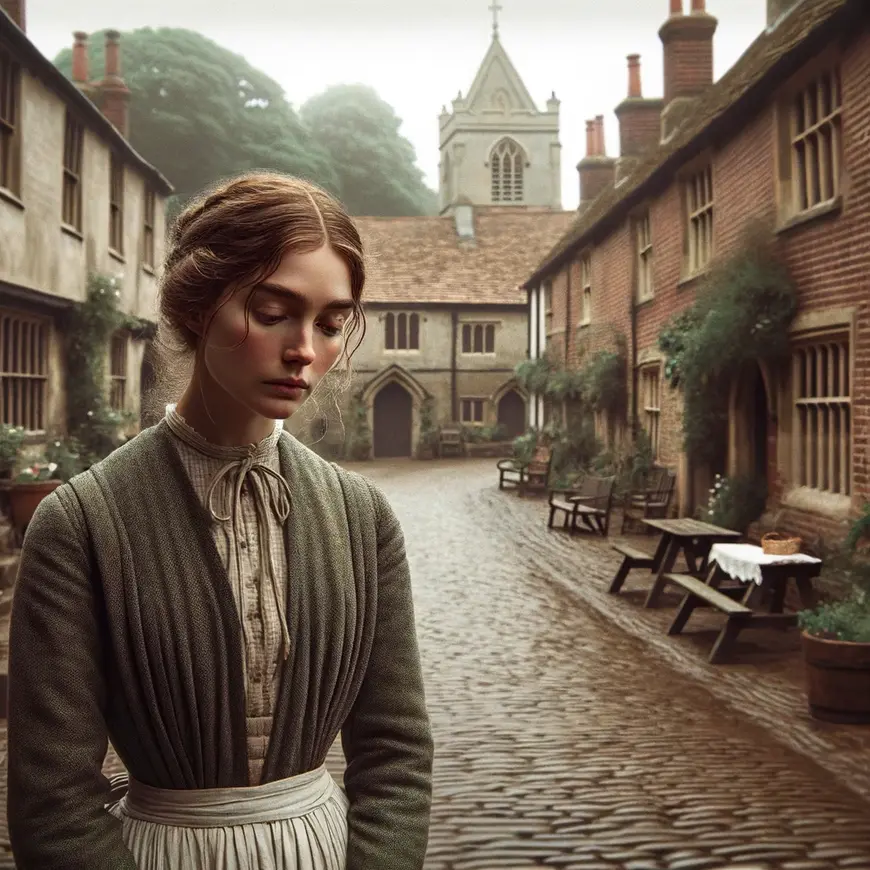
The author’s writing career began as a young man when he embarked on a journey to explore the lives of the destitute and marginalized. Inspired by his experiences, he wrote his first book, “Down and Out in Paris and London,” which exposed the harsh realities of poverty.
Orwell’s most celebrated novel, “Nineteen Eighty-Four,” published in 1949, remains an unparalleled masterpiece of dystopian fiction. This prophetic tale depicts a totalitarian regime that manipulates truth, suppresses individuality, and controls the masses. Its influence on literature and popular culture is immeasurable, and the term “Orwellian” has become synonymous with oppressive regimes and surveillance states.
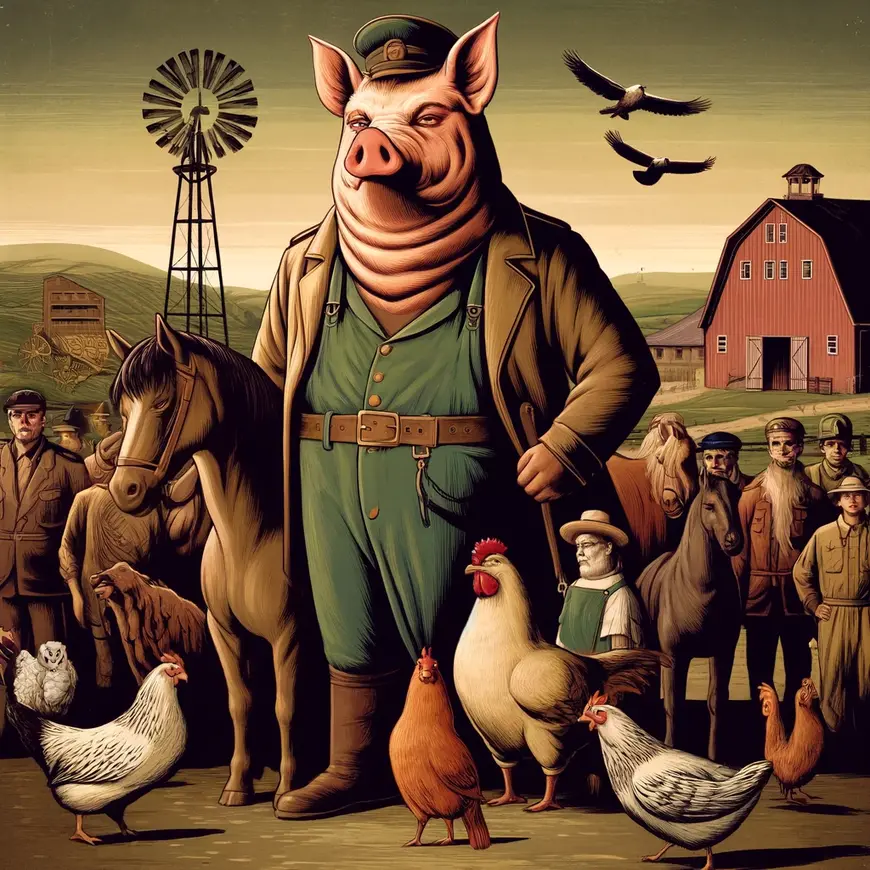
The writer’s political allegory, “Animal Farm,” published in 1945, brilliantly satirizes the Soviet Union under Joseph Stalin. The novel uses a group of farm animals to illustrate the corruption and betrayal of the Russian Revolution.
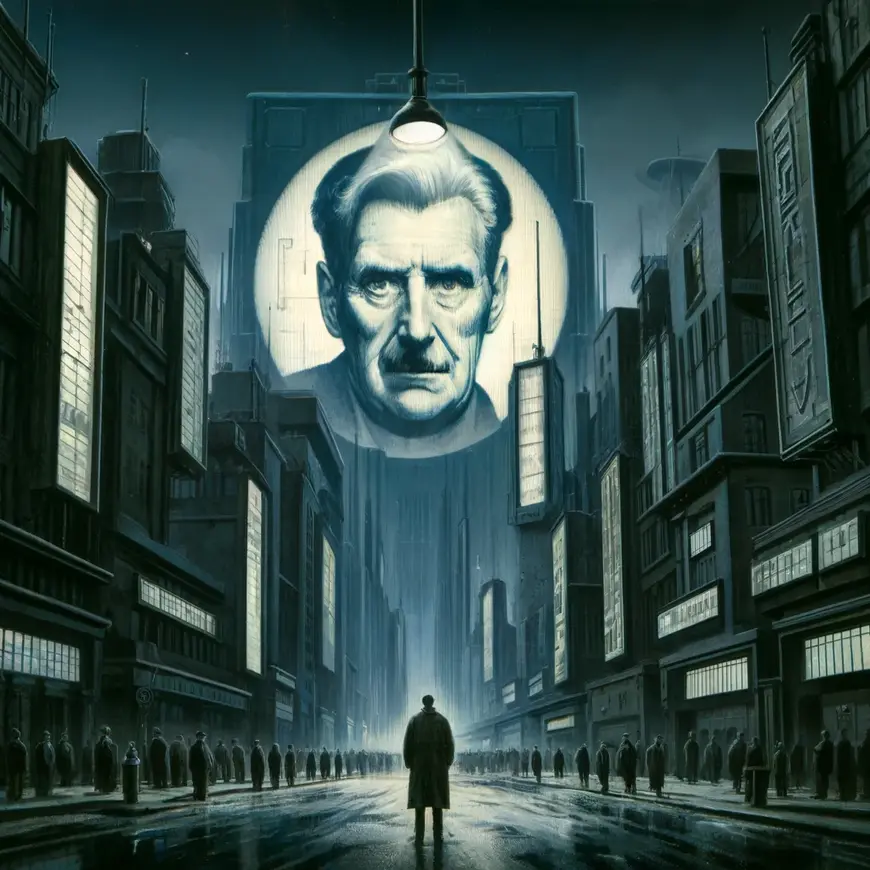
List of works and books by George Orwell in chronological order
- Down and Out in Paris and London (1933): The first published work, a semi-autobiographical account of his experiences of poverty and homelessness in Paris and London.
- Burmese Days (1934): A novel set in British colonial Burma, exploring themes of imperialism, racism, and corruption.
- A Clergyman’s Daughter (1935): A novel that follows the life of Dorothy Hare, the daughter of a clergyman, as she experiences a series of misadventures and personal crises.
- The Road to Wigan Pier (1937): A non-fiction book that examines the living conditions of the working class in the industrial areas of northern England, as well as hiss own experiences during his research.
- Homage to Catalonia (1938): His personal account of his time fighting in the Spanish Civil War, where he joined the Republican forces to fight against the Nationalists led by General Francisco Franco.
- Coming Up for Air (1939): A novel that explores the themes of nostalgia and the disillusionment of the protagonist, George Bowling, as he reflects on his life and the changes in society.
- Animal Farm (1945): A satirical novella that allegorically depicts the events leading up to the Russian Revolution and the early years of Soviet communism, using animals on a farm to represent different political figures and ideologies.
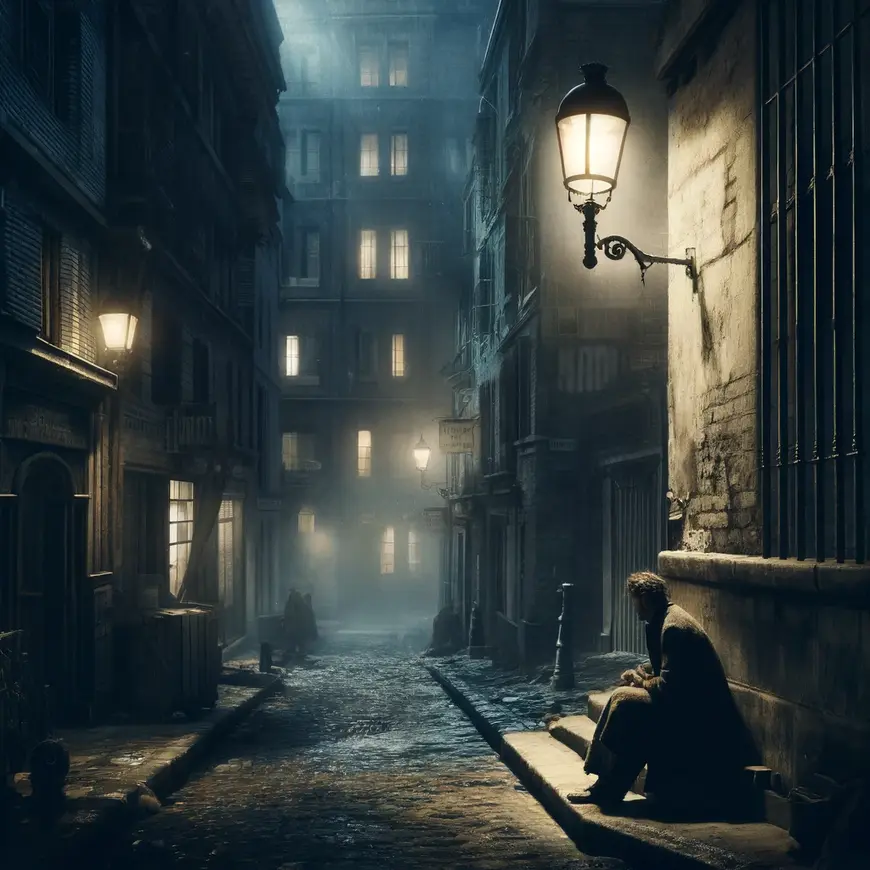
- 1984 (1949): George Orwell’s most famous and influential work, a dystopian novel set in a totalitarian society ruled by the Party and its leader, Big Brother. The novel introduced concepts such as thought control, surveillance, and the manipulation of truth.
Influences on George Orwell
- Jack London: London’s exploration of social inequality, particularly in “The People of the Abyss,” which describes the living conditions in the East End of London, had a profound impact on George Orwell. Hi’s own investigations into the lives of the impoverished in works like “Down and Out in Paris and London” mirror London’s exposé of social injustices.
- Jonathan Swift: Swift’s use of satire and irony, especially in “Gulliver’s Travels,” influenced his approach to political writing and satire. The novelist admired Swift for his ability to use literature as a vehicle for critiquing society, a technique George Orwell himself mastered in “Animal Farm.”
- Yevgeny Zamyatin: Zamyatin’s novel “We” is often cited as a precursor to “1984.” “We” provided a blueprint for dystopian fiction, presenting a society governed by logic and reason to the total exclusion of personal freedom and individuality. His “1984” explores similar themes of surveillance, conformity, and totalitarianism.
- H.G. Wells: Wells’s speculative fiction and social commentary inspired the author, particularly his ability to critique contemporary society through futuristic and dystopian visions. While the author grew more critical of Wells’s optimism about the future, Wells’s influence is evident in Orwell’s interest in the potential consequences of political and technological developments.
- Charles Dickens: Dickens’s concern for social justice, his critique of societal inequalities, and his vivid portrayals of the poor and oppressed in Victorian England influenced Orwell. He admired Dickens for his moral seriousness and his ability to reach a wide audience with his social critiques.
His Influence on Later Writers
- Ray Bradbury: Bradbury’s “Fahrenheit 451” reflects the writer’s concerns with censorship, the suppression of dissenting ideas, and the role of technology in society’s decline. Both writers caution against the loss of individual freedom and the importance of intellectual freedom.
- Margaret Atwood: Atwood’s “The Handmaid’s Tale” owes a debt to Orwell’s exploration of totalitarianism and the use of power to control personal freedoms. Atwood extends his themes, focusing on gender and the control of women’s bodies as tools of the state.
- Aldous Huxley: Although Huxley’s “Brave New World” was published before “1984,” Orwell’s work reignited interest in Huxley’s dystopia, and the two are often compared for their visionary insights into society’s future. The dialogue between these works continues to influence discussions on freedom, surveillance, and the role of government.
- Thomas Pynchon: Pynchon’s complex narratives and explorations of paranoia, control, and resistance echo his concerns. In works like “Gravity’s Rainbow,” Pynchon delves into the impact of technology and the omnipresence of surveillance, themes central to 1984.
- Cory Doctorow: Doctorow’s “Little Brother” and its sequels directly engage with Orwellian themes, updating the concerns of “1984” for the digital age. Doctorow explores surveillance, privacy, and civil liberties in the context of contemporary society, reflecting the influence on discussions of digital rights and freedoms.
How the author Uses Narration, POV, and Time
George Orwell likes to place the reader very close to his characters without losing a cool, observing eye. In many works he uses a third person narrator who stays near one central figure. The voice feels calm, almost documentary, and it lets the moral shock of events speak for itself. In Nineteen Eighty-Four, the narrator follows Winston’s fears and small acts of rebellion with quiet precision. The point of view rarely leaves him, so the reader feels the same pressure and narrowing of choices.
First person narration appears often in his non-fiction. Books like Homage to Catalonia or Down and Out in Paris and London use an honest, self-critical “I”. The voice admits confusion, fatigue, and bias. This choice builds trust, because the writer shows how his own viewpoint is limited and shaped by class, health, and politics. The mix of clear reporting and open doubt gives his essays a strong ethical presence.
Time in his fiction usually moves in a straight line. Scenes follow one another in a simple sequence, which keeps tension focused on what happens next. Flashbacks appear, but they stay short and functional. Winston’s childhood memories or Boxer’s early strength in Animal Farm deepen emotion rather than distract from the main line of the story. In the non-fiction, time often feels like a path of awakening. The narrator moves through streets, trenches, or workplaces and slowly builds a judgement on what he sees. This steady, linear movement helps readers feel that insight grows step by step from experience.
Syntax and Rhythm; Imagery and Tone in Orwell’s Prose
At sentence level, George Orwell favours clarity over flourish. He prefers simple structures, strong verbs, and concrete nouns. Many sentences follow a subject verb object pattern, but he varies length enough to keep the rhythm alive. Short, punchy lines often close a paragraph and carry the sting of his argument. In essays such as “Politics and the English Language”, the syntax itself performs the advice he gives. The prose stays clean, so the ideas can cut sharply.
The rhythm in his fiction is more patient but still firm. Descriptions of streets, kitchens, or shabby offices unfold in steady beats. You feel the drag of poverty in Down and Out in Paris and London or the dull weight of routine in The Road to Wigan Pier. Repetition of key phrases supports this rhythm. Slogans in Nineteen Eighty-Four or commands in Animal Farm echo through the text like drumbeats, showing how language can trap thought.
His imagery works through plain objects rather than lush metaphor. A cracked mug, a thin blanket, a greasy plate, a torn boot. These items stand for whole systems of neglect, class, or power. When he does use larger images, they tend to be stark and memorable. Big Brother’s face, the two minutes hate, the windmill on the farm. The tone that wraps this imagery is often sober and slightly sad, with brief flashes of dark humour. George Orwell rarely shouts on the page. Instead, he speaks in a voice that sounds reasonable and tired, which makes the moments of horror or beauty feel even more convincing.
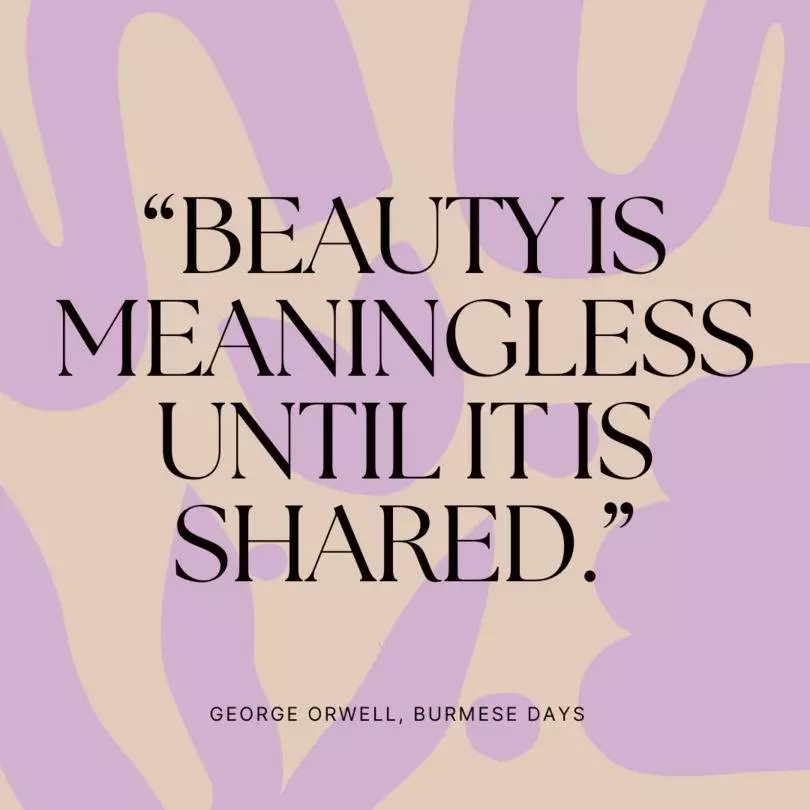
Famous quotes from George Orwell
- “War is peace. Freedom is slavery. Ignorance is strength.” From “1984,” this quote is a stark example of Orwell’s exploration of dystopian language and doublespeak, illustrating how totalitarian regimes manipulate truth and language to control the populace.
- “All animals are equal, but some animals are more equal than others.” From “Animal Farm,” this quote succinctly critiques the hypocrisy and corruption that can arise in revolutionary movements, ultimately betraying their founding principles.
- “In a time of deceit, telling the truth is a revolutionary act.” Although the attribution to the author is debated, this quote reflects themes consistent with his work, emphasizing the importance and rarity of truth in a society marred by propaganda and manipulation.
- “Big Brother is watching you.” From “1984,” this quote has transcended literature to become a universal symbol of surveillance, state control, and the erosion of privacy in society.
- “Who controls the past controls the future. Who controls the present controls the past.” Also from “1984,” this quote delves into the theme of historical revisionism and the power of controlling information to shape society and the future.
Trivia facts about the author
- Real Name: George Orwell’s real name was Eric Arthur Blair. He chose “George Orwell” as a pen name because he believed it to be a “good, round English name.” This choice reflected his deep connection with English culture and society, which he frequently explored and critiqued in his writing.
- Burmese Police Force: Before becoming a writer, George Orwell served in the Indian Imperial Police in Burma (now Myanmar) from 1922 to 1927. His experiences there, witnessing the effects of imperialism and the harsh realities of colonial rule, deeply influenced his political views and writing, particularly evident in his essay “Shooting an Elephant.”
- List for the British Government: During World War II, he provided the British Foreign Office with a list of writers and journalists whom he considered to be unsuitable for producing propaganda due to their sympathies towards the Soviet Union. This controversial act has been the subject of much debate regarding his attitudes towards communism and free speech.
- Tuberculosis: George Orwell struggled with tuberculosis for the last decade of his life, which significantly impacted his work and productivity. His battle with the disease, and his time spent in sanatoriums, influenced his writing and ultimately led to his death at the age of 46 in 1950.
- BBC Broadcaster: During World War II, the writer worked as a broadcaster for the BBC‘s Eastern Service. He produced and presented radio programs designed to gain Indian and East Asian support for Britain’s war efforts. Though he was critical of propaganda, he saw this as an opportunity to make a contribution to the fight against fascism.
Conclusion: Summary on George Orwell
This essay explores the life, writings, and impact of George Orwell, born Eric Arthur Blair. His works are known for their critiques of totalitarianism, social injustice, and language manipulation. His early life in British India, his time in the Imperial Police in Burma, and his experiences in the Spanish Civil War shaped his disdain for authoritarian regimes and his empathy for the underprivileged.
The essay examines Orwell’s two most famous novels, “Animal Farm” and “1984.” These works criticize totalitarian states and warn against unchecked power and surveillance. “Animal Farm” is an allegory about the corruption of revolutionary ideals in the Soviet Union. “1984” explores a dystopian future where government control and “Newspeak” suppress thought and truth.
The essay also covers his lesser-known works, such as “Down and Out in Paris and London” and “Homage to Catalonia.” These showcase his range as a writer and his commitment to social justice and truth. The essays, especially “Politics and the English Language,” are praised for their clarity and insight into the degradation of language and its effects on democracy.
Throughout the essay, Orwell’s personal struggles, including his battle with tuberculosis, are highlighted. His illness, which took his life at 46, adds a sense of urgency to his writing and activism. Despite his short life, George Orwell left a significant mark on literature, political thought, and our understanding of power dynamics in society. The essay concludes by reflecting on his lasting legacy.
His fears of totalitarianism and surveillance have become more relevant in the digital age. His insistence on clear language, individual freedom, and political integrity continues to inspire and challenge people worldwide.
Reviews of works by George Orwell