Isabel Allende: family sagas with spine
Isabel Allende writes families the way rivers write deltas—branching, shining, and carrying history as sediment. I start here because her novels make memory an engine, not a backdrop. Letters spark lineages. Ghosts sit down like relatives. Women who steer history hold the table steady while politics shakes the walls. The tone is welcoming and unsentimental: love blooms, but love has consequences; miracles flicker, yet the bill still arrives.
You don’t need a scholar’s map. Begin with a house you can walk through—creaking stairs, a courtyard, a ledger of secrets. Then widen to revolutions, migrations, and the stubborn resilience of everyday work. This guide keeps things simple: English titles in every chapter, a clear reading order later, and short spotlights on themes and style so you always know what carries the weight. Expect warmth with backbone rather than ornament for ornament’s sake.
What makes these pages travel is balance. Passion stands beside duty. Humor follows grief like a younger sister who refuses to leave the room. The line stays clear and image-led—keys, letters, kitchens, and a door that never quite closes—so memory, myth, and history can share the page without tangling. If you love multigenerational tapestries with moral stakes, you’re in the right house.
By the end of this article you’ll have one novel to start tonight, another for a long weekend, and a way to hear the craft beneath the color: how point of view passes like a candle, how time loops to collect another witness, how a single recipe keeps a family alive. The promise is simple: stories that feel lived-in, told with feeling and a clear eye.
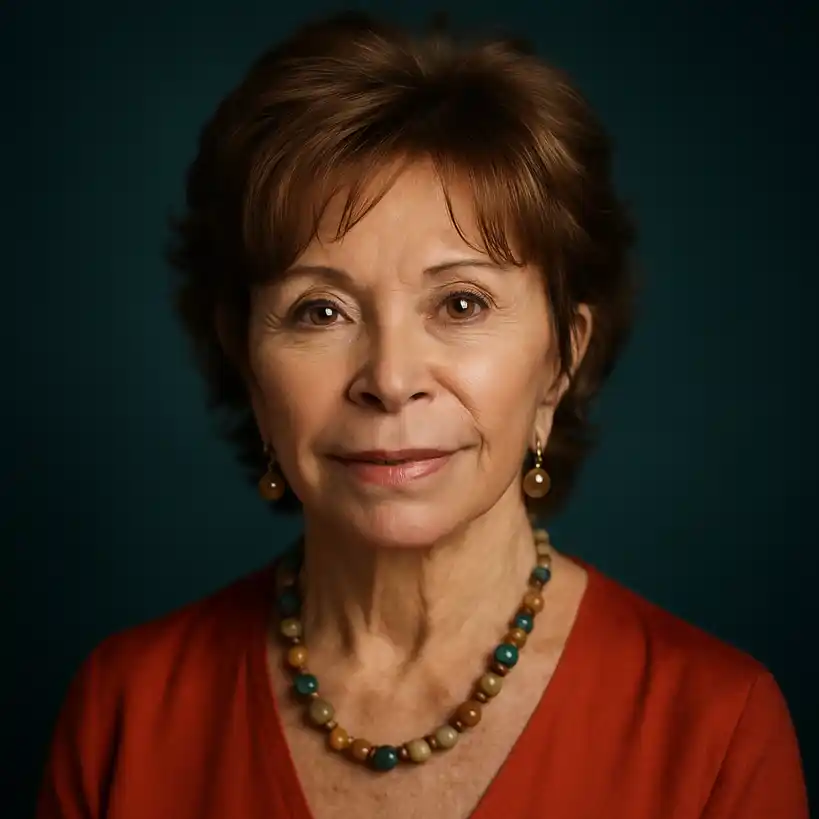
Life and Work of Isabel Allende – Profile
- Full Name and Pseudonyms: Isabel Angélica Allende Llona; publishes as Isabel Allende.
- Birth and Death: 2 August 1942, Lima, Peru; lives in California.
- Nationality: Chilean-American.
- Father and Mother: Tomás Allende (diplomat); Francisca “Doña Panchita” Llona Barros.
- Wife or Husband: Miguel Frías (m. 1962–1987); William C. “Willie” Gordon (m. 1988–2015); Roger Cukras (m. 2019–).
- Children: Paula Frías Allende (1963–1992); Nicolás Frías Allende (b. 1966).
- Literary Movement: Post-Boom Latin American narrative; civic, family-saga realism with touches of the marvelous.
- Writing Style: Image-led clarity, multigenerational chorus, memory as engine, tender tone with moral backbone.
- Influences: Gabriel García Márquez, Juan Rulfo, Elena Poniatowska; Chilean song/poetry; newsroom craft.
- Awards and Recognitions: Chile’s National Prize for Literature (2010); Presidential Medal of Freedom (2014); National Book Foundation Medal for Distinguished Contribution to American Letters (2018).
- Adaptations of Their Work: The House of the Spirits (film, 1993); Of Love and Shadows (film, 1994); Inés of My Soul (TV miniseries, 2020).
- Controversies or Challenges: Exile after 1973; public grief after Paula’s death; debates over genre labels and “magic realism.”
- Career Outside Writing: Journalist, TV host, translator; founder of the Isabel Allende Foundation.
- Recommended Reading Order:
1. The House of the Spirits
2. Of Love and Shadows
3. Eva Luna
4. Paula
5. A Long Petal of the Sea
Family rooms, newsroom deadlines, and the first exile
Childhood moved across borders: a family in motion, schoolrooms that changed accents, and a house where talk ran late. That restlessness trained the gaze. Observation before judgment became a habit; faces and phrases were stored like notes for later. Early work in journalism taught speed, cuts, and sentences with purpose. Interviews and columns had to land on time, which honed the crisp, image-first line that later novels keep.
The newsroom did more than pay rent. It taught how to thread private feeling through public events without losing either. Politics in the next room was daily reality; headlines pressed against kitchens and courtyards. When the country ruptured, exile turned movement into necessity. New jobs, new cities, a changed set of neighbors. The page learned to carry grief without heaviness and hope without sugar. That is the register readers now recognize: generous, lucid, and stubbornly humane.
A letter to an ailing grandfather set the first great novel in motion. Family memory became architecture—rooms, recipes, names repeated like refrains—while history supplied the weather. You can feel journalism’s discipline under the shimmer: dates that hold, objects that witness (a key, a diary, a photo), and scenes that refuse to float away from real cost.
If you want a nearby waypoint for the multigenerational canvas and its moral pull, pair this origin story with 👉 One Hundred Years of Solitude by Gabriel Garcia Marquez. The comparison clarifies Allende’s own path: more open light, more kitchen talk, and an ethic that lets miracles glow without erasing the ledger. From these beginnings, the signature emerges—family at the center, country at the edges, and a voice that believes the heart can survive history.
Exile, a letter, and a house that wouldn’t stay quiet
The turning point begins with a letter that became a family novel. I keep returning to that origin because memory as engine explains so much of Isabel Allende’s middle years. A private act of care turned into a chorus of women, a house full of rooms that refused silence, and a style that let the marvelous enter like a relative. Journalism had trained sentences with purpose; the fiction kept that backbone while widening the light.
Exile sharpened the gaze. New countries meant new kitchens, new neighbors, and a fresh inventory of losses. The books learned to braid love with consequence: a kiss shared space with a disappearance; a recipe sat beside a rumor. Family sagas carried public weather without lecturing. The line stayed clear—keys, letters, courtyards—so politics and ghosts could share a page without noise.
Novels arrived in a steady arc: city rooms where revolutions knock; love stories that test duty; a storyteller whose tales spin work, desire, and survival into one thread. Short fiction proved the voice could scale down; memoir showed how grief and faith can live in the same paragraph. Across genres, the method held. Warmth with backbone; clarity before flourish; ordinary objects doing moral work.
Workdays remained disciplined. Mornings for pages, afternoons for letters and travel, evenings for family. Public life grew—talks, interviews, and the creation of a foundation in memory of a daughter—and the books answered by keeping their promises to ordinary readers. I hear a constant ethic under the color: keep the room inclusive, name the cost, let women steer the scene, and never forget the ledger of love and loss that families carry through history.
Long light, new shelves, the same steady music
Later books widened the map without thinning the voice. Historical adventures crossed oceans; intimate memoirs returned to bedside and kitchen table. Through it all, the house remains central—not only a building, but a way of holding people together when history scatters them. A late rhythm settles in: stories that heal, humor that protects, and scenes where a single keepsake turns memory into guidance.
Genres keep rotating. A family epic gives way to a love story; a memoir opens a door to private grief; a sequence for younger readers proves the cadence can still sing in a lighter key. The tone never abandons rigor. Tenderness with rules stays in place: joy is real; the bill still arrives. Women keep the ledger, and the novels honor that labor without turning it into halo.
Public commitments deepen the page. The foundation’s work echoes in plots that protect the vulnerable and honor resilience. Travel feeds the palette—port towns, deserts, winter cities—but the sentence remains image-led and clear. Letters, keys, photographs, recipes: the same small republic of objects returns to carry love across distance.
Reception grows generational. Parents hand down favorites; students meet the voice through a classroom chapter; book clubs argue over endings and forgive the characters anyway. I read the late style as a kind of hospitality: a door that never quite closes, a promise that a family can be built after loss, and a reminder that history is better faced at a table with enough chairs. Technique stays quiet, purposeful, humane. Point of view passes like a candle; time loops to gather another witness; the marvelous visits, eats, and leaves a blessing on the plate. The music is steady, and the rooms feel lived-in all the way to the last page.
Movements, neighbors, and the threads that hold
Critics often place Isabel Allende near Latin American magic realism, yet her pages feel more like open windows than puzzles. She stands beside the Post-Boom for accessibility and pace, while keeping women at the center of history, kitchens, and councils. García Márquez is a useful north star for mythic scope; Laura Esquivel and Ángeles Mastretta echo the intimate braid of love and politics; Elena Poniatowska models civic conscience that still hears individual voices. Across languages, peers like Toni Morrison show how memory can become a court where families seek truth without losing tenderness.
Themes recur as living habits, not slogans. Memory as engine powers plots; letters, keys, and photographs move fate as decisively as laws. Love with consequences keeps passion honest; every kiss meets a ledger of duty, class, or exile. Women who steer history act, negotiate, forgive, and refuse silence; they hold the table steady while storms pass through the house. Exile does not erase roots; it grows new ones.
Technique serves clarity. The marvelous enters like a relative, not a guest of honor. A ghost sits, eats, and leaves a blessing; no trumpet is required. Time loops back to pick up a witness; the same scene returns with a fresh angle. Point of view passes like a candle so everyone gets light for a moment. The tone remains warmth with backbone. Joy is granted; the bill still arrives.
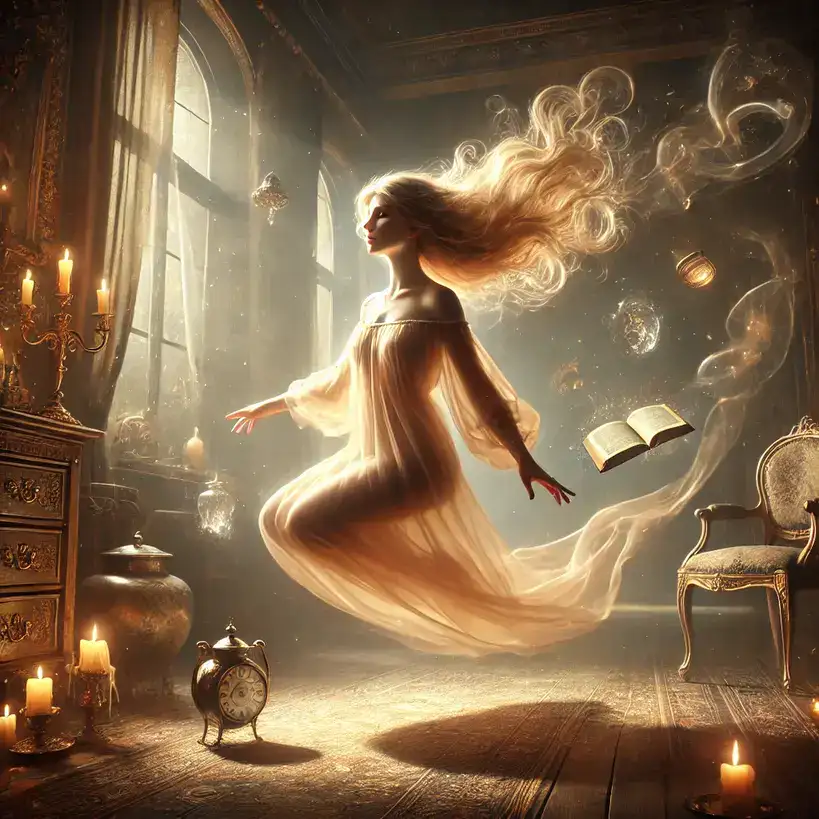
Famous Works by Isabel Allende in chronological order
- 1982 – La casa de los espíritus (The House of the Spirits); novel. A family saga where memory, politics, and the marvelous share one roof.
- 1984 – De amor y de sombra (Of Love and Shadows); novel. A love story that uncovers state violence and asks what courage can bear.
- 1987 – Eva Luna (Eva Luna); novel. A storyteller’s gift becomes a map through desire, work, and survival.
- 1990 – Cuentos de Eva Luna (The Stories of Eva Luna); short stories. Linked tales that widen the orbit of characters and themes.
- 1994 – Paula (Paula); memoir. A letter to a daughter turns grief into remembrance and resolve.
- 1999 – Hija de la fortuna (Daughter of Fortune); novel. A Chilean heroine crosses to Gold Rush California in search of love and a self.
- 2000 – Retrato en sepia (Portrait in Sepia); novel. A photographer traces family roots; images and memory anchor truth.
- 2002 – La ciudad de las bestias (City of the Beasts); young adult novel. An Amazon expedition blends myth, ecology, and first courage.
- 2006 – Inés del alma mía (Inés of My Soul); novel. The founding of Santiago seen through Inés Suárez; love and conquest entwine.
- 2009 – La isla bajo el mar (Island Beneath the Sea); novel. From Saint-Domingue to New Orleans, a woman fights for freedom and identity.
- 2015 – El amante japonés (The Japanese Lover); novel. A secretive cross-cultural love echoes across decades and migrations.
- 2019 – Largo pétalo de mar (A Long Petal of the Sea); novel. Spanish Civil War exiles rebuild a life in Chile while history keeps testing them.
- 2022 – Violeta (Violeta); novel. A centenarian recounts a century of upheaval, love, and reinvention.
What fed the house of stories – Influences on Isabel Allende
Isabel Allende learned to let memory lead the plot and to give miracles the manners of relatives. I hear the sources as lineage rather than template—voices that licensed warmth with backbone and taught her to seat history at the kitchen table.
- Gabriel García Márquez — myth with civic weight: One Hundred Years of Solitude showed how a family saga can carry a nation’s weather. Allende keeps the amplitude, trims opacity, and writes open windows, not puzzles.
- Juan Rulfo — the dead as witnesses: Pedro Páramo treats the afterlife as a village with chores. She lets ghosts visit without trumpets, bringing unfinished love and truth to dinner.
- Elena Poniatowska — public sorrow, private rooms: Testimony and reportage prove that politics is a neighbor, not an abstraction. Allende follows by letting disappearances and trials echo through courtyards and letters.
- Toni Morrison — memory as tribunal: Novels like Beloved model care with rigor, where the past returns for reckoning, not spectacle. She adapts the ethic to Chilean and diasporic rooms.
- Chilean poetry and song — Neruda, Violeta Parra: Lyric image and human-scale abundance lend the prose its ease with kitchens, seasons, and work-worn objects.
- Journalism — deadlines and cuts: Columns taught sentences with purpose; the novels keep that spine so color never drowns clarity.
Across these shelves, the craft rule holds: let the house speak. Keys, recipes, photographs, and letters do narrative labor; miracles behave like manners; women who keep ledgers also keep the plot moving. The result is an inviting line with moral charge, where love feels costly, memory feels earned, and history comes in through an unlocked door.
Who writes differently because she did
Her success licensed a generation to braid family, politics, and the marvelous without apology. I keep seeing three gifts travel forward: women centered as historical agents, memory as engine, and a page that stays accessible while carrying pain.
- Ángeles Mastretta — intimate courage in public time: Arráncame la vida pairs desire with civic risk. The tone—warmth with steel—speaks fluently to Allende’s readers.
- Laura Esquivel — kitchen as cosmos: Like Water for Chocolate turns recipes into rites. Her example made it easier to treat domestic space as epic stage.
- Gioconda Belli — love and revolution entwined: The Inhabited Woman trusts desire with consequences, where bodies and countries share one fate.
- Julia Alvarez — diaspora memory with clear light: In the Time of the Butterflies and How the García Girls Lost Their Accents show exile as a family grammar; the hospitable line owes a debt to Allende’s reach.
- Marcela Serrano — women steering the ledger: Chilean settings, friendships, and quiet acts of defiance echo her belief in ordinary bravery.
- Younger Latinx and global novelists — permission and pathway: Commercial proof that a multigenerational saga with ghosts and politics can thrive without losing literary nerve.
Influence here is license, not cloning. Writers keep their weather, slang, and saints; what carries forward is the right to seat history at a table, to let letters and photographs move fate, and to use clear, image-led prose that welcomes many readers in. Because Isabel Allende proved that kindness can have a spine—and that a house can hold a country—others could write their own rooms with the doors wide open.
A house voice that passes the candle – Style & Technique
Isabel Allende writes with an open-armed narrator: welcoming, curious, and calm under pressure. Point of view moves like a family heirloom. A scene begins in third person close to one woman’s breath, widens to a whole household, then tilts toward a witness who kept the letter or the key. Memory as structure does the heavy lifting; testimony, diaries, and side-long confessions slot together until the house finally tells the truth.
Voices don’t compete so much as form a chorus. A grandmother’s certainty rubs against a granddaughter’s doubt; both remain credible because detail stays tactile—spoons, shutters, a damp step at dawn. Free-indirect style lets interior weather appear without quotation marks, so intimacy never breaks the flow. Time bends, but gently. A chapter returns to the same night from another angle, not as a trick, but to bring in the witness who was cooking, hiding, or waiting by the phone.
Where the marvelous enters, it behaves like a neighbor. Miracle as neighbor means a ghost sits, eats, and leaves a blessing rather than a lecture. The social world holds. Laws, uniforms, and ration books still matter, so enchantment arrives to widen responsibility, not to erase it. When politics presses hard—a raid, a disappearance—the camera lowers and stays with the person who has to act.
Scene endings preserve moral heat: a door not locked, a recipe folded into a pocket, a story finally told. Objects carry verdicts more than speeches do. For a darker echo of choral memory that still centers the dead as witnesses, compare with 👉 Pedro Páramo by Juan Rulfo; the contrast clarifies why the author chooses light, hospitality, and continuity over labyrinth. The result is a voice that keeps everyone in the room until the ledger balances.
Sentences with sunlight, rooms that remember
The line favors clarity before flourish. Verbs do the work; modifiers earn their keep. Short main clauses carry news; an occasional long sentence braids memory and present without knotting. Paragraphs land on a precise, sensory object—steam rising from a kettle, thread caught on a nail—so emotion anchors to touch. Lists appear when life requires inventory: names, provisions, absentees.
Imagery runs domestic and durable. Keys, letters, photographs, recipes return as instruments of fate. Kitchens glow because work lives there: chopping, stirring, mending, deciding. Courtyards and stairwells hold rumor; trunks hold proof. Color marks mood—lime walls, copper pots, a dress saved for one risky night. The marvelous keeps good table manners. A vision does not cancel the bill; it clarifies it.
Tone blends warmth with a spine of accountability. Jokes arrive, but they don’t smother pain. Blessings are spoken, then chores resume. When violence nears, syntax tightens; when love or forgiveness opens, vowels lengthen and commas breathe.
Form follows purpose. Chapters interleave witnesses until a family truth can stand; refrains stitch generations together. Endings resist melodrama, preferring a look, a kept promise, a safe sleep. Objects settle the argument more often than speeches.
Across books, the craft remains humane: sentences with sunlight, rooms that remember, and a tone that refuses both cynicism and sugar. The page welcomes you in, feeds you, and quietly asks what you will risk to keep the house together.
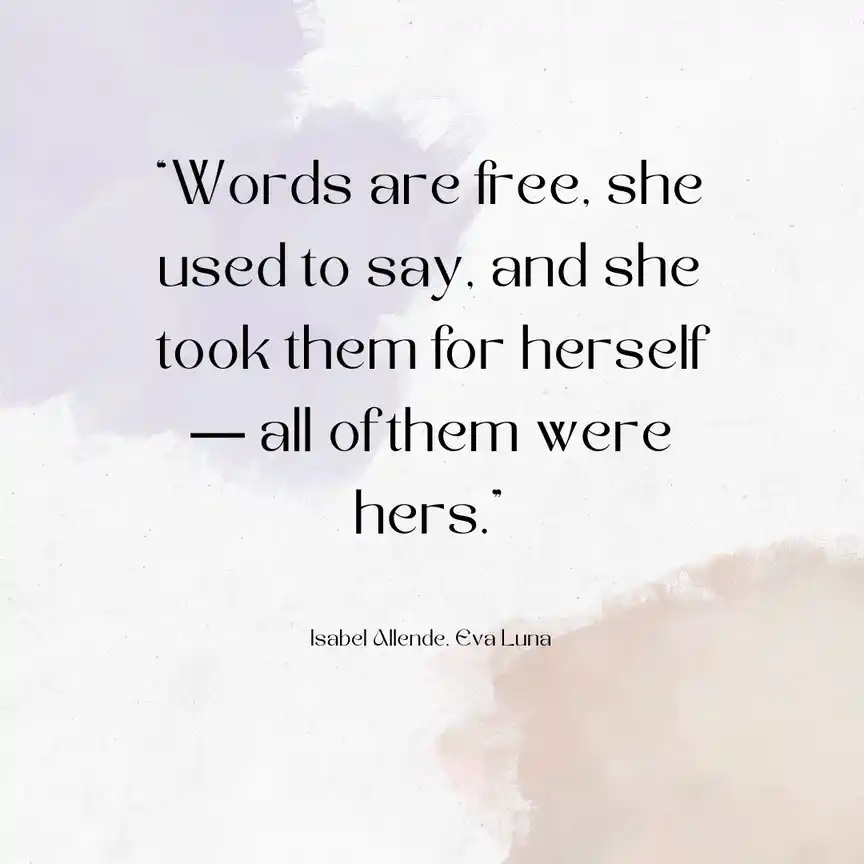
Famous Quotes by Isabel Allende
- “Write what should not be forgotten.” A mission statement in one line; memory becomes work, not nostalgia.
- “We don’t even know how strong we are until being strong is the only choice we have.” Courage appears as practice; crisis reveals the reserve.
- “The library is inhabited by spirits that come out of the pages at night.” Reading as visitation; books keep the dead and the distant within reach.
- “You are the storyteller of your own life, and you can create your own legend.” Agency framed as authorship; the self edits and revises toward meaning.
- “What is truer than truth? The story.” Narrative gathers scattered facts into a shape we can carry; form turns data into understanding.
- “I have been a feminist since I was a little girl.” A lifelong stance, not a late posture; the novels center women who steer history.
- “Hearts are not had as gifts but as rewards.” Love comes with labor and accountability; tenderness requires keeping promises.
- “Accept what life offers you and try to drink from every cup.” Appetite for experience pairs with craft discipline; curiosity fuels the pages.
Trivia Facts about Isabel Allende
- Foundation born from grief: After the death of her daughter Paula, Allende created the Isabel Allende Foundation to support women and girls; its mission centers reproductive rights, economic independence, and freedom from violence.
- A Presidential honor: In 2014 she received the U.S. Presidential Medal of Freedom, recognizing her cultural impact and humanitarian work. 🌐 White House announcement.
- Journalism as apprenticeship: Early newsroom years trained the crisp, image-first line; the novels keep that backbone while widening to family saga and history.
- A letter that became a house: The first great novel began as a letter to her dying grandfather, a seed that grew into a multigenerational architecture of rooms, recipes, and refrains.
- A lifetime medal in the U.S.: In 2018 the National Book Foundation awarded her its Medal for Distinguished Contribution to American Letters, honoring decades of work and readership.
- Exile and return by pages: Homes are rebuilt in apartments and borrowed kitchens; letters and photographs keep families together across borders.
- Neighboring echoes to explore: For a tight, investigative counterpoint to family memory, see 👉 Chronicle of a Death Foretold by Gabriel García Márquez.
- Her own historical adventure to pair next: Read 👉 Daughter of Fortune by Isabel Allende to watch love, migration, and enterprise test a heroine’s resolve.
How readers embraced the open door
The reception arc runs from instant global readership to durable classroom presence. Early novels felt like open windows in a tradition some perceived as hermetic; readers found family, history, and a hospitable narrator who still told hard truths.
Over time, criticism moved from labeling “magic realism” toward attention to women as historical agents, exile, and civic compassion. Major recognitions—the 2010 National Prize for Literature (Chile), the 2014 Presidential Medal of Freedom, and the 2018 NBF lifetime medal—fixed her as both popular and canonical. For concise overviews and award context, see Britannica and the Library of Congress author pages.
Translations and adaptations widened the circle. Book clubs favored the house-novels; schools assigned memoir chapters that model grief without spectacle. Critics who once preferred colder experiment now often note the technical discipline under the warmth: memory as structure, objects as witnesses, and a steady key that keeps many readers in the room. Public work through the Isabel Allende Foundation further linked the page to practical care.
Further reading: start with a reliable life-and-works overview at Britannica; add the National Book Foundation citation and video for the 2018 medal; then sample Library of Congress notes for U.S. festival context and prize history. A critical pairing that sharpens the ear is García Márquez for mythic amplitude and Elena Poniatowska for testimonial proximity.
What to keep, and where to start tonight
Isabel Allende builds houses that hold history. The rooms invite, the windows stay open, and the marvelous behaves like a good neighbor. Memory is the motor; letters, keys, and recipes move fate more honestly than speeches. The line remains clear and humane. Women run the ledger. Love has consequences. Exile rebuilds home without pretending loss was cheap.
A practical route helps. Begin with a keystone: The House of the Spirits shows the full architecture—family chorus, politics at the door, miracles with table manners. Move to intimacy under pressure: Of Love and Shadows pairs desire with civic courage. Meet the storyteller as heroine: Eva Luna and The Stories of Eva Luna show how tales feed work, survival, and joy.
Add the memoir key: Paula teaches how grief can keep its dignity and still give guidance. Go historical and outward: A Long Petal of the Sea and Violeta test migration, catastrophe, and reinvention across decades.
Read with simple tools. Mark one object per chapter—a key, a letter, a photograph—and ask what task it carries. Track reprises of the same night or rumor from another witness. Listen for how point of view passes like a candle so every voice gets a turn.
Leave with this: warmth with backbone. The novels believe love and memory can repair a life, but they keep the ledger honest. Start tonight, and let the house show you how to keep yours together.
Reviews of Works by Isabel Allende
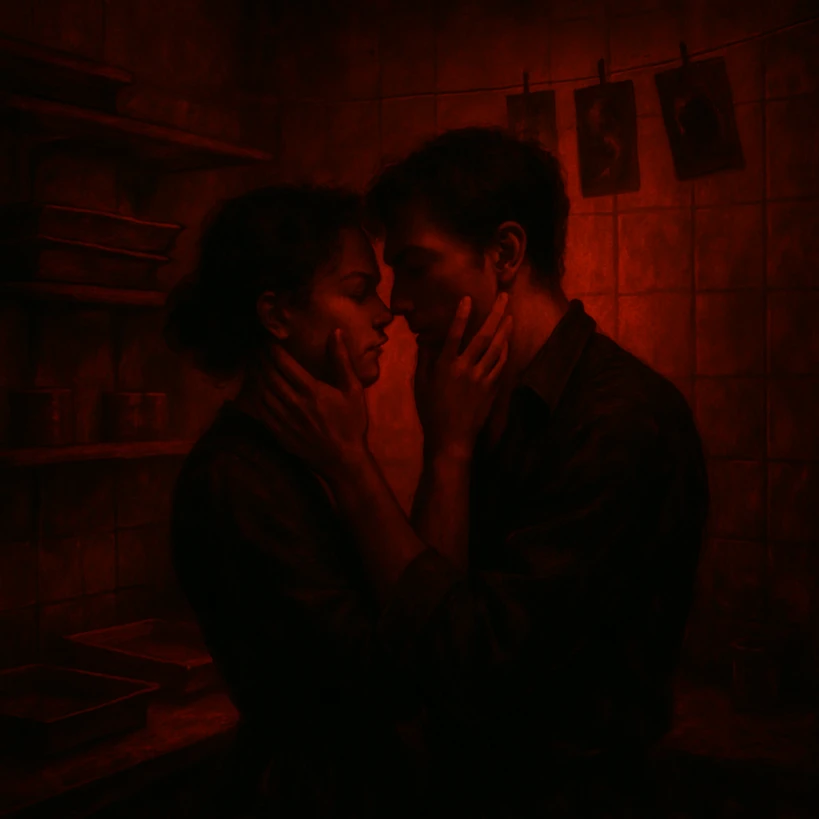
Of Love and Shadows by Isabel Allende – Resistance and Hope Of Love and Shadows opens inside a climate of…
The House of the Spirits by Isabel Allende — Memory and Magic Some novels walk; others float. The House of…