Chronicle of a Death Foretold: Honor and Collective Guilt
Chronicle of a Death Foretold reveals its murder in the opening sentence. Santiago Nasar will be killed, Pedro and Pablo Vicario will use their butcher knives, and much of the town will learn about the plan before he does. Gabriel García Márquez removes the usual mystery of who committed the crime. The real mystery is why nobody prevents it.
The answer develops through a reconstruction made 27 years later. Witnesses remember the weather differently, warnings arrive too late, officials neglect simple duties, and private resentments hide inside public concern. The result is neither a conventional thriller nor a story of supernatural destiny. Chronicle of a Death Foretold is a literary novella, a fictional chronicle, and an inverted detective story about responsibility.
This review gives a complete, spoiler-filled summary, including Chapter 1 and the brutal ending. It also explains the main themes, message, title, historical context, and several verified quotations from Gregory Rabassa’s English translation. The author turns one short morning into an examination of an entire community, leaving Santiago’s guilt uncertain while making the town’s failure impossible to ignore.
What Is Chronicle of a Death Foretold About? A Plot Summary
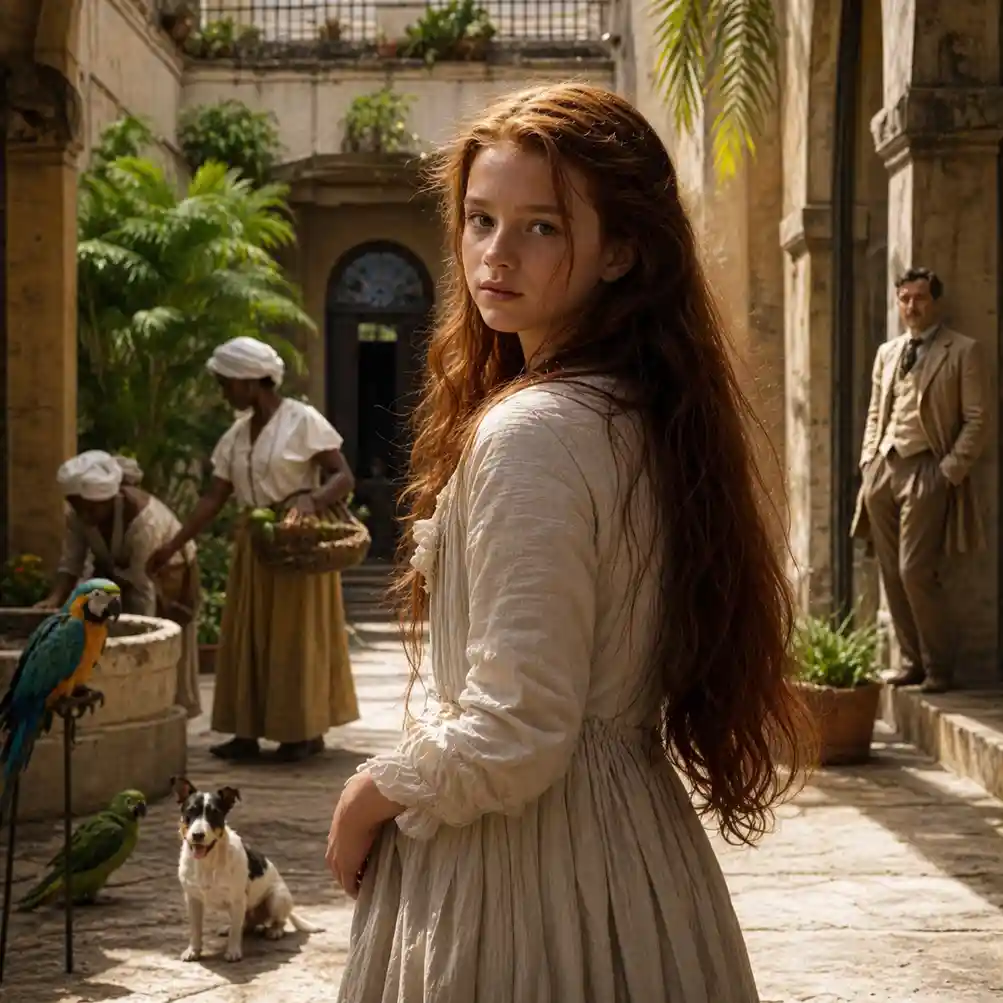
The plot of Chronicle of a Death Foretold begins after the extravagant wedding of Ángela Vicario and Bayardo San Román. Only hours after the celebration, Bayardo returns his bride to her parents because she was not a virgin. Her mother beats her and demands the name of the responsible man. Ángela identifies Santiago Nasar, although the book never proves that he had a sexual relationship with her. An unsupported accusation becomes a death sentence.
Ángela’s twin brothers, Pedro and Pablo Vicario, decide that family honor requires them to kill Santiago. They collect their pig-slaughtering knives, sharpen them publicly, and announce their intention to numerous people. Their openness suggests that at least part of them wants to be stopped. The mayor confiscates one set of knives but does not detain them, so they obtain another pair and wait near Santiago’s home.
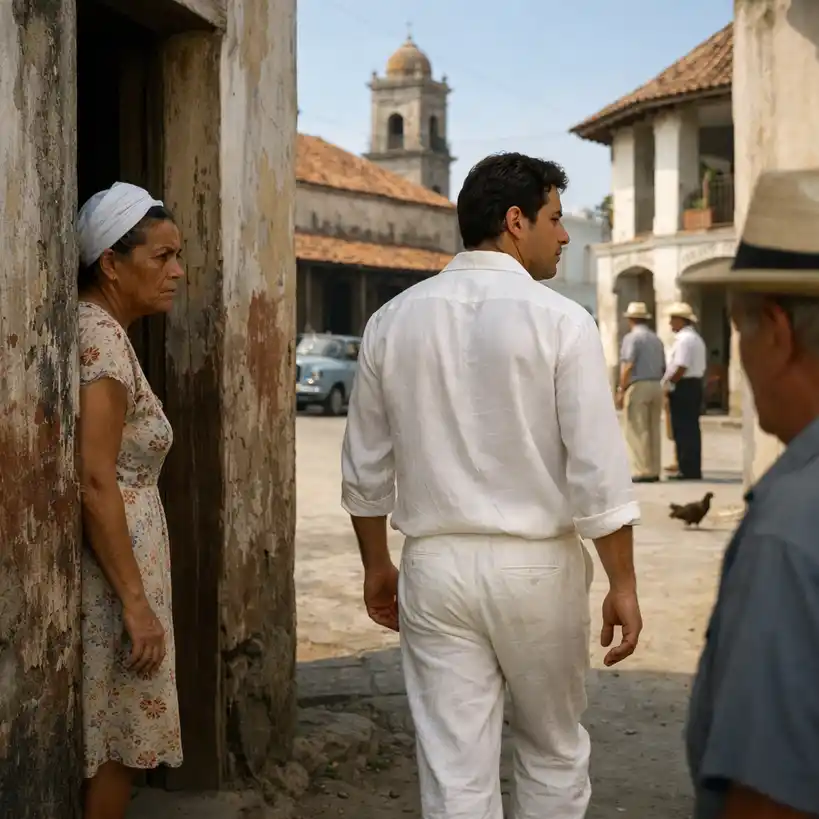
Meanwhile, Santiago wakes early to watch the bishop’s boat pass the town. He moves among neighbors who either know about the threat, assume someone else has warned him, or dismiss the brothers as drunk. A written warning remains unseen beneath his door. His friend Cristo Bedoya searches for him, but confusion and bad timing keep them apart.
Chronicle of a Death Foretold ends where its first sentence promised. Santiago’s mother mistakenly bolts the front door, and the twins stab him outside his own house. He walks around the building while carrying his wounded body and finally collapses in the kitchen. Like The House of the Spirits by Isabel Allende, the story reconstructs violence through unstable memory. Knowledge never becomes rescue.
What Happens in Chapter 1? The Death Is Already Announced
Chapter 1 of Chronicle of a Death Foretold opens on the morning Santiago Nasar is going to be killed. He rises at 5:30 to meet the bishop, who is expected to pass by boat after the wedding festivities. Santiago has dreamed of trees and light rain, but his mother, Plácida Linero, fails to recognize anything ominous in it. She is known for interpreting dreams accurately when told before breakfast, yet she overlooks the danger surrounding her own son. The first warning is misunderstood.
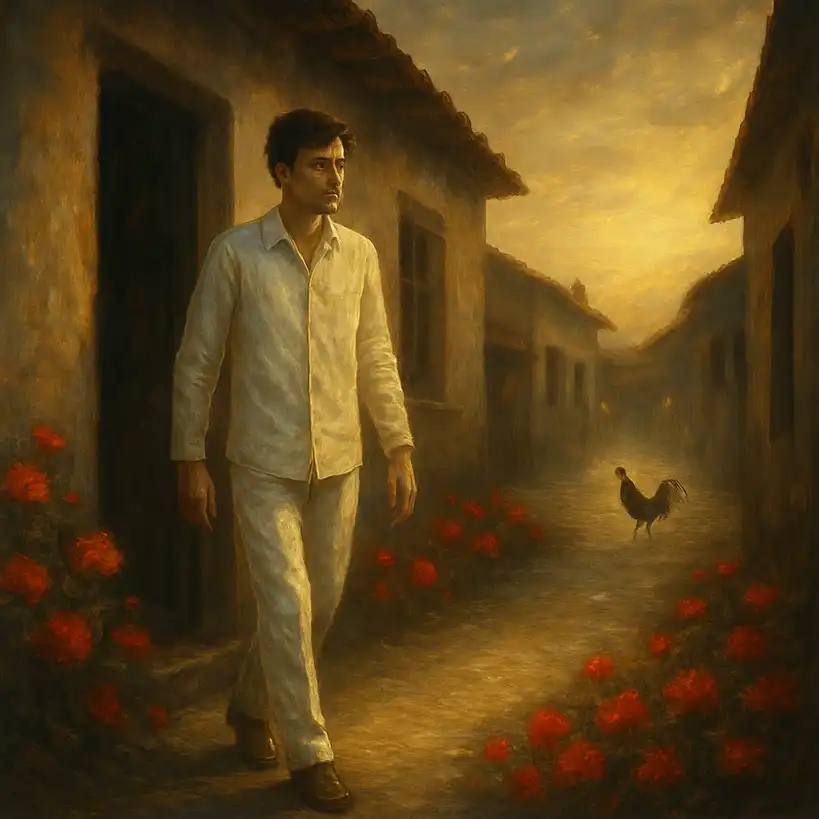
Santiago dresses in white linen because of the bishop’s visit and leaves through the front door. A warning letter explaining the planned murder has already been pushed underneath it, but nobody notices the paper. Victoria Guzmán, the cook, and her daughter Divina Flor know that the Vicario brothers are waiting. Victoria despises Santiago’s inherited male privilege and says nothing, while Divina remains frightened and uncertain.
Outside, the town prepares for a ceremonial visit that never becomes a genuine encounter. The bishop blesses the crowd from the boat without stopping. At the same time, many residents have heard that Pedro and Pablo intend to kill Santiago. Each person possesses only part of the information, assumes the threat is not serious, or trusts that somebody more responsible has acted.
Chapter 1 of Chronicle of a Death Foretold therefore contains the victim, the announced crime, numerous warnings, and the murderers’ names. Suspense comes from watching possible interventions fail, not from waiting for a culprit to be revealed. In Cold Blood by Truman Capote also combines narrative suspense with investigative reconstruction, although García Márquez openly reshapes his source into fiction. Every disclosed fact deepens the puzzle.
Chronicle of a Death Foretold Themes: Honor, Gender, and Guilt
Honor is the novel’s most visible theme, but García Márquez presents it as a social performance rather than a moral truth. Ángela’s virginity is treated as family property, and her brothers believe that killing Santiago can restore what her marriage has exposed. The community largely accepts the ritual. Public reputation matters more than human life.
Gender makes this honor code possible in Chronicle of a Death Foretold. Women are trained for marriage, obedience, domestic skill, and suffering, while men are expected to display sexual experience and answer humiliation with violence. Pedro and Pablo do not act from private hatred of Santiago. They fulfill a masculine role that neighbors, relatives, and eventually the court understand. Yet women are not presented as one passive group: Clotilde Armenta urgently seeks help, Victoria Guzmán withholds it, and Ángela gradually builds a new self after rejection.
Collective guilt develops through these roles. No single bystander controls the morning, but dozens of small decisions create its outcome. The mayor takes the first knives and then becomes distracted. Father Amador forgets to warn Santiago. Friends search in the wrong places, messages miss their recipients, and spectators mistake shared knowledge for effective action.
Other themes in Chronicle of a Death Foretold include class resentment, uncertain truth, institutional failure, and the unreliability of memory. Santiago enjoys the protection of wealth and maleness, yet that privilege also feeds hostility. The unanswered question of his guilt prevents a simple division between innocence and corruption. In The Time of the Hero by Mario Vargas Llosa, a male institution similarly turns silence into complicity. A community’s values become visible through its violence.
What Is the Message? Fate Does Not Remove Responsibility
The central message of Chronicle of a Death Foretold is that preventable violence can look inevitable after people have allowed it to happen. García Márquez fills the morning with dreams, coincidences, missed encounters, and strange reversals. These devices create the atmosphere of tragedy, but they do not absolve the town. What resembles fate is accumulated negligence.
Almost everyone can explain why personal intervention seemed unnecessary. Some believe the Vicario brothers are too drunk to act. Others assume Santiago has already been warned because the plan is widely known. The mayor believes confiscating the first knives has ended the danger, and the priest gives priority to the bishop’s visit. Their reasons sound limited rather than monstrous, which is precisely the point. A fatal collective outcome can grow from ordinary acts of avoidance.
Pedro and Pablo further complicate responsibility. They repeatedly announce their plan and delay the attack, creating opportunities for authority figures to stop them. Their hesitation does not make them innocent, because they choose to return with new knives and carry out the murder. It does reveal how strongly they depend upon a culture that expects them to defend honor through male violence.
Chronicle of a Death Foretold also warns against converting social failure into the language of destiny. Calling Santiago’s death inevitable makes every neglected warning appear meaningless. He instead directs attention toward the exact moments when another choice remained possible. As in The Trial by Franz Kafka, institutions are present everywhere but provide no dependable justice. The novel’s message is therefore ethical as well as political. Responsibility does not disappear when it is divided. Each person may contribute only a small failure, yet Santiago dies from their combination.

Ending Explained: Why Does Santiago Nasar Still Die?
The ending of Chronicle of a Death Foretold returns to the final minutes that the narrator has postponed throughout the book. Santiago learns about the threat from Nahir Miguel and leaves the house confused rather than prepared. He enters the square as the crowd watches. Clotilde Armenta shouts for him to run, but Plácida Linero sees the brothers approaching and locks the front door because Divina Flor mistakenly tells her that Santiago is already inside. His intended refuge becomes a barrier.
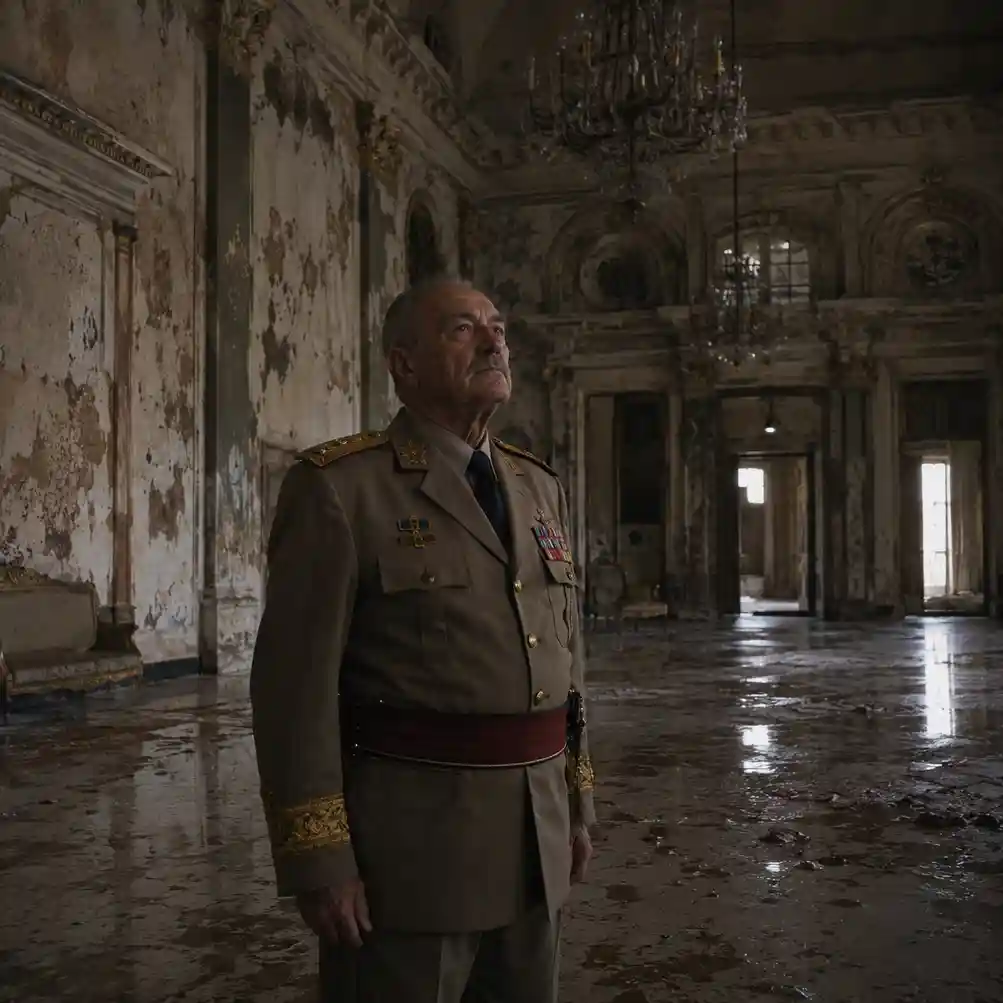
Pedro and Pablo catch Santiago against the door and stab him repeatedly. The violence is clumsy, prolonged, and physical, far removed from the clean abstraction of “honor.” After the brothers move away, Santiago remains standing. He walks around the house, passes through a neighbor’s home, answers a startled greeting, and enters his own kitchen from the rear before falling face down. The final scene in Chronicle of a Death Foretold makes the death public, intimate, and grotesquely unnecessary.
Santiago still dies because every protective system has failed at once. His mother acts on false information, his friend arrives too late, the mayor has not detained the twins, the priest has forgotten the warning, and the crowd becomes an audience. Chance matters, but chance works through human decisions.
There is another ending in chronological terms. Earlier in the narrative, Ángela describes writing to Bayardo for years after he rejected her. He eventually returns carrying her letters, still unopened, and appears willing to resume their life together. That reunion occurs long after the murder, but the author places it before the final killing scene. The Lost Honor of Katharina Blum by Heinrich Böll likewise exposes the violence hidden inside public judgments about sexual respectability. The novel closes not with reconciliation, but with the body that such judgment produced.
The Significance of the Title and Nonlinear Structure
The title Chronicle of a Death Foretold defines both the form and the central irony. A chronicle ordinarily arranges events into a factual sequence. Here, an unnamed narrator returns 27 years after the murder and assembles memories, letters, testimony, official records, and his own experience. His method sounds journalistic, but the evidence never forms a perfectly stable account. Witnesses disagree even about whether the morning was bright or rainy. Documentation does not guarantee certainty.
“Foretold” has an unusually literal meaning. Pedro and Pablo announce their plan in shops, at the market, and to people passing through town. The murder is not concealed by a clever criminal. It is public knowledge that somehow fails to reach Santiago clearly enough or soon enough to save him. The title’s irony lies in the distance between knowing about danger and accepting responsibility for preventing it.
The nonlinear structure strengthens that idea. Chronicle of a Death Foretold circles the same few hours from different perspectives, repeatedly moving into the past and future. Readers learn early about the autopsy, the brothers’ trial, the later lives of witnesses, and Ángela’s transformation. The murder itself remains withheld until the last pages. This arrangement changes the question from “Who did it?” to “How could everyone let it happen?”
The book is therefore an inverted detective story. The killers, victim, method, and apparent motive are given almost immediately, while the deeper truth becomes less certain with every statement. Even Ángela’s accusation cannot be verified. Across these accounts, memory preserves trauma while also reshaping it. The title promises facts and delivers moral uncertainty.
The Historical Context of Chronicle of a Death Foretold
Gabriel García Márquez based the novella on a real murder committed in Sucre, Colombia, in January 1951. His friend Cayetano Gentile Chimento was killed by Víctor Manuel and José Joaquín Chica Salas after their sister, Margarita, was returned by her husband following the wedding. The brothers claimed to be avenging the family’s honor. He was 24 and working as a journalist when he learned what had happened. The event remained with him for three decades.
He initially wanted to write a report about the case, but his mother asked him to wait out of consideration for the families involved. When Chronicle of a Death Foretold appeared in 1981, it was not a documentary transcript. The writer changed names, relationships, motives, chronology, and the manner of telling. He turned a local crime into an investigation of how a whole society helps make violence possible.
The historical setting reflects the honor culture, machismo, class hierarchy, religious authority, and legal assumptions of a mid-twentieth-century Caribbean community. The Vicario brothers’ belief that they must answer sexual shame with blood is reinforced by relatives and neighbors. The law later accepts their defense of honor. At the same time, Santiago belongs to a prosperous Arab Colombian family, a detail that adds ethnicity and economic status to the town’s complicated feelings about him.
The book’s journalism matters as much as its history. He uses interviews, documentary fragments, contradictions, and precise times while allowing dreams and surreal images to disturb the record. Chronicle of a Death Foretold belongs beside Gabriela, Clove and Cinnamon by Jorge Amado as a Latin American novel that reveals social power through an intensely local community. Fiction enlarges the case without pretending to solve it.

Trivia Facts from Chronicle of a Death Foretold
- Rooted in real events: Chronicle of a Death Foretold is inspired by the 1951 killing of Cayetano Gentile Chimento in Sucre, Colombia. Márquez knew people involved in the case, which gave the novel its distinctive authenticity. The real story has been documented extensively by 🌐El Espectador in retrospective features.
- A deceptively small cast: Although the novel features dozens of named characters, the story revolves around a tight circle whose choices, or lack thereof, directly lead to the killing.
- Communal complicity: The novel examines how silence and hesitation make a town collectively responsible for a murder. This theme closely parallels 👉 The Lost Honor of Katharina Blum by Heinrich Böll, where public perception and gossip shape reputations and fates.
- Critical acclaim and controversy: Upon its release in 1981, the book received international praise but also criticism in Colombia, where some felt the writer exposed too much of local culture’s darker side.
- Compressed but layered: At fewer than 130 pages, the book delivers a narrative as rich as a full-length novel. Critics have noted in 🌐 The New York Times that its brevity heightens its moral intensity, forcing every scene to bear weight.
- Honor as a social script: The brothers’ actions follow an unwritten law that honor must be restored at any cost. A similar examination of rigid codes appears in 👉 The Time of the Hero by Mario Vargas Llosa, set in a Peruvian military academy.
- Enduring classroom presence: Decades after publication, Chronicle of a Death Foretold remains a staple in world literature curricula for its unique mix of cultural anthropology, moral inquiry, and narrative experimentation.
Memorable Quotes from Chronicle of a Death Foretold
- “On the day they were going to kill him, Santiago Nasar got up at five-thirty in the morning.” This iconic opening sets the tone for the novel, laying bare the inevitability of the tragedy and inviting the reader into a story where the ending is already known.
- “The truth is that they all knew he was going to be killed.” A stark acknowledgment of communal complicity, this line captures the moral heart of Chronicle of a Death Foretold, where silence becomes as lethal as the act itself.
- “Honor doesn’t wait.” This phrase crystallizes the cultural codes that drive the killing, showing how duty can override compassion, reason, and even justice.
- “Fatality makes us invisible.” Here, the novelist distills the paralyzing force of inevitability, how knowing the outcome can render action unthinkable.
- “The smell of closed-in flowers had penetrated everything.” A sensory detail that turns the reader’s focus to the intimate texture of grief and death, making the loss tangible.
- “There had never been a death more foretold.” This meta-commentary reinforces the structure of the novel: a story whose power lies not in surprise but in the slow unveiling of inevitable events.
- “We all remembered him as he was that morning: dressed in white linen and carrying his own fate.” This image turns Santiago into a symbol, his innocence or guilt less important than the role he plays in the town’s shared memory.
Quotes: “Honor Doesn’t Wait” and the Language of Complicity
The shortest famous quotation from Chronicle of a Death Foretold is “Honor doesn’t wait.” Prudencia Cotes’s mother says it when Pablo Vicario returns for a newspaper before the murder. She believes he and Pedro must perform the duty expected of them before ordinary life can continue. The line is memorable because it compresses the community’s moral inversion into three words. Honor becomes an excuse for urgency and violence.
Another verified sentence in Gregory Rabassa’s translation is “Fatality makes us invisible.” It appears in the investigating magistrate’s notes while he confronts the almost unbelievable chain of missed warnings. The wording captures how coincidence feels inside the reconstructed story. It should not, however, be mistaken for García Márquez’s final message. The novel repeatedly shows people who could have acted differently.
The narrator’s judgment that “There had never been a death more foretold” brings title and plot together. Many residents heard the brothers’ announcement, and some knew their weapons, location, and motive. The statement does not mean that a prophecy controlled events. It means that public knowledge failed to generate timely responsibility.
Quotes from Chronicle of a Death Foretold require an identified translation because English wording varies by edition. Rabassa’s language is the appropriate basis for quotations from the widely available Vintage edition. Readers should be cautious with attractive sentences circulating online without a page, scene, or speaker. Several supposed quotations turn paraphrase into dialogue or alter the novel’s imagery. Context separates criticism from the values depicted. “Honor doesn’t wait” is not praise for honor killing. It exposes a society in which an inherited slogan can sound more authoritative than a living person’s right to be protected.
Is Chronicle of a Death Foretold Worth Reading?
Yes, Chronicle of a Death Foretold is worth reading because it achieves the pressure of tragedy without pretending that tragedy equals destiny. Readers know the victim and murderers from the first sentence, yet the book remains suspenseful. Every new detail opens another possible escape, only for hesitation, distraction, or convention to close it. Foreknowledge makes the reading more compelling.
The novella is also accessible in length. The widely available Vintage paperback translated by Gregory Rabassa has 128 pages, although page counts differ among editions. Its five chapters can be read quickly, but the nonlinear chronology and large cast reward slower attention. A reader looking only for a crime plot may find the repetitions unusual. Someone interested in memory, gender, class, journalism, and moral responsibility will find considerable depth.
The main difficulty in Chronicle of a Death Foretold is the violence. Santiago’s killing and the improvised autopsy are described in disturbing physical detail. The book also portrays misogyny, sexual coercion, racial prejudice, and honor killing without offering comforting resolutions. Its refusal to establish whether Santiago was responsible for Ángela’s lost virginity may frustrate readers who expect a solved mystery, yet that uncertainty prevents the accusation from becoming a simple explanation.
His prose, carried into English with precision by Rabassa, balances documentary clarity with dreams, odors, omens, and surreal images. Chronicle of a Death Foretold is short, but it leaves a larger moral question behind: when danger is known by everyone, who is required to act? The honest answer is not only the murderers. That insight makes the novella more than a tale about an obsolete honor code. It remains a powerful study of how communities create the disasters they later call inevitable.
More Reviews of Works by the famous writer from Colombia